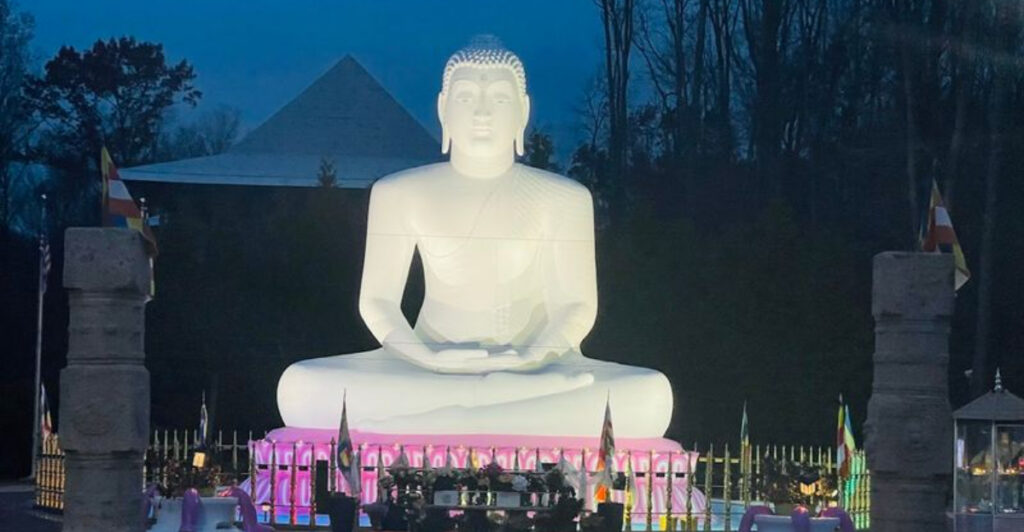
A white Buddha rises from the trees beside Route 27, calm as ever while New Jersey does what New Jersey does best around it: traffic hums, planes pass overhead, and someone somewhere is probably trying to make a left turn they should have skipped.
That contrast is part of what makes the New Jersey Buddhist Vihara and Meditation Center so striking.
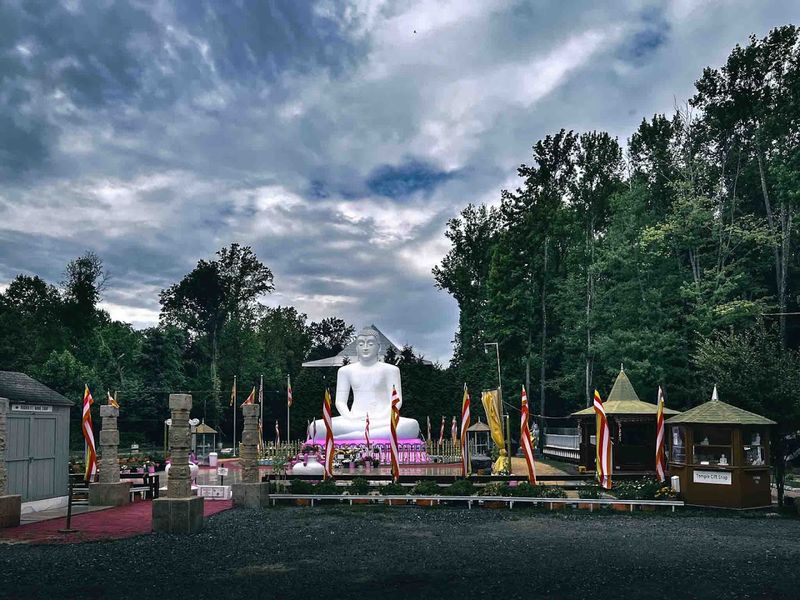
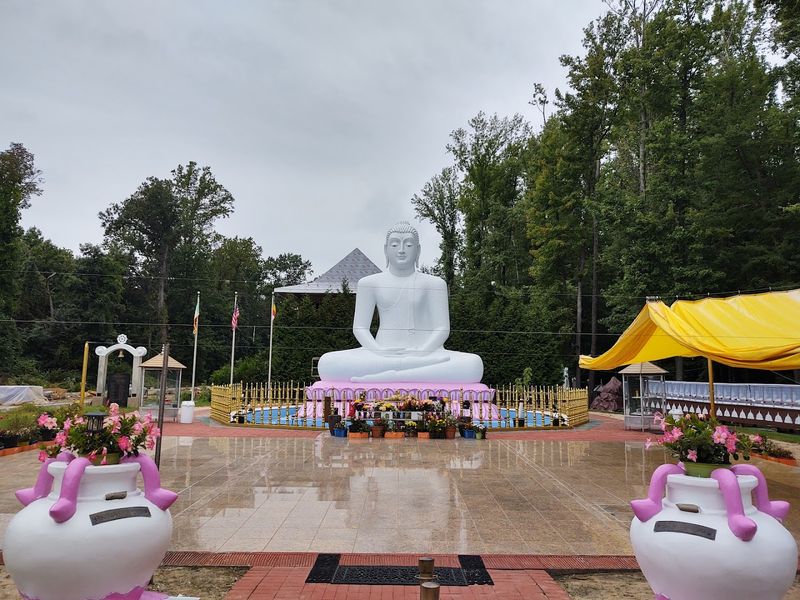
One moment you’re driving through Franklin Township near Princeton, and the next, there it is: a 30-foot Samadhi Buddha seated on a pink lotus, looking completely unbothered by the rush of Central Jersey life.
The temple sits at 4299 Route 27, on a wooded 10-acre property that feels quiet without pretending the highway isn’t right there.
It’s not flashy. It’s not trying to compete with Princeton’s historic buildings or Somerset County’s busy suburban rhythm. It simply sits there, peaceful and enormous, waiting to surprise anyone who notices.
The Giant Samadhi Buddha That Stops Visitors Along Route 27
Route 27 is not exactly where most people expect a moment of stillness. This is a practical road, the kind locals use to get between Kingston, Princeton, Franklin Township, and the rest of Central Jersey without making a production of it.
Then, set back from the traffic, a massive seated Buddha appears through the trees. The statue is the centerpiece of New Jersey Buddhist Vihara and Meditation Center, and it is hard to overstate how unexpected it feels the first time you see it.
The Buddha sits in the Samadhi posture, a meditative pose associated with deep concentration and inner peace. At 30 feet tall, the statue is often described as one of the largest Buddha statues in the United States, and the temple’s own materials describe it as one of the largest Samadhi-style Buddha statues of its kind in the Western Hemisphere.
Its scale gets your attention first. The details keep it there.
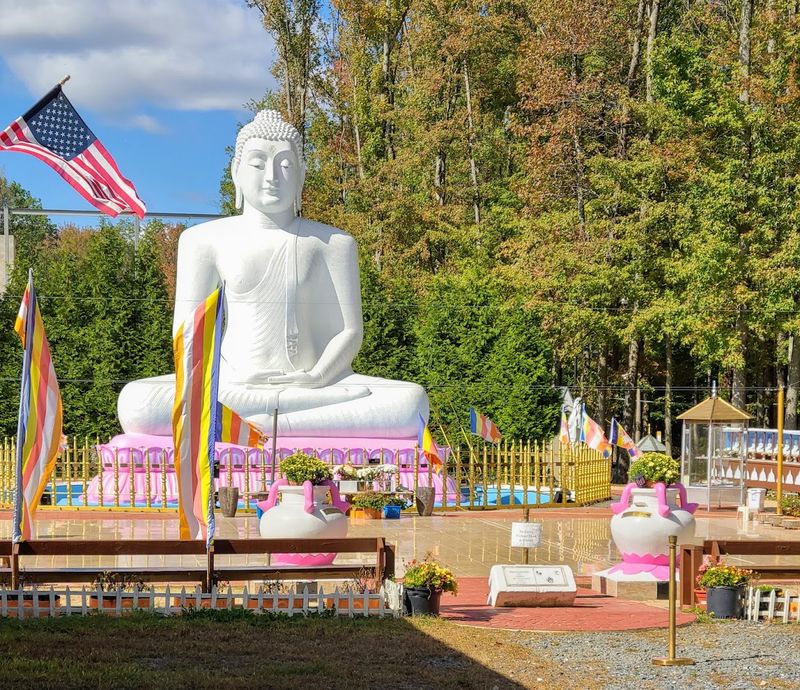
The statue is white, seated on a pink lotus base, with a calm expression that makes the surrounding sounds feel almost funny by comparison. Cars move along Route 27.
The occasional truck rolls past. Birds cut through the trees.
Visitors step out of their cars and suddenly lower their voices, because the place seems to ask for it without saying much. This is not a museum piece behind glass or a distant monument you admire from a designated viewing area.
It sits outdoors, part of the temple grounds, close enough that visitors can take in the shape of the lotus, the stillness of the face, and the way the trees frame the statue differently depending on the season. In spring and summer, the greenery softens the scene.
In fall, the leaves make the white statue stand out even more. In winter, when the branches are bare, the whole setting feels sharper and more exposed, like the Buddha has been quietly watching the town through every New Jersey season without complaint.
How a Quiet Franklin Township Temple Became a Spiritual Landmark
Franklin Township has a way of surprising people who only know it from a map. It sits near Princeton, stretches across busy roads and quiet pockets, and has the kind of religious and cultural diversity that makes Central Jersey feel bigger than its zip codes.
New Jersey Buddhist Vihara fits right into that mix, even if the 30-foot Buddha makes it impossible to call the place ordinary. The temple was founded in 2003, long before many casual passersby knew what was tucked off Route 27.
In September 2009, the Samadhi Buddha statue was unveiled, giving the property a landmark that would eventually draw not only practicing Buddhists, but also neighbors, interfaith groups, curious drivers, and people looking for a quieter place to sit for a few minutes. That growth makes sense once you understand where it is.
The temple is only about 10 minutes from Princeton University, but it does not feel like a campus-adjacent attraction. It also sits within reach of New York City, close enough for visitors from the broader metro area but far enough away to keep its wooded, local feel.
The temple’s setting matters. This is not a grand complex sitting on a hilltop.
It is a monastery and meditation center on a 10-acre property in a busy part of New Jersey, which somehow makes the whole thing more powerful. It is peace with road noise.
It is reflection with errands happening nearby. It is the Garden State in one very specific image.
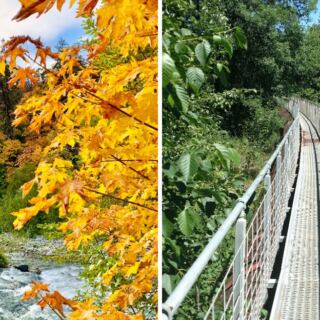
Over the years, the Vihara has also grown beyond the statue itself. Plans for the property have included a larger meditation and activity center, a library, clergy residence, community gathering space, meditation trails, landscaped gardens, and a footbridge over a natural stream.
That tells you something important: this is not just a roadside curiosity. It is an active religious and cultural center that has kept building around a simple idea — there should be a place here for learning, prayer, meditation, and community.
The Story Behind New Jersey Buddhist Vihara and Meditation Center
The name sounds formal, but the heart of the place is pretty direct. New Jersey Buddhist Vihara and Meditation Center was built to serve people, not just impress them.
Its roots are Sri Lankan and Theravada Buddhist, but its reach has become wider than one tradition, one community, or one kind of visitor. The temple is led by Venerable Hungampola Sirirathana Nayaka Thero, a Sri Lankan monk ordained in the Theravada tradition.
Theravada Buddhism is one of the oldest surviving branches of Buddhism and is widely practiced in countries such as Sri Lanka, Thailand, and Myanmar. That background shapes the temple’s religious life, including chanting, meditation, and observances tied to the Buddhist calendar.
But the Vihara has never been only about serving one group behind closed doors. Its mission has long included welcoming Buddhists and non-Buddhists alike for religious, cultural, and social purposes.
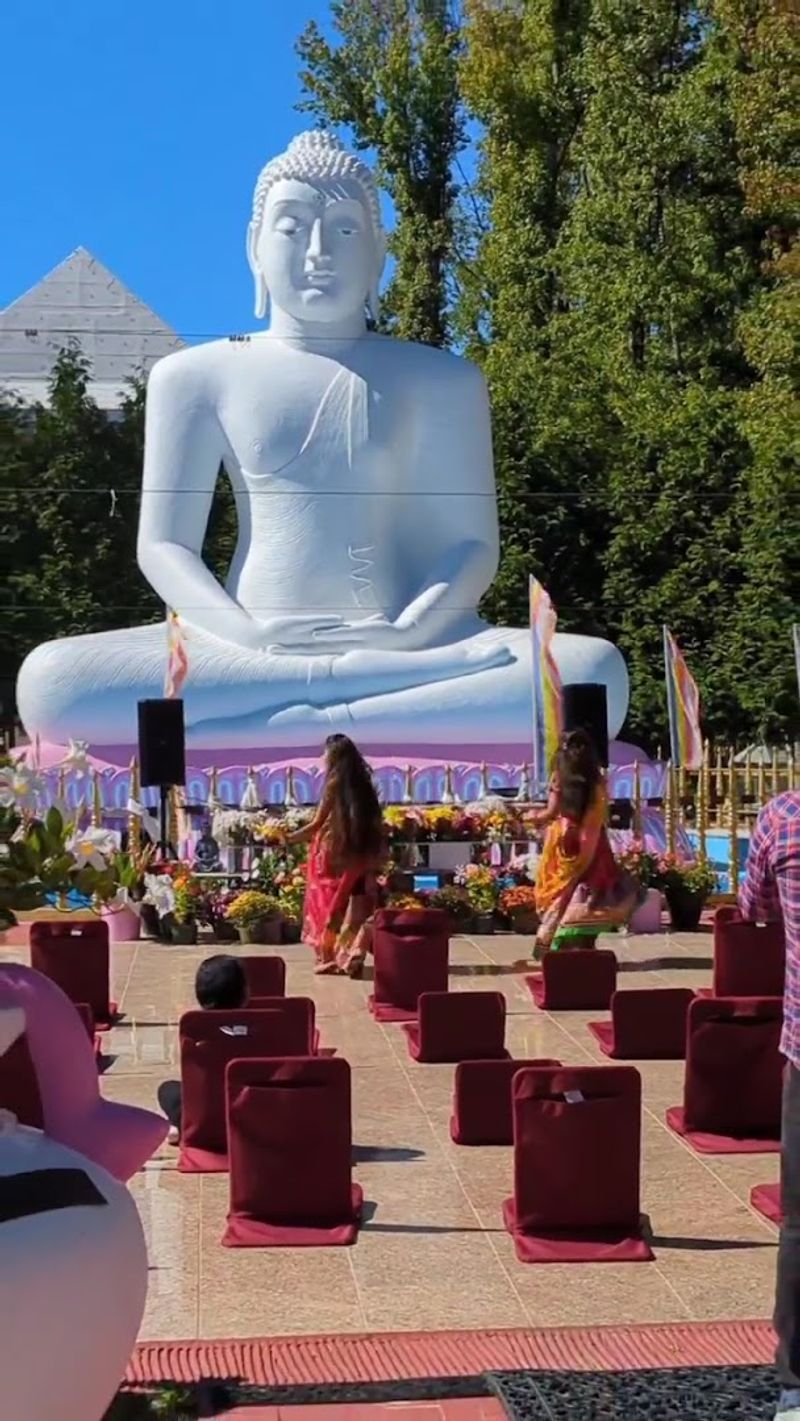
That may sound like a line from an organization’s brochure, but on the ground, it shows up in very real ways. You might see monks in saffron robes, families bringing offerings, students visiting from nearby schools, or someone sitting quietly on a bench because they were curious and stayed longer than planned.
The temple also hosts programs connected to Buddhist holidays and education, including Dhamma School activities, Vesak celebrations, Poson observances, and meditation programs. The Samadhi Buddha statue was part of the temple’s bigger vision from the beginning.
In Buddhist practice, statues are not worshipped as gods. They are reminders — of the Buddha’s qualities, of compassion, of mindfulness, of patience, and of the possibility that a person can train the mind instead of being dragged around by it all day.
That is why the statue works so well here. It is huge, yes. It is photogenic, absolutely. But it is not there simply to be big.
It anchors the property. It gives visitors something to focus on. And for a place surrounded by one of the busiest states in the country, that focus is no small thing.
Why Visitors From Every Background Feel Welcome Here
A temple can say it welcomes everyone. This one actually looks like it means it.
Part of that comes from the community that has gathered around the Vihara. The temple follows the Theravada tradition, but visitors and practitioners come from many Buddhist backgrounds, including Mahayana and Vajrayana traditions.
That matters because Buddhism is not one single cultural lane. A Sri Lankan Buddhist family, a Korean Zen practitioner, a Tibetan Buddhist, and a curious New Jersey neighbor might all approach the space differently, yet still find something familiar enough to stay.
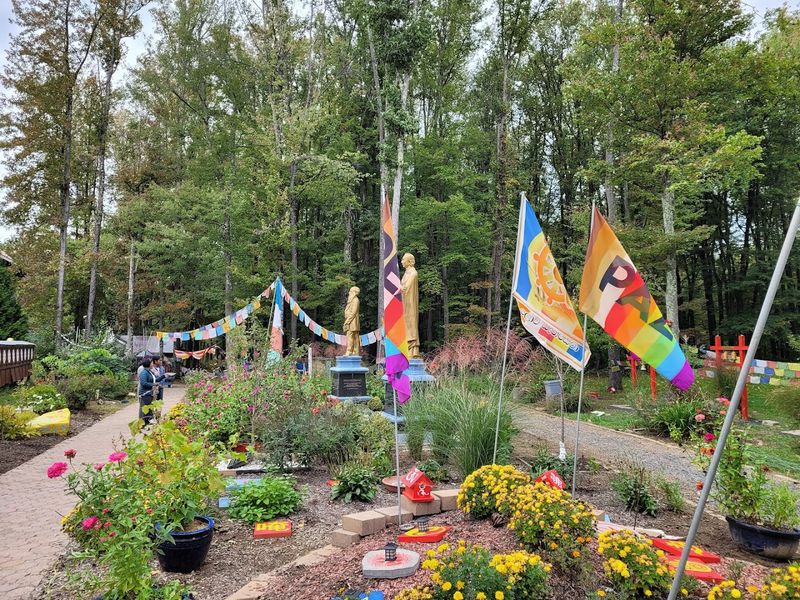
One detail says a lot: the grounds include a statue of Kuan Yin, the figure associated with compassion in Mahayana Buddhism and especially meaningful in Chinese, Korean, Tibetan, and other East Asian Buddhist traditions. For someone whose practice is not Theravada, that presence can feel like a quiet nod of recognition.
It says, in effect, there is room here. The temple has also become part of Central Jersey’s broader interfaith life.
Franklin Township and nearby communities are home to Hindu temples, Jain centers, Sikh gurdwaras, churches, mosques, synagogues, and cultural organizations. The Vihara fits into that landscape naturally, not as an isolated place, but as one piece of a much larger local story.
That is what makes it feel so distinctly New Jersey. The state is crowded, layered, and constantly overlapping.
People live close together here, but they do not all come from the same place or pray in the same way. At the Vihara, that mix is not treated like a complication.
It is part of the point. Visitors do not need to arrive with a perfect understanding of Buddhist customs.
Respect goes a long way. Speak softly. Dress modestly. Watch what others are doing before stepping into a sacred area.
If people are meditating, give them space. If monks or regular members are present, a polite greeting is enough.
The welcome here is not loud. It is calmer than that. It is the kind that lets a first-time visitor stand quietly for a moment and feel they are not intruding.
The Peace Garden and Statues That Make the Grounds Feel Sacred
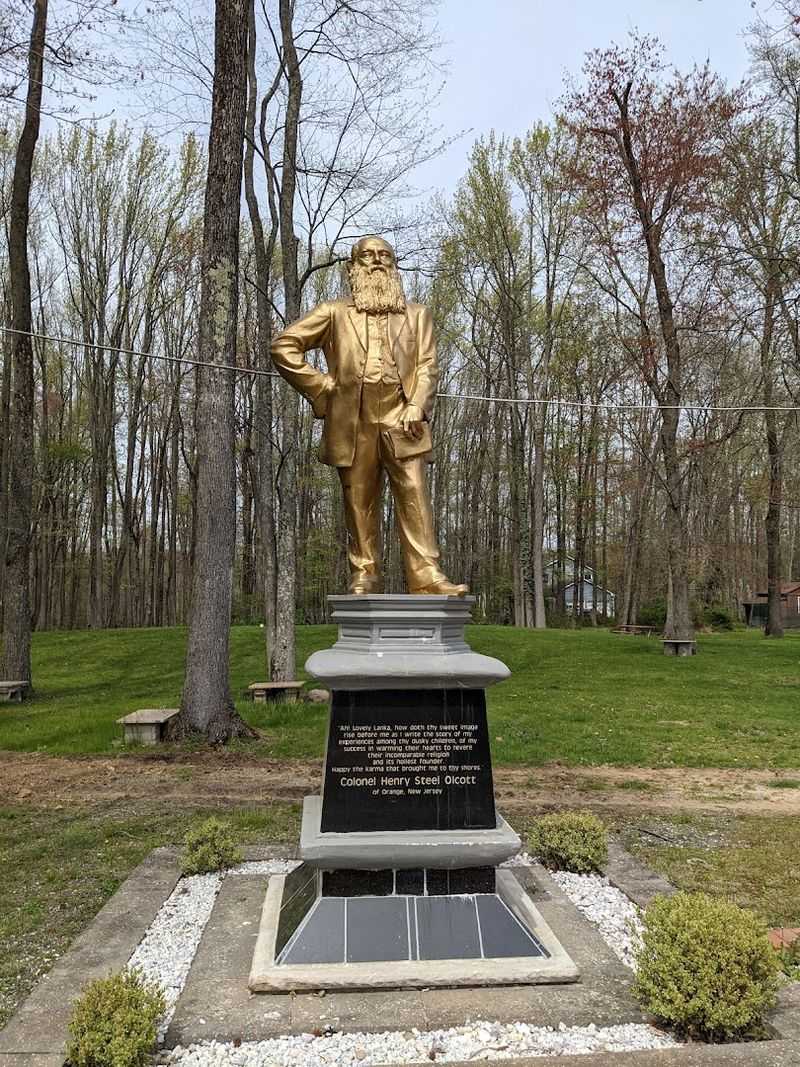
Most people pull in because of the giant Buddha, but the grounds are what make them slow down. Around the temple, the wooded property includes small sacred details that reward a more patient look.
Tibetan prayer flags bring color to the trees, moving with the wind in a way that feels gentle without being staged. An interfaith peace mural painted by local students adds another layer, with symbols representing different religions practiced across New Jersey and beyond.
It is a very Central Jersey kind of image: many traditions sharing the same wall, not competing for the whole thing. There is also a peace garden on the property, tended as part of the temple’s interfaith spirit.
It is not the sort of garden designed for dramatic entrances or glossy brochure photos. Its purpose is quieter.
It gives visitors a place to pause, reflect, and notice the grounds beyond the giant Buddha. That smaller scale is important.
A 30-foot statue can dominate a visit if you let it. But walk around a little and the place becomes more layered.
The Kuan Yin statue adds a note of compassion from another Buddhist tradition. The prayer flags connect the property to Tibetan Buddhist practice.
The mural points outward, toward the many faith communities that make Somerset County and Central Jersey so unusually rich. Even the natural setting plays a role.
The temple property includes woods and plans for expanded meditation trails, landscaped gardens, and a footbridge over a stream. That combination of religious art and New Jersey woodland gives the place its unusual texture.
It is not manicured into blandness. It still feels like a real local property, with trees, paths, and the practical edges of a working religious center.
That is probably why the grounds do not feel like a tourist stop, even though curious visitors do come by. The sacredness here is not dramatic.
It is built out of repeated gestures: offerings placed with care, flags tied among trees, students painting symbols of peace, people sitting on benches in front of the Buddha because stillness feels better when there is somewhere to put your eyes.
What To Know Before Visiting This Hidden New Jersey Temple
A visit here is simple, but it helps to know what kind of place you are entering. New Jersey Buddhist Vihara and Meditation Center is located at 4299 Route 27 in Princeton’s mailing area, within Franklin Township near Kingston.
The entrance can be easy to miss if you are moving with normal Route 27 confidence, so slow down as you get close and look for the temple property set back from the road. This is an active monastery and meditation center, not a theme park and not a sculpture garden with a ticket booth.
There is no big production when you arrive. Parking is generally straightforward, and donations are commonly accepted, but visitors should treat the grounds as a sacred space first and a sightseeing stop second.
Because temple schedules can change for religious observances, community programs, construction, weather, or private events, it is smart to check ahead before making a special trip. The temple lists its phone number as 732-821-9346 and maintains a calendar of observances and activities.
Buddhist holidays such as Vesak and Poson can bring more people to the property, along with chanting, offerings, and community gatherings. The best visit is unhurried.
You do not need half a day unless you are attending a program, but this also is not a five-minute hop-out-and-go stop if you want to understand why the place matters.
Give yourself time to see the Buddha statue, notice the Kuan Yin statue, walk respectfully through the outdoor areas that are open to visitors, and sit for a few minutes if benches are available.
Dress comfortably but respectfully. Keep your voice low.
Avoid climbing on anything, blocking people who are praying, or treating religious objects like props. Photos may be fine outdoors, but use common sense and skip pictures of people meditating or participating in religious practice unless you have permission.
The beauty of this place is that it does not ask New Jersey to become quiet before offering peace. The traffic is still nearby.
Princeton is still down the road. Errands, work, school, and weekend plans are still waiting.
And yet, beneath the trees off Route 27, the Buddha sits in complete stillness, making the town around it feel just a little softer.
Share this story