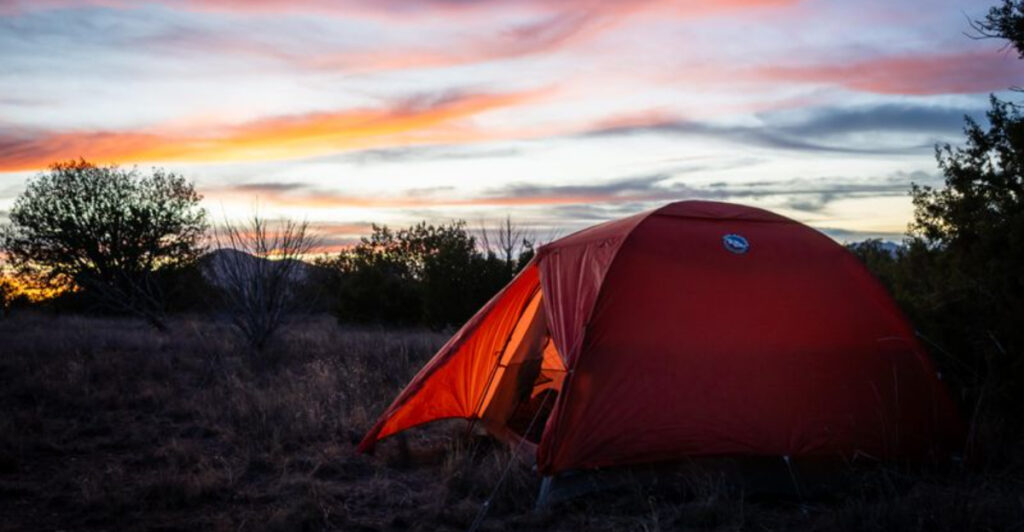
Texas isn’t all flat plains and wide-open prairies. Tucked into the western and northern corners of the state are rugged mountain ranges that offer some of the most stunning camping experiences you’ll find anywhere. From towering canyon walls to sky-high peaks that scrape the clouds, these mountain campsites deliver views that’ll make your jaw drop and your camera work overtime.
Whether you’re a seasoned backpacker or just looking for a weekend escape under the stars, these six spots prove that Texas mountains are seriously underrated.
1. Davis Mountains State Park
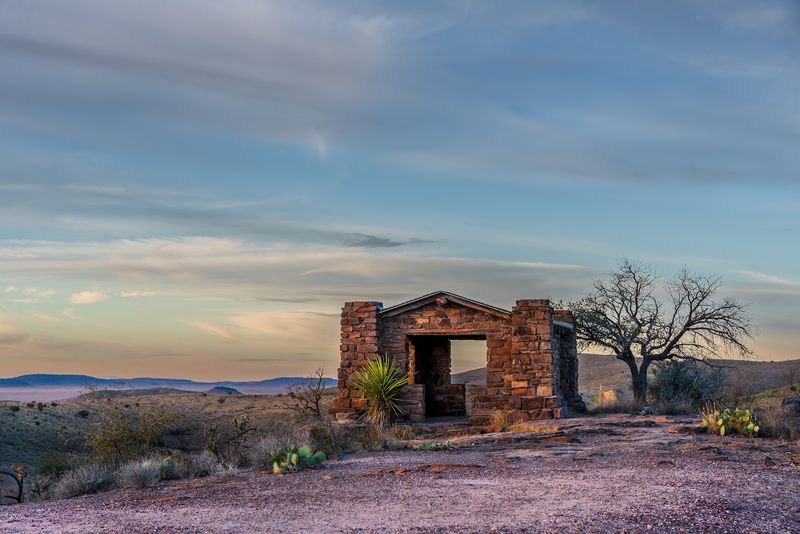
Perched at nearly a mile above sea level, Davis Mountains State Park sits in one of the most geologically fascinating regions of West Texas. The campground here isn’t just a place to pitch a tent—it’s your front-row seat to some of the darkest night skies in the continental United States. During the day, the jagged peaks surrounding the park create a dramatic backdrop that shifts colors as the sun moves across the sky.
The park offers several camping options, from primitive backcountry sites to spots with water and electric hookups. No matter where you set up camp, you’ll wake up to views of Sleeping Lion Mountain and the surrounding volcanic landscape. The elevation here keeps temperatures cooler than the desert floor below, making it a perfect summer escape when the rest of Texas feels like an oven.
What really sets this place apart is the Skyline Drive Trail, a scenic route that winds through the mountains and offers panoramic views that stretch for miles. Early morning hikers often spot mule deer, javelinas, and even the occasional mountain lion track. The cooler mountain air carries the scent of juniper and oak, creating an atmosphere that feels worlds away from the typical Texas experience.
Stargazers flock here because the McDonald Observatory sits just up the road, taking advantage of the exceptionally clear skies. On a moonless night, you can see the Milky Way stretching overhead like a cosmic river. The silence at night is almost surreal—no city hum, just the occasional rustle of wildlife and the whisper of wind through the canyons.
The Indian Lodge, a historic pueblo-style hotel within the park, adds a unique touch to the area’s character. Even if you’re camping, it’s worth checking out for its architecture and the stunning sunset views from its grounds. The combination of rugged mountains, diverse wildlife, and astronomical wonders makes Davis Mountains State Park a camping destination that delivers on every front.
2. Big Bend Ranch State Park
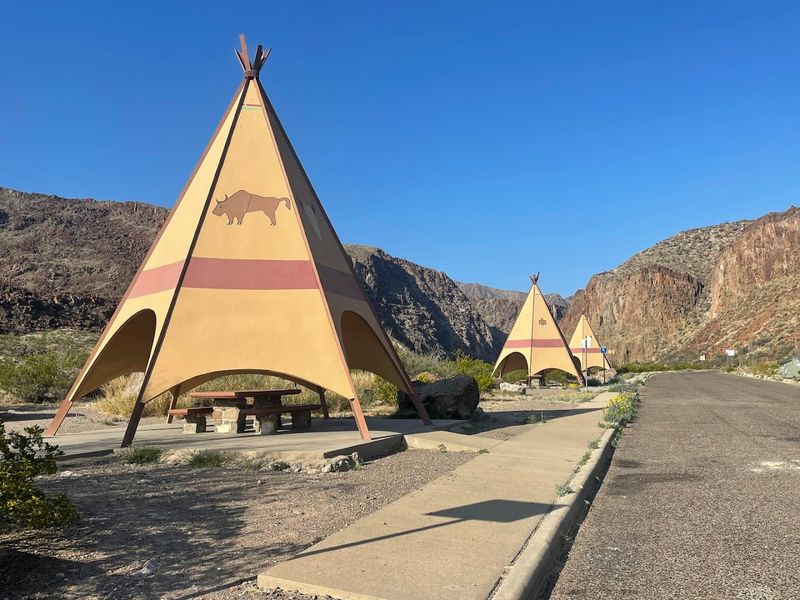
Sprawling across more than 300,000 acres, Big Bend Ranch State Park is Texas’s largest state park and one of its most remote. This isn’t a place for casual weekend warriors—it’s raw, wild, and seriously challenging terrain that rewards adventurous campers with views that feel almost otherworldly. The Solitario, a massive volcanic uplift that looks like a giant crater from above, dominates the landscape and creates some of the most unique geological formations you’ll ever see.
Camping here means choosing your own adventure. Primitive sites are scattered throughout the park, many accessible only by hiking or high-clearance vehicles. The backcountry campsites near Fresno Canyon offer incredible solitude, with views of layered rock formations that tell millions of years of geological history.
You’ll fall asleep under a blanket of stars so thick it almost feels overwhelming.
The Rio Grande forms the park’s southern boundary, carving through dramatic canyons that create some of the most photogenic landscapes in Texas. Colorado Canyon and Closed Canyon are both accessible from the park and offer slot canyon experiences where towering walls rise hundreds of feet on either side. The contrast between the river’s green ribbon and the surrounding desert mountains creates scenes that don’t even look real.
Wildlife viewing here is exceptional because the park’s remoteness keeps animal populations healthy and active. Desert bighorn sheep, once nearly extinct in Texas, have been successfully reintroduced and can sometimes be spotted on rocky slopes. Black bears occasionally wander through from Mexico, and the variety of bird species attracts serious birders from across the country.
The park’s elevation changes dramatically, from low desert valleys to mountain peaks over 5,000 feet high. This variation creates microclimates and diverse ecosystems within a relatively compact area. Spring wildflowers can be spectacular after wet winters, painting entire hillsides in vibrant yellows, purples, and reds that seem impossibly bright against the dusty landscape.
3. Palo Duro Canyon State Park
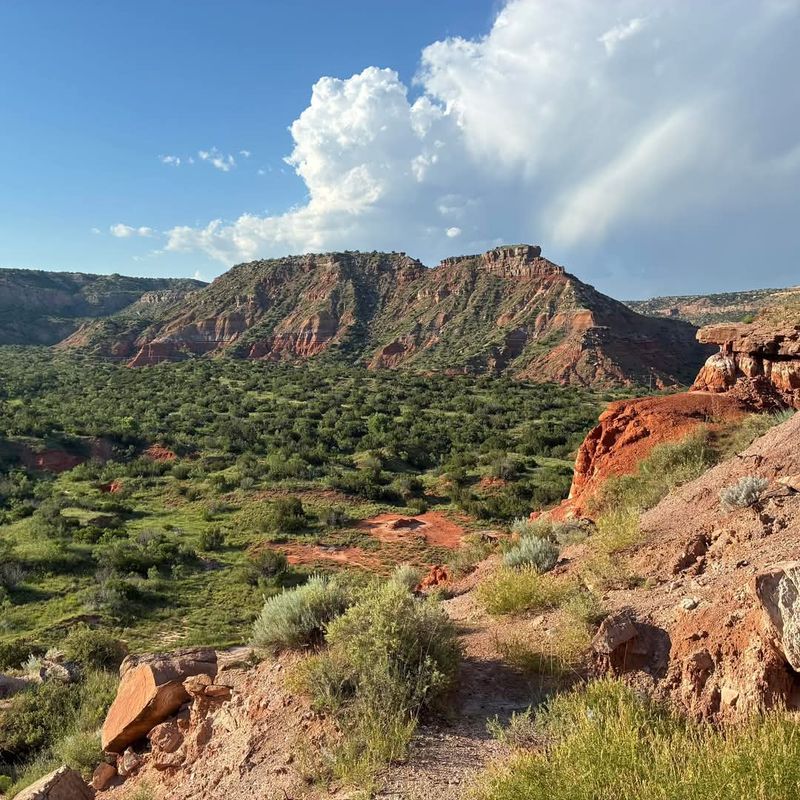
They call it the “Grand Canyon of Texas,” and while that might sound like typical Texan exaggeration, one look at Palo Duro Canyon will make you a believer. Carved by the Prairie Dog Town Fork of the Red River, this massive canyon stretches 120 miles long and plunges 800 feet deep in places. The multicolored layers of rock—reds, oranges, yellows, and purples—create a visual feast that changes throughout the day as light and shadow play across the walls.
The campgrounds here sit right on the canyon floor, surrounded by towering formations with names like Lighthouse Rock and Capitol Peak. Waking up inside the canyon feels like camping on another planet, especially when the morning sun hits the eastern walls and sets them ablaze with color. The scale of everything around you makes you feel wonderfully small in the best possible way.
Hiking trails range from easy nature walks to challenging climbs that take you to the canyon rim. The Lighthouse Trail is the park’s signature hike, leading to a distinctive rock formation that stands like a sentinel overlooking the canyon. From the top, views extend across the entire canyon system, revealing hidden side canyons and geological features invisible from below.
It’s a moderately tough climb, but absolutely worth the effort.
Summer temperatures can be brutal in the canyon, but spring and fall create nearly perfect camping conditions. Cooler months bring migrating birds and more active wildlife, including roadrunners, wild turkeys, and the occasional bobcat. The Texas bison herd, descendants of the Southern Plains bison that once roamed in millions, can sometimes be spotted grazing in designated areas of the park.
The outdoor musical drama “Texas” performs in an amphitheater carved into the canyon wall during summer months, adding a cultural element to the natural experience. Even if you skip the show, the amphitheater area offers fantastic views and interpretive displays about the canyon’s geological and human history.
4. Guadalupe Mountains National Park
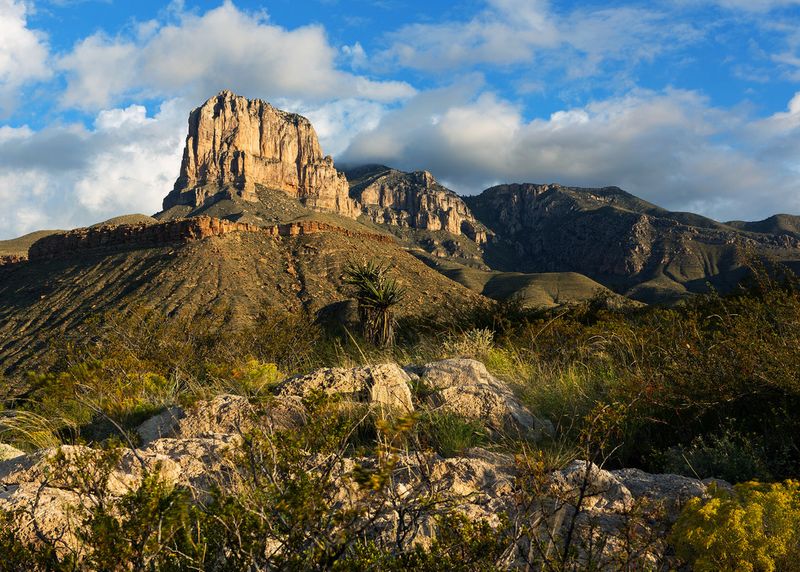
Home to the highest point in Texas, Guadalupe Mountains National Park offers camping experiences that range from desert floor sites to high-country adventures. Guadalupe Peak towers at 8,749 feet, and while reaching the summit requires a strenuous day hike, the campgrounds below offer spectacular views without the lung-burning climb. El Capitan, a massive limestone cliff face, dominates the southern skyline and glows golden during sunset.
Pine Springs Campground serves as the park’s main camping area, nestled against the base of the mountains with views that stretch across the salt flats toward the distant Sierra Diablo range. The contrast between the white salt deposits and the dark mountains creates a stark, beautiful landscape that’s uniquely West Texas. Sites here are first-come, first-served, adding an element of adventure to your trip planning.
What makes this park special is the incredible biodiversity packed into a relatively small area. Ancient reef formations from when this area was covered by an inland sea create the foundation for ecosystems that range from Chihuahuan Desert to high-altitude forests. McKittrick Canyon, often called the most beautiful spot in Texas, transforms into a riot of autumn color when bigtooth maples change in late October and November.
Backcountry camping opens up even more dramatic scenery for those willing to haul their gear into the high country. The Bowl, a high-elevation forest area, offers a completely different camping experience from the desert below. Ponderosa pines, Douglas firs, and aspen trees create an environment that feels more like Colorado than Texas.
The temperature difference between the desert floor and these high camps can be 20 degrees or more.
Night skies here rival any dark sky preserve in the country. The park’s remote location and lack of nearby cities mean light pollution is virtually nonexistent. Meteor showers, planetary alignments, and the Milky Way’s galactic core all put on shows that make staying up past bedtime completely worthwhile.
The silence and darkness create a camping experience that feels genuinely wild.
5. Big Bend National Park
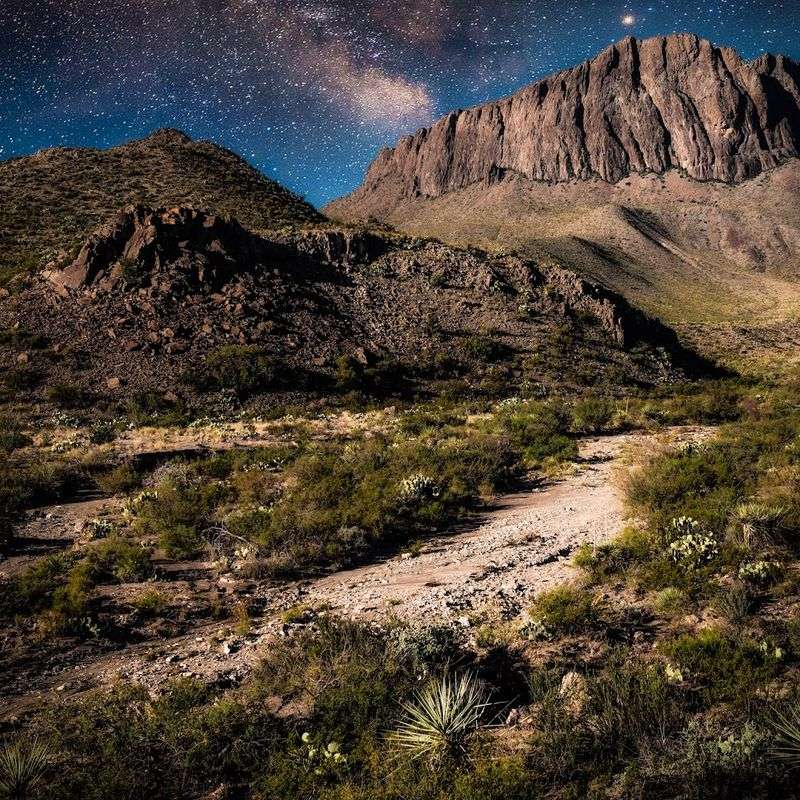
Straddling the Rio Grande where it makes a dramatic bend along the Mexican border, Big Bend National Park encompasses an area larger than Rhode Island. The Chisos Mountains rise from the desert floor like an island, creating a sky island ecosystem found nowhere else on Earth. Camping in the Chisos Basin puts you at 5,400 feet elevation, surrounded by peaks that climb another 2,000 feet higher and offer views that seem to extend forever.
The basin campground books up months in advance because campers know this spot delivers something special. Casa Grande, a massive rock formation, towers over the campground like a natural fortress. As evening approaches, the setting sun paints the surrounding peaks in shades of pink and purple while the desert below fades into deep shadow.
The temperature drops quickly after sunset, creating perfect campfire weather even in warmer months.
Window Trail, accessible right from the basin, leads to a natural V-shaped notch in the mountains that frames the desert below like a living photograph. Sunrise and sunset at the Window are bucket-list moments, with light streaming through the gap and illuminating the landscape in ways that seem almost theatrical. The relatively easy hike makes this view accessible to most campers.
Beyond the Chisos, the park offers riverside camping along the Rio Grande and desert sites in more remote areas. Each zone provides completely different experiences and views. Boquillas Canyon, where limestone walls rise 1,500 feet straight up from the river, creates a sense of scale that’s hard to comprehend until you’re standing there.
The silence inside these canyons is so complete you can hear your own heartbeat.
Wildlife encounters happen regularly because the park’s size and remoteness support healthy populations of everything from black bears to roadrunners. Mexican jays, found only in this region, visit campsites looking for handouts (don’t feed them, but enjoy their company). The combination of Chihuahuan Desert, river ecosystems, and mountain habitats creates biodiversity that attracts nature enthusiasts from around the world seeking species found nowhere else in the United States.
6. Franklin Mountains State Park
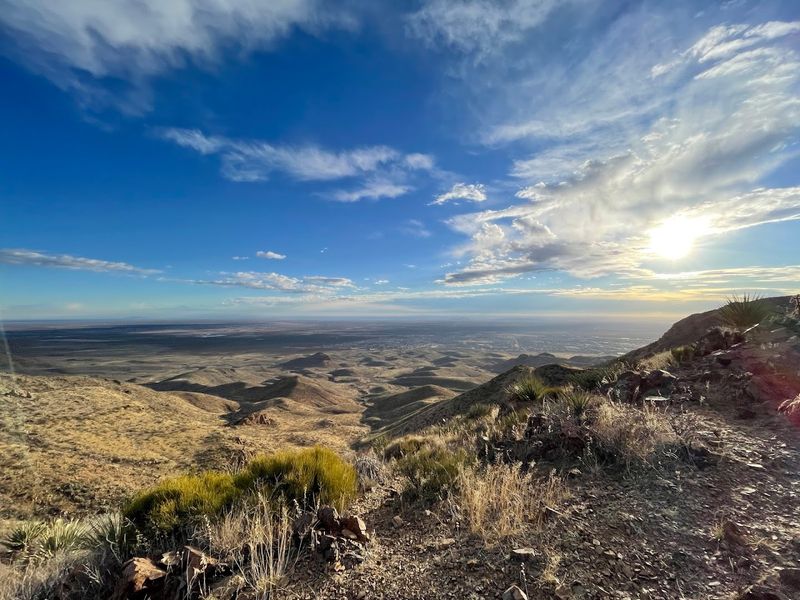
Rising abruptly from the urban landscape of El Paso, Franklin Mountains State Park holds the distinction of being one of the largest urban parks in the United States. Don’t let the city location fool you—once you’re in the mountains, civilization feels miles away despite being visible below. The park’s location on the northern tip of the Chihuahuan Desert creates a unique camping experience where you can watch city lights twinkle at night while coyotes howl from nearby ridges.
Tom Mays Unit offers the park’s main camping area, tucked into the foothills with views of the rocky peaks above and the Rio Grande Valley below. The mountains here are raw and rugged, composed of Precambrian rock that’s over a billion years old—some of the oldest exposed rock in Texas. Desert vegetation clings to seemingly impossible slopes, creating a landscape that’s beautiful in its harshness.
Hiking trails wind throughout the park, ranging from easy nature walks to challenging scrambles up rocky peaks. North Franklin Peak, the highest point in the range at 7,192 feet, requires serious effort to summit but rewards climbers with 360-degree views spanning three states and two countries. On clear days, you can see into New Mexico, across the border into Mexico, and across the vast Chihuahuan Desert stretching south.
The park’s desert ecosystem comes alive in unexpected ways. Spring blooms can transform the landscape when winter rains are sufficient, with prickly pear, ocotillo, and various wildflowers adding splashes of color to the rocky terrain. Desert wildlife thrives here despite the proximity to the city—roadrunners, golden eagles, mule deer, and various reptile species all call these mountains home.
Sunset camping sessions are particularly special because you get to watch the sun disappear behind the mountains while the city below begins to glow. The transition from day to night happens quickly in the desert, and the temperature drop can be dramatic. Star visibility varies depending on your location within the park, but areas farther from the city lights still offer decent night sky viewing considering the urban setting.
Share this story