If you think courthouses are just formal brick buildings with a clock and a few stone steps, Ohio is ready to prove you wrong. Across the state, these historic landmarks rise above their town squares and city streets with grand domes, carved columns, stained glass, murals, statuary, and the kind of architectural confidence that makes you stop mid-walk and stare a little longer than planned.
What surprised me most about Ohio is how these courthouses do more than represent government – they quietly tell the story of ambition, prosperity, civic pride, and local identity in communities both large and small. From river towns with deep early statehood roots to industrial cities that wanted their public buildings to look every bit as bold as their future, these thirteen courthouses reveal a side of Ohio that feels dramatic, elegant, and far more impressive than you might expect.
1. Cuyahoga County Courthouse, Cleveland
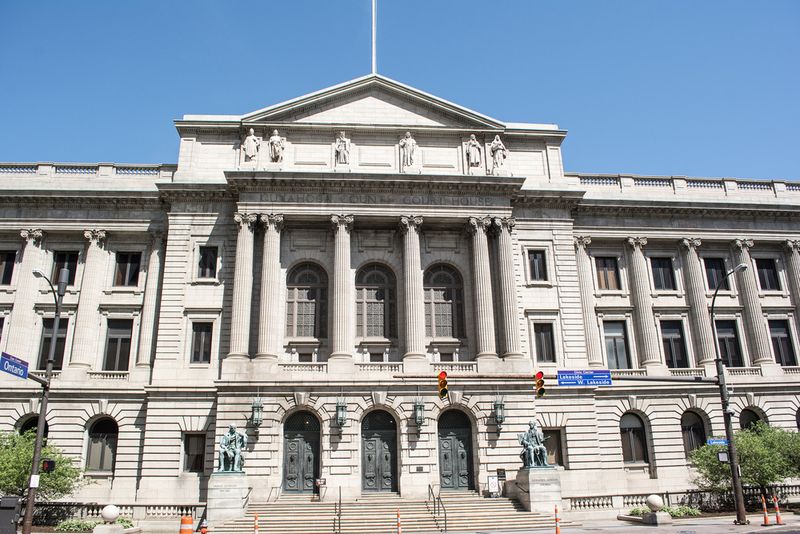
From the moment you approach Public Square, it becomes clear this is not an ordinary government building. The Cuyahoga County Courthouse in Cleveland carries the full weight of Beaux-Arts ambition, with monumental columns, carved stone details, and a symmetry that instantly makes the surrounding city feel more formal.
If you love architecture that knows how to make an entrance, this one delivers before you even reach the steps.
What really stands out is the sense of scale. Cleveland was a booming city when this courthouse rose in the early twentieth century, and that confidence still shows in every decorative flourish, cornice, and stately window.
Inside, the building is known for richly finished spaces, murals, and elegant materials that remind you public architecture once aimed to inspire everyday visitors, not just process paperwork.
I find that part especially compelling because the courthouse feels tied to Ohio’s larger story of industry, migration, and urban growth. It reflects a period when civic leaders wanted the county seat to project permanence, order, and cultural sophistication.
Even if you usually pass courthouses without thinking twice, this one nudges you to slow down and appreciate how seriously Cleveland took its public image.
Set among some of downtown’s most important landmarks, it also benefits from location. The surrounding streets, open views, and neighboring historic buildings make the courthouse feel like part of a much larger civic stage rather than a standalone monument.
That combination of artistic detail, city pride, and commanding presence is exactly why it ends up being far more impressive than many visitors expect when they first put Ohio on their travel list.
2. Lake County Courthouse, Painesville
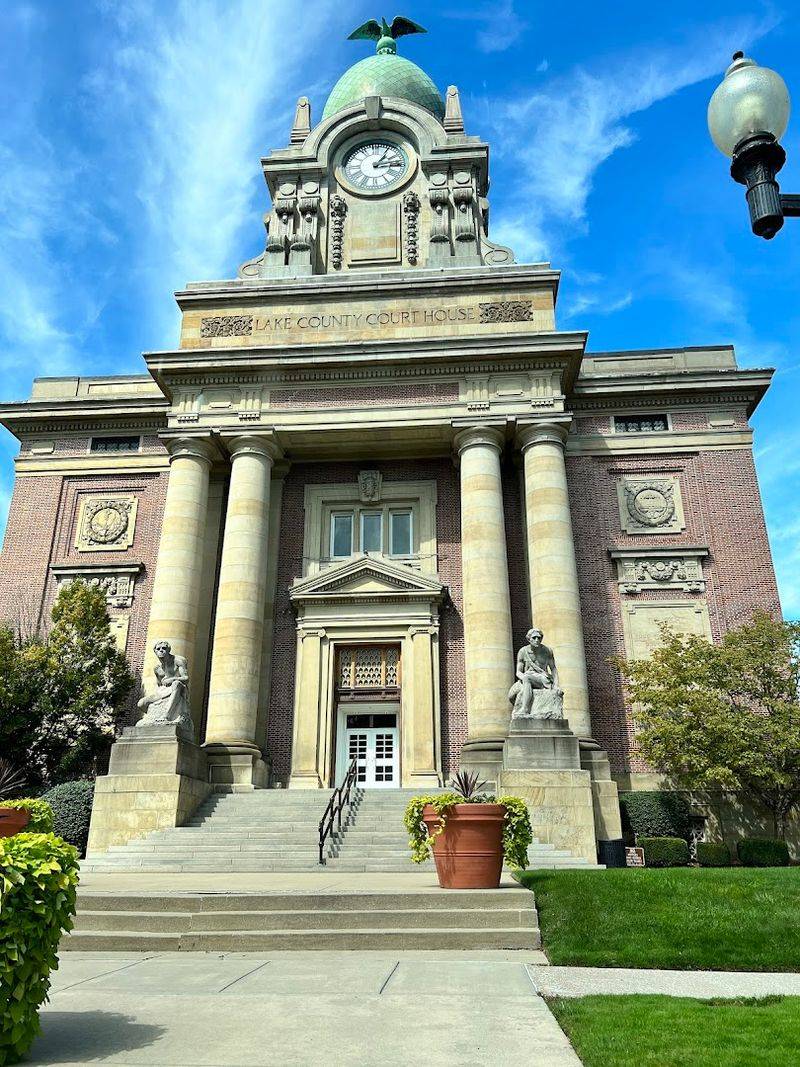
Standing in the center of Painesville, this courthouse has the kind of presence that quietly takes over the whole square. The Lake County Courthouse balances classical formality with small city charm, creating a landmark that feels important without becoming distant or overly severe.
You notice the symmetry first, then the dome, then the way the building seems to anchor everything around it.
That sense of balance is what makes it memorable. While some historic courthouses overwhelm you with ornament, this one impresses by combining elegance, proportion, and a strong civic posture that suits northeastern Ohio beautifully.
It reflects the era when county buildings were designed to reassure residents that local government was stable, serious, and built to last for generations.
I like how the courthouse also fits Painesville rather than competing with it. The streetscape around it, the courthouse lawn, and the nearby commercial blocks give the building context, so the whole setting feels like a living historic center instead of a preserved object.
When you visit, you get a better sense of how county seats once revolved around these structures socially, legally, and visually.
There is also something satisfying about finding this level of architecture outside Ohio’s largest cities. The Lake County Courthouse proves that grandeur was never reserved only for state capitals or industrial giants.
In a place many travelers might otherwise drive through quickly, you come across a courthouse with enough dignity, detail, and staying power to change your impression of the town almost immediately, and that surprise is a big part of its appeal.
3. Trumbull County Courthouse, Warren
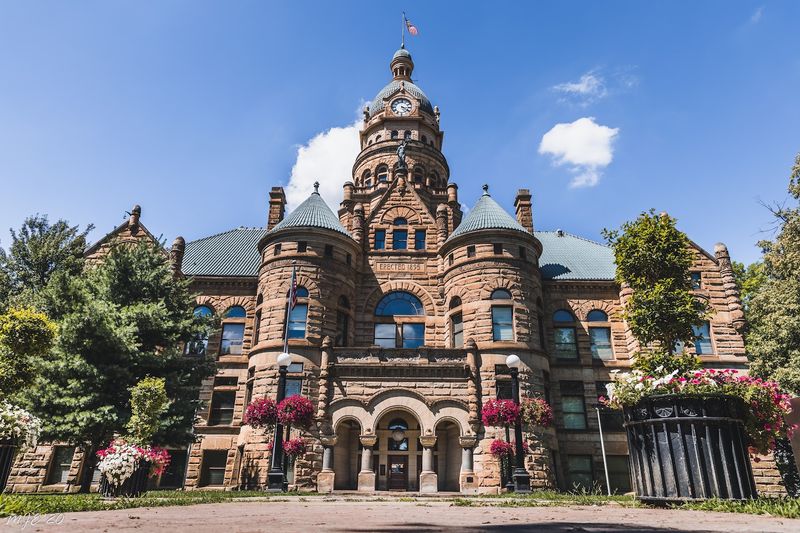
There is a certain old Ohio confidence built into this courthouse, and you can feel it as soon as it comes into view. The Trumbull County Courthouse in Warren stands with a formality that suits one of the state’s historically important regions, using classical lines, a commanding profile, and carefully composed details to make a strong civic statement.
It feels substantial in the best possible way, like a building that expected to be admired for a very long time.
Warren itself has deep historical roots, and this courthouse benefits from that context. Rather than seeming oversized for its setting, it feels like the natural centerpiece of a county seat that once held significant regional influence.
Architectural features such as the dome, stonework, and organized facade give it visual authority, while the surrounding streets help preserve that traditional courthouse-square atmosphere many places have lost.
I think what makes it more impressive than expected is the combination of history and restraint. It does not rely on flashy novelty or unusual design tricks to capture attention.
Instead, it succeeds through proportion, craftsmanship, and the quiet confidence of a public building meant to symbolize justice, permanence, and civic aspiration in an era when those ideas were deliberately written into architecture.
For anyone exploring Ohio beyond the usual big-name destinations, this courthouse is a reminder that some of the state’s most rewarding sights are in communities with layered local stories. In Warren, you are not just looking at a handsome building.
You are seeing a landmark that reflects how northeastern Ohio once imagined itself – established, ambitious, and fully worthy of architecture that still turns heads long after its original era has passed.
4. Wood County Courthouse, Bowling Green
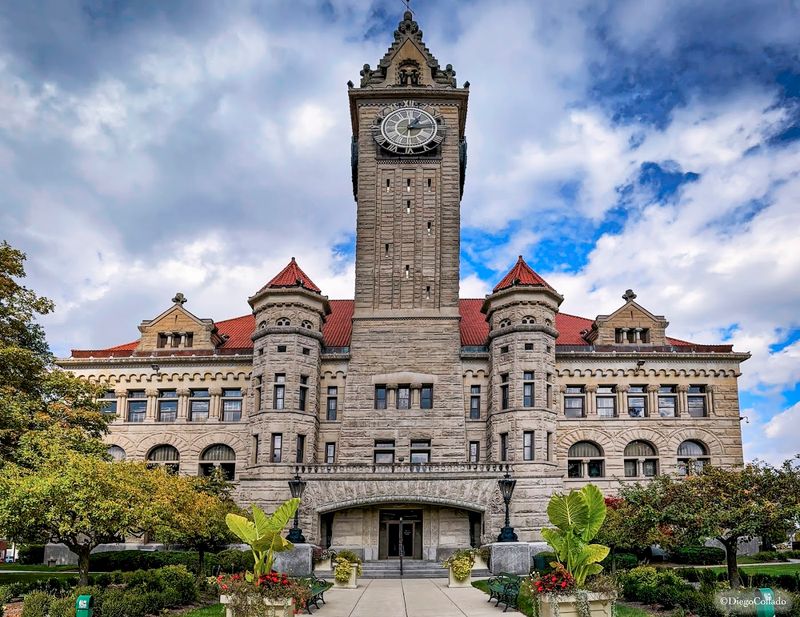
At first glance, this courthouse looks like it stepped out of a more decorative and theatrical age of American architecture. The Wood County Courthouse in Bowling Green is especially striking because it breaks from the plain expectations many people bring to county buildings, showing off ornate brickwork, bold rooflines, and a silhouette that feels almost storybook from the right angle.
It has personality before you even start noticing the details.
One reason it stays with you is that it reflects a period when civic architecture could be expressive as well as authoritative. Instead of relying only on heavy columns and stone massing, this courthouse uses texture, shape, and vertical emphasis to project importance.
The result is a landmark that feels lively and distinctive, while still carrying the seriousness expected of a county seat in Ohio.
I also appreciate how well it fits Bowling Green’s historic center. The courthouse grounds and nearby buildings create a setting where the structure can be seen from multiple directions, allowing its roof, tower elements, and decorative features to stand out naturally.
You do not have to be an architecture expert to feel that this is one of those places where local government once wanted the public realm to look genuinely memorable.
That is what makes it more impressive than expected. In a college town that many visitors know for other reasons, the courthouse offers a completely different kind of attraction – one rooted in craftsmanship, civic pride, and visual drama.
It reminds you that Ohio’s architectural treasures are not limited to major cities or famous museums. Sometimes the building that leaves the strongest impression is the one standing right at the center of everyday local life.
5. Williams County Courthouse, Bryan
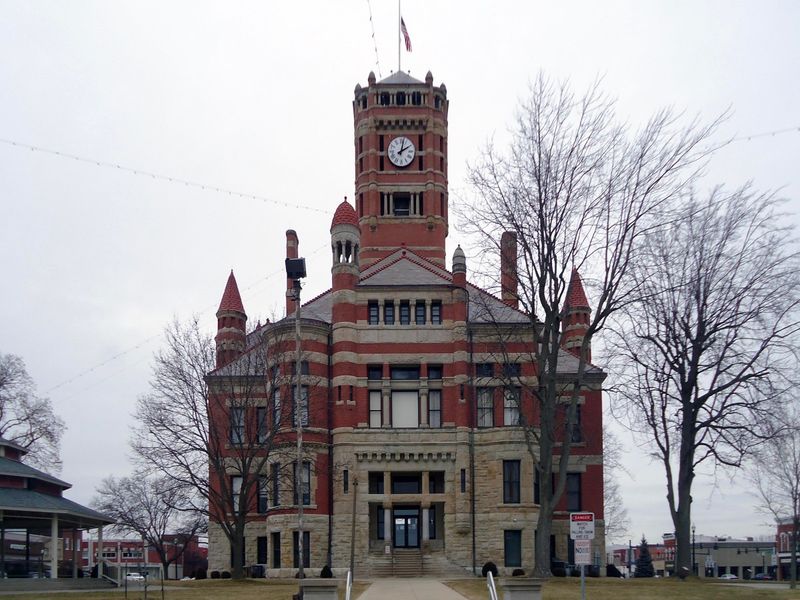
You might not expect one of Ohio’s most eye-catching courthouse buildings to be in Bryan, but that is exactly what makes this stop so satisfying. The Williams County Courthouse has the kind of robust historic presence that immediately elevates its surroundings, using a strong tower, substantial masonry, and richly textured surfaces to create a building that feels both protective and proud.
It does not blend in, and it was never meant to.
There is a rugged elegance to the design that makes it especially memorable. Many late nineteenth-century courthouses aimed to project stability through weight, height, and durable materials, and this one follows that formula beautifully.
As you look around, the massing and details work together to give the building a grounded authority, while still leaving room for visual interest and a little drama.
I think smaller county seats often make the biggest architectural impression because the courthouse dominates the local skyline in a way it cannot in a larger city. In Bryan, that effect is especially strong.
The building reads as a genuine landmark, not just an administrative office, and the surrounding civic space helps reinforce its role as the symbolic heart of the county.
What surprised me most is how effectively it captures a broader piece of Ohio history. This is the kind of courthouse that speaks to the ambitions of a growing community that wanted permanence and distinction written into stone and brick.
If you are exploring the state for overlooked historic architecture, the Williams County Courthouse proves that even places far from the biggest tourism circuits can deliver a building with real character, presence, and staying power.
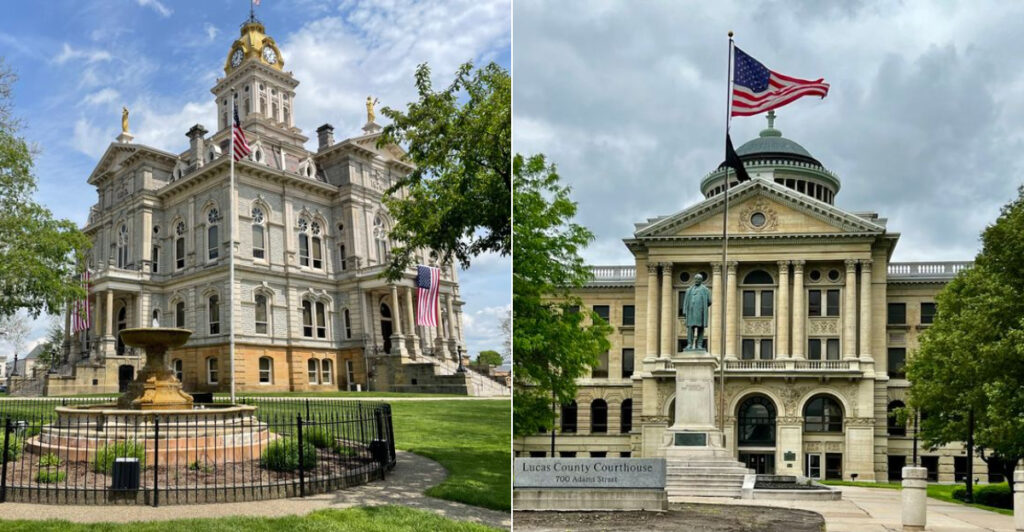
6. Lucas County Courthouse, Toledo
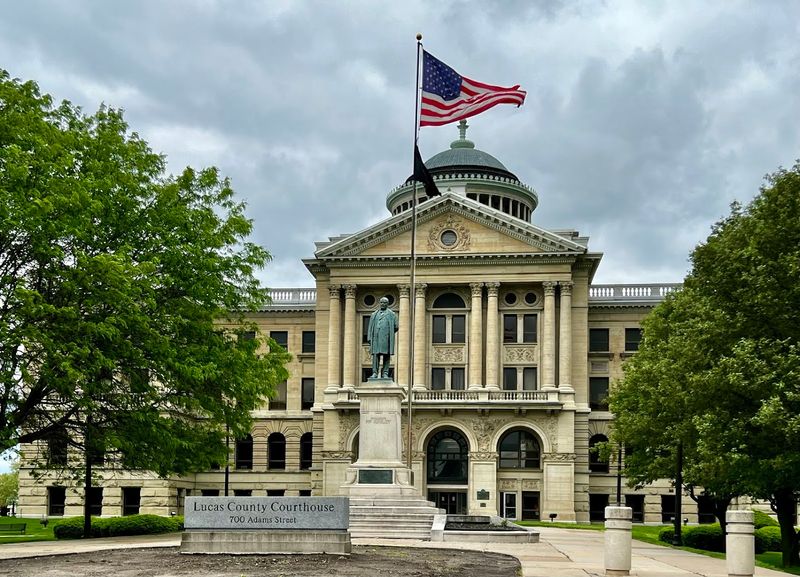
In Toledo, this courthouse rises with the kind of grandeur that makes a routine civic building feel almost ceremonial. The Lucas County Courthouse is monumental in scale, classically composed, and richly detailed in a way that reflects the confidence of a city that once stood at the center of major industrial and transportation networks in Ohio.
It is the sort of place that makes you instinctively look up.
What I find most impressive is how completely the architecture embraces public dignity. The columns, broad steps, and carefully ordered facade send a clear message about stability and authority, but the building never feels cold.
Instead, it has an elegance that comes from proportion and craftsmanship, showing how early twentieth-century civic design often tried to elevate the everyday experience of entering a public institution.
Its urban setting strengthens that effect. Surrounded by downtown Toledo’s layers of history, the courthouse reads as both an individual landmark and part of a larger story about regional ambition, economic power, and municipal identity.
Even if you arrive focused on the city’s museums or waterfront, the courthouse can easily become one of the most visually satisfying historic stops on your route.
That is why it belongs on any list of Ohio courthouses that exceed expectations. You may assume the biggest surprises are tucked away in tiny towns, but Toledo proves major cities can still catch you off guard with architecture that feels far more refined and impressive than a quick online search might suggest.
The Lucas County Courthouse is bold, polished, and unapologetically civic, which is exactly what makes it such a rewarding building to see in person.
7. Hancock County Courthouse, Findlay
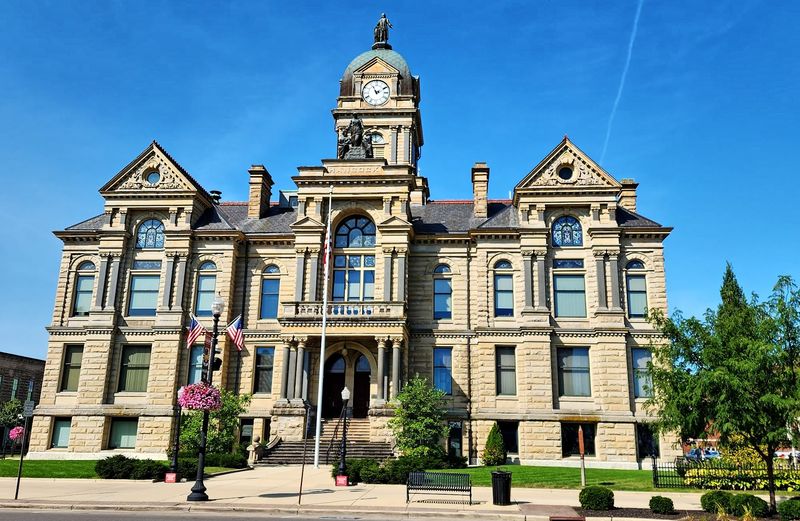
Some courthouses impress because they are enormous, but this one wins you over through elegance and composition. The Hancock County Courthouse in Findlay stands as a polished civic centerpiece, with a stately dome, refined stonework, and a balanced design that gives the whole downtown a sense of order and history.
It feels important from a distance and even better once you stop to take in the details.
Findlay has long been an active regional center, and the courthouse reflects that standing without tipping into excess. The architecture shows confidence, yet it remains approachable, which is part of its charm.
Historic county buildings work best when they symbolize authority while still belonging to the community around them, and this one handles that balance especially well.
I also like how naturally it fits the rhythm of the city. The courthouse does not exist apart from daily life – it shapes it, defining views, orienting streets, and giving the downtown core a visual focal point.
When you walk around the square, the dome and facade keep reappearing in ways that remind you just how carefully these public buildings were placed and designed.
What makes it more impressive than expected is that it rewards both quick admiration and closer study. You can appreciate it immediately as a handsome landmark, but the longer you look, the more you notice the craftsmanship, proportion, and civic ambition built into it.
In a state full of worthy historic courthouses, the Hancock County Courthouse stands out by making sophistication feel effortless, which is not something you automatically expect in every county seat you pass through.
8. Licking County Courthouse, Newark
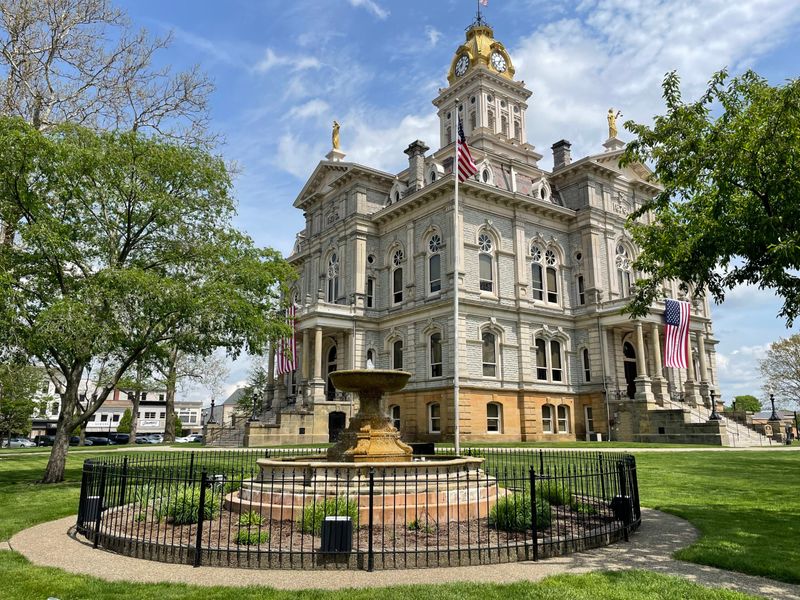
When you come upon this courthouse in Newark, the first impression is one of solidity and civic pride. The Licking County Courthouse presents itself with a commanding presence, combining classical order, a strong central mass, and historic detailing that gives it both dignity and visual warmth.
It feels exactly like the kind of building a prosperous Ohio county would have wanted at the center of public life.
That sense of permanence matters here. Courthouses were often designed to outlast fashion, and this one succeeds by leaning into timeless architectural language rather than temporary trends.
The form is clear, the materials feel substantial, and the overall effect is reassuring, which is probably part of why the building still communicates authority so naturally to modern visitors.
I think Newark benefits from having a courthouse that can hold its own against the city’s broader historical identity. Licking County has deep roots and a rich built environment, so a forgettable courthouse would vanish into the background.
Instead, this structure anchors the area with enough scale and character to become part of the conversation whenever you start noticing what makes central Ohio towns visually distinctive.
What surprises many visitors is how rewarding it is as an architectural stop, even if they arrived for other reasons. The courthouse offers the pleasure of symmetry, craftsmanship, and a setting that still allows it to be read clearly as a landmark.
In a state packed with historic public buildings, the Licking County Courthouse stands out by being confident, handsome, and deeply rooted in place – qualities that make it easy to admire and difficult to dismiss as just another county office.
9. Ross County Courthouse, Chillicothe
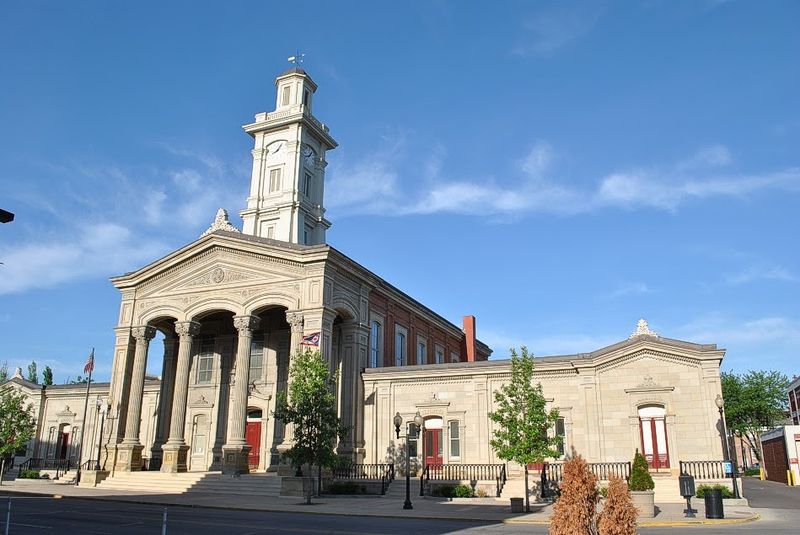
Because Chillicothe was once Ohio’s capital, expectations are already a little higher here, and this courthouse meets them with ease. The Ross County Courthouse brings together historical significance and architectural presence in a way that feels fitting for one of the state’s most important early communities.
It stands with a confidence that suggests the surrounding streets have been watching civic life unfold for a very long time.
What makes the building especially compelling is the way it connects county identity to larger state history. In a place so closely tied to Ohio’s beginnings, the courthouse does more than serve a local function – it reinforces the sense that Chillicothe remains a serious historic destination.
The proportions, materials, and formal design all contribute to that impression, helping the building feel rooted rather than merely old.
I appreciate that it does not need excessive ornament to make an impact. Instead, the courthouse relies on clarity, placement, and historical atmosphere, which can be just as effective as elaborate decoration.
Around the square, it becomes part of a broader visual experience that includes older streetscapes, civic memory, and the kind of layered setting that makes history feel present rather than remote.
If you are touring Ohio for architecture, this courthouse deserves more attention than it often gets. It may not always be the first Ross County landmark people mention, but it contributes powerfully to the city’s character and sense of importance.
The result is a courthouse that feels dignified, historically resonant, and more impressive than expected – especially once you understand how naturally it belongs to one of Ohio’s oldest and most meaningful places.
10. Highland County Courthouse, Hillsboro
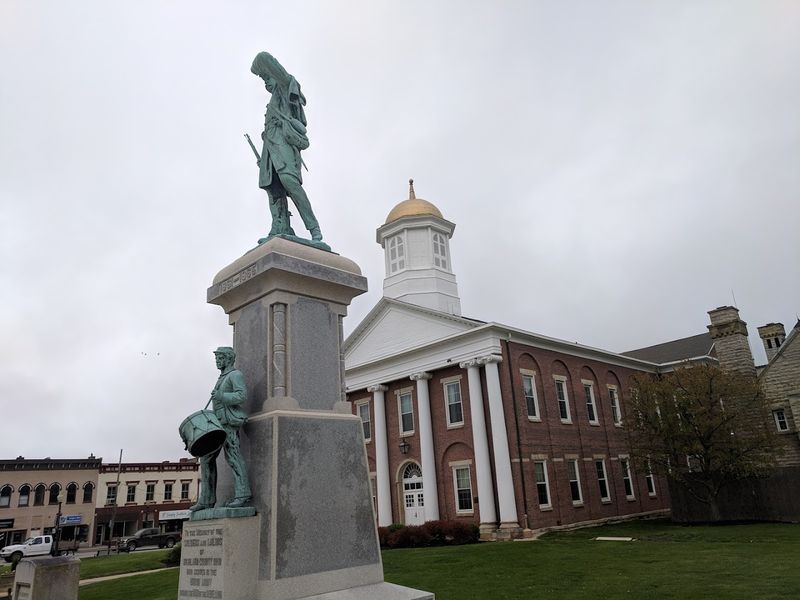
In Hillsboro, this courthouse manages to feel both commanding and deeply local, which is not always an easy combination. The Highland County Courthouse stands at the center of town with the kind of architectural confidence that immediately signals importance, using historic detailing, a memorable profile, and a prominent position to shape the identity of the square around it.
It is the building that tells you where the heart of the community is.
What makes it more impressive than you might expect is its ability to elevate the whole setting. A strong courthouse can transform an ordinary downtown into a place with visual drama and historical weight, and that is exactly what happens here.
The building’s materials, proportions, and carefully designed facade help create a scene that feels recognizably Midwestern and distinctly Ohio at the same time.
I find these smaller-city courthouses especially rewarding because they often preserve the relationship between public architecture and everyday life better than larger urban centers do. In Hillsboro, the courthouse still reads as the symbolic and visual anchor of the county seat.
That continuity gives it more emotional force than a beautiful building disconnected from its surroundings would have.
It also reminds you that architectural ambition was once spread widely across Ohio, not concentrated only in major cities. Communities like Hillsboro wanted landmarks that conveyed stability, seriousness, and pride, and the Highland County Courthouse still carries that message well.
If you enjoy places that reveal themselves slowly, this courthouse is a great example – striking at first glance, then increasingly satisfying as you notice how much character and history it contributes to the town around it.
11. Fayette County Courthouse, Washington Court House
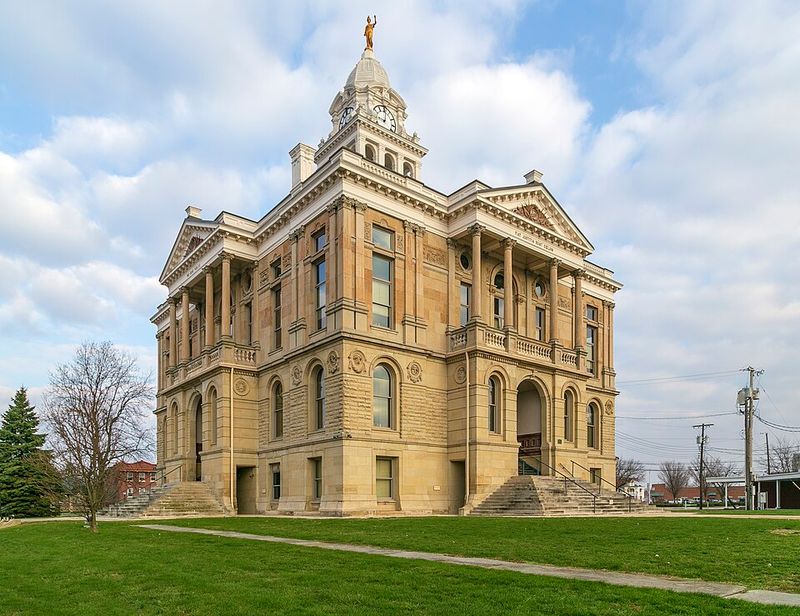
The name of the town already hints at how central civic life has always been here, and the courthouse fully lives up to that expectation. The Fayette County Courthouse in Washington Court House stands as the visual and symbolic center of the community, with a formal design, balanced massing, and enough historic character to make the entire downtown feel more rooted and complete.
It is difficult to imagine the town without it.
One reason this building lands so well is that it feels perfectly scaled to its surroundings. Rather than overpowering the square, it commands it with confidence, giving nearby streets and storefronts a strong focal point.
The architecture communicates seriousness and permanence, yet there is also an inviting quality to the composition that makes the courthouse feel like part of everyday local life, not separate from it.
I think that connection is why the building exceeds expectations. In many places, courthouses are visually isolated or overshadowed by later development, but here the relationship between the courthouse and the town remains legible.
You can still read the original civic logic of the place, which turns a simple visit into a lesson in how Ohio communities were designed to function socially as well as administratively.
For travelers exploring beyond the state’s biggest destinations, this courthouse offers exactly the kind of surprise that makes a road trip memorable. It is handsome, historically grounded, and deeply tied to its setting in a way that feels increasingly rare.
The Fayette County Courthouse proves that a smaller county seat can deliver architecture with real grace and authority, and sometimes that quiet confidence leaves a stronger impression than buildings that try much harder to demand attention.
12. Guernsey County Courthouse, Cambridge
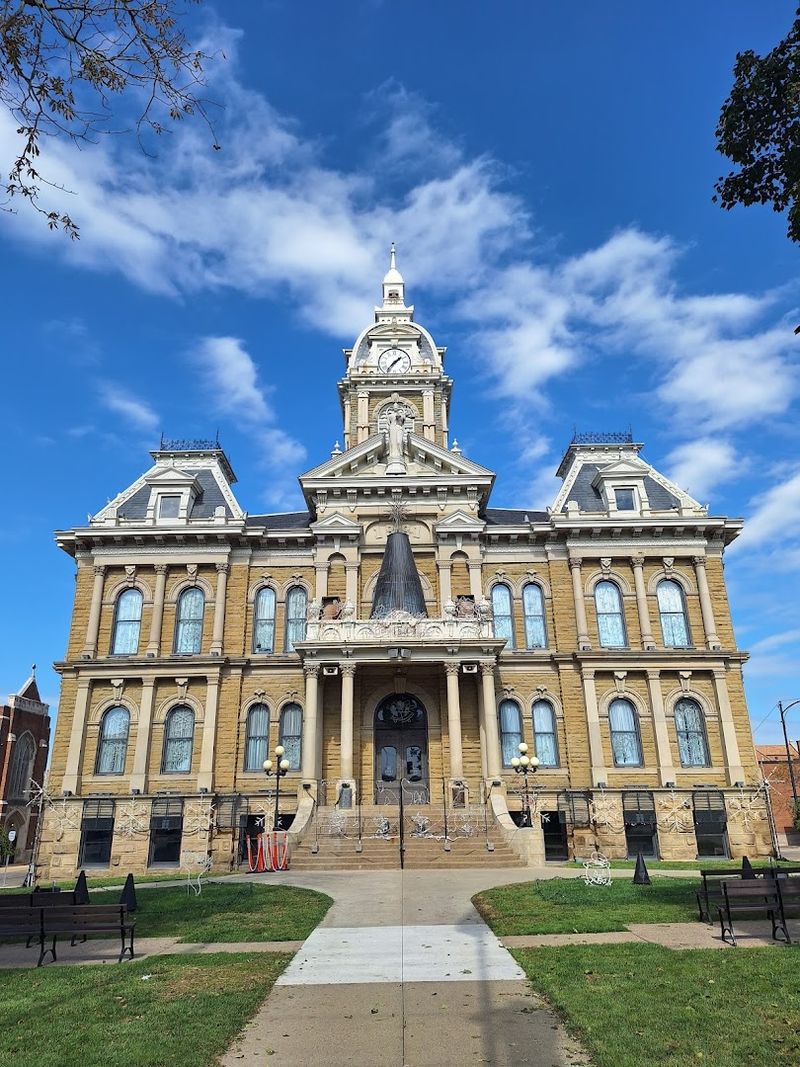
There is something instantly satisfying about a courthouse that looks exactly like the centerpiece of a historic Ohio county seat, and this one does. The Guernsey County Courthouse in Cambridge has an assured presence, combining a prominent dome, substantial masonry, and a strong civic silhouette that gives the town an unmistakable focal point.
It catches your eye quickly, then keeps it as more details come into focus.
Cambridge already has charm, but the courthouse raises the stakes. Its architecture contributes a sense of permanence and public ambition that helps explain how important county seats once were in shaping local identity.
The building’s classic composition and carefully worked exterior make it feel ceremonial without becoming stiff, which is part of why it remains so appealing today.
I also think location matters here more than people expect. In southeastern Ohio, where the landscape and town patterns can feel a little more intimate and varied, a courthouse with this level of authority stands out even more strongly.
It becomes both a visual marker and a kind of historical shorthand, telling you that this was a place where civic image and regional stature genuinely mattered.
That is why it belongs on a list like this. You might come to Cambridge for roadside nostalgia, Appalachian foothill scenery, or a broader Ohio road trip, only to discover that the courthouse is one of the most impressive structures in town.
The Guernsey County Courthouse succeeds by being handsome, durable, and unmistakably proud of its role, which is exactly what great historic public architecture should do if it wants to surprise people more than a century later.
13. Washington County Courthouse, Marietta
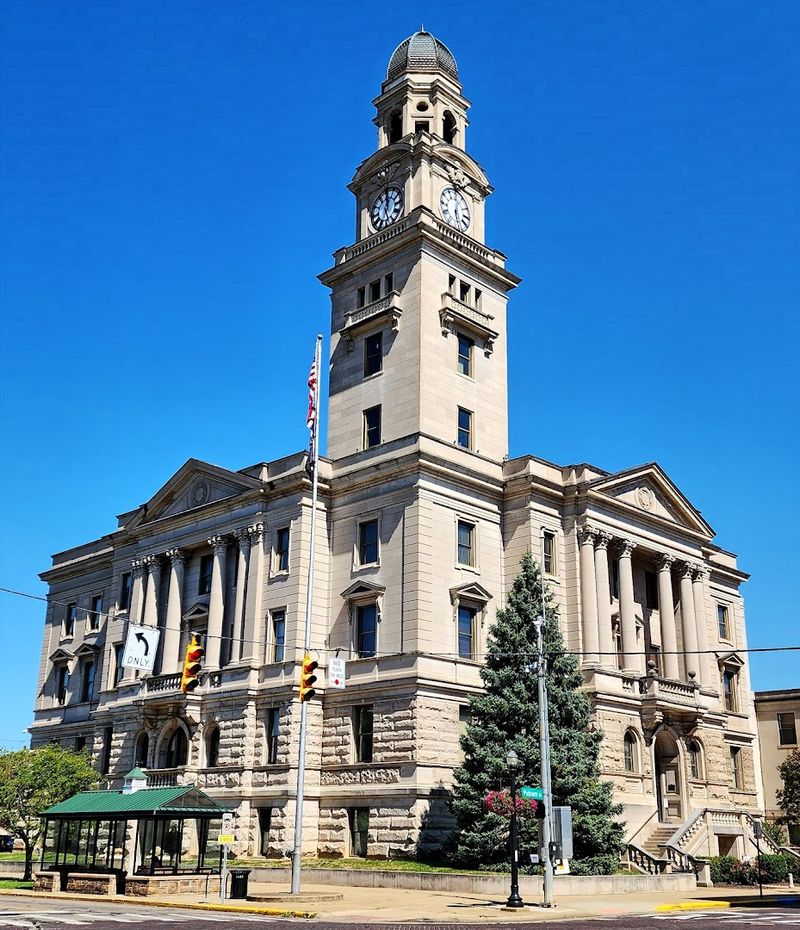
Ending in Marietta feels right because few places in Ohio blend history and atmosphere as naturally as this river city. The Washington County Courthouse fits that setting beautifully, standing with a dignified presence that reflects the importance of one of Ohio’s oldest communities.
It is not just a public building here – it is part of a landscape shaped by early settlement, commerce, and long civic memory.
What makes the courthouse so effective is its relationship to place. Marietta’s historic character is already strong, so any major civic building has to contribute to that identity rather than compete with it.
This courthouse does exactly that, using traditional architectural language, solid materials, and a prominent yet harmonious profile to reinforce the town’s sense of continuity and historical depth.
I love how the building seems to gather the surrounding streets into a coherent civic scene. In a community with deep roots along the Ohio River, that matters.
The courthouse helps translate abstract history into something visible and walkable, reminding you that Ohio’s story was shaped not only in capitals and industrial centers, but also in older regional hubs where public buildings carried enormous symbolic weight.
More than anything, this courthouse impresses because it feels inseparable from Marietta itself. You do not admire it in isolation – you admire it as part of a townscape that still preserves a strong sense of origin and purpose.
That makes the Washington County Courthouse a fitting finale for this list: graceful, grounded, and unexpectedly memorable, with the kind of historic presence that lingers long after you leave southeastern Ohio behind.
Share this story