Just before you officially roll into Ocean City, somewhere between the bridge traffic, the salt air, and the quiet mental debate over whether you’re stopping for Johnson’s Popcorn first or heading straight to the beach, there’s a sudden commotion in the trees. White wings flash over the marsh.
Long-legged birds balance on branches like they’re auditioning for a very dramatic ballet. Cameras appear. Binoculars rise. Somebody always whispers, “Wait, are those all nests?” They are.
The rookery at the Ocean City Welcome and Information Center, tucked along the Route 52 Causeway at 300 W. 9th Street, is one of those classic Jersey Shore surprises hiding in plain sight. It is not a sprawling preserve with a long hike or a dusty trail map.
It is a quick stop by the bridge where summer suddenly feels wilder, louder, and a whole lot more interesting.
Why June Is the Best Time to Visit Ocean City’s Rookery
By June, the Ocean City rookery has moved past the polite early-season stage. The birds are not just arriving anymore.
They are building, guarding, feeding, squawking, flapping, fussing, and generally running the place like a crowded shore house with too many relatives and not enough bathrooms. Nesting season begins earlier in spring, but June is when the rookery tends to hit that sweet spot between high activity and easy visibility.
The trees are full, the chicks are more noticeable, and the adult birds are constantly coming and going with the kind of urgency that makes even a casual visitor stop mid-sentence. This is also when the scene feels especially alive for photographers.
You are not waiting twenty minutes for one bird to do something. You are deciding which little drama to follow first.
A great egret may be rearranging sticks with surgeon-level concentration. A black-crowned night-heron may be tucked into the greenery like it knows it has better camouflage than everyone else.
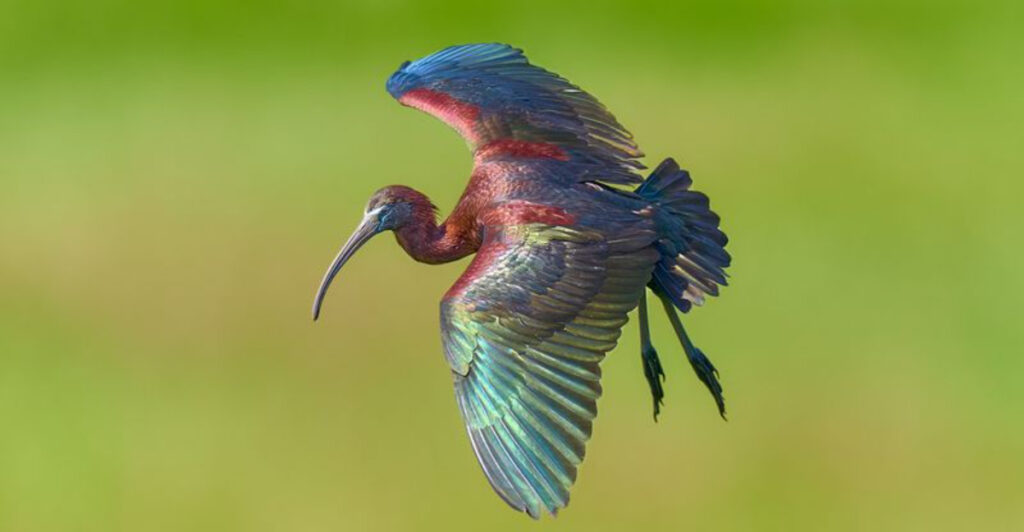
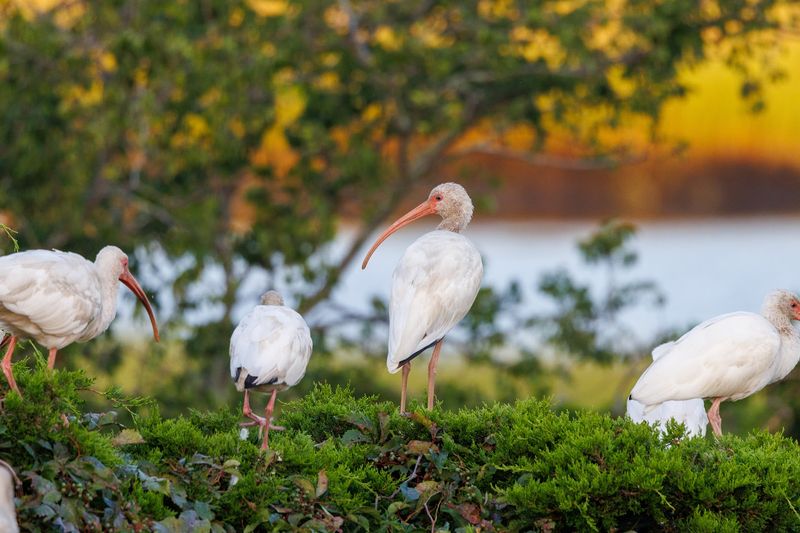
White ibis and glossy ibis may pass through the frame with curved bills and a businesslike strut. The timing also works beautifully for summer visitors because the rookery sits right where many people already enter town, on the causeway from Somers Point into Ocean City.
You can spend ten minutes there before checking into a rental, or you can accidentally lose an hour because the birds keep doing ridiculous, photogenic things. June light can be bright and unforgiving by midday, so morning is usually kinder to both your camera and your patience.
Late morning can still be good, especially from the raised viewing area, but bring a hat, water, and a little tolerance for gnats. The birds are the main event, but the marsh gets a vote too.
The Raised Walkway That Puts You Right Near the Action
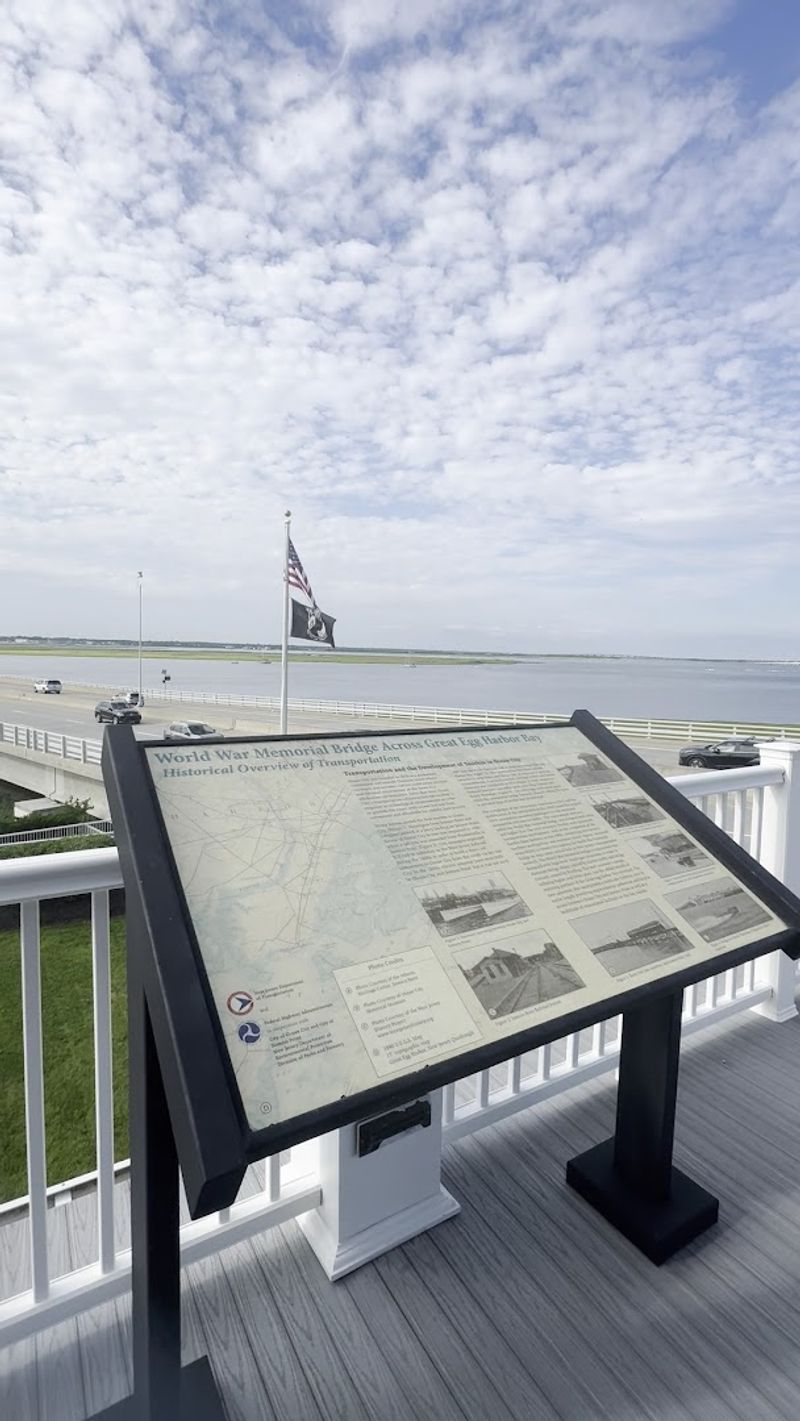
The first funny thing about the Ocean City rookery is how little effort it asks of you. A lot of birding spots require a decent walk, muddy shoes, and at least one moment where you wonder whether you should have worn different pants.
Here, you can pull into the paved parking area at the Welcome Center and be looking into the colony almost immediately. That accessibility is a big part of what makes this place feel so special.
The upper viewing level gives you a railing, an elevated angle, and unusually close views of birds nesting in the trees below and across from you. It is not a zoo, and it does not feel staged, but it does feel oddly generous, like nature decided to put the good seats right next to the parking lot.
There is also a lower viewing area reached by stairs and a ramp, plus a short walk under the bridge that gives the rookery a different personality. From above, you see the colony as a busy whole, with wings crossing in every direction and nests tucked into the greenery.
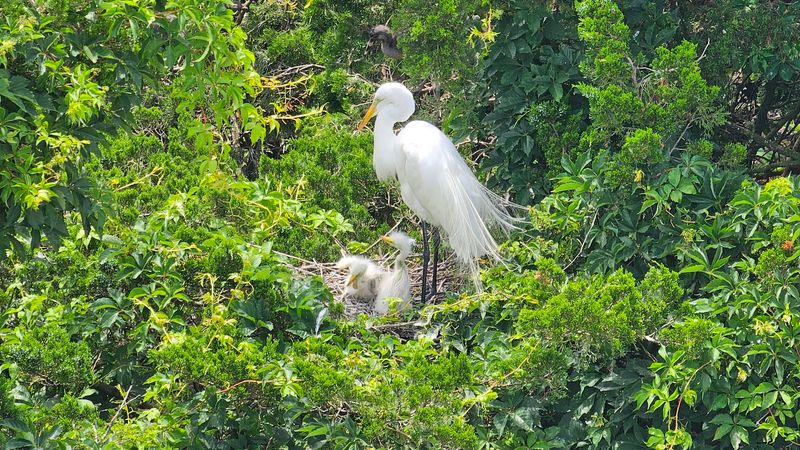
From below, you catch smaller moments: a bird shifting its feet on a branch, a chick poking its head up, a parent landing with a stick that looks way too large for the job. The Welcome Center itself is useful in the very practical Jersey Shore way, too.
Restrooms are inside when the building is open, and the Chamber of Commerce information center is listed with regular daytime hours, typically weekdays from 9 a.m. to 4:30 p.m. and shorter weekend and holiday hours.
Even when you only came in for a map, beach tag information, or a quick break from bridge traffic, the rookery has a way of stealing the errand.
Herons, Egrets, and Ibises Turn the Trees Into a Living Nursery
There are bird sanctuaries where you need a patient guide to help you understand what you are seeing. Ocean City’s rookery is friendlier than that.
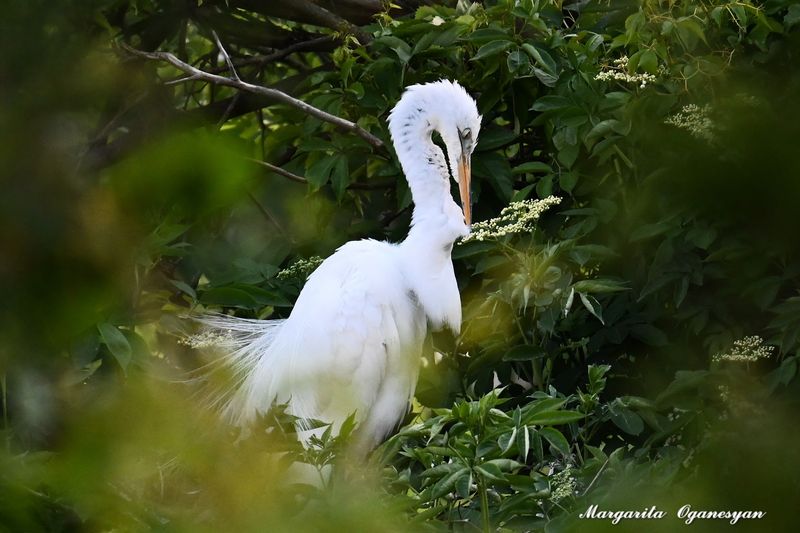
Even if you do not know a snowy egret from a great egret when you arrive, the differences start to jump out after a few minutes. Great egrets are the tall, elegant ones with long S-shaped necks, black legs, and yellow bills, looking like they know exactly how good they look.
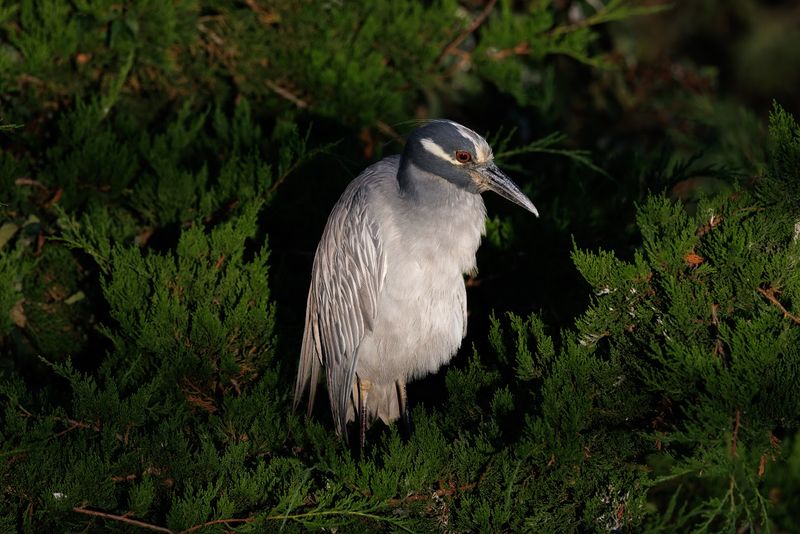
Snowy egrets are smaller and flashier in their own way, with black legs, bright yellow feet, and a sharper little attitude. Black-crowned night-herons can look almost grumpy, which only makes them more charming, while yellow-crowned night-herons have a more refined, slightly mysterious face.
Little blue herons, glossy ibis, and white ibis add more layers to the scene, and in nesting season all of them seem to be involved in some kind of neighborhood business. That is what makes the rookery feel less like a pretty overlook and more like a living nursery.
Birds are not simply perching for your camera. They are pairing up, arranging nests, protecting space, feeding young, and bickering with neighbors.
It gets noisy. It gets messy. It sometimes smells exactly like a place where a lot of large birds have decided to live very close together. That honesty is part of the experience.
This is not a sanitized nature moment; it is a working colony. The trees become a stacked apartment complex of nests, wings, bills, and bright white bodies against green leaves.
For kids, it is often more exciting than a quiet trail because something is always happening. For adults, it has the same effect.
You may arrive thinking you will take one photo and move on. Then a chick stretches its neck out of a nest, an egret lands like a paper airplane with legs, and suddenly your beach plans have been respectfully delayed.
What Makes This Small Sanctuary Such a Big Deal for Photographers
Photographers love the Ocean City rookery because it solves one of wildlife photography’s biggest problems: distance. Usually, nesting birds are too far away, too hidden, or too sensitive to approach.
Here, the viewing areas put visitors close enough to observe real behavior while still keeping people out of the colony itself. That means you can capture more than a white dot in a green tree.
You can get eye contact, nesting material in a bill, wings half-open during a landing, or the chaotic little moment when a chick demands food with the confidence of a boardwalk seagull near a French fry cup.
A telephoto lens is still useful, especially something in the 200mm to 600mm range, but this is not a place where only the person with the most expensive gear gets to have fun.
A phone can catch decent wide shots of the rookery and marsh. A compact camera can do better than you might expect.
A beginner with a modest zoom can practice timing, focus, and composition without hiking three miles or sitting in a blind all morning. The rookery also gives you options.
From the upper railing, you can shoot across at nests and flight paths. From the lower walkway, you can look for cleaner backgrounds, reflections, and birds moving through different layers of vegetation.
The best photos often come from patience rather than frantic clicking. Watch one nest for a few minutes.
Notice where the adults keep landing. Pay attention to repeated behavior.
A bird that flew out for sticks once may do it again, and the second time you will be ready. The only real challenge is restraint, because the rookery can make every branch look like a possible shot.
Bring extra memory, wipe salt haze from your lens, and accept that at least one bird will do something spectacular the second you lower your camera.
How to Watch Nesting Birds Without Disturbing Them
The easiest rule at the rookery is also the most important one: let the birds keep being birds. The whole reason this spot works is that people have good views from designated areas without needing to push closer, climb around, or treat the colony like a photo studio.
Stay on the walkways and viewing areas, keep your voice reasonable, and do not try to get a bird’s attention for a better picture. No clapping, whistling, tossing food, shaking branches, or making strange noises because someone on social media told you it works.
Nesting season is hard work. Adult birds are spending their days protecting eggs or chicks, finding food, and defending tiny pieces of real estate from neighbors who may be only a few feet away.
Stressing them for a cleaner photo is a bad trade. Flash is another thing to skip, especially around nesting birds and chicks.
Natural light is more than enough here, and the birds do not need surprise bursts of light in the middle of their nursery. If you bring children, this is a great place to teach the “quiet detective” version of wildlife watching.
Ask them to spot yellow feet, red legs, curved bills, or nests hidden deep in the branches. It turns good behavior into part of the fun instead of a lecture.
You also want to be courteous to other visitors. The railing can get busy when bird activity is high, and not everyone needs one person’s tripod claiming the prime view for half an afternoon.
Take your photos, shift around, share the sightlines, and remember that some people are seeing this for the first time. There is plenty to go around.
The rookery is generous, but it is still fragile, and the best visits are the ones where the birds barely notice you were there.
Why This Easy Shore Stop Belongs on Every New Jersey Nature Lover’s List

Ocean City is usually associated with boardwalk pizza, beach days, mini golf, and the particular joy of sandy flip-flops slapping against pavement at the end of a long afternoon. That is all part of the town’s charm, but the rookery shows a different side of the island before you even reach the downtown blocks.
It reminds you that the Jersey Shore is not just a vacation backdrop. It is marsh, bay, tide, migration, nesting habitat, and constant movement.
The location makes that lesson wonderfully convenient. You do not need to plan a full nature expedition or convince everyone in the car to sacrifice a beach day.
The rookery can be a 15-minute stop on the way into town, a morning camera outing before the sun gets too high, or a quiet reset after a crowded boardwalk night.
It is also close enough to classic Ocean City routines that you can pair it with whatever your group already likes: breakfast on Asbury Avenue, a walk on the Boardwalk, a stop for donuts, or a slow drive back over the bridge toward Somers Point.
What makes it linger in your memory, though, is the contrast. One minute you are dealing with traffic and shore logistics.
The next, you are watching a great egret glide in over the marsh with nesting material trailing from its bill. There is no grand entrance, no dramatic sign announcing that you have arrived somewhere important.
The place simply reveals itself when you look over the railing. In a state full of loud summer traditions, this small rookery offers a different kind of spectacle, one built from wings, patience, and the busy, beautiful work of raising the next generation above the bay.
Share this story