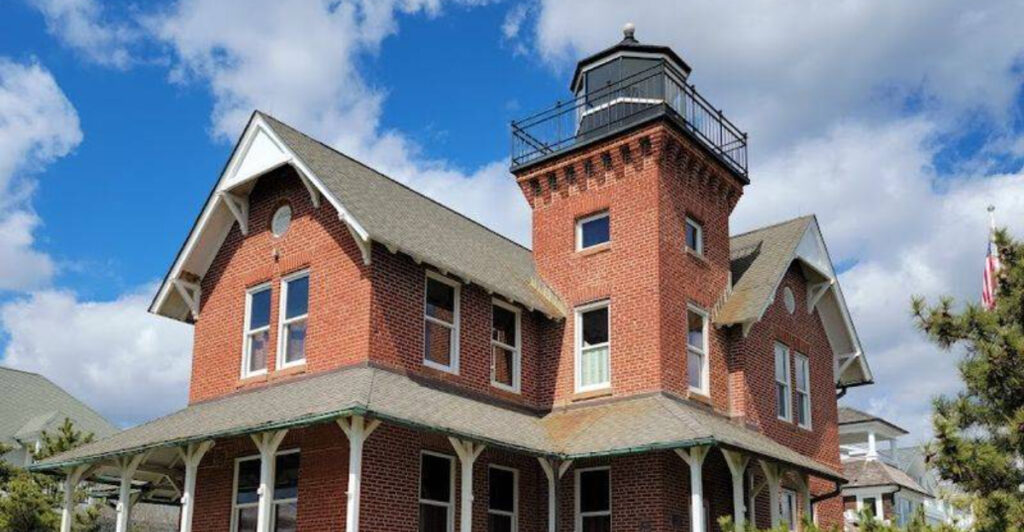
At the corner of Ocean Avenue and Beacon Boulevard in Sea Girt, there’s a red-brick Victorian house that looks like it belongs in a tidy shore-town postcard. White porch railings frame the front.
Gables peek over the roofline. The windows have that old-fashioned, lived-in look you expect from a grand seaside home.
Then your eyes climb a little higher, and there it is: a square lighthouse tower rising right out of the building like the house has been keeping a secret since the 1890s. That is the charm of Sea Girt Lighthouse.
It does not loom over the coast like Barnegat Lighthouse or command a bluff like Twin Lights in Highlands. It blends into the neighborhood, then quietly reveals one of the more unusual maritime stories on the Jersey Shore.
Built in 1896, it guided ships, housed keepers, served during wartime, and somehow still feels like someone might be waiting inside with tea.
The Sea Girt Lighthouse Looks More Like a Shore Home Than a Beacon
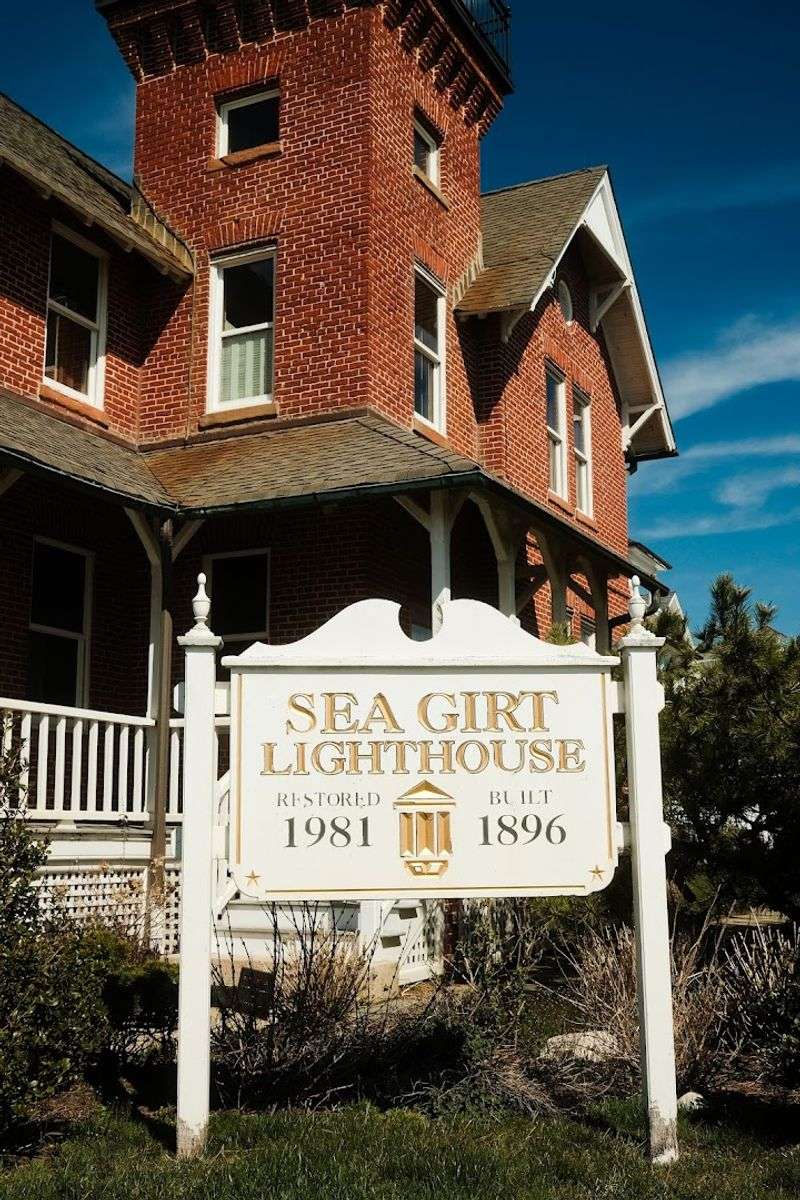
Most people picture a lighthouse as a tall, lonely tower with waves crashing somewhere below, but Sea Girt Lighthouse politely ignores that whole script. It sits right in town at 9 Ocean Avenue, surrounded by the polished calm Sea Girt is known for, with a lawn, porch posts, red brick, white trim, and enough Victorian personality to make you look twice before realizing what you are seeing.
The tower is the giveaway, of course, but it does not stand apart from the building like a separate monument. It rises from the house itself, which makes the whole place feel less like a dramatic coastal warning and more like a shore home with an important job upstairs.
That is exactly what makes the first look so fun. Barnegat Lighthouse has that classic tall-tower presence.
Sandy Hook Lighthouse feels sturdy and old in the way only the oldest operating lighthouse in the country can. Sea Girt has a different rhythm.
It is domestic, approachable, and a little sneaky. The lighthouse first flashed on December 10, 1896, when this stretch of coast needed better guidance for mariners traveling between Navesink and Barnegat.
Its beacon could be seen 15 miles out at sea, helping ships cross a section of shoreline that had long been too dark for comfort. It also served as a landmark near Sea Girt Inlet and Wreck Pond, two names that still root it firmly in local geography.
Nothing about the building feels accidental, even if it looks charming enough to be mistaken for a private home. The design was practical, the location was chosen for a reason, and the tower had real work to do.
Still, standing outside today, the lighthouse does not shout for attention. It lets you notice it slowly, which is half the fun.
Why Its L-Shaped Design Makes It So Unusual
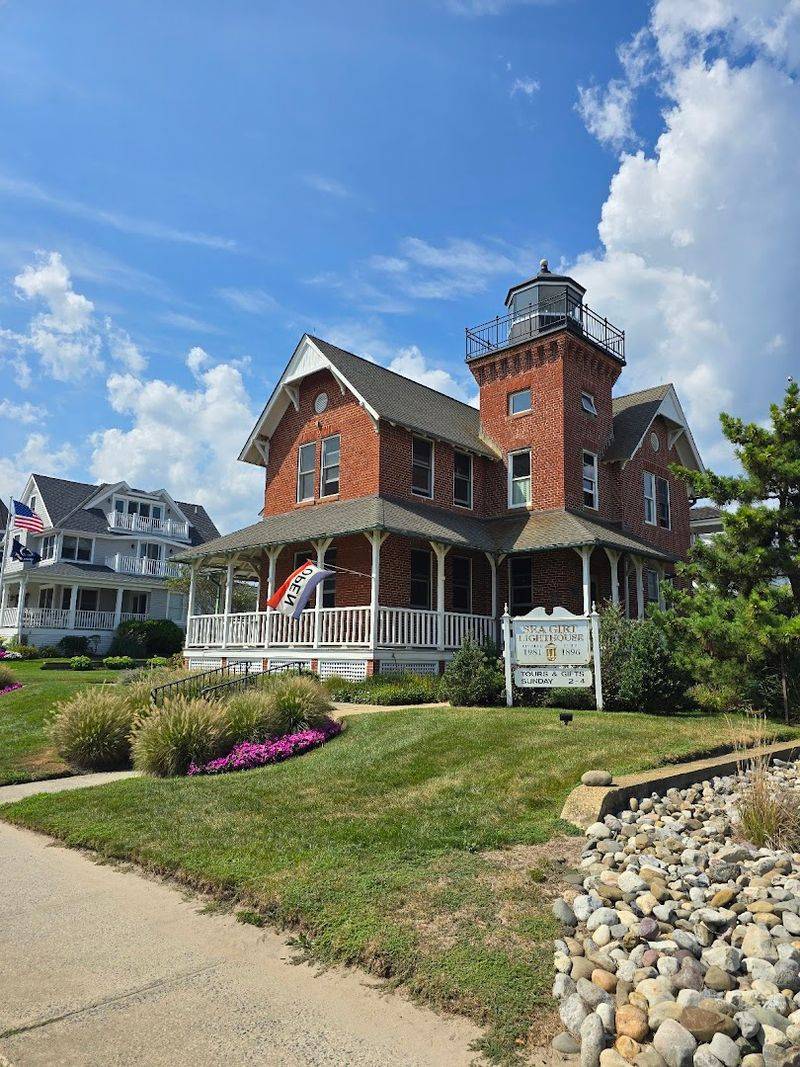
Here is the detail that separates Sea Girt Lighthouse from the pack: the building is L-shaped, and that unusual footprint is not just an architectural flourish. It reflects the way the lighthouse was meant to function.
Instead of a detached tower with a keeper’s house nearby, Sea Girt was built as one connected live-in structure, with the light tower integrated directly into the residence. That is why it can look like a Victorian home from one angle and a working lighthouse from another.
The job and the household were stitched together under the same roof. For the keeper, that meant the beacon was not across a yard, down a path, or in a separate tower getting battered by the wind.
It was part of the home. The lighthouse is known as the last live-in lighthouse built on the Atlantic Coast, which gives its quirky shape some real historical weight.
By the late 19th century, lighthouse design was already changing, and Sea Girt arrived near the end of an era when a keeper’s family life and professional duty could be so physically connected. The tower rises 44 feet, modest compared with New Jersey’s taller lights, but it did not need to be enormous.
Its purpose was to fill a blind spot in the 38½-mile stretch between Twin Lights to the north and Barnegat Lighthouse to the south. The L-shape also gives the site its strange visual charm.
From the street, the porch and gables soften the view. From the side, the tower becomes more assertive.
Walk around the property and the building keeps changing personalities, which is rare for a lighthouse. It does not look confused.
It looks clever. It is not pretending to be a house, because it genuinely was one.
It is not pretending to be a lighthouse either, because it guided mariners for decades. That double identity is the whole secret hiding in plain sight.
How This Live-In Lighthouse Kept Keepers Close to the Light
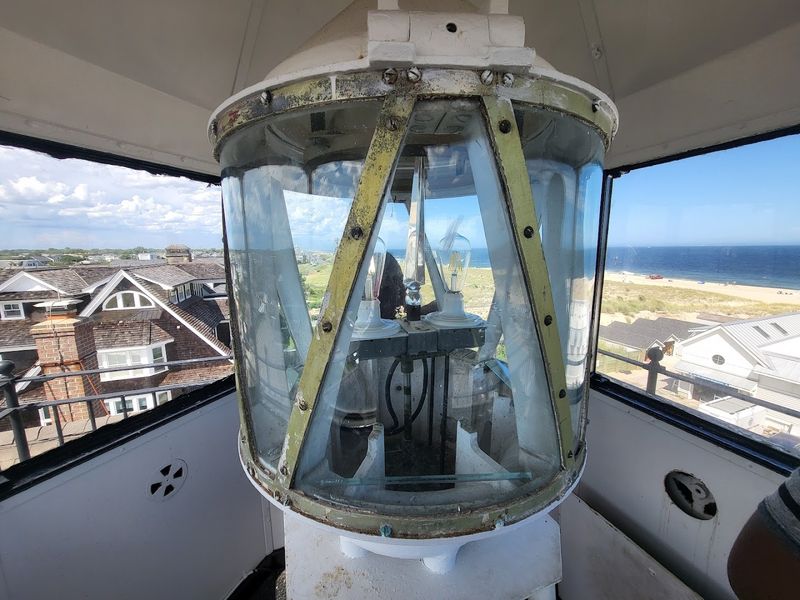
Picture a winter night in Sea Girt before the town filled with summer walkers and beach badges, with the Atlantic wind pushing against the brick walls and the keeper responsible for a light sailors were counting on offshore. This was not a job where someone simply flipped a switch and went back to dinner.
In the early years, the lamp, lens, and clockwork mechanism all required care. The light had to be fueled.
The machinery had to be wound. The equipment had to keep moving properly through fog, storms, freezing nights, and all the ordinary interruptions of family life.
The first keeper, Major Abraham Wolf, brings a wonderfully specific human note to the story. By the end of his service, he was in his early 70s and was considered the oldest active lighthouse keeper in the U.S.
Lighthouse Service. He had also lived a remarkable life before Sea Girt, including service connected to the Civil War.
The keepers who followed added their own chapters, including Harriet Yates, who served as acting keeper for two months after her husband, Abram Yates, died in 1910. Her story matters because lighthouse work was often family work, even when official titles did not always capture the full picture.
The building’s live-in design made that impossible to miss. Children, spouses, meals, repairs, sleepless nights, and maritime duty all shared the same walls.
During World War II, Sea Girt Lighthouse shifted from guiding mariners to guarding the coast. The beacon was extinguished so it would not help enemy vessels, and the Coast Guard took over the station.
As many as 15 Coast Guardsmen were stationed there, sleeping in bunks and watching from the tower while patrols searched the beaches for possible threats. That wartime chapter adds steel to a place that can look deceptively gentle from the sidewalk.
Sea Girt Lighthouse was charming, yes, but it was never just decorative. It was a home, a workplace, a lookout, and a coastal safeguard, all packed into one unusual red-brick building.
The Victorian Details That Make It Feel Surprisingly Cozy
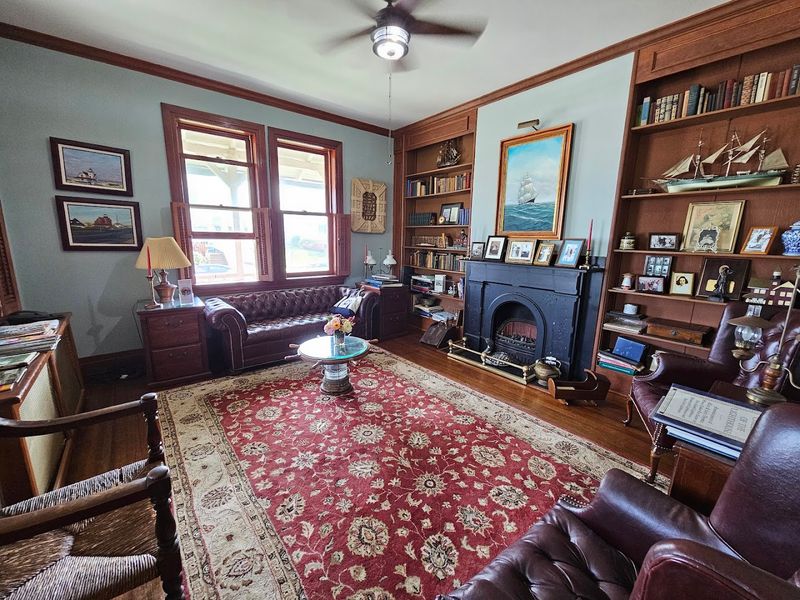
The porch gives the game away before the tower does. White railings wrap around the red-brick exterior, softening the whole building and making it feel more like a neighbor’s well-kept historic home than a federal light station.
Add the decorative gables, tall windows, neat trim, and compact lawn, and the lighthouse starts to feel unusually personal before you even step inside. That feeling continues because the interior is not just a climb-and-look-at-the-view experience.
Visitors move through rooms that supported daily life, including the keeper’s office, parlor, upstairs spaces, and lantern room. The parlor is especially important because it pulls the story away from machinery and back toward people.
Photos of the families who lived there are displayed, along with artifacts tied to the U.S. Lighthouse Service, Coast Guard years, local Sea Girt history, and the keepers who made the building run.
This is where the lighthouse’s charm becomes more than surface-level prettiness. You can understand it as a home, not just a historic object.
The building also had a very local second act after the federal government sold it to the Borough of Sea Girt in 1956 for $11,000. For more than two decades, it was used as a town library, community center, and recreation space.
That is the kind of reuse that could only make a place feel more woven into local life. By 1980, though, the building had become worn down and needed serious repairs.
Local residents formed the Sea Girt Lighthouse Citizens Committee, went looking for support, and took on the work of restoration and preservation. Their lease with the borough was set at $1 a year, which feels like one of those perfect small-town preservation details.
The result is a lighthouse that does not feel frozen or overly polished. It feels saved.
The brick, porch, parlor photos, keeper exhibits, and community history all work together to make it cozy in a specific way. It is not cozy because someone added charm later.
It is cozy because people actually lived, worked, gathered, repaired, and remembered here.
The Fresnel Lens and Maritime Technology Behind the Charm
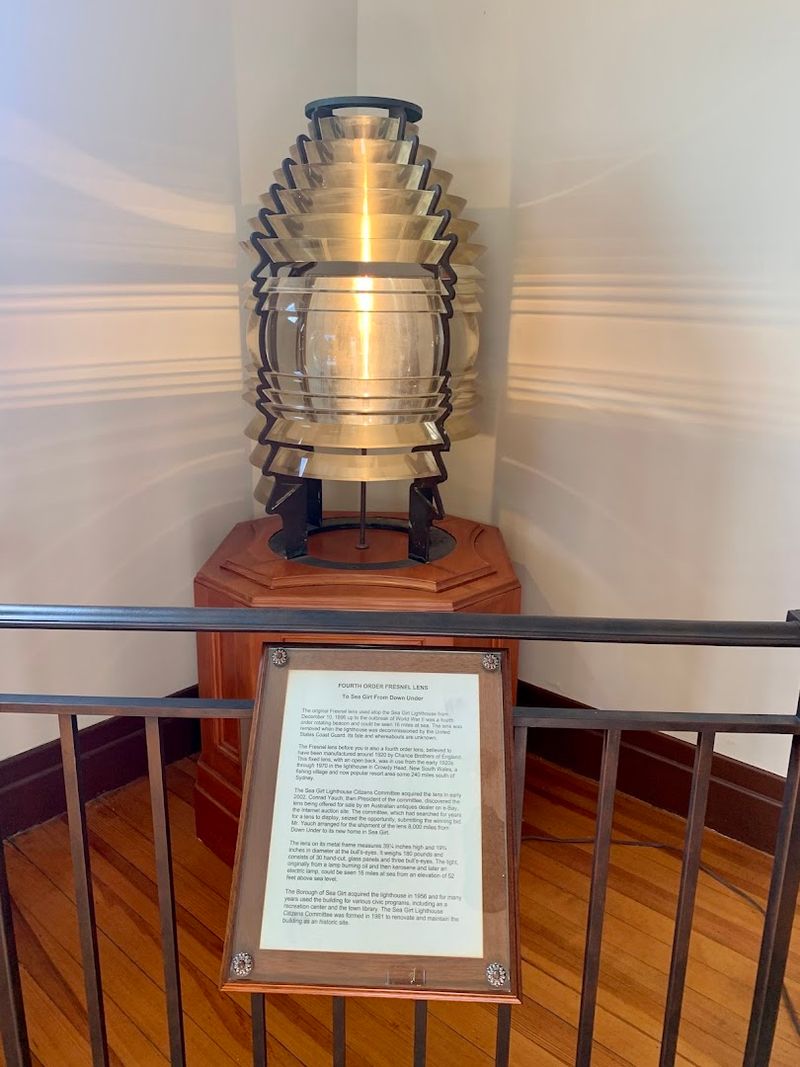
A pretty Victorian exterior can make Sea Girt Lighthouse seem sweet and simple, but the technology behind it was anything but casual. When the lighthouse first went into service, it used a fourth-order Fresnel lens, a carefully engineered optical device about 30 inches high.
A Fresnel lens is not just a fancy glass cover. It uses prisms to gather and bend light so a relatively small flame can be seen much farther away.
At Sea Girt, the lens revolved, creating the appearance of a flashing signal as the light passed through its bull’s-eye prisms. The original characteristic was a red flash lasting two seconds out of every six seconds, which helped mariners identify it from offshore.
Lighthouse signals needed that kind of personality. A ship’s crew did not simply need to know a light existed. They needed to know which light they were seeing. The system had a satisfying old mechanical logic to it.
A weight dropped down a shaft, powering the lens as it turned on its pedestal. One winding could keep the light moving for hours, and the keeper’s job included making sure all of it worked as intended.
The lighthouse later changed with the times, moving from kerosene and oil-based systems to electrification in the 1920s. Then came one of Sea Girt’s most impressive technological claims.
In 1921, it became the first land-based light station equipped with a radio beacon navigation system. That meant ships could receive radio signals in poor visibility, using Sea Girt along with signals from Ambrose Channel and Fire Island lightships to help determine their position.
In plain local terms, Sea Girt helped mariners when they could not rely on their eyes. Fog, rain, and darkness made visible light less dependable, but radio signals could still give vessels a better sense of where they were.
That is a big story tucked inside a small-looking building. The lighthouse may resemble a Victorian shore home, but it also stood at the edge of a changing era in navigation.
Planning a Visit to This One-of-a-Kind Sea Girt Landmark
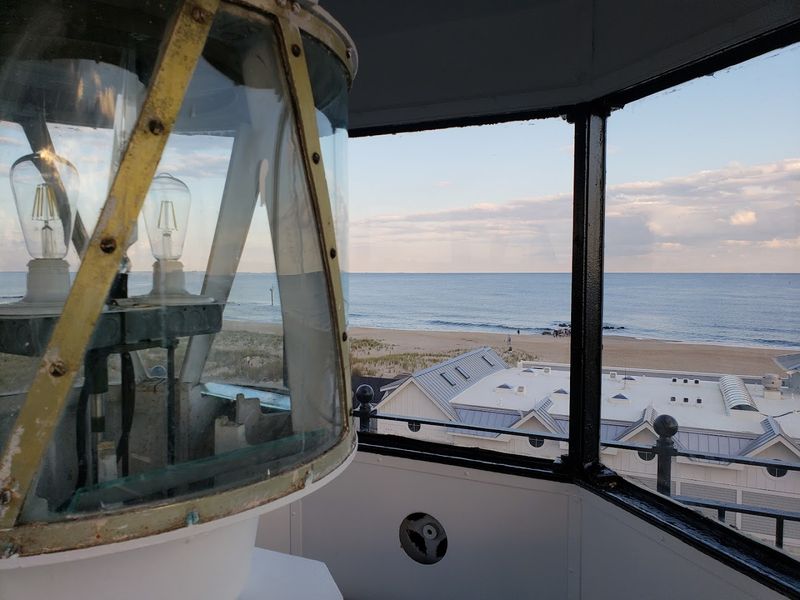
Sea Girt Lighthouse is easy to fold into a Shore afternoon because it sits right in town, close to the oceanfront and surrounded by the quiet residential feel that makes Sea Girt different from busier boardwalk towns.
The address is 9 Ocean Avenue, at Ocean Avenue and Beacon Boulevard, so it is not the kind of place you have to hunt for down a remote road.
In 2026, public tours are scheduled on Sundays from 2 p.m. to 4 p.m., running from April 12 through November 22, with closures listed for Mother’s Day, Memorial Day weekend, Father’s Day, Fourth of July weekend, and Labor Day weekend.
This is a volunteer-supported historic site rather than a big commercial attraction, so checking the current schedule before going is part of the deal.
Once inside, the tour route gives you a strong sense of how the building actually worked. Visitors enter through the keeper’s office, where a replica of the weight that powered the revolving Fresnel lens helps explain the old mechanism.
From there, the tour moves through the home, into the parlor, upstairs, and eventually to the lantern room. The exhibits cover the U.S.
Lighthouse Service, keeper families, Coast Guard years, the Morro Castle disaster, and older Sea Girt history. The Morro Castle material is especially memorable because that 1934 tragedy happened just offshore during a storm, and Sea Girt Lighthouse served as both a reference point and a first-aid station during the rescue effort.
Outside, take a minute to look at the building from more than one angle. From the front, the porch and brickwork make it feel residential.
From the side, the L-shaped design becomes clearer. From the lawn, the tower takes over again.
That shifting personality is exactly what makes the place worth noticing. It is small enough to visit without rearranging your whole day, but layered enough to stay with you after you leave Ocean Avenue behind.
Share this story