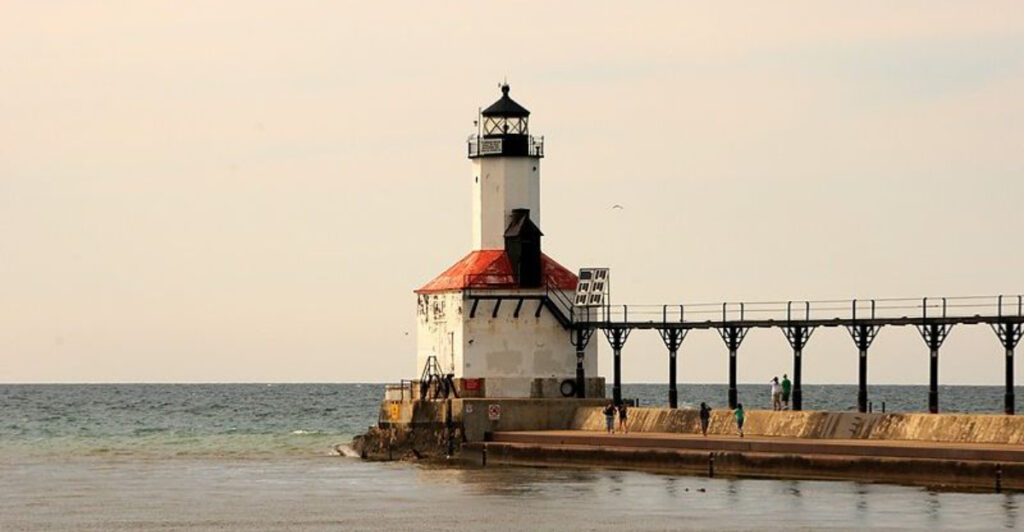
Indiana does not get enough credit for dramatic lakefront scenery, and this corner of Michigan City proves exactly why it should. At the end of a long pier, the Michigan City East Pierhead Lighthouse delivers the kind of clean, striking view that instantly slows your pace.
Add open water, giant shoreline boulders, and one of the most talked-about sunsets on Lake Michigan, and this simple walk turns into the main event. If you want a landmark that looks great in photos and still rewards the full experience in person, this is the one to know.
The Walk That Builds the Reveal
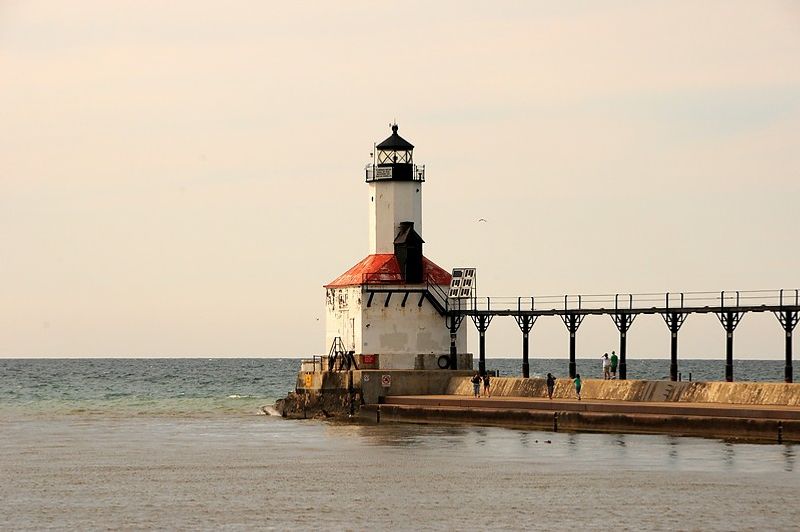
The approach is part of the appeal here. You do not pull up beside the lighthouse and call it done. You cross a long concrete pier with water opening wider on both sides, and that gradual walk gives the structure room to build anticipation.
At first, the tower reads as a crisp white shape at the end of a straight line. Then details start sharpening with every few steps – the red roof, the compact house-like form, the steel catwalk hovering above, the changing texture of the lake.
Even on a busy day, the layout creates a sense of forward motion, almost like the whole shoreline is pointing you outward.
That matters because the lighthouse works best as a destination, not a quick roadside glance. Along the way, you pass anglers casting into the lake, people pausing for pictures, and families moving between beach time and a pier stroll.
The scene feels active without losing its openness, and the steady breeze keeps everything from turning static. By the time you reach the end, the perspective has completely changed.
Looking back toward shore, the beach, harbor, and lakefront buildings line up in a broad sweep that makes the walk feel longer in the best way.
Looking ahead, the water dominates. The lighthouse is small compared with the horizon, yet it commands the whole setting because the route gives it a proper entrance.
A Small Lighthouse With Big Visual Power
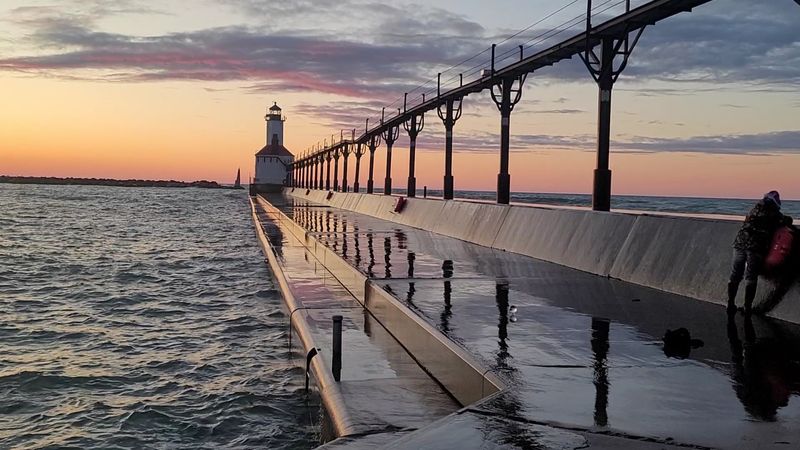
The lighthouse itself is not oversized, and that is exactly why it lands so well visually. It sits at the pierhead with a compact, practical silhouette, more workmanlike than grand, yet the proportions are unusually photogenic against open water.
The white exterior catches changing light beautifully, especially when the lake shifts from steel blue to silver to peach near sunset.
One of the most distinctive details is the elevated catwalk nearby. You cannot treat it like an attraction to climb, but as a design element it adds a strong industrial note that keeps the setting from becoming too polished.
The contrast between the tidy light tower and the tougher harbor infrastructure gives the place character. It reads as both historic landmark and functioning edge-of-the-lake structure.
There is also a pleasing tension between geometry and motion here. The lighthouse is all crisp angles and fixed purpose, while the water never stops changing.
Waves slap the rocks, gulls cut through the frame, fishing lines arc outward, and the whole background keeps moving around this small steady object. That visual tension is part of why photos from this spot look so sharp even without dramatic weather.
Visitors can walk all the way to the lighthouse at the end of the pier, although access is limited to the exterior. Up close, the structure rewards attention with its crisp white walls, distinctive red roof, and historic details set against the open waters of Lake Michigan.
While you cannot tour the interior, the close-up views and dramatic lakefront setting make the walk well worth it.
Why Indiana Sunsets Hit So Hard Here
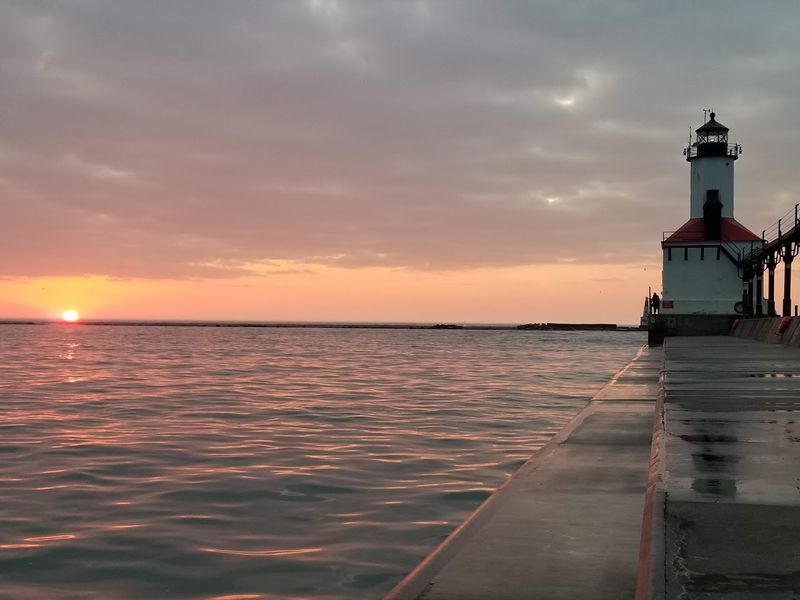
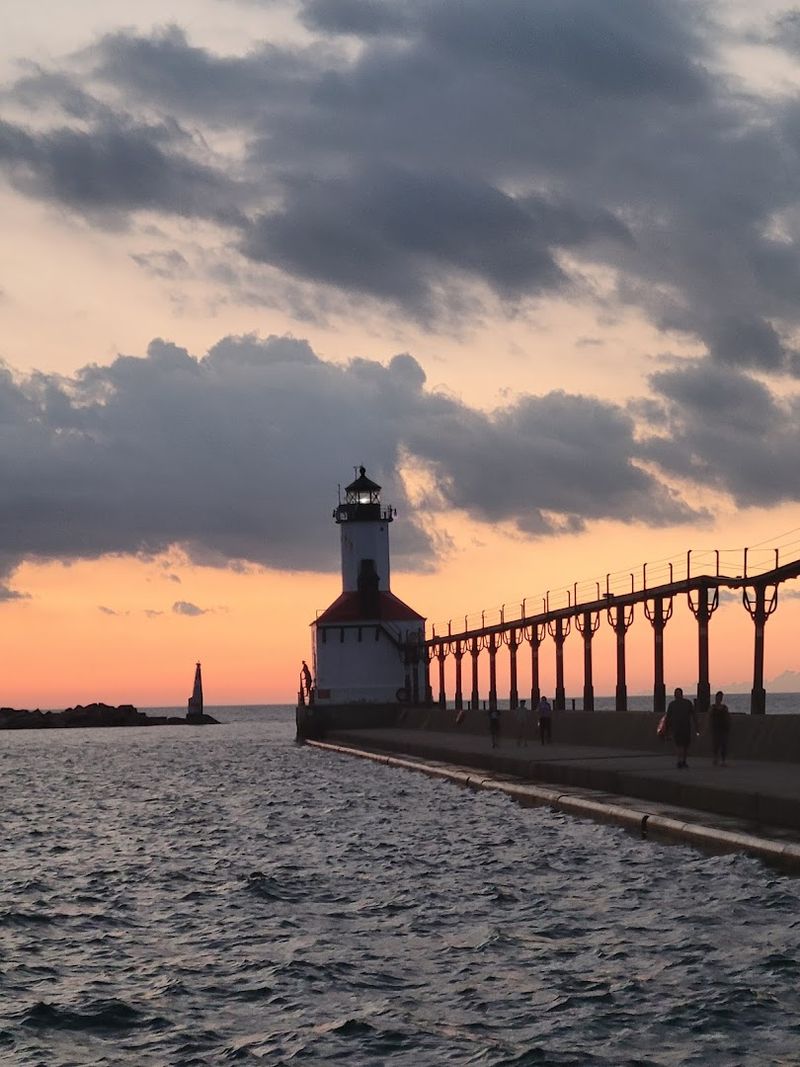
Sunset is when this pier shifts from solid daytime landmark to full performance. The western sky opens wide over Lake Michigan, and there is very little visual clutter to interrupt the color.
As the sun drops, the lighthouse becomes a clean focal point instead of competing with the view, which is why evening photos here tend to look far more dramatic than the modest scale might suggest.
The best part is how many layers show up at once. You have the straight line of the pier, the darkening water, the silhouette of anglers and walkers, and the bright sky doing most of the heavy lifting overhead.
On clear evenings, the horizon can stretch so far that distant skyline and shoreline details start to feel almost unreal. The scene stays legible even as the light gets softer.
There is also a practical reason sunset works so well here. You are not searching for a perfect angle through dense buildings, trees, or dune grass.
The pier presents the view directly, and the lighthouse gives your eye a visual anchor. That combination helps even casual phone photos come out with structure instead of looking like a flat wash of color over water.
After the sun slips below the horizon, the pier remains beautiful as the sky holds onto bands of pink, orange, and violet.
The lighthouse continues to stand out against the fading light, making the walk back just as memorable as the walk out. If your schedule allows one specific time to visit, late day into dusk is the clearest answer.
Rocks, Fishing Lines, and the Harbor Edge
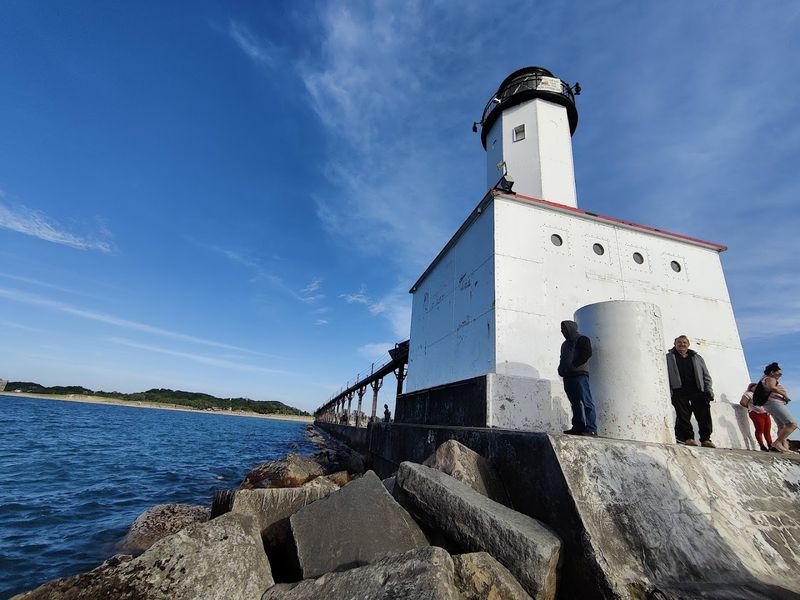
This spot is more textured than a simple lighthouse stop might suggest. Around the pierhead, large boulders stack up in rough formations that give the scene a tougher, more physical edge.
They break up the clean lines of the walkway and add a rugged foreground that looks especially good in photos when waves are moving through.
Fishing is part of the landscape too. Along stretches of the pier, rods, tackle, and patient stances become part of the visual rhythm, turning the walk into more than a sightseeing corridor.
That detail matters because it roots the place in daily use. You are seeing a shoreline that functions for locals and regulars, not just a polished viewpoint designed only for quick snapshots.
The harbor setting helps explain the atmosphere. This is not a remote, untouched coast where everything is soft and quiet.
It has movement, structure, and occasional mechanical notes in the distance. Boats, breakwater elements, concrete surfaces, and steel details give the lakefront a working character that feels specific to Michigan City rather than interchangeable with every other beach on the Great Lakes.
Even the narrow areas near the lighthouse add to that sense of edge. You can walk right up to the structure and move around parts of it, but the footing and spacing can get tighter than some people expect.
That little bit of constraint keeps the end of the pier interesting. Instead of a broad overlook platform, you get close quarters, rough stone, open water, and a front-row seat to the harbor meeting the lake.
The History You Can Read From the Outside
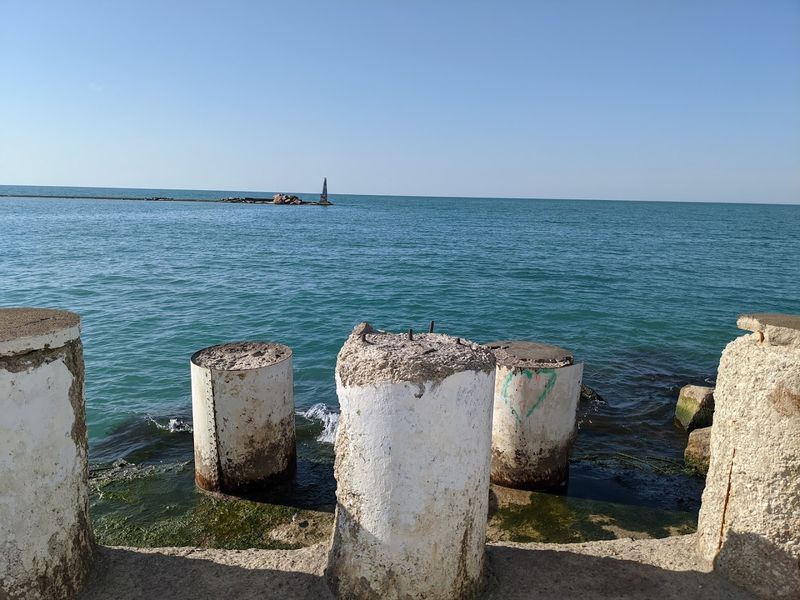
You do not need interior access to understand why this lighthouse matters. The structure communicates its purpose from the outside with unusual clarity: compact footprint, strategic placement, durable materials, and a direct relationship to the pier and harbor entrance.
It reads less like a decorative landmark and more like a piece of working navigation history that still defines the shoreline.
That distinction is important in a state where lighthouse imagery is not as culturally dominant as it is farther north along Lake Michigan. In Indiana, this tower carries extra symbolic weight simply because it stands out.
It gives Michigan City a lakefront icon that is instantly recognizable, and it links the beach experience to maritime infrastructure in a way a standard overlook never could.
The catwalk nearby deepens that historic character. Even when you are only viewing it from below or beside it, the metal framework suggests an earlier era of maintenance, access, and shoreline engineering.
It is an architectural detail with storytelling power. Instead of one neat lighthouse sitting alone, you see a fuller system built to handle weather, water, and harbor demands over time.
Because the building is closed, the experience stays external and observational, which actually suits the site. You are encouraged to notice shape, placement, and relationship to the lake rather than rushing through indoor exhibits.
That makes the setting more visual and less museum-like. The history here is read in profile, in hardware, in the pier’s alignment, and in the obvious fact that this little tower still defines the end of the walk.
How to Time Your Visit for the Best Experience
Timing changes this place more than first-time visitors may expect. Midday gives you the clearest look at the lighthouse and bright lake color, but it can flatten photos and increase glare off the concrete and water.
Early evening tends to be the sweet spot, when the light softens, the tower gains more definition, and the whole pier walk feels less exposed.
If you want space, aim for a weekday or shoulder season visit. Cooler days can still be beautiful here, and the lighthouse does not rely on hot beach weather to work.
In fact, crisp air and a choppier lake often sharpen the atmosphere. The site has enough openness that even a simple off-season walk can feel dramatic, provided you dress for wind coming off the water.
Practical expectations help too. Parking conditions and fees can vary by season or access point, so treat this as a beach-and-pier outing rather than a quick curbside stop.
The walk is straightforward, but the distance from parking to lighthouse is long enough that comfortable shoes make a difference. If you are bringing children or anyone with mobility concerns, remember that the area around the lighthouse narrows and gets less forgiving.
It also helps to decide what kind of visit you want before arriving. A sunset photo mission, a beach day with a lighthouse walk built in, and a casual after-lunch stroll all use the site differently.
The place handles each version well, but it rewards a little planning. Arrive with time to walk slowly, pause often, and let the pier do its work.
The Lake Michigan Finale That Outshines Expectations
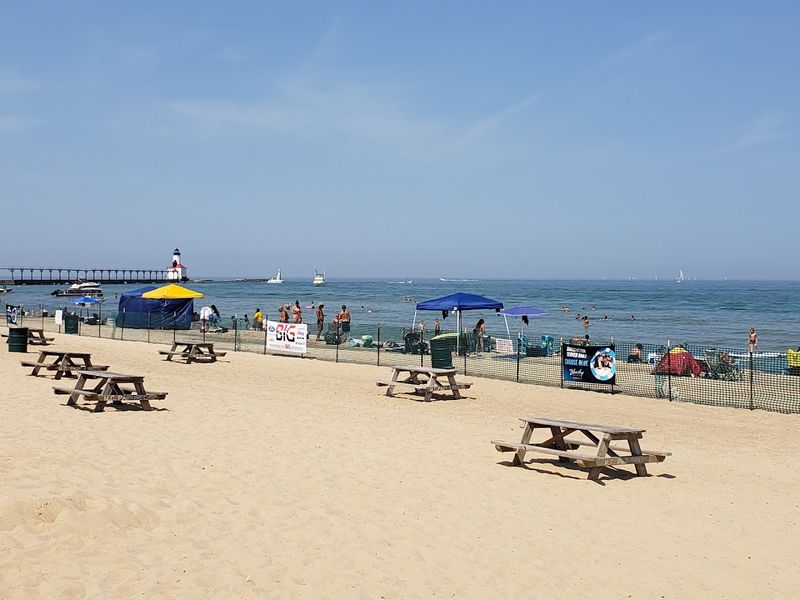
The strongest argument for this lighthouse is how much it delivers beyond the structure itself. You get a long pier walk, active fishing scenes, beach access, huge water views, rugged shoreline texture, and a clear sense of arrival when the lighthouse finally fills the frame.
Few quick lakefront stops combine so many elements without feeling crowded with distractions. There is also a satisfying sense of regional surprise.
Plenty of travelers do not associate Indiana with this kind of Great Lakes imagery, which makes the experience land harder once you are there.
On clear days, the distance can reveal far-off skyline hints and the broader lakefront context, reminding you that this is part of a much bigger shoreline story than many people expect from the state.
Just as important, the place does not need overblown claims to stand out. The lighthouse is not enormous. You cannot go inside. The pier is straightforward concrete, not some elaborate boardwalk.
Yet those plain facts are almost the point. The setting succeeds through clean composition, easy access, and the unusually effective pairing of a historic light tower with one of the best sunset stages in the area.
If you are choosing one Michigan City landmark that captures the local lakefront in a single experience, this is the obvious pick. It offers movement instead of a static overlook and structure instead of a formless beach horizon.
By the end of the walk, the lighthouse has done exactly what a memorable landmark should do: organize the scenery, sharpen your attention, and make the whole shoreline look bigger.