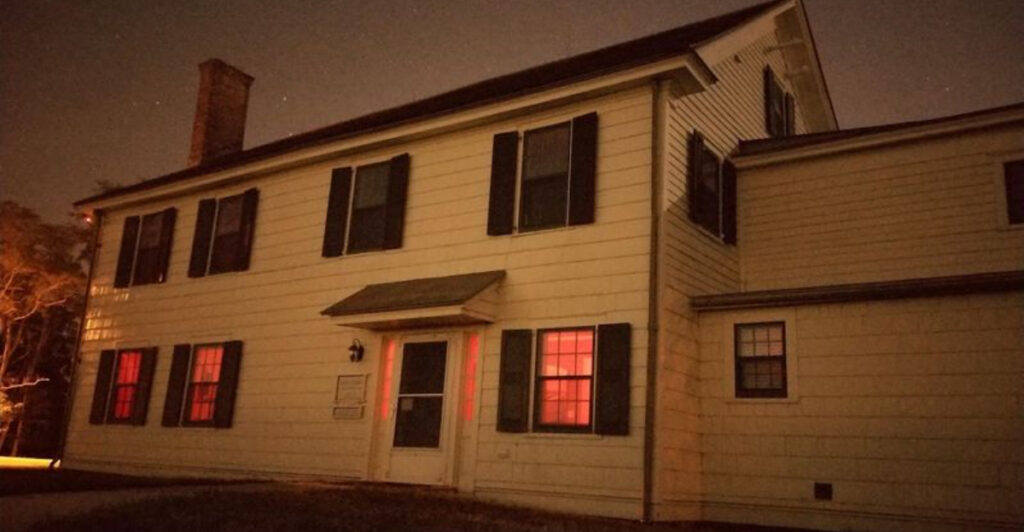
The white clapboard house beside Sandy Hook Bay does not exactly scream “paranormal hotspot.” Its green shutters look cheerful, a curved walkway crosses the lawn, and fishing boats drift past while the Manhattan skyline hovers across the water.
Then someone mentions the faces reportedly seen in upstairs windows, the objects said to move without help, and the phantom smell of pipe tobacco.
Suddenly, that waterfront breeze feels a little less innocent. This is the Seabrook-Wilson House in Port Monmouth, better known to generations of New Jerseyans as the Spy House.
Parts of the building date to the early 1700s, and its rooms have served as a family farmhouse, seaside boarding house, tavern, museum, and park activity center. Its Revolutionary War reputation is shakier than many people realize, and its ghost stories are impossible to prove.
Neither complication has stopped this quietly handsome Bayshore landmark from becoming one of New Jersey’s most enduring historical mysteries.
A peaceful waterfront park hides one of New Jersey’s most notorious haunted houses
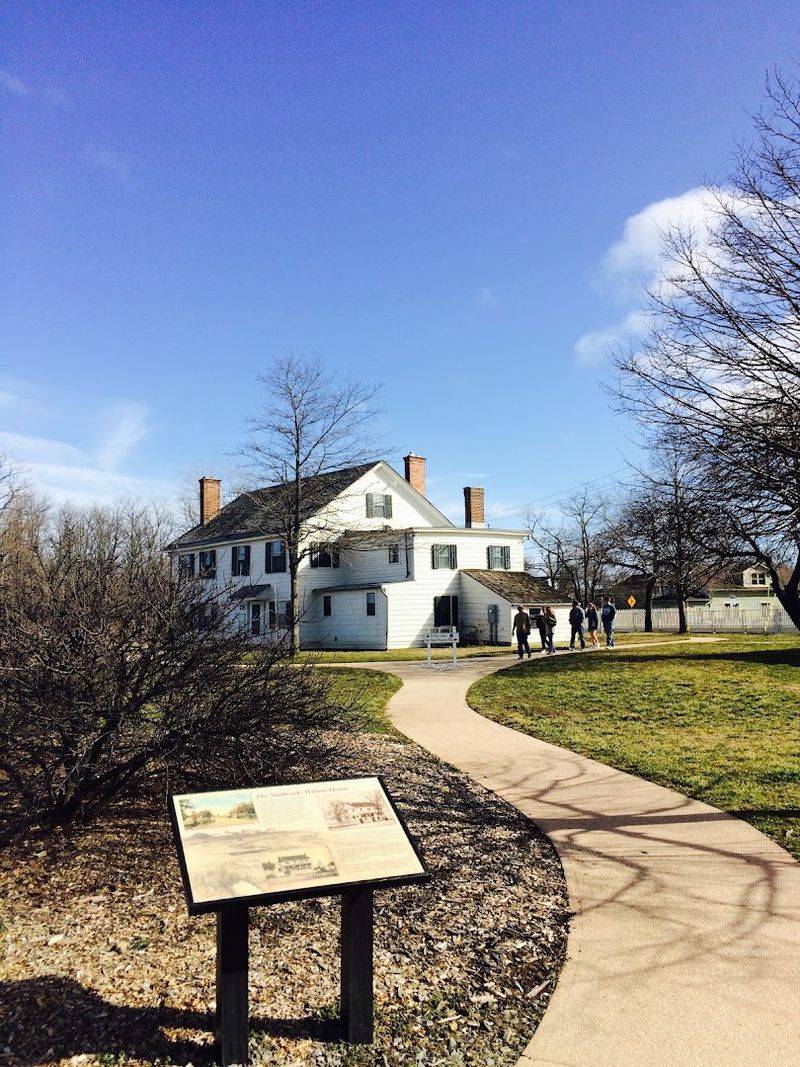
At 119 Port Monmouth Road, the first thing likely to grab your attention is not the old house at all. Bayshore Waterfront Park spreads across 229 acres beside Sandy Hook Bay, protecting salt marshes, tidal creeks, dunes, maritime shrubs, and roughly a mile of beach.
A 495-foot accessible fishing pier stretches into the water, kayakers launch from the sandy shoreline, and clear days bring distant views of New York City. The setting is bright, breezy, and wonderfully unhelpful to anyone hoping for creaking gates and permanent thunderclouds.
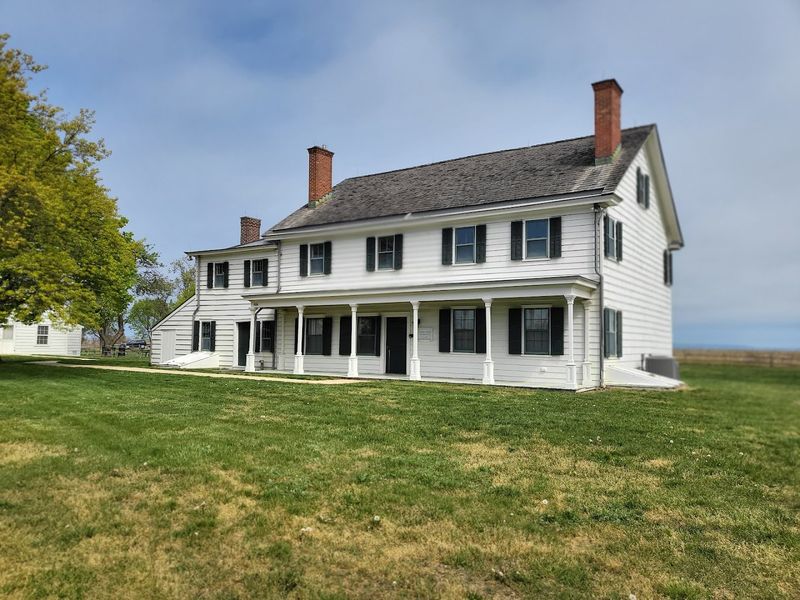
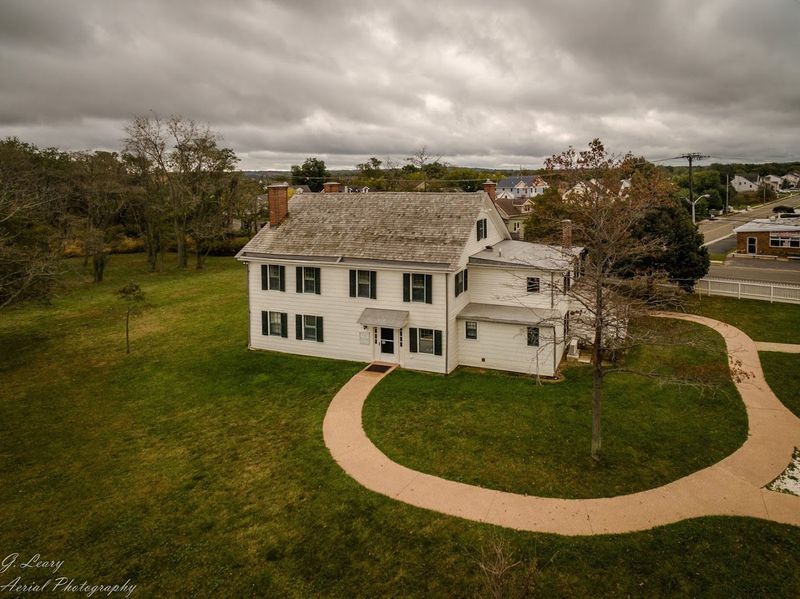
The Seabrook-Wilson House sits near Monmouth Cove Marina, looking more like a well-kept coastal farmhouse than the supposed home of restless spirits. Its white exterior, green shutters, broad porch, and collection of additions reveal a building assembled gradually rather than designed all at once.
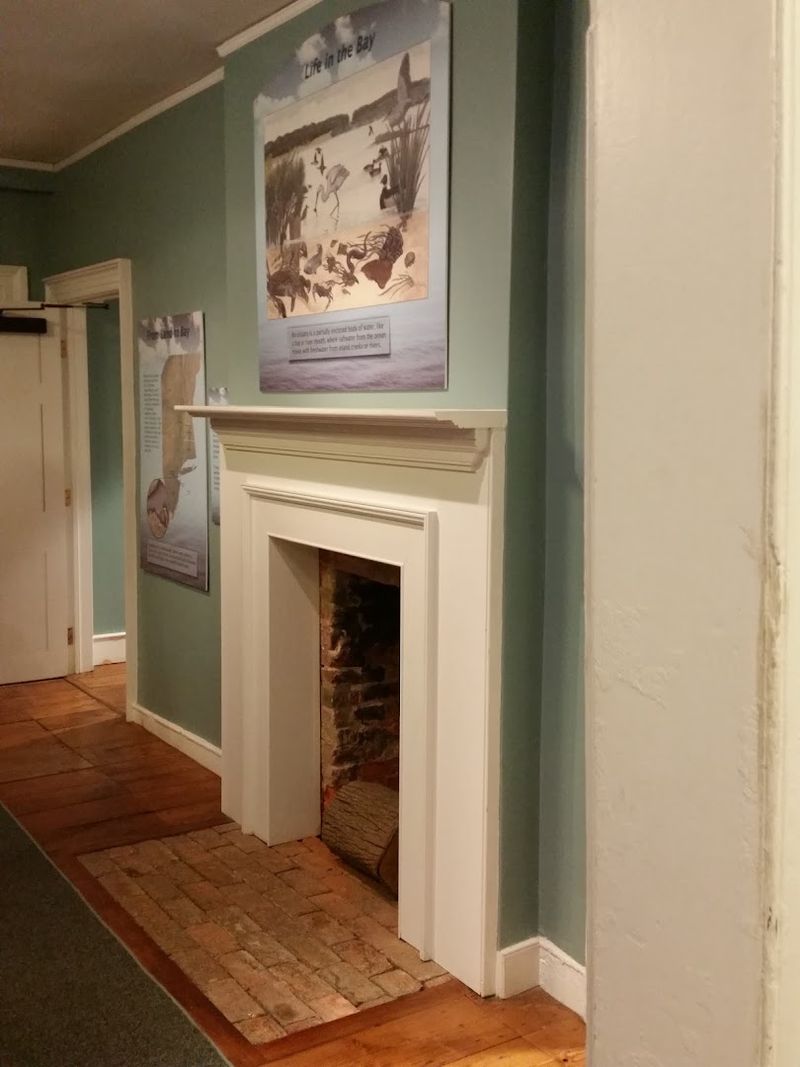
Today, it serves as the Bayshore Waterfront Park Activity Center, with first-floor exhibits connecting the house’s history to the ecology and maritime culture of the surrounding bay. The park itself is open daily from 7 a.m. to dusk and does not charge admission.
During the 2026 season, the house is scheduled to open from 1 to 4 p.m. on select Mondays, Thursdays, and Sundays between May and late October, although repairs have temporarily limited access to tours and exhibits. That official park identity is calm and educational.
The nickname “Spy House,” however, refuses to stay buried. For decades, people have arrived expecting whispered voices, cold spots, shifting objects, and figures watching from rooms that appear empty.
The contrast is half the fun: gulls cry over the pier, anglers wait patiently for a bite, and one of New Jersey’s most talked-about haunted buildings stands a few steps away looking perfectly respectable.
The Seabrook-Wilson House has stood beside Sandy Hook Bay for more than three centuries
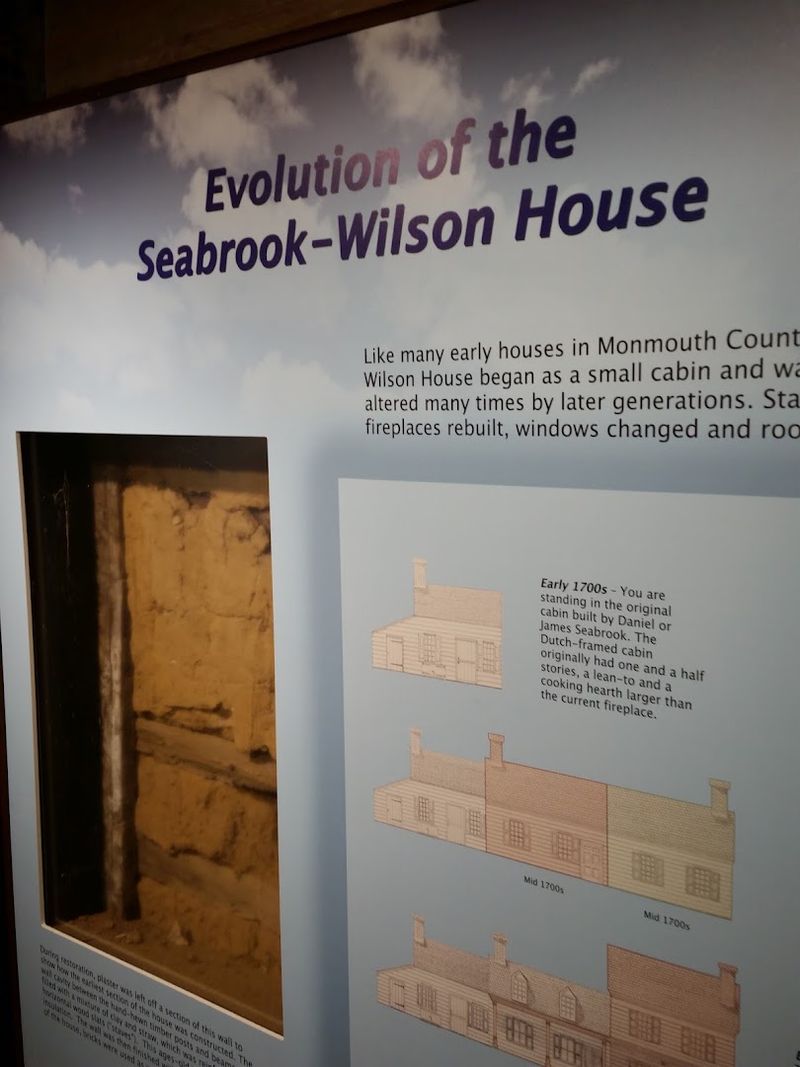
Forget the often-repeated claim that the present building was constructed in 1663. Modern research by the Monmouth County Park System dates its earliest surviving section to around 1720, still old enough to make most New Jersey houses look like recent arrivals.
What visitors see today is not one untouched colonial home but a patchwork created over roughly two centuries. The oldest portion stood on the western end and was a small cabin with a hewn oak frame, brick-filled walls, a fireplace, a cellar, and a simple loft above the main rooms.
Later owners removed partitions, raised rooflines, shifted staircases, and added parlors and bedrooms as the family and its fortunes grew. A substantial eastern addition built around 1830 to 1850 introduced late Greek Revival details and two parlors with gable-end fireplaces.
Reverend William V. Wilson enlarged the structure again during the late 19th century, and by 1896 the house had reached approximately its present size and appearance.
That layered construction gives the building its unusual proportions and explains why one room can feel distinctly older than the next.
The house’s documented significance eventually earned it places on both the New Jersey and National Registers of Historic Places in 1974, with transportation and social history cited among the reasons for recognition.
Preservation was not guaranteed. By the mid-1960s, after years as an inn, boarding house, and tavern, the building was vacant and badly deteriorated.
Middletown residents persuaded the township to purchase it in 1967, sparing it from possible demolition.
Monmouth County took ownership in 1998, and a major restoration completed in 2009 repaired structural damage, restored historical exterior features, modernized mechanical systems, and adapted the interior for public programs.
The result is not a frozen colonial artifact. It is something more interesting: a house that visibly changed whenever a new century demanded it.
Generations of Seabrooks and Wilsons gave the old farmhouse its remarkable maritime history
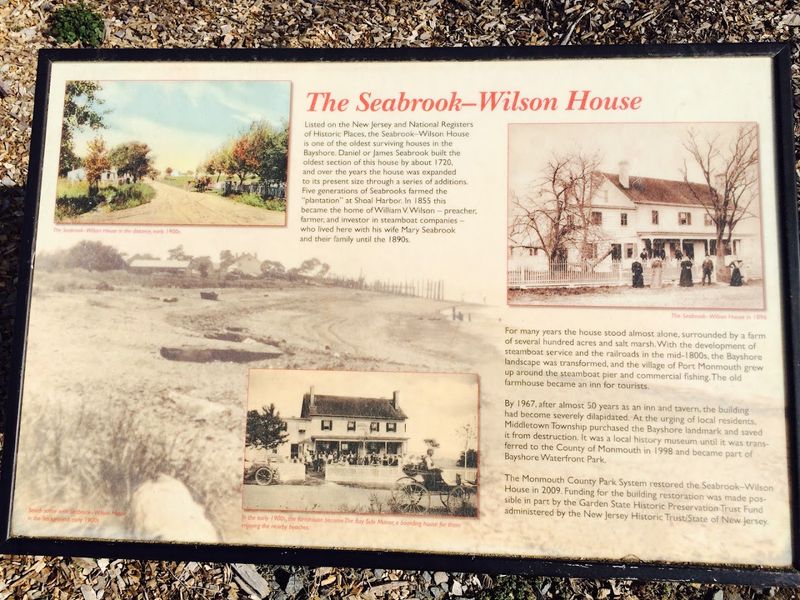
Long before Port Monmouth became a neighborhood of Middletown Township, this stretch of shoreline was known as Shoal Harbor. In 1696, Thomas Whitlock sold a 202-acre property there to Daniel Seabrook, beginning a family connection that would shape the land for generations.
A 1750 estate record describing a plantation left to Daniel Seabrook’s sons provides the earliest definite written evidence of a house on the property. From there, the story becomes less about ghosts and more about the families who helped turn the Bayshore into a busy transportation corridor.
Thomas Seabrook served in the New Jersey militia during the Revolutionary era and was elected to the state Assembly in 1780. Later generations invested heavily in boats, ferries, hotels, and local commerce.
Aaron Seabrook helped establish the Port Monmouth Transportation Company and was connected to the Port Monmouth Hotel; the company’s vessels were even used to transport troops during the Civil War. His brother Henry moved to Keyport and founded the Middletown Point Steamboat Company.
In the 1850s, their sister Martha married Reverend William V. Wilson, a clergyman who served local congregations and also became involved in the family’s shipping and ferry interests.
Wilson Avenue, which leads toward the house, carries the family name. For much of this period, the farmhouse stood almost alone, surrounded by several hundred acres of fields and salt marsh.
That isolation ended when steamboat service, rail connections, a commercial fishing industry, and a waterfront pier transformed Port Monmouth during the mid-1800s. Vacationers began arriving for fresh air, sandy beaches, and recreational fishing.
By the early 1900s, the old family home had adapted again, welcoming guests under names including Bay Side Manor and later the White House. It spent nearly 50 years operating as a boarding house and tavern, collecting plenty of genuine human history without needing a single spectral tenant.
The famous Spy House story grew from Revolutionary War folklore that may never have happened
Here is the version many New Jersey children heard on school trips: British soldiers visited a waterfront tavern during the Revolutionary War, drank too freely, and revealed military secrets within earshot of patriot innkeepers, who quietly passed the information to American forces. It is a fantastic setup.
It also appears to be unsupported by the historical record. The building was a private residence during the Revolution, not a tavern, and historians have found no evidence that its occupants operated an organized spy post.
Thomas Seabrook was genuinely a patriot and militia officer, while British raids and skirmishes certainly occurred around the Bayshore. Those real details may have supplied the thread from which a much larger yarn was spun.
The storyteller most closely associated with the nickname was Gertrude Neidlinger, a former concert performer who became involved with the house after it opened as a local museum.
Around the country’s Bicentennial era, she promoted the “Spy House” identity through animated tours, pamphlets, ghost stories, and displays intended to make the old building irresistible to school groups and visitors.
Her tales expanded to include pirates, murders, hidden passages, missing sailors, bodies in the cellar, and enough spirits to fill every bedroom twice. Researchers later found that construction dates, biographies, and dramatic episodes in those materials often conflicted with deeds, maps, architectural evidence, and family records.
Calling the whole thing a cynical hoax, however, misses an important piece of the story. Neidlinger helped draw attention to a neglected building at a time when historic preservation could be a hard sell.
People who knew her described her as warm, creative, and prone to “embroidering” a good tale rather than deliberately deceiving visitors for profit. Her stories blurred history and theater, but they also built an audience.
The irony is deliciously New Jersey: the spy story may be fiction, yet the legend may have helped save the real house from disappearing.
Apparitions, phantom voices, and moving objects have fueled chilling stories for generations
Ask longtime locals about the house, and the alleged guest list gets crowded quickly. There is Peter, usually described as a mischievous little boy who peers through windows or makes his presence known around the rooms.
A woman dressed in white supposedly wanders the building searching for a child or waiting for a husband who never returned from sea. Other accounts mention a shadowy sea captain, a ghostly dog, children on the lawn, and mysterious faces appearing behind upstairs glass.
Visitors and former museum guests have described unexplained breezes on stairways, sudden cold patches, footsteps in empty rooms, doors moving by themselves, and objects turning up somewhere other than where they were left.
One especially vivid report involves the smell of burning pipe tobacco drifting through the house when nobody nearby was smoking.
Banging, clanging, whispers, and disembodied voices also became part of the familiar script. These are stories, not established events, and many can be traced to the same folklore-heavy museum era that produced the Revolutionary spy narrative.
An old wood-framed building beside a windy bay also comes with plenty of natural special effects. Floors settle. Pipes knock. Air slips through aging joints.
Boats, birds, traffic, and water carry sound in odd directions, especially after dark. Expectations do the rest; once someone tells you a child’s ghost watches from a particular window, every reflection deserves a second look.
Still, folklore does not need laboratory proof to become meaningful. Thousands of local children heard these stories on tours, repeated them at home, and eventually brought their own families back to the Bayshore.
The haunting became a shared piece of Monmouth County culture, passed along like a favorite campfire story. Whether Peter ever existed matters less to the legend than the fact that plenty of grown adults still glance toward the upper windows before walking away.
Paranormal investigators and curious visitors keep returning to test the house’s mysteries
Technology has changed the way people hunt for ghosts, but it has not settled the argument inside the Seabrook-Wilson House.
Modern investigators may arrive with digital recorders, infrared cameras, electromagnetic-field meters, temperature sensors, and spirit boxes that rapidly scan radio frequencies for possible voices.
The equipment looks impressively scientific in a dark room, though unexplained readings are not the same thing as proof of life after death. Greg Caggiano, a New Jersey historian, folklorist, and paranormal investigator, spent years sorting through the house’s legends, museum pamphlets, architectural records, and reported encounters.
His work dismantled many of the most dramatic historical claims, including the 1663 construction date, the colonial tavern story, and much of the house’s colorful roster of named spirits. His Ghosts on the Coast NJ team also investigated the property and reported finding no outstanding evidence of paranormal activity.
That conclusion is hardly the ending ghost-story fans might prefer, but it makes the house more intriguing rather than less.
The Seabrook-Wilson House has become a place where three different things overlap: documented family and maritime history, folklore created during the museum years, and personal experiences that visitors interpret in their own ways.
Skeptics can point to wind, loose doors, suggestibility, and decades of embellished storytelling. Believers can point to the sheer number of reports and wonder whether every strange sound can really be dismissed so neatly.
Meanwhile, the house continues doing what it has done since the 1700s: standing beside the bay while Port Monmouth changes around it. Its rooms now hold exhibits instead of boarding-house guests, and park programs have replaced candlelight ghost tours.
Yet the old nickname survives, whispered more often than the official one. On a sunny afternoon, it is an important Bayshore landmark.
When the park grows quiet and the windows begin reflecting the darkening water, “Spy House” somehow feels right again.