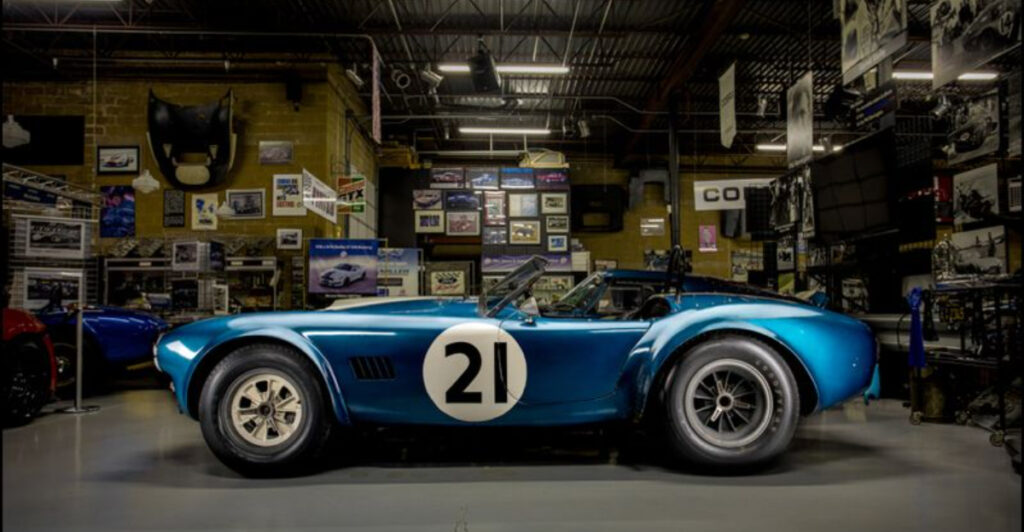
The Shelby American Collection in Boulder is one of Colorado’s most impressive automotive museums, showcasing legendary Shelby Cobras, GT40s, Mustangs, racing memorabilia, and other iconic performance vehicles that helped shape American motorsports history. Operated as a nonprofit museum, the collection gives visitors an up-close look at rare automobiles, historic race cars, original artifacts, and the remarkable legacy of Carroll Shelby.
Whether you’re a lifelong car enthusiast or simply appreciate exceptional engineering and design, the exhibits offer an unforgettable glimpse into one of America’s greatest automotive success stories. If you’re searching for a must-visit Colorado car museum, the Shelby American Collection deserves a place on your itinerary.
A Warehouse Door Hiding Serious Horsepower
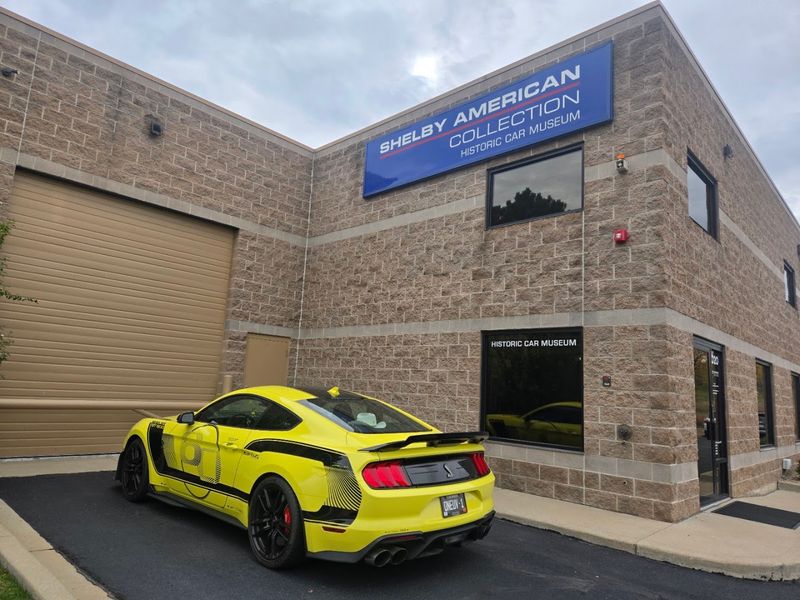
The approach to the Shelby American Collection is half the fun because the setting does not telegraph what waits inside. You pull into a practical business-park pocket in Boulder, see two straightforward buildings, and get no oversized neon promise of spectacle.
Then the doors open, and the visual temperature changes fast. Instead of gimmicks, the museum relies on the raw authority of the machinery itself.
Low-slung race cars, muscular fastbacks, and famous Shelby forms sit in a clean, roomy layout where their proportions do all the talking. The contrast between the plain exterior and the polished, history-heavy interior gives the first few minutes real lift.
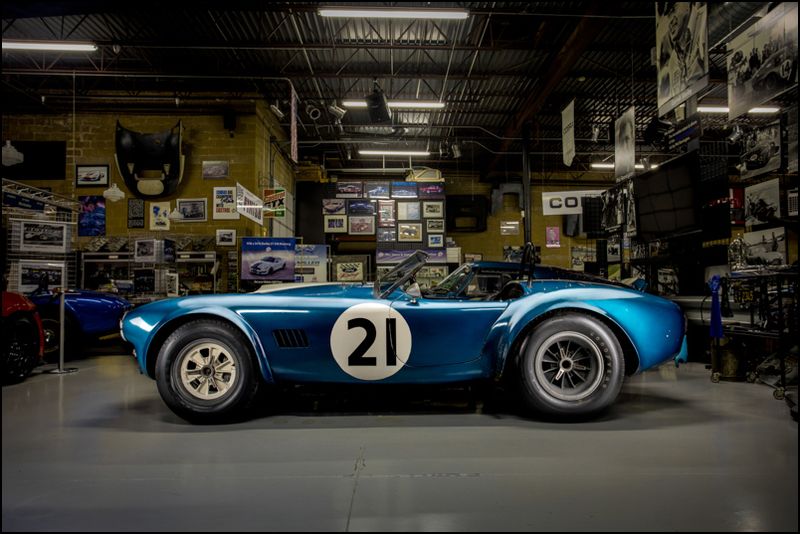
That reveal matters because Shelby cars are best appreciated in person, where scale and stance become obvious. A Cobra is smaller and more purposeful than many expect.
A GT40 looks less like a collectible object and more like a weapon designed with one job in mind. The museum also benefits from space that lets you look without fighting crowds or clutter.
Cars are arranged so you can compare shapes, eras, and intentions rather than seeing everything as one blur of shiny paint. Photos, artwork, and memorabilia fill the walls without stealing attention from the sheet metal.
Even if your knowledge of Shelby history begins and ends with a movie title or a poster on a childhood wall, the setting makes the story readable. This is not a maze of random automotive trophies.
It is a focused, carefully presented collection that uses immediate visual impact to pull you into a bigger narrative about racing, engineering, and American performance culture in a Colorado industrial corner.
Where the GT40 Story Hits Hardest
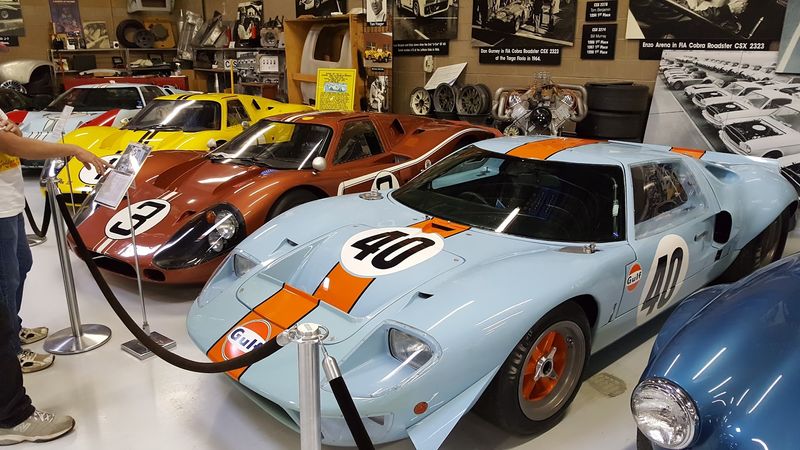
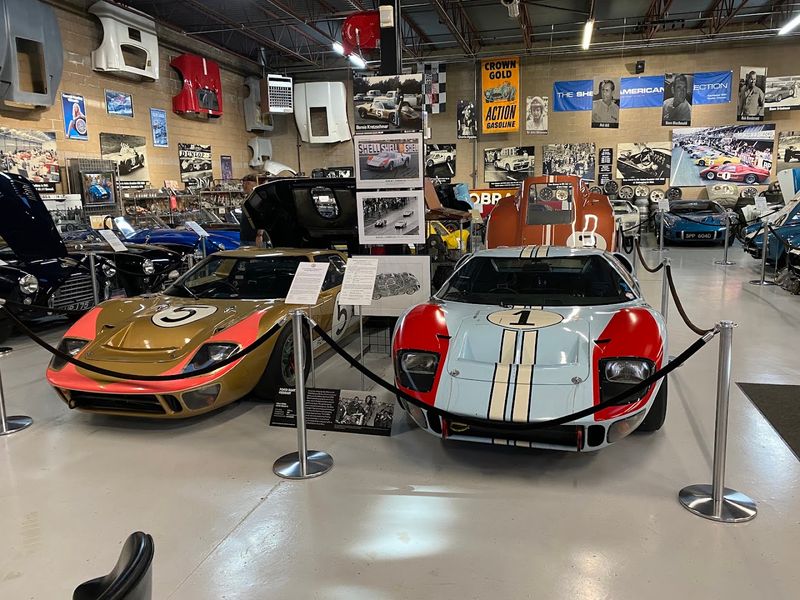
If there is a centerpiece to the Shelby American Collection, it is the concentration of cars tied to Shelby’s racing legacy, especially the GT40 line. Seeing one is exciting.
Seeing multiple examples in a single visit changes the scale of the story and makes the endurance-racing chapter of American motorsport feel immediate instead of distant.
These cars carry unusual visual tension. They are beautiful, but not delicate. Everything about them reads compact, intense, and optimized, like the design team kept removing anything that did not help them move faster down a straight or stay planted through a corner.
That physical presence is why the museum works so well for people who already know the names Carroll Shelby and Ken Miles, and for people who only know the broad outline. Here, history is not trapped in a documentary voice-over.
It sits a few feet away in aluminum, fiberglass, vents, scoops, and impossibly low rooflines. The supporting material helps without overexplaining. Placards, photos, and artifacts add context, but the main event remains the cars themselves and the pedigree attached to them.
You are not looking at generic vintage racers chosen to fill floor space. The collection is centered on vehicles with real historical significance inside the Shelby orbit.
That focus gives the museum a clarity many larger institutions never quite achieve. Instead of wandering through decades of unrelated machines, you get a sharp, coherent view of how a handful of iconic models shaped an outsized reputation.
For anyone with even a mild interest in competition history, this section of the museum is where admiration turns into concentration, and the visit shifts from casual browsing to genuine study.
Not Just Cars – The Walls Carry the Era
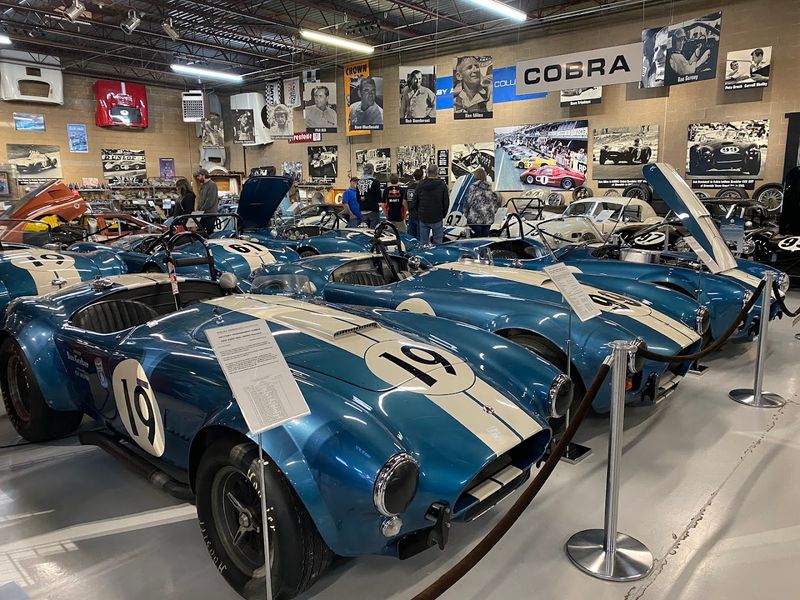
The cars pull you in first, but the surrounding material is what gives the Shelby American Collection its depth. This is not a room of polished bodies parked in isolation.
The walls, cases, and supporting displays build an era around them, so the visit becomes less about admiring horsepower and more about tracing a larger culture of speed.
Photos and artwork help frame the personalities involved, while memorabilia adds texture that pure vehicle displays often lack. Racing was never just machines circulating a track.
It was branding, experimentation, mechanical risk, and a rotating cast of drivers, builders, executives, and promoters trying to move faster than the competition and look good doing it.
That broader context makes even small objects interesting. A poster, uniform piece, document, or period image can shift the way you read a nearby car.
Instead of seeing a famous model as a standalone artifact, you begin to place it inside a workshop, a paddock, a rivalry, or a precise moment in American automotive ambition.
The museum has displays across two adjacent buildings, which helps the experience feel layered rather than crammed. You move from one cluster of visual information to another and keep discovering fresh angles on the same central story.
That pacing keeps attention sharp, especially if you like details and would rather examine one corner thoroughly than rush through a giant hall.
For visitors who worry they need expert-level knowledge before stepping inside, this part of the museum is reassuring. The supporting material supplies entry points.
You can arrive knowing every chassis code, or arrive simply curious about why Shelby still matters, and the objects around the cars quietly connect the dots without turning the experience into a classroom lecture.
Why This Colorado Museum Feels So Personal
Some automotive museums impress through scale but create distance. The Shelby American Collection does something more inviting.
It presents major machinery and serious history in a setting that still leaves room for conversation, curiosity, and the kind of close attention that turns a visit into a real exchange instead of a silent lap around a gallery.
That shift seems to come from the people in the room as much as the collection itself. The museum has a reputation for knowledgeable staff and volunteers who are comfortable talking shop without making newcomers feel out of place.
For a subject that can easily become gatekept through jargon, that tone matters. Shelby history is full of strong personalities, racing legends, and highly specific details. In the wrong setting, all of that could harden into hero worship or trivia overload.
Here, the human side appears to come through more naturally. Questions lead to stories, stories lead back to the cars, and the entire place becomes easier to understand because it is explained with enthusiasm rather than ceremony.
The personal quality also fits the collection’s subject. Carroll Shelby’s legacy was never only about finished products.
It was about teams, builders, drivers, experiments, and improbable ideas pushed into reality. A museum devoted to that world should have a little energy in the air, not just polished stillness.
That is especially useful if you are visiting with mixed levels of interest in your group. A dedicated Ford fan can zero in on pedigree and specifications, while someone else can connect through the larger stories behind the machines.
The result is a museum that reads less like a shrine behind glass and more like a living archive of competition culture, interpreted by people who clearly enjoy opening the door for you.
Two Buildings, Better Pacing
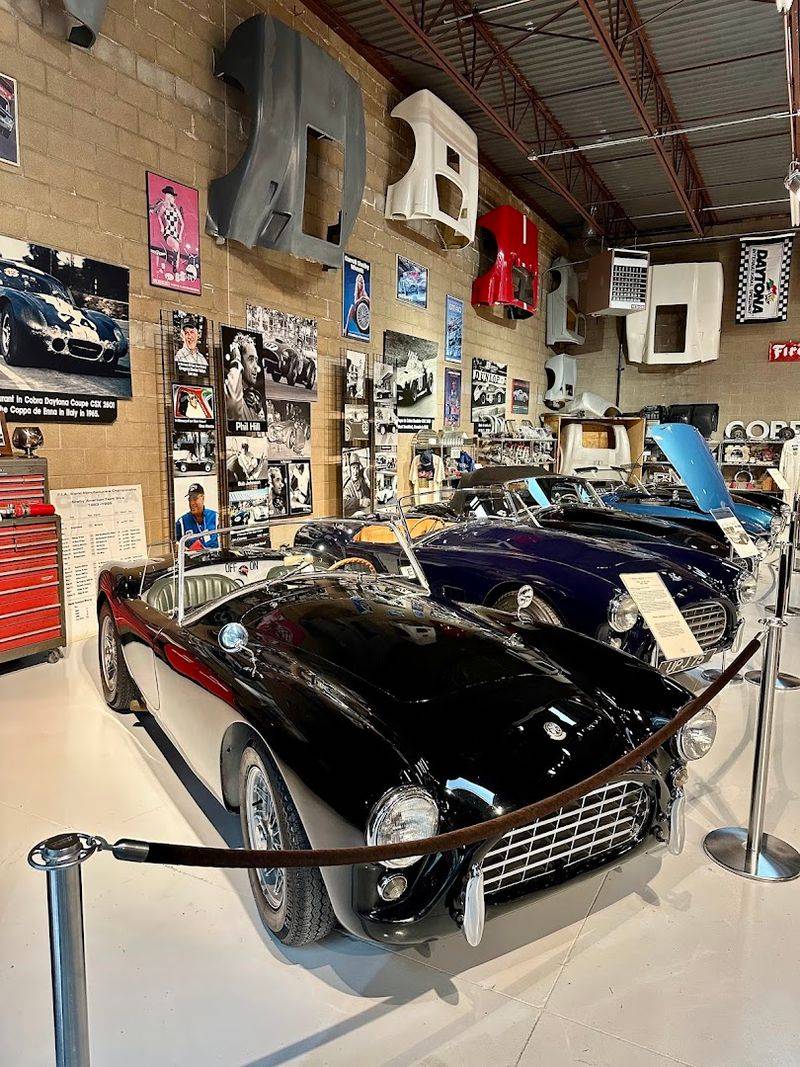
Layout can make or break a specialized museum, and the Shelby American Collection benefits from a structure that gives the visit rhythm.
With displays spread across two buildings, the experience has a built-in reset point. Instead of standing in one giant room until everything visually blends together, you move through chapters.
That movement matters more than it sounds. Shelby-related cars share family traits, and if they were packed too tightly, even remarkable examples could start competing for your attention in unhelpful ways.
Dividing the collection lets each cluster breathe, whether your interest leans toward Cobras, Mustangs, GT40s, or the supporting memorabilia around them.
The change of space also encourages better looking. You can focus hard in one area, step out mentally while moving to the next, then re-enter with fresh attention.
It is a simple design advantage, but it helps transform the museum from a checklist stop into a visit with pace and shape.
Practical visitors will appreciate this too. Many visitors spend around one to two hours exploring the collection, which feels believable given the depth of material and the manageable size.
That means the museum can anchor a Saturday outing without swallowing the entire day, especially useful in Boulder where outdoor plans, meals, and other stops often compete for time.
The two-building format also supports repeat visits. Even when you know the major attractions, there is a good chance you will notice a different wall display, compare two cars more carefully, or spend longer with a volunteer conversation in a section you rushed before.
Good museum pacing is easy to overlook when it works. Here, it quietly keeps the collection approachable, digestible, and much more satisfying than a single quick pass would suggest.
The Best Time to Go and How to Do It Right
Because the Shelby American Collection keeps limited public hours, timing your visit is part of the strategy. The museum’s regular public hours are Saturdays from 10 AM to 4 PM, with additional tours and special openings offered at select times.
That narrow window gives the place a purposeful, event-like quality instead of an all-week drift. For travelers, that means planning ahead rather than assuming you can squeeze it in whenever you happen to pass through Boulder. If Shelby history is the reason for the stop, build your day around it.
Arriving earlier is smart, especially if you like taking your time with placards, conversations, and repeated laps around the same car from different angles.
Special event days can bring additional enthusiast gatherings outside the museum, with interesting machinery appearing outside while the main collection waits indoors. When that happens, the museum becomes both destination and gathering point, which is exactly the sort of combination car people hope to find.
If you are bringing someone who is not deeply immersed in automotive history, this is still an easy sell. The visit is compact enough to stay engaging, and the visual payoff begins immediately.
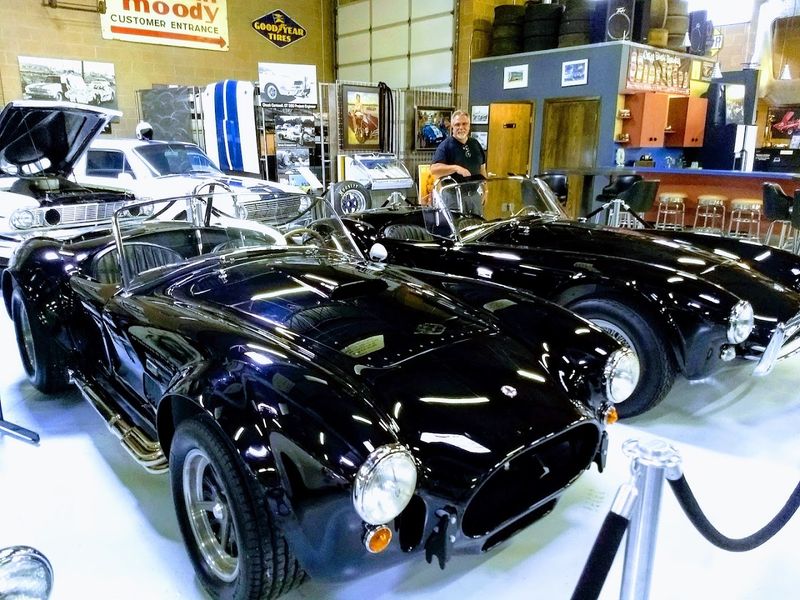
You do not need a full technical vocabulary to understand why a row of Cobras and GT40s is exciting in person. One practical note helps set expectations. This is a focused museum, not a sprawling amusement complex with endless extras.
Go in ready to look closely, read selectively, and ask questions when the opportunity appears. Treated that way, the timing works beautifully, and the modest scale becomes an advantage rather than a limitation on a Boulder weekend.
The Real Reason It Rises Above a Casual Stop
Plenty of places display old cars. Far fewer create a convincing argument for why those cars mattered, why these examples deserve attention now, and why the setting itself becomes part of the appeal.
The Shelby American Collection clears that bar by staying focused, specific, and unapologetically centered on one of the most compelling names in American performance history.
Its advantage is not sheer volume. It is concentration. Shelby’s legacy touches racing, design, branding, Ford performance culture, and a particular strain of American confidence that still resonates decades later.
Putting those threads in one place, and doing it with actual historic machinery rather than generic substitutes, gives the museum unusual force.
The Boulder location adds a nice twist. You do not expect a collection of this significance to be tucked into a straightforward industrial address near the Front Range.
That element of surprise sharpens the experience and makes the museum feel discovered rather than packaged. For serious enthusiasts, the attraction is obvious: rare cars, racing pedigree, and the chance to study details up close. For everyone else, the appeal turns out to be just as real because the collection is visually legible.
You can understand the drama through stance, scale, and context even before you understand every badge or chassis story.
That broad accessibility is the museum’s strongest finishing move. It honors deep knowledge without demanding it at the door.
You leave with clearer eyes for what made Shelby important, why these machines still command attention, and how a compact museum in Colorado can deliver a sharper hit of automotive history than many much larger institutions. If a gearhead has one mandatory stop in Boulder, this is the one that should already be pinned on the map.
Share this story