Some of the best history lessons in Colorado come with a hill attached. In Glenwood Springs, a short and steep trail leaves a quiet neighborhood street and climbs above town to an old frontier burial ground. Up top, weathered headstones sit among wild growth, and the names include two of the Old West’s most famous characters.
One of them may not even be resting under his own marker, and nobody knows for sure where he is. The walk is under half a mile, it costs nothing, and the views over the valley are a bonus. Stick around to learn how steep the climb really is, what to bring, which quirky landmarks hide along the path, and why the lesser-known graves might end up being your favorite part of the trip.
A Hillside Graveyard Above Bennett Avenue
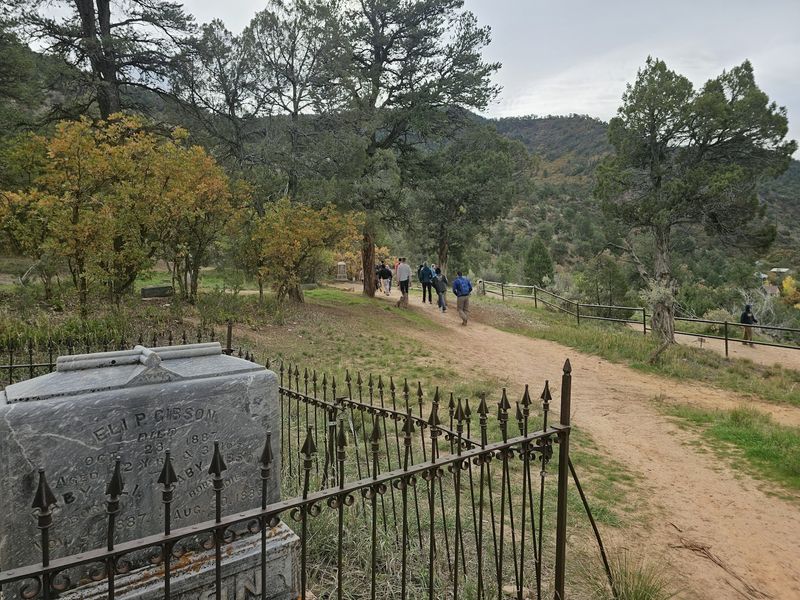
The trip starts on an ordinary residential street, which is part of the charm. Linwood Cemetery is found at 1310 Bennett Ave, Glenwood Springs, CO 81601, in the Roaring Fork and Colorado River country of western Colorado.
From the street, a trail heads uphill to the cemetery itself. The burial ground sits on the mountainside above town, so there is no driving right up to the gates.
That small barrier keeps the place feeling a bit apart from the busy downtown below. Glenwood Springs residents and Western Slope day-trippers often treat it as an easy local outing with a big payoff in history.
The cemetery is small, but it is considered old by American standards. It stands as a solid example of a frontier burial ground, the kind of place that once served a rough-edged mountain town.
For Front Range folks heading west on I-70, it makes a handy stop that does not require a ticket, a reservation, or a full day. Bring your legs and your curiosity, because the hill is about to ask for both.
How Steep Is Steep, Exactly
Numbers help here. The trail runs roughly a third of a mile from the trailhead to Doc Holliday’s headstone, though some people count closer to half a mile once they wander the grounds.
The elevation gain is about 220 feet. That works out to something like climbing the stairs of a 22-story building, which is a fun fact to share with your hiking partner halfway up.
Glenwood Springs already sits above 6,000 feet, so the air is thinner than many out-of-state guests expect. Coloradans may shrug at that, but newcomers and visiting relatives might need a few extra breathers.
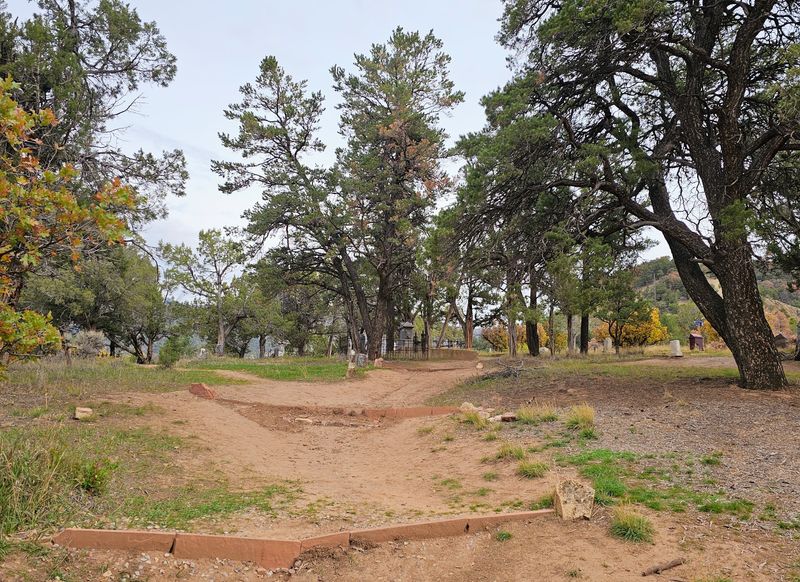
The route begins on a well-kept entrance that looks deceptively easy. Soon the surface turns to gravel and sand, with a few stairs and minor obstacles mixed in.
Most of the trail is wide, around 20 feet in many spots. Expect the climb to take about twenty minutes at a steady pace, longer if you stop to admire the view, which you will.
Short does not mean flat, and this trail is happy to remind you.
Doc Holliday’s Famous Mystery Marker
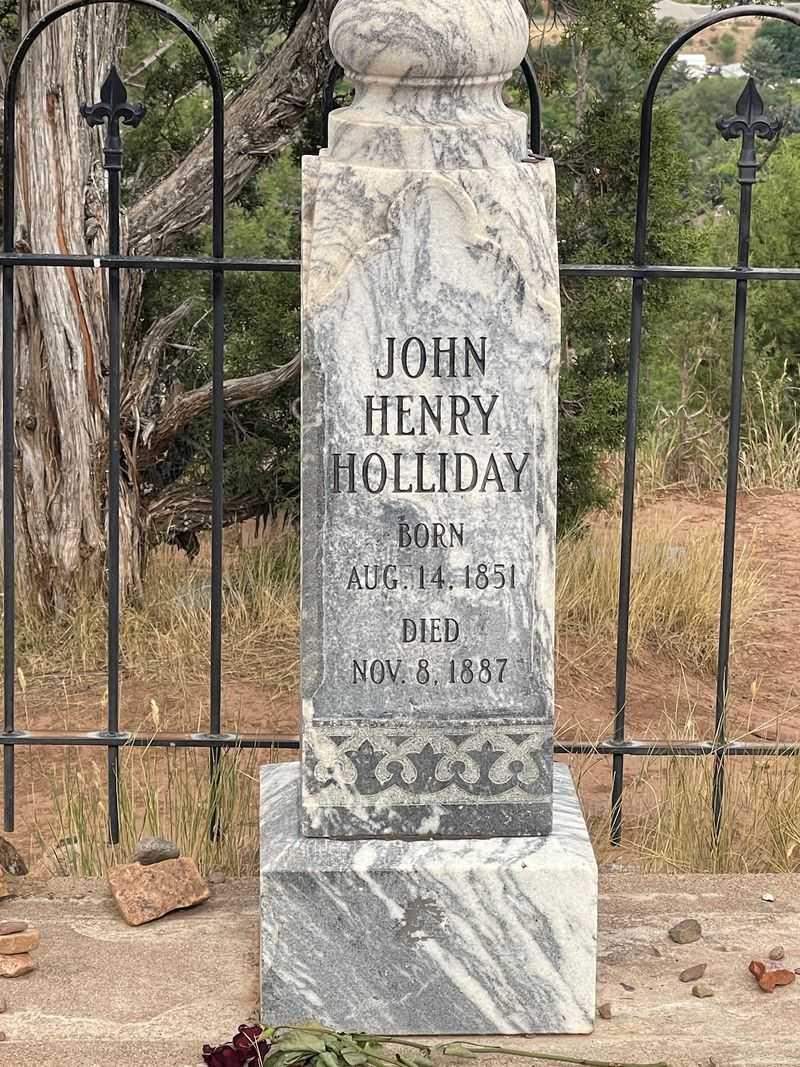
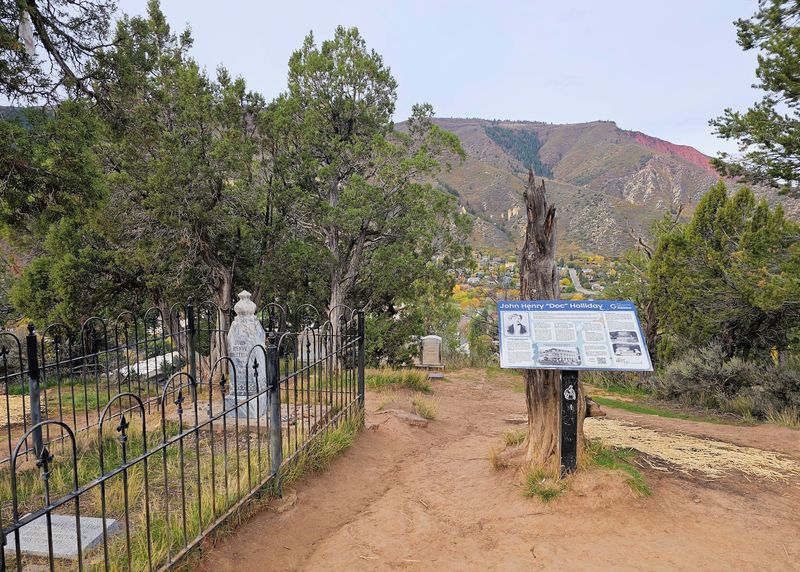
Here is the twist that surprises many people. Doc Holliday is buried in Linwood Cemetery, but his exact grave location is unknown.
The headstone that draws the crowds marks the fact that he rests somewhere in the cemetery. It does not mark the precise spot, which has been lost to time.
Some historians suggest he may have been placed in the potter’s field section, since he passed away without money. That theory adds another layer to an already colorful legend.
The famous gambler and gunfighter of Tombstone fame ended his days in Glenwood Springs in 1887. Today his memorial is the star of the hilltop, and folks leave small tokens nearby.
A popular local send-off is simple advice for the trip: make sure to say hi to Doc. Whether he hears you from right there or from somewhere down the slope remains one of the West’s quieter mysteries.
The Outlaw Called Kid Curry
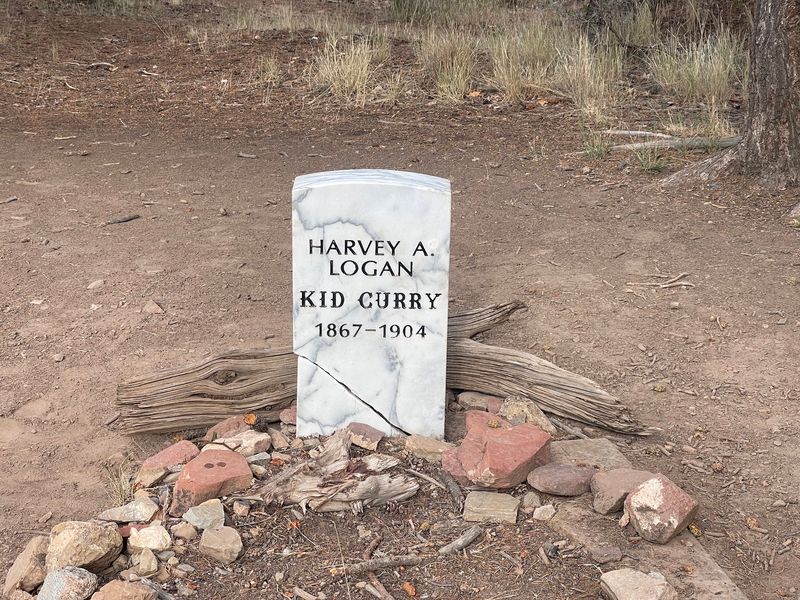
Doc gets the headlines, but he is not the only Old West name on this hill. Kid Curry, the outlaw, is also buried at Linwood Cemetery.
Kid Curry ran with the Wild Bunch crowd tied to Butch Cassidy and the Sundance Kid. His story ended in the Glenwood Springs area in 1904.
Markers on the grounds point toward the different sections, and information signs share background on figures like Doc Holliday and Kid Curry. That makes it easy to find both famous stops without a guidebook.
Having a gambler and an outlaw sharing one small hillside gives the place a fittingly rowdy guest list. It also shows how many restless characters drifted through Colorado’s mountain towns.
Spend a minute at both markers, then keep going. The two big names are the hook, but they are far from the whole story.
Headstones Worth a Second Look
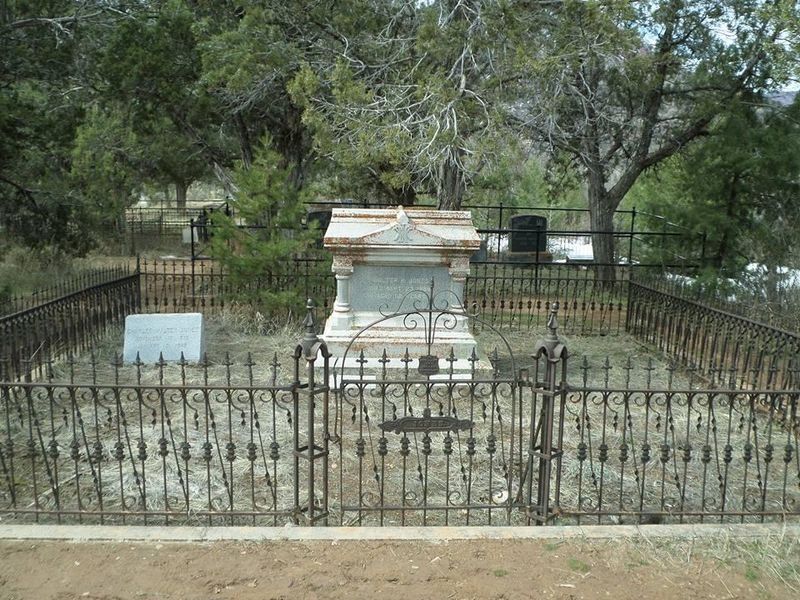
Plenty of people march straight to the famous names and head back down. That is a missed opportunity.
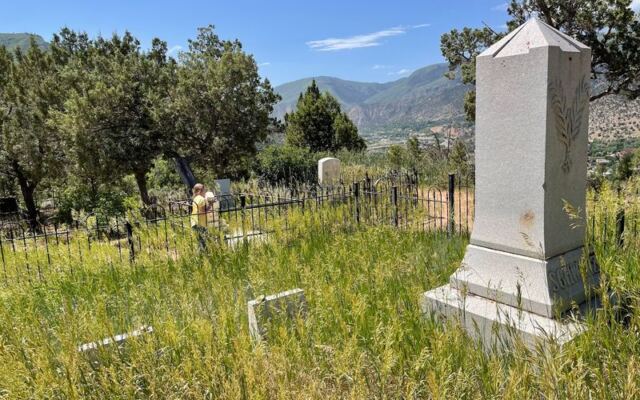
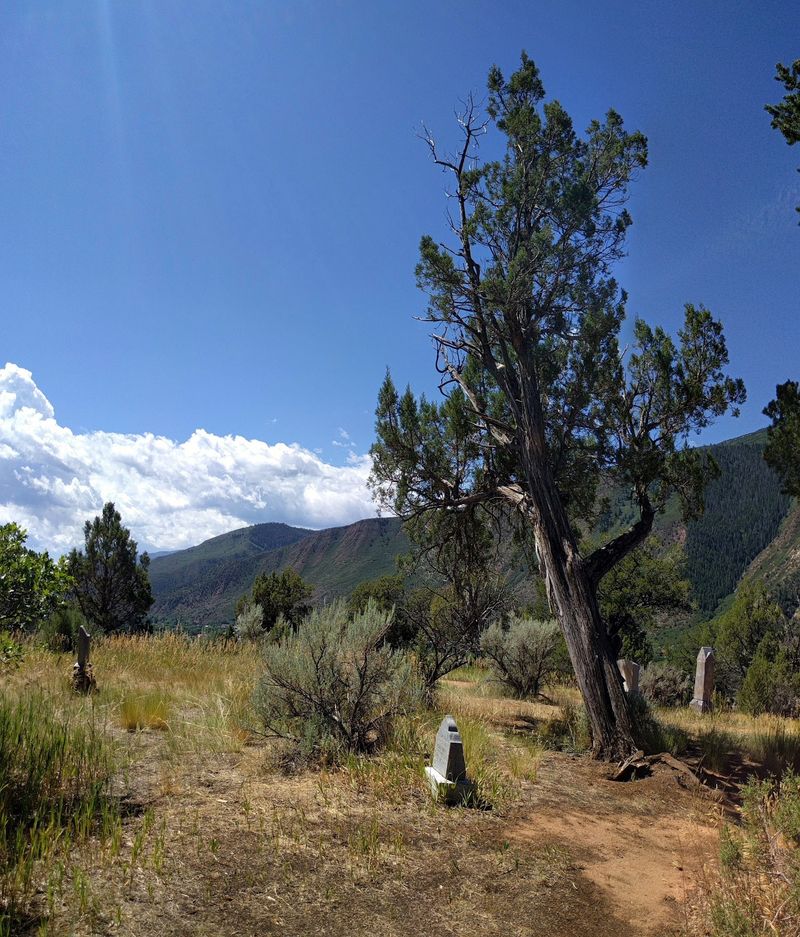
The grounds hold many other headstones, and some are genuine works of art. Carved stones, old family plots, and iron fencing reflect the craftsmanship of a frontier era.
Every marker hints at a life lived in early Glenwood Springs. Miners, merchants, and families who built the town are all part of the record here.
Many first-timers leave wishing they had set aside more time to explore. It is easy to suspect that dozens of fascinating stories sit just beneath the surface.
Plan on about an hour to read the markers and follow the paths properly. Slow wandering pays off, and the less famous graves are where the forgotten stories quietly wait.
Wild Growth and Weathered Stones
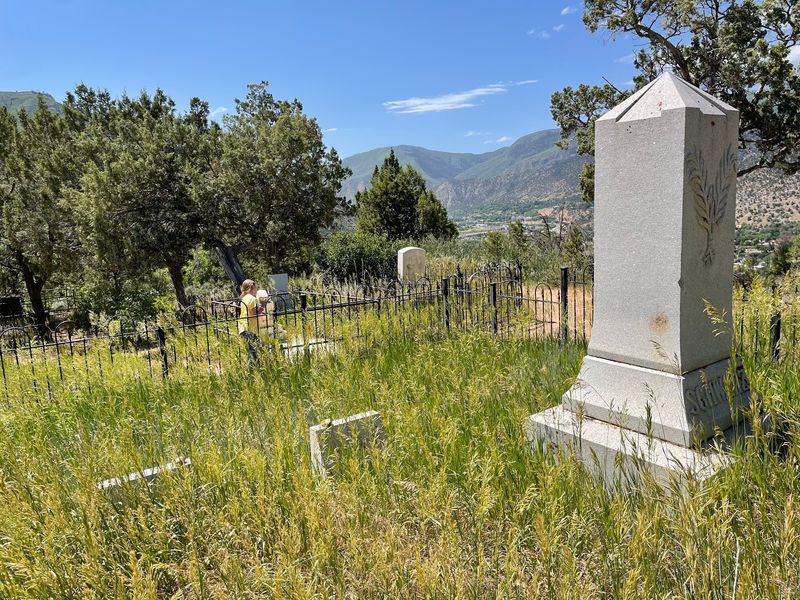
Manicured lawns are not part of the deal. The cemetery is old and in places quite overgrown, with some headstones partly swallowed by plants.
That untamed look gives the grounds an authentic frontier character. It also signals that upkeep depends on limited resources.
Most sites are fenced or marked off. Please respect those barriers and stay on the well-marked paths, since many graves are fragile and very old.
The paths make it simple to explore without stepping where you should not. Following them keeps the hillside in better shape for the next group.
Think of the scruffiness as part of the honesty of the place. This is a working piece of history, not a polished exhibit, and that is exactly why it feels so real.
The Ribbon Tree Halfway Up
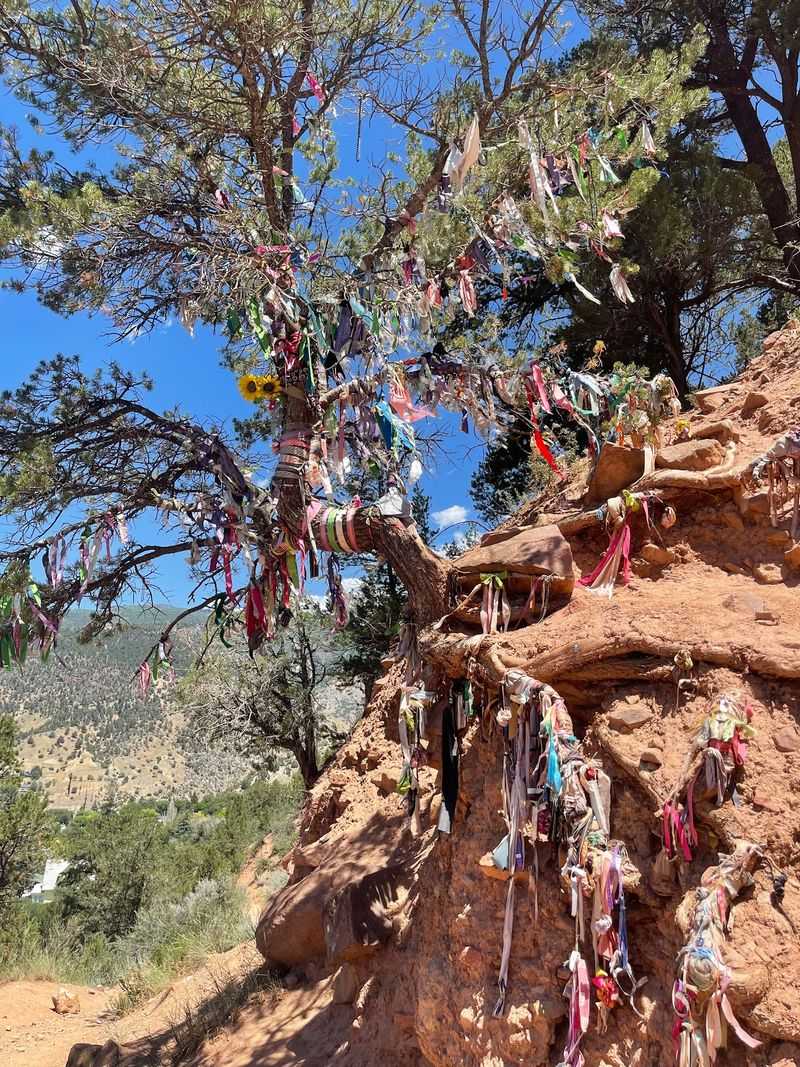
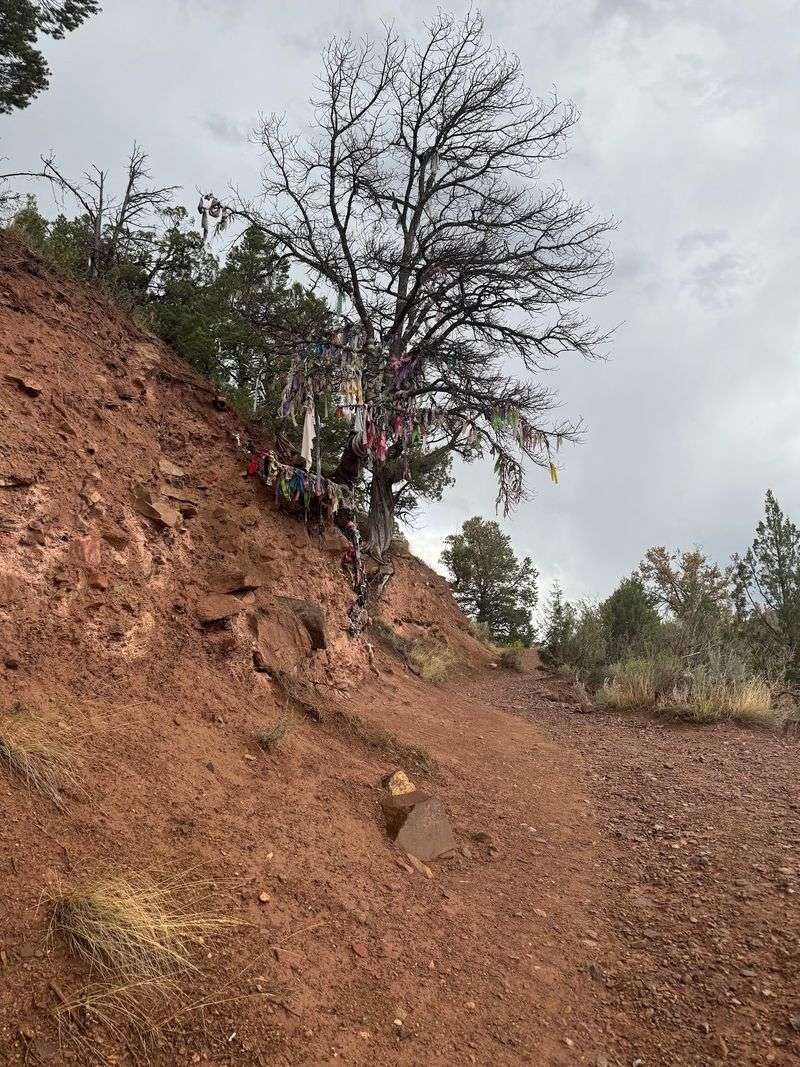
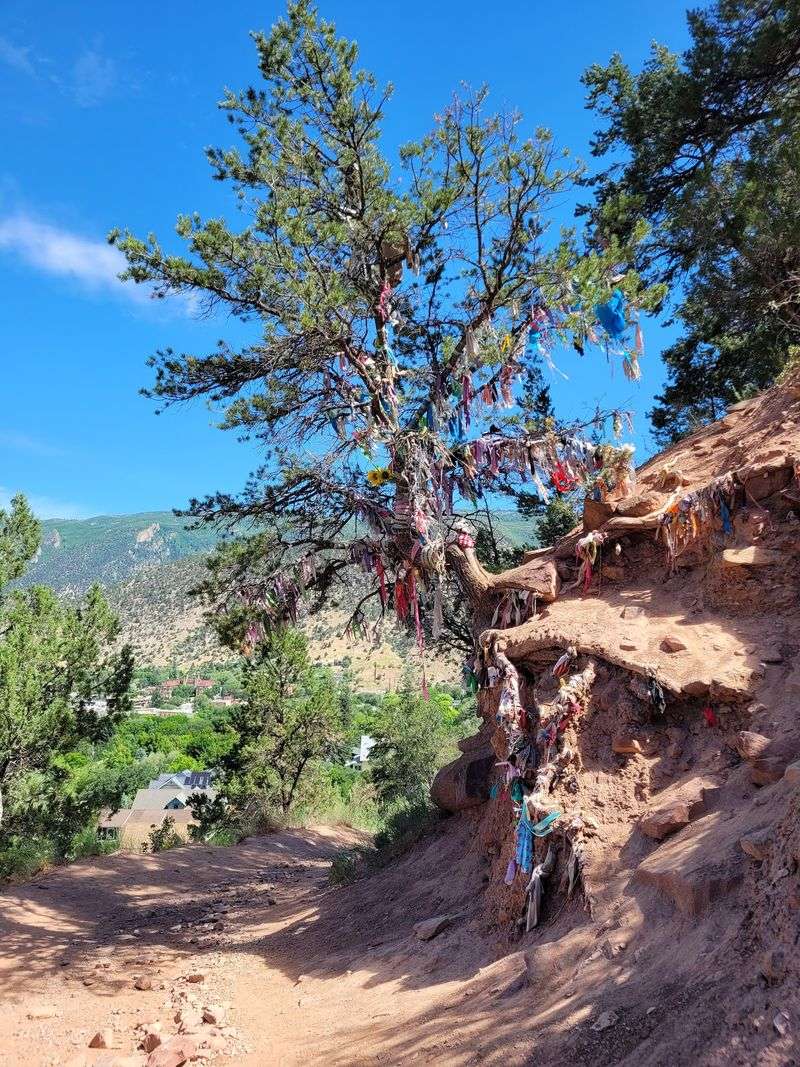
About halfway up the climb, the trail serves up a quirky surprise. A tree hung with ribbons and small tokens stands beside the path.
Some call it the tree of shame, others simply the ribbon tree. People leave a ribbon or marker as a way of saying they made it this far.
Nobody seems entirely sure how the tradition began. That uncertainty fits right in on a hill where even Doc’s exact spot is a guess.
It does add a splash of color to the route. It also makes a handy checkpoint for anyone wondering how much farther is left.
Consider it a mid-climb pep talk tied to a branch. Half the hill is behind you, and the payoff is closer than your legs might believe.
Valley Views on the Way Up
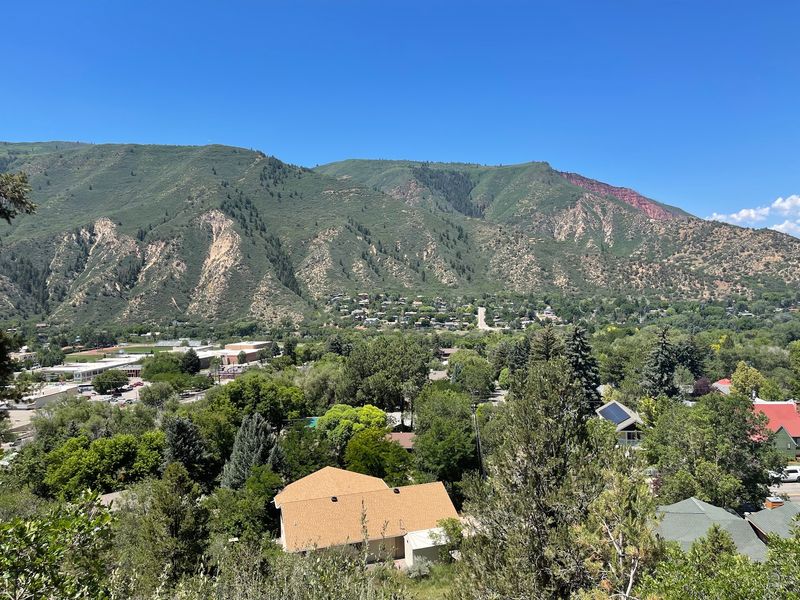
The history may be the headliner, but the scenery steals plenty of attention. Views of Glenwood Springs open up along nearly the whole trail.
As you gain height, the town, the valley, and the surrounding mountains spread out below. The vistas are a reward on the way up and again on the way down.
Those stops to rest double as photo breaks. Nobody needs to know you were mostly catching your breath.
For locals who usually see Glenwood from the highway or downtown streets, the perspective can feel brand new. It is a reminder of how tightly the town is tucked into its canyon country.
Behind the cemetery, additional trails continue for those who want more time outdoors. A short historic walk can easily stretch into a longer afternoon on the mountain.
Old Houses and a Friendly Neighborhood
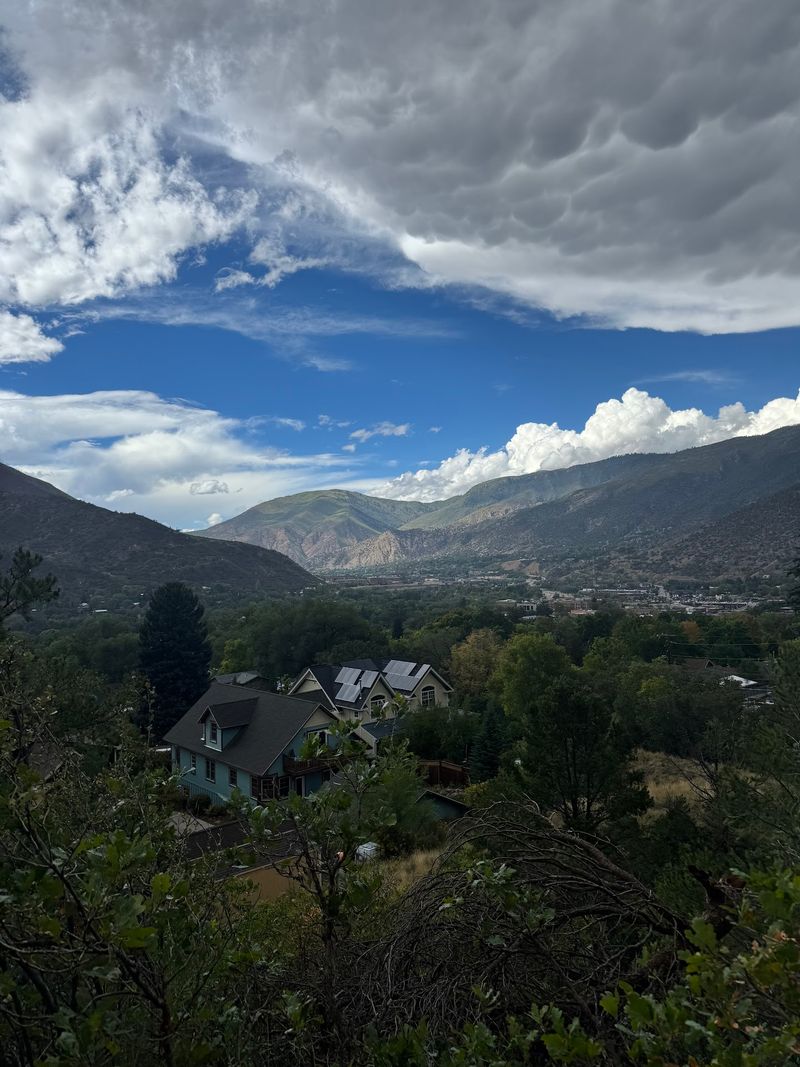
Few historic trails begin in such a homey spot. The trailhead is tucked into a residential neighborhood, which means older homes line the approach.
Many people enjoy checking out those houses before or after the climb. It turns the outing into a small walking tour of the town’s past.
Neighbors live right here, so a little courtesy goes a long way. Keep voices down and leave driveways clear.
Parking along the street is pretty limited. Arriving early or on a weekday may make it easier to find a spot.
Over the years, even a well-fed, friendly local cat has been spotted greeting hikers on the trail. Small moments like that give the walk a neighborly, lived-in feel.
Lanterns, Costumes, and Ghost Tour Season
Autumn brings a different kind of visit. The local historical society hosts a ghost tour during the spooky season, and it has earned a strong following.
Guides lead groups up the hill after dark. At several graves, actors in period clothing step forward to tell the life stories of the people buried there.
Bring a flashlight, since the trail is not lit. Tickets are sold through the historical society’s website.
The tour is suited to all ages, which makes it a fun family tradition for Western Slope households. Cider and treats wait at the end as a reward for the climb.
Fall is also a particularly atmospheric time to visit on your own. Pair the season with the stories, and the hillside comes alive in the friendliest possible way.
A Museum Stop Before the Climb
Homework rarely sounds fun, but this kind pays off. Stopping by the historical museum in town first can make the cemetery far more meaningful.
Literature about the cemetery is available there. It explains who else is buried on the hill beyond the two famous names.
In front of the Frontier Historical Museum sits an old wooden wagon hearse. Seeing it makes you wonder how anyone hauled that contraption up such a steep slope.
Plenty of people joke that a wheel or two must have given out on the way. Whatever happened, the wagon makes the hill’s history feel very concrete.
With a little background in hand, the headstones stop being just names. They become neighbors from another century, each with a story ready to be read.
What to Wear and What to Carry
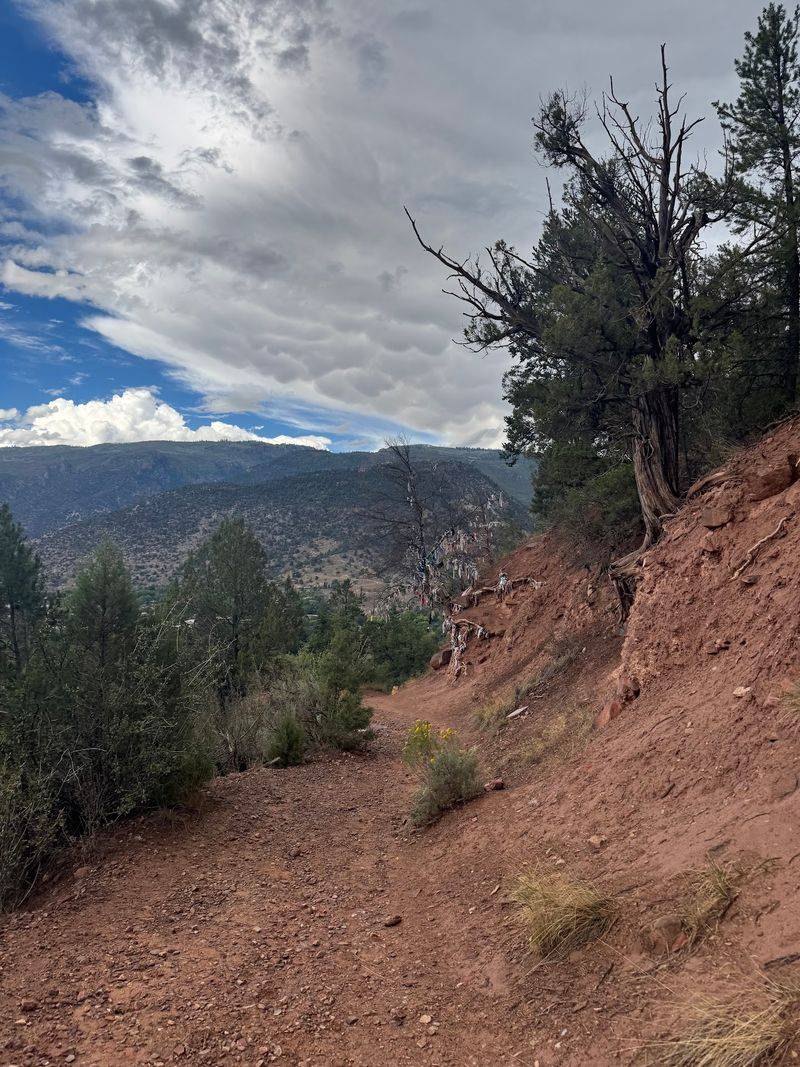
Flip-flops are a bad bet on this hill. Sturdy shoes help on the loose sand and rocks, especially on the way back down.
Descending is far easier on the lungs but trickier on the ankles. Take it slowly and watch your footing.
Shade is spotty, and some stretches are fully exposed. Fill a water bottle at the trailhead or bring your own, particularly in summer heat.
Only one bench sits along the route, roughly three-quarters of the way up. Anyone who needs regular seated rests should plan accordingly.
Strollers will not make the climb, and the trail is not suited to those who need assistance. Mild summer mornings around the low 70s make for comfortable conditions, while hot afternoons can wear people down quickly.
Good Fit for Kids, Dogs, and History Buffs
Families looking for a cheap outing that wears out the kids will find a winner here. The hike is short enough for children and works well for dogs too.
Just keep little ones from tossing rocks. The hillside and the graves deserve a gentle touch.
History lovers get Old West legends, frontier craftsmanship, and plenty of names to research later. Casual walkers get a workout and a view.
Retirees and anyone on a tight budget will appreciate that it costs nothing to explore. The cemetery runs on donations, and a donation box sits at the top of the hill.
Dropping in a few dollars helps with upkeep, trail improvements, and care for the overgrown stones. It is a small way to keep this hilltop history in shape for future generations.
Worth Every Step of the Hill
Some local outings ask for a big budget or a full weekend. This one asks for twenty minutes of climbing and a little patience.
In return, Linwood Cemetery offers frontier history, two legendary names, a ribbon-covered tree, and wide views over Glenwood Springs. It is the sort of place people say they will definitely come back to.
The strong local affection shows in how often it gets called a must-see in Glenwood. Many longtime visitors to town admit they waited far too long to finally make the climb.
Go early, bring water, and skip the sandals. Read up at the museum, say hi to Doc, and leave a little something in the donation box.
Above all, give the quieter headstones some time. The forgotten stories of this hillside are still waiting for someone willing to walk up and listen.
Share this story