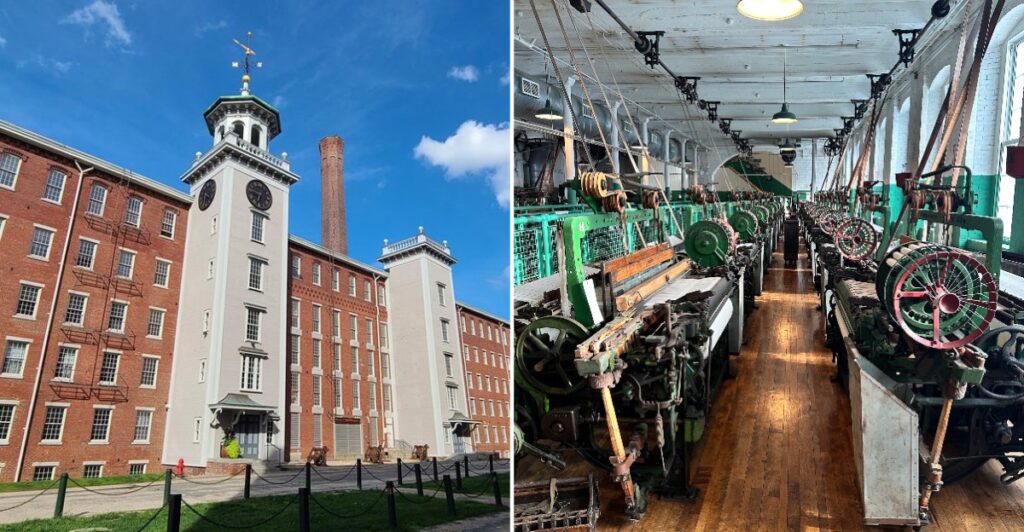
History gets surprisingly loud when the old looms start moving at this Massachusetts museum. At the Boott Cotton Mills Museum in Lowell, rows of working textile machines clatter, shake, and recreate some of the intensity that once filled the city’s factories.
Part of Lowell National Historical Park, the museum digs into how cotton manufacturing helped transform American industry while also changing the daily lives of the people who worked inside these mills. The noise and motion make that story much harder to picture as distant history.
For anyone curious about Massachusetts’ industrial past, this is one museum where you may feel the history under your feet before you finish reading the exhibits.
A Massachusetts Mill Built on a Giant Scale
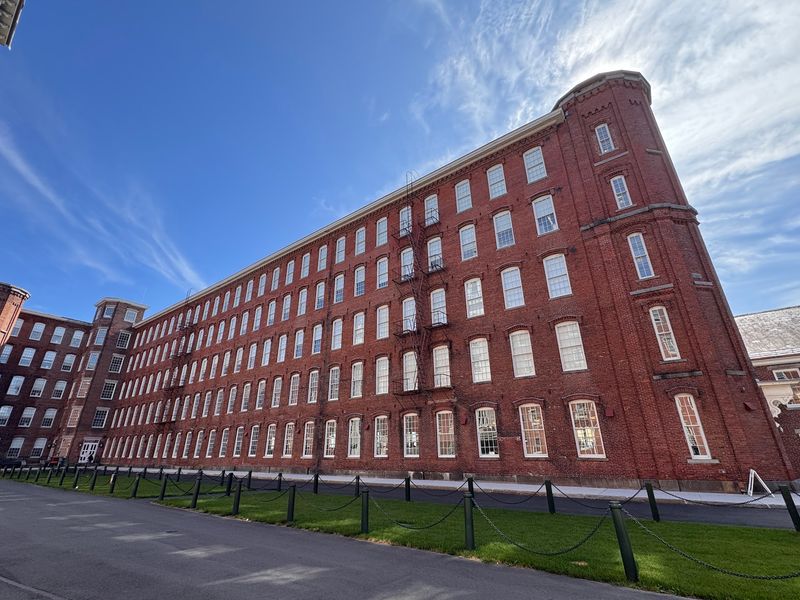
Before a single loom starts, the building gives you a clue about the size of the operation. Long brick walls and repeated rows of windows make the Boott Cotton Mills look very different from a small workshop.
Cloth production here belonged to an industrial system built around large buildings, shared power, and many workers.
The museum occupies part of the historic mill complex at 115 John Street in Lowell, Massachusetts. Its setting helps explain the exhibits before you even reach them.
You are entering a place designed for manufacturing, rather than a modern gallery made to resemble one.
Take a little time outside to study the windows and the shape of the buildings. Large windows brought daylight into workrooms before electric lighting became common.
The repeated design also hints at how factory owners arranged people and machines across several floors.
Inside, that scale becomes easier to understand. The weave room places machinery within an industrial space, so you can connect a machine to the room it needed.
Instead of seeing one isolated invention, you begin to see a working system.
Keep the distinction between the museum and the wider complex in mind. Not every part of the surrounding mill buildings is museum space or open for casual exploring.
Follow entrance signs and stay within areas marked for public access.
If you enjoy photographing architecture, start with a wide view, then move closer for brickwork and window details. Avoid blocking doors while lining up a shot.
A few minutes spent looking carefully at the exterior will give the indoor displays a stronger sense of place.
The building is more than a backdrop for old equipment. It helps show why mills reshaped cities: manufacturing required space, steady power, organized labor, and a layout that could repeat the same tasks at a remarkable scale throughout each working day.
When the Looms Start, the Room Changes
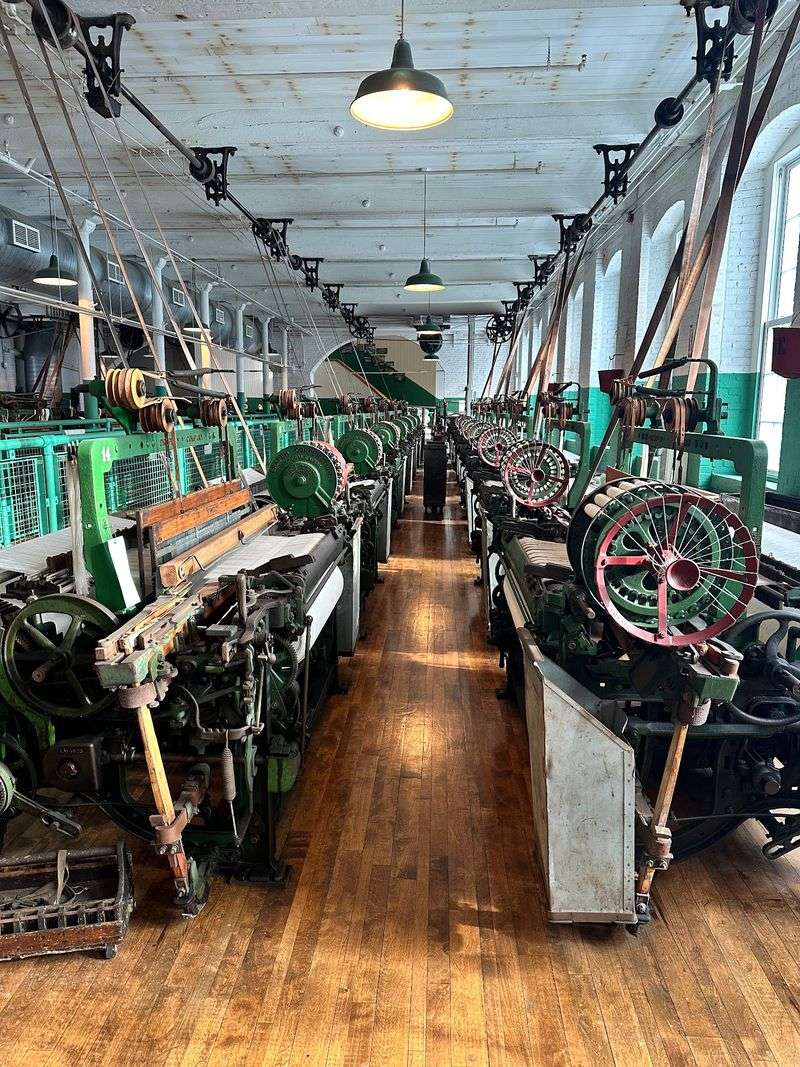
Your ears may notice the demonstration before your eyes settle on a single machine. Operating looms create a sharp, repeating clatter that turns a quiet museum visit into a physical lesson.
Depending on where you stand and which machines are running, you may also notice vibration underfoot.
The museum’s working weave room is its signature experience. Historic power looms show how threads become fabric through repeated mechanical motion.
Seeing them operate answers a question that a still photograph cannot: how did all those moving pieces work together?
Watch one loom first rather than trying to follow the whole room. Look for the threads held in place, the movement across them, and the growing cloth.
An operator or ranger can help identify the steps without burying you in technical terms.
Machines of this age need care, so a demonstration is not a promise that every loom will run. The museum operates selected equipment to explain the process.
Even a limited group can make the room surprisingly loud.
Use the hearing protection offered or recommended by staff, and bring suitable protection if loud sounds bother you. Families should prepare children before the machines begin.
Nobody needs to stand through discomfort to understand the exhibit.
Stay behind the visitor boundaries and keep hands away from machinery, even when it appears stopped. Loose clothing and dangling belongings should remain clear of equipment.
A good photograph is never a reason to lean into a working area.
Ask about demonstration timing when you arrive rather than relying on an older schedule. Then leave room in your visit to watch both the explanation and the operation.
The difference between silent equipment and moving machinery is the point: cloth making was a noisy, repeated task, not a quiet craft performed at the gentle pace of a museum stroll through display cases alone.
Follow the Thread Beyond the Factory Floor
A shirt can hide a surprisingly long chain of work. By the time cotton becomes finished cloth, it has passed through several stages, each with its own tools and skills.
The museum helps connect that familiar material to the process behind it.
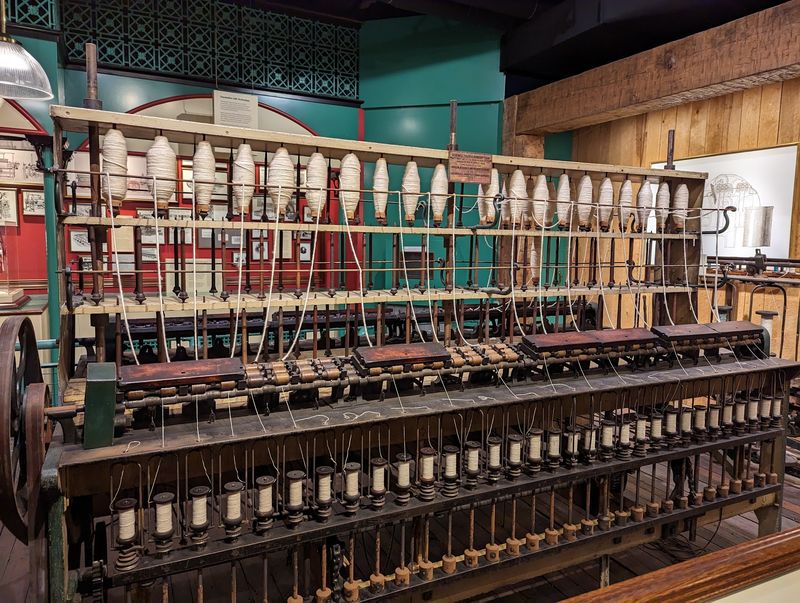
Weaving is only one part of textile production. Cotton fibers must be prepared and made into yarn before a loom can turn that yarn into fabric.
Keeping those stages separate makes the machinery much easier to understand.
Start with the simplest idea: a loom crosses one set of threads through another. The lengthwise threads are called warp, while the threads carried across them are called weft.
Those two words give you a useful handle on the demonstration.
Look closely at the cloth where viewing is allowed. A finished surface can appear plain from a distance, yet its structure becomes clear when you follow the crossing threads.
Color and pattern also depend on how yarn is arranged and woven.
The museum’s exhibits expand the story beyond the moving equipment. Displays explain manufacturing alongside the growth of industry, helping you connect individual steps to a much larger business.
Give those quieter areas time rather than treating them as a hallway after the main attraction.
If you are visiting with children, turn the process into a simple challenge. Ask them to explain how loose fiber could eventually become something they wear.
Then use the exhibits to fill in the missing steps together.
Adults can try a different question: which tasks demanded careful attention, even when machines supplied the power? Thread breaks, material changes, and equipment care remind you that automation did not remove human skill.
Before leaving this part of the museum, you should be able to look at ordinary cotton fabric and picture both its crossing threads and the work needed to create them.
The Workers Were Never Just Part of the Machinery
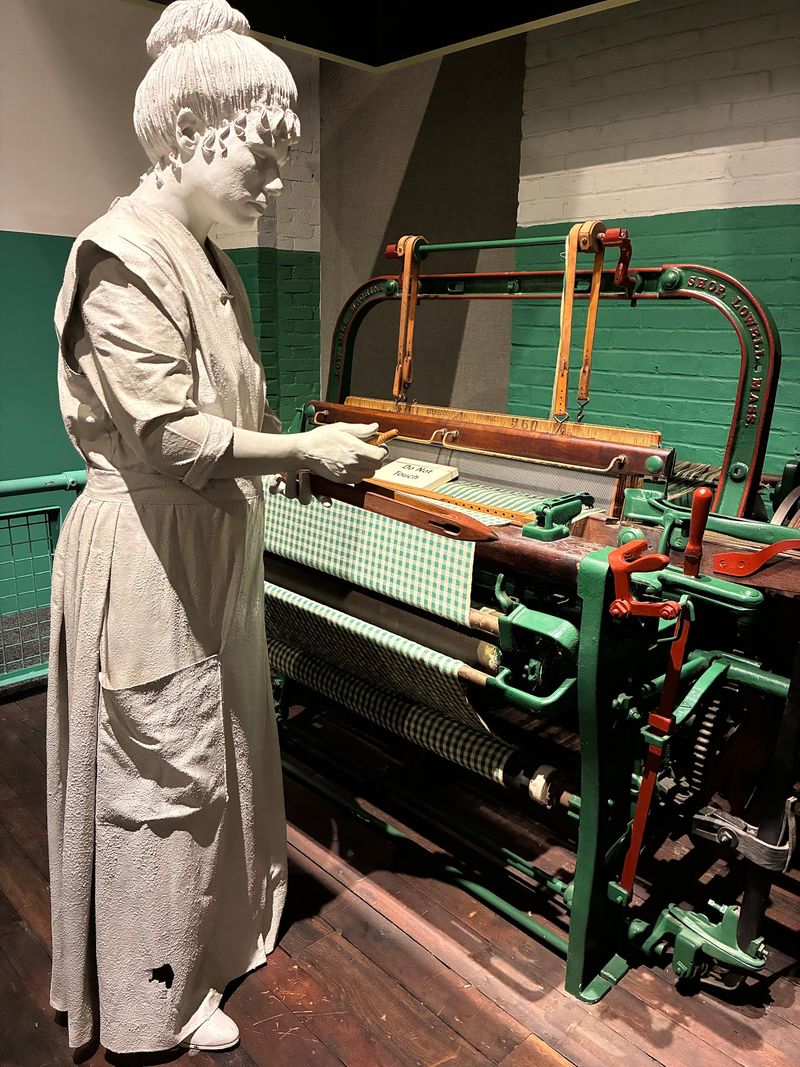
Imagine hearing that clatter for a full workday instead of a short demonstration. The question shifts your attention from clever machinery to the people expected to keep it running.
At Boott, labor history belongs at the center of the story.
Lowell became closely linked with young women who came to work in its textile mills, often called mill girls. For some, wages offered opportunities beyond life on a family farm.
Factory employment also brought strict schedules, supervision, and demanding conditions.
Opportunity and hardship existed together. Long hours and pressure to maintain production shaped daily life, while workers sought better treatment and a stronger voice.
The museum explores those tensions rather than presenting industrial growth as an uncomplicated success.
Later generations of workers added new backgrounds and experiences to Lowell’s mill communities. Immigration helped shape the city’s workforce and culture.
Follow the exhibits across time so the story does not stop with the earliest mill girls.
Photographs and personal accounts make broad topics easier to grasp. A face, a job description, or a detail about daily routines can show what a production number leaves out.
Slow down when an exhibit connects work inside the mill with life beyond it.
The loud weave room gives these displays useful context, but it cannot fully recreate a historical shift. Present conditions, a short demonstration, and visitor protections differ from factory life in earlier periods.
Use the sound as an entry point, not as a complete reenactment.
For a thoughtful family conversation, ask who benefited when cloth became cheaper and who carried the strain of making it. There is no need to turn the visit into a lecture.
The exhibits supply concrete examples that let you discuss wages, choices, safety, and fairness through the lives of real workers rather than through a distant textbook chapter alone.
Upstairs, Give the Quieter Exhibits Their Turn
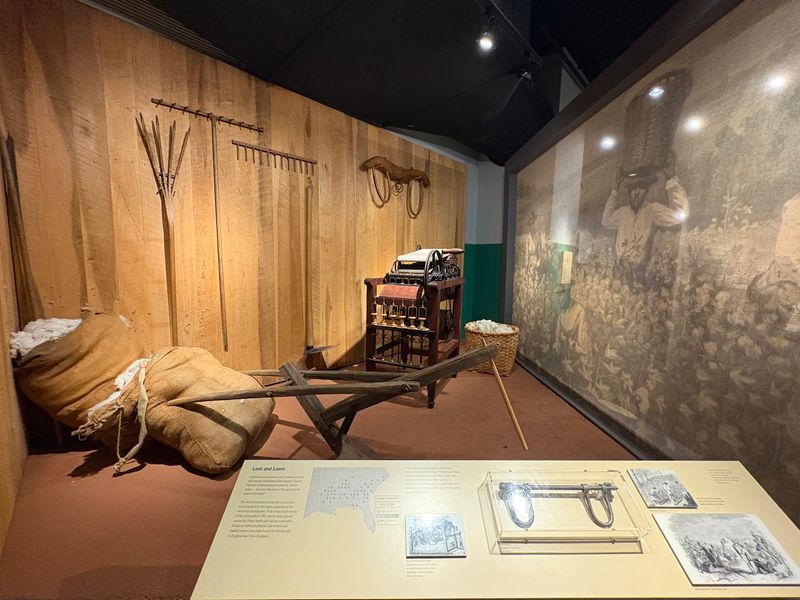
Once your ears get a break, your attention can shift to the bigger picture. The upper museum areas explore the mill, its workers, and the changes that industrial production brought to Lowell.
They reward a slower pace than the operating floor.
Allow time for the film presentation if it is available during your visit. Moving images and spoken stories can help link information scattered across several displays.
Ask staff about the current running time and when the next showing begins.
Different kinds of exhibits also give families options. Reading panels, looking at photographs, listening to accounts, and trying available interactive features do not require the same attention style.
A child who struggles with a long label may connect quickly with a visual explanation.
Rather than reading every panel in order, choose a topic that catches your interest. You might follow technology, working conditions, or the city’s growth.
Then add a second topic to see where the stories overlap.
For example, a new machine could increase production while changing the demands placed on its operator. A larger workforce could support a growing city while raising questions about housing and daily life.
Connections like these keep the galleries from becoming a collection of unrelated dates.
Build in a pause if the machinery demonstration has tired younger children or anyone sensitive to noise. Use the quieter spaces to regroup without rushing the remaining exhibits.
Follow posted rules around seating, food, and hands-on materials.
Before moving on, revisit one question raised downstairs. Perhaps you wondered who repaired the looms or how workers responded to changing conditions.
Searching for an answer gives the upper galleries a clear purpose and helps you leave with more than a picture of machines: you gain a better understanding of the larger system that kept those machines supplied, staffed, and running each day.
Let the Mill Explain Lowell’s Industrial Logic
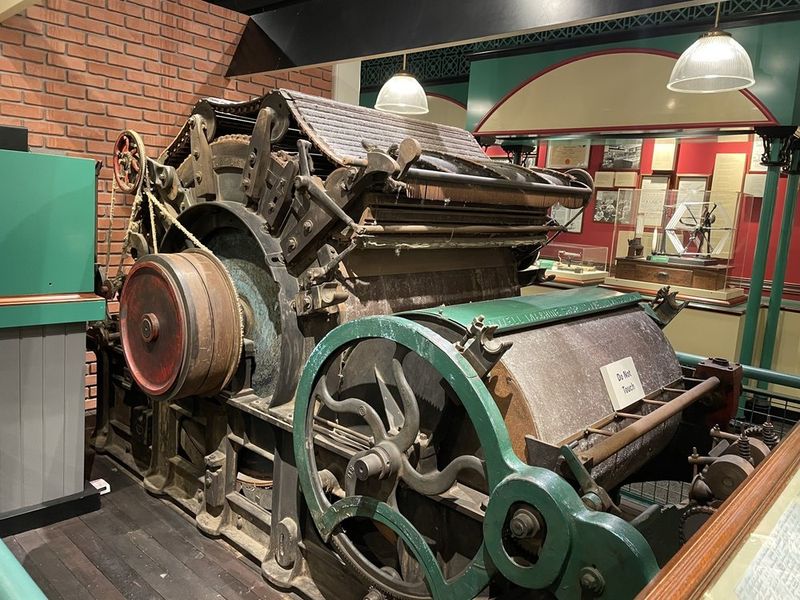
Why did a major textile operation grow here rather than somewhere else? The answer reaches beyond one building.
Lowell’s industrial development depended on water power, canals, investment, and a workforce organized around factory production.
Boott offers a useful place to connect those pieces. The museum shows manufacturing at the scale of a mill, while its historical exhibits place that work within the growth of Lowell.
Machinery becomes easier to understand when you know what supported it.
Water power helped make large textile mills possible in the city’s early industrial period. A canal system directed water for industrial use, linking geography with engineering.
Factory owners were not simply choosing attractive riverfront property; they needed a dependable source of power.
Inside the museum, look for explanations of how power reached the equipment and how production was organized. Avoid assuming that every machine on display represents the same decade or power arrangement.
Industrial technology changed over the mill’s long history.
The Boott mills began operating in the nineteenth century and continued into the twentieth. That long span is important because the museum’s working looms do not represent every stage of the site’s past.
Early development, later equipment, and changing labor conditions belong to different chapters.
A useful question for staff is how the weave room shown today fits into that timeline. Asking about dates can clarify which features are original to a period and which have been restored for interpretation.
Preservation makes history visible, but it also requires careful choices.
When you return outside, the building’s size will carry a different meaning. You can read it as part of a network that brought power, materials, and workers together.
The museum’s strongest local lesson is that Lowell’s factory growth was not accidental: it depended on geography, planned infrastructure, business decisions, and the labor needed to turn cotton into saleable cloth.
Plan Around the Demonstration, Not the Clock
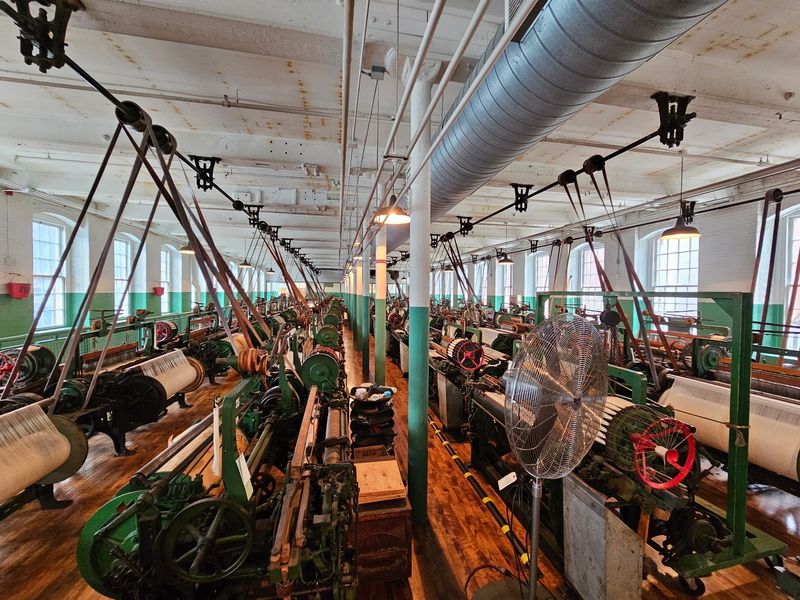
A little planning can keep the main attraction from slipping past you. The museum is at 115 John Street, within Lowell National Historical Park.
Set your destination specifically to Boott Cotton Mills Museum rather than assuming every park facility shares one entrance.
The supplied listing gives daily hours of 9 a.m. to 4 p.m., but confirm current hours before traveling. Seasonal operations, special closures, and program changes can affect a visit.
Admission prices and pass benefits should also be checked rather than taken from older accounts.
On arrival, ask when the looms will run and whether a ranger talk accompanies the demonstration. Build the rest of your visit around that answer.
If you head straight upstairs without checking, you could miss the operating session you came to see.
Allow roughly ninety minutes to two hours if you want the machinery, galleries, and film without hurrying. That is a suggested planning window, not a fixed tour length.
Your pace will depend on program timing and how much you enjoy reading exhibits.
Bring hearing protection if you have particular noise needs, and ask what the museum currently provides. Anyone with mobility or sensory concerns should check available accommodations before arrival.
Confirm elevator access and any temporary restrictions rather than relying on an old visit report.
Parking arrangements in downtown Lowell can change, so leave extra time to find a legal space and walk to the entrance. Carry only what you need, keeping bags manageable around displays.
Comfortable shoes help when your visit includes standing through explanations.
Save a few minutes at the end for a question you could not answer yourself. Staff can help connect a machine, a worker’s story, or a building detail to the broader history.
That final exchange can turn an impressive mechanical display into a clearer understanding of how the mill functioned.
📍 115 John St, Lowell, MA 01852, United States