Heavy cell doors and narrow corridors create an uneasy atmosphere before you even begin reading the stories at the Museum of Colorado Prisons in Cañon City. Housed in a former women’s correctional facility, the museum surrounds visitors with old cells, prison artifacts, and accounts of life behind bars that make Colorado’s correctional history feel unusually close.
Tales of unexplained activity add another chilling layer for anyone drawn to supposedly haunted places. Even without the ghost stories, the historic setting carries an undeniable sense of unease. Here, learning about the past can come with the uncomfortable feeling that you might not be exploring it alone.
Where the Uneasy Feeling Starts
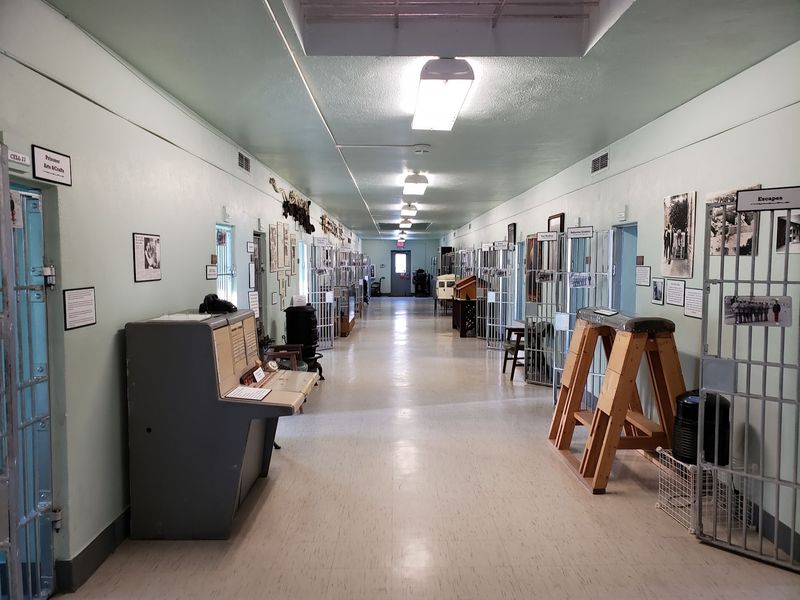
Even before the exhibits begin, the building does a lot of the work. The Museum of Colorado Prisons sits inside the original women’s prison in Cañon City, and that alone gives the place a heavy, serious presence. Brick walls, narrow windows, and a no-nonsense entrance set the tone fast.
Plenty of museums try to create mood with lighting or music. Here, the structure itself handles that job. The setting is not polished into a theme park version of the past, so the experience starts with the plain reality of an older correctional space.
That matters because the museum never has to pretend to be eerie. The hallways and cells already carry the look of confinement, and the layout reminds visitors that the building once had a much different purpose than education. Every step through it feels tied to real use, not staged drama.
Cañon City is already known for its strong connection to prisons, so the location adds another layer. Seeing this museum in the middle of that larger story makes it more than an odd stop on a road trip. It becomes a window into how deeply incarceration shaped the area around it.
For anyone hoping for a haunted-museum vibe, the visual setting delivers right away without needing wild claims. The uneasy energy comes from old architecture, strict design, and the knowledge of what happened in spaces like these. That is often more effective than jump scares or ghost-tour tricks.
Start slowly when entering, especially if old buildings tend to pull your attention in many directions at once. Look at the doors, the bars, and the long sightlines before rushing to the displays. The museum works best when the building is treated as the first exhibit, because in many ways, it is.
Thirty Cells, Thirty Different Stories
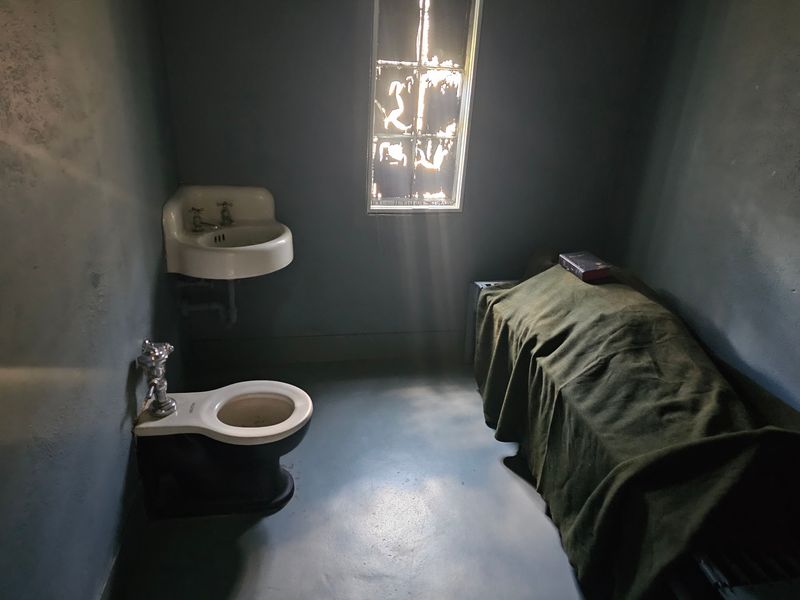
One of the smartest things about this museum is how it uses the old cells. Instead of treating them like empty backdrops, the museum turns roughly 30 cells into focused exhibit spaces, each one packed with a different slice of prison history. That setup keeps the visit moving while making every stop feel contained and intense.
A big open gallery can blur together after a while. Small cells do the opposite. You step from one topic into the next with a natural pause between them, which makes the information easier to take in and harder to forget.
Some rooms highlight prison life, while others center on artifacts, photos, equipment, or specific chapters in Colorado corrections history. The result is a visit that feels organized without becoming dry. There is always another door, another display, and another shift in subject waiting a few feet ahead.
The self-guided format helps here. Visitors are usually given a booklet to follow along, so there is no need to bunch up around a guide or rush with a group.
That freedom lets readers spend extra time on the displays that catch their eye, whether they care most about daily routines, major crimes, or how prison systems changed over time.
Families should know that some material is serious and can be graphic. A careful lap through a room before younger kids read every panel can be a good move. The museum is informative, but it does not soften difficult topics just to make them easy.
Plan more time than the small size first suggests. The building may not look huge from outside, yet a cell-by-cell layout naturally slows people down.
Anyone who likes reading signs and studying details can easily spend well over an hour, especially once the rhythm of opening one more door becomes impossible to resist.
The Gas Chamber Stops You Cold
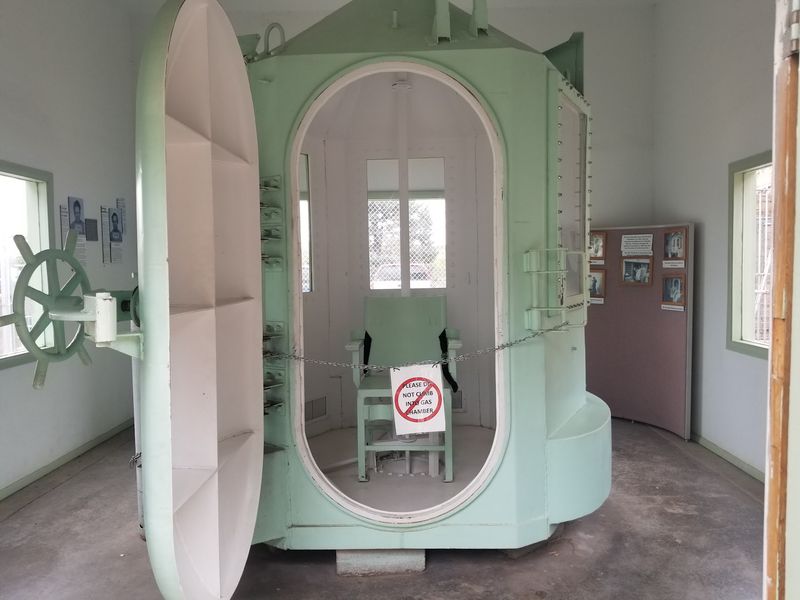
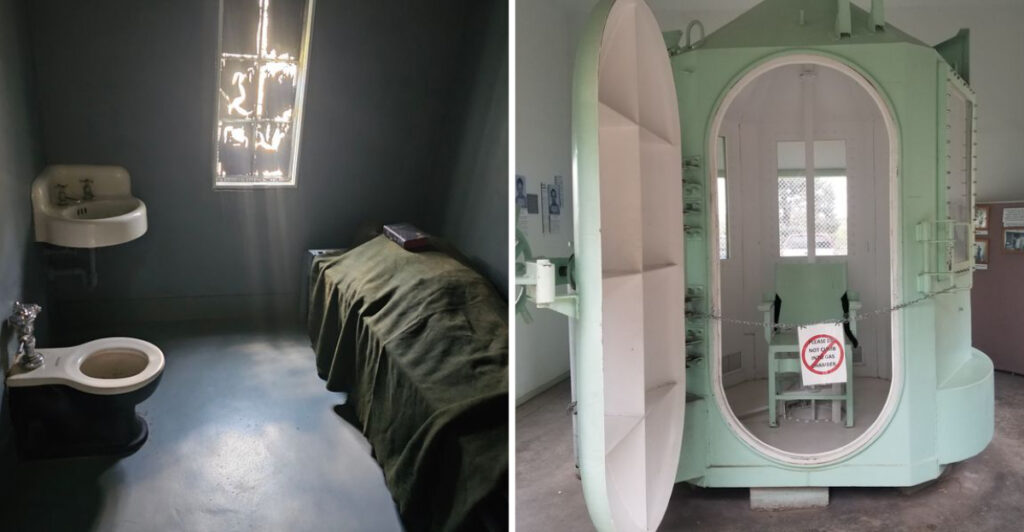
Few museum pieces hit as hard as the gas chamber connected with this site. It is the exhibit many travelers have heard about first, and it carries a shock that does not depend on special effects. Just knowing what it was built for changes the mood of the entire visit.
Some visitors even notice part of that story before paying admission, since the chamber can draw attention from outside. Going inside the museum adds the context that turns quick curiosity into a more serious understanding.
Instead of being a random strange object, it becomes part of a bigger conversation about punishment, policy, and how justice has changed over time.
The strongest reaction usually comes from how plain it looks. There is no dramatic movie styling to hide behind. The design feels practical, cold, and direct, which somehow makes it more unsettling than anything exaggerated.
That section works best when approached slowly. Read the labels, look at the materials, and let the details explain the system around the chamber rather than treating it as a quick photo stop. The exhibit is sobering, and rushing through it can flatten the meaning.
For older kids, teens, or adults interested in history, it can open important discussions about criminal justice and the past use of execution methods.
Parents with younger children may want to decide in advance how much detail to share. The museum gives a real-world view of a difficult subject, and that honesty is part of what makes it powerful.
If the haunted reputation of the museum catches people first, this exhibit often explains why the place can feel so heavy. There is no need to prove ghost stories when the documented history already creates such a strong reaction. The gas chamber is not the whole museum, but it is the point where the visit often turns from curious to deeply serious.
Colorado History Through a Women’s Prison
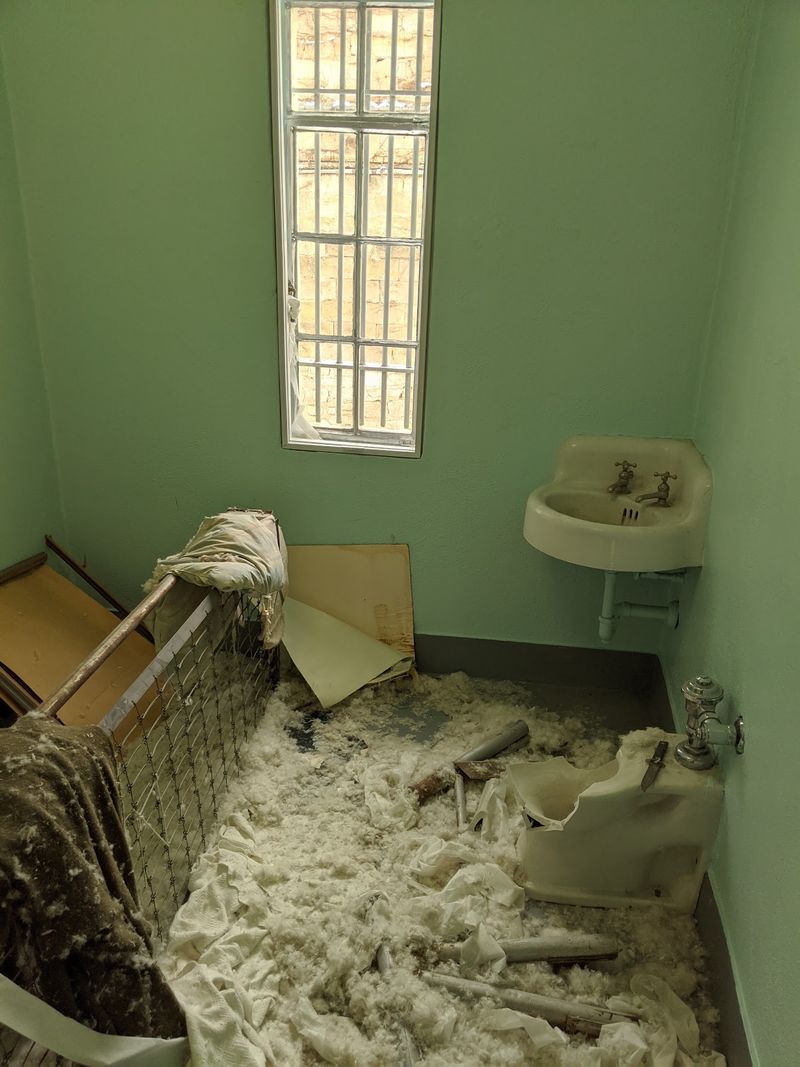
Here is one of the museum’s most important twists. The building is not just any old correctional site. It is the original women’s prison, and that gives the exhibits a very specific frame for understanding Colorado’s prison history.
That detail changes the visit in useful ways. Instead of hearing only the broad story of crime and punishment, visitors also see how incarceration touched different populations and institutions over time. The building helps ground those lessons in a real place with a clear identity.
Walking through former cells while reading about the prison system creates a sharper sense of scale. History stops being abstract when it is tied to a room you can physically stand in.
The close quarters, heavy doors, and institutional design make the social history easier to grasp than a textbook paragraph ever could.
Cañon City is one of the strongest places in Colorado for understanding the state’s corrections story. That makes the museum useful far beyond ghostly appeal or unusual-roadside-stop energy. It connects local identity, state policy, and lived experience in one compact building.
Visitors interested in the human side of the museum should pay attention to the photos, written stories, and changes in prison practices shown across the exhibits.
The material does not need dramatic language to leave an impact. Ordinary details such as clothing, routines, and room setup show how controlled daily life could be.
There is also value in noticing what the museum does not glamorize. It presents tough material, but it is still a history museum first. That steady approach keeps the focus on learning rather than turning the prison setting into pure spectacle.
Anyone making a day of Colorado attractions around Cañon City can use this stop as a deeper counterpoint to more scenic outings nearby. Mountains and gorges tell one version of the state. This building tells another, and it is far more complicated.
Weapons, Uniforms, and the Hard Edges of Daily Life
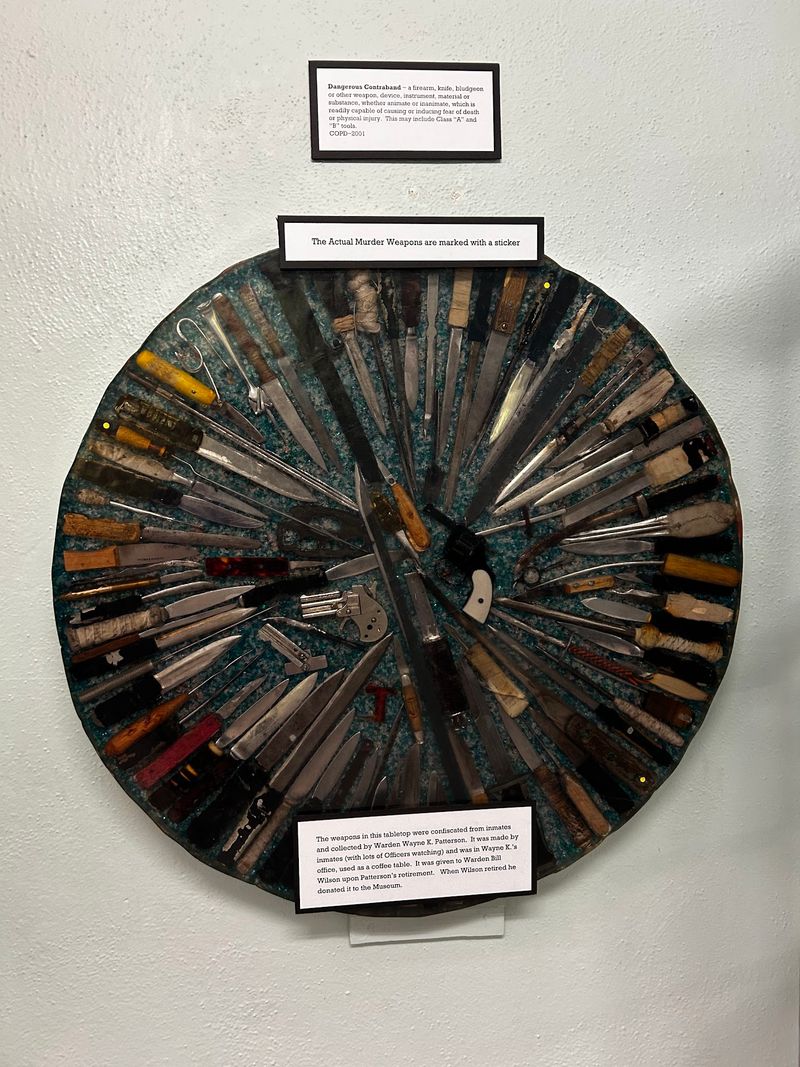
If the old cells provide the chill, the artifacts provide the sharp detail. Inside the Museum of Colorado Prisons, displays of confiscated weapons, uniforms, prison equipment, photos, and other correctional objects give the visit its gritty texture.
They show prison history not as a distant idea, but as a chain of real objects built for control, defense, work, and survival.
Confiscated weapons tend to draw immediate attention, and for obvious reasons. They are often small, improvised, and unsettling in their creativity. Seeing them up close reveals how tense prison life could become and how everyday materials might be turned into dangerous tools.
Uniforms and staff equipment add a different angle. They remind visitors that a prison is also a workplace with systems, routines, and strict roles.
Clothing, riot gear, medical items, and correctional tools all help explain how order was maintained and how institutions presented authority.
The museum also mixes in stories, photographs, and donated items that widen the picture. Instead of one dramatic object stealing the whole show, many smaller pieces build a fuller sense of prison life.
That layered approach is especially useful for readers, history fans, and older students who like connecting objects to larger themes.
This is a strong place to slow down and study labels carefully. The visual impact comes first, but the written context is where many exhibits become more meaningful. A rough homemade weapon looks alarming on its own. Learning when and why it existed turns alarm into understanding.
Some museum collections feel random, as if items were gathered simply because they were old. Here, the objects support the setting and the subject in a direct way.
The displays keep pointing back to one central fact: prisons are built on constant pressure, and these artifacts make that pressure visible in steel, cloth, paper, and glass.
Best Way to Walk Through the Eerie Parts
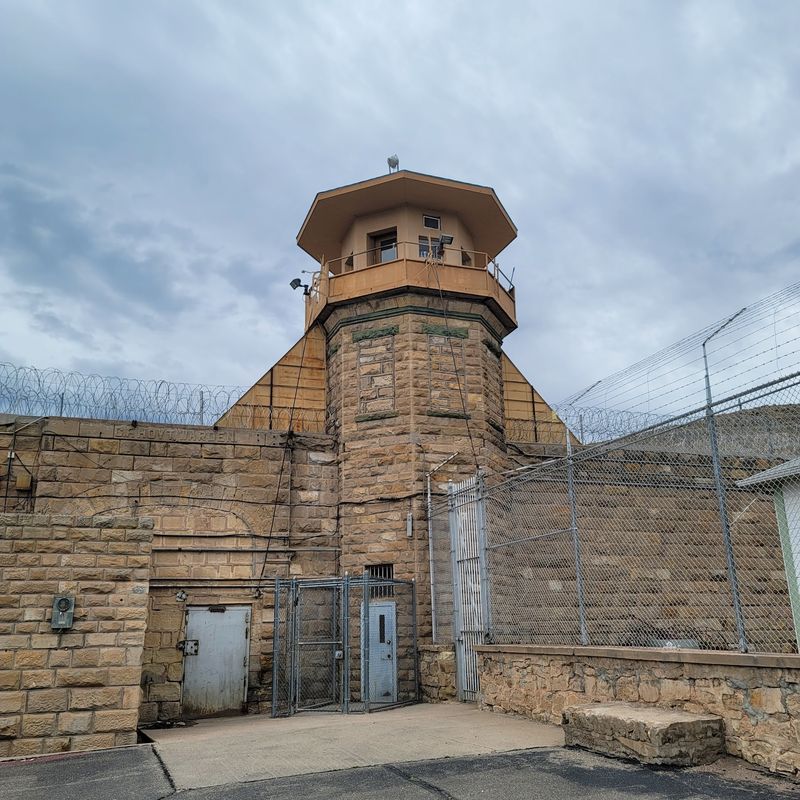
Rushing is the easiest way to flatten this museum, so a slower pace wins. The Museum of Colorado Prisons works best as a self-guided walk with pauses, not as a race to glance into every cell. A booklet is often provided, and using it turns the visit into a clearer, more connected experience.
Start with the building itself before getting lost in labels. Notice the stairs, the hallway length, the way each cell opens into a small world of its own. Once that physical layout sinks in, the exhibits make more sense because the setting is no longer background decoration.
After that, choose a rhythm. Some visitors move cell by cell and read nearly everything. Others scan the rooms, then return to the subjects that catch them most, such as execution history, inmate-made objects, the women’s prison connection, or modern correctional topics like information related to high-security facilities.
For adults traveling with kids, a little previewing helps. Several displays cover disturbing material, and younger readers may need guidance on what they are ready to process. That does not mean skipping the museum altogether. It just means shaping the route thoughtfully.
Another helpful tip is to protect more time than the front door suggests. Small museums can fool people into expecting a quick stop, but this one gets denser as you move through it. Reading, thinking, and circling back can easily push a visit toward 90 minutes or more.
Quiet moments matter here too. When a museum has a haunted reputation, some visitors arrive waiting for a dramatic jolt. A better approach is to pay attention to the stillness, the old materials, and the contrast between public display and private confinement.
That is where the place becomes most gripping. End with the gift shop only after finishing the exhibits. It breaks the tension nicely and gives the visit a softer landing after all the steel, stone, and hard history upstairs.
Timing, Price Expectations, and the Final Chill
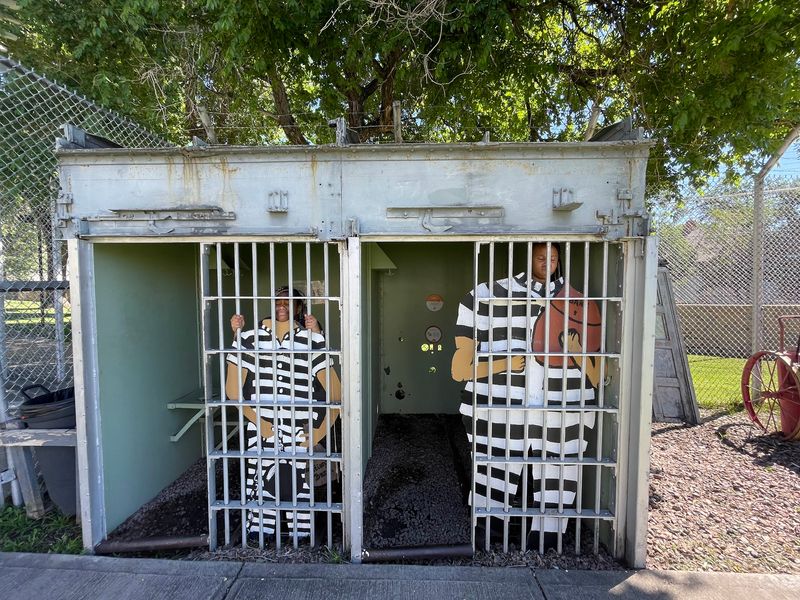
A good plan makes this visit better, especially because the museum can feel smaller on the outside than it does once you are inside reading everything.
Daily hours generally run from 10 AM to 6 PM, which gives travelers a simple daytime window to work with. Still, arriving too close to the end of the day is not ideal for a place built on slow looking and careful reading.
An early or mid-day visit gives the museum room to unfold. There is less pressure to speed through serious exhibits, and the steady pace suits the setting. On hot days, the indoor stop can also be a smart break from more exposed outdoor attractions around Cañon City.
As for budget, admission is usually considered reasonable for a specialty museum with a lot packed into one building, though expectations matter.
Anyone hoping for a huge modern attraction with interactive effects may misread what this place offers. The value comes from depth, not size, and from the rare chance to explore a former prison space at close range.
Parking and entry are fairly straightforward, but the old building format means paying attention to stairs and timing is wise. Comfortable shoes help, especially for visitors who like to stand and read. Bringing a curious mindset matters even more than bringing a camera.
The final reason this museum stands out is simple. It combines Colorado history, difficult subject matter, and a setting that already carries visible tension in its walls.
The haunted angle may catch attention first, but the stronger draw is how directly the museum presents incarceration without dressing it up.
That balance makes the place memorable in a sharper way than a typical roadside stop. You come for the eerie reputation, then realize the real power is the history sitting in every locked-looking doorway. For a museum visit with both chills and substance, Cañon City delivers the real thing.
Share this story