Not every Colorado state park comes with crowded trailheads and packed parking lots. Just outside the mountain town of Divide, Mueller State Park offers a quieter side of the Rockies, where sprawling meadows, dense forests, and panoramic mountain views create an ideal setting for hiking, wildlife watching, camping, and peaceful scenic drives.
With more than 5,000 acres to explore and miles of well-maintained trails, it’s easy to spend an entire day immersed in nature without feeling rushed. For travelers looking to experience Colorado’s natural beauty away from the busiest destinations, Mueller State Park is a hidden gem well worth discovering.
The Drive In Changes the Mood Fast
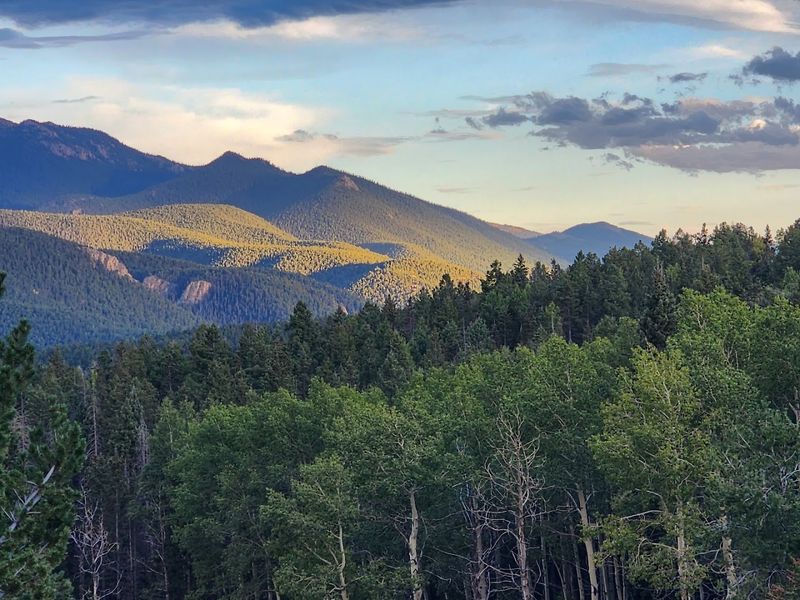
The approach to Mueller State Park does not build with flashy drama. It starts with a simple road near Divide, then slowly trades everyday errands for thicker forest, wider sky, and the kind of elevation that sharpens every color.
By the time the park opens up, the shift is obvious: less noise, more distance, and a steadier rhythm. That first visual contrast is one of the park’s best tricks.
Dense stands of spruce and pine suddenly give way to meadows, and those meadows frame long views instead of hiding them.
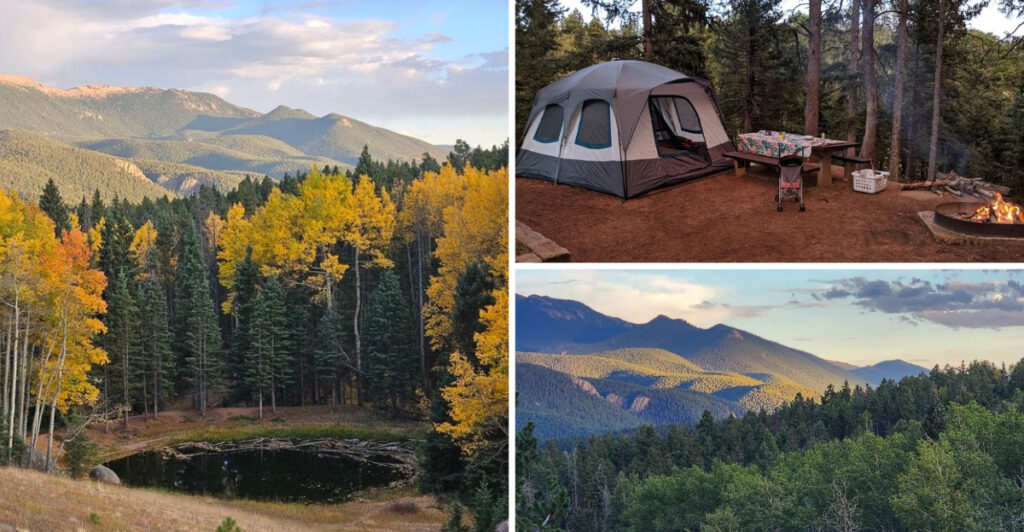
On clear days, the horizon looks layered rather than crowded, with ridgelines stepping back one by one and Pikes Peak showing up like a familiar landmark that never needs an introduction.
Mueller sits high enough to feel alpine, but the layout stays welcoming. Roads are accessible, trailheads are spread across the park, and the landscape never reads as staged or overbuilt.
It feels like Colorado left mostly alone, with infrastructure tucked in just enough to make the day easier without interrupting the scenery.
There is also an immediate quiet here that lands differently than silence in a remote wilderness area. You are not battling city noise or shoulder to shoulder turnout chatter, yet you are not committing to an all-day expedition either.
That balance gives the park unusual range, especially for anyone craving mountain space without logistical friction.
It’s easy to see why this park has become a favorite for visitors looking to escape the busier mountain destinations. Within minutes of arriving, the air cools, the ground opens, and the usual Front Range rush starts to fall away behind the trees.
Trails That Reward Attention, Not Just Mileage
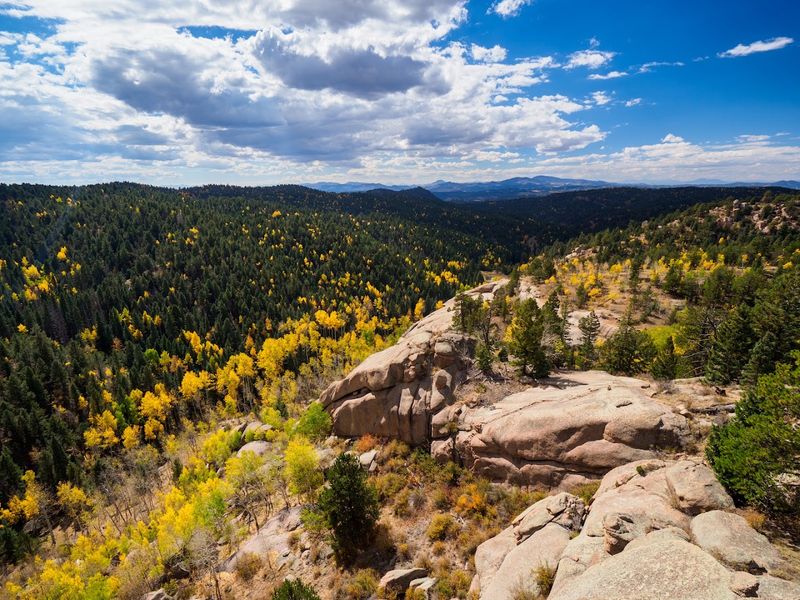
Mueller State Park earns its reputation on the trail network, and not because every route is extreme. The appeal is variety.
You can pick a shorter walk with quick scenery, commit to a longer loop, or link segments together for a day that moves between forest shade, open grassland, and high viewpoints without ever feeling repetitive.
The terrain has a useful honesty to it. Several hikes begin with a gentle downhill or rolling stretch that feels easy at first, then remind you later that high elevation changes the math.
That design makes pacing matter, especially if you are used to flatter parks where the return feels like an afterthought.
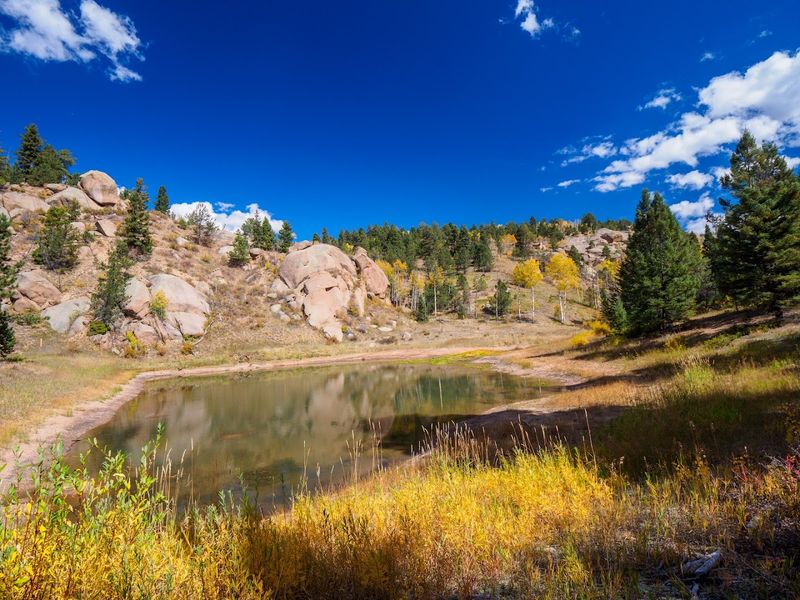
Good trail systems reveal the character of a place instead of just transporting you through it. Here, one section may thread through quiet timber, the next may step into a bright meadow with broad mountain sightlines, and another may skirt ponds or damp low spots where wildlife movement is more likely.
The scenery changes often enough that the miles break naturally into chapters. Just as important, the trails are legible. Clear markings, numbered routes, and trailhead access make it easier to choose a route that fits your energy instead of guessing wrong.
That matters at nearly 9,000 feet, where overcommitting can turn a relaxed outing into a slow climb back to the car. This is the kind of park where a three-mile hike can feel satisfyingly complete, and a longer outing can still keep revealing new texture.
Mueller does not rely on one famous path. Its strength is how many different kinds of days the trail map can hold.
Where Colorado Opens Into Meadows and Big-Sky Views
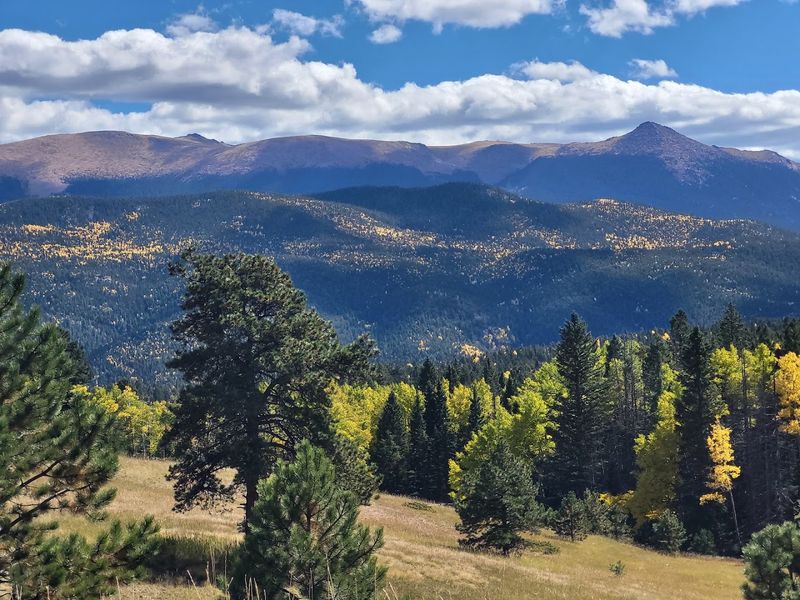
Some mountain parks are all forest, which can be beautiful but visually narrow. Mueller State Park works differently.
Its meadows give the whole landscape breathing room, creating those wide visual pauses where the eye can travel from grasses to tree line to distant peaks without hitting a wall of timber.
That open structure changes the experience of walking here. Light moves across the park in a bigger, more noticeable way, and weather becomes part of the scenery instead of a backdrop.
Morning can look clean and silver, midday turns the grass bright and high-contrast, and late afternoon throws longer shadows that make the rolling terrain read almost like waves.
The views are impressive partly because they are not delivered from a single crowded platform. They show up in intervals.
A bend in the trail, a rise near a meadow edge, or a clearing above the surrounding terrain can suddenly frame mountain ranges, Pikes Peak, or broad sections of the park in a way that feels discovered instead of scheduled.
Open meadows also create habitat variety, which is one reason the park feels active even when it is quiet. You notice more movement at the edges: birds crossing low, deer stepping between cover and grass, shifting light over distant slopes.
The landscape is not static, and that makes even a slower walk feel eventful. For photographers, casual hikers, or anyone who gets restless in unbroken woods, this balance is a gift.
Mueller gives you the intimacy of a forest park and the visual range of a much larger mountain basin, often within the same half hour.
Wildlife Watching Without the Theme-Park Energy
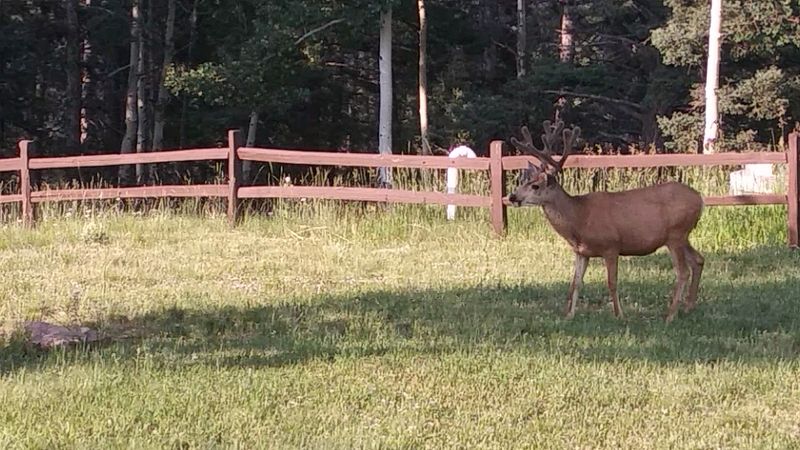
Wildlife is part of Mueller State Park’s identity, but the park does not package the experience with spectacle. There are no guarantees, no staged feeding moments, and no sense that animals exist to perform on schedule.
Instead, the landscape is arranged in a way that gives patient observers a real chance, especially near meadow edges, ponds, and quieter stretches of trail.
That low-key approach is exactly why the experience works. When animals do appear, whether it is elk, mule deer, birds, or the occasional moose, the sighting lands as a genuine interruption rather than a planned attraction.
You notice how much habitat diversity matters here: forest for cover, open areas for movement, and enough space that wildlife can remain visible without looking cornered.
Even when nothing large steps into view, the park still reads as biologically active. Bird calls carry through the trees, small movement flickers along the undergrowth, and tracks or worn paths hint at what passed through earlier.
It rewards alertness more than luck, which makes the whole outing feel richer than a simple checklist search. The practical side matters too. Early and late hours usually offer cooler temperatures, softer light, and a quieter setting, all of which improve the odds of seeing more.
Keeping a respectful distance is not only safer, but it also preserves the calm that makes these encounters possible in the first place.
Mueller handles wildlife the way a strong state park should. It protects enough habitat to make observation plausible, then lets nature keep its timing.
For anyone tired of crowded scenic stops and constant background noise, that restraint is part of the park’s real appeal.
The Campground Advantage Most Day Visitors Miss
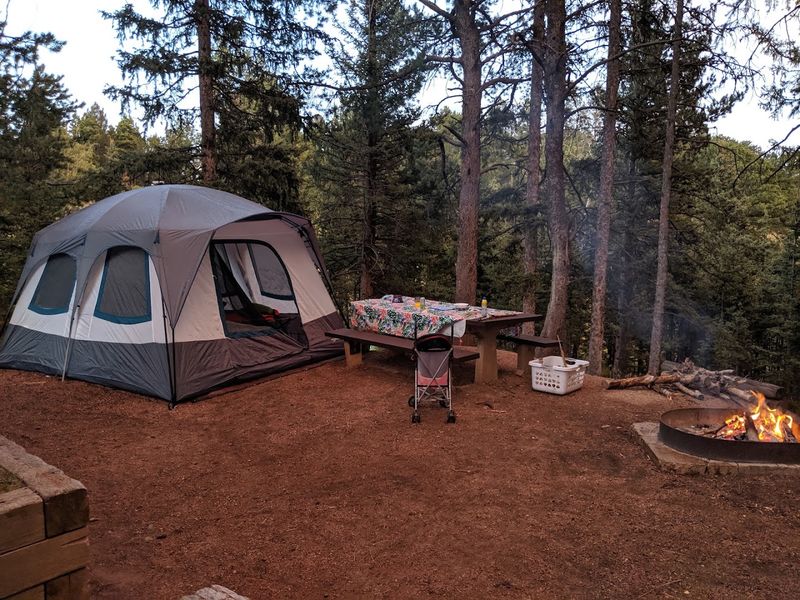
Day hiking gets most of the attention, but staying overnight reveals a second version of Mueller State Park. The campgrounds sit high, quiet, and well spaced, which changes the pace completely.
Instead of fitting the park into a few afternoon hours, you get early light, colder air, and the long twilight that makes mountain campgrounds feel most alive.
One of the strongest advantages is how the campsites connect you to the setting without dropping comfort. This is not a bare-bones stopover where scenery and usability are in conflict.
Campers have access to practical amenities, and many sites are positioned to take advantage of open views, forest cover, or both.
The layout matters more than it sounds. Roads and loops are organized enough to keep things straightforward, yet the camp areas avoid that parking-lot look that can flatten the outdoor mood.
Trees break up sightlines, ridges create separation, and even a developed campground can still feel immersed in the landscape rather than laid on top of it.
At this elevation, overnight conditions deserve respect. Temperatures can cool quickly, afternoon weather can shift, and the thin air can make a short walk to the restroom feel more noticeable than expected.
Planning for layers, hydration, and an earlier reservation window is smart, especially in warmer months when Colorado campers move fast on good sites.
For anyone deciding between a day trip and a full stay, the campground is where Mueller starts to pull away from easier roadside parks. Evening settles in, the traffic disappears, and the mountain setting finally gets the uninterrupted time it deserves.
Why Locals in Divide Talk About Timing So Carefully
Mueller State Park is easy to reach from the Colorado Springs side, which is part of the reason timing matters so much. It is not hidden by distance.
Its protection comes more from habit: locals know when to go, which trails match the day, and how quickly weather, temperature, and exposure can change the experience.
Morning is often the smartest play. The air is cooler, trailheads are calmer, and open sections that can feel warm later are still comfortable.
Wildlife movement tends to be better, the light is cleaner across the meadows, and uphill returns are kinder before the sun settles in.
Afternoons require a little more strategy. Thunderstorms are always worth keeping in mind at elevation, and some exposed stretches can feel surprisingly hot despite the mountain setting.
Carrying more water than you think you need, checking the map before starting, and remembering that downhill first often means uphill later are small decisions that pay off quickly.
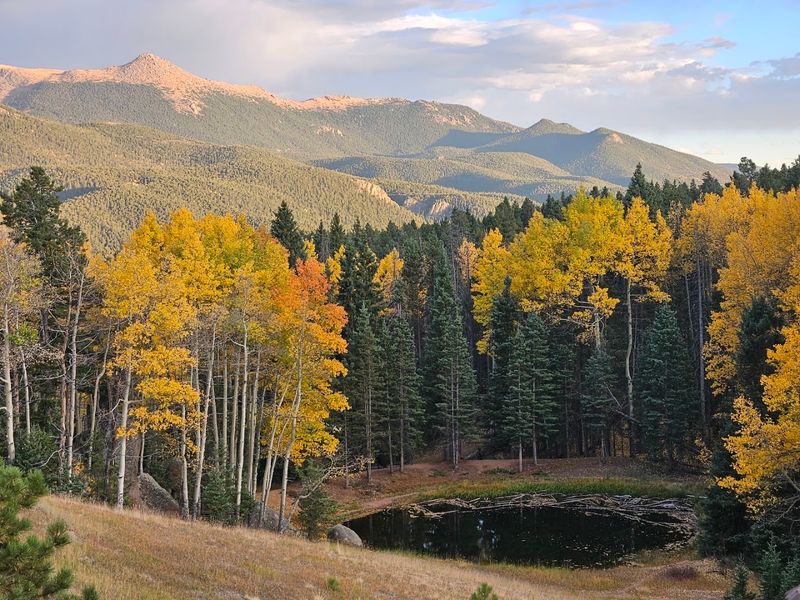
Seasonality adds another layer. Summer brings easy access and long days, fall can light the aspens and sharpen the views, and winter changes the park into a quieter base for snow-focused outings when conditions cooperate.
The visitor center and trailhead information become especially useful when snow coverage or road details shape the plan.
This is not difficult travel, but it rewards a local mindset. Arrive a little earlier, choose with intention, and respect the altitude. Mueller gives back more when treated as a mountain park first and a casual roadside stop second.
A State Park That Still Knows How to Stay Quiet
Plenty of parks in Colorado are beautiful. Fewer manage to stay calm while being accessible, scenic, and genuinely useful for different kinds of visitors.
Mueller State Park pulls that off with surprising confidence, offering enough infrastructure for an easy day while protecting the spacious, unhurried character that usually disappears once a place becomes widely known.
The park’s strength is not a single headline feature. It is the combination of meadow views, varied trails, wildlife potential, high elevation camping, and a layout that keeps the experience moving instead of bottlenecking into one famous stop.
You can hike, picnic, watch weather roll across the ridges, or simply drive between trailheads and still come away with a full sense of place.
That versatility helps explain why the park remains one of the quieter alternatives to Colorado’s better-known outdoor destinations. Mueller is close enough for repeat visits, broad enough to support different moods, and polished without turning overly commercial.
Families can use it one way, serious hikers another, campers another, and none of those experiences cancel out the others.
There is also a refreshing lack of performative hype here. The park does not need oversized signage, crowded selfie platforms, or manufactured excitement.
Its details do the work: clean trail access, open views at the right moments, forested quiet, and enough room to let the scenery arrive naturally rather than on command.
If the best parks are the ones that fit into real life while still changing your pace, Mueller belongs high on the list. It is the kind of Colorado place locals mention selectively, then hope you treat with the same respect that keeps it so good.
Share this story