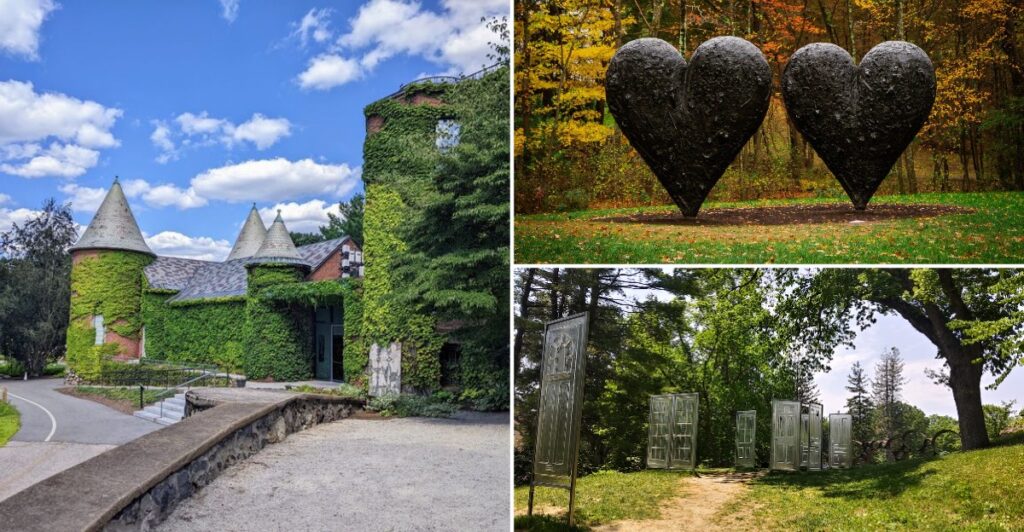
A walk through the woods in Lincoln can suddenly put you face-to-face with a sculpture big enough to stop you in your tracks. At deCordova Sculpture Park and Museum, contemporary art spreads across a former private estate filled with tall trees, grassy slopes, and views of Sandy Pond. The appeal comes from how naturally the artwork and landscape mix, giving you space to wander, look closely, and decide what each piece means without feeling rushed or intimidated.
Some corners feel almost hidden, while others open into broad views. For anyone looking for a Massachusetts outing that blends art, nature, and a little surprise, deCordova makes an easy place to spend a few unhurried hours.
Massachusetts Woods With an Unexpected Art Collection

You might arrive expecting a museum entrance, then realize that the grounds themselves are the main event. Across deCordova’s roughly 30 acres, outdoor sculpture interrupts the familiar shapes of lawns, trees, and wooded paths. A large artwork can appear against the sky before you have even reached its label.
The surprise comes from scale and placement rather than a single grand reveal. Some pieces occupy open grass, where you can see them from several directions. Others sit closer to trees, making the surrounding branches and shadows part of your view.
Unlike a gallery with a clear line of rooms, the park asks you to choose where to look next. A turn in the path may lead toward another sculpture, a stretch of lawn, or a different angle on something you already passed. That freedom makes an ordinary walk more alert and curious.
Give yourself a few minutes to settle into the setting before chasing every marker on the map. Notice how a solid form changes when its background shifts from pale sky to dark leaves. Even without knowing the artist’s name, you can spot those differences right away.
The landscape also sets the pace in practical ways. Open areas can be sunny and warm, while wooded stretches offer different light and footing. Wear shoes meant for walking outdoors, and expect a visit that involves more movement than standing in front of framed pictures.
Keep your first circuit loose rather than treating it as a scavenger hunt. Choose one nearby work, walk toward it, and let the next sightline guide you onward. You can return to the map once you understand the layout, but that first unhurried stretch is useful for seeing how this estate joins art and land, with enough space between pieces to let each encounter begin on its own terms.
Walk Around the Art Before You Read the Label
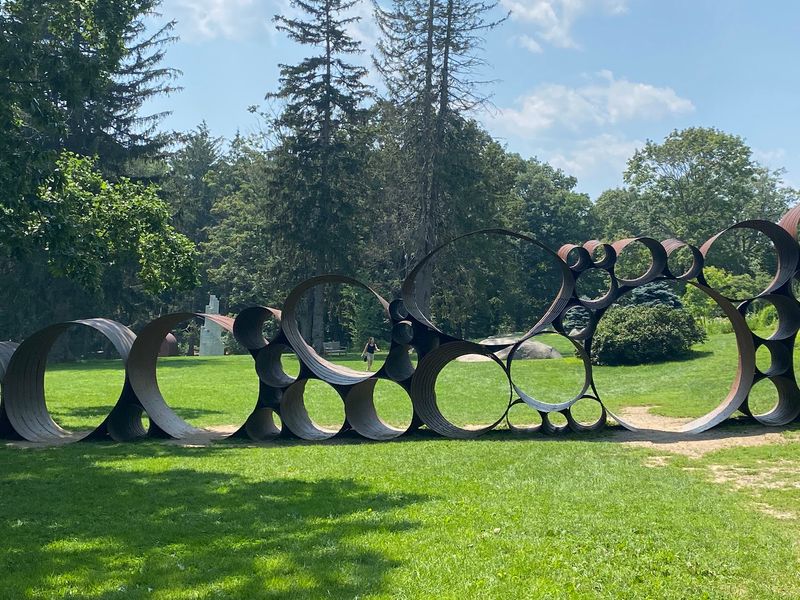
A sculpture can look completely different after ten steps to the left. At deCordova, you have the space to test that simple idea instead of viewing every piece from one fixed position. Shape, balance, empty space, and surface become easier to notice when your feet do some of the work.
Start with a quick look before reading the nearby information. Decide whether the piece seems heavy, airy, orderly, strange, or funny. There is no need to guess the correct response, and your first reaction gives you something to compare with the artist’s ideas.
Next, move around the work where paths and posted rules allow. A gap that seemed small may suddenly frame a tree, while a broad side can narrow to an edge. Stand farther back to understand the outline, then look closer without touching or entering areas that are restricted.
Labels help connect that visual experience to a name, date, material, or larger theme. Read them after you have formed a few questions of your own. The information becomes more useful when it answers something you actually noticed, rather than arriving as a block of unfamiliar facts.
Because outdoor displays can change, avoid building the entire visit around one sculpture seen in an older photograph. Check the current park information if a particular artwork is your main reason for coming. A changing selection also means a return visit may offer different subjects and arrangements.
Choose several pieces for close attention instead of trying to study everything equally. One might invite a slow walk around its base, while another works best from across the lawn. If you are visiting with someone, compare descriptions before consulting the label together; two plain observations can open a better conversation than a hurried attempt to sound knowledgeable about contemporary art or the artist’s intentions on the spot.
The Private Estate Behind the Public Park
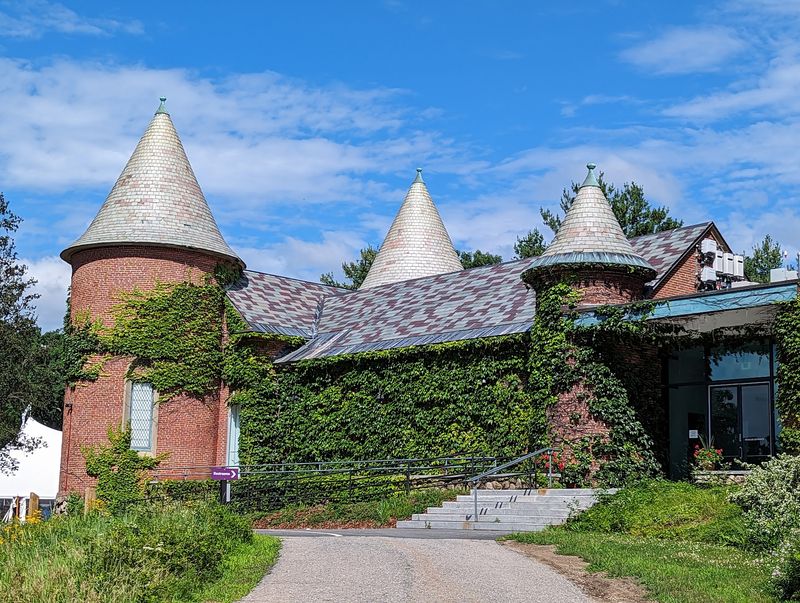
Before sculpture filled these grounds, the property was a private home. Julian de Cordova and his wife, Elizabeth, lived on the estate overlooking Sandy Pond. Their name now belongs to a cultural destination, but the setting still helps explain why this place differs from a museum built on a city block.
Julian was a businessman and collector whose interests helped shape the property’s future. He gave the estate to the town of Lincoln with the intention that it become a public museum. The museum opened in 1950, turning a personal setting into a place for shared encounters with art.
That history is useful to know while walking between the building and the grounds. The lawns, slopes, and pond setting were not simply added as decoration around a standard gallery. They belong to the estate’s identity and now provide a broad outdoor stage for modern and contemporary work.
Over time, deCordova developed a strong connection to contemporary art and became especially known for its sculpture park. The Trustees took over stewardship in 2019. That link places the property within an organization focused on protecting and sharing significant Massachusetts landscapes and cultural places.
You do not need to memorize dates to appreciate the change in purpose. Look toward the museum building from the lawn, then turn back toward the outdoor works. The contrast shows how an older residential property can support art that asks entirely new questions about shape, materials, and space.
Indoor access should be treated separately from the estate’s history. The supplied visitor information reports museum renovations, so confirm the current gallery status before expecting an indoor exhibition. Even when those rooms are unavailable, the building’s exterior gives the walk a useful anchor: a reminder that this public art landscape began with a home, a collection, and a decision to share them more widely.
Sandy Pond Gives Your Eyes a Different Assignment
After looking closely at several sculptures, a stretch of water offers a useful change of focus. Sandy Pond forms part of deCordova’s setting, giving the grounds a visual feature beyond the artworks. Where views open toward it, your attention shifts from solid objects to light, distance, and moving reflections.
Think of the pond as part of the composition rather than a separate attraction with promised activities. You are visiting an art estate, not arriving for a beach day or a boating outing. Stay on permitted routes and follow signs instead of assuming every visible shoreline is open for access.
The quieter details reward a slower pace. Tree bark, stone surfaces, leaves, and birdsong can stand out once you stop reading labels for a moment. Those natural textures also offer a useful contrast to the materials and deliberate shapes of nearby sculpture.
For photography, try leaving more room around your subject than you would inside a gallery. Including trees or a glimpse of water can explain where the artwork sits. A close image records a surface, but a wider frame shows the relationship between the object and its surroundings.
Light changes the practical experience as well as the pictures. Bright sun can flatten details or create strong glare, while softer light may reveal more texture. In colder weather, exposed areas near open views can feel less sheltered than the wooded paths, so carry a layer that is easy to put on.
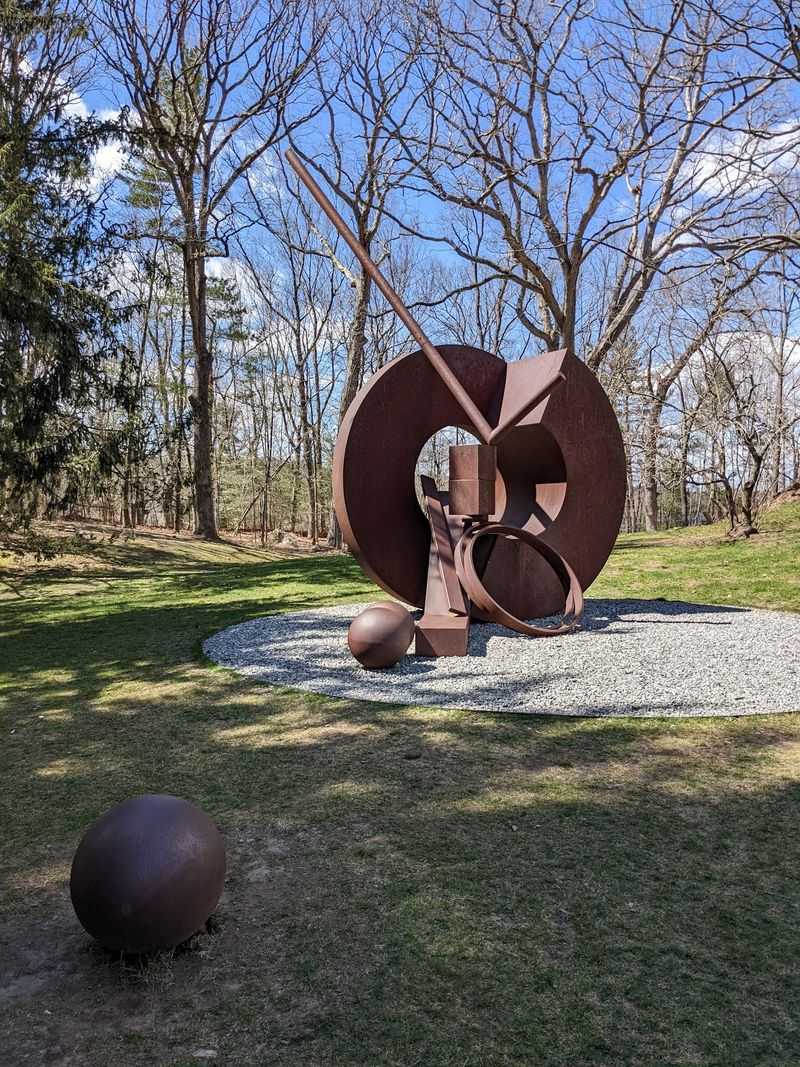
Use this part of the grounds as a pause, not another task to complete. Put the camera away briefly and notice which sounds reach you when conversation stops. Then return to the sculptures with rested eyes; a dark metal edge, a pale surface, or a sharply cut opening may register more clearly after several minutes spent looking at water and the uneven lines of trees.
Bring the Kids, Leave the Art Quiz at Home
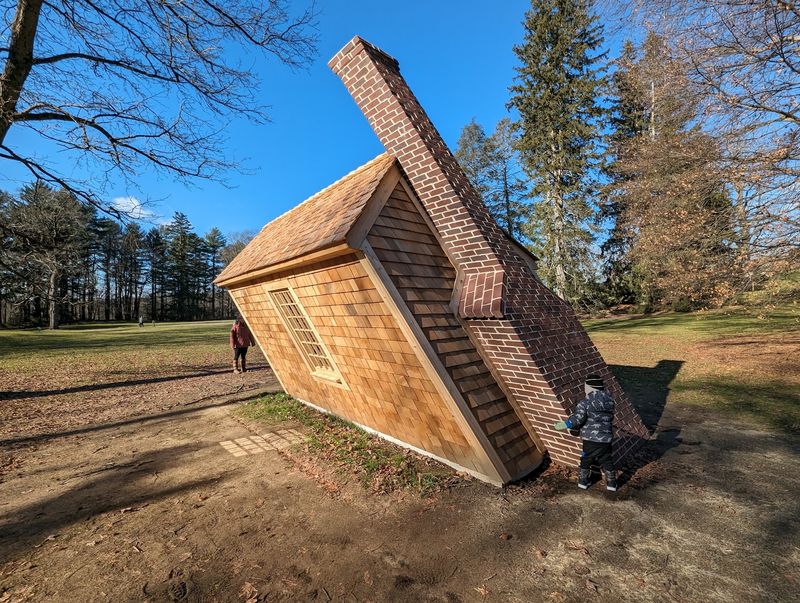
No one needs to identify an art movement to have a good afternoon here. For families, deCordova offers a simpler starting point: walk together, find an unusual shape, and compare what you see. The open setting gives conversations room to happen without requiring everyone to stand silently in a gallery.
Ask children to describe a sculpture using ordinary words before offering an explanation. Does it resemble a tool, an animal, a stack, or nothing familiar at all? Different answers can sit side by side, which takes the pressure off getting art right and keeps attention on the object.
Make the activity small enough to stay fun. You could each choose one favorite work, search for three different materials, or find a piece that changes most when viewed from another side. Skip long lists of challenges that turn a relaxed outing into homework.
Set boundaries early, especially when a sculpture looks inviting to climb. Outdoor art is not automatically play equipment, and interactive access should never be assumed. Follow the instructions for each work, keep children nearby, and use permitted grassy spaces for movement rather than the artworks themselves.
A short visit with breaks can work better than a determined effort to cover the whole property. Bring water and plan around the group’s walking energy. If you intend to picnic, check current rules and use designated or permitted areas, leaving food and bags well away from the art.
Adults can join the game without becoming tour guides. Say what surprises you, admit when a piece puzzles you, and let a child’s observation change the direction of the conversation. Before moving on, try one final look from a different angle; that simple habit teaches close attention more naturally than a lecture, and it gives everyone a clear next action when interest begins to fade during the walk.
A Map, Good Shoes, and a Route That Can Bend
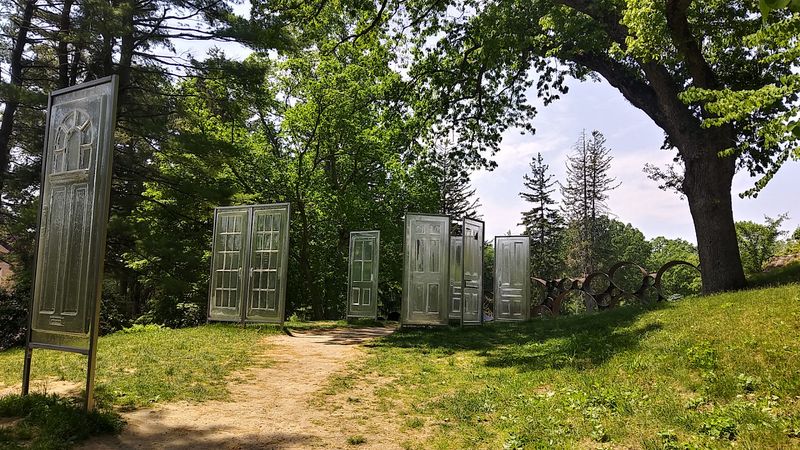
The smartest thing to collect at the start is not a perfect photograph. It is a park map. With sculptures spread across lawns and wooded areas, a little orientation helps you avoid repeated backtracking and makes it easier to judge how much walking your group wants to do.
Begin by locating the entrance, restrooms, main building, and the paths you plan to follow. Then choose a loose circuit rather than drawing a route that depends on seeing every piece. Leave room for a longer stop when an artwork catches your attention or a shorter walk when energy drops.
Allow around two hours as a starting point for an outdoor visit, not a guarantee that you will see everything. Close looking, photographs, breaks, and children’s pace can add time. A focused hour can still be satisfying if you choose a smaller portion of the grounds.
Footing deserves more attention than it might at an indoor museum. Not all paths are paved, and outdoor conditions can change with rain, leaves, ice, or snow. Shoes with reliable grip are a better choice than footwear selected only for a nice arrival photo.
If you use a wheelchair, push a stroller, or need to avoid slopes and uneven surfaces, ask staff about suitable routes before setting out. Do not assume that every artwork has the same access. A route tailored to your needs is more useful than a general promise that the entire estate will be easy.
Download any available map or audio material ahead of time, since mobile reception may be unreliable in parts of the grounds. Keep a paper option when possible, and avoid making your phone the only way to navigate. Near the end, check your position before adding one last detour, so the final stretch leads toward the exit rather than another unexpected loop.
Check the Gate Hours, Not Just the Museum Name
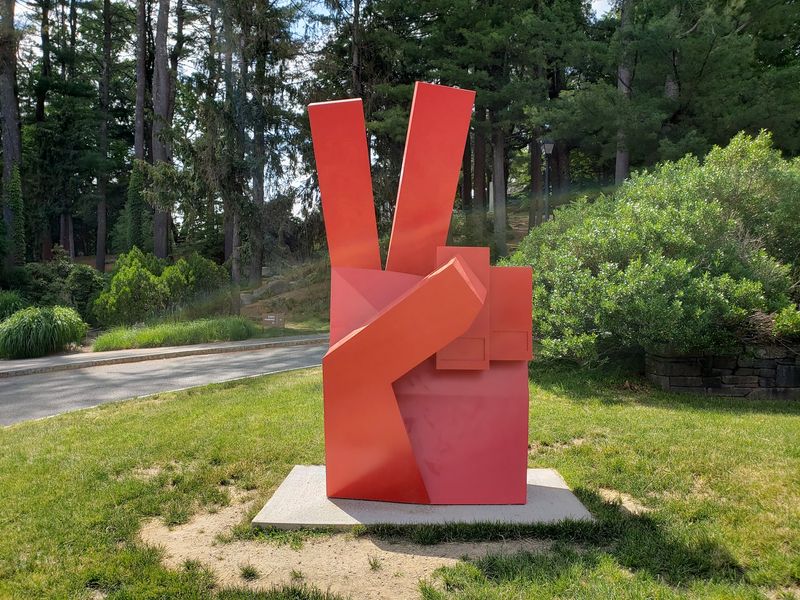
A museum name can make you picture an indoor backup plan for rainy weather. At deCordova, that assumption needs checking. The supplied information reports that the main museum has been closed for renovations, while the outdoor sculpture grounds remain the central experience, so verify current access before leaving home.
The listed schedule is Tuesday through Friday from 10 am to 4 pm, and Saturday and Sunday from 10 am to 5 pm. Monday is listed as closed. Treat those hours as planning guidance rather than a permanent promise, especially around holidays, special events, or weather disruptions.
The address is 51 Sandy Pond Road in Lincoln, Massachusetts. Onsite parking is available, but admission prices, reservation requirements, and any parking conditions should be confirmed before your visit. Arriving with those details settled leaves more of your attention available for the grounds.
Choose clothing for an outdoor walk, even if your main interest is art. Bring drinking water, sun protection for open lawns, and an extra layer when temperatures may drop. After wet weather, expect that unpaved areas could require more careful steps than the entrance suggests.
A shop, restrooms, and a café are useful supporting amenities, but their availability may differ from park hours. Check the current café schedule before depending on it for lunch or a warm drink. If you bring food instead, confirm picnic rules and carry out everything you brought in.
Leave enough daylight and opening time to finish without rushing. A late arrival can turn a generous landscape into a series of quick stops, especially when you still need to return across the grounds. Plan around the sculpture park first, then treat any available indoor spaces or refreshments as additions; that approach matches the estate’s strongest offering and protects your afternoon from expectations based on facilities that may not be operating.