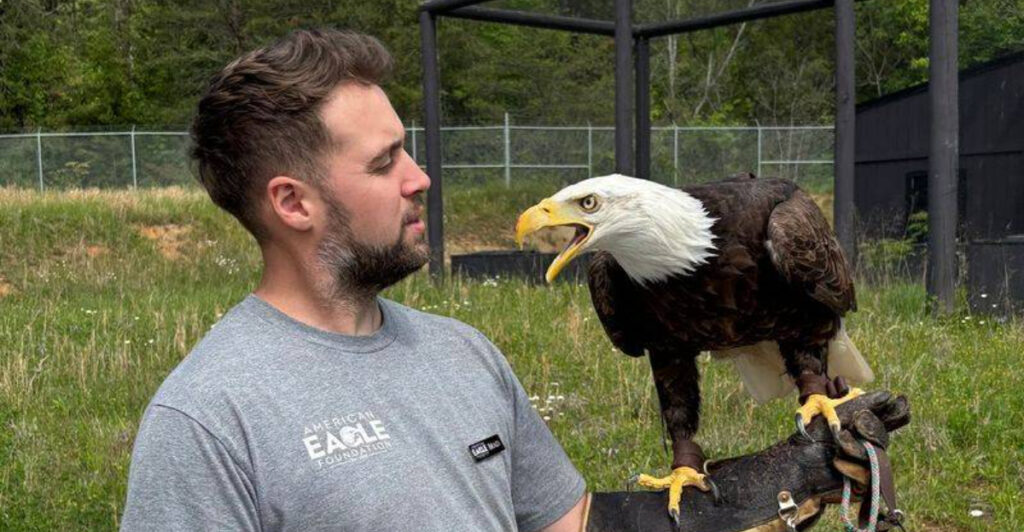
Seeing a bald eagle soaring overhead is memorable, but getting a closer look at one makes the experience even more remarkable. At the American Eagle Foundation in Kodak, visitors can learn about rescued birds of prey while discovering the important work involved in wildlife rehabilitation, conservation, and education. The foundation has spent decades working to protect bald eagles and other raptors, including birds that have been injured or otherwise cannot survive independently in the wild.
Educational experiences give guests an opportunity to hear the individual stories behind these remarkable animals and better understand the challenges wild birds face. Surrounded by the wooded landscape of East Tennessee, the setting adds another layer to the visit. Rather than feeling like a traditional indoor attraction, the experience connects visitors with the natural environment these birds represent.
Seeing an eagle at relatively close range also reveals details that are difficult to appreciate from afar, from its powerful beak and talons to its impressive size. The educational focus makes this an especially meaningful outing for families and wildlife enthusiasts. Guests can come away with a greater understanding of raptor behavior, rehabilitation, and why protecting habitats remains so important.
For travelers exploring the Smoky Mountain region, the American Eagle Foundation offers something different from the area’s usual attractions. It is an opportunity to encounter extraordinary rescued birds, hear their stories, and gain a deeper appreciation for one of America’s most recognizable wild animals.
Meet the Majestic Bald Eagles Up Close
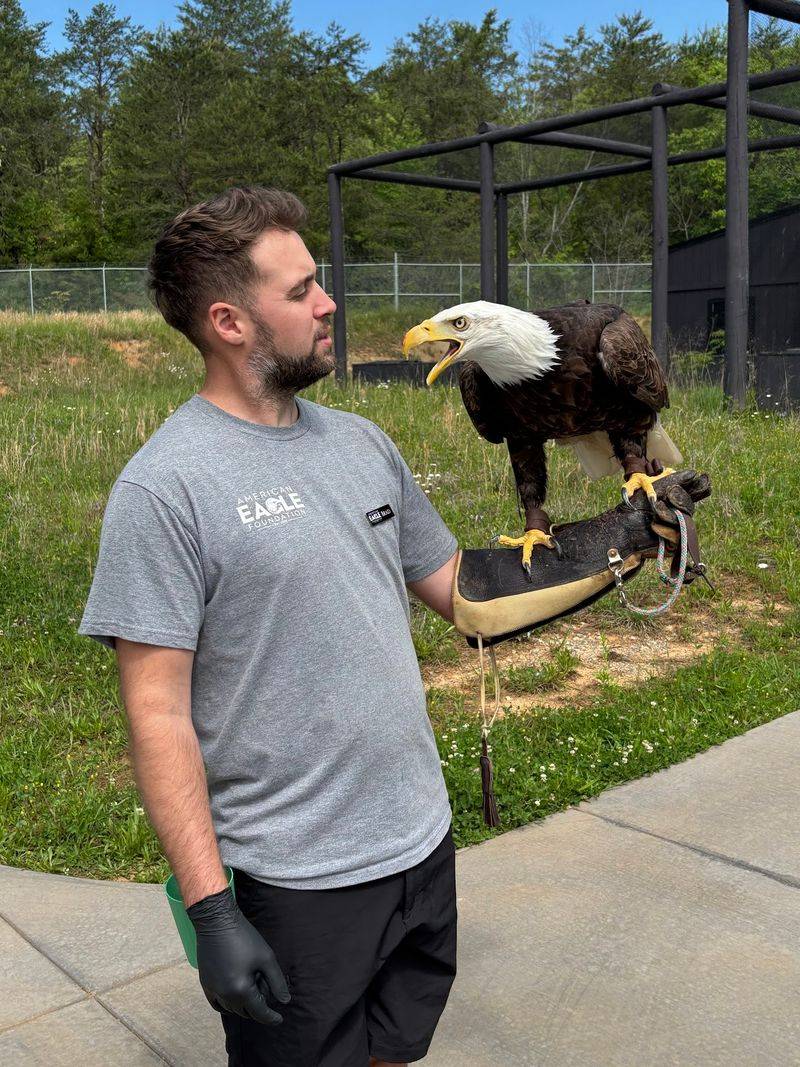
Standing in front of a bald eagle enclosure with nothing but a few feet of space between you and one of nature’s most powerful predators creates a rush you won’t forget. The American Eagle Foundation houses multiple rescued bald eagles, each with their own backstory of survival. Some were hit by cars, others tangled in power lines, and a few were found as orphaned chicks.
The facility’s aviaries are designed to give these birds as much room and comfort as possible while keeping them safe. You’ll watch them spread their wings, preen their feathers, and sometimes even call out with that iconic screech. Unlike the distant glimpses you might catch in the wild, this experience puts you eye-to-eye with birds that can have wingspans stretching over seven feet.
What makes this encounter educational is learning why each bird can’t return to the wild. Maybe they lost an eye or suffered permanent wing damage. The staff shares these stories with genuine emotion, and you start to see each eagle as an individual rather than just a species.
Photography enthusiasts go wild here because the lighting and proximity offer shots you simply can’t get anywhere else. The eagles often perch at eye level, giving you frame-filling portraits that look like they belong in National Geographic. Just remember to silence your phone and move slowly, loud noises can startle them.
Kids especially love watching the eagles interact with enrichment items like logs and perches. The foundation rotates toys and challenges to keep the birds mentally stimulated, and sometimes you’ll catch them playing or practicing their hunting instincts. Watching a bald eagle demonstrate its natural behaviors just a few feet away transforms a simple outing into a wildlife documentary come to life.
Experience the Talons and Tidbits Guided Tour
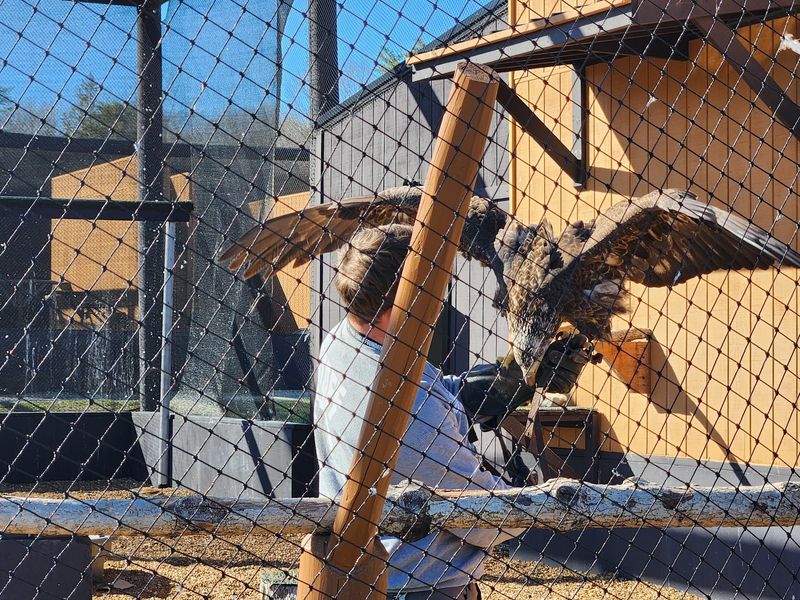
Booking the Talons and Tidbits tour bumps your visit from interesting to absolutely unforgettable. This 90-minute guided experience takes you behind the scenes with knowledgeable staff members who live and breathe raptor rehabilitation. Nancy, Crystal, and Jennifer are names that pop up constantly in visitor reviews, each bringing infectious enthusiasm to every tour.
The tour doesn’t just show you birds. It teaches you about their rehabilitation journeys, their quirky personalities, and the conservation challenges facing raptors today. You’ll hear about Scout’s rescue story, learn why Challenger became famous for stadium flyovers, and discover which birds are permanent residents versus those healing for eventual release.
Here’s the bucket-list moment though. At the end of the tour, you actually get to feed a bald eagle. Using long tongs for safety, you’ll offer food while standing close enough to see every detail of their talons and beak.
The power in their grip becomes immediately obvious, and the privilege of interacting with America’s national symbol in this way hits different than any zoo visit.
Tour guides customize their presentations based on the group’s age and interests. School groups get curriculum-aligned education about ecosystems and conservation, while adult visitors might dive deeper into rehabilitation techniques and release statistics. Either way, the passion these volunteers and staff members bring makes every fact stick.
Plan to bring bottled water and wear sun protection since you’ll be outdoors by the aviaries for most of the tour. Tennessee summers get brutal, and there’s limited shade near some enclosures. Comfortable walking shoes matter too because you’ll be on your feet moving between different bird habitats throughout the property.
Discover Why Vultures Steal the Show
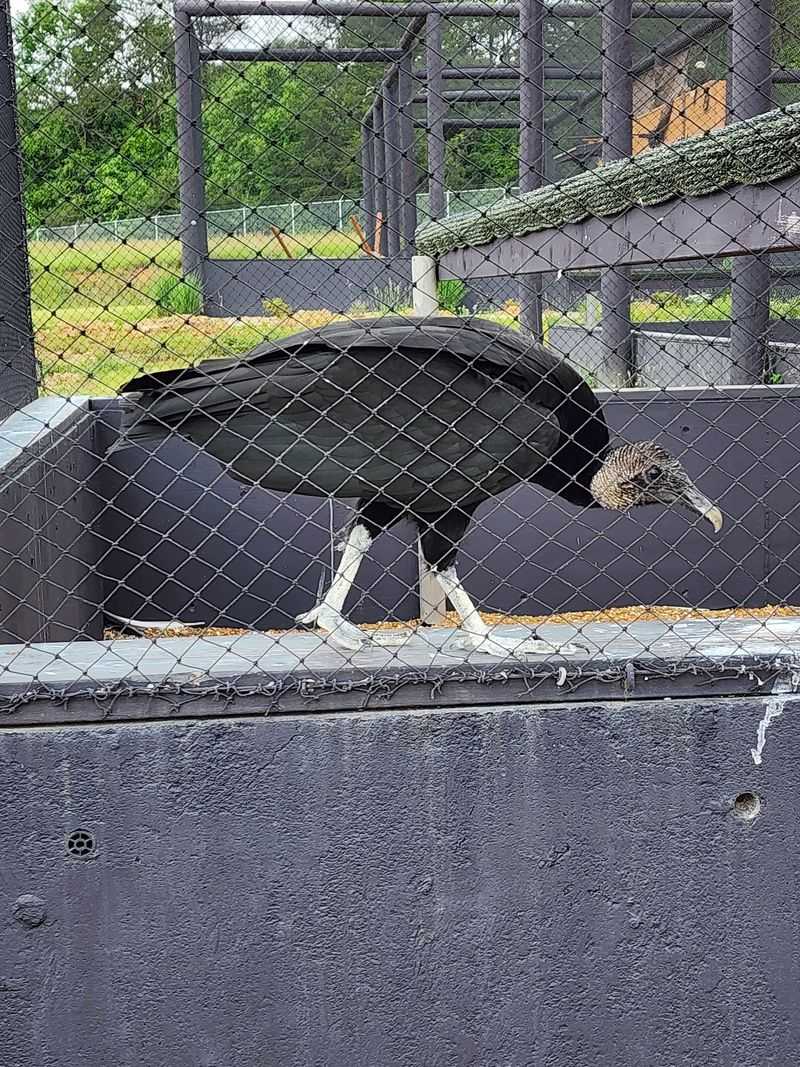
Almost every review mentions the same surprising twist. Visitors show up for the eagles but leave absolutely charmed by the vultures. These misunderstood birds get a serious reputation upgrade once you learn about their critical role in preventing disease outbreaks.
The foundation houses both turkey vultures and black vultures, and their personalities range from shy to downright goofy.
Vultures are nature’s cleanup crew, consuming carrion that would otherwise spread bacteria and viruses throughout ecosystems. Without them, dead animals would rot for weeks, creating breeding grounds for diseases that affect humans and livestock. The staff explains this in ways that transform vultures from “ugly scavengers” into environmental heroes.
Watching these birds up close reveals features you’d never notice from a distance. Their bald heads aren’t about looks, they’re functional adaptations that prevent bacteria buildup when they feed. Their incredible sense of smell can detect a dead animal from miles away.
Some species can even digest anthrax and botulism without getting sick.
The foundation’s vultures often display entertaining behaviors during feeding time. They hop around with surprising energy, interact with enrichment items, and sometimes show off their impressive wingspans. Their intelligence becomes obvious when you see them solve puzzles or recognize individual staff members.
Kids who initially wrinkle their noses at vultures usually end up fascinated once they understand the science. The educational displays near the vulture aviaries include interactive elements explaining decomposition, food chains, and ecosystem balance. Teachers love bringing field trips here because the vulture exhibits align perfectly with life science standards while keeping students genuinely engaged through the gross-out factor that middle schoolers especially appreciate.
Explore at Your Own Pace with the Self-Guided Option
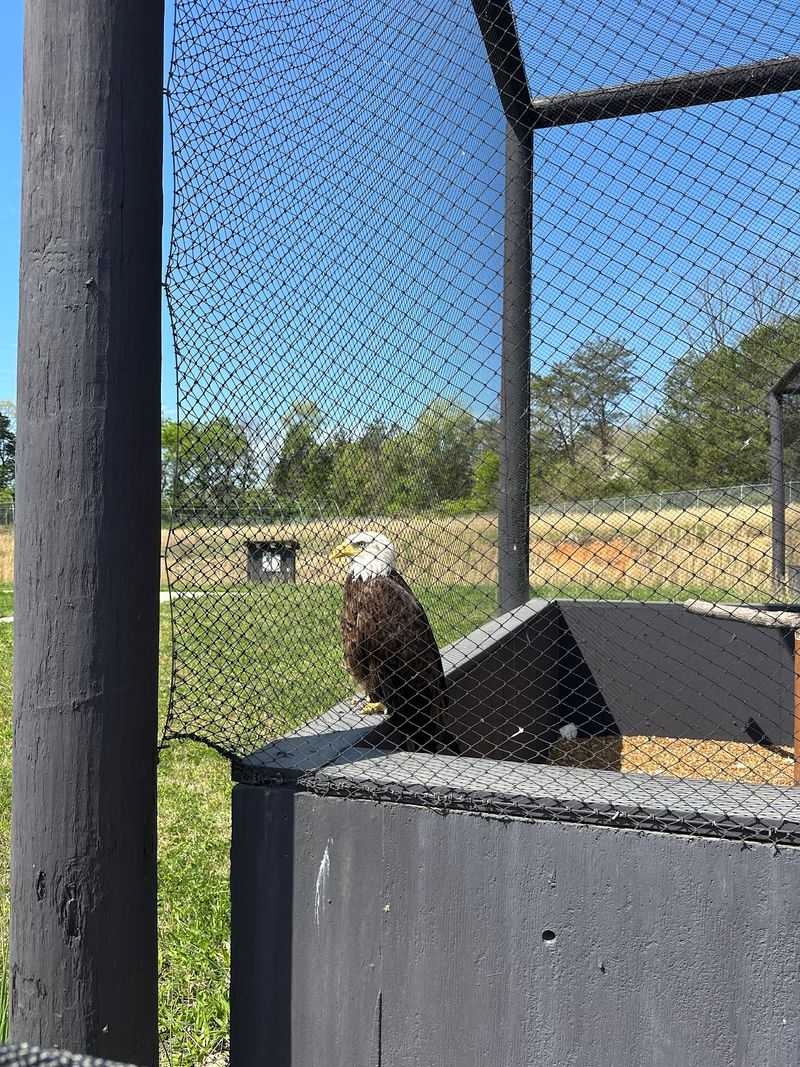
Not everyone wants a scheduled tour, and the foundation totally gets that. The self-guided experience lets you wander the aviaries at whatever speed suits your mood. Early birds who arrive right when doors open at 10 AM often have the pathways nearly to themselves, creating an almost meditative experience.
Download the American Eagle Foundation app before you visit because it transforms the self-guided tour into an interactive adventure. Point your phone at QR codes posted near each enclosure, and you’ll unlock detailed information about that specific bird. You’ll learn their names, rescue stories, injuries, and whether they’ll eventually return to the wild.
The app includes photos and videos that show the birds during different seasons and behaviors. Some entries feature audio clips of the birds’ calls or interviews with staff members discussing rehabilitation challenges. This digital layer adds depth that static signs simply can’t match, especially for visual learners who absorb information better through multimedia.
Self-guided visitors can spend as much or as little time as they want at each habitat. Bird photographers often camp out near favorite subjects waiting for perfect lighting or interesting behaviors. Families with young kids appreciate the flexibility to take bathroom breaks or snack stops without holding up a group.
The pathway layout flows logically from one species to the next, with benches positioned at scenic viewing spots. Interpretive signs throughout the route explain broader conservation topics like habitat loss, lead poisoning from ammunition, and the success of the Endangered Species Act in recovering bald eagle populations. You’ll leave with both specific bird stories and big-picture understanding of wildlife challenges.
Learn About the Rehabilitation Process
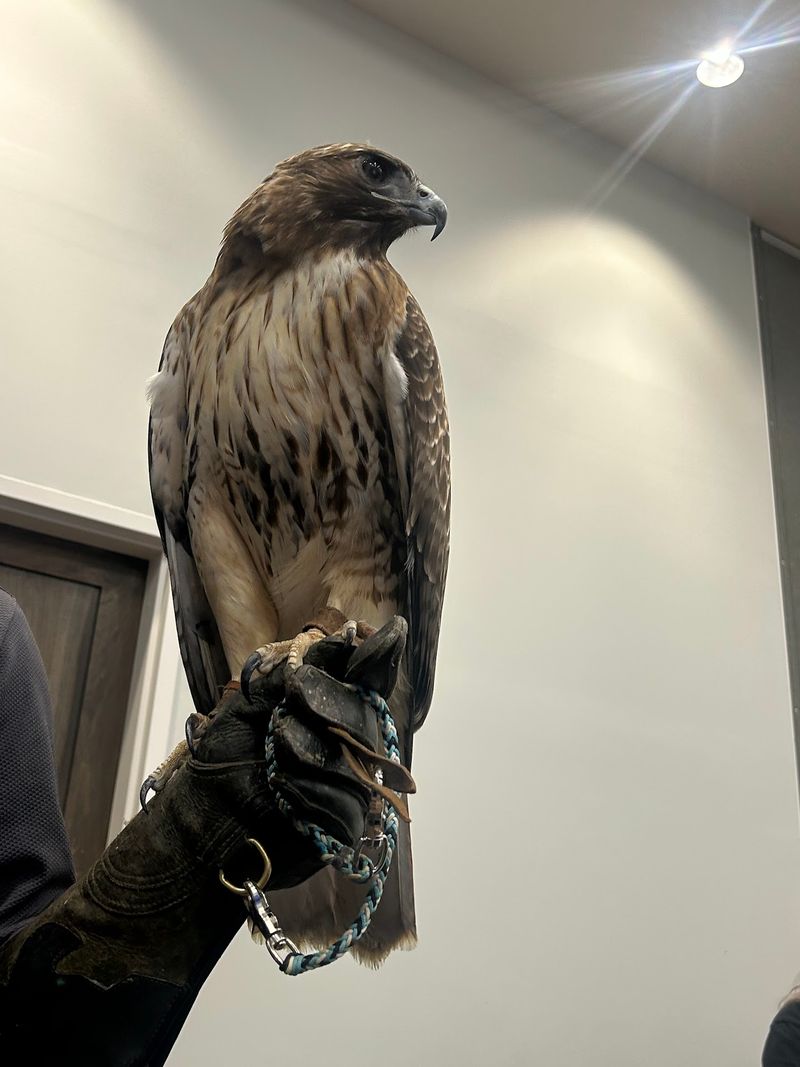
The American Eagle Foundation isn’t just a viewing facility. It’s an active rehabilitation center where injured raptors receive medical treatment and therapy before release back into the wild. Staff members love explaining the journey from rescue to recovery, giving visitors insight into wildlife medicine that most people never see.
When a bird arrives, it goes through triage just like a human patient. Veterinarians assess injuries, run diagnostic tests, and create treatment plans. Some birds need surgery to repair broken wings or remove embedded fishing hooks.
Others require medication for infections or parasites. The foundation partners with veterinary specialists across Tennessee to provide top-tier care.
Recovery enclosures are designed to encourage natural behaviors while preventing re-injury. Birds progress through increasingly larger spaces as they heal, building strength and practicing flight skills. Staff monitor weight, appetite, and movement patterns to determine when a bird is ready for release.
The goal is always to return healthy birds to their natural habitats whenever possible.
Not every bird can be released though. Those with permanent disabilities that would prevent survival in the wild become permanent residents and educational ambassadors. These birds help teach thousands of visitors annually about conservation, creating a legacy that extends far beyond their individual stories.
Many of the eagles and hawks you see during your visit fall into this category.
The foundation also participates in captive breeding programs for endangered species, contributing to nationwide conservation efforts. Their success stories include birds that went on to raise wild chicks after release, multiplying the impact of rehabilitation work. Understanding this bigger picture helps visitors appreciate how their admission fees and donations directly support wildlife survival.
Meet Other Incredible Birds of Prey
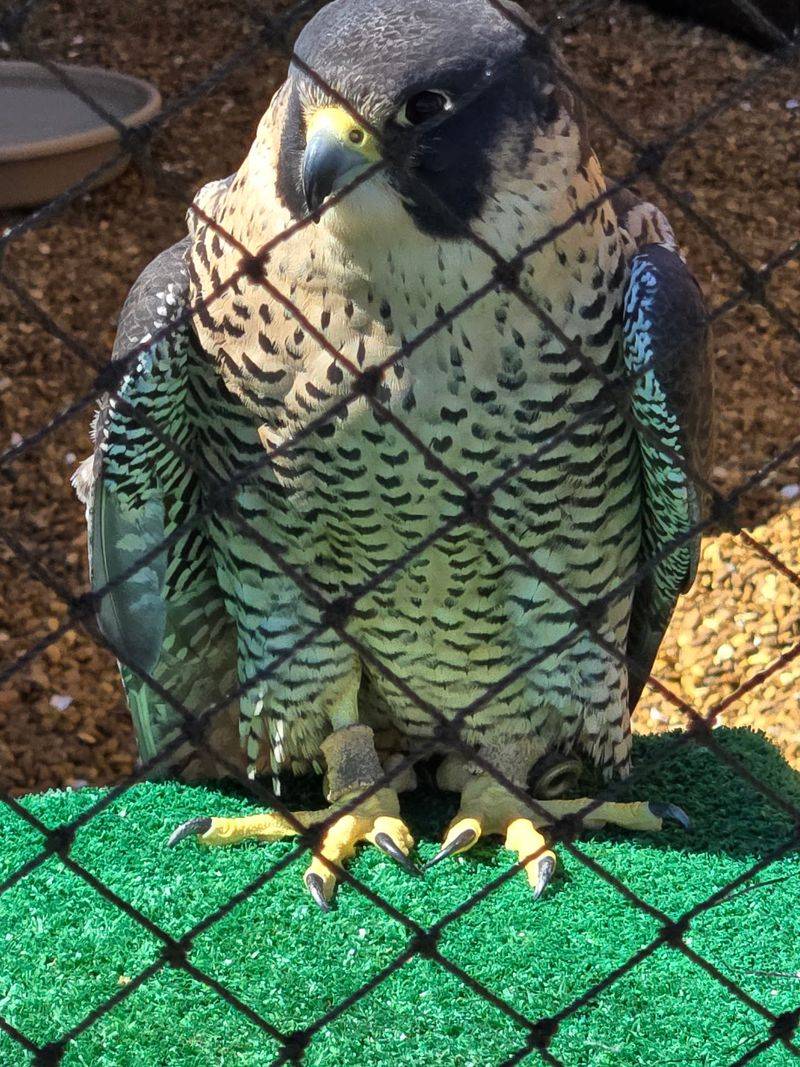
Bald eagles might be the headliners, but the supporting cast deserves serious attention too. The American Eagle Foundation cares for hawks, owls, falcons, and even a charismatic raven named Poe who apparently creates paintings. Each species brings unique characteristics and stories that round out your understanding of raptor diversity.
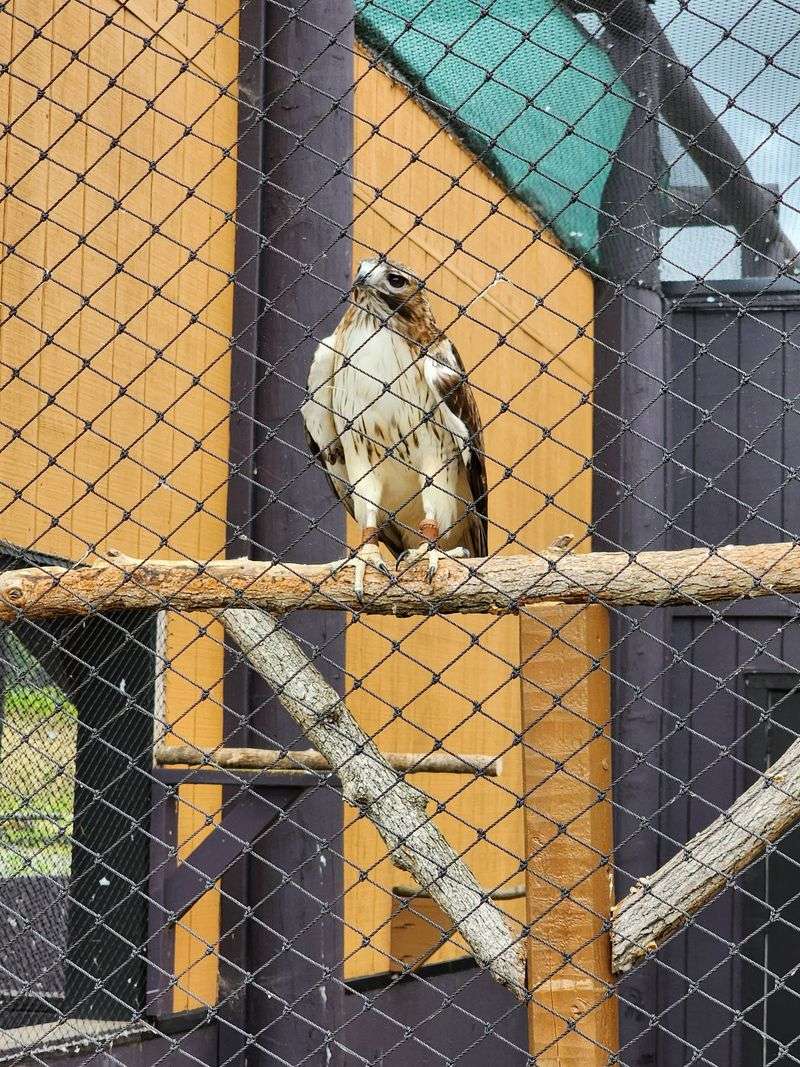
The hawk aviaries showcase different hunting strategies and habitat preferences. Red-tailed hawks demonstrate the soaring flight style common in open country, while sharp-shinned hawks show the agility needed for forest hunting. Staff explains how wing shape, talon structure, and beak design all reflect each species’ ecological niche.
Watching these differences in living birds makes biology textbook concepts click instantly.
Owl encounters feel almost magical because these birds are primarily nocturnal and rarely seen in the wild. The foundation houses several owl species, and if you time your visit right, you might catch one emerging from their nest box. Their silent flight adaptations, rotating heads, and asymmetrical ear placement for pinpoint sound location fascinate kids and adults equally.
Poe the raven steals hearts with intelligence that rivals primates. Ravens can solve complex puzzles, use tools, and even plan for future needs. Watching Poe interact with enrichment items or respond to staff members demonstrates cognitive abilities that challenge assumptions about bird brains.
His artistic talents add an unexpected creative dimension to the visit.
Falcons represent the speed demons of the raptor world, with peregrine falcons holding the title of fastest animal on Earth during hunting dives. The foundation’s falcon residents help visitors appreciate the physics and biology behind such incredible velocity. Educational displays explain how their specialized respiratory systems, streamlined bodies, and protective eye membranes enable record-breaking performance.
Participate in Special Events and Educational Programs
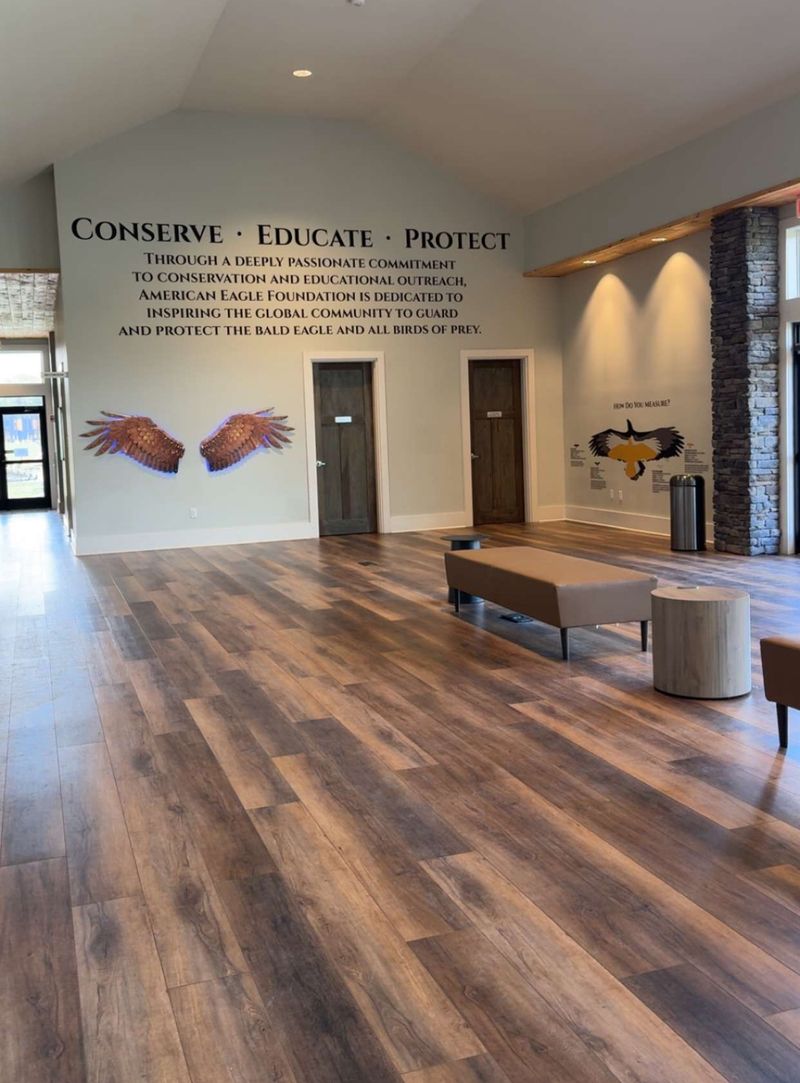
The American Eagle Foundation calendar stays packed with special events that add extra value to regular visits. International Owl Awareness Day brings hands-on activities like owl box building workshops led by Home Depot volunteers. Kids get to construct actual nest boxes using real tools, then take them home to install in their own yards, creating habitat for wild owls.
Craft stations during special events offer nature-themed projects like pinecone owls, bird mask coloring, and feather art. These activities give younger children tactile experiences that reinforce what they’re learning about birds. Volunteers staff each station with patience and enthusiasm, helping kids of all skill levels create something they’re proud of.
Field trip programs are specifically designed to align with educational standards for different grade levels. Fifth graders studying ecosystems get curriculum-matched content about food webs and energy transfer. High school biology classes dive into genetics, adaptation, and conservation policy.
Teachers rave about how well-organized these programs are and how minimal prep work they require.
The foundation also hosts photography workshops where professional wildlife photographers share techniques for capturing birds in flight or getting perfect portrait shots through aviary fencing. These specialized programs attract serious hobbyists looking to improve their skills while supporting conservation efforts. Participants leave with portfolio-worthy images and new technical knowledge.
Birthday parties and group events can be customized to include private tours, special presentations, and dedicated time with educational birds. The staff works with organizers to create memorable experiences that match the group’s interests and age range. Scout groups, homeschool co-ops, and family reunions all find programming that fits their needs while supporting the foundation’s mission.
Support Conservation Through Your Visit
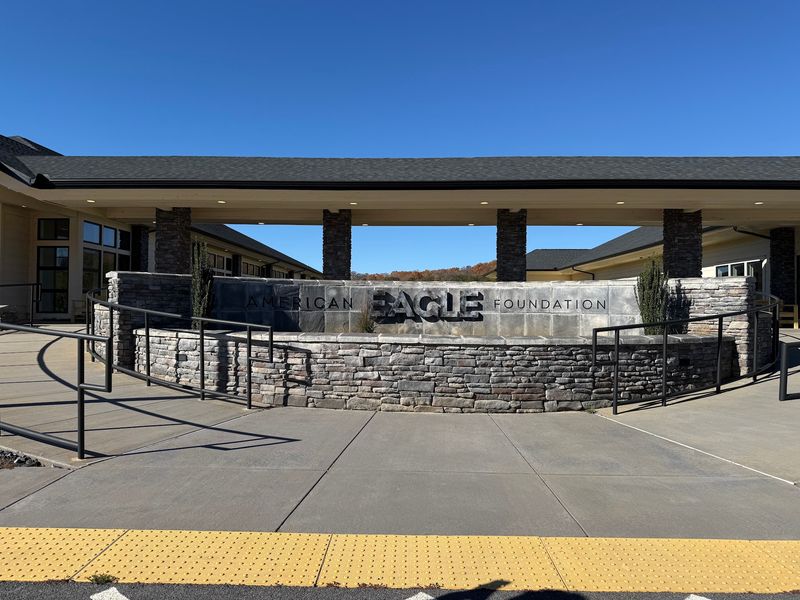
Every admission ticket, tour booking, and gift shop purchase directly funds the American Eagle Foundation’s rescue and rehabilitation work. As a non-profit organization, they depend on visitor support to continue providing medical care, habitat maintenance, and educational programming. Your visit literally saves birds’ lives, which adds meaningful purpose to a fun outing.
The foundation operates on a lean budget, stretching every dollar to maximize impact. Staff members often wear multiple hats, serving as tour guides, animal caretakers, and facility maintenance workers. Volunteers contribute thousands of hours annually, from cleaning aviaries to leading educational programs.
This efficient operation means your money goes toward birds rather than administrative overhead.
Financial transparency reports are available on their website, showing exactly how donations get allocated. Medical supplies, specialized diets, aviary construction, and veterinary bills consume the largest portions of the budget. Seeing these breakdowns helps donors understand the real costs of wildlife rehabilitation and feel confident their contributions make tangible differences.
Beyond immediate care, the foundation invests in long-term conservation research and advocacy. They participate in studies tracking migration patterns, breeding success rates, and threat assessment for various raptor species. This data informs policy decisions at state and federal levels, influencing regulations that protect birds across entire populations rather than just individual rescues.
Gift shop purchases offer another way to support the mission while taking home meaningful souvenirs. Books about raptors, plush eagles for kids, and artwork featuring resident birds all carry conservation messages beyond the visit. Many items are created by local artisans, adding community economic impact to the conservation benefits.
Even small purchases accumulate into significant funding when thousands of annual visitors participate.
Plan Your Visit for the Best Experience
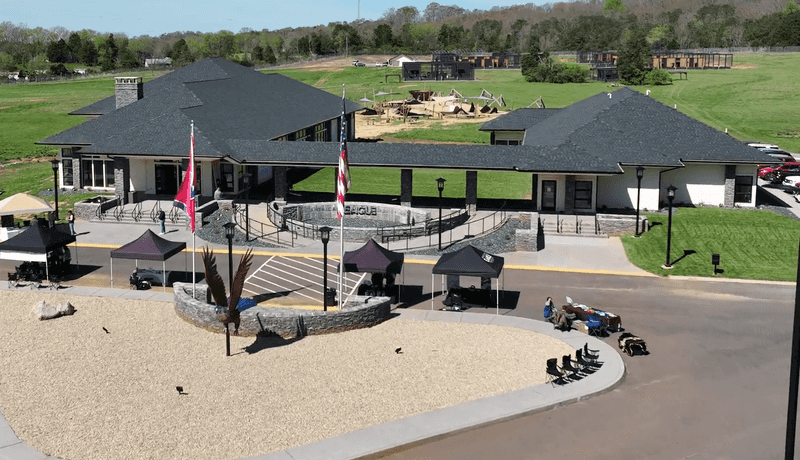
The foundation is located at 510 Kodak Road in Kodak, Tennessee, not at their old Dollywood location. GPS sometimes tries to send people to the previous address, so double-check you’re headed to Kodak specifically. The drive from Pigeon Forge or Gatlinburg takes about 15 minutes, making it an easy addition to a Smoky Mountain vacation.
Operating hours are Tuesday through Friday from 10 AM to 3 PM, and Saturday from 10 AM to 2 PM. They’re closed Sunday and Monday, so plan accordingly. Arriving right when they open gives you the calmest experience with fewer crowds and more active birds.
Mornings also offer better lighting for photography before harsh midday sun creates challenging shadows.
Admission prices are reasonable compared to other attractions in the area, especially considering the conservation impact. Talons and Tidbits tour slots fill up quickly during peak tourist season, so book online in advance rather than hoping for walk-up availability. The website provides clear pricing for different experience levels and age groups.
Dress for outdoor walking in Tennessee weather, which means layers you can adjust as temperatures shift. Summers get hot and humid with intense sun exposure near the aviaries. Spring and fall offer ideal conditions with mild temperatures and lower humidity.
Winter visits are possible but check ahead since some outdoor areas might have limited access during extreme cold.
The facility is family-friendly with amenities like restrooms and a small playground for kids who need movement breaks. Stroller accessibility varies by pathway, with some aviary areas featuring gravel or mulch that makes pushing harder. The staff at the front desk can advise on the easiest routes if mobility is a concern.
Bringing your own water bottles is smart since outdoor time can be lengthy.
Hear from Passionate Staff and Volunteers
Names like Nancy, Jennifer, and Crystal appear repeatedly in visitor reviews because these staff members and volunteers bring genuine passion that transforms good tours into great ones. Nancy especially gets praised for her encyclopedic knowledge and obvious affection for each bird. She shares stories like she’s talking about family members, because to her, these birds basically are.
The emotional connection these caregivers have with their feathered charges comes through in every interaction. They celebrate when a bird successfully hunts enrichment prey, worry when someone seems off their food, and beam with pride when sharing recovery success stories. This authenticity resonates with visitors who can tell the difference between scripted information and heartfelt sharing.
Many volunteers came to the foundation as visitors first, got hooked, and decided to contribute their time. Some are retired educators who love teaching about wildlife. Others are college students studying biology or veterinary medicine gaining hands-on experience.
A few are simply bird enthusiasts who want to support conservation in practical ways. This diversity brings varied perspectives to educational programs.
Staff members make extra efforts to accommodate visitors who arrive late or have special needs. Multiple reviews mention front desk personnel who personally walked guests out to join tours already in progress. Others describe how guides adjusted presentations for children with attention challenges or adults with mobility limitations.
This flexibility and kindness create welcoming experiences for everyone.
The team’s expertise extends beyond just bird facts. They can discuss conservation policy, rehabilitation techniques, ecosystem dynamics, and even the physics of flight. Ask questions and you’ll discover depths of knowledge that could fill hours of conversation.
Their willingness to engage with curious visitors at any level makes learning feel like chatting with a knowledgeable friend rather than sitting through a lecture.
Witness Famous Eagles Like Challenger
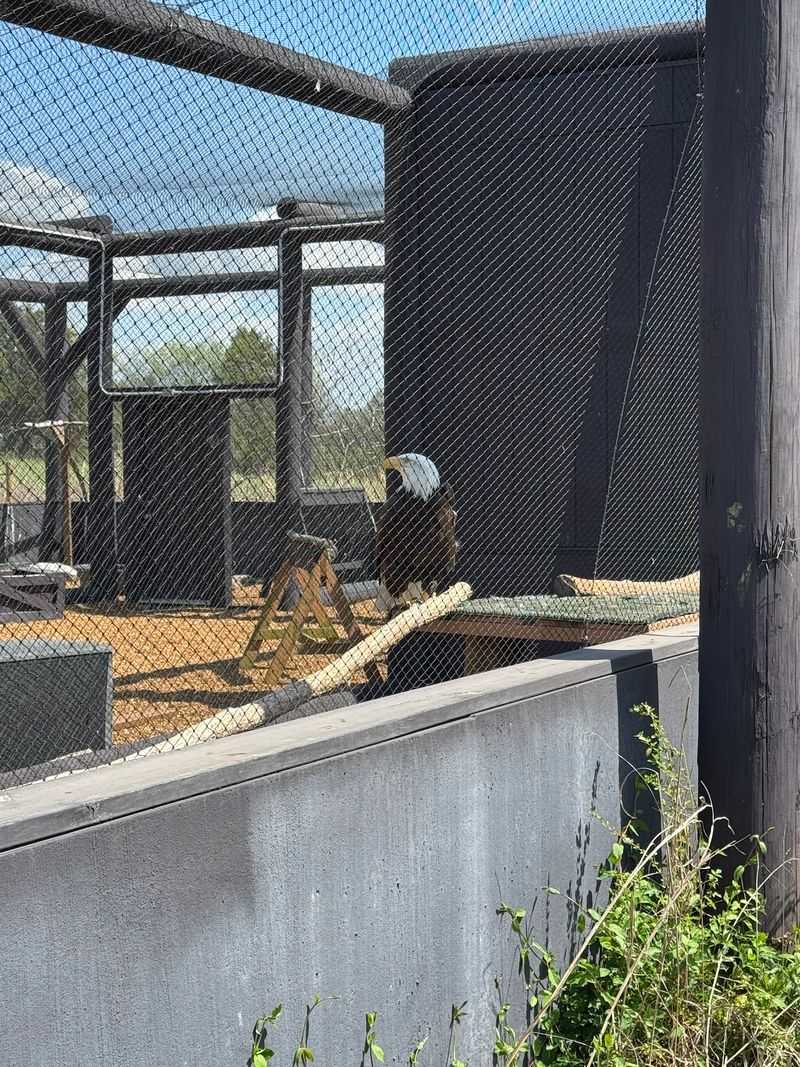
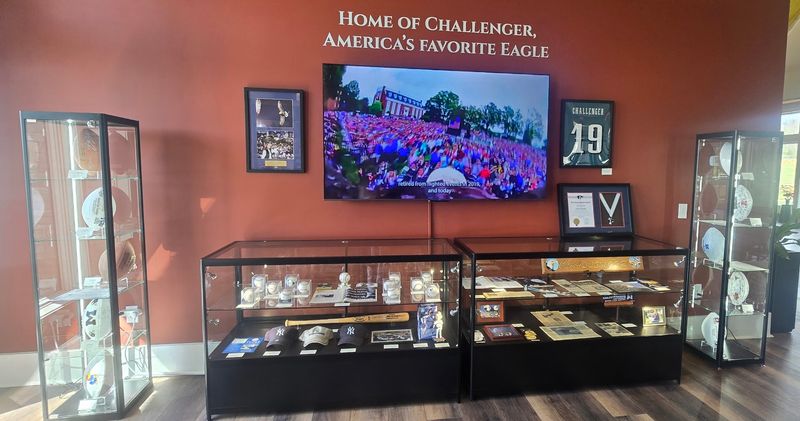
Challenger might be the most famous bald eagle in America. This non-releasable bird serves as an ambassador at major sporting events and national ceremonies, free-flying into stadiums while the national anthem plays. Seeing Challenger at the foundation feels like meeting a celebrity, except this one has feathers and talons instead of autographs.
The eagle’s flight demonstrations at events like the World Series and Super Bowl have been watched by millions of people worldwide. These appearances raise awareness about bald eagle conservation while creating powerful patriotic moments. Between public appearances, Challenger lives at the Kodak facility where visitors can see him up close and learn about the training that makes such flights possible.
Not every eagle has the temperament for public work. Challenger’s calm demeanor and trust in handlers are rare traits that took years to develop. The foundation’s staff explains how positive reinforcement training builds the relationship necessary for safe free flights in crowded, noisy environments.
Watching videos of Challenger’s stadium flights during your visit adds context to his importance.
Other resident eagles have their own claims to fame, from successful breeding programs to educational outreach appearances at schools across Tennessee. Each bird’s biography reveals unique contributions to conservation messaging. Some were featured in documentaries, others helped scientists study eagle behavior, and a few became foster parents to orphaned chicks.
The foundation’s role in returning bald eagles from endangered status to thriving populations deserves recognition. Through decades of rehabilitation, breeding programs, and advocacy, organizations like this helped America’s national symbol make one of conservation’s greatest comebacks. Standing near Challenger and other ambassadors connects you directly to that success story in ways that history books simply cannot match.
Enjoy a Hidden Gem Away from Tourist Traps
While Gatlinburg and Pigeon Forge overflow with mini-golf courses and dinner theaters, the American Eagle Foundation offers something genuinely meaningful just minutes away. Visitors consistently describe it as a hidden gem that provides educational value and authentic wildlife encounters without the manufactured tourist trap vibe that dominates the area.
The admission price delivers incredible value compared to theme parks that charge triple the amount for less memorable experiences. Instead of standing in long lines for rides, you’re face-to-face with rescued wildlife learning real conservation science. Families especially appreciate attractions that entertain kids while actually teaching them something worth remembering.
The peaceful setting provides a welcome break from the sensory overload of main tourist corridors. Walking among aviaries surrounded by Tennessee forest creates a calm atmosphere where you can actually hear yourself think. Birds call, leaves rustle, and genuine nature sounds replace the carnival music and traffic noise of nearby commercial strips.
Local insiders know about this place, but it hasn’t hit mainstream tourist radar the way it deserves. That means smaller crowds, more personal interactions with staff, and better photo opportunities without strangers photobombing your shots. The foundation benefits from increased visitation, but the current manageable crowd levels create quality experiences that massive facilities cannot match.
Adding this stop to your Smoky Mountain itinerary provides balance to vacation days otherwise filled with shopping and entertainment. Kids who’ve been cooped up in cars or sitting through shows need active learning experiences where they can move around and engage their curiosity. Adults appreciate attractions with substance that justify the trip beyond just keeping children occupied.
The American Eagle Foundation delivers both, making it worth the short drive from wherever you’re staying in the Sevierville area.
Share this story