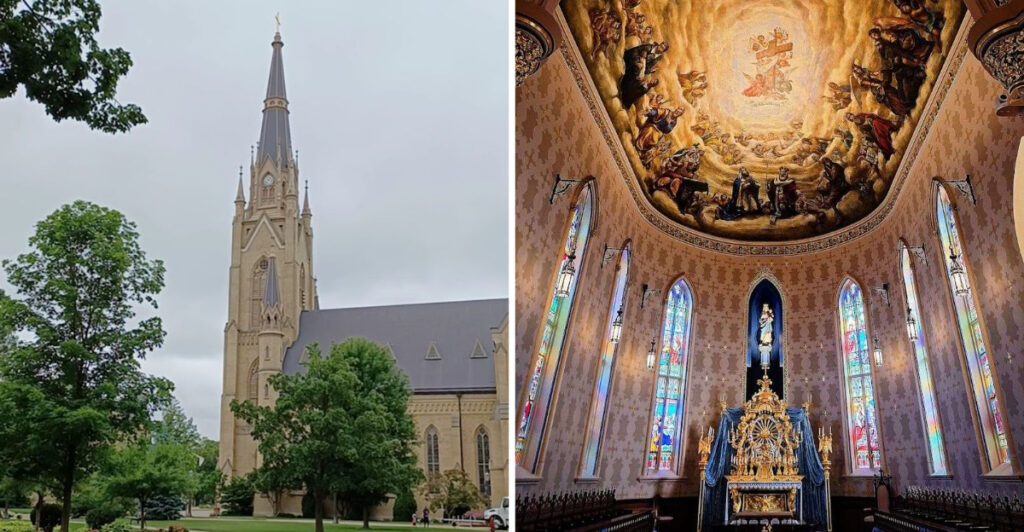
Indiana is home to many impressive landmarks, but few rival the beauty and grandeur of the Basilica of the Sacred Heart at the University of Notre Dame. Often compared to Europe’s great cathedrals, this stunning Gothic Revival masterpiece features soaring ceilings, intricate artwork, vibrant stained-glass windows, and architectural details that leave a lasting impression on visitors.
Its towering spire has become one of the most recognizable sights on campus, while the interior showcases extraordinary craftsmanship and religious artistry. Whether you’re interested in history, architecture, or simply beautiful places, this remarkable basilica is one of Indiana’s most unforgettable destinations.
The Spire That Rewrites the Indiana Skyline
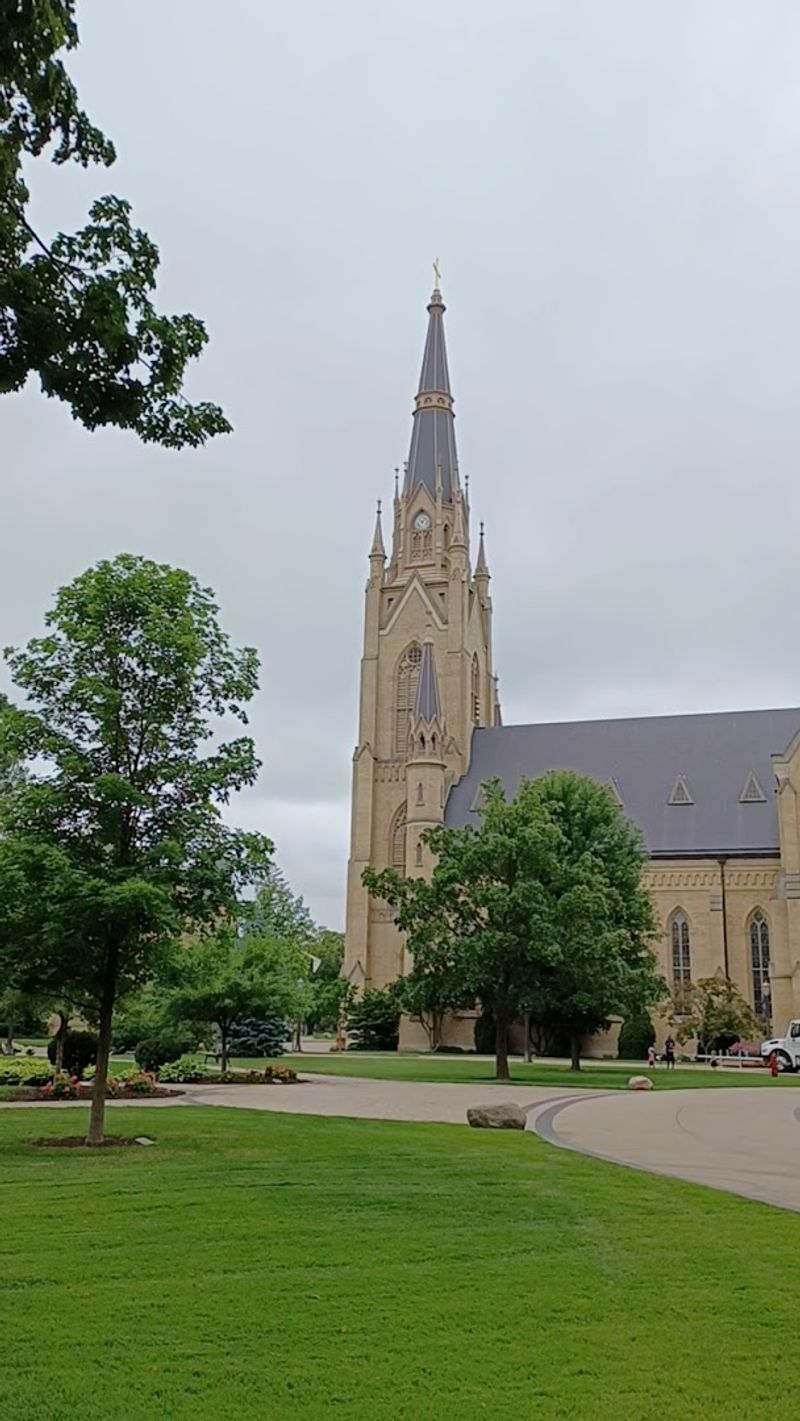
Long before you reach the doors, the Basilica of the Sacred Heart establishes the mood. Its vertical lines, pointed arches, and steep roof pull the eye upward in the classic Gothic Revival way, but the setting gives the drama an extra twist: this is Indiana, not Paris, London, or Cologne.
On a campus filled with recognizable landmarks, the basilica still dominates the visual conversation. That first exterior read matters because the building works like a landmark and a signal tower at once.
The spire is visible from multiple approaches around Notre Dame, so your sense of direction gradually locks onto it as you walk.
Instead of appearing buried within the university, it anchors the grounds and gives the surrounding lawns, paths, and academic buildings a ceremonial center.
Stone detailing adds plenty to study before you ever step inside. The façade carries the disciplined rhythm that Gothic architecture does so well, with repeated vertical elements that create momentum even when you are standing still.
Look at how the entry sequence tightens your focus, narrowing the experience from open campus space to a more formal threshold.
That approach also prepares you for a shift in pace. Outside, students, tours, and campus traffic keep things moving, but near the basilica the scene starts to slow down.
The building has enough visual authority to quiet the area around it without needing fences, grand stairs, or theatrical landscaping tricks.
For a first visit, the smartest move is simple: do not rush the exterior. Circle wide enough to take in the full height, then come closer to read the texture and proportions.
By the time you reach the entrance, the basilica has already done something rare – it has made familiar Midwestern ground feel unexpectedly monumental.
Inside, Color Takes Over Every Surface
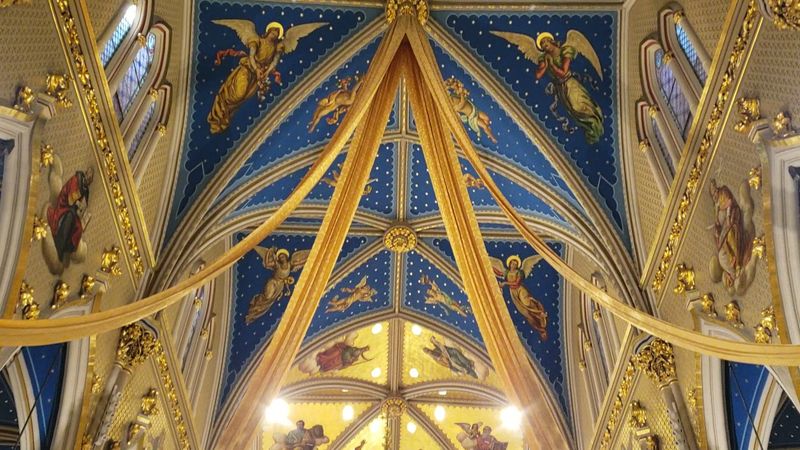
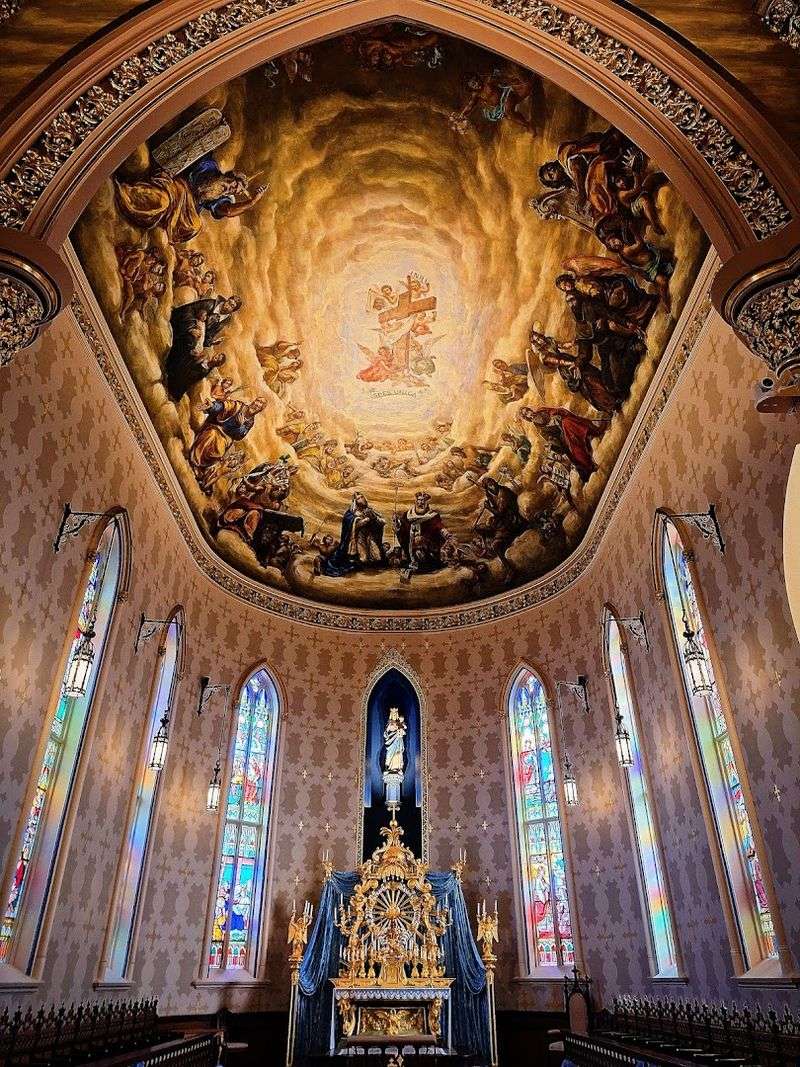
The real shock arrives indoors. Step into the Basilica of the Sacred Heart and the restrained stone exterior gives way to a richly painted interior where color, pattern, and light are doing serious work all at once.
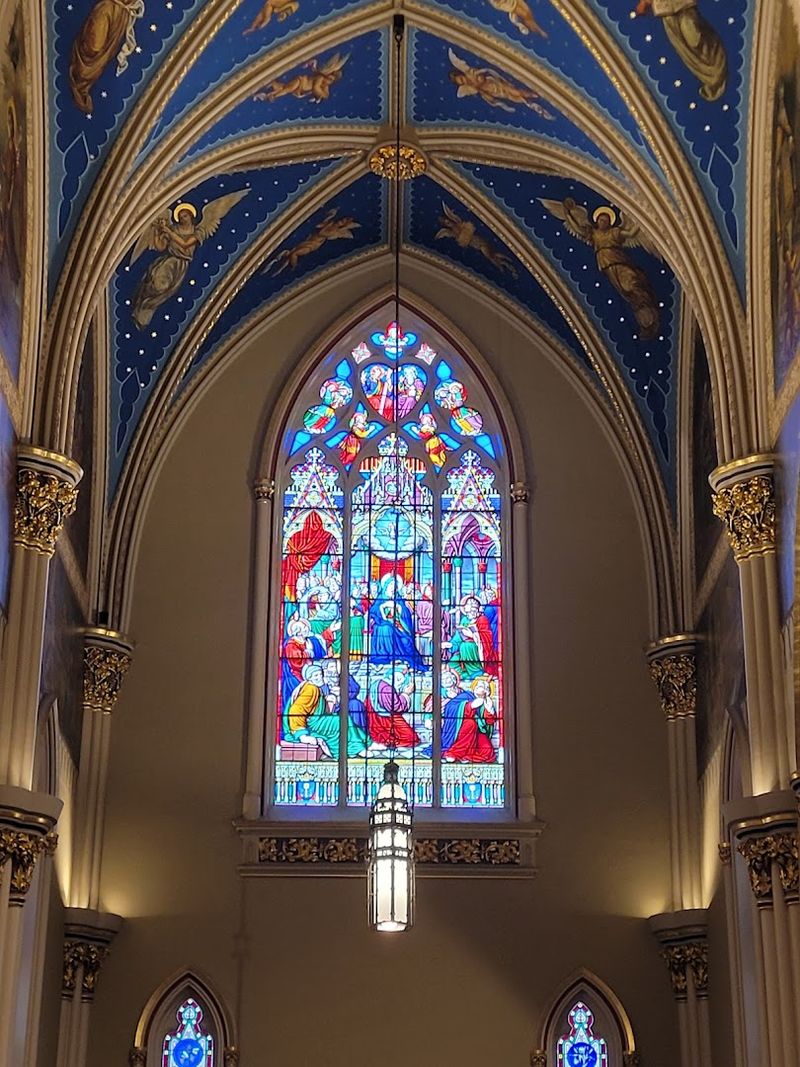
Gold accents flash against deep blues, murals sweep across the ceiling, and stained glass turns ordinary daylight into moving bands of jewel tones.
This is the kind of interior that rewards looking in layers rather than all at once. First your attention goes up, because the ceiling and upper walls are impossible to ignore.
Then your focus drops to columns, altars, carved details, and the orderly geometry of the nave, each element helping the room feel both elaborate and tightly composed.
Plenty of churches impress through scale alone, but this one uses decoration as structure. The painted surfaces are not random embellishment; they guide your sightline and reinforce the building’s vertical logic.
Even if you do not know the iconography, you can still read the room clearly because every visual cue pushes toward reverence, order, and upward movement.
The stained glass deserves time of its own. Historic windows frame the interior with changing color, and their effect shifts depending on weather, hour, and where you stand.
On bright days the glass turns the basilica into a place of filtered radiance rather than direct glare, which softens the room without flattening any of its details.
Go slowly here. A fast walk-through gives you spectacle, but a measured lap reveals how carefully the interior is balanced between painting, architecture, and devotional art.
That balance is why the basilica does not read as cluttered despite its richness – every surface is active, yet the whole space remains calm enough to hold silence.
The Altar, the Organ, and the Room’s Built-In Drama
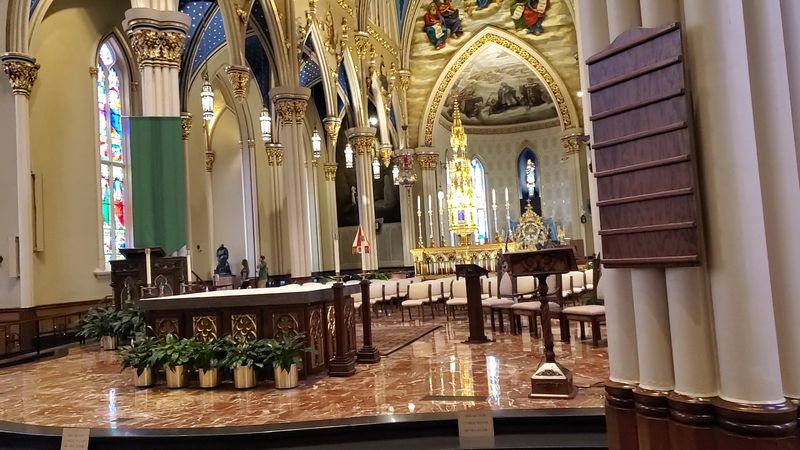
Once your eyes adjust to the overall richness, the basilica starts organizing itself around focal points. The altar commands the front of the church with visual gravity, while the organ adds another layer of scale and presence.
Together they shape the building’s most dramatic axis, one that works whether the room is full for Mass, quiet between services, or tuned for a recital.
The altar area matters because it shows how the church handles grandeur without becoming visually noisy. Architectural framing, decorative painting, and sacred objects all converge there, but the composition stays legible from a distance.
Instead of looking like separate beautiful things assembled in one place, the sanctuary reads as one integrated scene.
Then there is the organ, which people consistently single out for good reason. Even at rest, its size contributes to the sense that sound belongs here as much as stone and glass do.
When music enters the room, the basilica stops being only something to look at and becomes a fully acoustic experience shaped by volume, echo, and lift.
This matters even if you are not attending a full service. A recital, choir, or even a brief musical passage can reveal how intentionally the space was built and preserved.
Notes do not just travel forward; they rise, bloom, and hang in the air long enough to make the architecture feel active rather than static.
If you have a chance to visit during music, take it. If you arrive during open hours with no program underway, spend a minute imagining the room at full sound and full capacity.
The basilica’s visual design is impressive on its own, but the altar and organ show how the building reaches its complete form when ceremony, architecture, and acoustics all meet.
Small Details With Big Presence
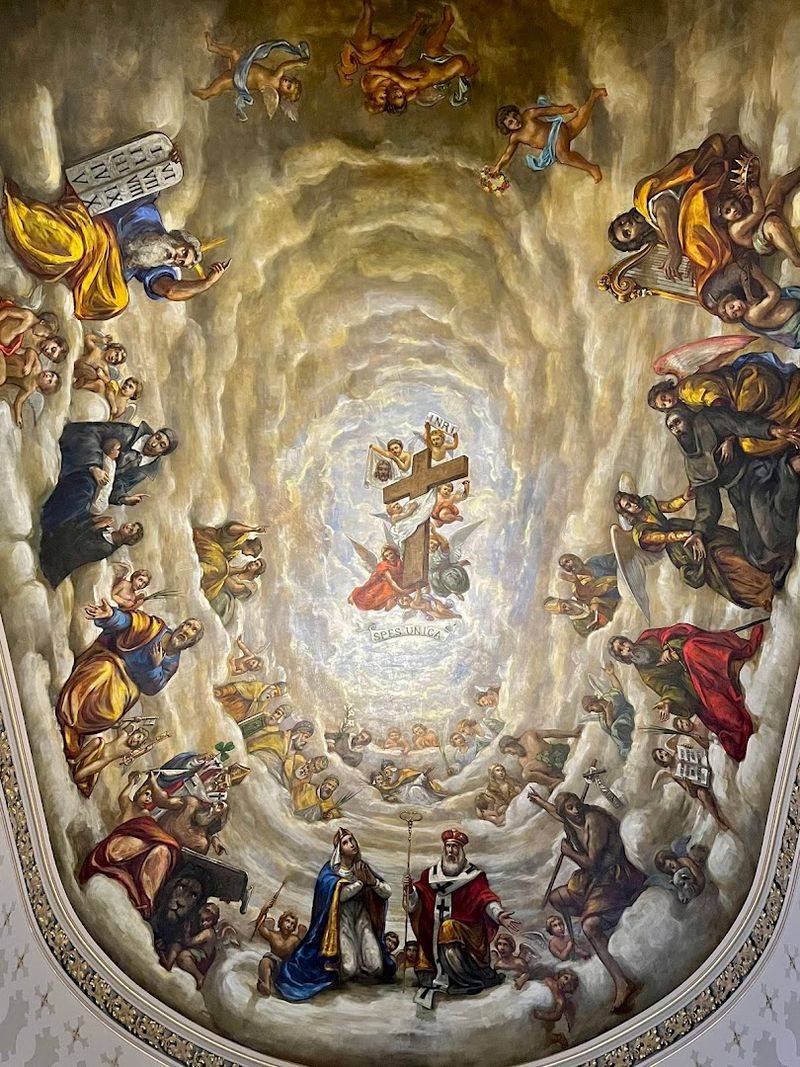
After the big views, the basilica starts rewarding close attention. This is where the visit shifts from broad architectural awe to slower discovery: painted figures overhead, finely worked trim, carved elements along the nave, and devotional objects that change the pace of looking.
The building is generous from a distance, but it becomes even more interesting when you start narrowing your focus. One standout feature is the density of visual storytelling packed into the church.
Murals and stained glass are not there simply to decorate empty wall space; they create a sequence of images and symbols that gives the interior its own rhythm. Even without decoding every reference, you can tell the basilica was designed to be read as well as admired.
That same close-looking applies to the relic displays often mentioned by returning visitors. These cases introduce a different register from the sweeping architecture around them.
Instead of overwhelming scale, you get concentration and intimacy, a reminder that basilicas are not museums with pews but active sacred spaces where artwork, objects, and ritual all belong to the same larger purpose.
The practical payoff is that your visit can stretch in useful ways. Someone interested in architecture can study form and decoration, while another person may spend more time with devotional details or symbolic imagery.
Because the church offers both monumental scenes and very small points of attention, it accommodates quick visits and unhurried ones equally well.
Try moving through the basilica twice. Let the first pass be wide and instinctive, then take a second, slower route that follows whatever catches your eye – a window, a painted ceiling panel, a side altar, a case of relics. The room changes when you stop treating it as one grand image and start reading it detail by detail.
Why the Basilica Is the Heart of Notre Dame
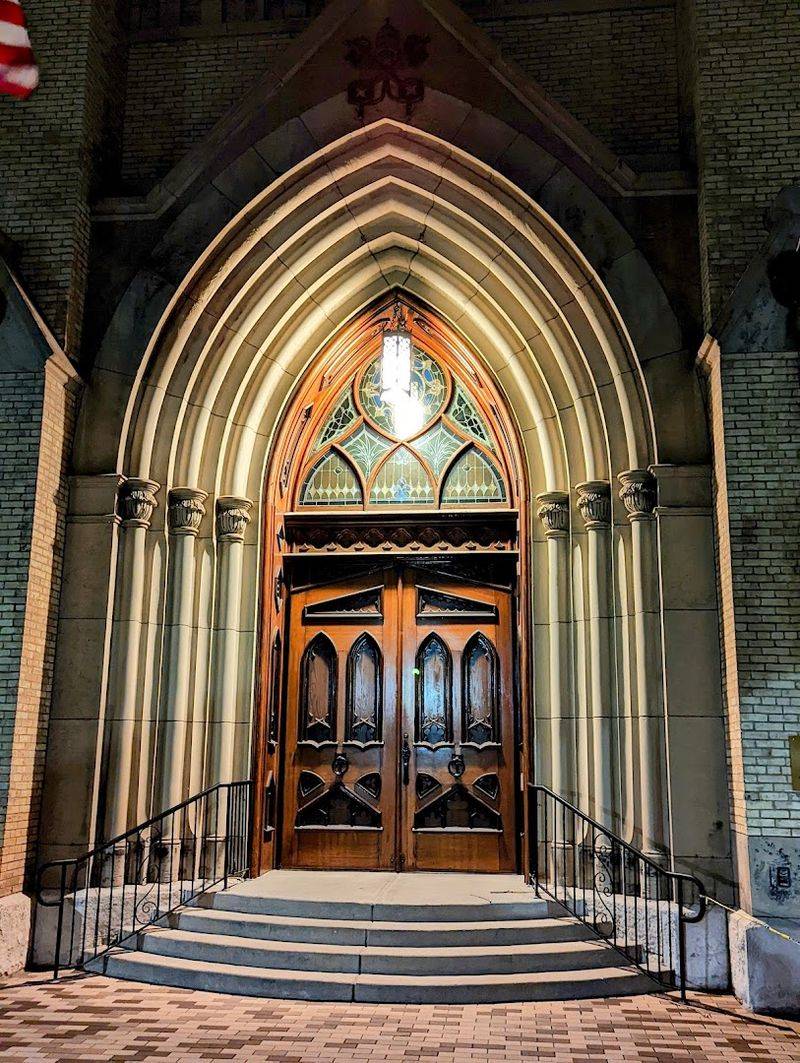
The Basilica of the Sacred Heart is not an isolated attraction dropped onto a university map. It functions as the spiritual center of Notre Dame, and that role explains a lot about why the building carries such weight.
You are not looking at a preserved shell from another century; you are standing in a church that still anchors campus life through worship, ceremonies, tours, and quiet individual visits.
That living connection gives the history a different texture. Gothic Revival architecture can sometimes feel theatrical when removed from its original purpose, but here the style is still in conversation with the daily rhythms around it.
Students cross nearby paths, families fold a basilica stop into a campus walk, and major university moments can spill naturally into the church’s orbit.
Guided tours are especially useful because they turn visual richness into readable context. Instead of only noticing that the artwork is extensive, you begin to understand how the building developed, what details deserve longer attention, and how religious meaning shaped the decorative program.
A strong tour can also connect the basilica to surrounding Notre Dame landmarks without pulling attention away from the church itself.
That relationship to place is part of what makes the basilica different from a stand-alone cathedral in a dense city center. Here, the church and campus amplify one another.
The academic setting sharpens the sense that the basilica belongs to a larger institutional story, while the basilica gives the grounds a ceremonial and visual core that ordinary campus chapels could never provide. For travelers, this means the visit carries more than architectural value.
You are seeing a building that helps explain Notre Dame’s identity in physical form – serious, symbolic, old-world in style, and still active rather than merely commemorative. The history does not sit behind velvet ropes here; it keeps moving through the doors every day.
Best Timing for a Better Visit in Indiana
Timing changes this visit more than many first-time visitors expect. The basilica is open daily from 9 AM to 9 PM, which gives you a wide window, but the experience can feel very different depending on whether you arrive during a quiet weekday stretch, around service times, or in the rush of a game weekend.
A little planning helps the building reveal more of itself. For pure visual study, calmer hours are your friend. With fewer people moving through the nave, you can pause in the center aisle, step aside to study stained glass, and back up for long interior views without feeling rushed.
Quieter periods also make it easier to notice how light shifts across painted surfaces and how the church holds sound even when almost no one is speaking.
That said, a more active visit has its own advantages. If the choir is singing, the organ is in use, or a service is underway, the basilica’s purpose becomes unmistakable.
You are no longer observing a beautiful interior in near stillness; you are seeing how architecture, music, and ritual fit together in real time.
Parking and movement around campus can require more patience on busy days, especially when major university events are happening. Building in extra time keeps small logistics from eating into the visit.
It also gives you room to approach on foot, which is the best way to appreciate how the basilica rises within the campus landscape rather than appearing all at once from a parking lot. If you want the strongest overall plan in Indiana, aim for a visit that leaves room for both stillness and activity.
Start with enough daylight to read the exterior and stained glass, then stay long enough to hear the room if music or worship is scheduled. The basilica works in every setting, but timing decides which side of its personality you meet first.
Why the Basilica of the Sacred Heart Is Worth the Trip
Plenty of campuses have a handsome chapel or a historic church tucked somewhere near the center. The Basilica of the Sacred Heart operates on another level.
It is larger in ambition, richer in interior artistry, and more integrated into the identity of its surroundings than the typical university religious building, which is exactly why it keeps resetting expectations for anyone who walks in thinking this will be a quick side stop.
Its power comes from combination rather than one single headline feature. The exterior delivers a commanding Gothic silhouette, the interior answers with stained glass and frescoes at serious scale, the altar and organ bring ceremonial focus, and the relics and devotional details pull the experience back down to human dimensions.
Each layer strengthens the others, so the basilica never depends on novelty alone. There is also something unusually effective about finding this level of craft in northern Indiana. The contrast sharpens the surprise without turning the church into a gimmick.
Instead, it makes the basilica feel like a declaration about what Notre Dame values – continuity, symbolism, and a willingness to build something unapologetically grand where many travelers least expect it.
That is why the visit satisfies very different kinds of curiosity. Architecture lovers get proportion, ornament, and historic style.
People drawn by faith or sacred art find an active place of worship with depth beyond the visual spectacle. Even travelers simply passing through South Bend can understand the building quickly, because its quality is obvious before any explanation begins.
If you are deciding whether this belongs on your route, the answer is straightforward. Make the stop, give it real time, and let the basilica unfold in stages instead of racing through for a photo.
By the end, it does not read as merely impressive for Indiana – it reads as one of the country’s most compelling church interiors, full stop.
Share this story