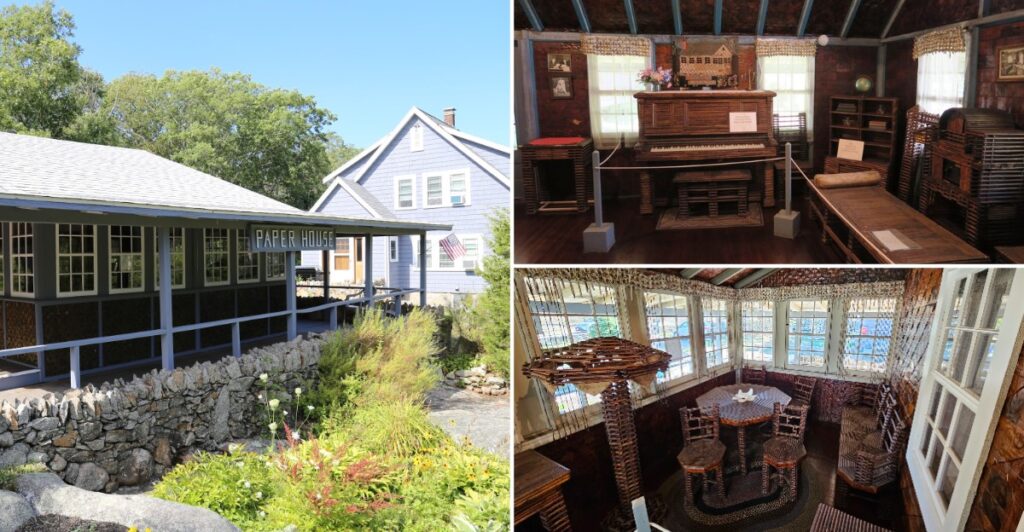
Most old newspapers are forgotten within days, but in Rockport, Massachusetts, thousands of them became something people still stop to see more than a century later. The Paper House turns an everyday material into walls, furniture, and details that reward anyone willing to look closely. The appeal comes from how strange and inventive the whole idea feels, especially once you realize how much patience went into building it.
A suggested $2 donation has long made this one of the more affordable quirky stops on the North Shore, though current access is worth checking before you go. For anyone who likes Massachusetts attractions with an unbelievable backstory, this little house is hard to forget.
A Quiet Massachusetts Cottage With a Wild Secret
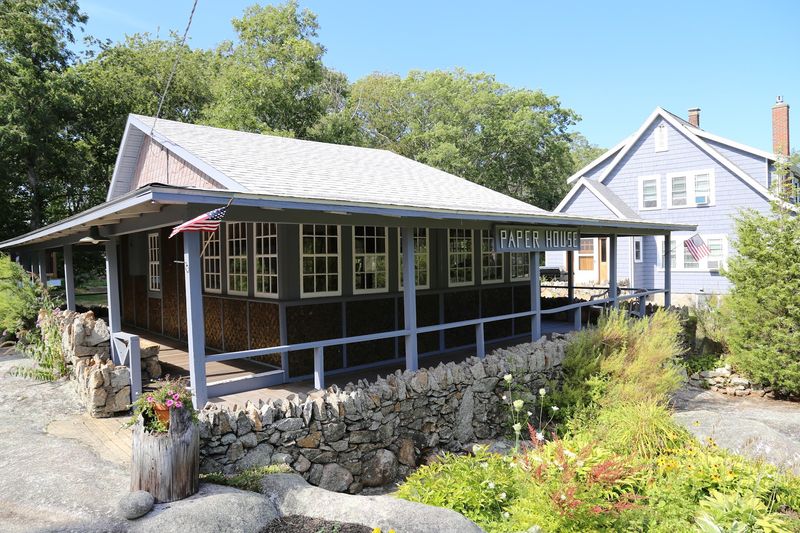
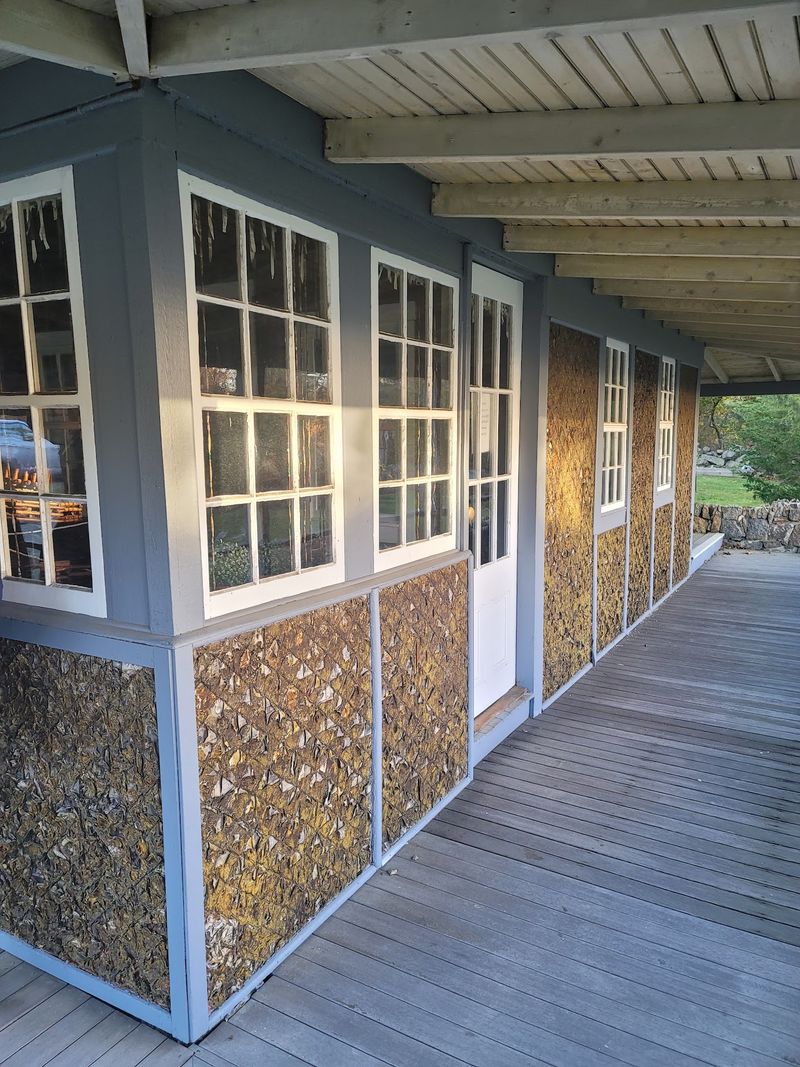
A small cottage on a residential street hardly sounds like a construction experiment. Yet the Paper House at 52 Pigeon Hill Street holds a surprise that becomes clearer as you move toward its walls: newspaper is part of the building itself.
The setting helps explain why the discovery is so striking. Rather than a large museum entrance or a grand estate, you arrive at a modest historic property tucked into Rockport’s everyday neighborhood landscape.
Start by looking at the overall shape before hunting for printed words. Its familiar roofline and porch give you a useful point of comparison, making the unusual wall material easier to understand.
Then shift your attention to the surface. Layers of paper, protective finish, and age create a texture that looks very different from fresh newspaper spread across a kitchen table.
Weathering is part of the story, but it is not an invitation to investigate with your hands. Keep your fingers away from loose edges, and never peel back a layer to see what lies underneath.
You can get a better sense of the building by changing your viewing angle. Step back for the cottage outline, then move closer where access allows to study the paper without touching it.
Because the property sits among homes, treat the approach like a neighborhood visit. Keep voices low, avoid blocking driveways, and stay within the areas clearly intended for museum access.
Save a photograph of the whole house before going inside. After seeing the furniture and construction details, that simple exterior view becomes a useful reminder of how much unusual work fits within such a small footprint.
For your opening look, the strongest contrast is also the simplest: a recognizable summer cottage, built with a material most households would never expect to find in their walls, standing quietly beside an ordinary residential street today.
Newspaper Walls, but Not a Paper Roof
Paper can carry more weight in this story than the title first suggests. The house is famous for its newspaper construction, but understanding which parts are paper makes the achievement more interesting, not less impressive.
A traditional wooden frame supports the cottage, and the roof and floor are wood. The fireplace is brick, so describing the entire structure as nothing but newspaper would miss several practical choices.
The unusual part is the wall filling and covering. Newspapers were layered together with homemade paste, then protected with varnish, turning thin sheets into a much thicker building material.
Think about the difference between one sheet of paper and a tightly packed stack. That comparison helps explain the basic idea, although this historic experiment should never be treated as a guide for building a modern home.
Its survival also does not mean newspaper is naturally weatherproof. Protective coatings, the building’s design, and continued care belong in the explanation, alongside the patient work that went into making the walls.
Look for places where the layered construction is already visible. Existing exposed details can help you understand the method without opening, scratching, or pulling at any part of the surface.
Printed words add another wrinkle: the wall material once served a completely different purpose. Pages meant to deliver daily news became part of a building intended to last far beyond the next edition.
For children, this is an easy place to discuss materials and their limits. Ask them to compare paper, wood, and brick by sight, while making clear that every object here deserves hands off care.
Leave with the accurate version of the surprise: this is a wooden cottage with remarkable newspaper walls and furnishings, not a house whose every nail, beam, and working part somehow came from the daily press or a single folded sheet.
The Furniture Steals the Show
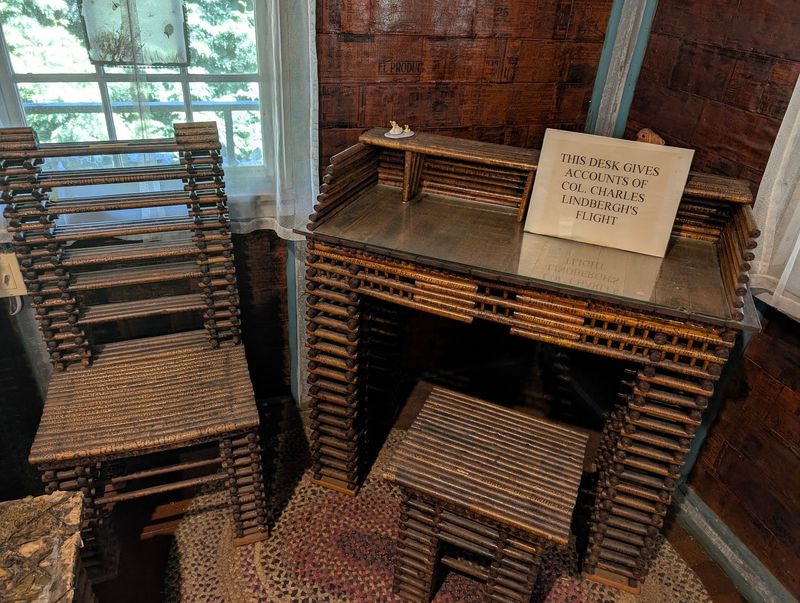
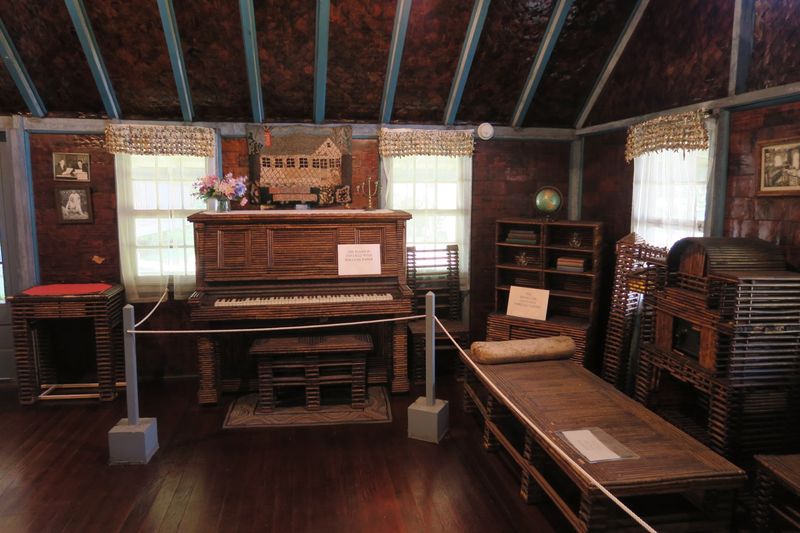
A chair made from yesterday’s news is the kind of object that makes you stop midstep. Inside the Paper House, furniture turns the building experiment into a room full of inventive shapes and carefully arranged paper.
Chairs, a desk, and a grandfather clock show how rolled newspaper could become more than a flat wall covering. The paper forms lines, curves, supports, and decorative surfaces that deserve separate attention.
Instead of trying to absorb everything at once, choose one piece and study its outline. Notice where the rolls run straight, where they turn, and how repeated sections build a larger shape.
The piano is especially useful for separating appearance from structure. It is a newspaper covered instrument, not proof that paper replaced every working part needed to produce music.
That distinction keeps the visit grounded while leaving plenty to admire. Covering a familiar object with printed paper changes how you see it, bringing its edges and surfaces into sharper focus.
Move slowly around whatever viewing space is available. A side view may reveal the pattern of the rolls more clearly than a straight on photograph, especially when the light catches the protective finish.
Do not sit on the chairs, test drawers, or try the piano unless clear current instructions specifically allow it. Museum furniture can look usable while still needing careful protection from everyday handling.
Younger visitors may enjoy spotting the difference between a household object and the material used to decorate or construct it. Keep that game visual, with pointing rather than touching.
Before moving on, compare two pieces with different shapes. A tall clock and a low chair solve different design problems, yet both show how repetition can turn a modest strip of paper into a surprisingly complex object through careful shaping, steady work, and countless small decisions made by hand.
Read the Room, Literally
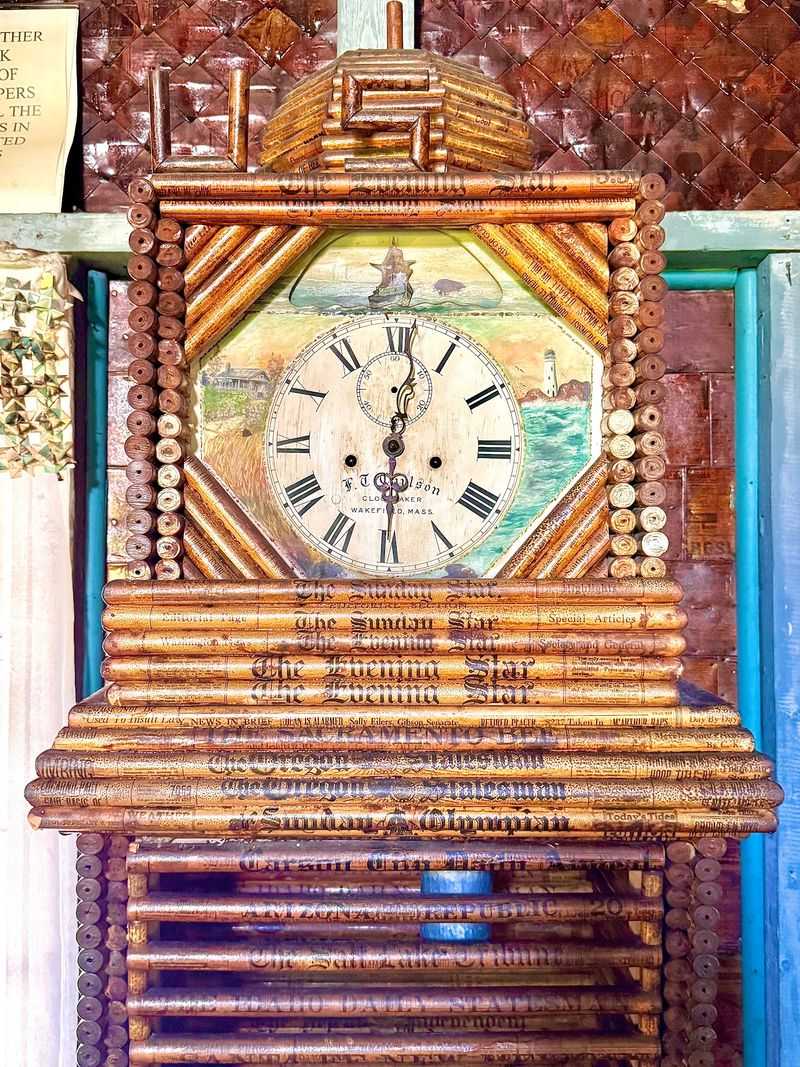
Most museum rooms ask you to read a label beside an object. Here, some of the reading material is the object, with printed words running across furniture and forming part of the house’s visible surface.
The newspaper brings a second timeline into the visit. Alongside the story of construction, you can look for traces of the events and everyday concerns that filled the pages before they became building material.
The writing desk is associated with newspaper coverage of Charles Lindbergh’s flight across the Atlantic. That connection gives you a specific detail to seek rather than scanning every surface without a plan.
Take your time, but keep expectations realistic. Age, curves, overlapping layers, and varnish can make sections difficult to read, and you should not expect every headline to remain clear.
A useful approach is to find one visible word, then follow the line as far as your viewing position allows. Sometimes a small readable section tells you more than a broad photograph of the entire piece.
Look at how the print is positioned, too. Lettering can function as decoration, with rows of type creating patterns even when the full article is hidden or turned away from view.
For a family visit, invite everyone to find a different feature: a large headline, a narrow column, a date if one is visible, or a change in the direction of the paper rolls.
Use your camera only where permitted, and avoid leaning across displays to improve a shot. A zoomed photograph taken from an allowed position is safer than moving your face or hands close to fragile surfaces.
The reward is not a complete newspaper archive. It is a chance to see information become texture, decoration, and structure, with fragments of public history still visible inside a private building project that later became a small museum in Rockport.
An Engineer’s Experiment That Outlasted a Century
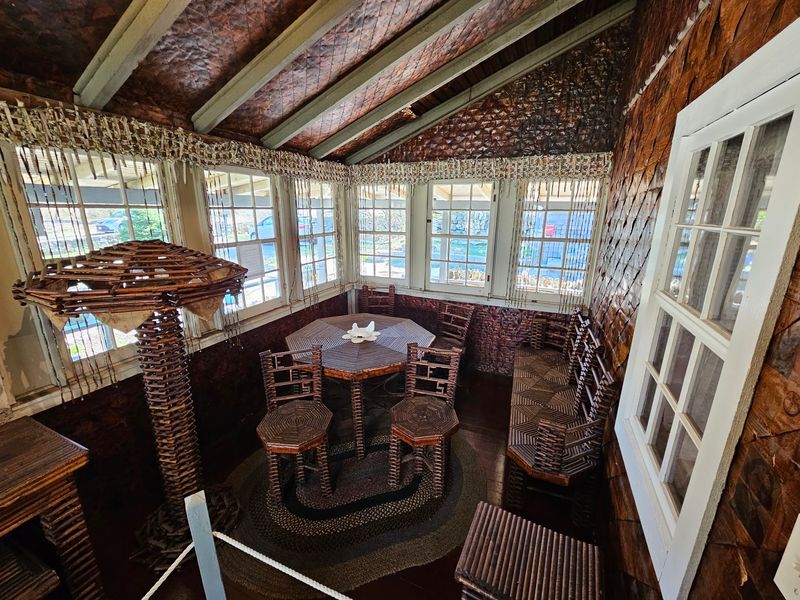
In 1922, mechanical engineer Elis Stenman began the project that would become the Paper House. What started as a summer cottage grew into a long running experiment in using newspapers for walls and household furnishings.
The date matters because it puts the building beyond the century mark. It also helps separate the original house construction from the additional paper work that continued over the years.
Stenman’s approach combined ordinary building methods with a material that usually had a short useful life. A newspaper might be read once and discarded, but here it became something to layer, roll, glue, and protect.
The project is commonly described as using about 100,000 newspapers across the house and its contents. Treat that figure as an estimate of scale, rather than a count you can verify by looking around the room.
Even without an exact total, the amount of handwork is clear. Each repeated roll and layered surface points to tasks that had to be done again and again before an object reached its finished shape.
That patient effort gives the engineer’s story its human side. The cottage was not simply an unusual idea sketched on paper; it was an idea carried through with enough persistence to fill a building.
Avoid assuming every furnishing dates to the first year. The broader project developed over roughly two decades, so the interior reflects an extended period of making rather than one burst of construction.
As you explore, connect the history to visible evidence. Repeated patterns, shaped furniture, and protected walls make the work easier to understand than dates alone can do.
The house now offers a rare view of one person’s sustained curiosity. Its historical value rests in that specific experiment, preserved in the place where the newspaper was transformed, rather than in a general claim that paper could replace conventional homes.
Make Your Small Self-Guided Visit Count
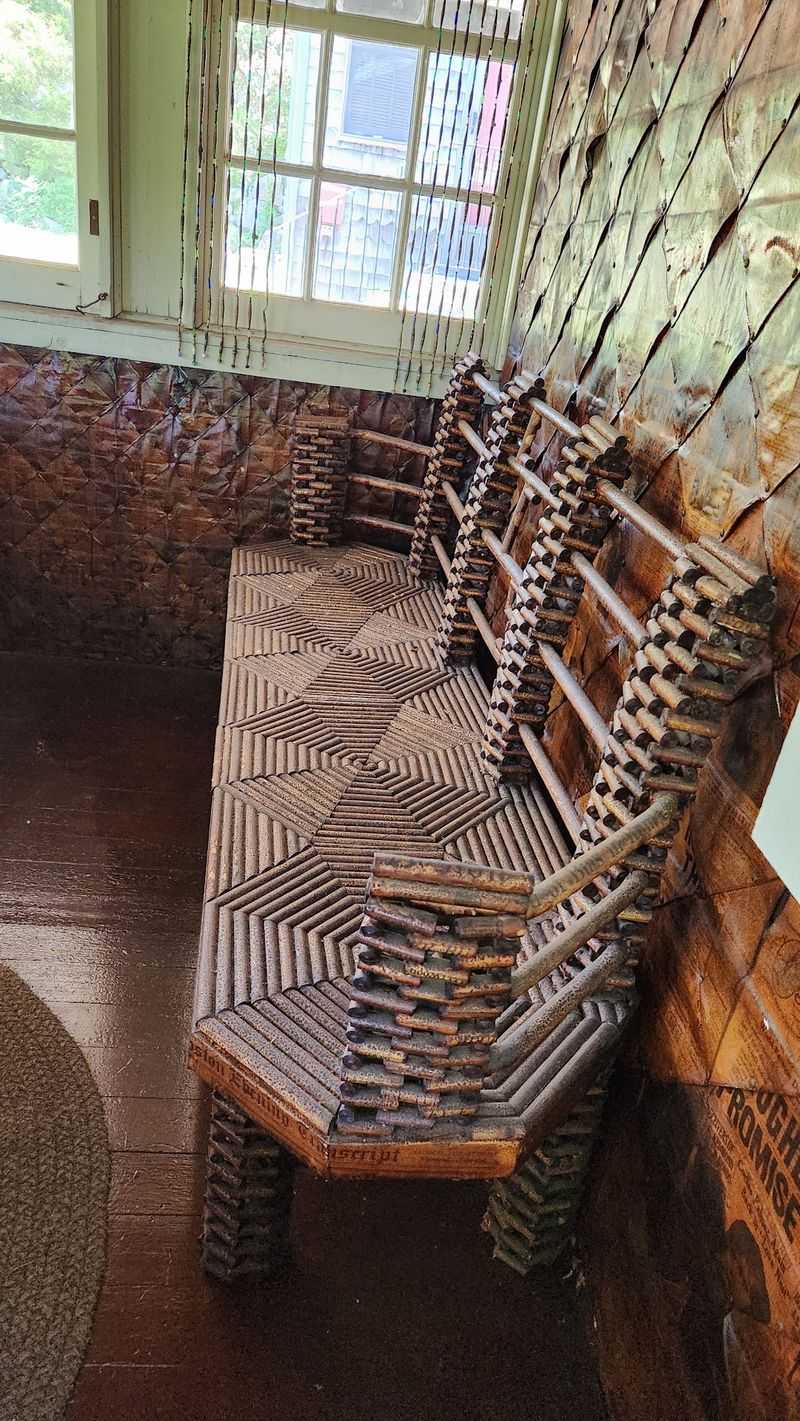
Slow looking works better here than a packed sightseeing schedule. The Paper House is compact, and its self guided format gives you room to decide which details deserve your attention without following a long formal tour.
Plan roughly fifteen to thirty minutes for a first visit, depending on how closely you study the furniture. That is a planning suggestion, not a required tour length or a promise about current access.
Begin with the building as a whole, then move to the walls, furniture, and printed details. This order keeps you from spending all your time on one striking object before understanding the larger experiment.
Because a staff member may not be present to answer questions, read any available information before you start browsing. Posted instructions should guide your visit, especially where they concern entry, donations, photography, or touching.
Give other visitors room to look. In a small interior, stepping aside after taking a photograph can be more helpful than trying to move quickly from piece to piece.
If you bring children, explain the hands off rule before entering. They can still take part by spotting shapes, matching furniture to familiar household objects, and searching for readable letters from a safe distance.
Resist the urge to treat every surface as a test of strength. The point is to observe what has survived, not to find out whether a chair still holds weight or a paper edge bends.
A short visit can remain focused without becoming rushed. Choose one construction detail, one furnishing, and one piece of visible printing as your three main things to examine.
Finish by stepping outside and looking back at the cottage. You will have a clearer picture of its scale, and you can check that your group has left the interior and access route clear for whoever arrives next to explore the house.
Bring $2, Then Check the Details Before You Go
Two dollars is the headline attraction, but it needs a small clarification. The Paper House has used a suggested $2 donation per person on an honor system, rather than the kind of staffed ticket counter found at larger museums.
Bring a few dollars in cash and follow the current instructions at the property. Treat the amount as a suggested contribution that has been associated with visits, not a guaranteed permanent admission price.
The address is 52 Pigeon Hill Street, Rockport, MA 01966. Enter the full address into your navigation system so you reach the historic property rather than searching only for a general Rockport destination.
Listed operating hours are 10 a.m. to 5 p.m. daily, but those hours should be checked against current seasonal access. The museum has traditionally welcomed visits from April through October.
A posted schedule cannot rule out an unexpected closure. Confirm the opening arrangements close to your travel date, particularly if seeing the interior is the main reason for making the drive.
Parking is another detail to handle carefully because the house sits on a residential street. Look for legal street spaces, obey posted restrictions, and leave driveways and neighboring entrances fully clear.
If you need step free access or have other mobility requirements, confirm the entrance and interior conditions before arriving. A small historic cottage should not be assumed to offer the same layout as a purpose built museum.
Keep your expectations matched to the site: this is a brief, close looking visit centered on a single unusual house. Allow enough time to browse, but do not plan around unconfirmed services or facilities.
The modest donation suits the modest scale. Your visit centers on real newspaper walls, carefully made furnishings, and a century old experiment, with practical planning helping ensure you can actually step inside when you reach Pigeon Hill Street.
Share this story