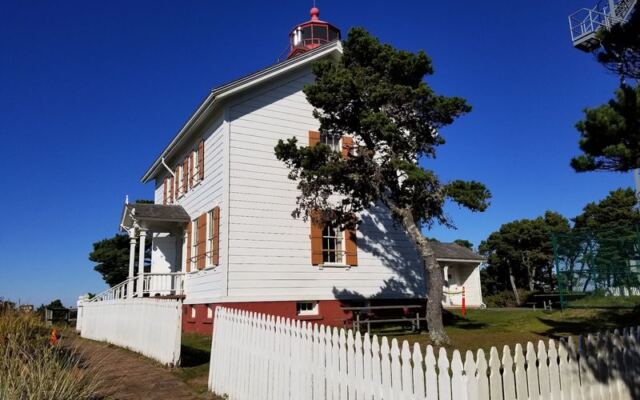
Some buildings quietly vanish before anyone notices they are gone. This one came close, and a group of determined Oregonians refused to let it happen. Today, a small white wooden lighthouse still stands on a grassy hill above the Newport harbor, freshly painted and open for people to walk through.
It served as a working light for only a few short years in the 1870s, yet it has outlasted almost everything around it. Inside, period rooms show how a keeper and his family lived, and a wooden staircase still leads upward through the house. Outside, the grounds offer bridge views, picnic tables, beach paths, and tide pools below the bluff.
Best of all, the price of admission is zero. Keep reading to learn how the community rescued it, what you can see inside, and how to plan a visit that fits your schedule.
A Hilltop Survivor in Newport
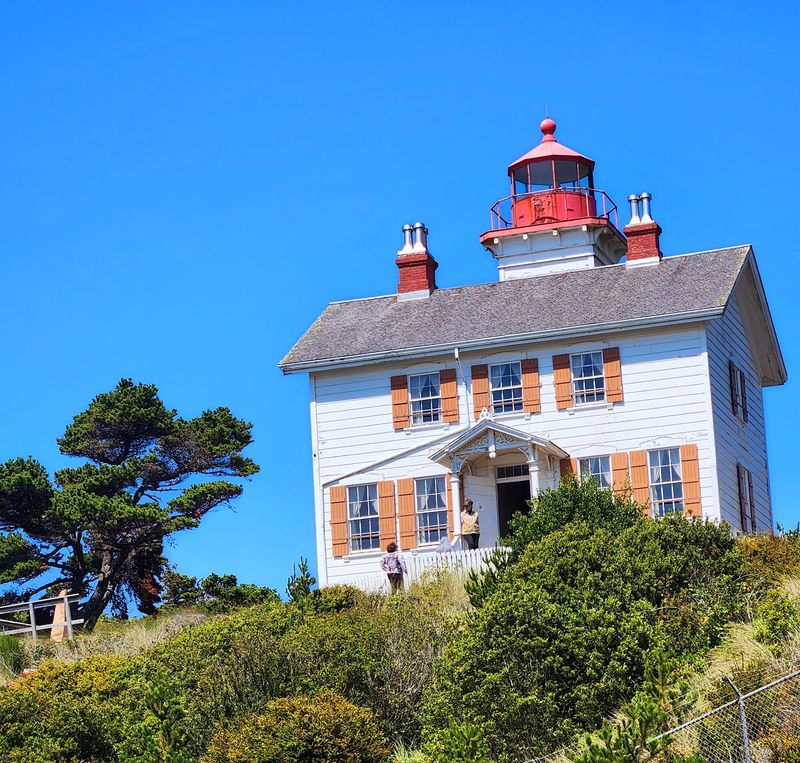
Plenty of Oregon lighthouses sit on lonely headlands far from town. This one sits right at the edge of a busy harbor community, close enough that a quick coffee stop can turn into a history lesson.
The Yaquina Bay Lighthouse is found at Yaquina Bay Lighthouse, Newport, OR 97365, in the United States. It sits within a state park on a hill overlooking the mouth of Yaquina Bay, near the north end of the Newport bridge.
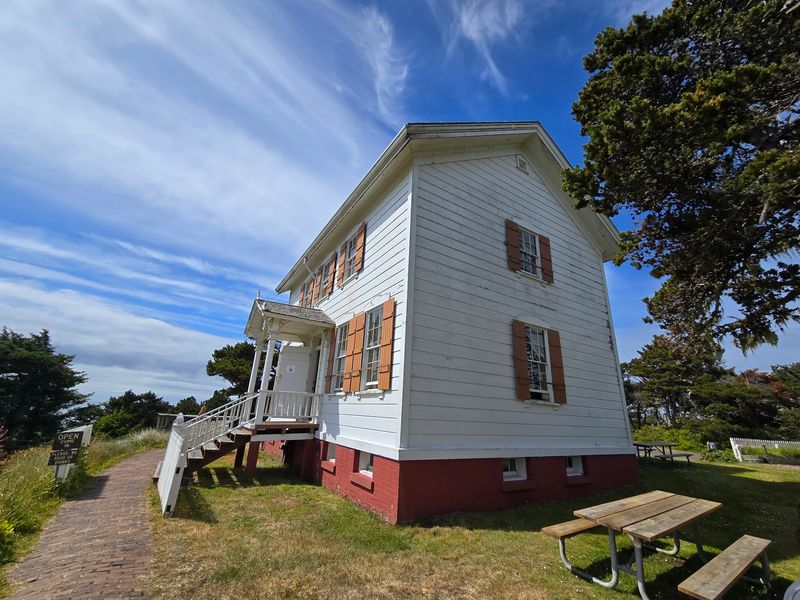
What makes it unusual is its shape. The light tower rises from the roof of a two-story wooden house, so the keeper’s home and the lighthouse are one building rather than two.
That design gives the place a homey look. It reads more like a tidy family residence that happens to wear a lantern on top than a stark coastal beacon.
The building is compact, and some people arriving for the first time find it smaller than expected. That modest size is part of its charm, because every room is easy to explore without feeling rushed.
The surrounding park adds plenty of reasons to linger. There are picnic tables, restrooms, viewpoints, and paths heading down toward the beach.
Still, the real story starts with the question of how a wooden building from the 1870s is still standing at all.
Three Years on the Job
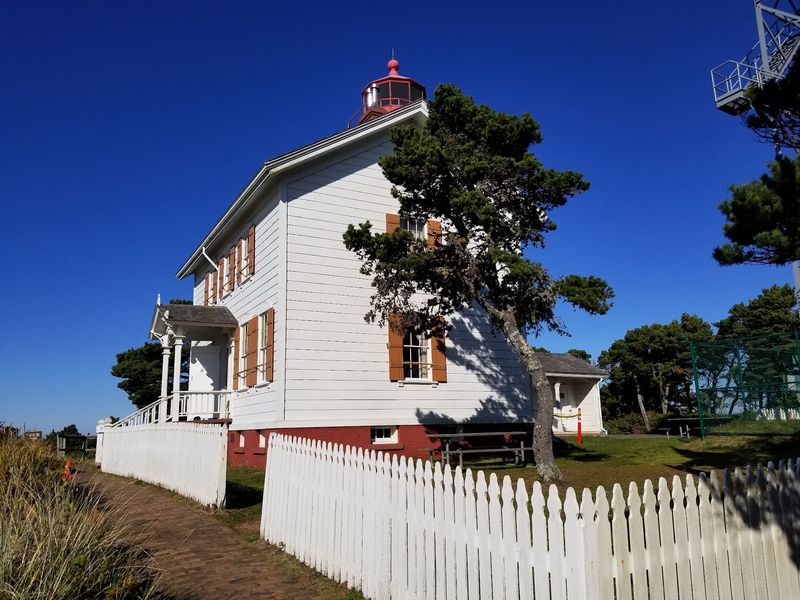
Talk about a short career. The lighthouse first shined its beam over the bay in 1871, and it was taken out of service only a few years later, in 1874.
The reason was simple geography. A taller lighthouse at nearby Yaquina Head took over the job of guiding ships along this stretch of coast, and the bay light was no longer needed.
Plenty of retired buildings disappear after losing their purpose. This one hung on through decades of different uses and long stretches of neglect.
Wooden structures on the Oregon coast do not get an easy life. Wind, rain, and salt air are hard on paint and boards, and an empty building can slide toward ruin faster than most people expect.
By the middle of the twentieth century, the old light faced the very real threat of being torn down. That is the moment when local residents stepped in and changed its fate.
The building is often described as one of the oldest structures in Newport. Its survival connects modern residents with the earliest days of the harbor town.
So a lighthouse that worked for roughly three years has now been part of the skyline for more than 150. Not a bad retirement plan.
The Neighbors Who Said No to the Wrecking Ball
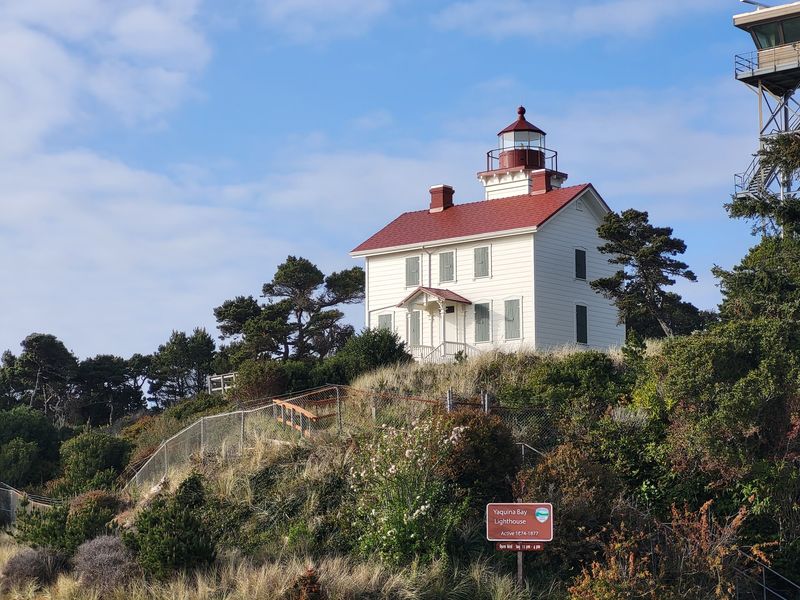
Preservation stories rarely start with grand gestures. They usually start with a few people who care about a familiar place and refuse to let it go without a fight.
That is what happened here. When demolition loomed in the 1950s, local history supporters in Lincoln County pushed back and worked to save the structure.
Their effort kept the building standing long enough for a bigger restoration to follow. Over the years, the house and tower were repaired and furnished to reflect the era of the original keeper.
The light itself was relit in 1996 as a private aid to navigation. That means the old lantern once again glows over the bay after more than a century of darkness.
The work has not stopped. A more recent restoration and a fresh coat of paint have given the exterior a crisp, cared-for look, and people who toured it years ago say it is worth seeing again.
For Oregonians, this is a reminder that local landmarks survive because ordinary residents show up for them. The site is supported by the Friends of Yaquina Lighthouses, whose website lists current information.
Every person who walks through the door today is benefiting from choices neighbors made generations ago.
Parlor, Kitchen, and a Keeper’s Routine
Forget velvet ropes and glass cases at every turn. Here, the experience is about moving through rooms that look like a family just stepped out for the afternoon.
The old living room and kitchen are furnished with period pieces. Each room helps explain what daily life looked like for the keeper and his household in the 1870s.
Signs throughout the house share details about the family that lived there and the duties of the keeper. Those duties included tending the light, a job that demanded steady attention every single night.
The artifacts are presented as historically accurate, and many are kept in excellent condition. That attention to detail makes the house feel like a working home rather than a museum display.
Small touches matter here. Furniture placement, household items, and room layouts all help tell the story without needing a long lecture.
For families, the rooms are easy to understand at a glance. Kids can compare a keeper’s kitchen with their own, which often sparks surprisingly good questions.
Give yourself time to read the panels. The house is small, but the story packed into it is bigger than its square footage suggests.
Up the Wooden Staircase
Here is where the headline earns its keep. A wooden staircase still climbs through the heart of the house, leading guests upward the way the keeper once went about his evening work.
The staircase is one of the details people mention most after a tour. It ties the living quarters directly to the tower, which is exactly why this building was designed as one connected structure.
Expect the climb to be steep. Older homes were built with narrow, upright stairs, and this one is no exception.
Access to the actual lantern and to the basement has been limited in recent years. It is smart to check the Friends of Yaquina Lighthouses website before your visit to see which areas are open.
Even without stepping into the lantern itself, the climb gives a real sense of the building’s vertical layout. You get a clear idea of how the keeper moved between family life and his duties above.
Take the stairs slowly and hold the rail. Comfortable shoes help, especially when the floors carry a bit of moisture from wet coastal days.
Few places let you follow a keeper’s daily path this closely, and that alone makes the climb worth the effort.
Volunteers With Stories to Share
Behind many local landmarks is a quiet crew of helpers giving up their afternoons. This lighthouse is no exception.
Volunteers often staff the house during open hours. Many are well informed and happy to share background on the keeper, the family, and the building’s long road to restoration.
Knowledge levels can vary from shift to shift. Some volunteers know the place inside and out, while others may be newer and still learning the finer points.
That is part of the reality of a community-supported site. The people in those rooms are giving their time so the doors can stay open without an admission fee.
A good approach is to ask a question or two early in your visit. If a volunteer does not know an answer, the informational signs throughout the house fill in a lot of gaps.
Longtime fans also remember a local ghost story tied to the lighthouse. It has been part of the building’s playful reputation for years, and it is a fun conversation starter with whoever is on duty.
Polite curiosity tends to pay off here, often with a bonus anecdote that never made it onto a sign.
Bridge, Bay, and Open Ocean
Some lighthouses are mostly about the building. This one is equally about the view from its hill.
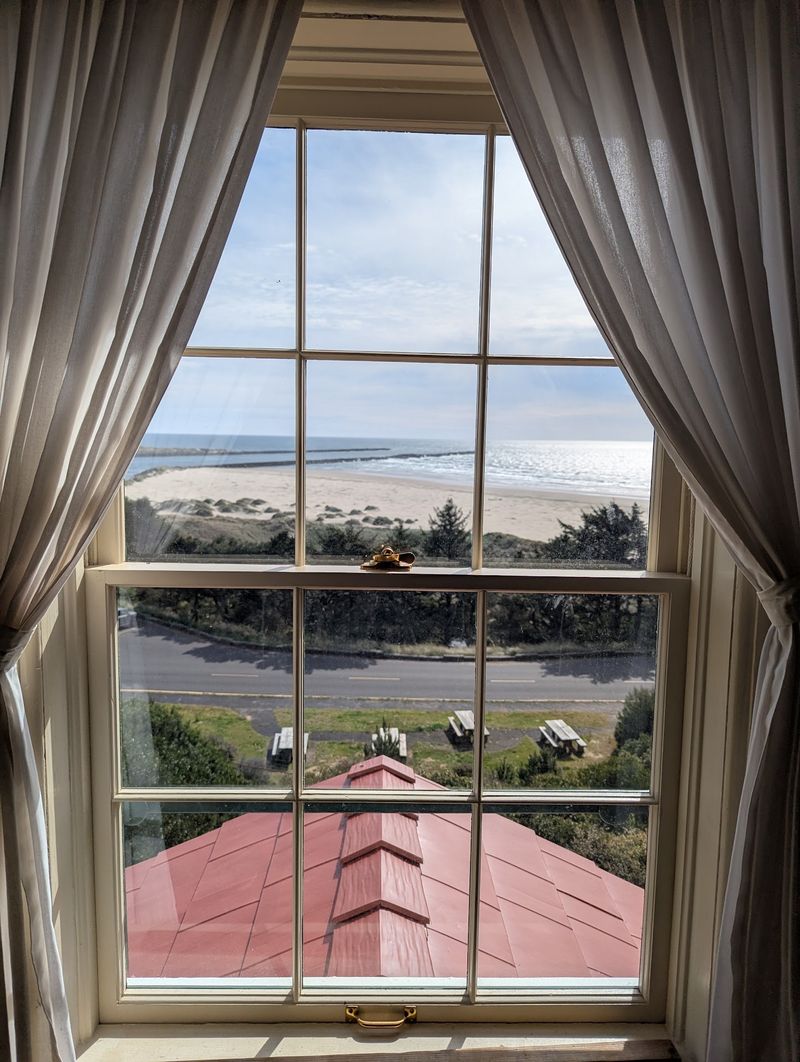
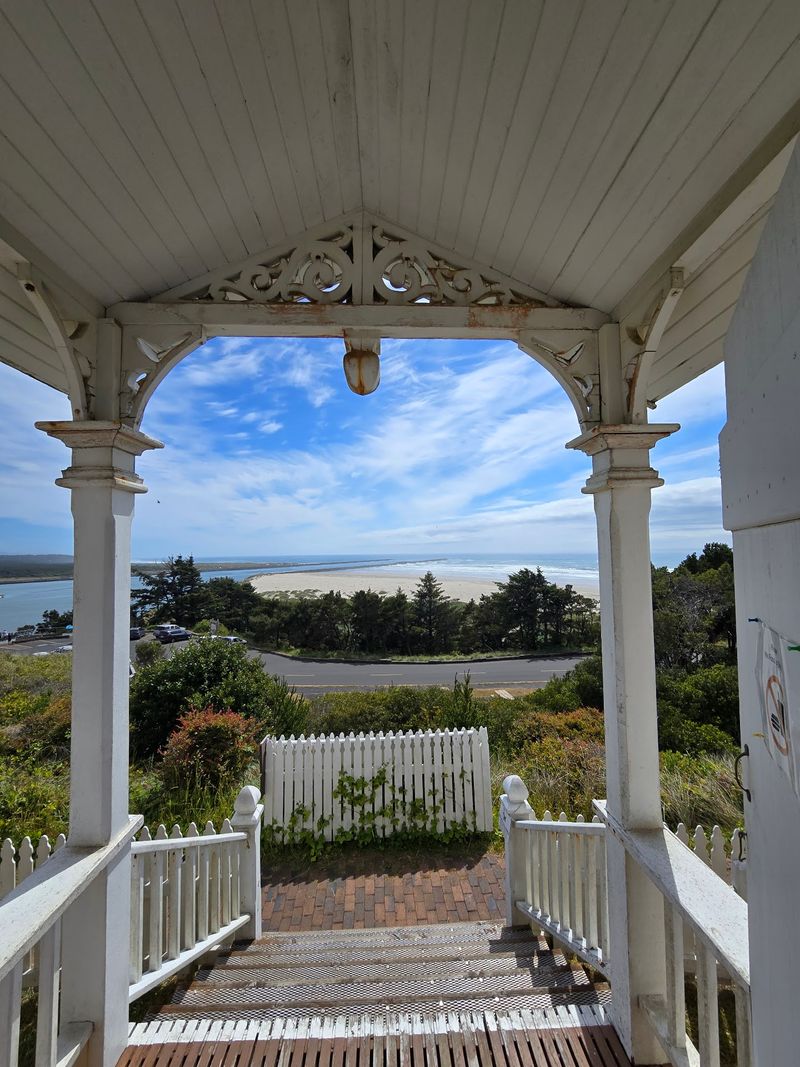
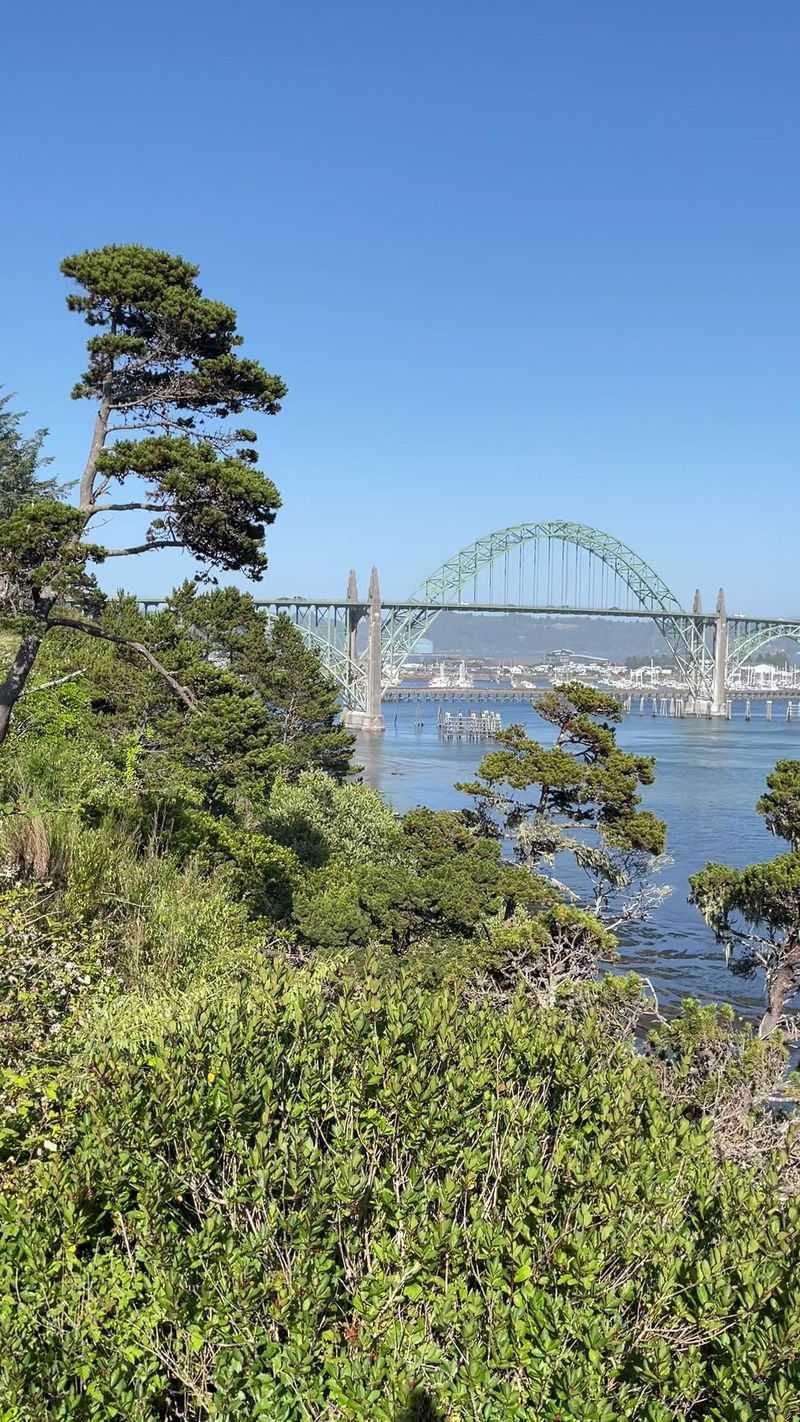
From the grounds, you can see the arch bridge stretching across Yaquina Bay, along with the harbor and the Pacific Ocean beyond. It ranks among the most photographed angles in Newport.
Weather does not ruin the show. Misty and cloudy days bring fog drifting across the bay, which gives the scenery a moody, dramatic look.
Photographers have two classic subjects in one stop. The white lighthouse itself makes a striking foreground, while the bridge provides a strong backdrop.
Distant boats moving in and out of the bay add some motion to the scene. Towering evergreens around the park frame the edges.
The viewpoints are easy to reach from the parking area. Even on days when the house is closed, the outdoor views alone make the stop worthwhile.
Bring a camera or simply bring patience. Weather changes quickly here, and a second look ten minutes later may offer an entirely different picture.
A Viewing Deck That Teaches
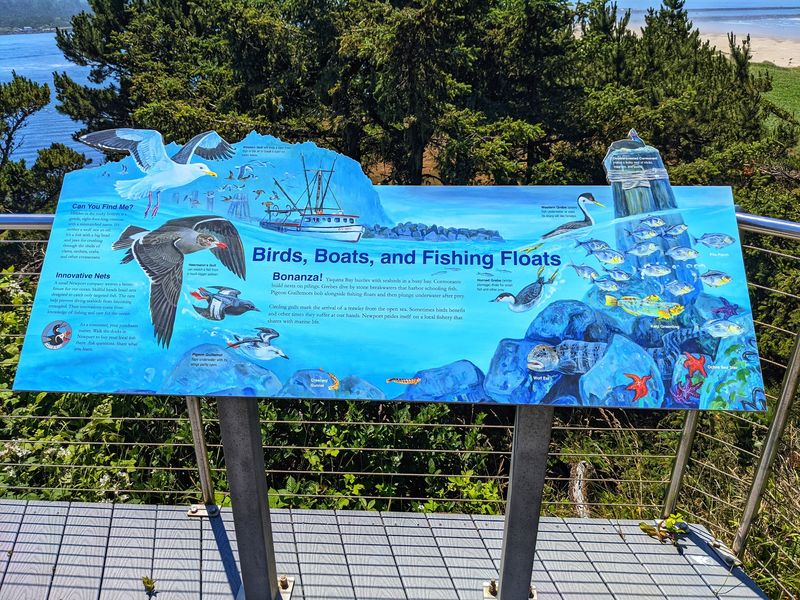
Short on time but hungry for context? The viewing platform near the lighthouse packs a surprising amount of learning into a small space.
Interpretive displays cover the history of the Yaquina people and the region’s oyster industry. Other panels explain Oregon’s geology and the influence of the Cascadia Subduction Zone.
There are also exhibits on tsunamis, marine ecosystems, seabirds, and local fishing traditions. The signs are designed to work for both adults and children.
A standout feature is the compass rose installation. It points toward nearby landmarks and lighthouses, helping you place this spot within the wider Oregon coast.
The deck itself is well maintained. Sturdy railings and plenty of room make it easy to stop, read, and take photos without crowding other people.
Nearby, the Fishermen’s Memorial honors members of the local fishing community. It is a calm spot for a moment of reflection and a meaningful part of Newport’s harbor identity.
Plan on spending more time here than expected. Between the views and the panels, an hour can disappear quickly.
Trails Down to Tide Pools
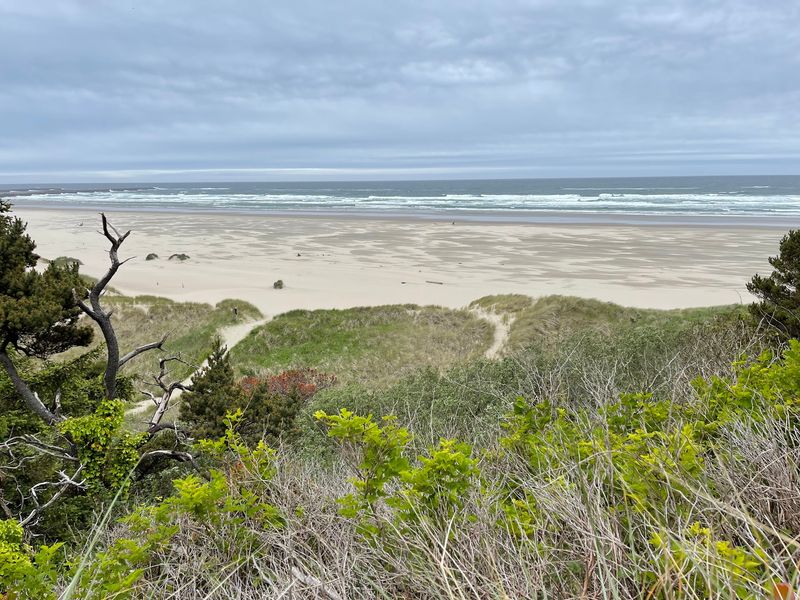
Not every highlight is up on the hill. Some of the best moments happen below the bluff, where the beach and tide pools wait.
Paths lead from the park down to the sand. Some families end up spending most of their time exploring the tide pools rather than the house.
The tide pools are a chance to watch local wildlife in its natural setting. Kids tend to love searching around the rocks, and adults often get just as absorbed.
A few words of caution help here. Some trails down to the beach are very steep, and there are dunes and dry sand to cross that can be tiring to climb back up.
Check tide times before heading down. Low tide offers the best access to the pools and the safest footing.
Treat the creatures you find with care. Look closely, touch gently if at all, and leave everything where it belongs.
The climb back up is the price of admission for the beach. Pace yourself, and the reward of the view from the top will feel well earned.
Picnics, Pups, and Easy Breaks
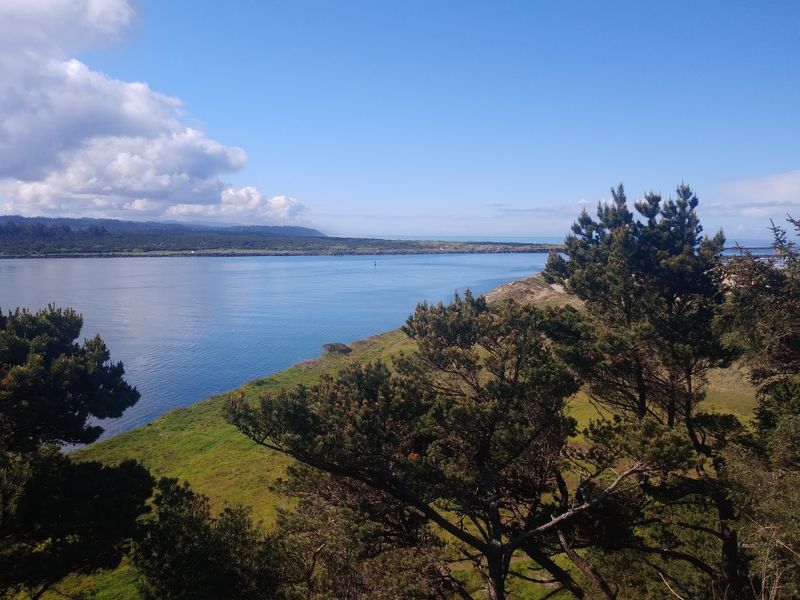
Road trips need good pit stops, and this park quietly ranks among the best along this part of the coast.
Picnic tables are scattered throughout the grounds. That makes it simple to pack a lunch and enjoy a relaxed break with a view of the harbor.
Restrooms are available on site. For anyone driving long stretches of Highway 101, that alone can make the stop worthwhile.
Dog owners will appreciate the dog area near the main parking lot. Pups can stretch their legs there, though they are not allowed down in the tide pool area.
The park also suits people who enjoy nature but are not looking for a long hike. The main sights are close together, and the lawn areas invite a slow stroll.
Resident birds add to the outdoor feel of the place. It is easy to sit at a table for a while and watch the activity around the bay.
Longtime locals have treated these grounds as a go-to spot since childhood. That kind of loyalty says plenty about how well the park works for an unhurried afternoon.
Hours, Parking, and Access Notes
Timing matters more than most people realize with this lighthouse. The house keeps limited hours, so a little planning goes a long way.
The lighthouse is open Wednesday through Sunday from 12 to 4 PM. It is closed on Mondays and Tuesdays.
Hours have shifted in past years, and the building has closed at times for restoration. Checking the website at yaquinalights.org before you go helps avoid surprises.
Here is the best part for budget-minded Oregonians. Parking is free, and looking inside the lighthouse costs nothing.
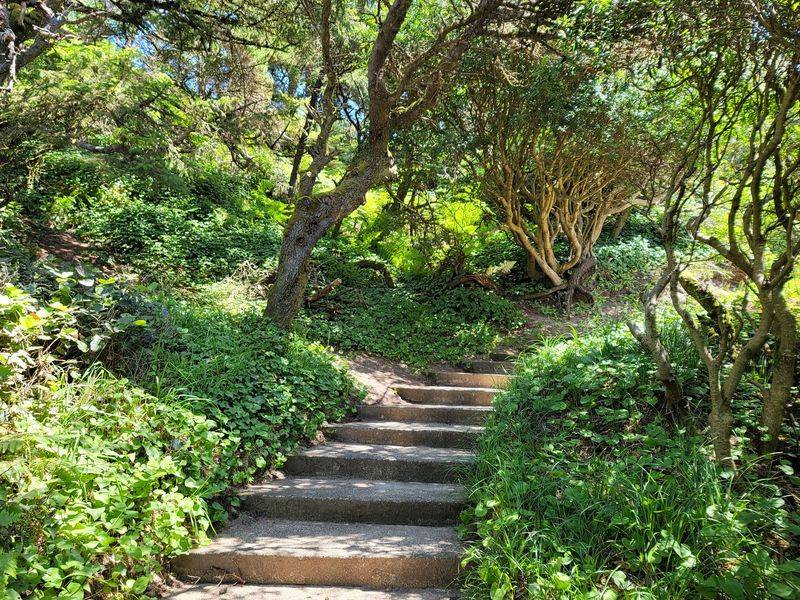
The lighthouse sits across the road from the parking lot. From there, a sloped path and a set of stairs lead up to the building.
Accessibility is limited. Steep stairs inside and outside mean the site is not wheelchair friendly and may be difficult for some older guests.
Arriving shortly after noon gives you the full four-hour window. That leaves room for the house, the viewing deck, and a trip down to the beach if your legs are up for it.
Why This Little Light Still Matters
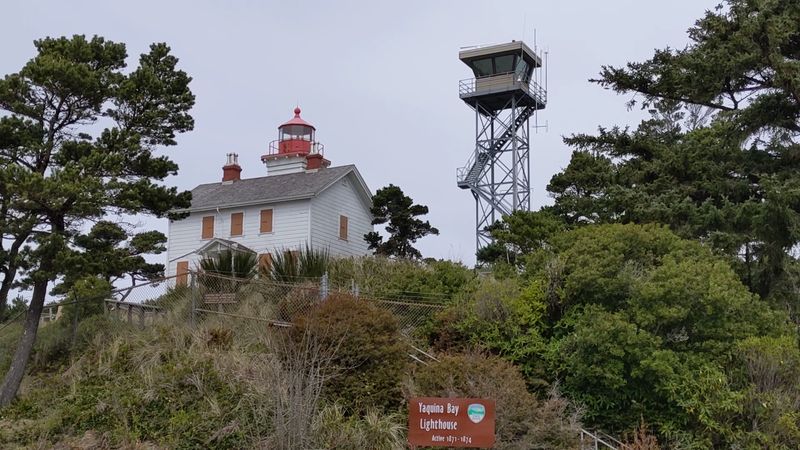
A lighthouse that worked for only a few years could easily have become a forgotten footnote. Instead, it became a community treasure.
The Yaquina Bay Lighthouse brings together history, scenery, and a hands-on look at a keeper’s life. All of it comes without an admission fee, which is rare these days.
History fans get period rooms and a story of survival. Photographers get the bridge and the bay, while families get tide pools, picnic tables, and room to roam.
Some caveats are worth keeping in mind. The stairs are steep, hours are limited, and certain parts of the building may not always be open.
Those trade-offs feel small next to what the site offers. It works as a short detour or a relaxed afternoon, depending on how much time you have.
Above all, it stands as proof that familiar Oregon places can survive when neighbors decide they are worth saving. The fresh paint on its walls is a sign that the work continues.
Climb the staircase, take in the bay, and leave knowing your visit helps keep this old light shining for the next generation.
Share this story