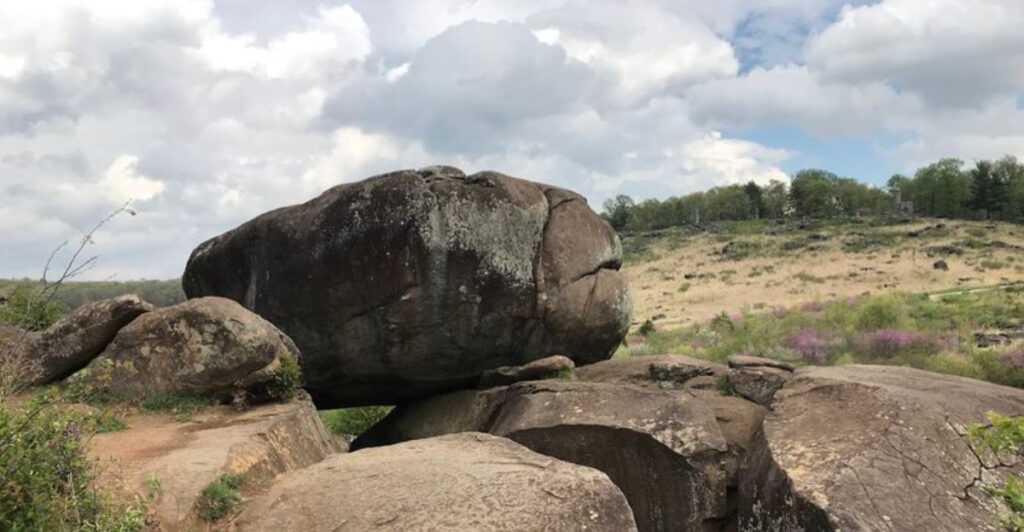
Devil’s Den is one of the most striking places on the Gettysburg battlefield, offering a landscape that is both beautiful and haunting. Massive boulders cover the hill, creating a dramatic setting that feels almost frozen in time. As you walk among the rocks, it becomes easier to imagine the difficult conditions soldiers faced during the Civil War and understand why this location became such an important part of the battle. The area’s rugged terrain played a major role in the fighting, and standing among the boulders gives visitors a deeper connection to the history that unfolded there.
Today, people come to Devil’s Den to explore the battlefield, learn about the soldiers who fought there, take in the surrounding views, and reflect on the stories that remain. With its unique landscape and unanswered questions that continue to surround it, Devil’s Den remains one of Pennsylvania’s most memorable historic places.
1. A Landscape That Feels Wild and Unforgettable
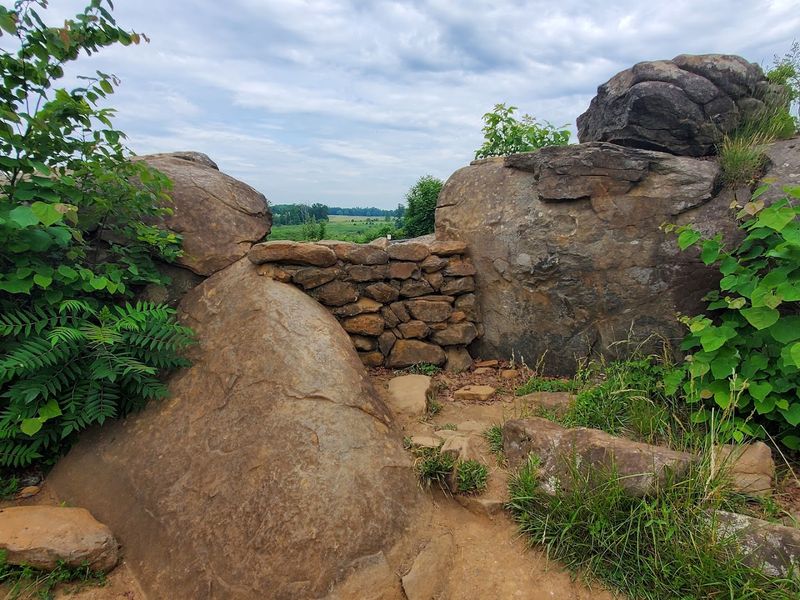
At first glance, Devil’s Den can look more like a giant stone playground than a battlefield.
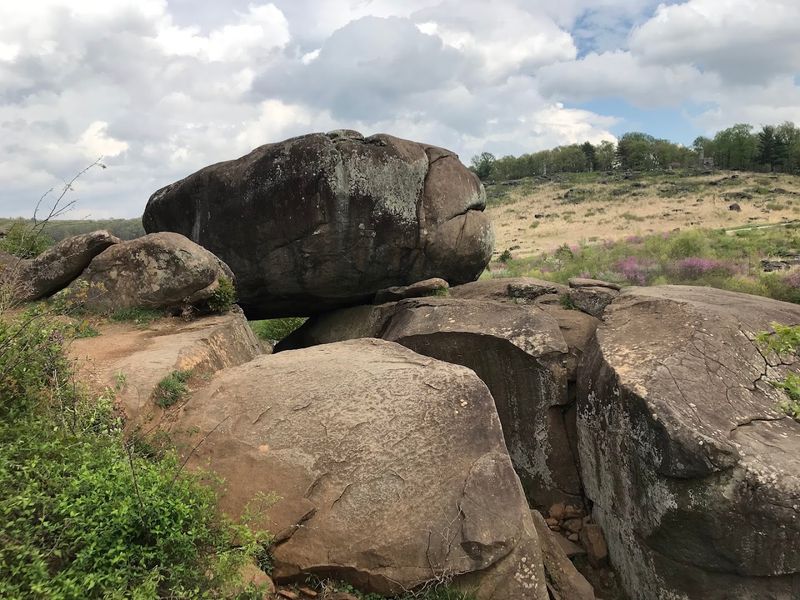
Massive boulders pile over each other in a way that feels wild and uneven, and that unusual ground is a big reason people remember this place so clearly.
Unlike many open parts of Gettysburg, this area is cramped, rocky, and full of hiding spots.
Walking here helps visitors understand how much land shapes history.
Soldiers had to climb, crouch, and fire around stone cracks and steep edges, which made every step harder and more dangerous.
The rough setting also gives the site its strange mood, mixing natural beauty with a heavy past.
If you visit, wear sturdy shoes and slow down on the rocks.
A careful walk reveals why Devil’s Den stands out as one of the most unforgettable places on the Gettysburg battlefield today.
Even quiet corners here seem to hold old stories.
2. The Deadly Fight on July 2, 1863
July 2, 1863, changed this rocky hill forever.
During the second day of the Battle of Gettysburg, fierce fighting swept through Devil’s Den as Union and Confederate troops struggled for control of ground near Little Round Top.
The stone cover helped some soldiers, but it also trapped others in a confusing, close-range fight.
Many visitors say the terrain makes the battle easier to picture, and that is true.
Open fields can seem distant from modern life, yet these boulders show exactly how hard it was to move, aim, and survive under fire.
Men from units such as the 124th New York and 1st Texas met in brutal action here.
Reading battlefield markers before climbing around adds a lot to the visit.
Knowing the timeline turns a pile of rocks into a place where split-second choices carried lasting consequences for both armies and shaped memories that still follow Gettysburg visitors for generations.
3. Close Combat Among the Giant Rocks
Nothing about Devil’s Den feels neat or simple, and that is exactly the point.
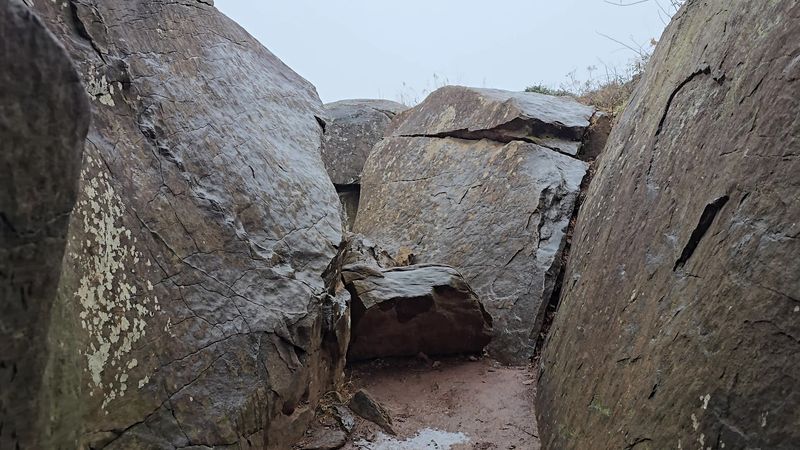
The giant rocks created blind corners, narrow gaps, and sudden high points, so soldiers often fought at very short distances without seeing much beyond the next stone wall.
That kind of combat was tense, loud, and deeply confusing.
From a visitor’s view, the boulders make the battle seem almost impossible.
Men had to scramble over uneven ground while carrying heavy gear, and officers struggled to keep units together.
A strong position could become exposed in seconds if someone moved too far or lost sight of support nearby.
Standing between the rocks gives a better lesson than any map alone.
You begin to notice angles, shadows, and small rises in the land, and those details explain why Devil’s Den became one of the battlefield’s hardest places to fight through for exhausted soldiers on that hot summer afternoon.
4. The Sharpshooter Story and the Mystery of the Photos
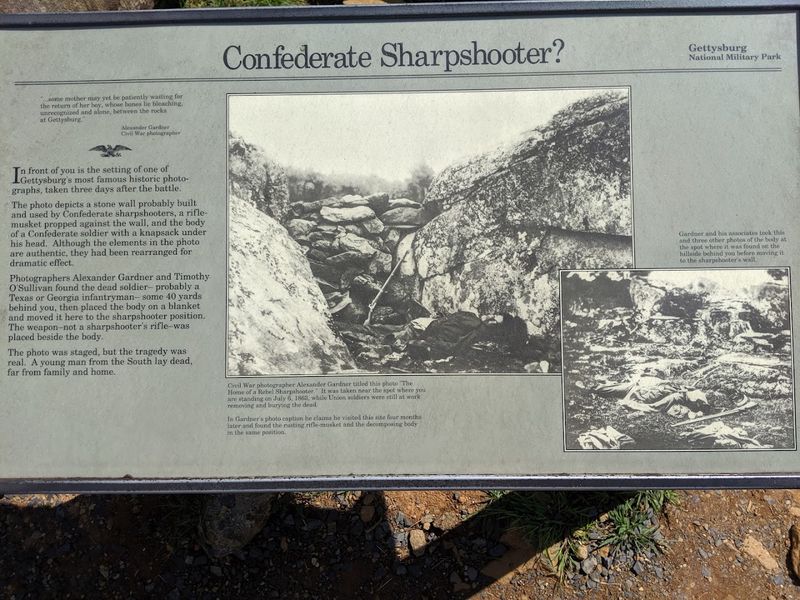
One reason Devil’s Den feels so mysterious has less to do with ghosts than with photographs.
After the battle, images of a dead soldier among the rocks became famous, and later arguments grew over whether the body had been moved by photographers.
That debate still fascinates visitors because it mixes history, memory, and the power of pictures.
Even without spooky stories, the scene can feel eerie.
Deep cracks, shadowy spaces, and the silence between the stones make people stop and look twice.
Add in old tales about strange sounds and the area’s dramatic name, and it is easy to see why legends settled here.
A smart way to explore the mystery is to separate fact from rumor while enjoying both.
Read park information first, then compare it with what you have heard, and the site becomes even more interesting instead of less for curious travelers visiting Gettysburg year after year.
5. A Clear View Toward Little Round Top
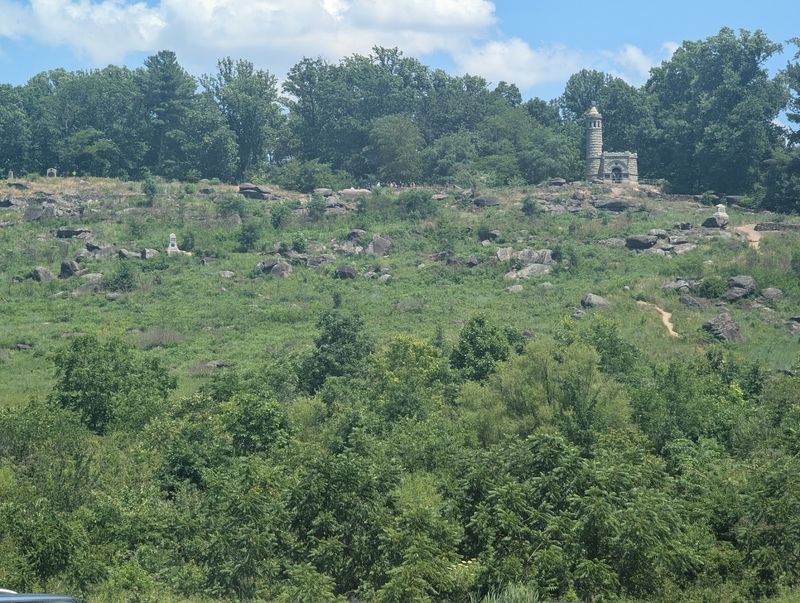
Look up from the rocks and another part of the story appears.
Devil’s Den sits near Little Round Top, and that close position helps explain why the ground mattered so much during the battle.
Anyone standing here can quickly see that the area was tied to bigger movements across the southern end of the field.
Visitors often mention how powerful it feels to spot Little Round Top across the way.
The view connects separate landmarks into one living map, which is especially helpful for younger readers, students, and first-time tourists.
Instead of memorizing names, you begin to understand how one hard fight affected another nearby struggle.
Bringing a battlefield map or using a tour app can make this stop far more meaningful.
Once the landscape clicks together, Devil’s Den stops being only a famous rock pile and becomes part of Gettysburg’s wider battle story for visitors picturing the events clearly.
6. The Witness Tree, Markers, and Quiet Reminders
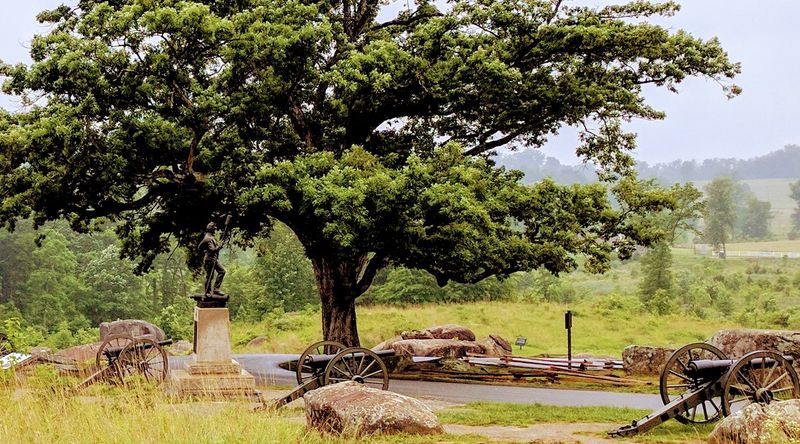
Not every sign of history at Devil’s Den is made of stone.
People who return again and again often talk about the witness tree, old markers, and memorial features that help the ground feel personal instead of distant.
Those details remind visitors that real people stood here, made choices here, and never forgot this place.
The famous tree near the top adds a quiet kind of power.
A living thing that survived long after the battle can stir strong feelings, especially for kids who connect better to something they can see and touch from a respectful distance.
Nearby plaques also help turn scattered facts into a clearer story.
Take time to read before rushing onward to the next stop.
Devil’s Den rewards patient visitors, and small clues across the hillside often leave a stronger impression than the biggest boulder in the entire area long after visitors head home at sunset.
7. How to Visit Safely and Respectfully
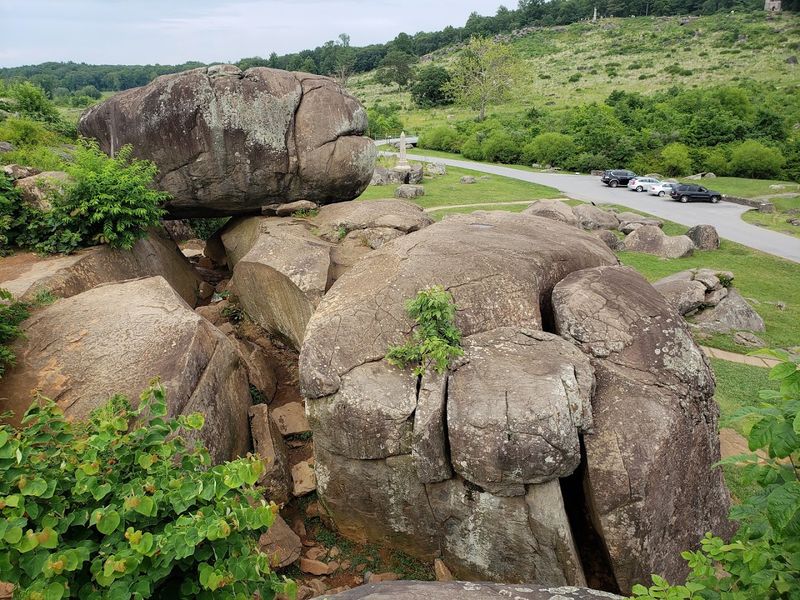
Families love Devil’s Den because the rocks invite exploration, but the site asks for care.
Many reviews praise the fun of climbing around, while others warn that the same boulders can be slippery, steep, and dangerous if children run ahead.
It is also hallowed ground, so safety and respect should go together.
Good shoes make a real difference here.
Bring water, watch your footing, and remember that restrooms are not available right at the spot.
Since the landmark is open daily from 6 AM to 8 PM, earlier visits can help you avoid heat and enjoy calmer light for photos.
Parents should keep kids close, and everyone should stay off monuments and read posted signs.
When visitors treat the place with patience, Devil’s Den becomes more than a quick stop, it becomes a thoughtful experience shaped by history, nature, and common sense from the first step to the final view.
8. Why Devil’s Den Still Feels So Mysterious
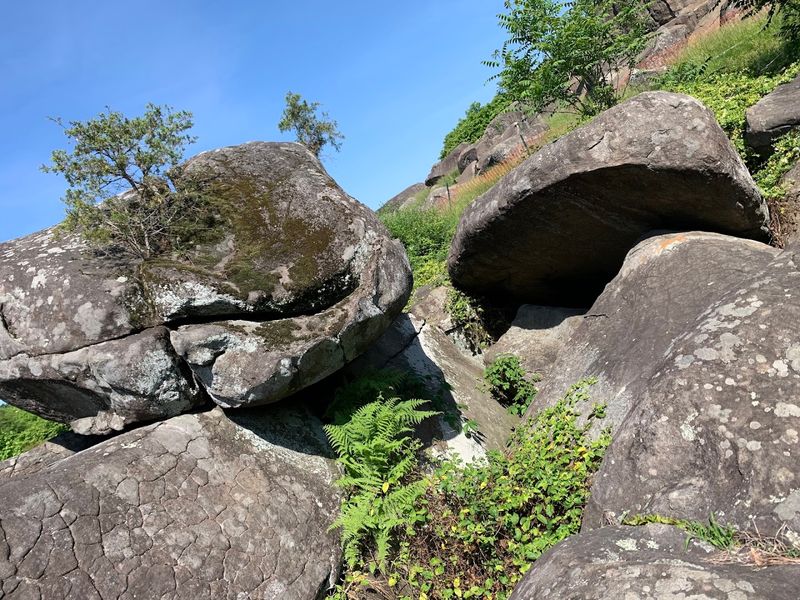
Some places give all their meaning right away, but Devil’s Den makes people linger.
Part of its pull comes from the way beauty and sorrow sit side by side, with sunlit rocks, deep shadows, and stories of terrible fighting all sharing the same hillside.
That contrast helps explain why so many visitors return year after year.
The mystery is not only about legends.
It also comes from standing in a place that still feels different from the rest of Gettysburg.
The land is strange, the history is heavy, and the silence can make your imagination work harder than it does in a museum room.
For the best experience, pause more than once and simply look around.
Notice the gaps between the boulders, the lines toward Little Round Top, and the memorial signs nearby.
Devil’s Den stays with people because it asks them to feel history, not just read about it.
Share this story