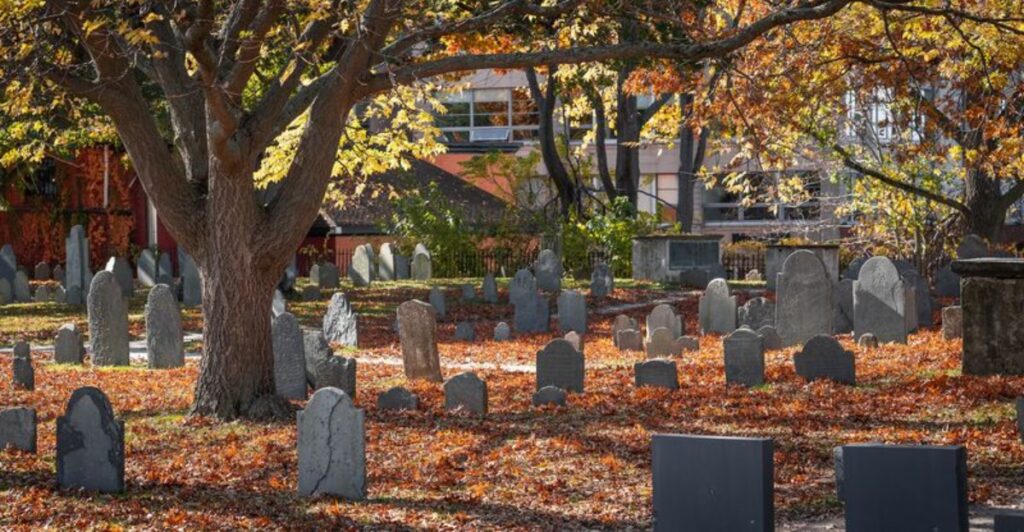
Salem’s history feels especially close when the names and dates are carved into stones only a few feet away. At the Burying Point on Charter Street, weathered markers trace the lives of colonial residents, including a judge connected to the 1692 witch trials.
The appeal goes beyond Salem’s famous spooky reputation, because the small cemetery opens a window into the people, families, and conflicts that shaped the town long before it became a tourist destination. A slow walk through the grounds reveals details that are easy to miss at first glance.
For anyone curious about the deeper story behind Salem, this historic burial ground gives you plenty to notice.
A Small Gate Opens onto Centuries of Massachusetts History
A few steps can change the whole scale of your Salem visit. Outside Burying Point, downtown moves at its usual pace; inside, narrow paths lead past stones that have stood through generations of change.
Also called Charter Street Cemetery or the Old Burying Point, the burial ground was established in 1637. It is Salem’s oldest cemetery, which means its story began more than fifty years before the witch trials.
That early date gives the setting a different role from a modern attraction built around 1692. You are looking at an actual burial ground that served a growing town, not a stage set created to suggest colonial life.
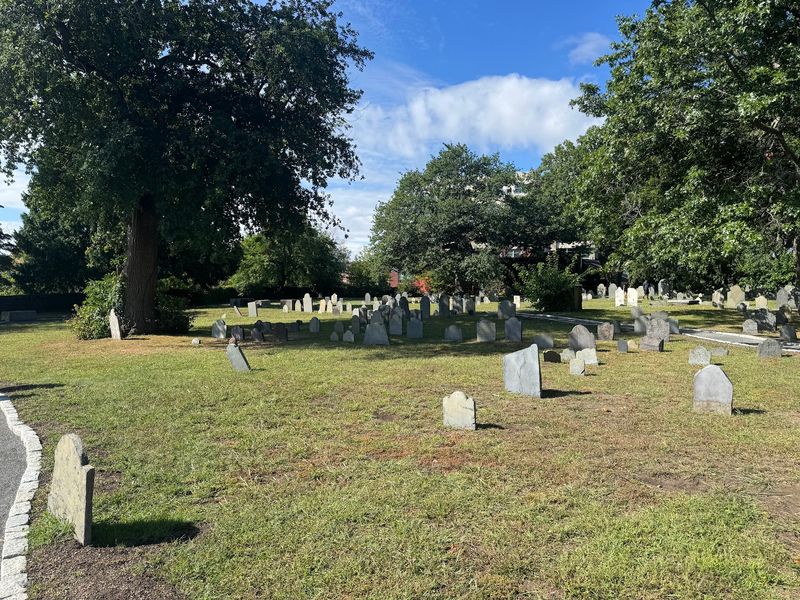
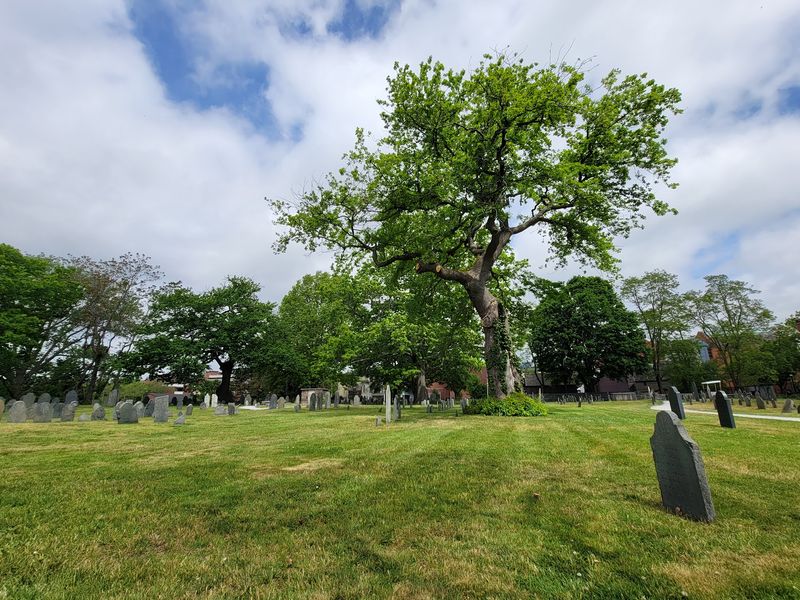
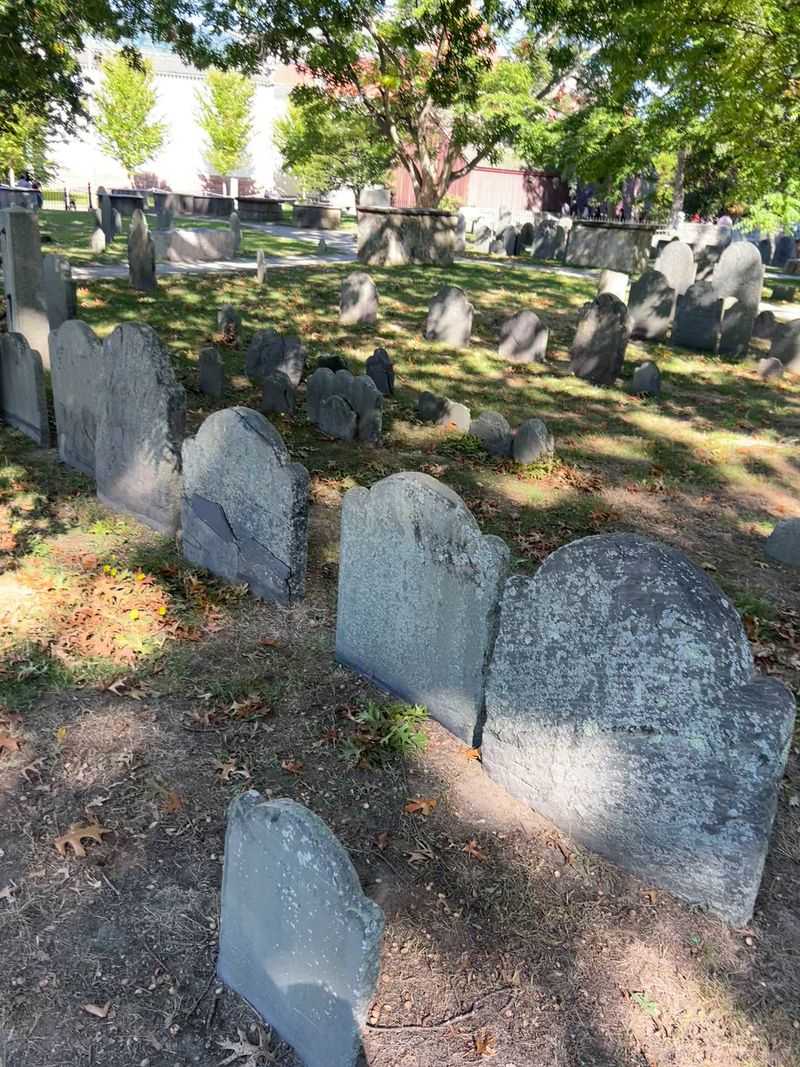
The first visual surprise is the variety. Low stones, taller markers, worn edges, and shifting angles break up the rows, while mature trees stretch above them.
Rather than rushing toward a famous name, pause where the path offers a broad view. Notice how much history fits into a relatively small space, with individual markers crowded into the same frame.
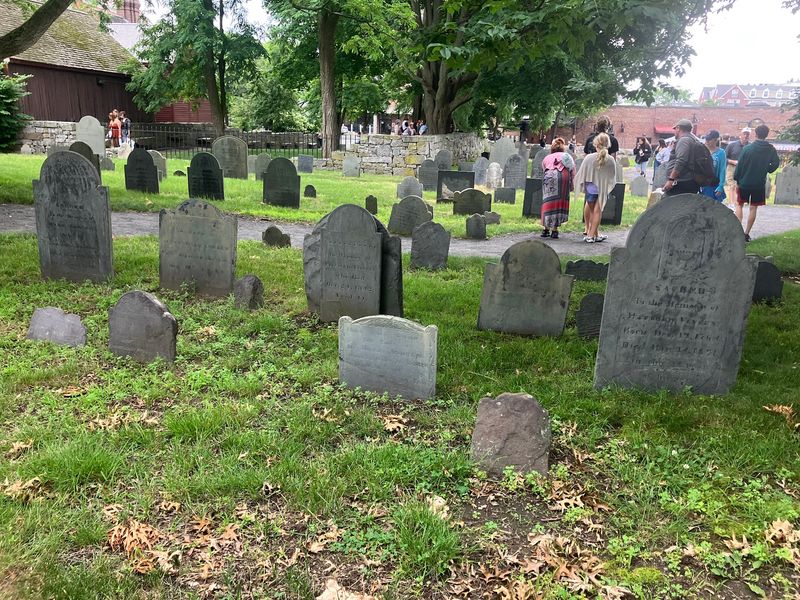
Some stones remain readable from the walkway; others offer only fragments. That uneven survival is useful to notice early, because the cemetery cannot tell every life story with equal detail.
You may also see supports or repairs that help fragile markers remain standing. Those practical features belong to the current chapter of the site, where preservation takes priority over a perfectly tidy picture.
Keep your first photographs wide enough to include the landscape. A close view of lettering can be useful later, but the larger view explains how the burial ground sits within Salem.
Allow your eyes to adjust before choosing a particular grave. The entrance is a starting point, not the main event, and the best details become easier to spot once you stop treating the cemetery as a quick photo stop on a busy sightseeing day.
John Hathorne’s Grave Brings the Trials into Focus
The name John Hathorne changes how you read this cemetery. Among the people buried here is a magistrate who questioned accused people during Salem’s witch trials, giving the site a direct connection to the events of 1692.
Hathorne was involved in the examinations that helped move accusations into legal proceedings. His grave therefore represents someone who exercised authority during the crisis, rather than someone executed as an accused witch.
That distinction is central to understanding Burying Point. The people executed during the witch trials are not known to be buried here, despite a common assumption that a cemetery beside their memorial must contain their graves.
The nearby memorial and the burial ground serve different purposes. One honors those put to death; the other contains historic burials, including a man involved in the system that accused them.
Before searching for Hathorne’s marker, consult the cemetery’s available map or ask a staff member for guidance. Several stones can look similar from a distance, and wandering off the path is not an acceptable shortcut.
Once you locate it, resist the urge to turn the moment into a ghost story. The stronger story is about real decisions made by people with power, and the terrible costs those decisions carried.
There is also a literary connection: Hathorne was the great-great-grandfather of author Nathaniel Hawthorne. The difference in their surnames is easy to notice, but the family relationship is more useful than speculation about why the spelling changed.
If you are visiting with children, explain the connection in plain terms. A judge helped question people who were accused of witchcraft, and the accusations led to deaths.
No dramatic retelling is needed to make that serious. Read the name, place it within the history, and leave room for questions about evidence, fairness, and how fear can shape a community’s actions and choices.
Look Above the Names for a Language Carved in Stone
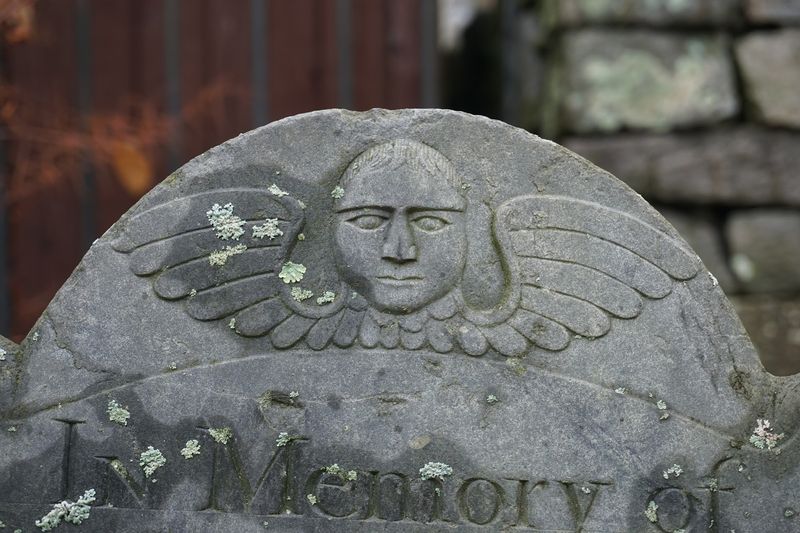
A carved skull can catch your eye before a name does. On older New England gravestones, images like winged death’s heads were part of a visual language about mortality, not decorations meant to entertain Halloween crowds.
Burying Point offers a chance to study that language in its original setting. Look near the tops of markers, where carved faces, wings, and other details can survive even when the lettering below has become difficult to read.
Styles changed over time, and not every symbol carries one simple meaning. A skull generally points toward death, while later carved faces and urn designs can reflect changing ideas about remembrance and the afterlife.
Try comparing two stones you can see from the same stretch of path. Differences in shape, lettering, and ornament may be more revealing than focusing on the oldest date alone.
The inscriptions deserve a second look, too. Names, ages, family relationships, and occasional verses show what survivors chose to record in a small amount of space.
Older wording can sound unfamiliar without being impossible to understand. Read slowly, and separate what you can clearly see from what you are guessing; a worn letter can change a name or date.
Photography helps when you use it carefully. A phone’s zoom may bring a carving closer, while light falling across the surface can reveal cuts that disappear under flat midday brightness.
Never rub a stone, trace its letters, or apply anything to make an inscription stand out. Even actions that seem gentle can damage a surface already weakened by weather and age.
For a simple challenge, find one symbol, one readable family connection, and one difference between two markers. You will leave with a better understanding of how these stones work as records, artworks, and objects that still need protection in the present day from every curious passerby.
The Other Names Make Salem Bigger Than 1692
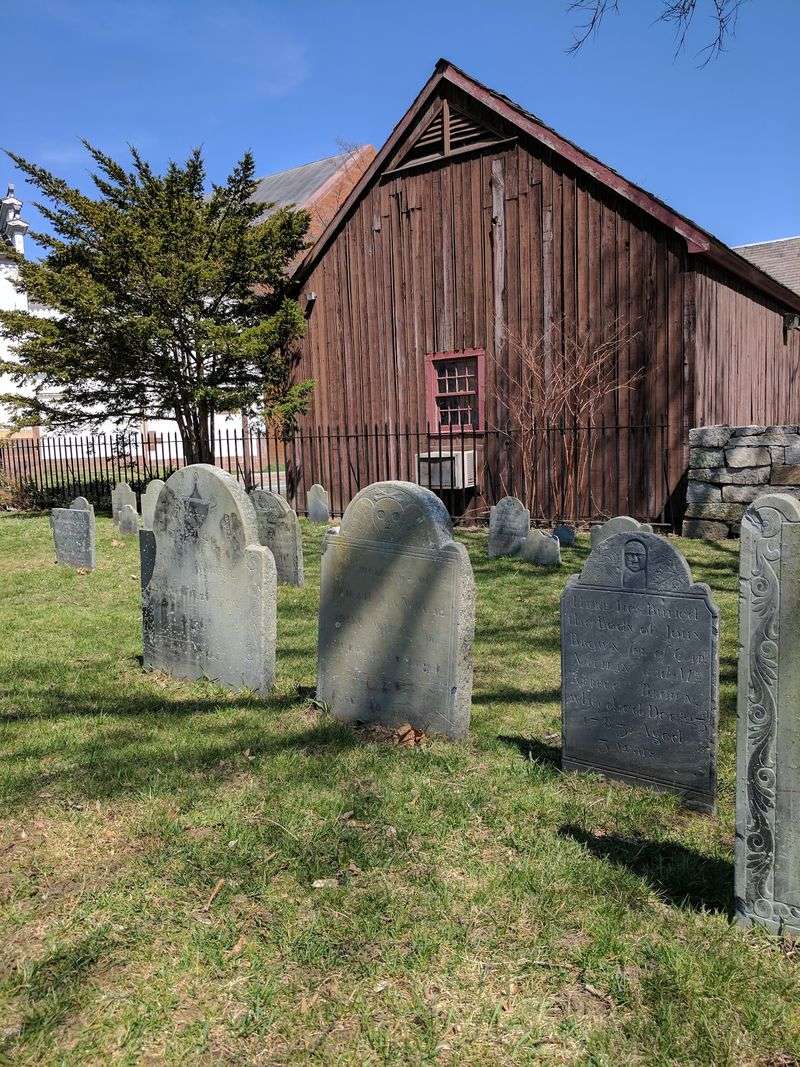
Salem did not stop living after the witch trials ended. The graves at Burying Point stretch across different generations, making room for stories of migration, skilled work, family life, and the town’s changing fortunes.
Richard More is one notable person buried here. He traveled aboard the Mayflower as a child in 1620, connecting this Salem burial ground to a much earlier chapter of English settlement in New England.
His presence is a useful reminder that colonial lives crossed town boundaries. A person associated with one famous voyage could later build a life elsewhere, leaving a final record far from the place most closely linked with that journey.
Samuel McIntire adds a different connection. Known for his work as a carver and architect, he helped shape Salem’s built environment, bringing craftsmanship into a cemetery better known for its link to a legal disaster.
Those two names should not turn your walk into a celebrity hunt. Less familiar markers record people whose lives mattered to their families, even when their stories never became part of a widely taught history lesson.
Look for relationships recorded in the inscriptions. Words identifying a spouse or child can reveal how a stone places someone within a household, rather than presenting an isolated name.
Keep the limits of the evidence in mind. A grave marker may provide an age and date without explaining a person’s work, beliefs, or daily life, so avoid filling those gaps with a dramatic invented story.
If a particular name interests you, photograph the readable inscription from the path and research it afterward. That approach lets you enjoy the site without blocking the walkway while searching on your phone.
The broader reward is a clearer picture of Salem as a working town. Its history includes the trials, but also people arriving, making things, raising families, and growing old.
Follow the Path, Not the Tempting Shortcut
That interesting stone across the grass may be close, but it is still off limits. At Burying Point, staying on established paths is part of protecting the burial ground, not a rule added merely to slow you down.
The markers are old, and their condition varies. Some have clear lettering and strong outlines; others are worn, cracked, supported, or reduced to only part of their original shape.
Ground conditions deserve care as well. Repeated footsteps away from the walkway can wear down the landscape around graves, while roots and uneven surfaces make casual shortcuts less simple than they appear.
Use the route as a viewing guide rather than treating it as an obstacle. Stop at places where several markers are visible, then let the next turn give you a different angle.
A zoom lens or phone camera can help you examine details without approaching a stone. If the view remains blocked, accept that limit instead of stepping onto the grass for a better photograph.
Avoid leaning on markers, resting bags against them, or touching carved surfaces. Stone can look sturdy while being much more fragile than its appearance suggests.
Tree growth offers another visible lesson in how old cemeteries change. Where roots and markers sit close together, you can see that the landscape is living even while the inscriptions preserve dates from long ago.
For children, give the path rule a clear purpose: it helps protect the graves and the ground around them. A small observation task, such as finding different marker shapes, can keep attention focused without encouraging a race between stones.
When the walkway gets crowded, step aside only where the permitted route allows enough room. Let another group pass, keep your bag close, and save longer conversations for a spot where nobody needs to squeeze around you to continue their own careful cemetery walk.
Plan Around the Gate, Especially in October
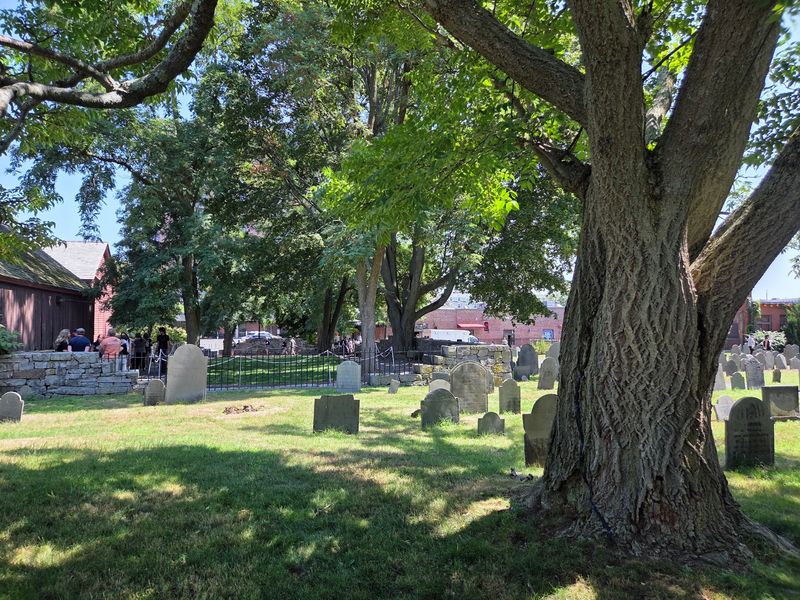
Arriving early only helps if the gate is open. Burying Point is a managed historic site, so a successful visit starts with checking access rather than assuming a cemetery is available at every hour.
The supplied listing gives daily hours of 10 AM to 5 PM. Treat that as a planning guide, not a guarantee, because seasonal arrangements, weather, preservation work, or other conditions can affect entry.
Admission is generally free, but timed reservations may be required during busy periods. October needs particular attention, since Salem’s seasonal crowds can turn a short cemetery visit into a scheduling problem.
Before heading to 51 Charter Street, confirm the current hours and whether a reservation is needed through the site’s official visitor information. Follow any instructions given at the entrance when you arrive.
If you want breathing room, choose a weekday outside the busiest fall period when possible. An earlier entry after opening may help, but no time of day guarantees an empty path.
Set aside about thirty minutes for a thoughtful walk, with extra time if you enjoy reading inscriptions. That is a useful personal allowance rather than an official tour length, and crowd levels may change your pace.
Wear comfortable shoes suited to outdoor walking. The cemetery is compact, but you will be standing, stopping, and looking closely rather than moving steadily through an indoor exhibit.
Bring weather protection appropriate to the day, and keep your hands free enough to manage your belongings. Wet conditions can make an already uneven outdoor setting less comfortable.
Anyone who needs step-free access or has difficulty with narrow routes should confirm current accessibility details before visiting. Do not assume every part of a historic burial ground offers the same conditions.
Leave a little space in your schedule afterward. A delayed entry should not force you to rush past the very stones you came to see.
Trade the Ghost Hunt for a Better Question
Forget trying to make every shadow spooky. Burying Point becomes more interesting when you ask what the surviving evidence can actually tell you about the people who lived in Salem.
The connection to 1692 is powerful because it is specific. A magistrate involved in the proceedings is buried here, while the stones around him place that history within a much longer record of ordinary lives.
That combination helps correct the cartoon version of Salem. The trials were not a fictional adventure with harmless villains; they were real events involving accusations, authority, suffering, and death.
You do not need to read every marker to leave with a stronger understanding. Choose a few clear details and connect them carefully: a name, a date, a family relationship, or a carving that shows how death was represented.
Try ending your walk with three separate questions. What can the stone prove, what would require more research, and what remains unknown?
Those questions are especially useful when a dramatic claim appears in a tour story or casual conversation. A confident delivery does not turn a guess into a fact, and a worn inscription cannot support details it no longer shows.
If staff or volunteers are available, ask a focused question about a marker or preservation feature. You are more likely to learn something useful by pointing to a specific detail than by asking for the cemetery’s scariest story.
Keep photographs respectful and purposeful. A readable inscription or careful view of the landscape can help you revisit the history later without turning someone’s burial place into a prop.
As you head toward the exit, the sharpest takeaway is simple: this ground holds evidence, not just mood. Salem’s past becomes closer here because real names occupy real space, and the limits of what survives encourage you to look carefully rather than invent the missing pieces.
📍 51 Charter St, Salem, MA 01970, United States
Share this story