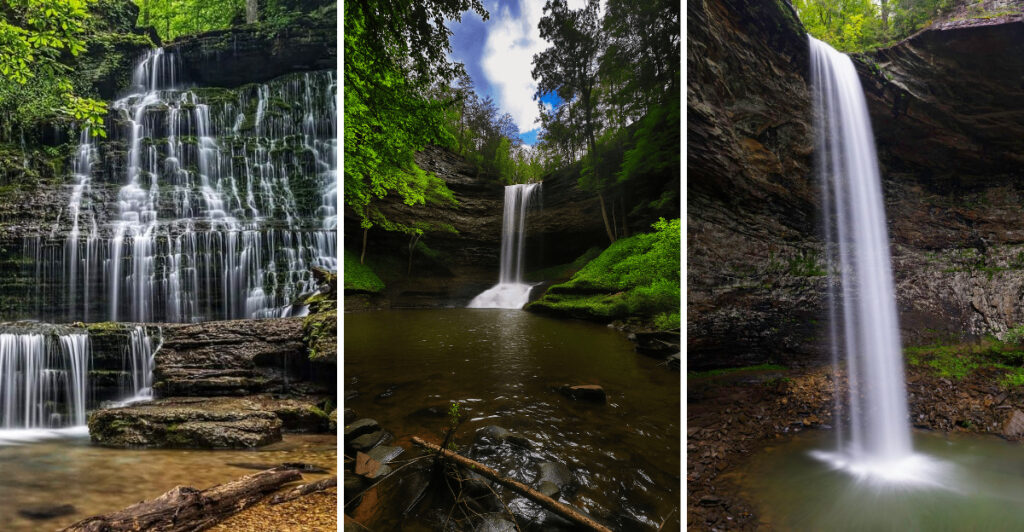
Tennessee hides some of the most stunning waterfalls in the Southeast, yet most visitors never venture beyond the crowded trails of the Smokies. These lesser-known cascades offer the same natural beauty without the tour buses and selfie sticks. If you’re ready to trade packed parking lots for peaceful forest trails, these seven waterfalls will show you a side of Tennessee that feels like your own private discovery.
1. Machine Falls – Tullahoma
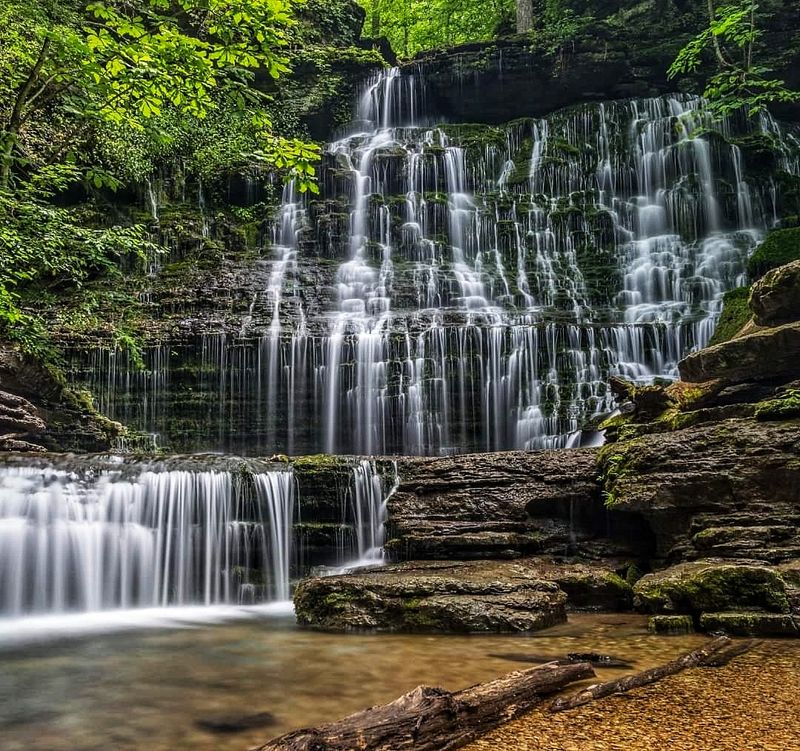
Not many people know that Tullahoma holds one of Tennessee’s best-kept waterfall secrets. Machine Falls tumbles down a series of rocky ledges in Short Springs Natural Area, creating multiple tiers that look like nature’s own staircase. The hike to reach it winds through a forest so quiet you’ll hear nothing but birdsong and the distant rush of water.
Getting there requires about a two-mile round trip on a moderately easy trail. You’ll cross wooden bridges and pass smaller cascades before the main event comes into view. The path can get muddy after rain, so wear boots with good grip and maybe bring a walking stick if you’re not totally confident on slippery surfaces.
What makes this spot special is how the water spreads across the rock face during different seasons. Spring runoff creates a wide curtain of whitewater, while summer slows it to gentle ribbons that catch the light filtering through the canopy. Fall adds another layer of magic when leaves pile up in the pools below, and winter occasionally freezes sections into temporary ice sculptures.
The area around the falls stays cool even in August, making it a perfect escape when the rest of Tennessee feels like a sauna. Families with older kids do fine here, though the rocks near the base can be slick. Pack out whatever you bring in because there aren’t trash cans, and the local wildlife appreciates visitors who leave no trace.
Most weekends you might share the trail with a handful of other hikers, but arrive on a weekday morning and you could have the whole place to yourself. That kind of solitude is rare for waterfalls this beautiful, which is exactly why Machine Falls deserves a spot on your Tennessee bucket list.
2. Stillhouse Hollow Falls – Mount Pleasant
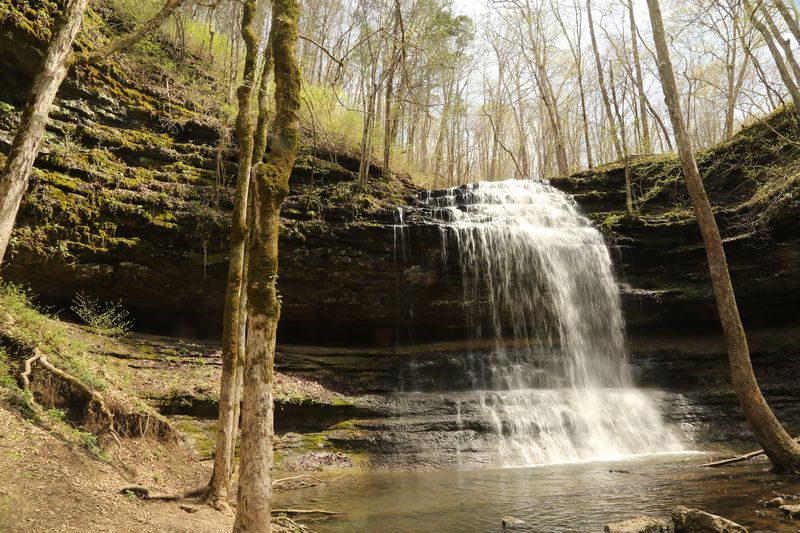
Tucked away in the rolling countryside outside Mount Pleasant, Stillhouse Hollow Falls feels like stepping into a different century. The name comes from old moonshine operations that supposedly used this hidden hollow as cover back in the day. Whether that story’s true or just local legend, the waterfall itself is very real and worth the short hike to find it.
The trail starts off an unmarked gravel road, so you’ll want to use a GPS or detailed directions because road signs won’t help much. Once you park and start walking, the path follows a creek bed through a narrow valley with rock walls rising on both sides. It’s maybe a half-mile walk, easy enough that most people in decent shape can handle it without breaking a sweat.
When you reach the falls, water pours about 15 feet over a limestone ledge into a pool that’s surprisingly clear. During wet months the flow increases dramatically, and you’ll feel the mist from several feet away. Summer drops the volume but reveals more of the interesting rock layers that make up the cliff face.
This spot doesn’t see heavy traffic, partly because it’s not officially marked on most trail maps. That means you get a more authentic wilderness experience without the crowds that pack places like Burgess Falls. Bring a camera because the lighting in the hollow creates some really photogenic moments, especially in late afternoon when sun angles through the trees.
The rocks around the pool are flat enough for sitting and having a snack, though swimming isn’t really an option since the water’s pretty shallow. Watch for salamanders and small fish in the creek, and keep your eyes up for hawks that nest in the surrounding woods. Stillhouse Hollow Falls proves that some of Tennessee’s best natural features are the ones that require a little extra effort to reach.
3. Piney Falls – Grandview
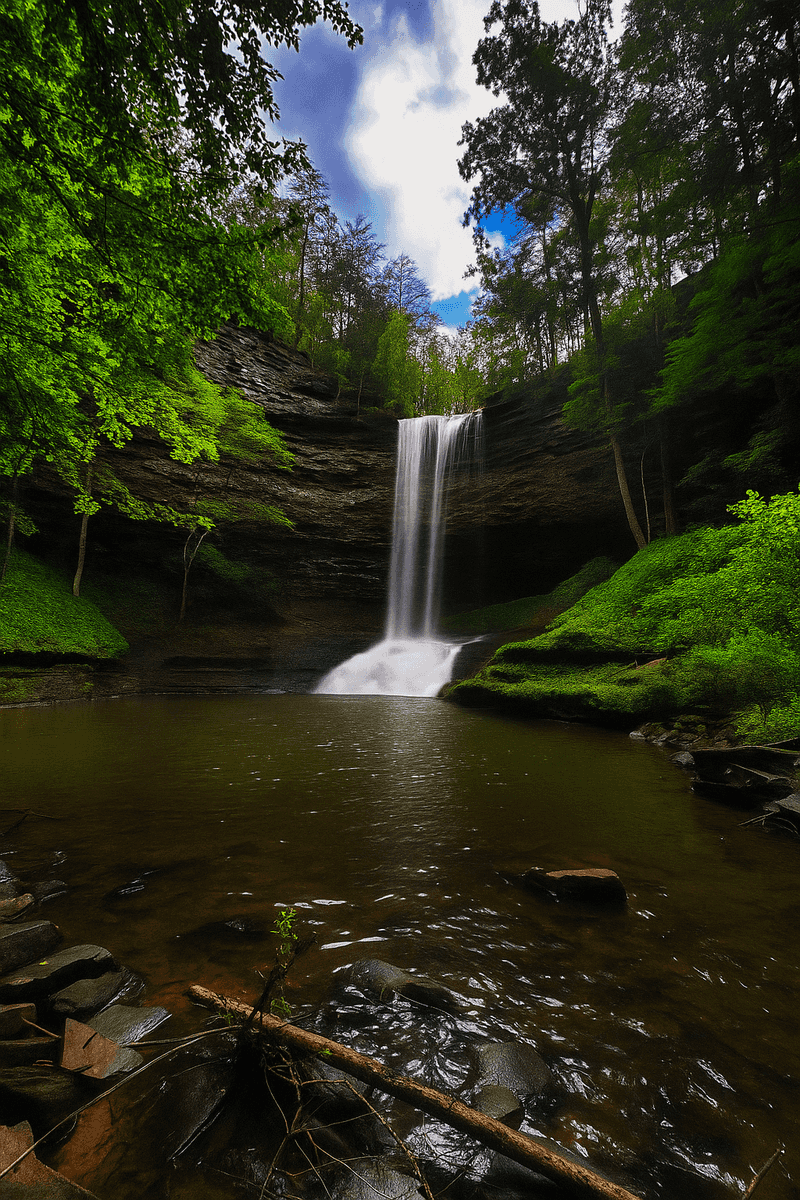
Standing at the overlook above Piney Falls, you’ll understand why this 90-foot cascade ranks among Tennessee’s most impressive. Water launches off the cliff edge and freefalls into a gorge carved over thousands of years by Piney Creek. The sound echoes off the rock walls in a way that makes you feel tiny in the best possible sense.
Two different trails offer totally different perspectives on this waterfall. The upper trail leads to viewing platforms where you can see the falls from above and peer down into the gorge below. The lower trail is where things get interesting because it takes you down to the base of the falls through a series of switchbacks and stone steps.
Plan on about an hour round trip if you do the lower trail, and expect a workout on the way back up. Those steps are no joke, especially in humid weather. But reaching the bottom rewards you with a close-up view of the plunge pool and the chance to feel the spray on your face.
Piney Falls State Natural Area keeps the trails well-maintained but doesn’t overdo it with development. You won’t find concession stands or gift shops, just nature doing its thing. The gorge walls support plants that typically grow much further north, making this a botanically interesting spot if you’re into that kind of detail.
Weekends during peak season bring more visitors, but the trails rarely feel overcrowded. Early morning visits offer the best light for photography, with sun hitting the waterfall at an angle that makes the spray glow. Winter visits can be spectacular when ice forms along the cliff faces, though the trails get trickier so bring proper footwear.
Piney Falls delivers drama without requiring you to drive all the way to the Smokies, making it perfect for a day trip from Chattanooga or Knoxville.
4. Ozone Falls – Ozone
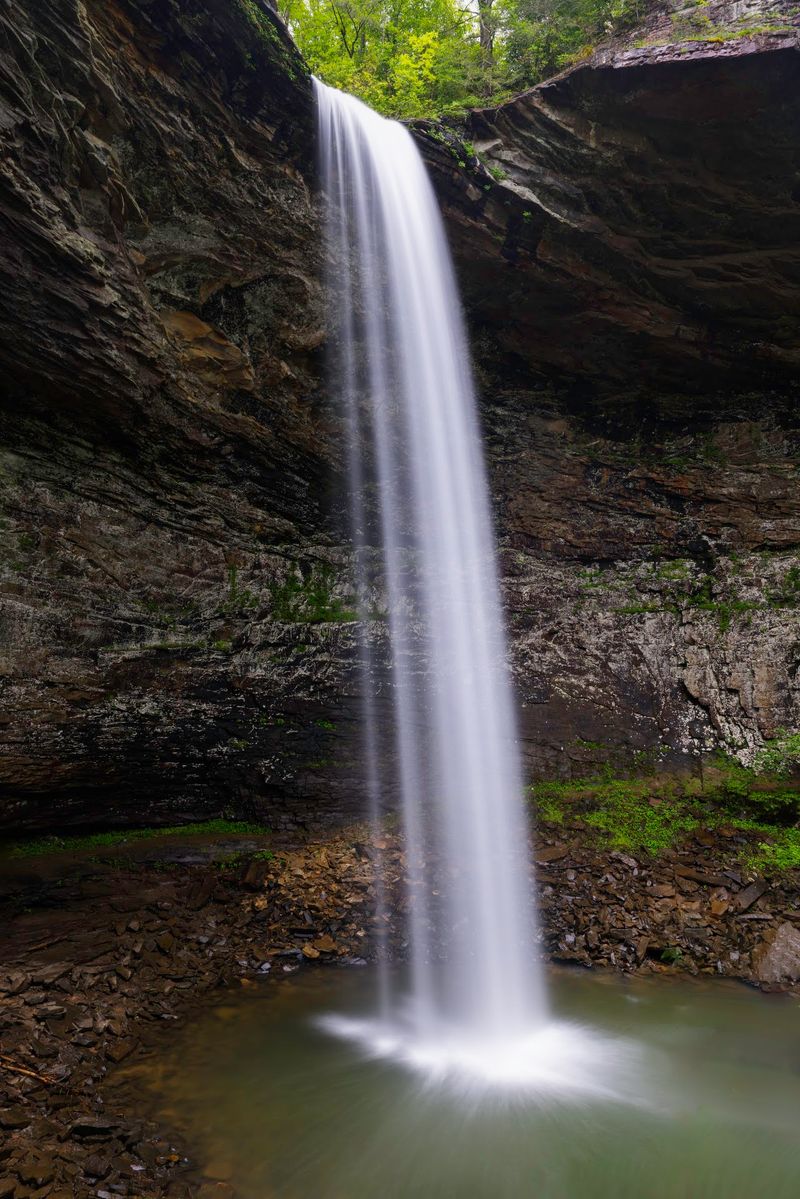
Pull off Highway 70 near the tiny community of Ozone and you’re five minutes from one of Tennessee’s most photogenic waterfalls. Ozone Falls drops 110 feet into a natural amphitheater carved from sandstone, creating a scene so perfect it’s been featured in movies and countless Instagram posts. What’s wild is how few people actually visit despite its easy access.
The main overlook requires maybe a five-minute walk from the parking area on a paved path that wheelchairs can navigate. From there you see the full height of the falls framed by curved rock walls that look almost designed for maximum visual impact. But the real adventure starts when you take the side trail down to the base.
That descent involves some scrambling over rocks and holding onto roots, nothing too technical but definitely not for flip-flops. At the bottom you can wade into the pool, though the water stays cold year-round thanks to the shaded gorge. Strong swimmers sometimes go all the way to the base of the falls, but respect the power of that much water hitting the pool.
The sandstone cliffs surrounding the falls show layers of geological history, with fossils visible if you look closely. Ferns and mosses cling to cracks in the rock, staying green even in winter thanks to the constant moisture. Ravens and hawks circle overhead, using the gorge’s updrafts to soar without flapping.
Photography enthusiasts should bring a tripod because the low light in the gorge calls for longer exposures. Sunrise and sunset don’t reach the falls directly, but overcast days actually work better by eliminating harsh shadows. Ozone Falls proves that Tennessee doesn’t hide all its treasures deep in the backcountry.
Sometimes the most spectacular sights are right off the highway, just waiting for you to stop scrolling and start exploring.
5. Northrup Falls – Jamestown
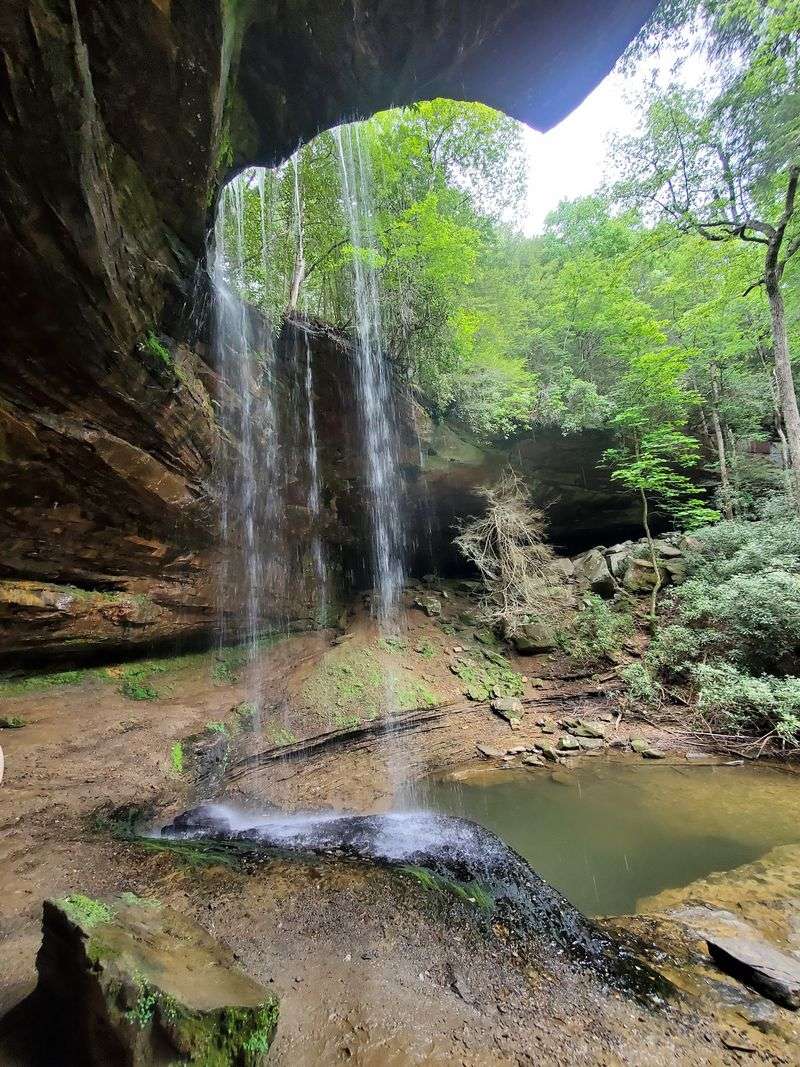
Hidden within the Big South Fork National River and Recreation Area, Northrup Falls requires more commitment than most waterfalls on this list. The reward for that extra effort is a three-tiered cascade that changes personality with every season. Spring turns it into a roaring beast, while late summer reveals the individual rock shelves that create its distinctive stepped appearance.
Getting to Northrup Falls means hiking about four miles round trip on a trail that loses and gains significant elevation. You’ll cross streams on wooden bridges, navigate rocky sections, and probably work up a decent sweat. Bring plenty of water and snacks because this isn’t a quick out-and-back stroll.
The trail follows an old logging road for part of the way before branching off into narrower paths through dense forest. Wildflowers line the route in spring, and fall brings a color show that rivals anything in the Smokies. Watch for white-tailed deer and wild turkeys, both common in this area and surprisingly unbothered by hikers.
When you finally reach the falls, you’ll find three distinct drops totaling about 60 feet. The upper tier is narrow and forceful, the middle spreads wider across a slanted rock face, and the lower section creates a pool deep enough for wading. Adventurous types scramble up beside the falls to see each level up close, though the rocks stay slippery so use good judgment.
Because Northrup Falls sits deeper in the Big South Fork system, you’ll encounter fewer people than at more accessible spots. That solitude comes with responsibility though. Cell service is spotty, so download offline maps before you go and let someone know your plans.
Pack out all trash and stick to established trails to protect the fragile ecosystem. Northrup Falls rewards those willing to earn it, offering a genuine wilderness experience just a couple hours from Nashville or Knoxville.
6. Margarette Falls – Greeneville
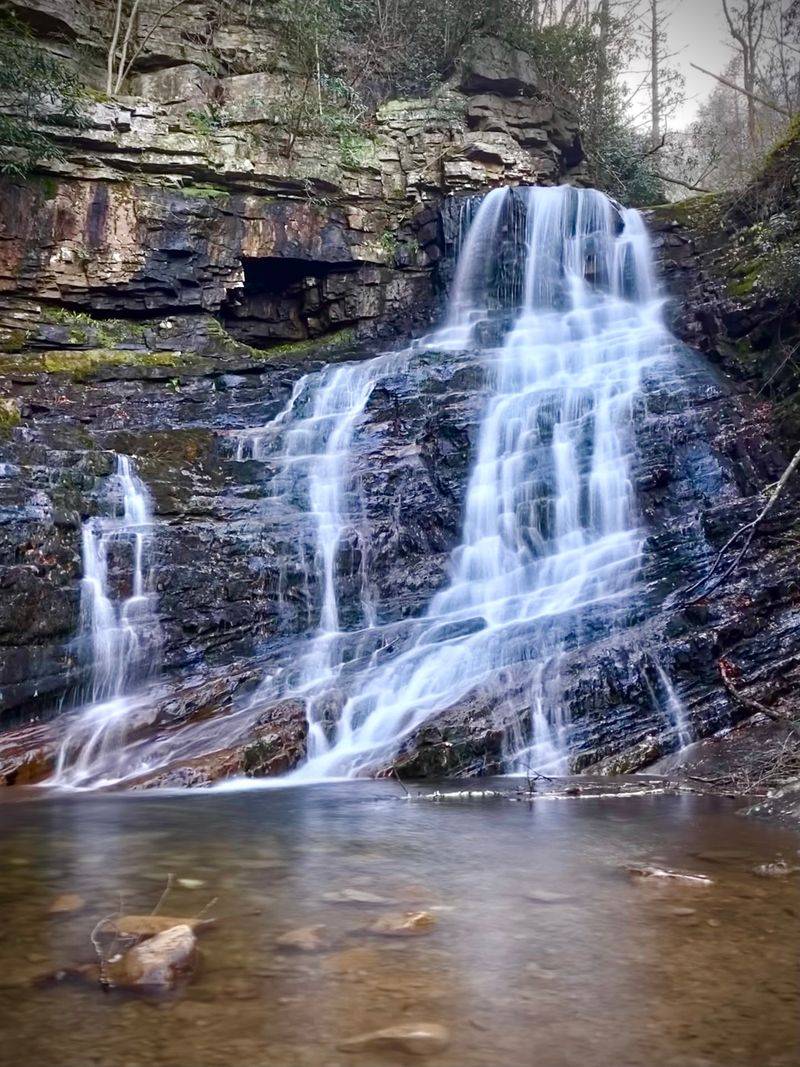
Ask locals in Greeneville about Margarette Falls and you’ll get knowing smiles from those who’ve discovered it. This Cherokee National Forest gem sits far enough off the beaten path that it rarely appears on waterfall roundup lists. The cascade itself isn’t huge, maybe 30 feet, but the setting and the journey to reach it make it memorable.
The trailhead starts near Paint Creek, and you’ll follow an old forest service road that’s been reclaimed by nature in the best way. Rhododendrons form tunnels over the path in places, and mountain laurel blooms create a pink and white explosion every late spring. The walk is about two miles one way, gentle enough for families with kids who are used to hiking.
Water flows year-round at Margarette Falls thanks to a reliable watershed higher in the mountains. Even during drought conditions when other waterfalls slow to trickles, this one maintains a respectable flow. The falls split around a rock outcropping partway down, creating a Y-shape that’s particularly striking when viewed from the side.
The area around the falls has flat rocks perfect for sitting and listening to the water. Pack a lunch and make an afternoon of it, especially in summer when the canopy provides natural air conditioning. The pool at the base is shallow but offers a place to cool your feet after the hike in.
Wildlife sightings are common here because the area sees light human traffic. Black bears use this corridor occasionally, so make noise on the trail and know what to do if you encounter one. More likely you’ll spot salamanders, which thrive in the cold mountain streams, or hear the drumming of pileated woodpeckers in the surrounding forest.
Margarette Falls represents the kind of quiet, unassuming beauty that Tennessee does so well, the kind that doesn’t need Instagram fame to be worth visiting.
7. Lower Greeter Falls – Altamont
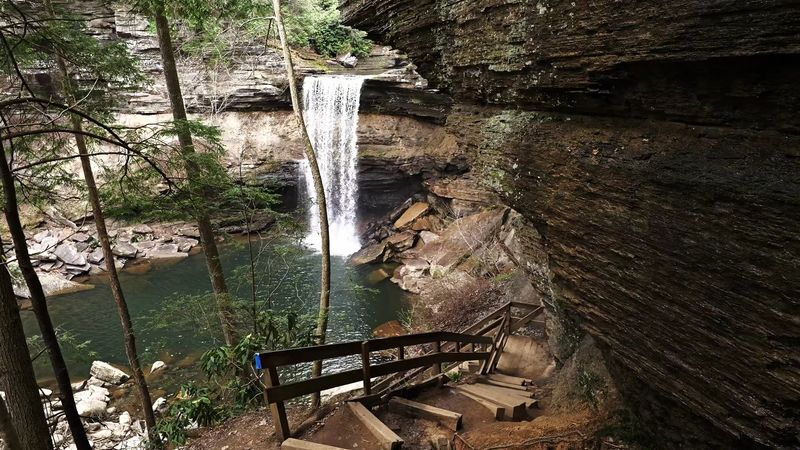
Most people who visit Savage Gulf State Natural Area make the trek to Upper Greeter Falls and call it a day. That’s their loss because Lower Greeter Falls, just a bit further down the trail, offers an entirely different experience with a fraction of the crowds. The 15-foot cascade feeds a swimming hole that glows an almost unnatural shade of turquoise on sunny days.
The hike to Lower Greeter requires about two miles of moderately challenging trail from the parking area. You’ll pass Upper Greeter along the way, which is worth a quick look, then continue descending through a forest of hemlocks and hardwoods. The path gets rockier as you drop into the gorge, so watch your footing especially if the trail is wet.
What sets Lower Greeter apart is the amphitheater of rock surrounding the pool. Cliffs curve around three sides, creating a natural gathering space that feels almost intentionally designed. The pool itself is deep enough for swimming and surprisingly clear, fed by cold mountain water that stays refreshing even in July and August.
Summer weekends bring locals who know about this spot, but arrive on a weekday or during shoulder seasons and you might have it completely to yourself. The rock ledges around the pool are great for sunbathing between dips, and there’s enough space that even when other people show up, it doesn’t feel crowded.
Bring water shoes because the rocks in and around the pool can be sharp. Also pack out whatever you bring in since there’s no trash service this far down the trail. The hike back up to the parking area is all uphill, so pace yourself and take breaks when you need them.
Lower Greeter Falls proves that sometimes the best experiences come from going just a little bit further than everyone else, pushing past the obvious destination to find something truly special.
Share this story