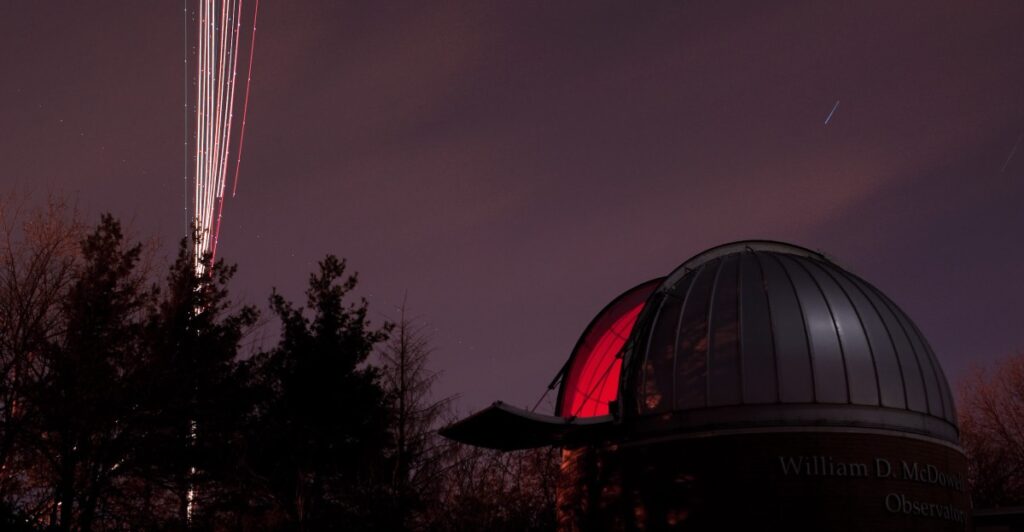
A narrow opening slides across the observatory dome, a massive telescope turns toward the sky, and suddenly Saturn is no longer a pale dot above the Meadowlands. Through the eyepiece, its famous rings come into view as something real, bright, and almost suspiciously perfect.
This memorable look at the solar system does not require an expensive ticket or a long drive to an isolated mountaintop. It happens on Wednesday evenings at the William D.
McDowell Observatory in Lyndhurst, where public viewing sessions are offered free of charge throughout the year, weather permitting. Hidden inside Richard W.
DeKorte Park, the observatory pairs a research-grade 20-inch telescope with astronomy experts who help visitors understand exactly what they are seeing. Depending on the season and conditions, the evening might feature Saturn, Jupiter, lunar craters, glowing nebulae, or objects located millions of light-years away.
For anyone who has only experienced astronomy through photographs, this is a wonderfully different kind of night out.
The William D. McDowell Observatory Brings Stargazing to the Meadowlands
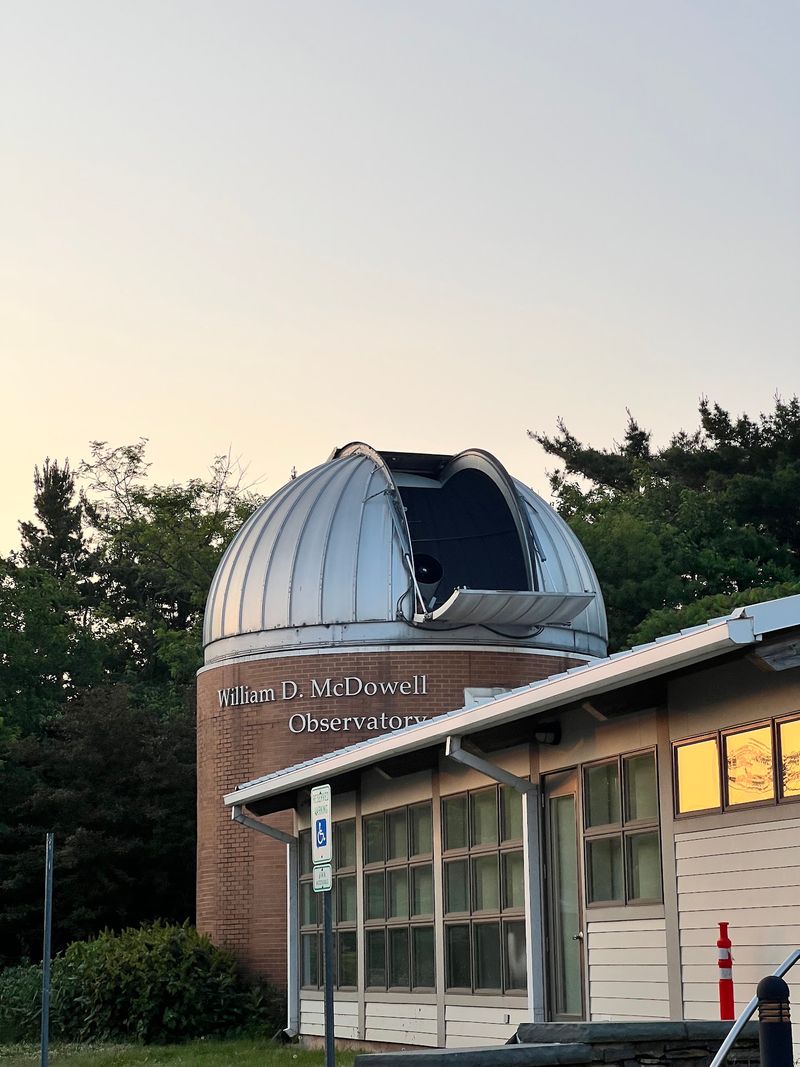
City lights usually make astronomy tricky in North Jersey, but the William D. McDowell Observatory gives local sky watchers a welcome workaround.
Set in the Meadowlands, the facility turns an ordinary evening into a close look at planets, the Moon, and brighter deep-sky sights.
Visitors do not need to be science experts. Staff or volunteer guidance can help guests understand what appears in the eyepiece, while the shared setting makes the experience feel relaxed rather than like a classroom.
Kids can ask questions, adults can compare views, and everyone gets a reason to look up.
Because visibility depends on clouds, haze, and the season, arrive with flexible expectations. One night may highlight Saturn; another may favor lunar craters or Jupiter.
Check the official event page before leaving home, then bring patience for possible lines.
The best approach is simple: dress for outdoor weather, keep phone screens dim, and let your eyes adjust. That small bit of planning helps preserve night vision and makes subtle details easier to spot through the telescope.
Free local astronomy rarely feels so wonderfully close by.
A Powerful 20-Inch Telescope Reveals the Night Sky in Remarkable Detail
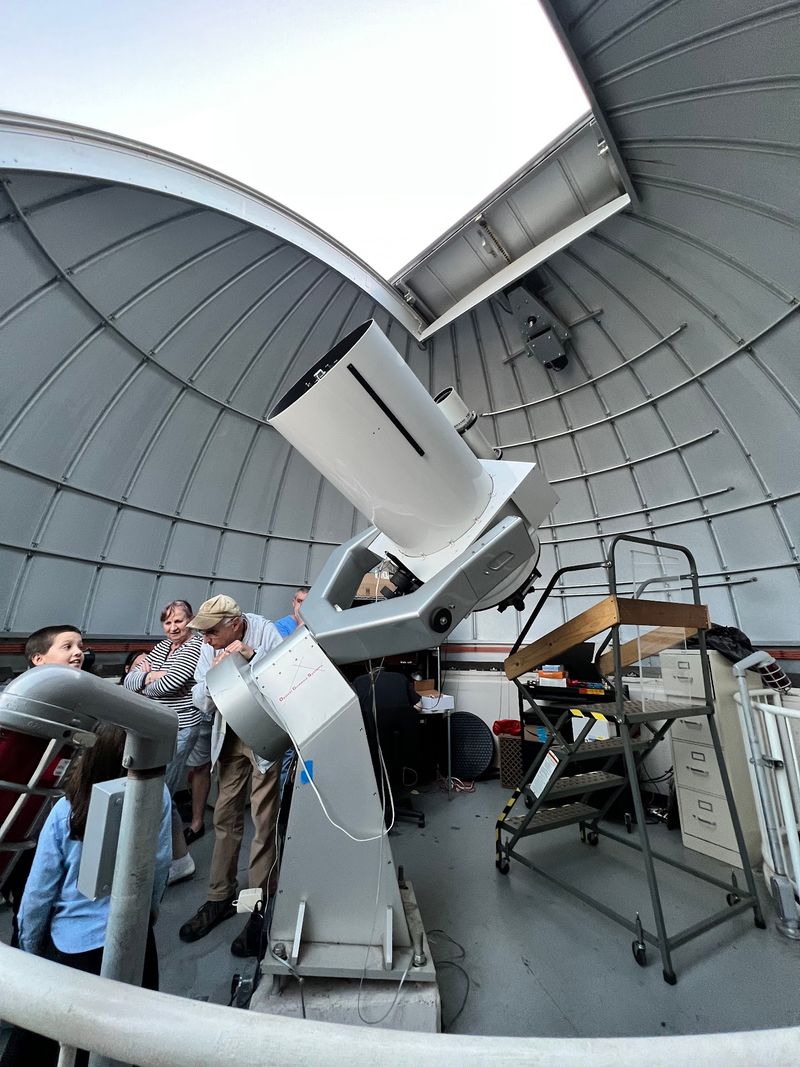
A telescope with a 20-inch mirror is the observatory’s headline act, and for good reason. Its large light-gathering surface can show far more detail than unaided eyes, giving visitors sharper views of bright planets, lunar landscapes, and selected objects beyond our solar system.
Think of it as a giant cosmic light bucket, not a zoom button. Clear, steady air matters as much as power, so an object may look crisp one moment and softer the next.
Taking several turns at the eyepiece can reward careful watchers with a better glimpse.
Avoid expecting colorful space photographs. Cameras collect light differently, while human eyes often see pale tones and fine shapes.
That gap does not lessen the thrill; seeing ancient light directly feels immediate and surprisingly personal.
For a stronger view, rest your face gently near the eyepiece without grabbing equipment. Look slightly beside faint targets, a trick called averted vision, and listen closely to instructions.
Glasses wearers should ask whether to keep them on. A calm, unhurried peek often reveals bands, shadows, texture, or a tiny point that first seemed invisible.
Saturn, Jupiter and the Moon Become the Stars of the Show
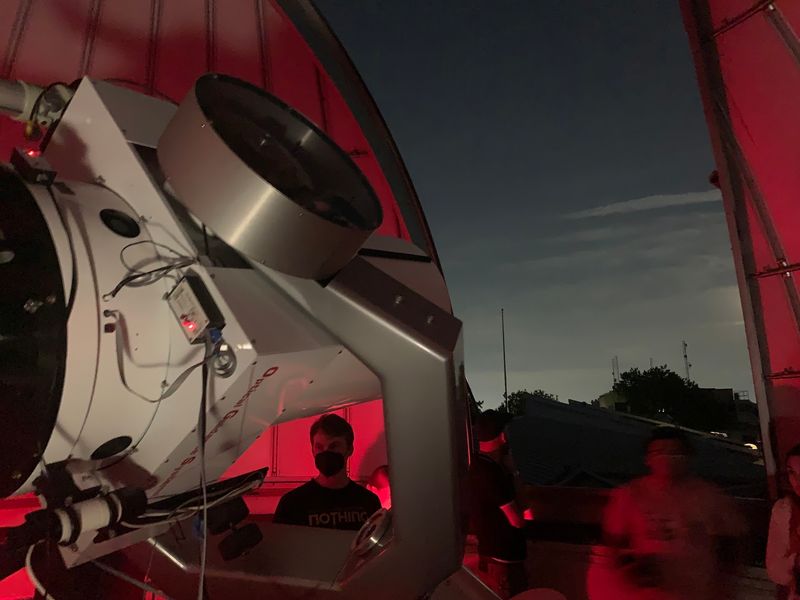
Some nights, Saturn steals the scene. Its rings can appear like a tiny bright handle around the planet, and that first clear view often earns an instant wow.
Jupiter brings different drama, with cloud bands and several bright moons changing position over time.
Then there is our Moon, the dependable crowd-pleaser. Along the line between lunar day and night, shadows sharpen crater walls, mountain ridges, and rough plains.
A partial phase can reveal more texture than a glaring full Moon, which is a handy surprise for first-time visitors.
Planet visibility changes through the year because Earth and its neighbors keep moving. Saturn will not be perfectly placed every Wednesday, and Jupiter may rise too late or sit below the horizon.
The night’s target list also depends on weather and staff choices.
Before promising children a ring sighting, check a current sky chart or contact the observatory. Frame the outing as a sky mystery instead.
Even if Saturn is unavailable, tracing Moon craters or spotting Jupiter’s moons can be unforgettable. Space does not follow a show schedule, which keeps stargazing exciting.
Free Wednesday Viewing Nights Make Space Exploration Surprisingly Accessible
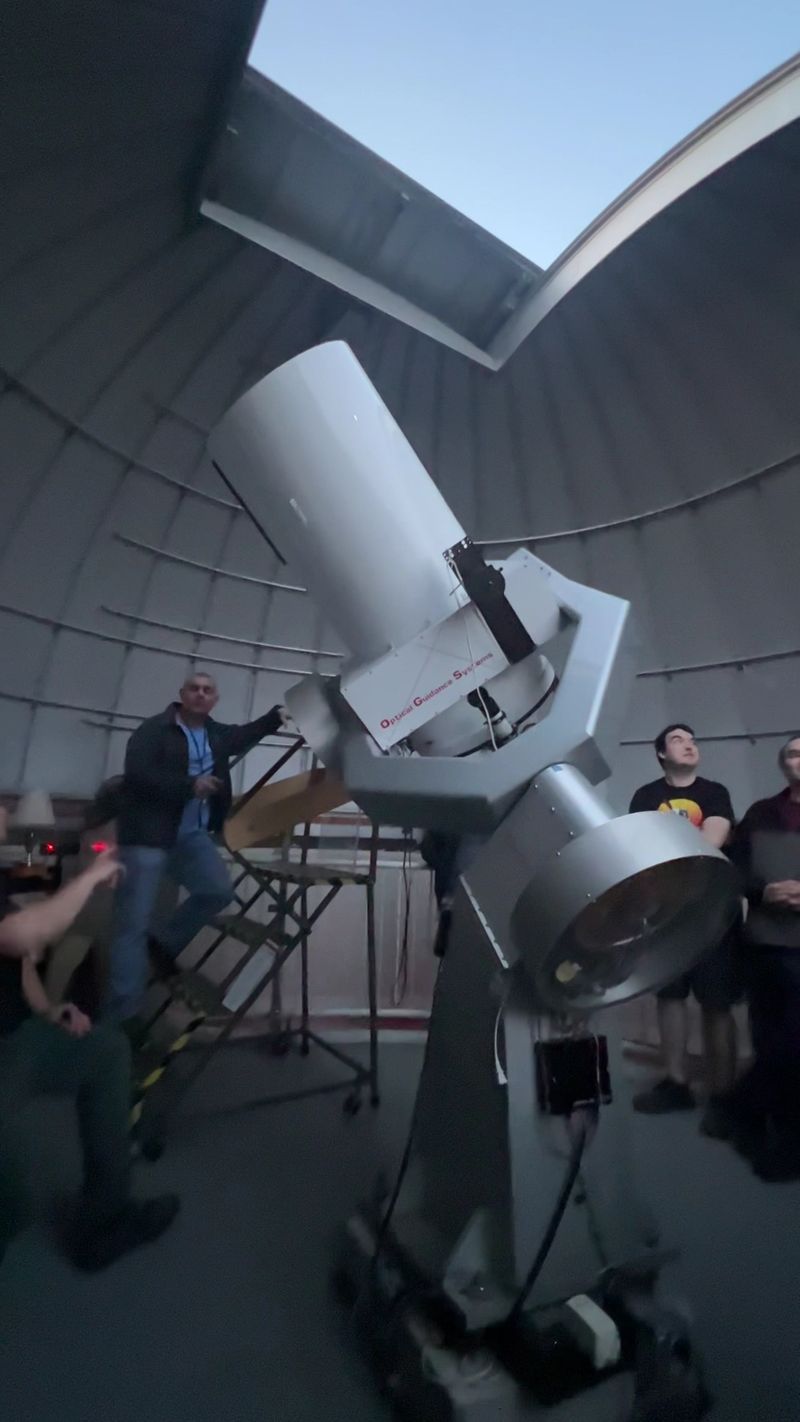
Free Wednesday viewing nights lower one of astronomy’s biggest barriers: access to serious equipment. Instead of buying a telescope or driving far from home, visitors can sample guided observing in a public setting.
That makes the outing especially appealing for curious families, students, and date-night explorers.
Free does not always mean walk in without planning. Public programs may use reservations, timed entry, capacity limits, or seasonal hours, and policies can change.
Confirm the latest Wednesday schedule through the official source before traveling, especially around holidays or poor weather.
Aim to arrive early enough for parking, check-in, and a calm wait. Observatory visits often move at the pace of small groups because each person needs a safe turn at the eyepiece.
Treat the line as part of the fun: compare constellation apps, notice bright stars, or challenge kids to find the Moon.
Budget matters, but manners matter too. Follow staff directions, avoid flash photography, and keep bright screens tucked away.
If clouds cancel viewing, skip the grumbling and try another week. A no-cost doorway to space is still a stellar deal.
The Observatory Dome Adds a Little Drama to the Adventure
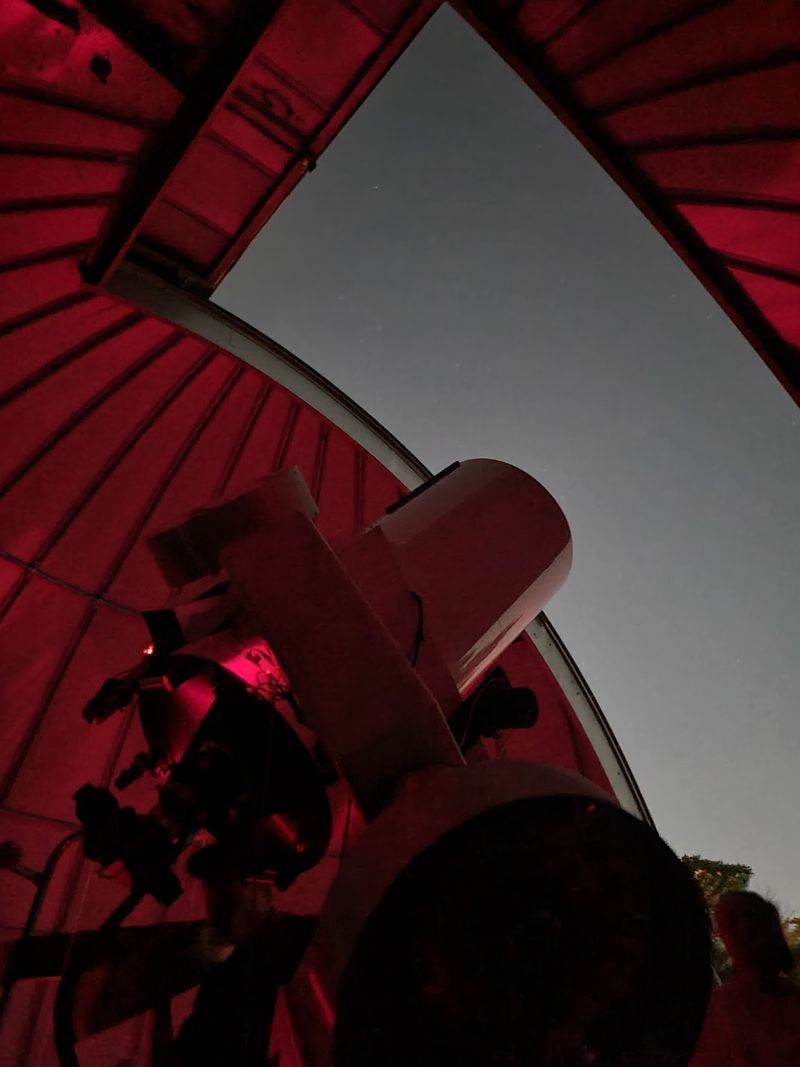
Before anyone sees a planet, the dome sets the mood. Its rounded roof signals that something unusual is about to happen, while the opening overhead gives the telescope a carefully aimed window onto the sky.
For kids, it can feel like stepping into a compact spacecraft.
The drama also has a practical purpose. An observatory dome helps shelter sensitive equipment and can rotate so its opening faces the chosen target.
Guests should never push doors, rails, or telescope parts; even a small bump can disturb careful alignment.
Inside, expect dim light and limited room rather than a movie-sized attraction. Move slowly, keep bags close, and help younger visitors stay aware of steps or equipment.
Quiet voices make instructions easier to hear, especially when a group is learning where to look.
Cold air may enter through the dome opening, so wear layers even if the day felt mild. Save photos for moments when staff says they are allowed, and disable the flash first.
The dome is more than a cool backdrop; it turns patient observing into a memorable little night adventure.
What to Know Before Visiting the McDowell Observatory
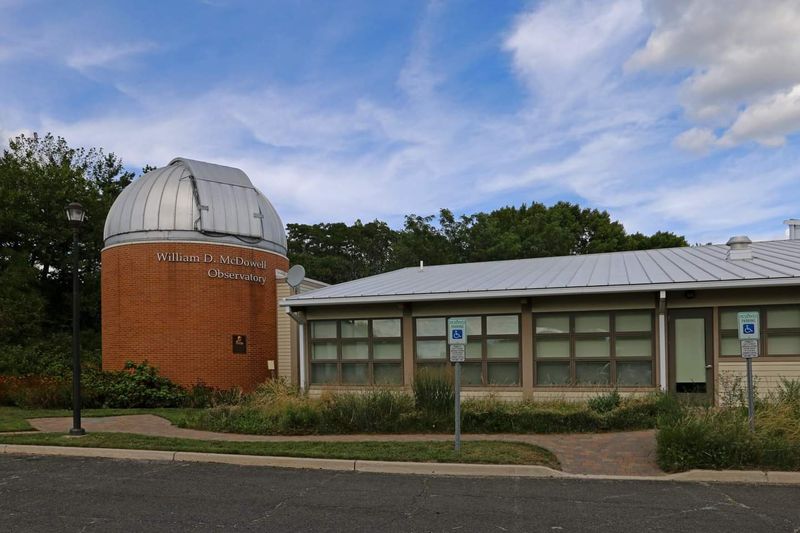
A smooth visit begins before the car leaves the driveway. Check the McDowell Observatory’s official listing for current hours, registration rules, age guidance, weather updates, and cancellation notices.
Conditions can change quickly, so look again on Wednesday afternoon rather than trusting an old post.
Dress warmer than the forecast suggests. Stargazing involves standing still, and the dome can feel chilly when open.
Closed-toe shoes, a light jacket, and simple layers beat bulky accessories that could brush against equipment.
Bring curiosity, not a carload of gear. Binoculars may be useful outside if permitted, but snacks, bright toys, and tripods can become clutter in a tight space.
Use a red-screen setting on your phone, silence alerts, and ask before taking pictures.
Families should explain waiting and turn-taking ahead of time. Visitors with mobility, vision, or hearing needs can contact the site beforehand to ask about access and accommodations.
Finally, keep a backup plan nearby in case clouds win.
Patience is the secret ingredient. Targets drift, lines form, and weather changes, yet one clean look at Saturn’s rings can make every minute worthwhile.
Share this story