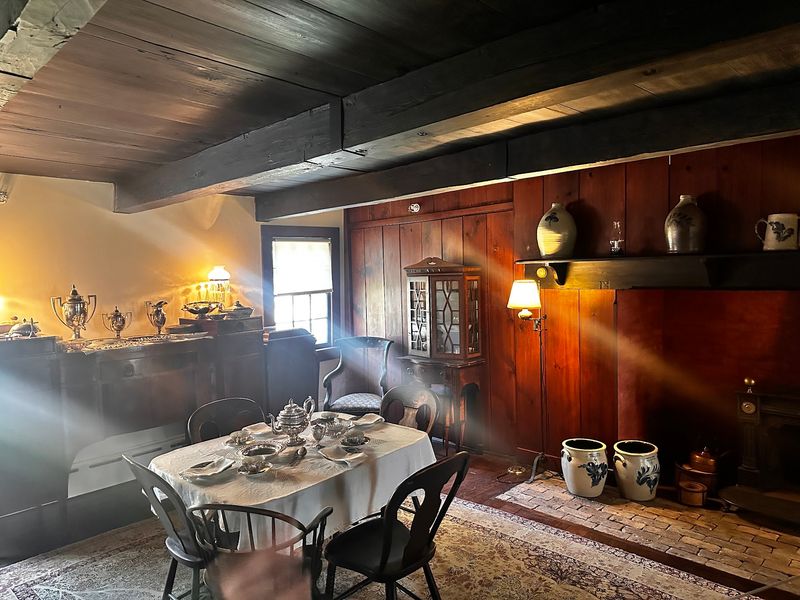
The oldest room at Portland Place does not sit behind the grandest doorway. It is the dining room, where the bones of a one-and-a-half-story pioneer cabin built around 1720 still anchor a house that grew for nearly three centuries.
Set on a bluff above the Navesink River in Locust, this carefully restored estate was shaped by eight generations of the Hartshorne family.
What began as part of a 200-acre farm gradually became a substantial farmhouse, a summer retreat, and eventually a public historic site filled with family furnishings, paintings, documents, and architectural clues.
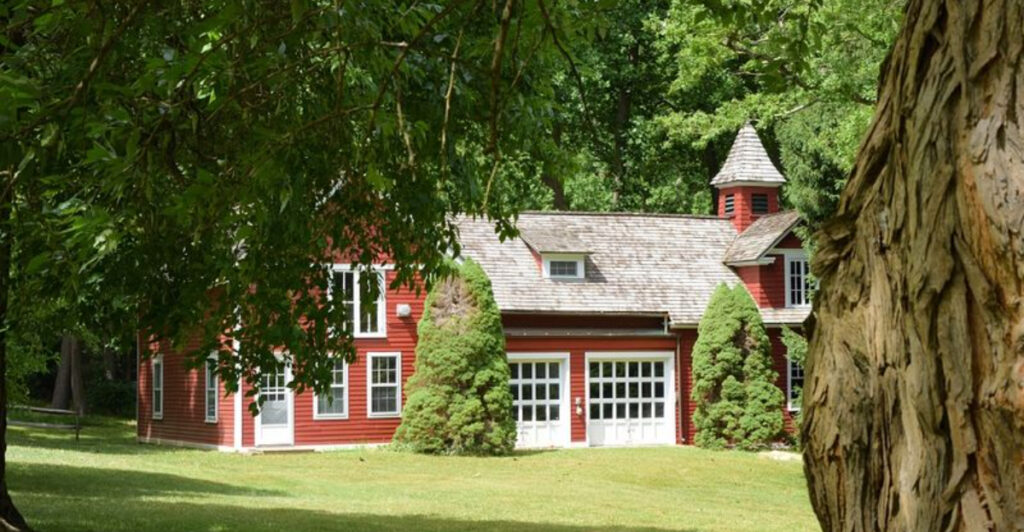
Even the neighboring barn has a second act as a visitor center. Today, Portland Place occupies 15 preserved acres within Hartshorne Woods Park, pairing intimate household history with broad river views and a patch of century-old coastal forest.
It is the rare historic home where New Jersey’s colonial beginnings, maritime past, artistic traditions, and modern preservation efforts all meet under one wood-shingled roof.
Historic Portland Place Began as a Humble Dutch-Framed Cabin Around 1720
Long before grand rooms and polished tours, the story likely started with a compact cabin built for hard work and daily survival.
That early Dutch-framed structure gives the whole property its heartbeat, because you can still imagine the first residents fighting cold winters, storing food, and making every board count.
Dutch building methods mattered in early New Jersey, and they still help visitors picture how local homes once came together. Heavy timber framing, practical layouts, and sturdy materials were not fancy choices.
They were smart ones.
Walking through a place with roots around 1720 can shift your sense of time in a good way. Small details, from low-beamed spaces to old textures, remind you that comfort used to mean shelter, warmth, and a safe table.
If you tour a historic house like this, slow down near the oldest sections. Age is easier to feel when you notice wood grain, room size, and how sunlight lands on handmade surfaces.
That beginning is a reason the farmhouse feels special today, since its earliest chapter was modest, local, and tied to the land.
Eight Generations of the Hartshorne Family Shaped the Estate’s Remarkable Story
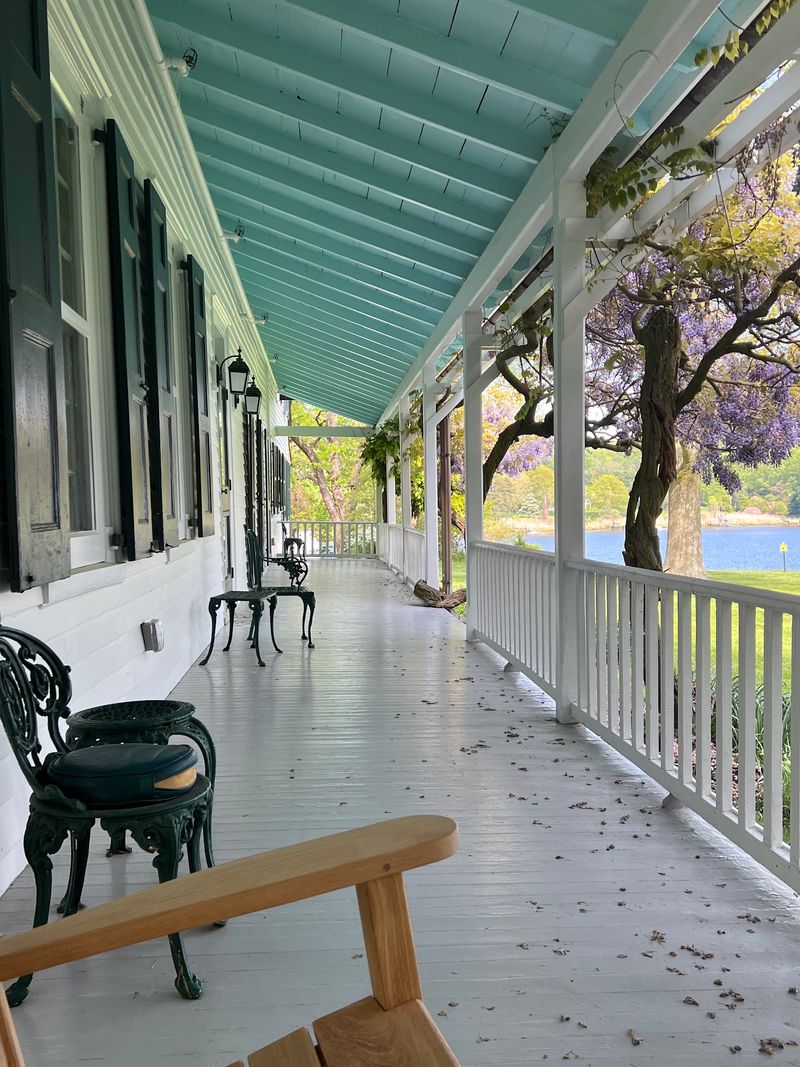
Families usually leave traces. Eight generations leave a whole map of choices, habits, celebrations, losses, and repairs.
At Portland Place, the Hartshorne family connection makes the estate feel less like a frozen museum and more like a long conversation carried across centuries.
That kind of continuity changes how you read every room. A stair might suggest children racing upstairs, a table might hint at holiday meals, and a porch can suddenly feel like a spot where news was shared for decades.
For readers who love New Jersey history, the human side matters just as much as architecture. Names passed down through a family help a house stay grounded in real life, not just dates on a timeline.
You do not need to know every branch of the family tree to appreciate the scale of that legacy. Instead, look for patterns such as changing tastes, careful upkeep, and objects saved because they meant something personal.
A home shaped by many generations feels layered in the best way. History here is not about events.
It is about people keeping a place alive.
Centuries of Additions Transformed the Farmhouse Into a Handsome Country Retreat
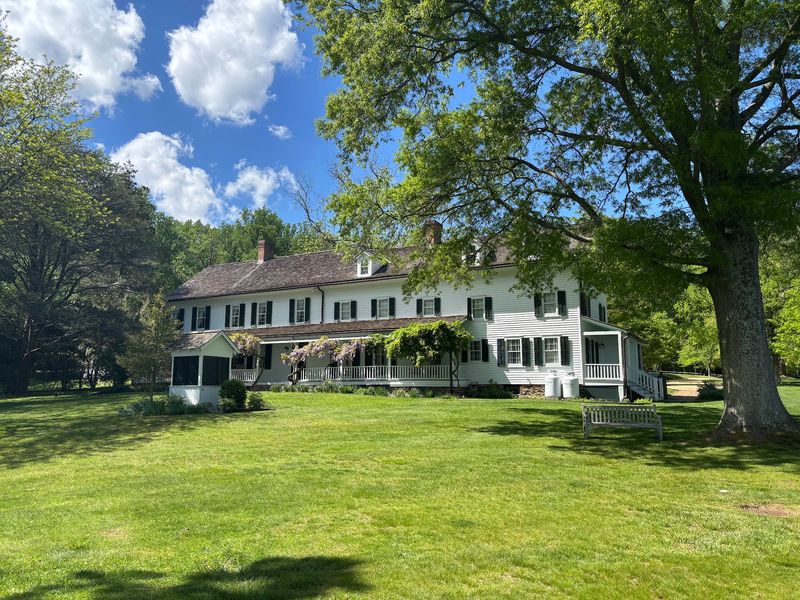
Old houses almost never stand still, and that is part of their charm. Over time, additions can turn a plain farmhouse into a fuller, more welcoming retreat, showing how each era leaves its mark without erasing the past.
At Portland Place, the long growth of the building is one of the most interesting things to notice. You may spot shifts in room size, rooflines, windows, or floor plans that suggest changing needs, changing taste, and a little more comfort with every generation.
That gradual evolution matters because it mirrors how families really live. When households grow, work changes, or entertaining becomes more important, homes stretch and adapt right along with them.
Visitors can have fun reading the structure almost like a puzzle. Which rooms feel oldest, which corners seem later, and where does the house become more polished or relaxed?
The result is often richer than a perfectly uniform design. A farmhouse shaped over centuries can feel warm, personal, and earned, like a favorite coat that was patched, tailored, and kept because it still fit the life around it well.
Original Furnishings Art and Family Treasures Bring the Historic Rooms to Life
Some historic homes feel distant until the objects inside start speaking for them. A chair worn smooth by use, a portrait with a familiar face, or a handmade piece of art can pull the past much closer than a date ever could.
That is why original furnishings and family treasures matter so much at an old farmhouse. They give rooms personality, show what people valued, and make it easier to picture real routines instead of a staged display.
Art adds another layer. Paintings, decorative pieces, and personal items can hint at travel, taste, memory, and the small ways a family wanted to present itself to the world.
When you visit, try not to rush from one room to the next. Pause and ask what an object was for, who might have touched it every day, and why it was kept when other things were lost.
Even simple pieces carry feeling. A table suggests meals, a chest hints at saving, and framed works can make a space seem proud or playful.
Those belongings make history easier for kids to understand today.
Careful Restoration Preserved the House, Barn and Gardens for Future Generations
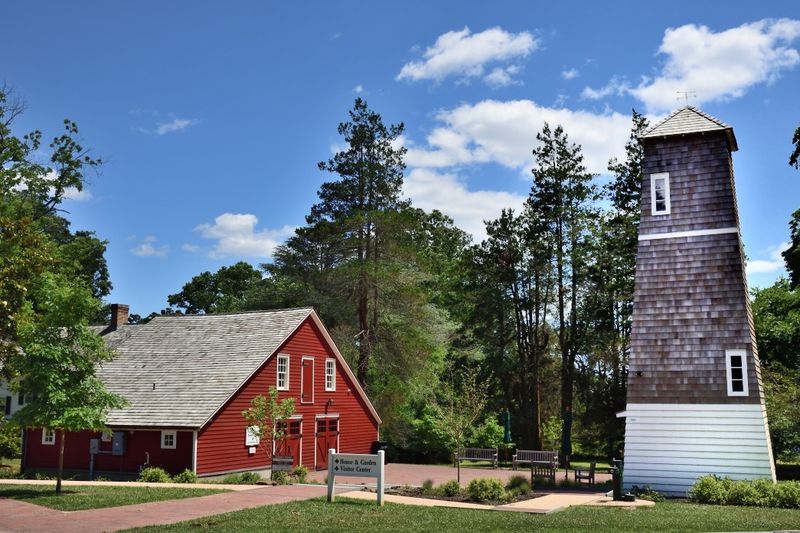
Saving an old property takes more than good taste. It takes patience, planning, and a willingness to protect what gives the place its character, even when easier fixes might look tempting at first.
The best restoration work usually feels almost invisible. Instead of trying to make a historic house brand new, careful stewards aim to keep age, texture, and evidence of use while strengthening what needs help.
At a site like Portland Place, that approach matters beyond the main residence. Barns, garden spaces, paths, and working landscape features tell their own part of the story, so preserving them keeps the property from feeling incomplete.
Gardens are especially good at connecting visitors to the rhythm of older homes. They show how beauty and usefulness often lived side by side, with room for flowers, shade, food, and seasonal chores.
For anyone who loves local history, restoration is really an act of respect. It says the house deserves a future, not just a past.
When preservation is done well, generations can enjoy the setting without losing the spirit that made it worth saving.
Guided Tours and Sweeping Navesink River Views Make the Past Easy to Explore
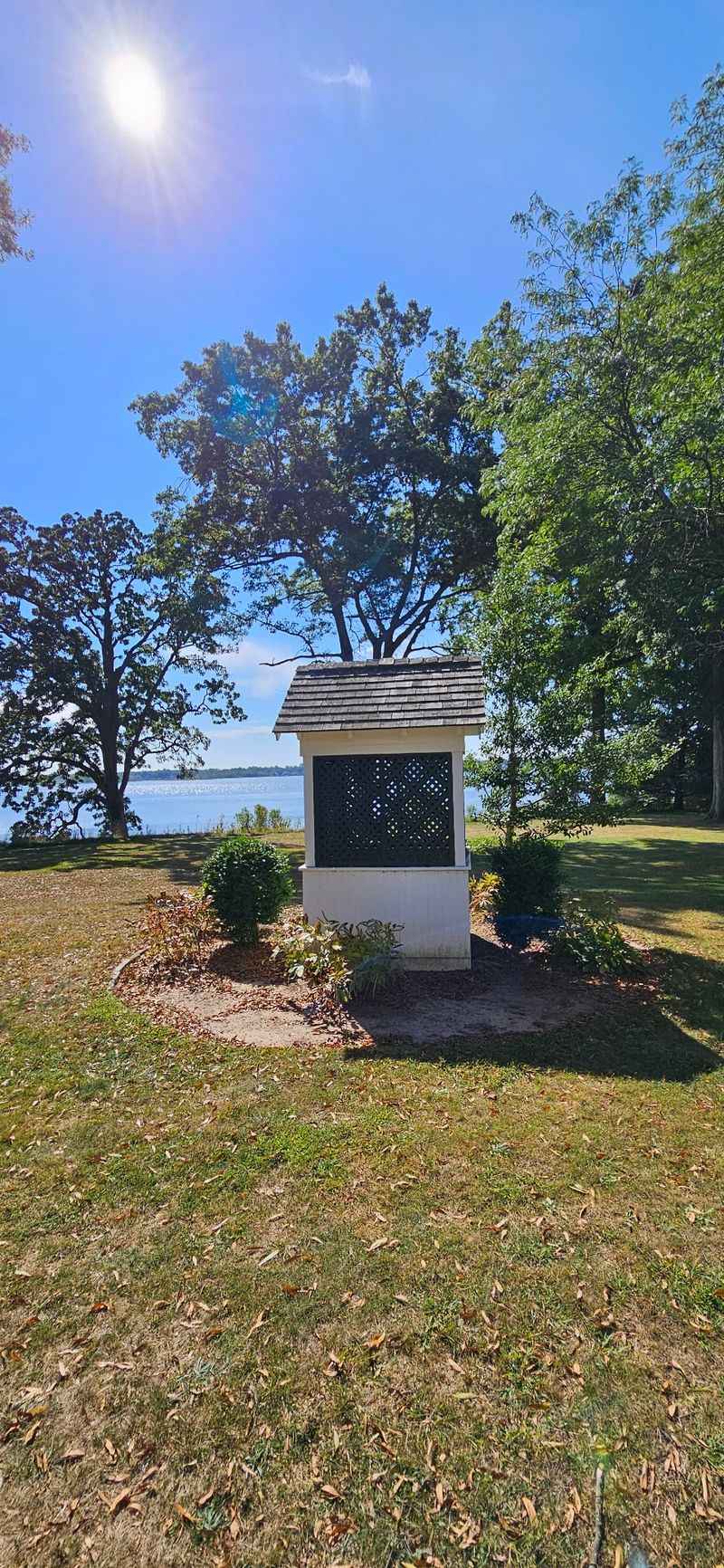
Not every historic site is easy to read on your own, and that is where a good tour earns its keep. Friendly guidance can turn old walls, quiet rooms, and broad landscapes into a story that actually sticks with you after you leave.
At Portland Place, guided tours can help visitors notice details they might miss at first glance. A guide can connect family history, architecture, restoration choices, and daily farm life in a way that feels clear instead of overwhelming.
Then there are the views. The Navesink River brings a sense of openness that balances the house’s age with fresh air and wide light, making the visit feel scenic as well as historical.
That combination works especially well for families and casual history fans. One minute you are learning about early building styles, and the next you are looking out across water and imagining how the landscape shaped the people who lived there.
If you go, give yourself time to walk slowly and look outward as much as inward. Past opens up when the setting helps tell the story.
Share this story