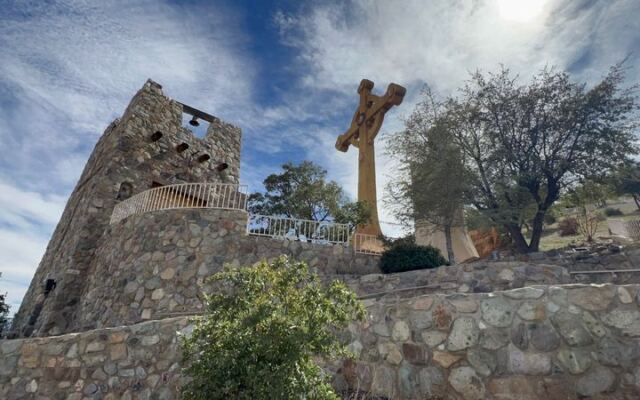
High on a hillside in Cochise County, a giant cross stands over the San Pedro Valley, and it can be seen long before the parking lot comes into view. Next to it stands a huge statue of Mary looking south toward Mexico. Getting to both means climbing hundreds of steps, with prayer stations along the way and wide views of the borderlands.
It costs nothing to visit, it is open every day of the week, and it sits about an hour and 45 minutes from Tucson. Plenty of Arizonans have driven Highway 92 for years without ever turning up the hill. Here is what is waiting at the top, how hard the climb really is, and what to know before making the trip.
1. A Hilltop Shrine Near the Border
Just one mile off Highway 92, a paved road climbs a hillside to one of southern Arizona’s most unusual sacred sites. Our Lady of the Sierras, also called Cerro de la Virgen, sits at 10310 S Twin Oaks Rd, Hereford, AZ 85615.
The shrine is a Catholic site with a small chapel, a path of Stations of the Cross, a massive statue of Mary, and the towering cross that gives the place its skyline.
Sierra Vista is close by, so it works well as a stop on a longer Cochise County day. From Tucson, plan on roughly an hour and 45 minutes of driving each way.
Many people stumble onto it by accident while exploring the area. Others hear about it from friends who insist it cannot be skipped.
Locals who live nearby often save it for out-of-town company and use it as their go-to spot to show guests. Plenty of them admit they waited years before finally making the drive up the hill themselves.
The setting is a big part of the appeal. The shrine faces the valley and the border region, so the views reach well past the property in nearly every direction.
The next question is how to get from the bottom of the hill to the top.
2. Six Hundred Steps of Reflection
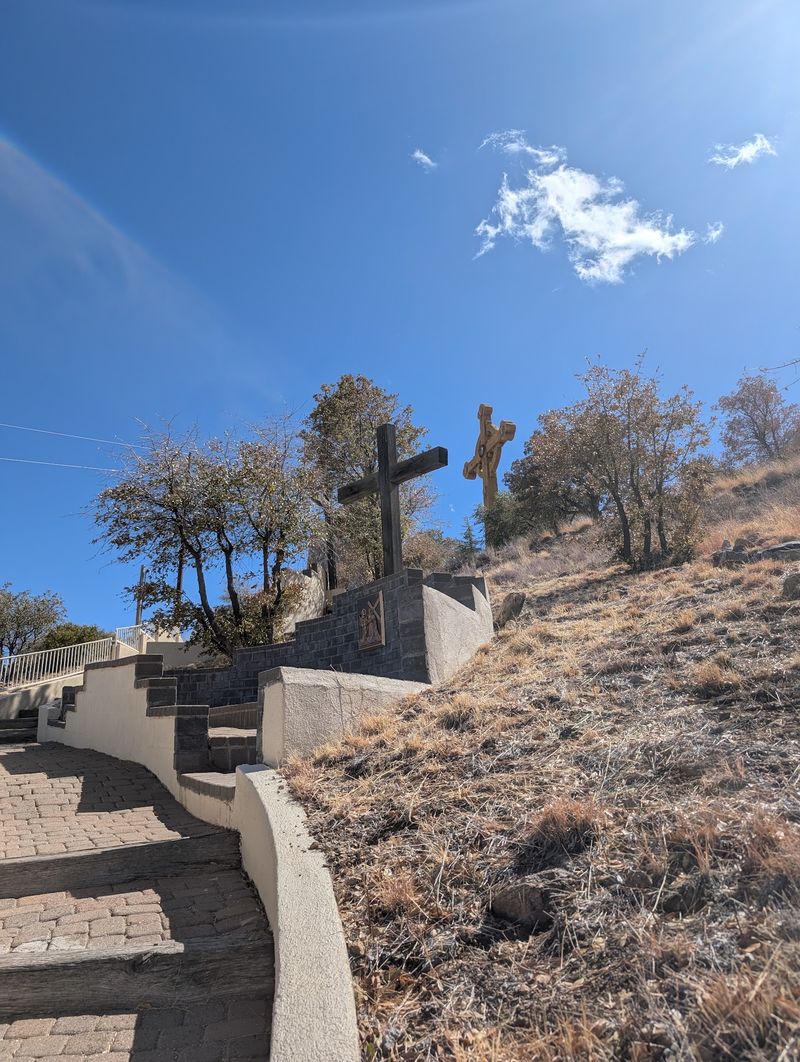
Bring good shoes and patience. Roughly 600 steps lead from the lower area up toward the cross, and the route is steep.
Even people who read about the climb ahead of time say they were not quite ready for it. Calling it a small hike undersells it a bit.
One easy mistake is skipping the right starting point. The stairs to the right near the entrance are where the Stations of the Cross begin, so heading that way keeps the full sequence in order.
The good news is that the climb comes with built-in breaks. Each station has a spot to stop and sit, which turns a tough workout into a series of shorter pushes.
The pace is meant to be slow anyway. The path is designed for reflection and prayer, not for racing to the summit.
People with bad knees or trouble on stairs should think carefully before attempting the full route. There is another way up, covered a little later.
For everyone else, the reward at the top makes the burning calves feel like a fair trade.
3. Stations Built With Care
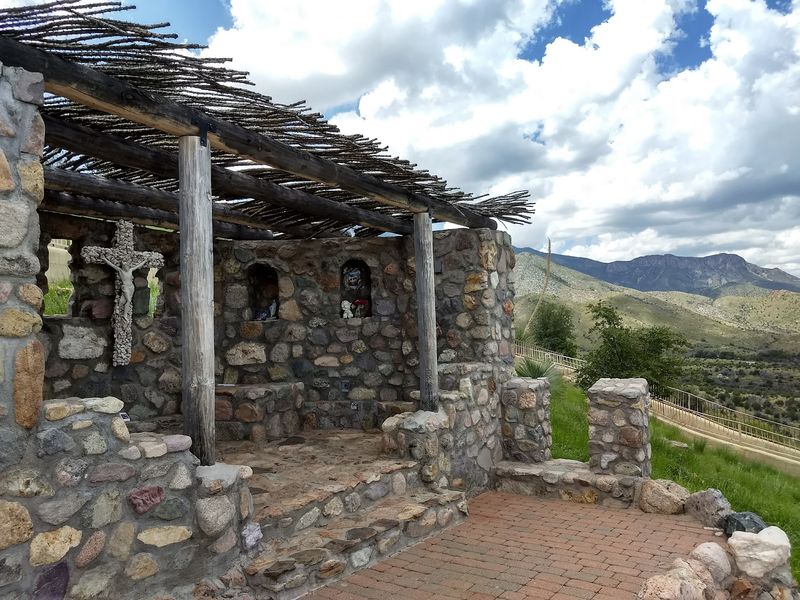
Plenty of churches have Stations of the Cross on an indoor wall. Here, they are spread across an entire hillside.
The stations depict the events of the crucifixion, one scene at a time, along the paved walkway. The path traces the journey of Jesus through Jerusalem, which gives the climb a clear spiritual purpose.
Much detail has gone into each station. It is evident that time, resources, and prayer shaped how they were built and arranged.
Many people find the walk emotional, especially when they move through all the stations in order. Non-Catholic guests often say the path still works as a place for quiet thinking.
Statues appear along the grounds too, so there is more to notice than the stations alone. Each stop offers a natural place to pause before the next stretch of stairs.
The combination of steady climbing and frequent stops keeps the walk from feeling rushed. It also means the hill turns into a kind of outdoor chapel, one turn at a time.
And then the path delivers its biggest moment.
4. The Giant Cross and the Virgin
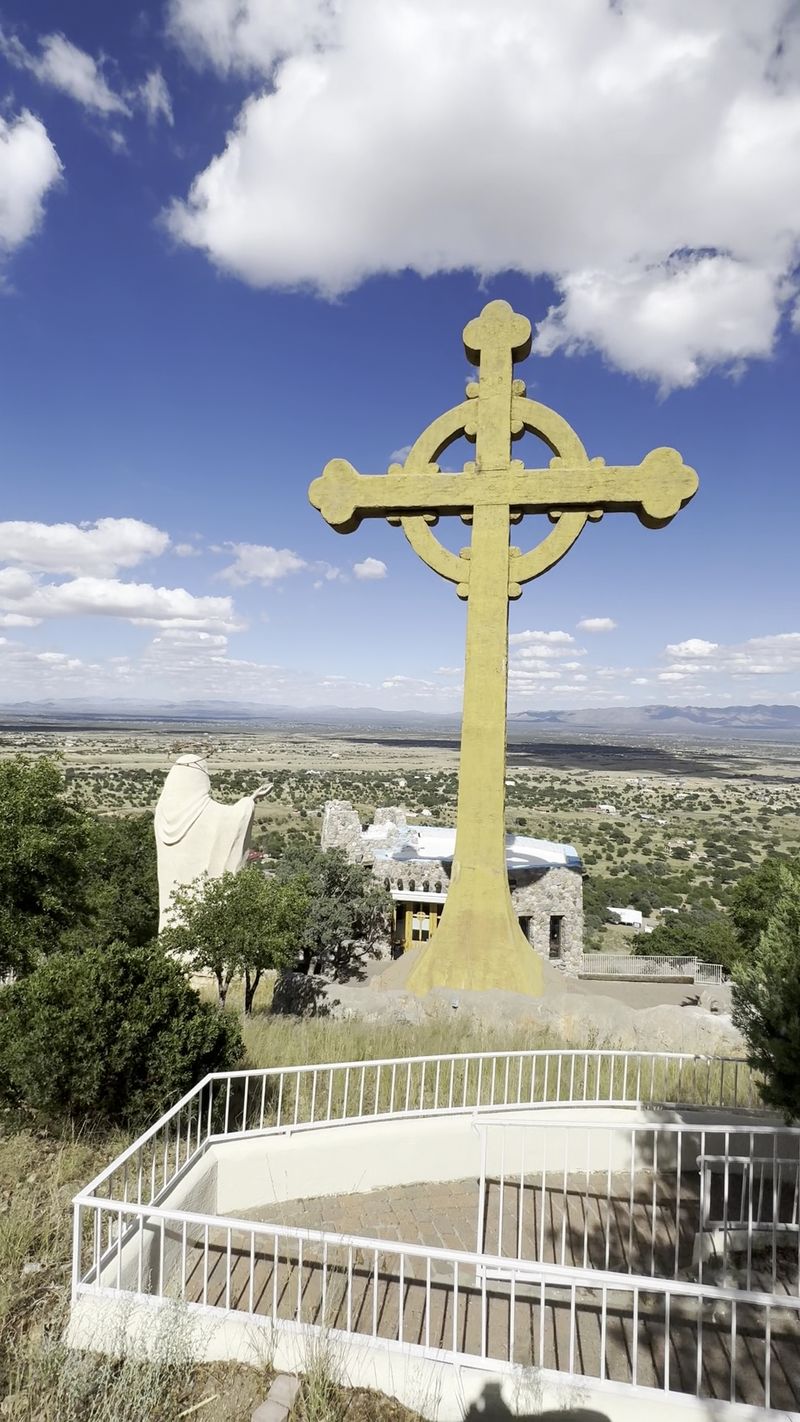
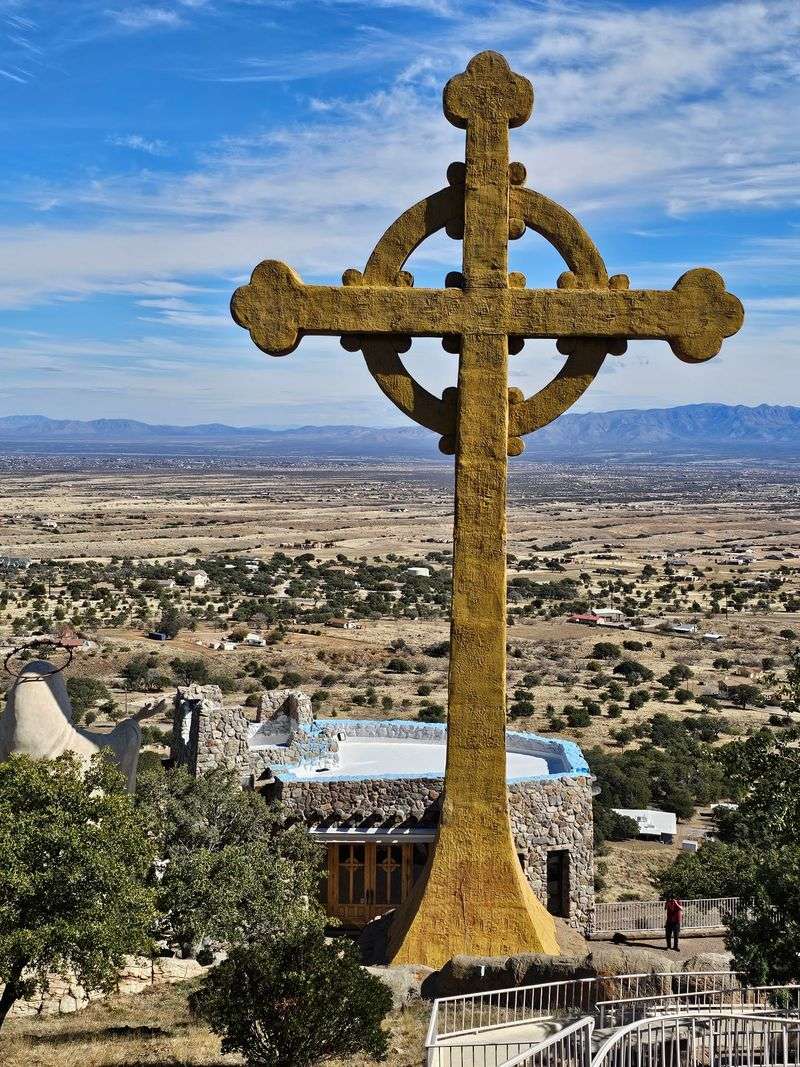
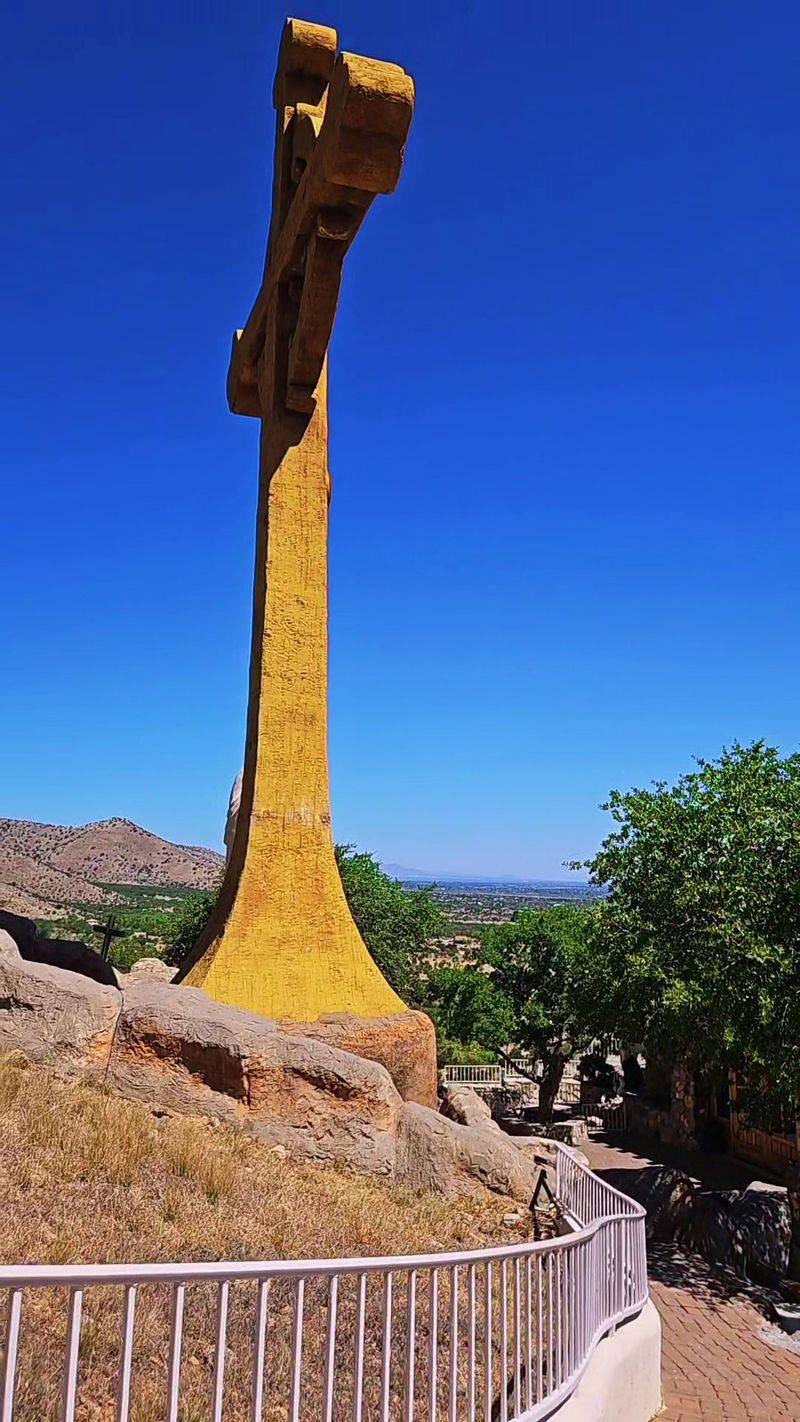
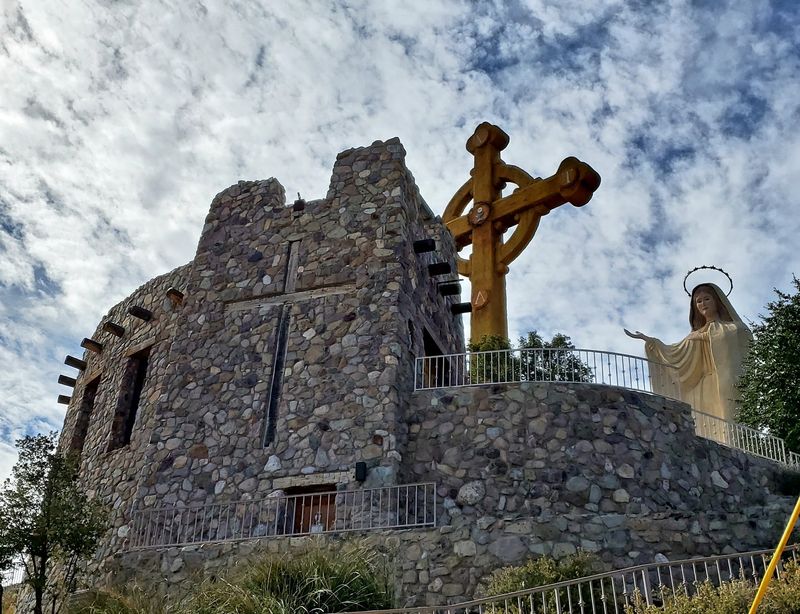
Scale is the first thing people talk about. The cross is enormous, and the statue of Mary beside it is huge as well.
Together they form the centerpiece of the shrine. The cross towers into the sky, which makes it a favorite subject for photographers.
Mary looks out over the valley, giving the shrine its Spanish name, Cerro de la Virgen, or Hill of the Virgin. The pairing is what many people remember long after the trip home.
Lots of photo opportunities exist all around the monument. Wide shots work well here because the backdrop is the open valley below.
Plenty of guests describe the monument as truly remarkable, even after seeing it from the road. Up close, the size makes much more sense than any photo can show.
It is worth lingering here after the climb. There is no reason to hurry back down, and the view keeps going in every direction.
Speaking of that view, it deserves its own section.
5. Views Reaching Into Mexico
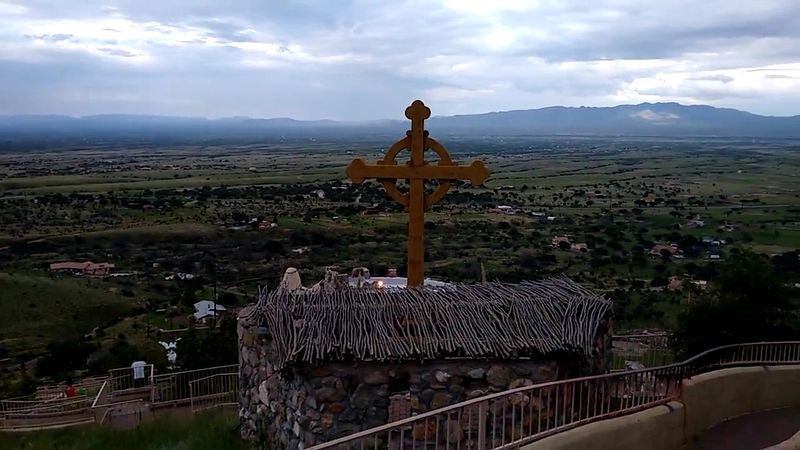
Few spots in Arizona let people see into another country from a church parking lot. This one does.
From the top, the San Pedro Valley spreads out below. The border with Mexico is visible, and the view continues well beyond it.
Landmarks on the horizon include the Mule Mountains and the Huachucas behind the shrine. Miller and Carr peaks are both visible from the site.
Looking south, San Jose peak and the foothills of the Sierra Madres come into view. That is quite a lineup for a free stop off a state highway.
Photographers make the trip just for these panoramas. The chapel itself also has views of the valley from inside, and the walking path offers more along the way.
Clear days help the view stretch the farthest. Cool, crisp mornings in the cooler months make the climb more comfortable too.
After soaking in the scenery, most people head into the chapel next.
6. A Small Wooden Chapel With Big Purpose
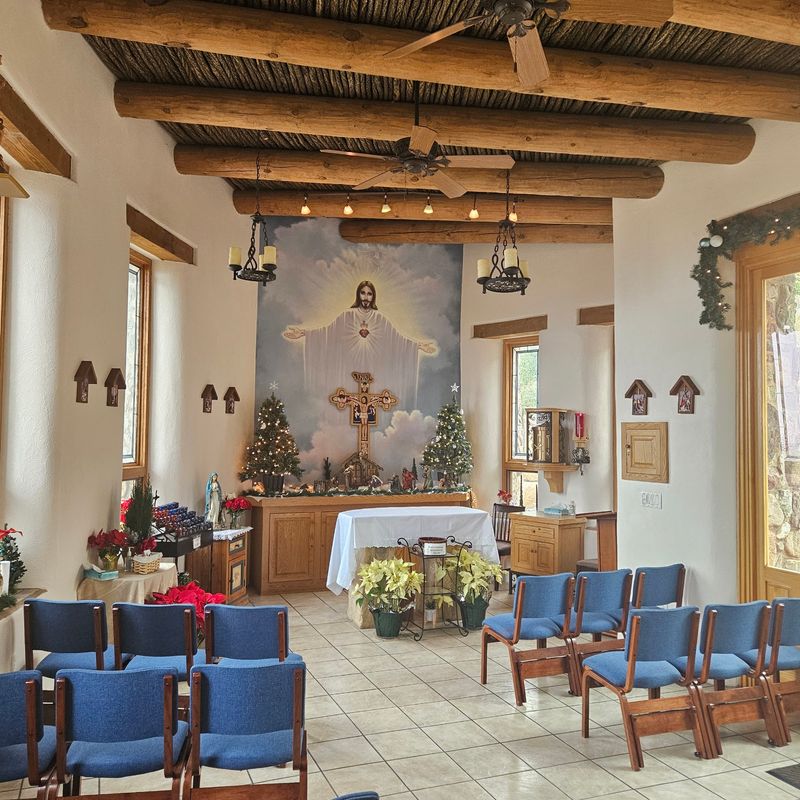
The chapel is small, but it holds much of the shrine’s daily life. It is a newly remodeled wooden building on the side of the mountain.
Mass is held every Sunday. If a service is underway, guests are asked to wait for it to end before going in to look around.
Inside, people can light a candle and write a message or prayer. When the candle is lit and red, the Body of Christ is present in the tabernacle.
Around Christmas, holiday music may play in the chapel. Informational packets are often available for anyone who wants to learn more.
The shrine also offers more than a single visit. Reservations can be made for retreats, and private Mass celebrations at the chapel are possible as well.
Non-Catholic guests regularly say they feel welcome here. The chapel works as a quiet place to sit, think, or pray, regardless of background.
A clean restroom is located below the church, which is good news after all those stairs.
7. Hours, Parking, and the Drive Up
Practical details matter at a hilltop site. The shrine is open daily from 8 AM to 5 PM, including weekends.
Admission is free. Donations are encouraged to help with upkeep of the grounds.
Parking comes in layers. There is a lower lot near the entrance, a middle lot, and an upper lot near the chapel, though space is limited.
The road up is paved but very steep. Driving down can be nerve-wracking for some, so take it slow.
For people with limited mobility, there is a workaround. A driver can drop a passenger near the chapel and cross, then return to the top for pickup.
Weekday evenings near closing can be very quiet, sometimes with only a couple of other people around. Some guests have had the whole place to themselves.
Wildlife like deer may appear on the paths, so give them plenty of space. Stick to the main walkways and keep your trip simple.
8. Worth the Climb, Any Month
Some places get a quick photo and a shrug. This one tends to earn a spot on people’s must-see lists.
It holds a 4.9-star average across more than 460 public ratings, which is rare for any attraction. Peaceful, well kept, and sacred are the words that keep coming up.
The appeal works on several levels. Pilgrims come for prayer, hikers come for the stairs, and photographers come for the views.
Families bring visiting relatives, and locals return again and again. The site stays open daily, so there is no wrong month to go.
For Tucson and Phoenix day-trippers, it pairs nicely with time in Sierra Vista or a broader Cochise County loop. Cooler months are the most comfortable for the climb.
Bring water, plan for the steps, and leave a donation if you can. Then take your time at the top.
The cross may be what draws people up the hill, but the quiet is what brings them back.
Share this story