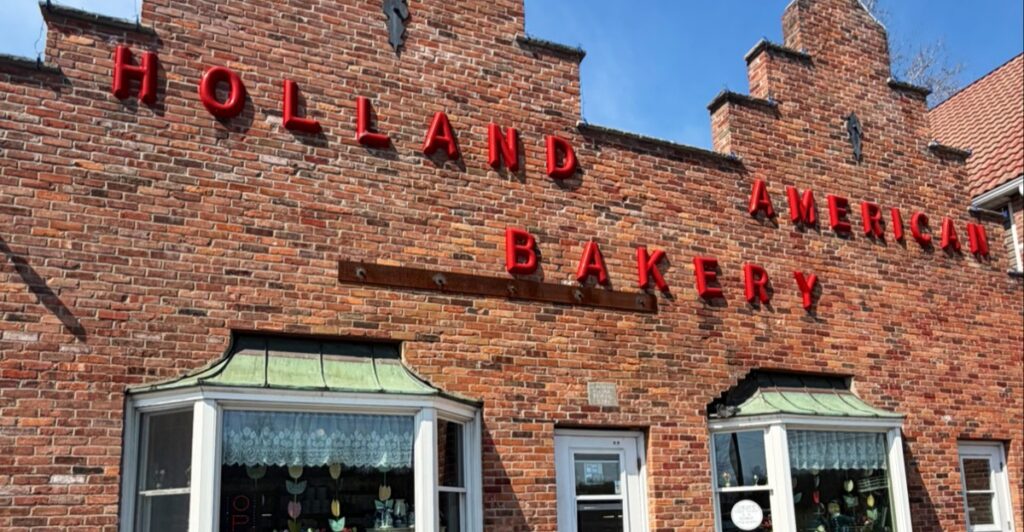
There’s a little bakery along Route 23 in Sussex County where almond-filled pastries, buttery cookies, and traditional Dutch treats have been coming out of the ovens for more than 70 years. The building looks like something borrowed from a European village, complete with charming decorations and shelves packed with goodies that aren’t exactly standard supermarket fare.
Welcome to Holland American Bakery, a family-run institution in Wantage that has been introducing New Jersey residents to authentic Dutch baking since 1954. What started as a small operation in a converted garage has become a destination for anyone who appreciates pastries made with old-fashioned recipes and plenty of butter.
You’ll find everything from delicate speculaas cookies to rich almond cakes, along with homemade pies and imported specialties. Whether you’re familiar with Dutch cuisine or couldn’t identify a banket if your life depended on it, this unassuming bakery has a delicious way of making newcomers feel right at home.
A Little Piece of the Netherlands Is Hiding in Sussex, New Jersey
Drive north along Route 23, and New Jersey starts looking noticeably different. The busy commercial strips gradually give way to wooded hills, open farmland, and small communities where family businesses have been part of the landscape for generations.
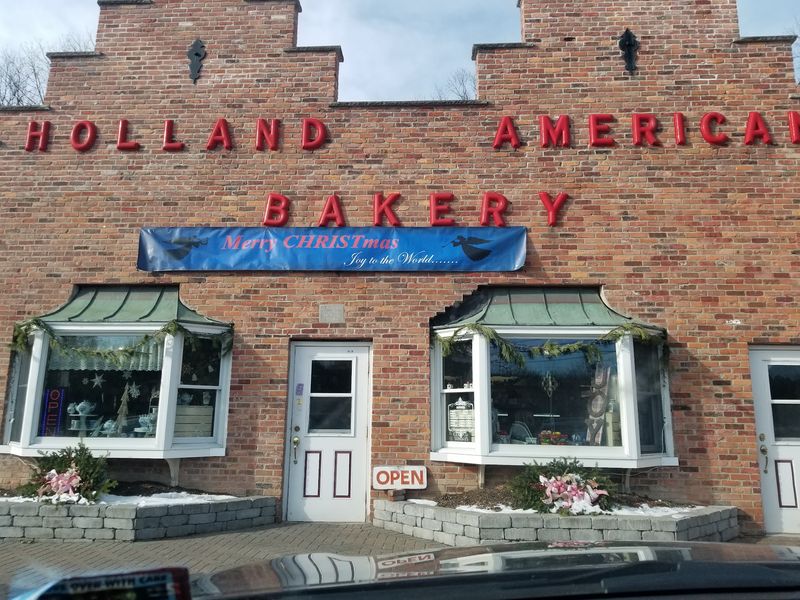
It’s in this quieter corner of Sussex County that Holland American Bakery has established itself as something of a local landmark. Located at 246 Route 23 in Wantage, near Sussex Borough, the bakery stands out with its distinctly Dutch-inspired appearance.
The building features architectural details that wouldn’t look particularly out of place in a small village in the Netherlands, while decorative touches provide an early clue about what awaits inside. Rather than trying to resemble a trendy modern café, the business embraces its European heritage.
Inside, the atmosphere feels more like an old-fashioned neighborhood bakery than a polished dessert boutique. Display cases showcase assorted pastries and cookies, while shelves hold Dutch groceries, candies, and other specialty products.
Traditional decorative plates and wooden clogs add character without making the place feel like a theme park. It’s a working bakery first, and the decorations are simply part of its personality.
The surrounding countryside also makes the location appealing for a longer outing. High Point State Park, home to New Jersey’s highest elevation, is a short drive north, offering hiking trails and impressive views across the surrounding region.
Sussex County’s rolling landscapes are particularly attractive during autumn, when the trees turn brilliant shades of orange, red, and gold. That makes this an easy stop to incorporate into a weekend drive through northwestern New Jersey.
Of course, the bakery doesn’t depend on scenery to attract customers. Its reputation comes from something considerably simpler.
People have been returning for generations because the pastries taste like they were made by someone who understands that a good recipe doesn’t need constant reinvention.
Holland American Bakery Has Been Keeping Dutch Baking Traditions Alive
The story behind this bakery begins with a man who discovered that making pastries was considerably easier than milking cows. Walter Valkema arrived in the United States from Friesland, a province in the northern Netherlands, in 1952 with his wife, Hilda, and their four children.
The family had been involved in baking back home, but starting over in New Jersey meant finding whatever work was available. A sponsor named Owen Aukema helped them settle in Sussex and arranged a job for Walter on a dairy farm.
Unfortunately, Walter and dairy farming weren’t exactly a perfect match. After finishing his work with the cows, he began preparing traditional Dutch baked goods at home.
His creations proved popular among fellow Dutch immigrants, and eventually he installed an additional oven in the family garage to meet demand. The arrangement worked so well that Walter abandoned his agricultural career and returned to baking full-time.
Over the Fourth of July weekend in 1954, Holland American Bakery officially opened for business. The original operation was modest, but its reputation spread through communities where Dutch families were eager to find familiar foods.
Walter and Hilda eventually purchased delivery trucks to bring their baked goods to customers, including people spending summers around the region’s lakes. Their son Sam took over the business in 1966 after marrying Dotty Aukema, the daughter of the very man who had helped the Valkema family settle in America.
It’s the sort of family connection that sounds almost too convenient for a movie script. Sam and Dotty later renovated the property to reflect traditional architecture from Friesland, giving the bakery much of its distinctive character.
Another generation assumed responsibility in 2000, when their son Owen and his wife Stephanie took over. Through these changes, the family maintained recipes brought from the Netherlands decades earlier.
The result is a bakery where history isn’t simply displayed on the walls. It’s baked into the products that customers still purchase today.
The Dutch Pastries Here Are Worth the Drive Alone
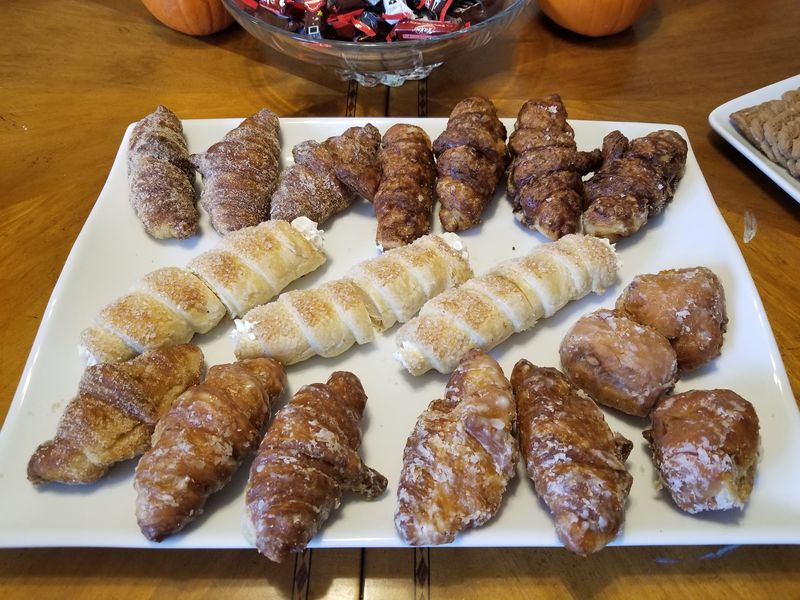
Almond lovers should probably approach the display cases with a little self-control, because this bakery has an impressive talent for turning almond paste into irresistible desserts. One of its signature specialties is banket, a traditional Dutch pastry made with an almond filling wrapped in pastry dough.
The bakery sells a Banket Almond Ring, bringing together the richness of almond paste and the satisfying contrast of pastry surrounding it. It’s an excellent introduction to Dutch baking because the ingredients are straightforward, yet the finished product feels much more distinctive than an ordinary breakfast pastry.
Another specialty worth investigating is boterkoek, a dense Dutch butter cake that demonstrates how wonderfully indulgent simple ingredients can become. Holland American Bakery makes a version with an almond filling tucked inside, producing a rich dessert that’s especially good alongside coffee.
Its boterkoek measures approximately seven inches across and two inches high, so there’s enough to share, assuming everyone involved can agree on reasonable portions. Then there’s the almond coffee cake, another tempting option for anyone who enjoys the combination of sweet dough and nutty flavors.
The bakery also offers almond stollen and small almond tarts, ensuring that visitors have several opportunities to discover their preferred version of this classic flavor combination. What makes these pastries interesting isn’t elaborate decoration or unusual ingredient combinations.
Dutch baking tends to favor recognizable flavors, particularly butter, almonds, warming spices, and carefully prepared dough. The appeal comes from how those ingredients are handled rather than how dramatically they’re presented.
A pastry doesn’t need a towering layer of frosting when its filling already delivers plenty of flavor. For newcomers, trying a few different specialties is a good way to appreciate the distinctions.
Banket emphasizes the almond filling and surrounding pastry, while boterkoek offers something denser and richer. The coffee cake makes a natural companion to a morning drink.
There’s enough variety to keep things interesting without straying from the traditions that made this bakery famous.
From Almond-Filled Banket to Speculaas Cookies, There’s Plenty to Try
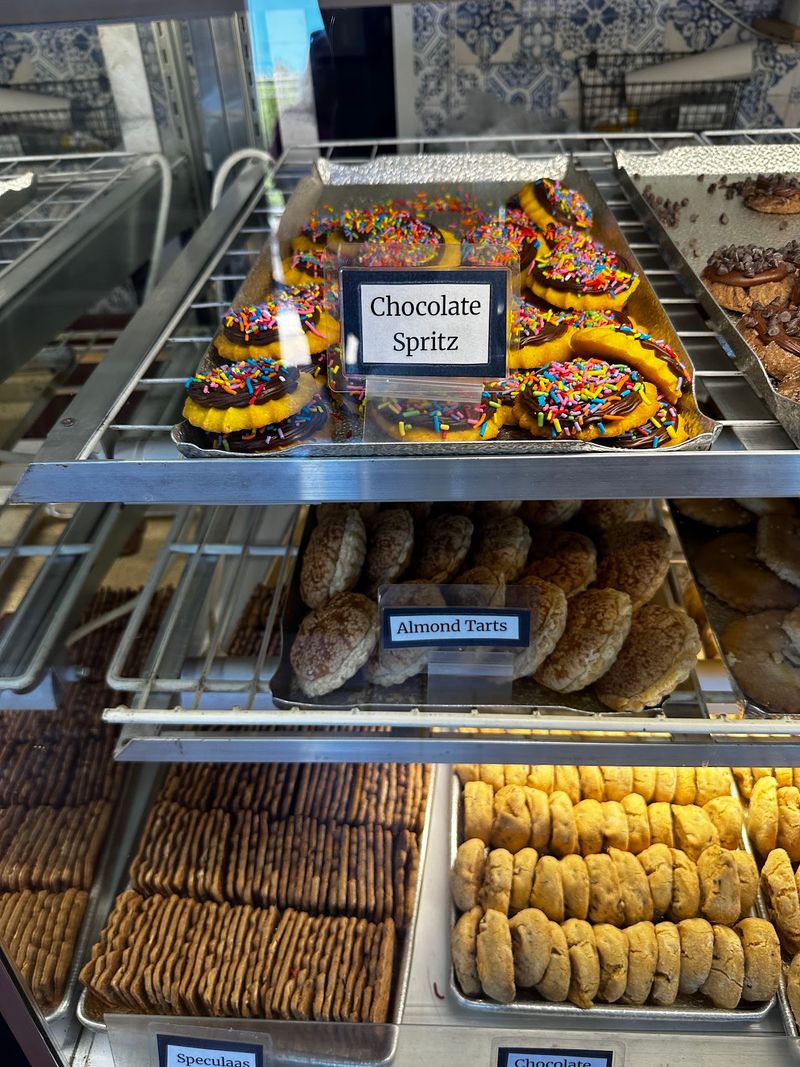
Some cookies are meant for absentminded snacking, while others deserve a proper cup of coffee and a few minutes of attention. Dutch speculaas belongs firmly in the second category.
These traditional spiced cookies are among Holland American Bakery’s best-known products, recognizable for their distinctive shapes and warming flavors. Speculaas is traditionally associated with spices such as cinnamon, cloves, and nutmeg, giving the cookies a flavor that’s particularly satisfying during colder months.
The bakery’s version is commonly called a windmill cookie, a reference to one of the Netherlands’ most recognizable symbols. They’re also an important part of the business’s history.
When Owen and Stephanie Valkema began expanding the bakery’s reach online, speculaas was the first cookie they offered for sale through the website. Customers soon began requesting other traditional treats, turning a single online product into a broader selection of Dutch specialties.
Another standout is krakelingen, a handmade pastry folded into a pretzel-like shape and rolled in coarse sugar. These treats combine delicate pastry with a sweet exterior, making them quite different from the soft pretzels New Jersey residents might usually picture.
The bakery also produces Jan Hagel cookies, which feature a combination of cookie dough, coarse sugar, and nuts. The texture and toasted flavors make them an appealing alternative to familiar chocolate chip or oatmeal cookies.
Gevulde koeken are another particularly interesting choice. These large Dutch almond cookies consist of two layers of dough surrounding almond paste, creating a substantial treat that’s more filling than its modest appearance might suggest.
Holland American Bakery lists them at approximately three and a half inches in diameter, which is generous by cookie standards. For something slightly different, look for bitter koekjes, traditional almond macaroons, or the bakery’s chocolate varieties of Jan Hagel.
Between the spices, almonds, buttery dough, and crunchy sugar coatings, the cookie selection offers an entertaining introduction to Dutch baking. It also explains why leaving with only one package can become surprisingly difficult.
The Homemade Pies and Old-Fashioned Treats Deserve Just as Much Attention
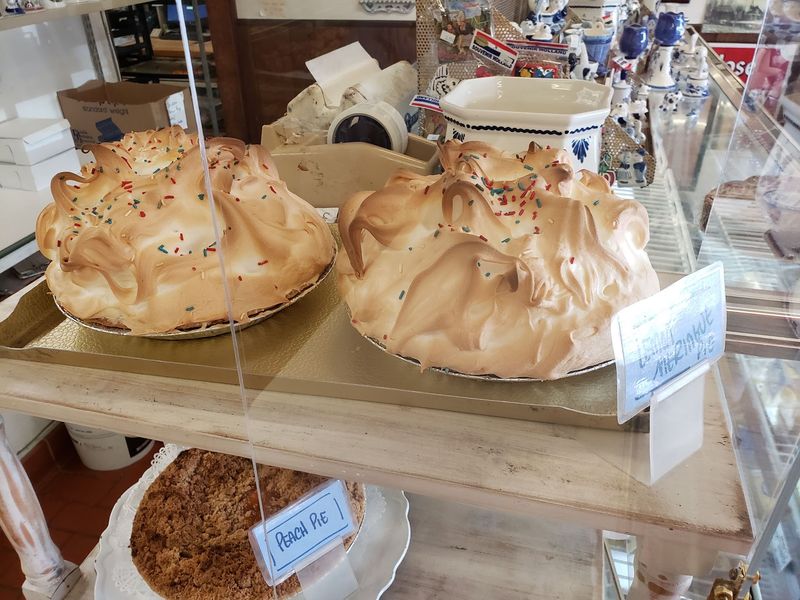
Dutch pastries might be the main attraction, but overlooking the bakery’s American-style desserts would be a fairly serious mistake. Holland American Bakery has long maintained a selection of familiar baked goods alongside its traditional European specialties, including an extensive assortment of homemade pies.
Fruit pie enthusiasts have plenty to consider, with options ranging from classic apple and blueberry to more unusual combinations. Apple crumb is an obvious choice for anyone who appreciates the contrast between tender fruit and a buttery topping, while apple cranberry crumb introduces an appealing tartness.
Apple walnut adds another layer of texture, and combinations featuring apples, peaches, and blueberries offer a different approach to familiar fruit flavors. Cherry pies and peach pies also belong to the bakery’s traditional lineup.
During autumn, pumpkin pie and pumpkin crumb pie become especially appropriate choices for a bakery surrounded by Sussex County’s changing leaves. The cream pie selection provides a completely different experience.
Chocolate cream, coconut cream, banana cream, and lemon meringue cater to those who prefer their desserts softer, richer, or topped with generous amounts of meringue. Particularly interesting is the Black Forest pie, which combines a fudge base with cherries and chocolate mousse.
It’s a considerable departure from a straightforward apple pie, but that’s part of the fun. Beyond pies, the bakery’s bread selection deserves attention.
Traditional Dutch rye bread is prepared using an old recipe that requires approximately 12 hours of baking, producing a dense, earthy loaf suitable for breakfast or savory toppings. Cinnamon bread and raisin bread offer sweeter alternatives.
The bakery also makes honey cake, a traditional treat with a more restrained sweetness than heavily frosted American cakes. Some of these products are especially appealing because they’re designed for ordinary breakfasts and afternoon snacks rather than grand celebrations.
A slice of cinnamon bread toasted with butter or a piece of honey cake served alongside tea can be every bit as satisfying as an elaborate pastry. That’s part of the charm here.
The bakery understands that everyday baked goods deserve just as much attention as special-occasion desserts.
Dutch Imports and Charming Details Make This Bakery More Than a Sweet Stop
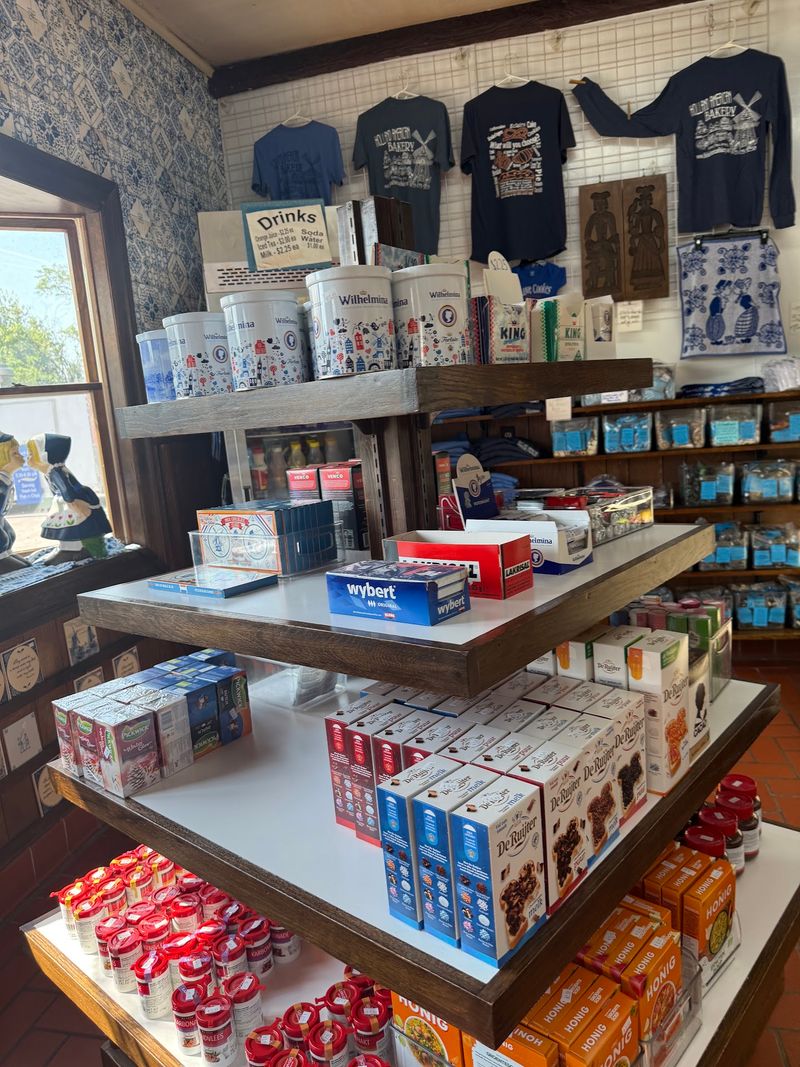
A bakery that sells Dutch cheese, chocolate sprinkles, licorice, and imported mustard clearly has ambitions beyond keeping the pastry counter stocked. Holland American Bakery doubles as a small specialty grocery, with shelves dedicated to products that can be surprisingly difficult to find in ordinary New Jersey supermarkets.
One of the most recognizable imports is stroopwafel, the classic Dutch treat consisting of two thin waffle cookies with a syrup filling between them. Traditionally, a stroopwafel can be placed over a hot cup of coffee or tea, allowing the warmth to soften its center before eating.
It’s a simple trick that makes an already enjoyable cookie even better. Another interesting product is hagelslag, the chocolate sprinkles that Dutch families commonly serve on buttered bread.
To Americans accustomed to finding sprinkles exclusively on cupcakes and ice cream, the idea might sound unusual, but chocolate-covered breakfast toast has its own appeal. The shelves also feature Dutch cheeses, including aged Gouda and Leyden, along with Dutch coffee, tea, mustard, soup mixes, and various kinds of licorice.
Anyone familiar with Dutch licorice knows that the salty varieties can be quite an adventure for unsuspecting first-timers. More approachable choices include peppermint candies and chocolate treats.
The imported groceries help explain why this bakery remains meaningful to families with Dutch roots. It’s not simply a place to buy dessert; it’s somewhere people can find flavors associated with childhood breakfasts, family gatherings, and holiday traditions.
The bakery also offers packaged treats that can be shipped, allowing customers who have moved away from Sussex County to continue enjoying familiar favorites. For an in-person visit, the shop is open Tuesday through Saturday from 6 a.m. to 6 p.m., with Monday and Sunday reserved as closing days.
That early opening makes it convenient for picking up breakfast pastries, while the broad selection encourages a little extra browsing. More than seven decades after Walter Valkema began baking in his garage, the family business still reflects the same practical philosophy that started it all.
Make good food, preserve the recipes that matter, and give people a reason to come back. In a small bakery on Route 23, that approach has aged rather well.
Share this story