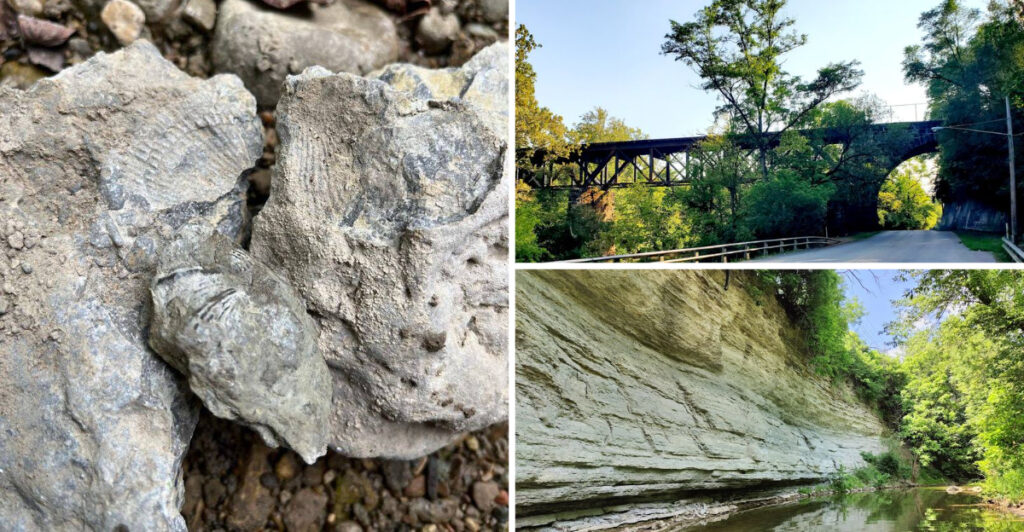
Imagine visiting a park where you can search for fossils nearly half a billion years old and take your discoveries home—all for free. Richmond Fossil Park in eastern Indiana offers one of the most unique outdoor experiences in the Midwest, giving visitors access to exposed fossil beds filled with remnants of ancient marine life from roughly 440 million years ago.
Located beside Whitewater Gorge, this hands-on destination attracts families, amateur fossil hunters, and curious travelers looking for something beyond the typical hiking trail. If you enjoy history, geology, or unforgettable adventures, this hidden Indiana gem is well worth exploring.
A Tiny Park With a Giant Stone Backdrop
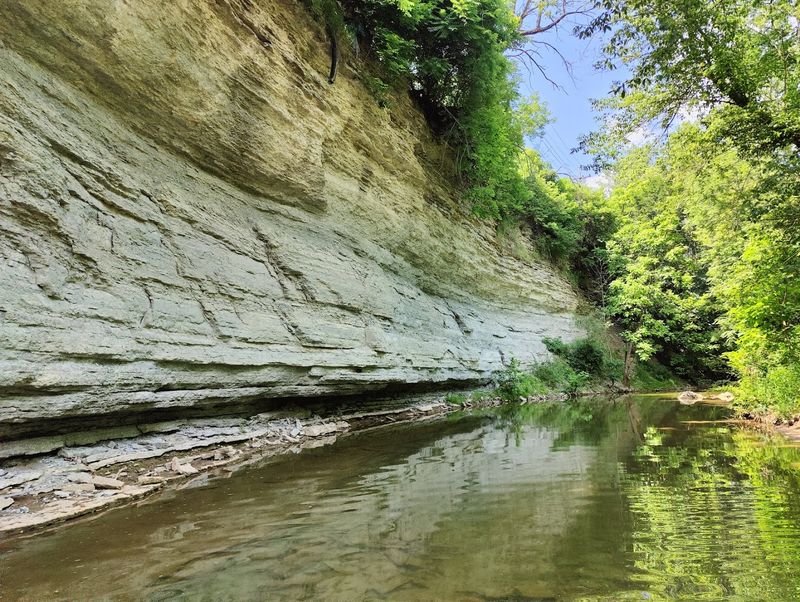
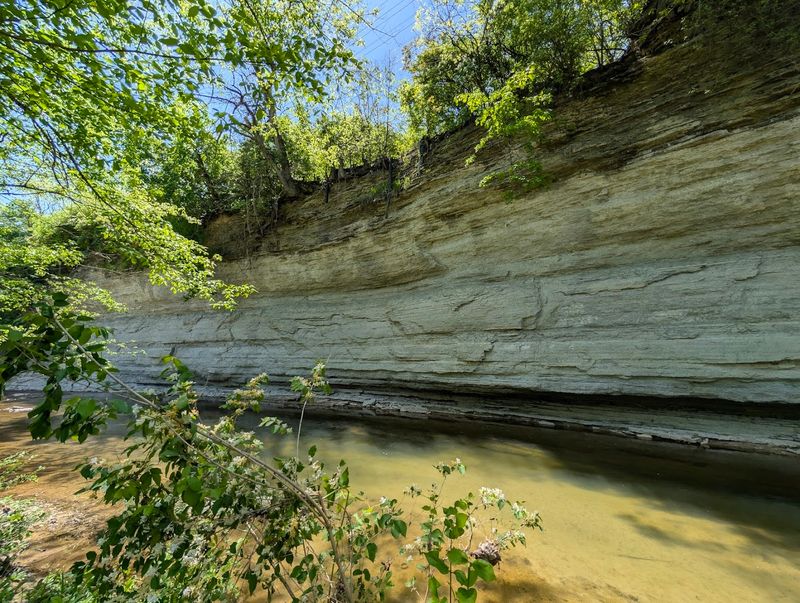
Richmond Fossil Park does not build suspense with a grand entrance. It sits in a modest pocket of Richmond near Whitewater Gorge, where the setting shifts quickly from neighborhood edges to exposed limestone, shallow water, and a surprising vertical wall of rock.
That contrast is the first jolt: an ordinary approach, then a geological backdrop that looks much bigger than the park around it.
The site is compact, and that works in its favor. Instead of spending half the visit figuring out where to go, you can immediately understand the terrain: a grassy open area, access toward the creek, and fossil-bearing stone that puts the park’s purpose right in front of you.
The cliff line and scattered rock create a scene that feels active rather than manicured, more like a small outdoor lab than a traditional recreation area.
That visual character matters because Richmond Fossil Park is not about polished landscaping or long walking loops. It is about seeing the region’s bedrock up close and recognizing that ancient life is embedded in material that now forms walls, chunks, and fragments along the water.
The appeal starts with scale, texture, and proximity, not signage or built attractions. On bright days, the pale stone catches light in a way that makes every crack and fossil pattern stand out more clearly.
After rain, the area can read rougher and muddier, which only emphasizes that this is a hands-on place instead of a decorative one.
You are not arriving for a distant overlook. You are arriving at ground level, where the geology is the main event and the first good look already hints that the park’s best finds are not behind glass.
Where 440-Million-Year-Old Finds Become the Main Attraction
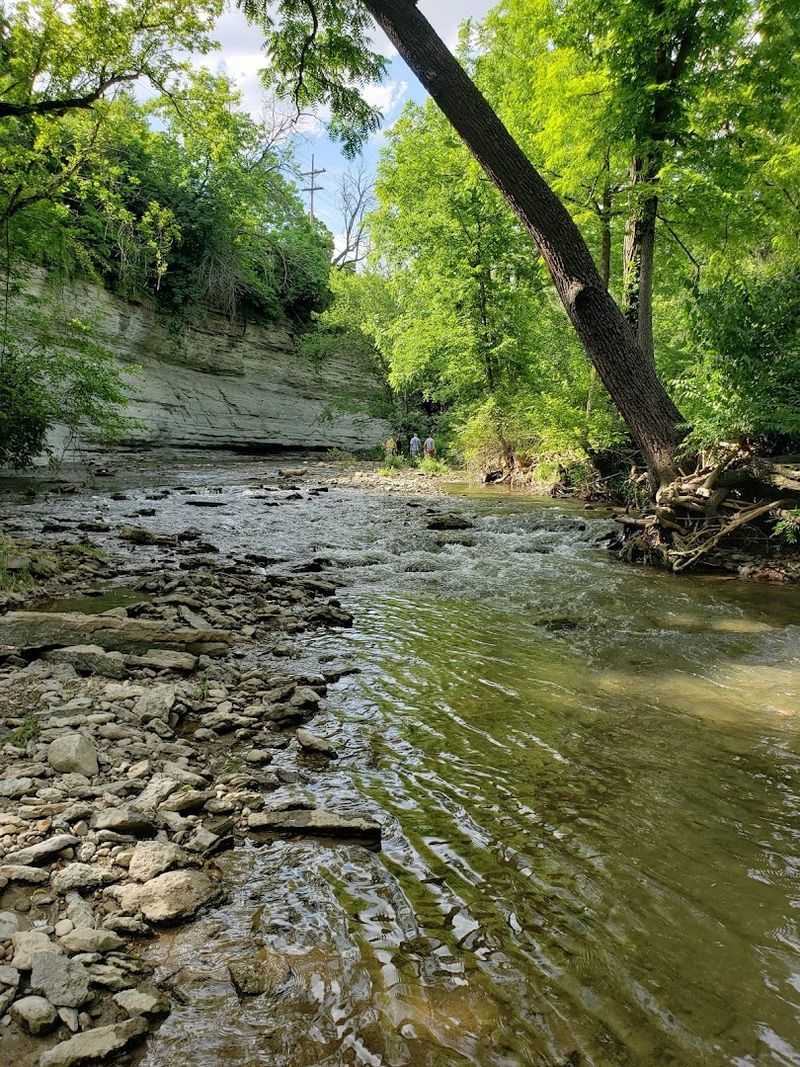
The headline draw here is wonderfully direct: you can hunt for fossils and keep what you find. Richmond Fossil Park is known for Ordovician-era material, often described as roughly 440 million years old, and that number changes the mood of the visit immediately.
You are no longer just picking through rocks. You are scanning remnants of a marine world that existed long before Indiana looked anything like it does now.
The fossils most commonly associated with the site include brachiopods, horn corals, bryozoans, crinoid fragments, and other marine impressions preserved in local limestone.
Even if you arrive without paleontology vocabulary, the shapes are satisfying to spot: ribbed shells, coral-like cones, clustered textures, and patterned surfaces that break the monotony of plain stone.
The fun is not limited to experts. The park works because recognition can happen in seconds. A key feature is the accessible rock pile area, which gives beginners an easier place to start before moving toward the creek. That setup removes some of the intimidation factor.
Instead of needing specialized knowledge or a long search through wilderness, you can begin by simply turning over promising pieces and looking for repeated forms, symmetry, or embedded outlines. Then the park starts doing what great free attractions do. It turns curiosity into momentum.
One fossil leads to another, your eyes adjust to the patterns, and the ground begins to look less random than it did on arrival.
That shift is the real signature experience. Richmond Fossil Park offers the rare pleasure of learning through direct discovery, with no ticket booth, no display case, and no requirement beyond patience, attention, and a willingness to get your hands dusty.
The Creek Edge Is Where the Adventure Gets Real
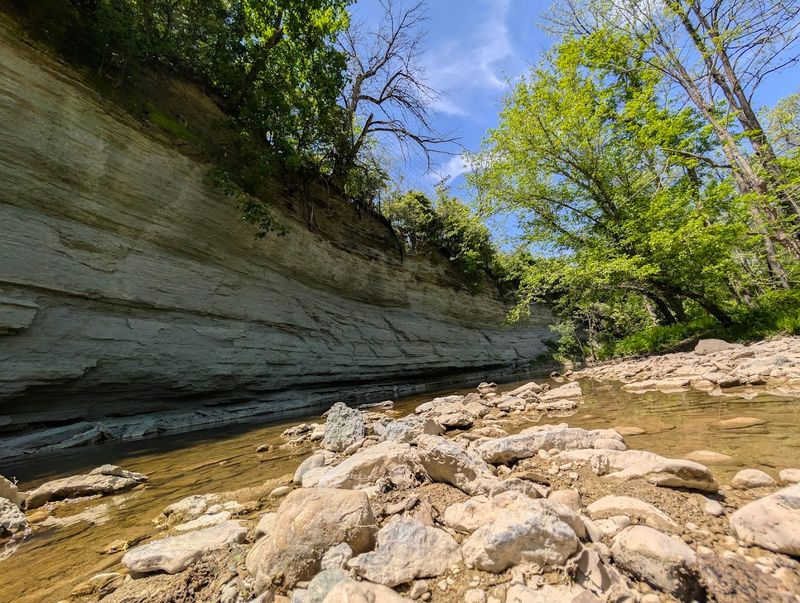
Beyond the easier surface searching, the park’s creekside area adds a more active layer to the experience. Water, exposed banks, and broken limestone create a setting where fossils can appear in loose pieces as well as in larger rock sections.
It is the part of Richmond Fossil Park that feels closest to field collecting, even on a casual visit. This is also where practical judgment matters most.
The ground can be uneven, the grass may hide rough footing, and the route toward the water is not designed like a heavily developed attraction.
Water shoes or sturdy shoes you do not mind soaking make a difference, especially if you want to wade for a closer look at stone along the edge. Dry sneakers and delicate sandals are the wrong energy here.
The creek changes the pace of the visit in a good way. Instead of standing in one place and sifting, you move, scan, crouch, compare textures, and notice how water reveals detail by washing dirt from rock surfaces.
Light bouncing off the shallow current can make shapes harder to read at first, but once your eyes settle, fossil forms begin to separate from the surrounding stone.
There is also a dramatic visual payoff. The limestone wall, stream, and narrow gorge-like setting give the park a sense of depth that its small size does not suggest from the road. You are close to the geology rather than looking at it from a boardwalk or fenced overlook.
That closeness brings responsibility. Careful footing, awareness of erosion, and attention to surroundings are part of the experience here.
Richmond Fossil Park is more rewarding when treated as a lightly developed natural area, not a smooth, all-ages playground with every hazard removed.
Why This Indiana Spot Works So Well for Beginners
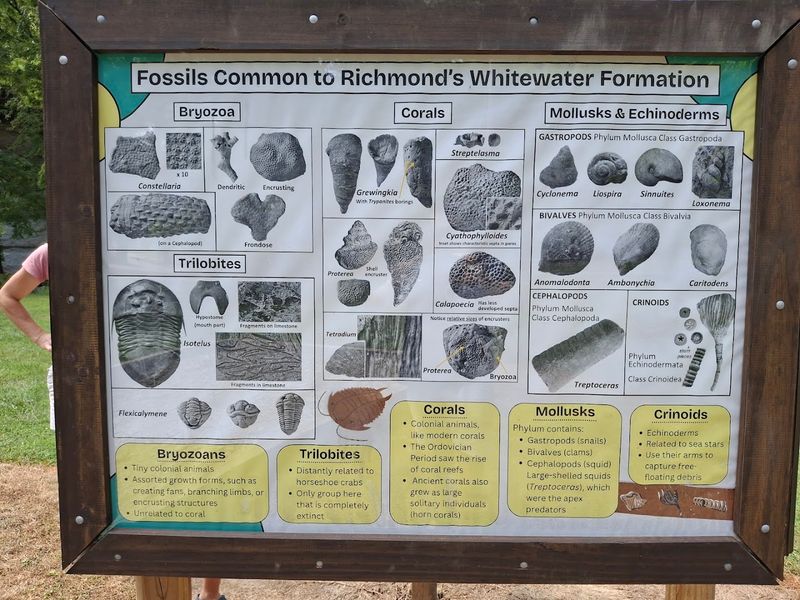
Some fossil destinations are impressive but intimidating. Richmond Fossil Park lands in a different category: approachable, informal, and easy to understand within minutes, which makes it especially good for beginners.
You do not need museum-level expertise to enjoy it, and you do not need a long checklist of gear to start noticing real fossils in real rock.
That accessibility comes from the park’s structure. The fossil-bearing material is not hidden behind a strenuous backcountry route or locked into a guided program.
There is a straightforward, public setting where new collectors can practice looking closely, compare shapes, and learn the difference between ordinary fractured stone and pieces carrying recognizable life forms. For children, that turns geology from an abstract school topic into a hands-on game with instant rewards.
The park also offers something adults appreciate just as much: permission to be amateur. You can arrive knowing only that Indiana was once covered by shallow seas, then spend an hour discovering how much detail is preserved in limestone fragments underfoot.
That low-pressure format is part of the charm. There is room to be curious without feeling unprepared. At the same time, the site does not pretend to be a giant destination packed with amenities. It is small, simple, and focused.
That honesty helps set the right expectations. Families looking for playgrounds, large picnic zones, or a full afternoon of structured activities may need to pair it with other nearby stops, but the fossil component itself is direct and engaging.
For newcomers, that is often the perfect balance. Richmond Fossil Park gives you a legitimate collecting experience without demanding deep experience first, and that makes the first successful find arrive quickly enough to keep attention locked in.
History Underfoot, Not Behind Glass
What gives Richmond Fossil Park its real punch is the gap between the present-day setting and the age of the material underfoot.
You are standing in eastern Indiana near a creek and neighborhood streets, yet the rocks connect back to an ancient marine environment from the Ordovician period.
That layered context turns a casual stop into a quiet time-travel exercise. The park does not need a museum building to make that point.
The stone itself carries the evidence. Brachiopods, corals, and other marine fossils are reminders that this region once sat beneath shallow seas, where sediments accumulated and preserved life in ways now visible as impressions, ridges, and repeating biological forms.
The educational value comes from direct contact with the material instead of interpretation alone. That matters especially for anyone used to seeing fossils only in labeled cases. Here, ancient life is not polished, spotlighted, or separated from the landscape.
It remains embedded in rough limestone, mixed with creekside mud, broken fragments, and weathered surfaces. The experience is less theatrical, but more immediate. You are reading history from the rock where it sits.
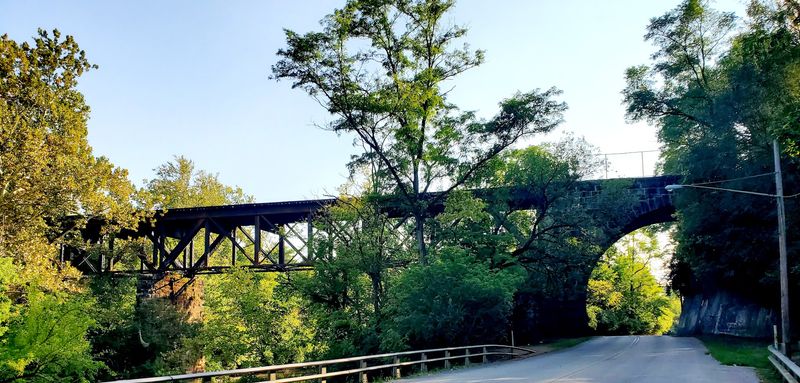
Richmond Fossil Park also fits into a broader local sense of place. The Whitewater Gorge area gives the geology a physical stage, with exposed cliff faces and water shaping how the stone is seen and reached.
Even the park’s rough edges reinforce the point that this is not a re-created educational exhibit. It is a public access point to actual regional geology.
That distinction sets the tone for the whole visit. Instead of consuming a curated story, you piece one together yourself, fossil by fossil, while the limestone wall nearby reminds you that the oldest thing at the park is also the reason the park exists.
The Moment Your Eyes Start Recognizing Fossils Everywhere
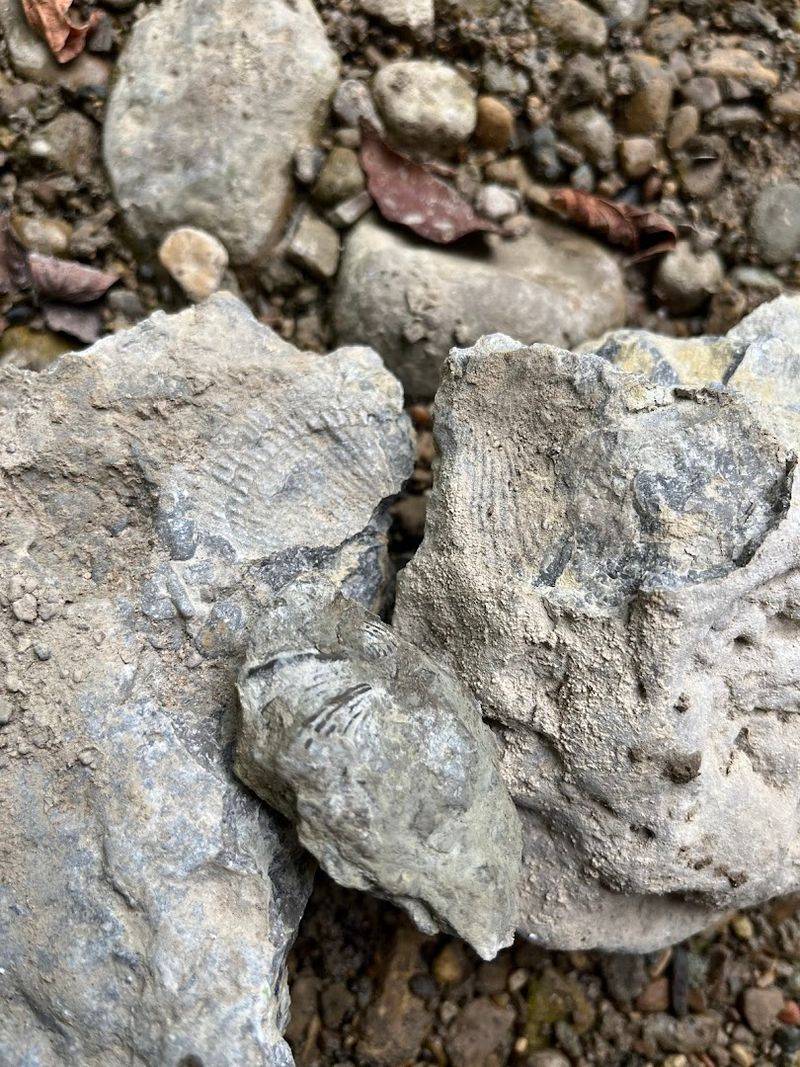
The most interesting shift at Richmond Fossil Park happens after about fifteen or twenty minutes. At first, the ground looks like a collection of ordinary rocks scattered across a creek bed and limestone pile.
Then something changes. Your eyes begin picking up patterns, textures, and shapes that seemed invisible when you arrived. A ribbed shell stands out from the surrounding stone. A coral fragment catches the light differently.
Small circular impressions suddenly look intentional rather than random. Once that process begins, the park becomes much harder to leave because every new rock feels like it might hold another discovery.
That learning curve is part of what makes the experience so satisfying. Richmond Fossil Park does not require expert knowledge before you arrive.
Instead, it teaches observation through repetition. Each successful find makes the next one easier, turning a casual walk into a genuine treasure hunt powered by patience rather than luck.
Families often notice this effect first with children, who quickly become determined to inspect every promising rock within reach. Adults tend to follow the same path.
What begins as curiosity gradually becomes focus, and the search develops its own momentum as more fossils reveal themselves. The result is a rare outdoor activity that rewards attention instead of speed.
There are no rides, schedules, or guided routes competing for your focus. The excitement comes from training your eyes to see evidence of a world that existed hundreds of millions of years ago.
By the time you decide to head home, chances are good that the ground looks very different than it did when you first arrived.
The Sharp Reason Richmond Fossil Park Stands Out
Richmond Fossil Park stands out for a reason many attractions miss completely: it offers real participation instead of passive observation. You are not paying to look at a collection assembled by someone else.
You are scanning the ground, testing your eye, and noticing that ancient life can appear in a chunk of stone no larger than your hand. That active element gives the park a very different kind of energy.
Its roughness is part of the identity. This is not a landscaped destination built around comfort, and it does not try to distract you with extras.
The appeal comes from exposed geology, accessible fossil hunting, and the odd thrill of realizing that a small park in Richmond can connect directly to a world hundreds of millions of years old. The scale stays modest while the subject matter gets enormous.
That contrast makes the place easy to underestimate from a distance. On paper, it is a small public park with limited amenities.
In practice, it is a hands-on science stop, a creekside wander, and a rare legal collecting spot where beginners can actually succeed. The value lies less in spectacle and more in contact.
You touch the rock, inspect the patterns, and leave with evidence that the visit happened. There is also a refreshing honesty to the experience. Richmond Fossil Park does not promise a theme-park version of paleontology.
Some days will produce better finds than others, and some travelers will spend more time navigating mud and footing than expected. That unpredictability is part of the deal, and for the right person, part of the fun.
If polished attractions blur together for you, this park cuts through the noise. It is specific, tactile, and quietly unusual, which is exactly why a free stop here can end up outshining far bigger destinations.
Share this story