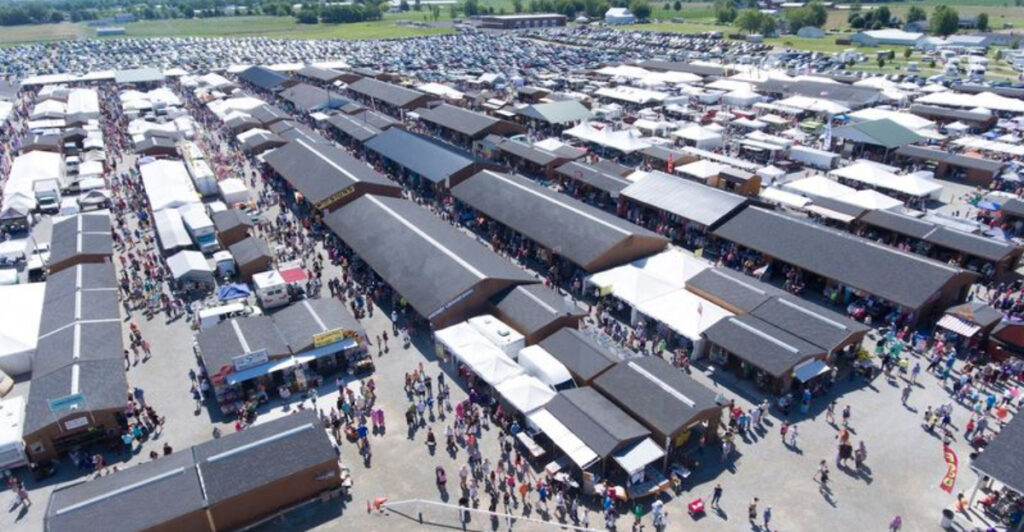
Some flea markets are worth an hour or two. The Shipshewana Auction & Flea Market can easily fill an entire day. Spanning roughly 40 acres with hundreds of vendor spaces, this iconic Indiana destination is one of the Midwest’s largest flea markets, offering everything from antiques and handcrafted furniture to home décor, fresh produce, baked goods, clothing, collectibles, and unique Amish-made products.
Every aisle brings a new surprise, making it just as appealing for casual browsers as it is for serious bargain hunters. Whether you’re searching for one-of-a-kind treasures or simply soaking up the lively atmosphere, this massive market delivers an unforgettable Indiana shopping experience.
A Market That Hits You All at Once
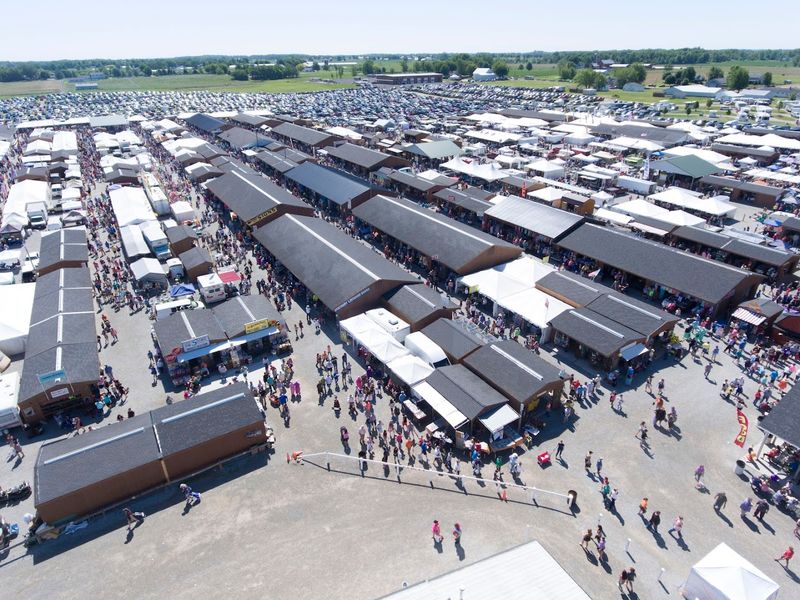
The first surprise at Shipshewana Flea Market is pure scale. This is not a quick loop of folding tables in a parking lot, but a broad, open market ground where rows keep extending, side paths keep branching, and the eye keeps catching one more booth farther ahead.
The space immediately changes your pace because trying to see everything like a sprint is the fastest way to burn out before lunch.
Gravel underfoot, open sky overhead, and long lines of canopies create a look that is part country marketplace and part seasonal retail village. Some booths are simple and temporary, others look settled in for the season, which gives the market a more established rhythm than a one-day pop-up.
You are not moving through random clutter so much as entering a huge organized sprawl where repetition, surprise, and convenience all sit beside each other.
That size matters in practical ways. You notice parking lots, access lanes, rest areas, and food stops because this is a place built for an all-morning or all-day outing, not a casual thirty-minute browse.
By the time you reach one end of a row, another aisle is already pulling your attention with flags, hanging baskets, metal yard art, kitchen gadgets, quilts, and stacks of jams.
Shipshewana also stands apart because the setting around it feels unmistakably local. Horse-drawn buggies can share the nearby roads, town traffic moves at a different rhythm, and the market sits naturally within a community known for auctions, shops, and Amish country culture.
Even before you start shopping, the environment tells you this place operates on its own scale. That opening visual rush is the hook. You arrive expecting a flea market and instead step into a small temporary city built around browsing, bargaining, snacking, and steady walking.
Where the Hunt Gets Interesting
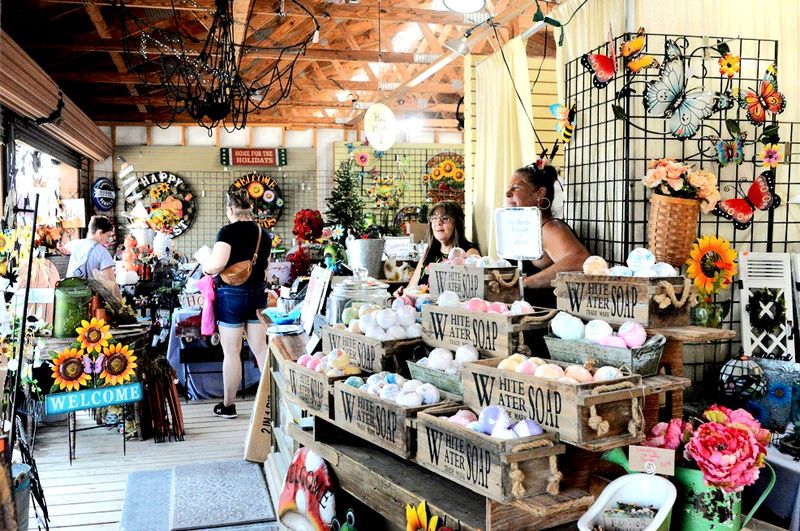
The core experience here is the hunt, and Shipshewana makes that hunt broad enough to keep different kinds of shoppers engaged.
One aisle might lean heavily into porch signs, yard decorations, socks, kitchen tools, or discount housewares, while the next offers handmade blankets, jams, spice blends, baked goods, candles, and small furniture. That mix means the market can be uneven, but it is rarely dull.
Anyone arriving with a strict antique-only expectation should adjust early. This market includes vintage and collectible pockets, yet a large share of the inventory is new merchandise, giftable items, practical household goods, clothing, seasonal decor, and craft-based products.
The fun comes from staying alert for quality, spotting booths with personality, and knowing that one table of ordinary stock can sit right beside a genuinely useful or beautifully made find.
The strongest booths tend to have visual confidence. A vendor who specializes in one thing, whether it is olive oils, natural body products, handcrafted wood pieces, garden accents, or textiles, often creates a sharper shopping moment than a stall crowded with everything at once.
You can feel the difference when a display is curated instead of piled high. Food products are part of the treasure hunt too.
Jars of preserves, pickles, syrups, breads, fudge, cheese snacks, and other take-home staples give the market a grocery-meets-fairground edge that works especially well if you like leaving with edible souvenirs. Even shoppers who resist buying decor often end up carrying a paper bag of treats back to the car.
That is the real trick at Shipshewana. You may come looking for one specific item, but the market is built to tempt you sideways, row by row, into purchases you did not plan and probably will not regret.
Indiana Details You Notice Between the Booths
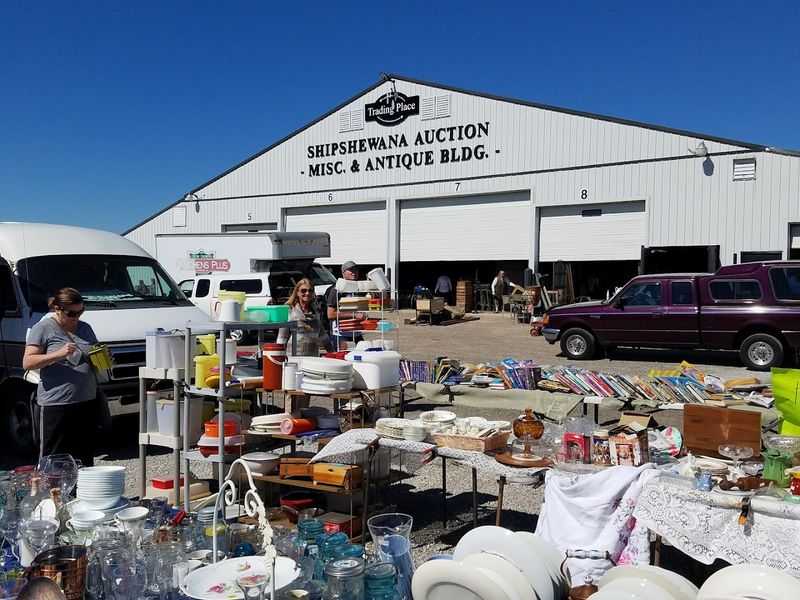
Beyond the merchandise, the small operational details shape the day more than most first-timers expect. Shipshewana is large enough that seating, shade, loading access, and food placement become part of the experience, and those details can make the difference between an enjoyable wander and an overheated trudge.
Recent visitors often note more places to sit than in the past, which matters when a market demands this much walking.
The ground is generally flat and covered in crushed gravel, an easy detail to underestimate until you have crossed several long rows. Comfortable shoes are not optional here, and neither is pacing yourself.
If you are carrying bags, plants, jars, or heavier goods, every extra aisle suddenly feels longer than it looked from the entrance.
One of the more useful features is the ability to load larger purchases without dragging them forever through the market.
Bigger items such as plants, furniture pieces, or bulky decor can be easier to manage because the grounds are designed for movement, with practical access patterns rather than a maze that traps you on foot. That sounds mundane until you buy more than expected.
Plant season adds another layer. When spring inventory is in full swing, garden shoppers move with real purpose, and the market shifts from casual browsing to trunk-filling logistics.
Hanging baskets, bedding plants, and outdoor greenery become major draws, turning certain areas into a kind of temporary nursery district inside the larger flea market.
These details are not glamorous, but they explain why Shipshewana functions better than a random roadside market. It is sprawling, yes, yet it has enough infrastructure to support the scale, which is exactly what keeps the day moving even after your step count starts climbing.
The Food Break That Resets the Whole Day
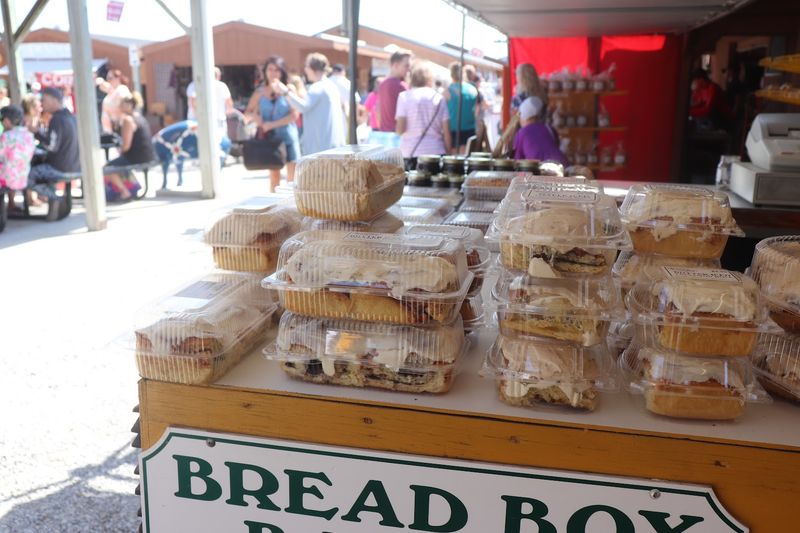
A market this large needs more than shopping to stay enjoyable, and that is where the food scene quietly carries a lot of weight.
Shipshewana is not presented as a culinary destination first, yet the mix of concession stands, snack booths, baked goods, and specialty foods gives the day a built-in reset button. Instead of pushing through aisle fatigue, you can stop, eat, regroup, and head back out with fresh energy.
The food has a fairground edge without being limited to the usual basics. Soft pretzels are a standout draw for many people, while fried pies, homemade bread, pickles, fudge, jams, and cheese snacks give the market a strong take-home appeal.
Some of the best choices are portable, which suits a place where eating and walking often blend together. There is also a practical side to all this. On warm sunny days, drinks, shade, and break spots matter almost as much as the menu itself, especially since the market is open air and the walking adds up fast.
A good snack stop is not just a treat here, it is part of your survival plan. The food areas also create a different tempo from the vendor rows.
Browsing can become a repetitive visual stream of merchandise, but a lunch break or quick pretzel stop interrupts that pattern and makes the second half of the visit feel new again. You start noticing things you would have walked past if you had kept forcing your way forward.
That reset is why the food at Shipshewana deserves more than a side note. It gives structure to a day that could otherwise become one long blur of aisles, and it adds exactly the right amount of comfort to a market built on motion.
Why Shipshewana Has a Different Local Rhythm
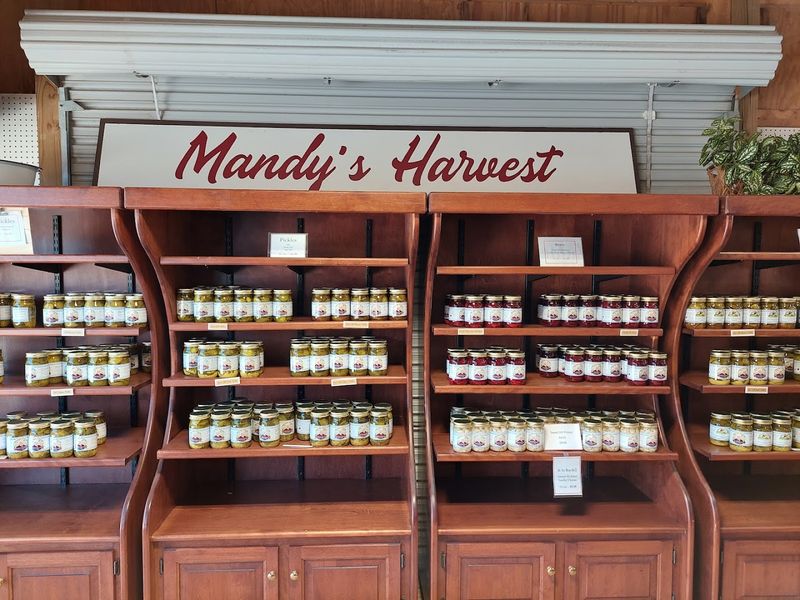
Shipshewana Flea Market is tied closely to the identity of the town around it, and that connection gives the place a different rhythm from suburban resale markets. You are not dropping into an isolated event space cut off from its surroundings.
The flea market sits inside a community where auctions, locally made goods, agricultural life, and Amish country tourism already shape the daily landscape.
That context shows up in subtle and obvious ways. Specialty foods, blankets, home goods, and handcrafted products fit naturally here because they do not feel imported from a generic vendor circuit.
Even when the market includes plenty of modern resale merchandise, the surrounding culture keeps the overall setting grounded in northern Indiana rather than nowhere in particular.
The nearby roads can include horse-drawn traffic, which immediately changes how the area moves. Cars, parking flows, and pedestrian habits all operate with a little more caution and awareness, especially near the main routes through town.
It is a reminder that the flea market is part of a living local ecosystem, not a sealed shopping complex. There is also a seasonal character to the place. Operating from May through September on select days gives it a built-in tempo that feels more anticipated and concentrated than an everyday retail center.
That schedule creates a sense of occasion, even for regulars who know the layout and have their favorite booths mapped out.
This local grounding is one reason the market holds attention despite the presence of repetitive stock in some aisles. The larger scene, the town identity, and the practical culture around buying, selling, farming, cooking, and making things all keep the experience anchored.
It is commercial, certainly, but not detached from place, and that distinction gives Shipshewana more character than size alone ever could.
How to Tackle the Market Without Burning Out
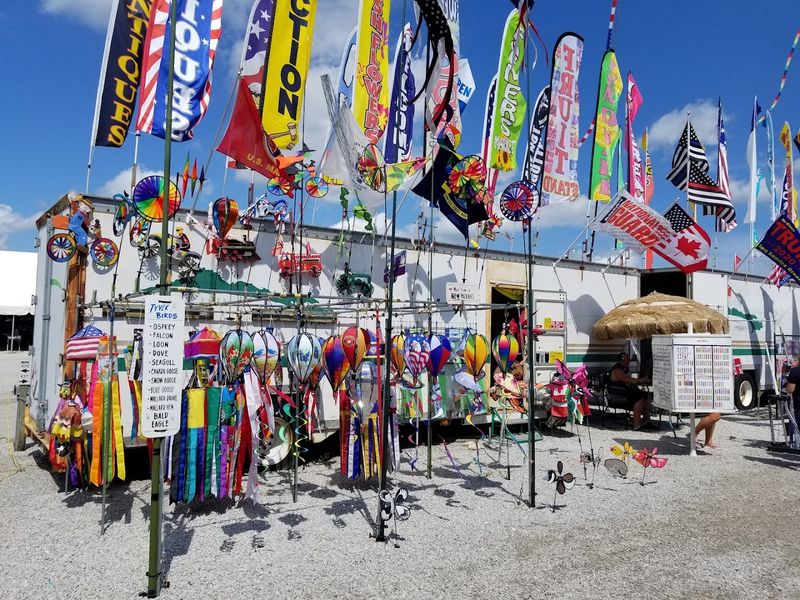
The smartest way to do Shipshewana is to treat it like a long outing, not a casual stop squeezed between other plans. Early arrival helps, especially because traffic and parking pressure can build as the morning moves on.
Starting fresh also gives you cooler temperatures, shorter lines, and more energy for the rows that deserve slower browsing.
Bring water, wear shoes meant for distance, and carry something that handles purchases better than flimsy shopping bags.
The market’s size turns small mistakes into annoying ones, and nothing drains momentum faster than being thirsty, overloaded, or dressed for a much shorter walk. A backpack, tote, or collapsible carrier makes more difference here than it would at most markets.
It also helps to accept that you may not see everything. Plenty of people run out of steam before covering the entire grounds, and that is not failure, it is simply the scale of the place.
Choosing a loose strategy, such as one full sweep before lunch and a more selective second pass afterward, usually works better than zigzagging without a plan.
Weather deserves respect too. Shade can be limited beyond tents and covered vendor areas, which means bright sun changes the experience fast.
A pleasant mild day can make the market feel inviting and leisurely, while heat pushes every aisle into harder work.
If mobility is a concern, planning ahead matters even more because the distance is real, not exaggerated promotional language. Shipshewana rewards patience, pacing, and a little self-management.
Approach it like a marathon of browsing with breaks built in, and you will enjoy far more of what the market offers instead of spending the final hour just trying to reach the car.
The Sharp Reason This Place Still Commands a Day Trip
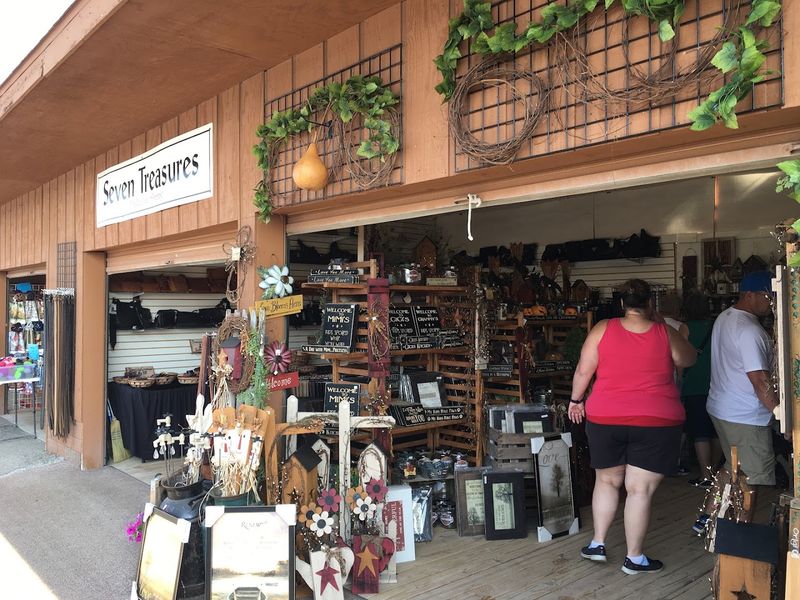
Shipshewana Flea Market stands out for a simple reason: it commits fully to excess. Excess of space, excess of booths, excess of possibility, and sometimes excess of repetition too.
That last part is important, because the market is more interesting when understood honestly rather than romanticized into a flawless treasure field.
Yes, you will pass items that look mass produced, practical, or forgettable. You may also wonder why one booth is packed while another is selling nearly the same category of goods a few rows over.
But that inconsistency is built into the experience, and in a market this large, it becomes part of the game instead of a fatal weakness.
The payoff comes in the moments when the scale works in your favor. A handmade textile booth appears after a stretch of ordinary stock.
A stand of preserves or breads suddenly sends out a smell that changes your route. A plant area, a food stop, a porch decor display, or a well-arranged craft booth gives the day fresh momentum just when your attention starts to drift.
That constant reset is why the market earns its reputation as a major Indiana attraction. It is not polished in the way a lifestyle center is polished, and it is not narrowly curated in the way an antique show is curated.
Instead, it offers a broad, highly walkable collision of local flavor, practical shopping, seasonal commerce, and old-fashioned browsing on an enormous footprint.
If you arrive expecting perfection, you will miss the point. If you arrive ready for range, movement, snacks, unpredictability, and the satisfaction of finding one excellent thing among hundreds of decent ones, Shipshewana makes complete sense. Few markets can turn a simple day of shopping into this much terrain.
Share this story