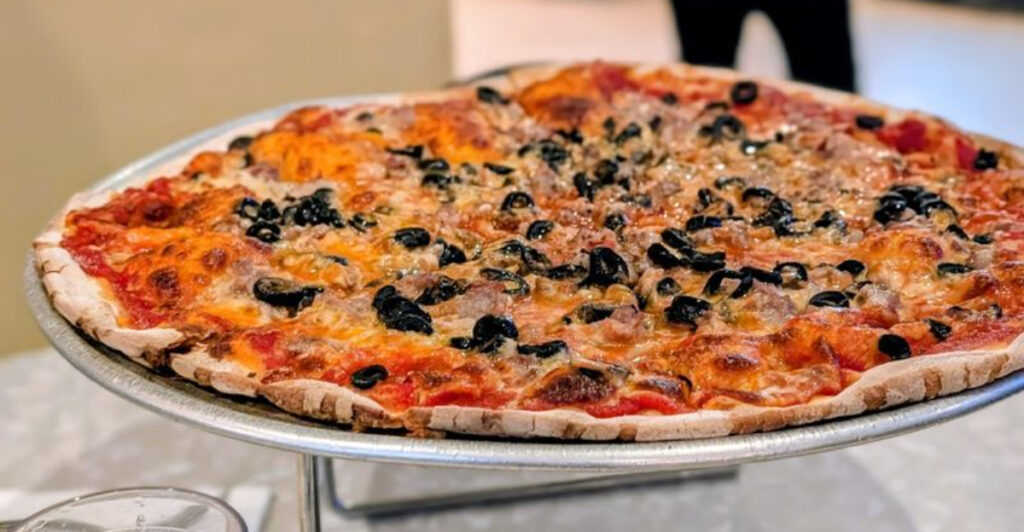
The sign outside Conte’s Pizza does not try very hard to impress you, which somehow makes it more convincing. At 339 Witherspoon Street in Princeton, the place looks less like a destination and more like a local secret that everyone already knows about.
There is no dramatic reinvention happening here, no glossy pizza trend fighting for attention, and no menu trying to make dinner complicated. Conte’s has been doing the same essential thing since 1950: putting thin-crust pies on tables for people who understand that simple food has to be done exactly right.
The crust is crisp, the room is lively, and the whole experience feels stubborn in the best possible New Jersey way. In a town known for ivy-covered buildings, famous names, and polished storefronts, Conte’s still feels like the kind of place where the pizza matters more than the presentation.
A Witherspoon Street Landmark Born From an Italian Immigrant’s Idea
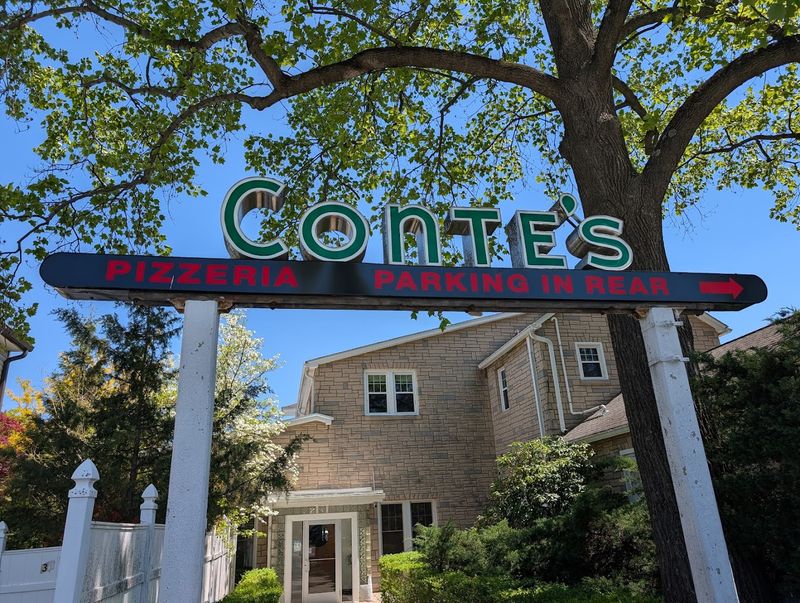
Conte’s did not begin as a polished restaurant concept, and that is part of its charm. Its story starts with Sebastiano “Sam” Conte, an Italian immigrant from Ischia who came to the United States in the early 20th century and eventually made his way to Princeton.
Before pizza became the headline, the address on Witherspoon Street was tied to a neighborhood bar, bocce, working people, and the kind of everyday gathering place that old New Jersey towns used to have in every few blocks. Conte opened the Witherspoon Bar in the 1930s, and the building slowly became more than a place to grab a drink.
It was where locals met, talked, played, celebrated, and built routines. Then, in 1950, Conte made the move that would turn the place into a Princeton landmark: he brought pizza to the business.
That may sound ordinary now, but it was not ordinary then. Pizza was not yet the default Friday-night food it has become across New Jersey, and Princeton did not have a long list of pizzerias competing for attention.
Conte saw an opening and filled it with something practical, affordable, and deeply satisfying. There is something wonderfully unforced about that origin story.
No one sat around trying to create a “heritage brand.” Conte’s became a landmark because it solved a local problem with a good idea and then kept doing it well.
That is how some of the best New Jersey food institutions are born: not from hype, but from someone noticing what a neighborhood wants before the neighborhood even knows how much it wants it.
The Thin Crust That Has Kept Princeton Coming Back Since 1950
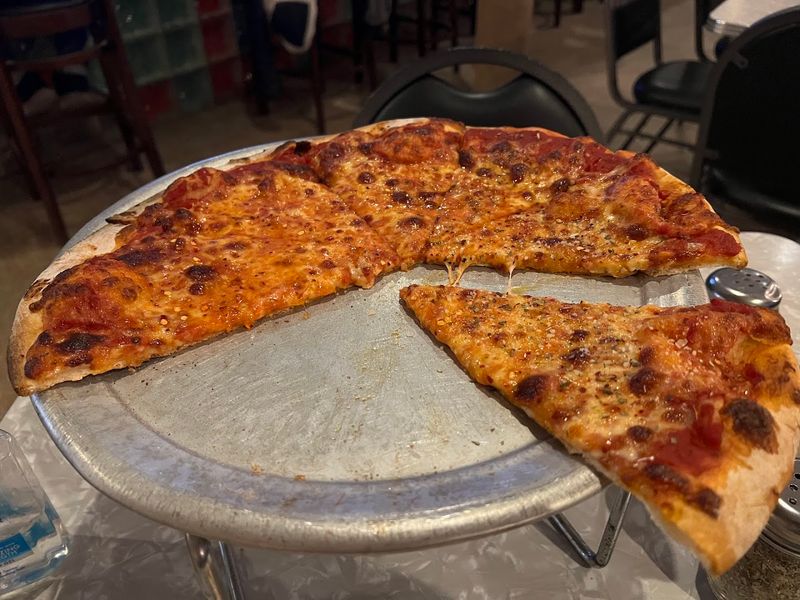
The crust is the thing people remember first, and for good reason. Conte’s pizza has that classic thin-crust personality: crisp at the edge, sturdy through the middle, and light enough that one more slice always sounds reasonable.
It is not floppy, overbuilt, or buried under a mountain of toppings. It has structure. It has snap. It lets the sauce, cheese, and toppings do their jobs without turning the whole pie into a soggy mess.
That sounds simple until you remember how many thin-crust pizzas get it wrong. Too dry and it feels like a cracker. Too soft and it loses the whole point. Conte’s lands in the sweet spot where the crust still feels like pizza, not a platform.
Part of the reason locals keep returning is that the pie does not seem interested in chasing whatever style is popular this year. It is not trying to be Neapolitan, Detroit, Roman, Sicilian, or a modern sourdough showpiece with three kinds of imported flour listed on the menu.
It is Conte’s. That confidence matters.
In New Jersey, pizza opinions are practically a civic duty, and people can tell when a place is coasting on nostalgia alone. Conte’s has history, but the crust is what keeps the history from feeling dusty.
It tastes like a recipe that has survived because people would notice immediately if someone tried to “improve” it too much. There is a quiet lesson in that.
Restaurants do not last for decades just because they are old. They last because enough people keep coming back, bringing friends, arguing over toppings, and deciding that the pie still tastes the way it is supposed to taste.
Why Conte’s Pizza Still Feels Like Old New Jersey
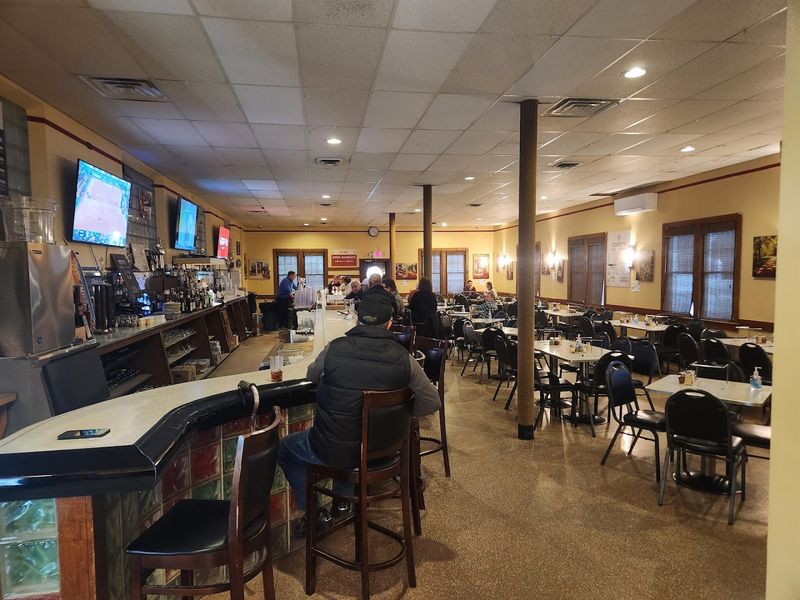
Step inside Conte’s and you do not get the feeling that someone hired a designer to manufacture “old-school.” That is the difference. The place feels old-school because it actually is old-school.
The room has the casual, lived-in rhythm of a neighborhood spot that has seen generations of families, students, regulars, sports fans, and pizza obsessives pass through. This is not a hushed dining room where everyone studies the plate before taking a bite.
It is louder, looser, and more honest than that. Tables fill, conversations overlap, and the pizza arrives like the main character it is.
Princeton can sometimes feel buttoned-up, especially around Nassau Street and the university core, but Conte’s has a different kind of energy. It belongs to the town without feeling consumed by the town’s polish.
That is a very Jersey balance: close to prestige, but not overly impressed by it. The Witherspoon Street location also matters.
This part of Princeton has deep local history beyond the university postcard version of the town, and Conte’s feels connected to that older neighborhood fabric. It has the kind of presence that makes longtime residents say things like, “We’ve been going there forever,” and mean it literally.
The appeal is not that everything is frozen in time. It is that the place still understands what it is.
A bar, a pizza restaurant, a local institution, a little bit noisy, a little bit stubborn, and completely uninterested in becoming sleek for the sake of it. In a restaurant world where so many places seem designed to be photographed before they are enjoyed, Conte’s still feels like somewhere people actually go to eat.
The Sausage Pie That Deserves Its Own Road Trip
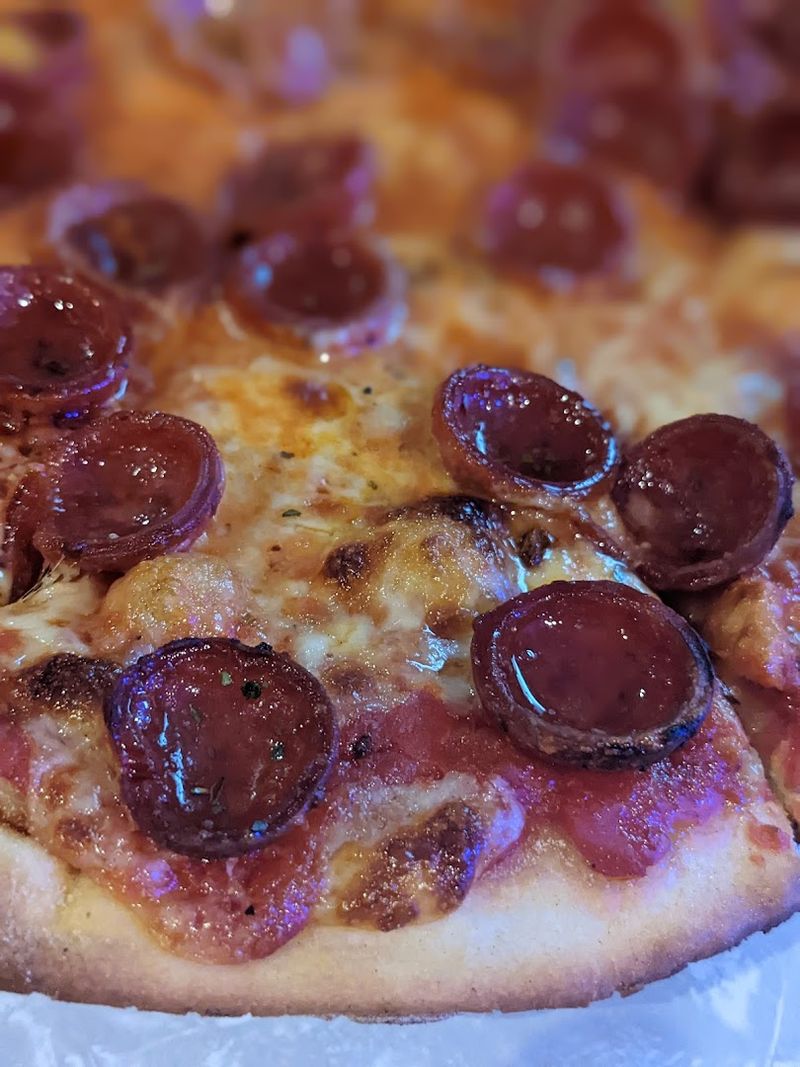
Every classic pizzeria has one order that feels like the right order, and at Conte’s, the sausage pie makes a very strong case. A plain cheese pizza will show you what the crust can do, and pepperoni is always a safe move, but sausage gives Conte’s thin crust something extra to work with.
It is savory, hearty, and old-fashioned in the best sense, with enough presence to make the pie feel special without turning it heavy. The beauty is in the balance.
The crust stays crisp, the cheese holds everything together, and the sausage brings that rich, satisfying bite that makes people stop mid-conversation for a second. That is usually the real review.
Not a dramatic speech, not a table full of adjectives, just a tiny pause after the first bite. Conte’s sausage pie also fits the room perfectly.
This is not delicate pizza. It is not precious.
It is the kind of pie you order for the table, slide onto a plate, and eat while somebody tells a story that starts with “Remember when…” The toppings do not feel like decoration. They feel like part of the restaurant’s identity, the sort of choice a regular would recommend without needing to overexplain it.
If you are coming from outside Princeton, the sausage pie is the one that makes the trip feel justified. The restaurant is close enough to the center of town that you can pair it with a walk through Princeton, but it sits just far enough from the most polished stretch to feel like you found the more local version of the place.
And honestly, that is where the better pizza usually is.
A No Fuss Menu Built Around What Locals Actually Want
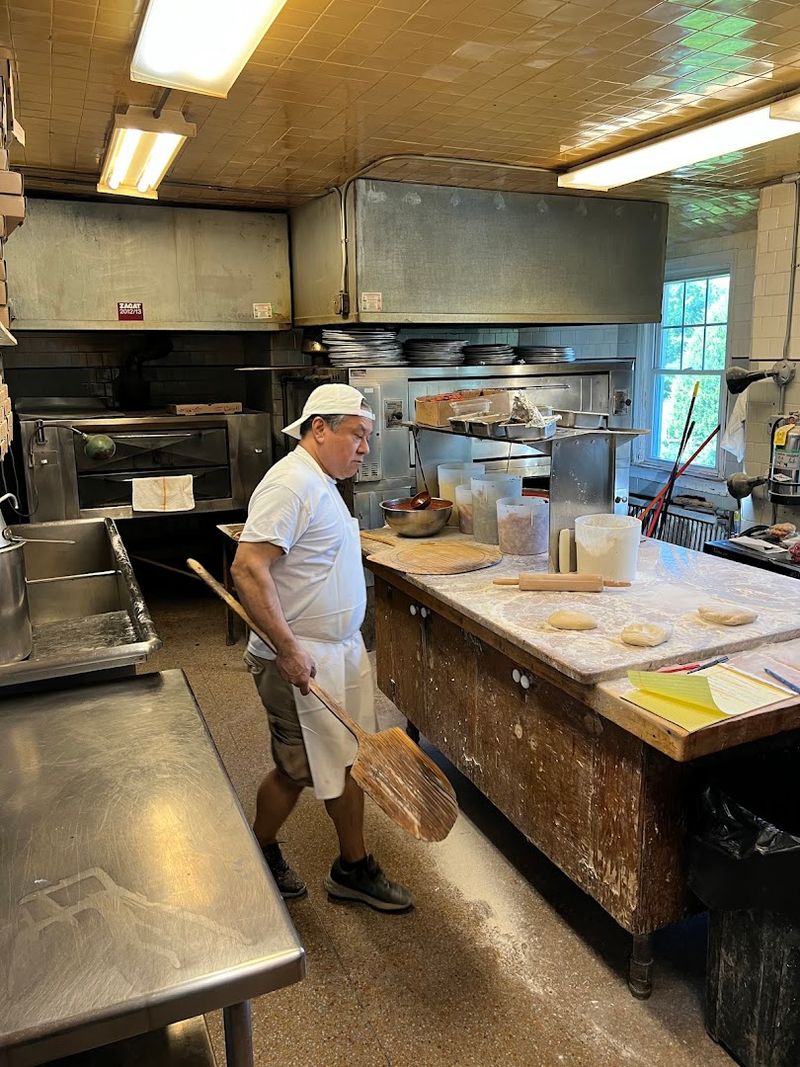
The menu at Conte’s does not behave like it is auditioning for attention, and that restraint is refreshing. Pizza is the point, and the choices stay close to the classics: plain, pepperoni, sausage, mushroom, onion, peppers, garlic, anchovies, and the kind of combinations that make sense on a thin-crust pie.
There is no need for a topping list that reads like a dare. No hot honey arms race.
No pizza that sounds like it was assembled during a brainstorming session. Conte’s trusts the basics because the basics work when the kitchen knows what it is doing.
That does not mean the menu is bare. You can build a full, comfortable meal here, especially if your idea of dinner leans toward pizza, sandwiches, pasta, salad, and something cold to drink.
But the restaurant’s strength is that it never distracts you from the main event. Even the ordering experience feels grounded in regular-people logic.
You come in, choose a pie, pick the toppings your table can agree on, and let the oven handle the rest. In a town with plenty of restaurants serving visitors, students, professors, parents, and locals with very different expectations, Conte’s has managed to stay broad without becoming bland.
That is harder than it looks. A no-fuss menu only works when the food has enough character to carry it.
Otherwise, “simple” becomes forgettable. At Conte’s, simple feels intentional.
It is the difference between a place that lacks ideas and a place that knows exactly which ideas are worth keeping. The result is a menu that feels built for repeat visits, not one-time curiosity.
You do not have to study it. You just have to know what kind of night you are having.
Why This Princeton Institution Still Belongs on Every Jersey Pizza List
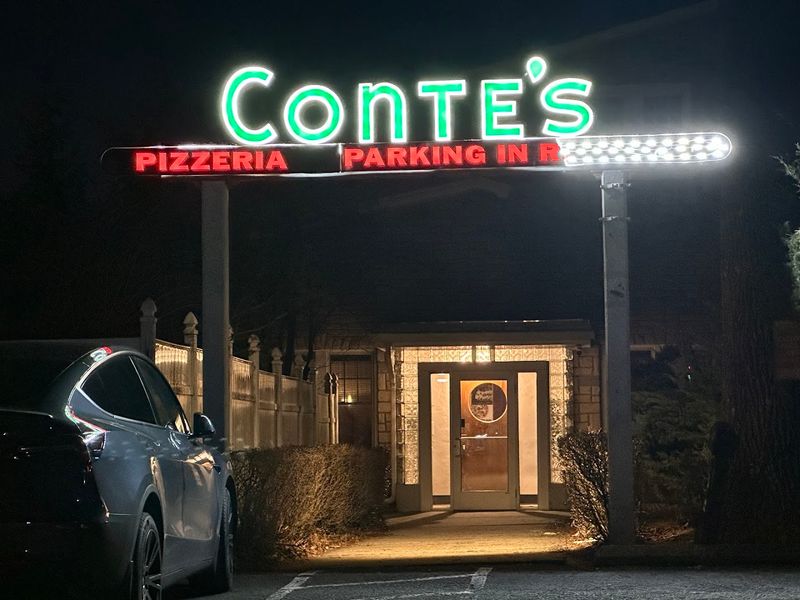
New Jersey pizza is a crowded conversation, and Conte’s still earns its place in it. That is not just because it has been around since 1950, although longevity certainly helps.
Plenty of restaurants get old without staying essential. Conte’s remains essential because it represents a specific kind of Jersey pizza experience that is getting harder to replace: a family-rooted, neighborhood-driven, thin-crust institution where the food and the room still feel connected.
It is not trying to be everything to everyone. It is not chasing a national profile or dressing itself up as a luxury version of a pizzeria.
It is a Princeton place, through and through, but its appeal makes sense even if you have no connection to Princeton at all. The crust gives it credibility.
The history gives it weight. The crowd gives it life.
Put those together and you get the kind of restaurant that locals defend with the seriousness usually reserved for sports teams and property taxes. That is why Conte’s belongs on any serious New Jersey pizza list.
Not because it is the newest, flashiest, or most experimental, but because it has kept its identity intact for more than seven decades. In a state where pizza loyalty can be wildly personal, Conte’s has built its reputation the old-fashioned way: one thin-crust pie at a time, across thousands of tables, for people who know exactly what they came for.
The most impressive thing is that it still does not feel like a museum piece. It feels alive, busy, familiar, and useful.
Conte’s still tastes like 1950, but not because it is stuck there. It tastes like 1950 because it figured out the right thing early and never let go.
Share this story