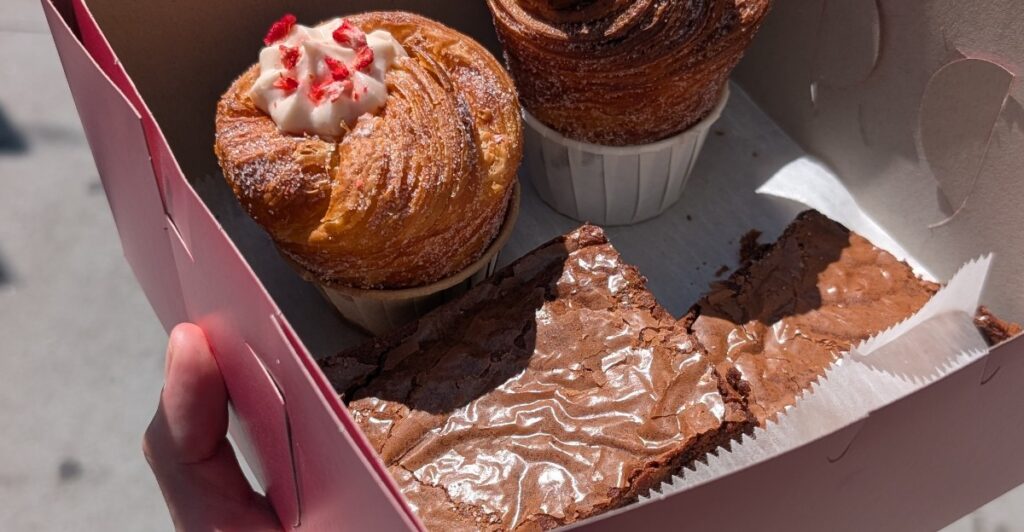
A glossy purple croissant is not easy to ignore, especially when it is filled with coffee pastry cream and finished with ube white chocolate ganache. At Panaderya Salvajē in Jersey City, that photogenic pastry is only one reason customers begin gathering before the doors open.
The bakery occupies just 480 square feet on Erie Street, yet its tightly packed display case carries flavors drawn from thousands of miles away. Ube, calamansi, pandan, muscovado sugar, Filipino sausage, and slow-cooked stews find their way into meticulously layered croissants, hand pies, cakes, and other small-batch creations.
There is barely room to linger inside, so pink pastry boxes quickly migrate to the benches and sidewalk out front. The compact setup might look modest to anyone passing by, but the morning line tells the real story.
This husband-and-wife operation has turned memories of the Philippines, serious baking technique, and a willingness to experiment into one of Jersey City’s most talked-about food stops.
Panaderya Salvajē Packs Big Ideas Into 480 Square Feet
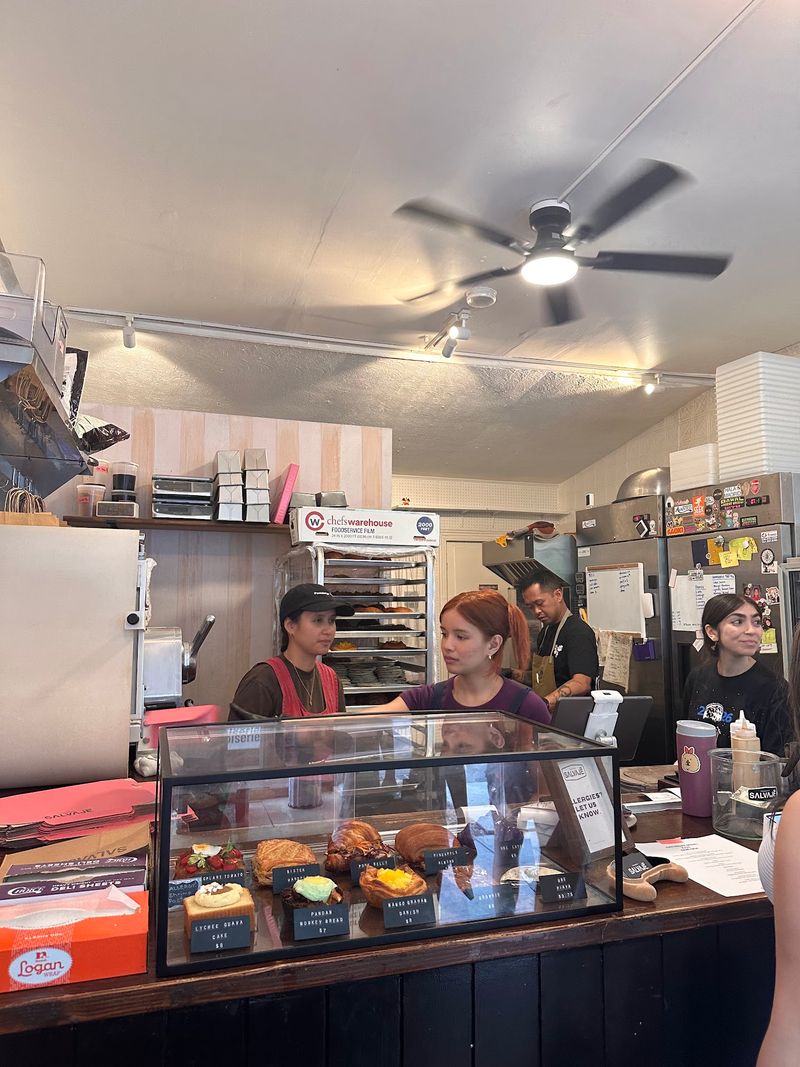
At 9 Erie Street, the bakery’s entire operation fits into a storefront smaller than many city apartments. The roughly 480-square-foot space has a counter, a pastry case, an espresso setup, and little room left over once several customers step inside.
There is no sprawling dining room or long row of café tables. Panaderya Salvajē works primarily as a grab-and-go shop, with a few outdoor seats offering immediate relief to anyone incapable of carrying a warm pastry for more than thirty seconds without opening the bag.
The space’s simplicity keeps attention on the morning’s bake. Golden croissants sit beside glossy, vividly colored sweets, while savory pastries make it dangerously easy to turn a coffee stop into breakfast and lunch.
Nothing in the case looks mass-produced or designed to sit around all day. Batches are intentionally limited, and the selection reflects what the kitchen can prepare well rather than how many different products can be squeezed onto a menu.
Even the large tree outside contributes to the bakery’s personality. Owners Nicu Dalman and Mikee Uychiat liked the idea of customers gathering beneath it, talking and relaxing in a way that recalls the casual social life of the Philippines.
When the benches fill, people settle into whatever space is available along the sidewalk. That outdoor scene has become an unofficial extension of the bakery.
Paper cups, bright pink boxes, and conversations between strangers make the block feel livelier than the storefront’s size would suggest. The name carries a personal story, too. “Panaderya” means bakery, while “salvaje” can mean wild and was a nickname Dalman heard growing up as a hardheaded child.
It also nods neatly to wild yeast, an essential ingredient in his earlier sourdough experiments. That combination of childhood memory and baking language suits a shop where nearly every item connects something personal with something unexpected.
A Pandemic Baking Project Became a Jersey City Sensation
Long before customers were lining up on Erie Street, Dalman was experimenting in a home kitchen during the unsettled early months of 2020. He was in Houston while Uychiat was in London, and baking offered a practical way to stay occupied.
Dalman had already built a career in professional kitchens, moving through demanding restaurant roles and eventually working as a chef de cuisine. Pastry, however, presented a new challenge.
He began with siopao, the fluffy Filipino steamed buns commonly filled with richly seasoned meat. Uychiat suggested adding piaya, a thin flatbread from her home region of Bacolod that traditionally holds a muscovado sugar filling.
What started as an experiment soon attracted paying customers, including friends, hospital workers, and members of the local Filipino community. A Houston pop-up in April 2020 drew a much larger crowd than the couple expected.
They were so unprepared for the turnout that pieces of cardboard boxes had to stand in for proper serving supplies. After moving to New Jersey, Dalman and Uychiat continued building the business through pop-ups in places such as Union, Metuchen, and Shrewsbury.
Their pastries also appeared at Jersey City businesses, including Lackawanna Coffee and The Warehouse Café. Those appearances helped introduce their work to a downtown audience, but repeatedly transporting and supplying pastries was difficult to sustain.
The couple considered returning to Houston to find a permanent storefront. Then the tiny space at 9 Erie Street became available.
Despite its limited dimensions, it offered exactly the kind of close-knit neighborhood setting they wanted. Permits and licensing stretched the opening process to nearly a year, but Panaderya Salvajē finally welcomed customers to its own shop on August 17, 2025.
The bakery reportedly sold 956 pastries during that grand-opening day. With no enormous advertising budget behind it, the reaction confirmed that years of pop-ups, word of mouth, and memorable purple croissants had already created a following.
Filipino Childhood Flavors Meet Carefully Laminated Pastry
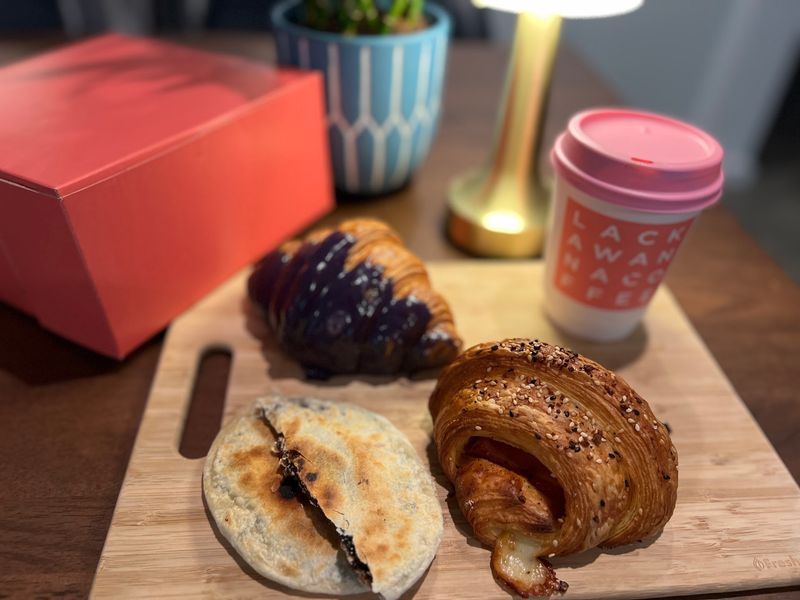
Croissant dough may provide the flaky structure, but memories of the Philippines determine where many of these pastries go next. Dalman and Uychiat were both born and raised there, and their menu reaches beyond a handful of familiar ingredients to explore the country’s remarkable regional variety.
With more than 7,000 islands and cooking traditions that shift from one region to another, the Philippines offers a deep supply of ideas. The bakery uses those flavors with intention.
Ube brings an earthy, gently nutty sweetness rather than serving merely as purple decoration. Calamansi adds a sharp citrus lift to curds and cakes.
Pandan contributes its distinctive grassy, vanilla-like aroma, while muscovado sugar delivers a darker molasses character than ordinary white sugar. These ingredients appear inside pastries made with demanding European techniques.
Lamination requires butter and dough to be folded repeatedly, creating thin alternating layers that puff apart in the oven. When handled correctly, a croissant develops a crisp shell, an airy interior, and enough flakes to decorate both the table and the person eating it.
Dalman largely taught himself the pastry side of the craft after years focused on savory cooking. That earlier experience helps explain why even the bakery’s sweetest creations tend to show restraint.
Fillings complement the pastry instead of overwhelming it, and tart, roasted, nutty, or coffee flavors help keep sugar in check. Uychiat serves as an important final judge.
New ideas are expected to evoke something recognizable from home before they reach the display case. The result is not a standard French bakery menu with Filipino ingredients added for novelty.
Familiar formats become a way to communicate specific memories, from the flavor of piaya in Bacolod to dishes normally served at family meals. For customers who grew up with those foods, the references can feel immediate.
For those tasting ube, pandan, or calamansi for the first time, a beautifully laminated pastry provides a very friendly introduction.
The Ube Latte Croissant Has Earned a Devoted Following
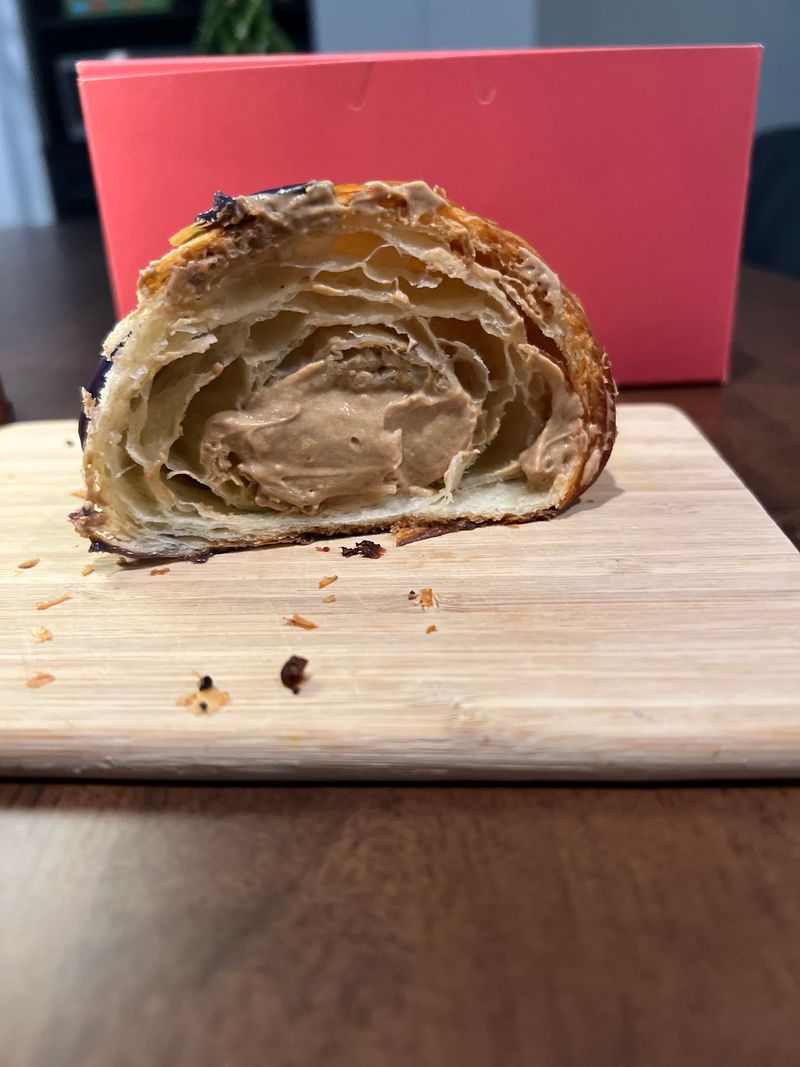
One pastry has become the unofficial celebrity of the display case. The ube latte croissant begins with a properly flaky laminated shell, but its filling and finish move far beyond the familiar French formula.
Coffee pastry cream fills the center, bringing gentle bitterness and a smooth, light texture. The outside is partially coated in ube white chocolate ganache, giving the croissant its unmistakable violet gloss.
It is a clever combination because each component keeps another from becoming too intense. White chocolate supplies sweetness, coffee adds depth, and ube contributes a mellow flavor often compared with vanilla and toasted nuts.
Beneath all of that, the crisp pastry still matters. A croissant this colorful could easily become a social-media prop that disappoints after the photograph, but the contrast between the shattering exterior and creamy center is what keeps people returning.
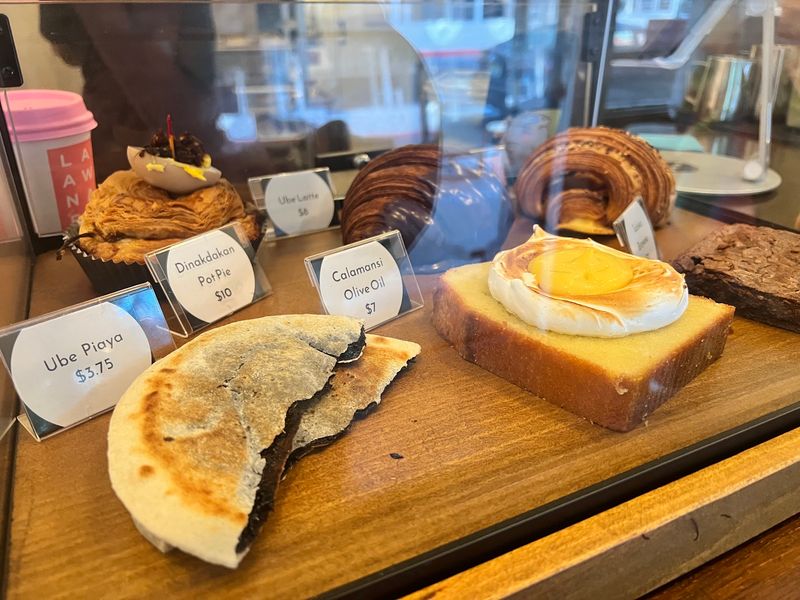
Panaderya Salvajē has found more than one way to use its signature purple yam. The rotating selection has included an ube almond croissant, ube monkey bread, and ube piaya.
Each format highlights a different side of the ingredient, whether paired with nuts, pulled into sticky bread, or connected to a traditional Filipino flatbread. The ube latte croissant remains the item most likely to inspire an early alarm, however.
Limited production and steady demand mean it can disappear well before closing, particularly on weekends. Customers who reach the counter after a long wait tend to order decisively, and buying more than one suddenly makes perfect sense when the next opportunity may be days away.
Its popularity also captures what the bakery does best. The pastry is visually bold without depending solely on appearance, technically precise without feeling stuffy, and rooted in Filipino flavor without requiring newcomers to understand every reference beforehand.
It looks unusual enough to stop someone mid-scroll, then tastes balanced enough to become a repeat order.
Savory Filipino Pastries Are Just as Tempting as the Sweets
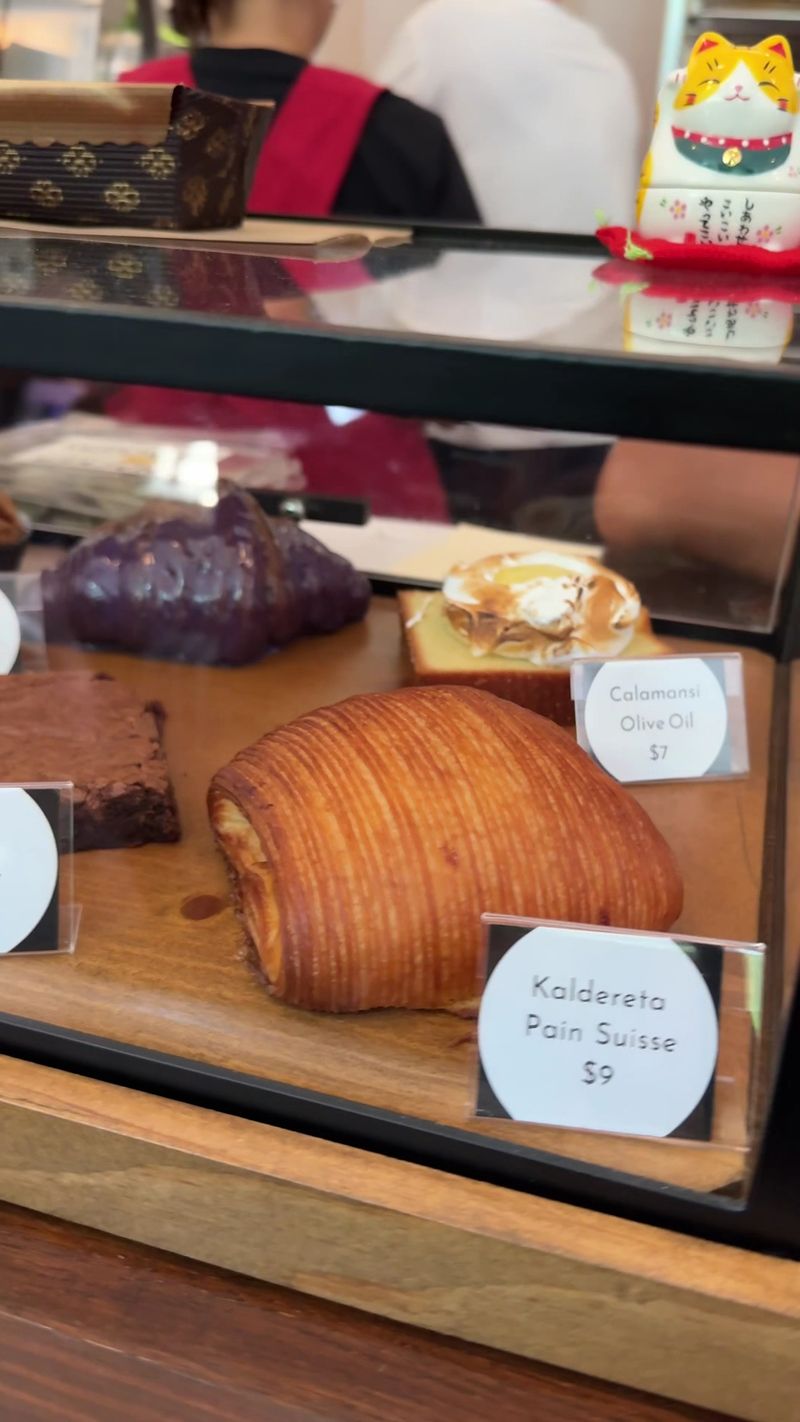
The smartest order at Panaderya Salvajē includes at least one item that is not covered in chocolate, sugar, or purple ganache. Dalman’s professional background in savory kitchens comes through clearly in pastries built around stews, sausage, eggs, and deeply seasoned meat.
These are not token sandwiches added to make the menu seem more complete. Some of the bakery’s most inventive work happens on the savory side of the case.
Beef kaldereta pain suisse places the flavors of a comforting Filipino stew inside neatly layered pastry. Kaldereta is typically rich and tomato-based, with tender meat and vegetables producing the kind of filling that can hold its own against buttery dough.
The dinakdakan pot pie takes another substantial dish and covers it with house-made puff pastry, then adds a soy-marinated egg and chili crisp. An igado version draws from a northern Filipino specialty made with pork, liver, green peas, and bell peppers.
The result feels much closer to a complete meal than a small bakery snack. Breakfast receives equally thoughtful treatment.
The chorizo, egg, and cheese pudpod uses a Danish-style base to rework a familiar morning combination with Filipino seasoning. Other rotating creations have included chicken sisig pastry, longanisa sausage rolls, and a tocino and cheese croissant filled with sweet cured pork, Gruyère, and everything bagel seasoning.
A rendang croissant has brought the slow-building spice and coconut richness associated with the Indonesian dish into the lineup as well. Because the menu changes, there is no guarantee that any one savory item will appear on a particular morning.
That unpredictability is part of the bakery’s rhythm. Dalman can explore a regional dish or seasonal ingredient, while regulars have a reason to inspect the current selection instead of ordering automatically.
Sweet pastries may dominate the photographs, but the hand pies, stuffed croissants, and savory Danishes reveal just how wide the kitchen’s imagination runs.
Arriving Early Is the Best Way to Beat the Sellout
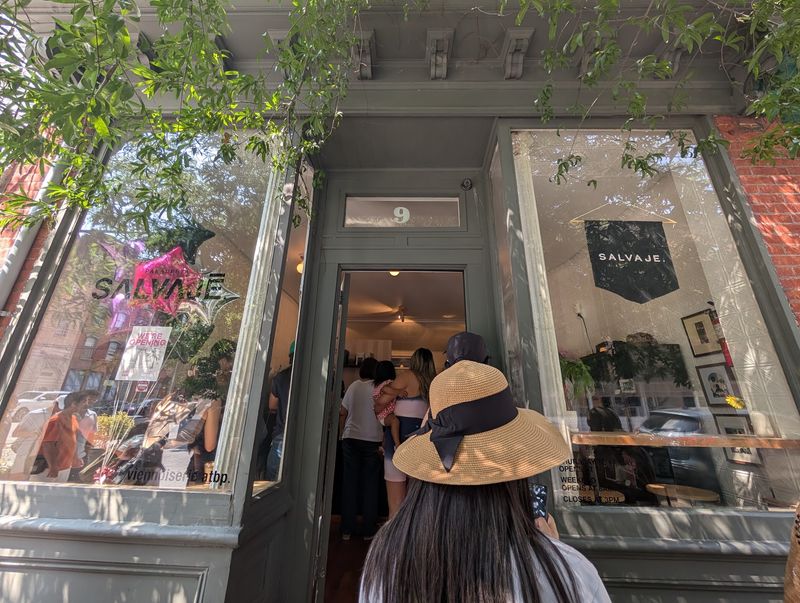
Timing can determine whether a visit ends with an ube latte croissant or an affectionate look at the empty spot where one used to be. Panaderya Salvajē operates on a small-batch model, and the day effectively ends when the trays are cleared.
The bakery is generally open Thursday through Sunday from 8 a.m. to 1 p.m., or until sold out, with Monday through Wednesday reserved for the considerable work required behind the scenes. Hours and menus can change, so checking the bakery’s latest update before leaving home is sensible.
Weekend mornings bring the biggest crowds. On particularly busy days, a line can form before the doors open and continue down the block as customers wait to enter the 480-square-foot shop.
The atmosphere is generally more neighborhood gathering than high-stakes pastry competition. Friends talk beneath the tree, newcomers study photos of potential orders, and regulars understand that the supply is finite.
Reaching Erie Street during the first hour provides the best selection, especially when a specific croissant or savory pie is nonnegotiable. The Grove Street PATH station is only a short walk away, making the bakery accessible without a car.
Since indoor seating is practically nonexistent, most customers take their boxes outside or continue through Downtown Jersey City. Nearby brownstones, shops, and the Hudson River waterfront give the morning plenty of room to continue after the counter visit.
Coffee deserves space in the order as well. The bakery has explored Japanese slow-pour methods and beans grown in the Philippines, along with drinks such as a muscovado latte and matcha muscovado latte.
The deep, molasses-like sweetness of the sugar works particularly well beside a savory pastry. By late morning, certain favorites may already be gone.
That quick turnover is less a manufactured scarcity trick than a practical reality of a tiny kitchen making intricate pastries by hand. On Erie Street, the empty trays and steadily moving line are simply evidence of how much can come out of 480 square feet.
Share this story