The road bends through the woods, the trees suddenly open, and an entire mountain valley appears before you—no steep switchbacks, sweaty scramble, or heroic footwear required. New Jersey hides some of its most memorable scenery surprisingly close to parking lots, paved paths, and leisurely drives.
One stop puts the Manhattan skyline across the water; another brings you within ear-ringing distance of a 77-foot waterfall. Elsewhere, lighthouses rise above choppy inlets, migrating birds sweep over acres of salt marsh, and the sun slips behind a century-old shipwreck.
A few optional staircases can add an even loftier perspective, but none of these destinations demands a difficult hike to deliver the goods. Pack a camera, check the weather, and leave the trekking poles at home.
These ten easy-to-reach viewpoints prove that enjoying a showstopping New Jersey landscape does not have to feel like passing an outdoor fitness test.
1. Sunrise Mountain Scenic Overlook – Stokes State Forest
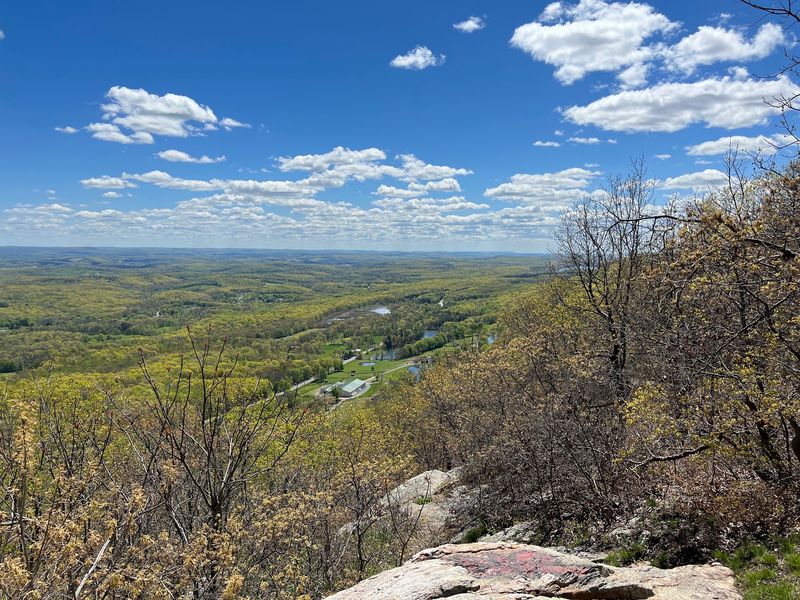
The payoff arrives almost immediately when you step out of the car: layer after layer of wooded ridges rolling toward the horizon. Sunrise Mountain Scenic Overlook sits along the crest of the Kittatinny Mountains in Stokes State Forest, giving visitors an elevated view without making them climb the mountain under their own power.
A winding drive through the forest handles most of the work, while a short walk leads to the stone pavilion and open viewing area. On clear days, the landscape seems to stretch far beyond Sussex County, with the Pocono Mountains visible across the Delaware River in Pennsylvania.
Autumn naturally gets plenty of attention here, when the hardwood forest turns into a broad patchwork of red, orange, gold, and deep green. The view has plenty of personality during other seasons, too.
Spring brings softer greens and misty mornings, while bare winter branches reveal the folds and contours of the surrounding ridges. Arrive early if you want the overlook to live up to its name; morning light spilling across the valley can be spectacular.
Sunrise Mountain Road may be affected by winter conditions or seasonal closures, so check access before making the drive. Once the road is open, however, this is about as easy as mountain scenery gets: park, stroll a few minutes, and enjoy a view that looks like it should have required far more effort.
2. Mount Mitchill Scenic Overlook – Atlantic Highlands
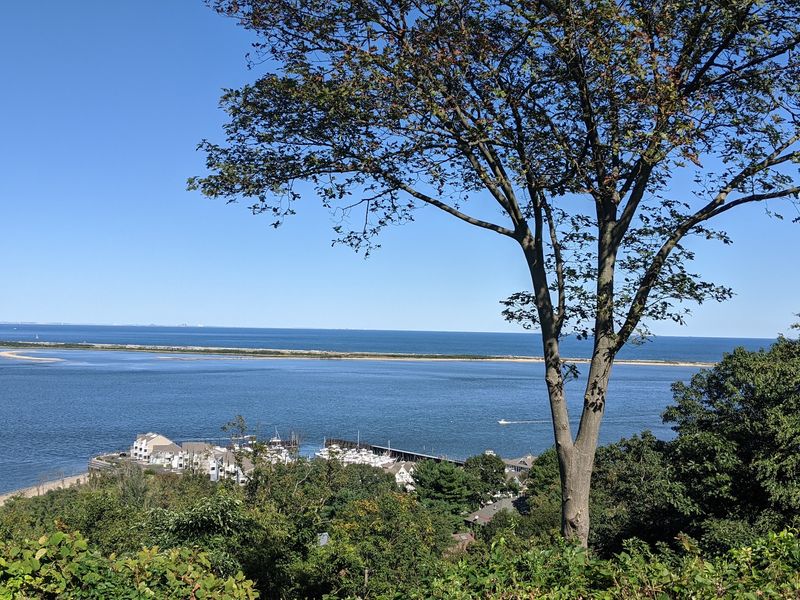
At 266 feet above sea level, this Atlantic Highlands overlook occupies the highest natural elevation along the Atlantic coast between Maine and the Yucatán Peninsula. That impressive distinction would normally suggest a serious uphill workout, yet visitors can drive directly into the park and reach the main viewing areas with a gentle stroll.
From the top, Sandy Hook curves into the water below while Raritan Bay spreads toward Staten Island and the distant towers of Manhattan. Cargo ships, ferries, and small boats give the panorama a constantly changing foreground.
The overlook is especially rewarding late in the day, when the water catches the sinking light and the skyline begins switching on its windows. Mount Mitchill is also home to Monmouth County’s 9/11 Memorial, which honors the county residents who died in the attacks.
A pathway recounts the events of that day and leads to an eagle sculpture holding a beam recovered from the World Trade Center, adding a reflective dimension to the visit. Benches make it easy to linger, and the compact grounds include a playground for families.
The park opens in the morning and closes at a seasonally adjusted time in the evening, so sunset visitors should confirm the current schedule. For maximum scenery with minimum exertion, few places manage the combination quite this well.
3. High Point Scenic Overlook – High Point State Park
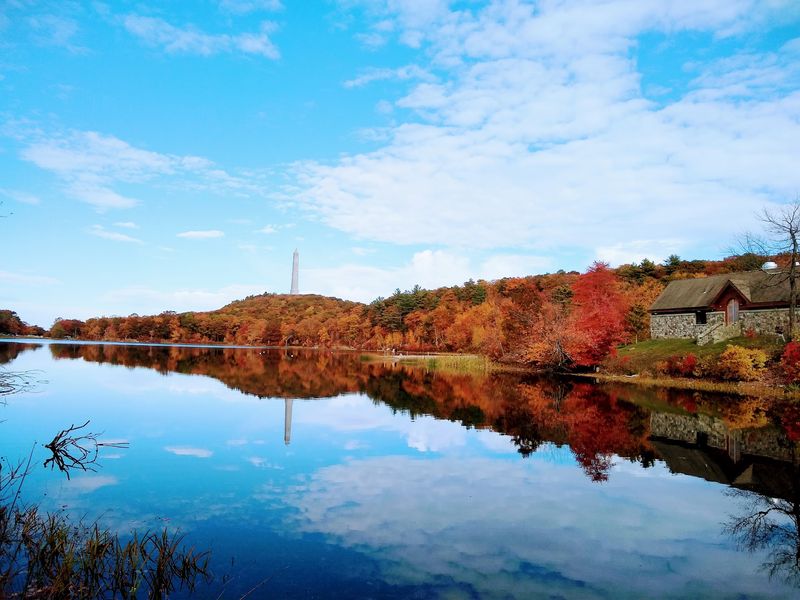
New Jersey’s highest elevation sounds like a destination reserved for determined hikers, but High Point State Park offers a much friendlier shortcut. A park road winds nearly to the summit, where scenic pull-offs and parking areas reveal broad views across New Jersey, New York, and Pennsylvania.
The landscape feels noticeably different up here. Farms and forests spread below in miniature, distant ridges fade into blue, and the 220-foot New Jersey Veterans’ Memorial rises above the mountaintop like an oversized exclamation point.
The monument itself stands at 1,803 feet above sea level. When tower access is available, visitors can climb its long interior staircase for an even higher perspective, but that workout is completely optional.
The views from around the summit are already worthy of the drive. Fall weekends draw the biggest crowds because the foliage can be remarkable, so visit on a weekday or early in the morning if you prefer a quieter experience.
Summer brings greener scenery and longer viewing hours, while crisp winter days can produce exceptionally clear sightlines when summit roads remain accessible. Fog, snow, and seasonal operations can affect access to the monument area, making a quick conditions check worthwhile before leaving home.
Even without entering the tower, High Point delivers the satisfying feeling of standing on top of New Jersey—without requiring you to hike there.
4. Paterson Great Falls – Paterson
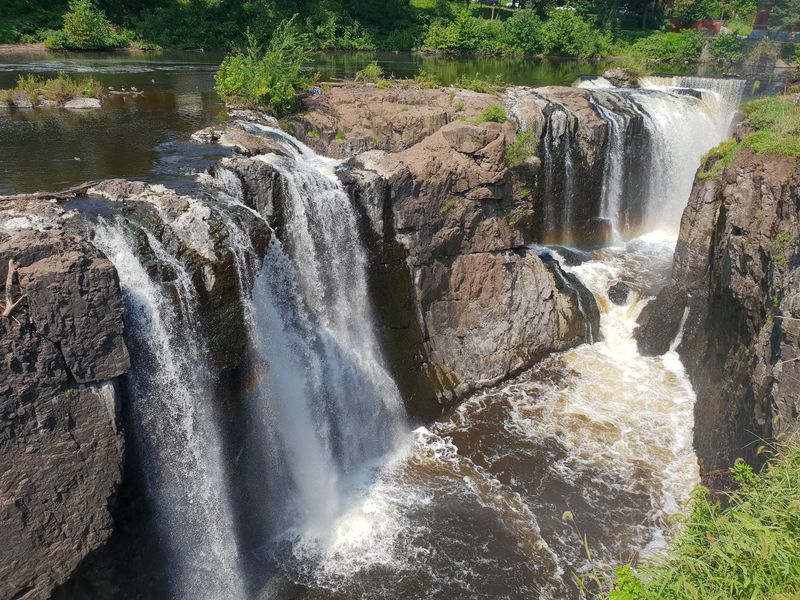
You hear the Great Falls before the full scene comes into view. The Passaic River gathers speed, surges over a rocky ledge, and drops 77 feet into a churning gorge in the middle of Paterson.
It is a remarkably powerful sight for a place reached by city streets and short paved walkways. Overlook Park provides the quickest introduction, putting visitors close enough to feel the mist when the river is running high.
Additional viewing areas around the national historical park reveal different angles of the falls, the gorge, and the old brick mill buildings that help explain why an industrial city grew here. Alexander Hamilton recognized the river’s potential in the 1790s, and the waterpower later fueled Paterson’s mills and factories.
That combination of natural force and industrial history gives this view an edge that a secluded woodland waterfall cannot match. Spring rains and the days following a major storm usually produce the most dramatic flow, though conditions can vary substantially.
Free parking is available at Overlook Park, but spaces are limited and weekends can become busy. The grounds remain accessible beyond visitor-center hours, although daylight is the best time to explore.
Come for the crashing water, then spend a little time noticing the raceways, stone walls, and factory remnants around it. The falls are not merely near the city; they are the reason the city exists.
5. Fort Lee Historic Park – Fort Lee
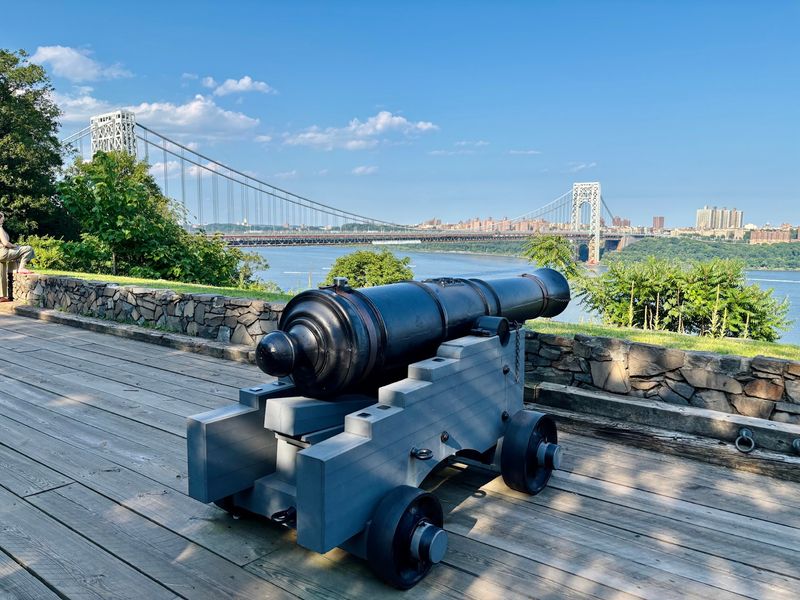
© Fort Lee Historic Park, Palisades Interstate Park Commission
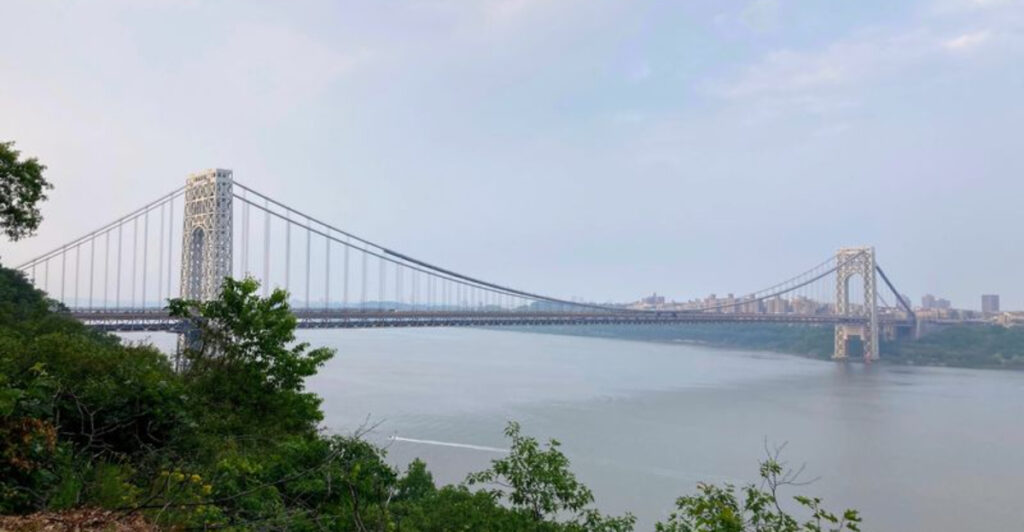
The George Washington Bridge dominates the northern overlook here, its steel towers rising almost at eye level while traffic streams across the Hudson River. Upper Manhattan fills the background, and boats moving far below emphasize just how high the Palisades cliffs stand above the water.
The northern viewpoints at Fort Lee Historic Park are reached from the parking area by easy paths, allowing visitors to collect one of North Jersey’s biggest panoramas without descending or climbing the cliffs. There is more to see than the bridge.
In 1776, American troops fortified this ground in an attempt to defend the Hudson during the Revolutionary War. Reconstructed soldiers’ huts, cannons, earthworks, and exhibits in the visitor center help turn what could have been a quick photo stop into a fuller afternoon outing.
The contrast is terrific: one moment you are imagining troops watching British ships on the river, and the next you are framing one of the world’s busiest bridges in your camera. Grounds are open year-round, with longer evening hours during the warmer months, while the visitor center follows its own schedule.
Parking is metered, so bring a payment method and allow more time than you think you need. Morning can offer clearer views and lighter crowds, but the bridge looks particularly striking as late-day light catches the cables.
This is history, engineering, and skyline scenery bundled into one very manageable walk.
6. Twin Lights Historic Site – Highlands
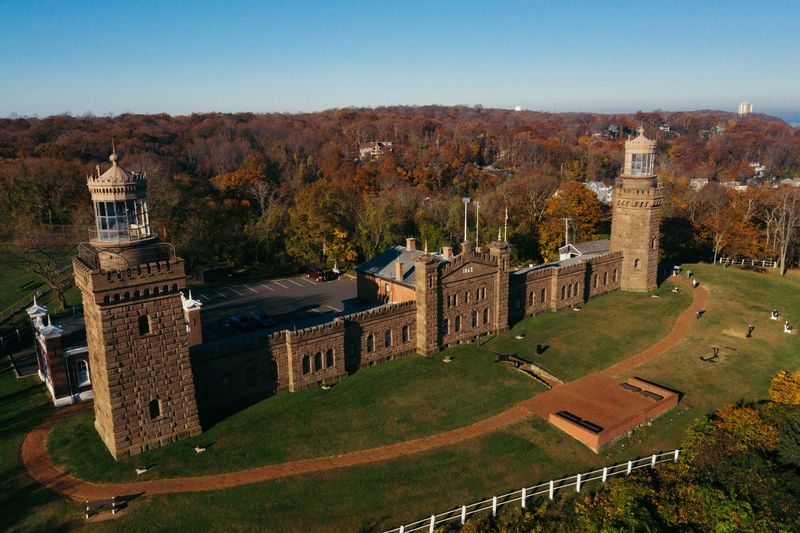
Two squat brownstone towers stand side by side above the Highlands, looking more like a small fortress than the classic white lighthouse found on a postcard. Their commanding location on the Navesink Highlands is precisely what makes Twin Lights such a fine no-hike viewpoint.
The road climbs to the site, parking is available near the buildings, and the grounds reveal sweeping looks over Sandy Hook, the Atlantic Ocean, Raritan Bay, and the New York skyline.
Visitors who want a higher perspective can buy a ticket to climb the towers during the regular climbing season, but the surrounding property supplies plenty of scenery without the stairs.
The current structure dates to the 1860s, although beacons had been guiding ships from this bluff decades earlier. Exhibits inside cover lighthouse technology, local maritime history, and the site’s role in communications experiments.
Even the building deserves a slow lap; the connecting central structure and mismatched towers make it one of New Jersey’s most distinctive coastal landmarks. The museum and grounds are generally free, while tower climbs carry a modest fee during part of the year.
Grounds remain open daily, though museum and tower schedules change seasonally. Choose a clear day if the distant skyline is your priority, or visit when the wind is up and the water below looks suitably dramatic.
Either way, the elevation comes courtesy of the Highlands—not a punishing climb.
7. Hoboken Waterfront – Hoboken
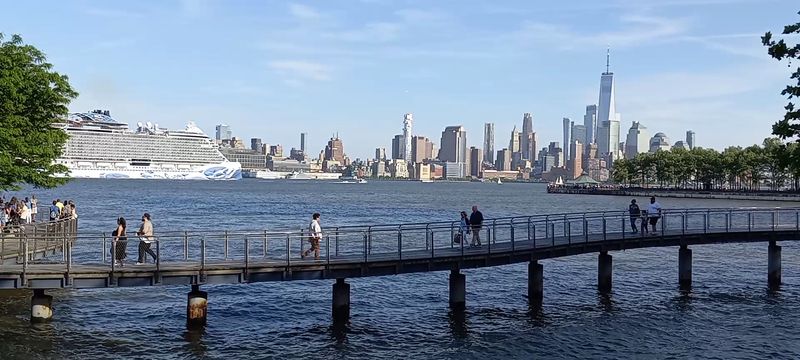
Manhattan is so close from Hoboken that individual buildings seem to stack on top of one another across the Hudson. The Empire State Building anchors the Midtown view, while ferries slice through the river and commuter trains rumble beneath the restored Lackawanna Terminal.
Best of all, the panorama unfolds along a broad, mostly level waterfront rather than at the end of an uphill trail. Start at Pier A Park, a grassy pier just steps from the PATH station, and walk north along Sinatra Drive for as little or as long as you please.
Benches, lawns, small parks, and piers provide frequent excuses to stop. Pier C extends into the river with curving paths and play areas, while the waterfront near Castle Point offers another strong angle on the skyline.
Each block shifts the composition slightly, which makes the route especially fun for photographers. Sunset paints the buildings from behind, but evening may be the real show: office windows begin to glow, ferries leave streaks of light on the water, and Manhattan turns into a wall of illumination.
Parking can be a nuisance, so arriving by PATH, train, light rail, or ferry is often the simplest choice. Grab coffee or something to eat on Washington Street, then bring it to the water.
This may be the easiest “big city” view in New Jersey, and arguably one of the best.
8. Edwin B. Forsythe Wildlife Drive – Galloway
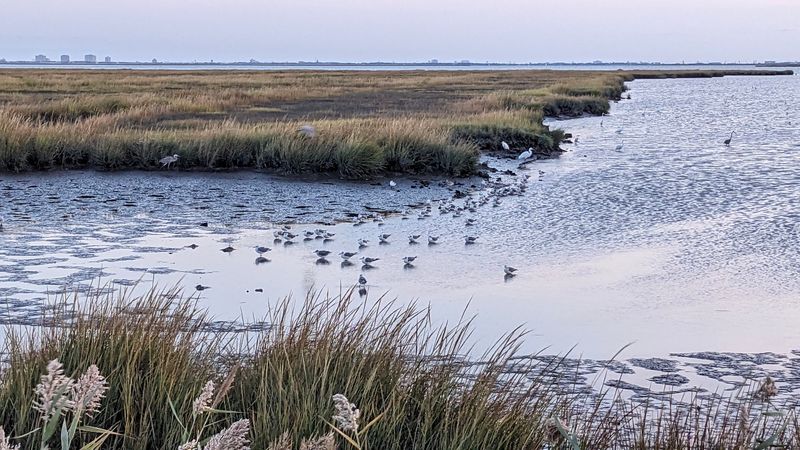
Roll down the windows and take this one at ten miles per hour. The eight-mile Wildlife Drive at Edwin B.
Forsythe National Wildlife Refuge carries cars between wide salt marshes, shallow pools, and tidal channels just north of Atlantic City. Instead of hiking to the scenery, you travel through it, stopping at pull-offs whenever an egret, osprey, glossy ibis, or bald eagle gives you a reason to reach for the binoculars.
The road sits slightly above the surrounding wetlands, creating long, uninterrupted views that feel much farther removed from development than the location suggests. On clear days, the Atlantic City skyline appears across the marsh like a mirage.
Two observation towers provide higher vantage points for those willing to climb some stairs, but excellent viewing begins from the car and continues along the boardwalk near the visitor area. Bird activity changes dramatically with the season and tide.
Spring and fall bring major migrations, summer fills the marsh with wading birds, and winter can deliver huge gatherings of ducks and Atlantic brant. The drive is unpaved, so expect dust in dry weather and take it slowly after rain.
An entrance fee applies unless you have an accepted federal pass, and the route is open from sunrise to sunset when conditions permit. Bring patience rather than hiking boots; the best moment may arrive when you simply stop the car and wait.
9. Barnegat Lighthouse State Park – Barnegat Light
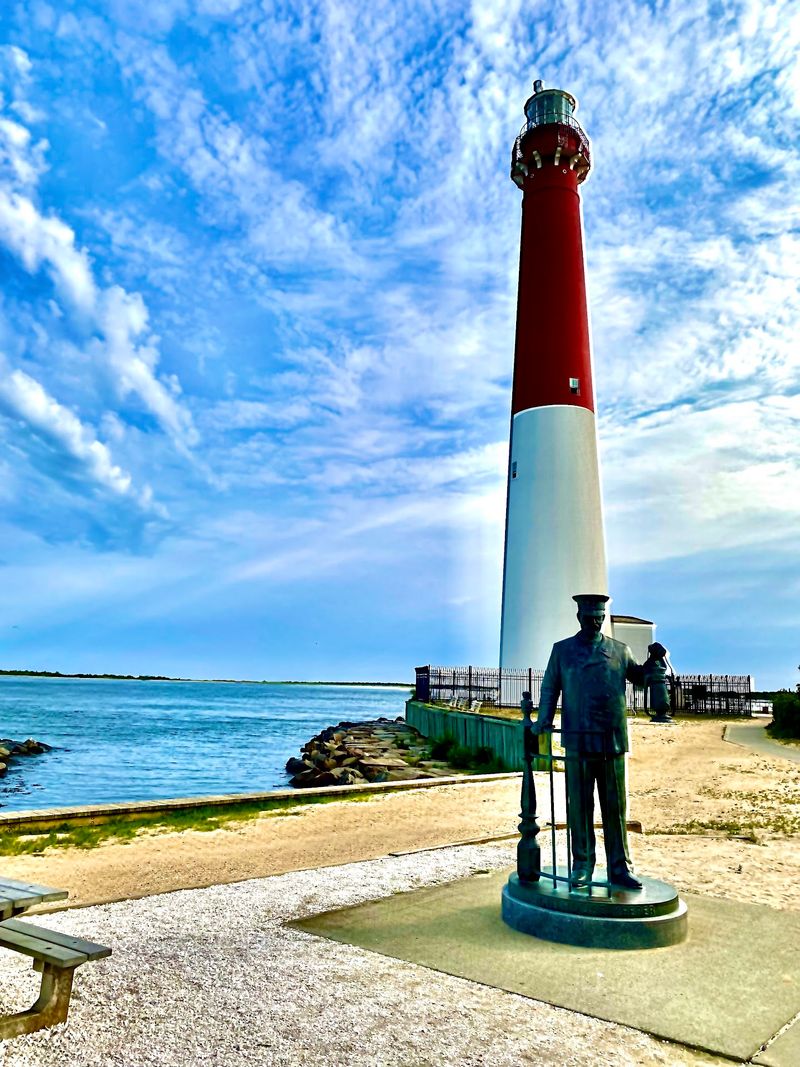
Fishing boats squeeze through Barnegat Inlet while waves strike the long rock jetty and “Old Barney” keeps watch from the edge of Long Beach Island. This is a working coastal scene, not a quiet decorative backdrop, and that movement is what makes the park so compelling.
The red-and-white lighthouse rises 172 feet above the inlet, making it visible well before visitors reach the northern end of the island. Climbing its 217 steps produces a tremendous view when the tower is open, but no one needs to tackle them to enjoy the park.
Flat paths near the lighthouse lead toward the water, where you can watch boats navigate the channel and look across to Island Beach State Park. A short maritime forest trail offers an easy change of scenery beneath black cherry, sassafras, and eastern red cedar.
Birders should keep an eye out for shorebirds and waterfowl, while anglers line the jetty when conditions cooperate. The interpretive center adds background on the lighthouse and the ecology of the inlet.
Admission to the park is generally free, and a parking lot sits close to the main attractions, though summer spaces can fill quickly. Arrive early on a warm weekend or come during the quieter shoulder seasons, when the wind, surf, and passing boats put on the same show with considerably more elbow room.
10. Sunset Beach – Cape May Point
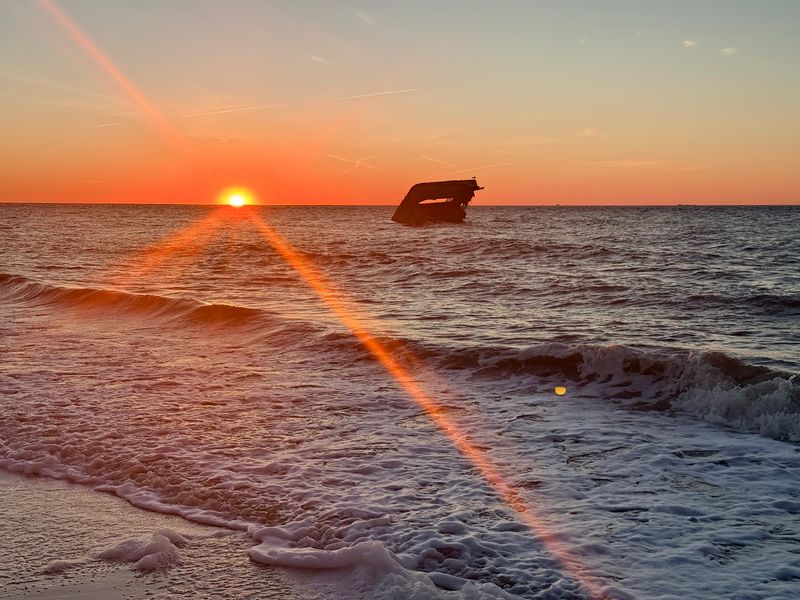
A broken concrete ship rests offshore, half swallowed by the Delaware Bay, while the sun drops directly behind it. That strange silhouette belongs to the SS Atlantus, an experimental vessel built during World War I that ran aground off Cape May in 1926.
Nearly a century of waves has reduced it considerably, yet the remaining wreck still gives Sunset Beach a finale unlike any other along the Jersey Shore. There is no hike involved—just park, cross to the sand, and choose your spot before the sky begins changing color.
Because this beach faces west, sunsets land over the water, producing the kind of view more commonly associated with the opposite coast. The location also overlooks the meeting area of Delaware Bay and the Atlantic Ocean, so ships traveling to and from the Delaware River often pass across the horizon.
Before sundown, search the pebbly shoreline for smooth quartz stones nicknamed Cape May diamonds, browse the nearby shops, or visit the remains of a World War II fire-control tower just up the road. Seasonal flag-lowering ceremonies add a moving tribute to veterans on many evenings.
Summer crowds arrive early, and parking becomes competitive around sunset, so give yourself extra time. Then settle in and let the shipwreck, open water, and sinking sun handle the entertainment.
Share this story