Road trips across Texas are rarely just about getting from one place to another. With endless stretches of highway cutting through deserts, small towns, open ranchland, and wide-open skies, the journey itself often becomes part of the adventure. And somewhere between the gas stations, roadside diners, and tiny blinking towns, travelers stumble across attractions so strange, unexpected, and unforgettable that they instantly turn an ordinary drive into something worth talking about long after the trip ends.
Texas is packed with roadside oddities that range from charmingly quirky to completely bizarre. One minute you might be pulling over to snap a photo of a giant cowboy statue towering over the highway, and the next you could be wandering through a desert art installation made to look like a luxury fashion storefront in the middle of nowhere. Some attractions celebrate the state’s larger-than-life personality, while others preserve pieces of ancient history, including dinosaur footprints that have survived for millions of years.
1. Prada Marfa
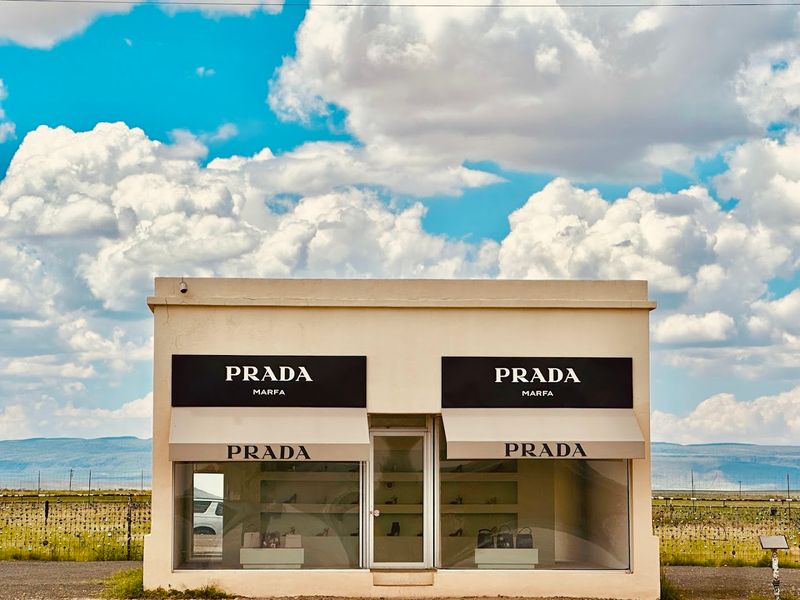
Out in the middle of nowhere, about 37 miles northwest of Marfa, sits what looks like a high-end boutique that wandered off from Rodeo Drive. Prada Marfa isn’t actually a store, though. It’s a permanent art installation created by artists Elmgreen and Dragset in 2005, designed to look like a real Prada shop but never intended to sell a single handbag.
The building showcases real Prada shoes and purses behind glass windows, but you can’t walk inside to browse. The door doesn’t open, and the whole structure exists as a commentary on consumerism and luxury brands. It’s become one of the most photographed spots in West Texas, drawing visitors from around the world who want to snap that perfect shot of designer fashion meeting desert isolation.
Vandals have targeted it several times over the years, breaking windows and stealing merchandise, but locals and art lovers keep restoring it. The installation sits on private land along U.S. Highway 90, so you can pull over safely to take photos from the roadside.
Early morning or late afternoon light makes for the best pictures, with long shadows stretching across the desert.
The structure represents the absurdity of placing a luxury boutique in such a remote location, miles from the nearest town. It challenges ideas about accessibility, exclusivity, and the relationship between art and commerce. Whether you see it as brilliant social commentary or just a weird building in the desert, Prada Marfa delivers a memorable roadside experience that’s purely Texan in its boldness and scale.
2. World’s Smallest Skyscraper
Back in 1919, a smooth-talking promoter named J.D. McMahon convinced investors in Wichita Falls to fund construction of a towering skyscraper that would transform the city’s skyline. They handed over $200,000, expecting a grand building that would bring prestige and commerce to their booming oil town.
What they got instead became one of the greatest architectural swindles in American history.
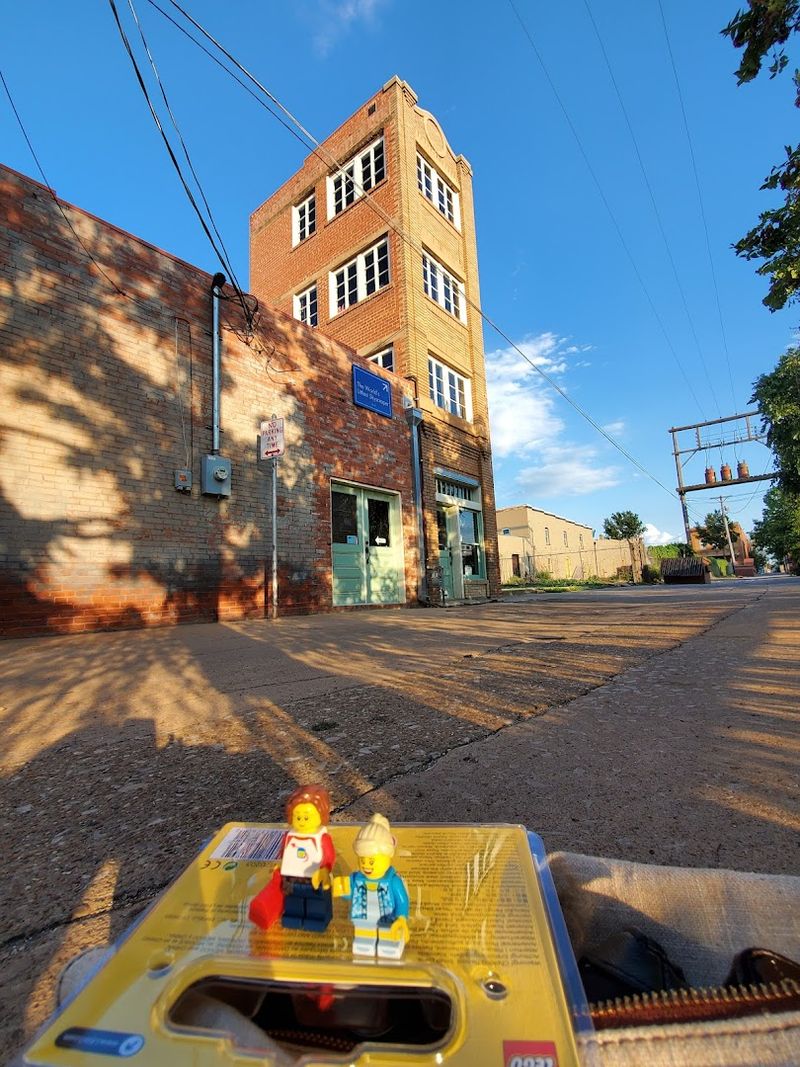
McMahon’s blueprints showed measurements in inches rather than feet, but investors didn’t notice the fine print. When construction finished, they discovered their “skyscraper” stood just 40 feet tall and measured only about 10 feet wide. The building had four stories, but each floor contained barely enough space for a desk and chair.
Investors were furious, but McMahon had technically delivered exactly what the blueprints promised.
The con artist disappeared with the money before anyone could take legal action. The building still stands today at 701 La Salle Street, a monument to one man’s audacity and several investors’ costly oversight. Its official name is the Newby-McMahon Building, though locals have always called it the World’s Smallest Skyscraper.
You can walk right up to it and marvel at how narrow it really is. The structure now houses offices and isn’t open for public tours, but seeing it from the outside tells the whole story. It’s a reminder that reading the fine print matters, and that sometimes the most interesting landmarks come from spectacular failures rather than grand successes.
The building earned a spot on the National Register of Historic Places, cementing its legacy as Texas’s most famous architectural mistake.
3. Cadillac Ranch
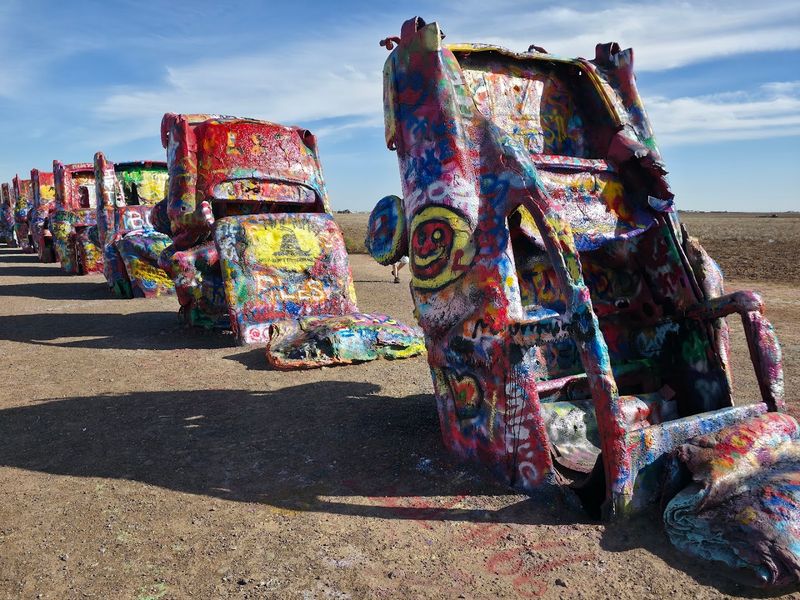
Ten Cadillacs buried nose-first in the dirt create one of America’s most interactive roadside attractions. Cadillac Ranch sits just west of Amarillo along Interstate 40, where eccentric millionaire Stanley Marsh 3 and an art collective called Ant Farm planted these cars in 1974. The vehicles span model years from 1949 to 1963, representing the golden age of American automotive design.
What makes this installation special is that visitors are encouraged to bring spray paint and add their own artwork to the cars. Layers upon layers of graffiti cover every surface, creating an ever-changing outdoor gallery where today’s bright colors might be buried under tomorrow’s fresh tags. People propose here, memorialize loved ones, and leave messages that range from profound to silly.
The cars originally stood in a different location closer to town, but urban sprawl threatened to surround them. In 1997, the entire installation was dug up and moved two miles west to its current spot, maintaining the same eastward orientation and angle. The new location provides better access and more room for the crowds that visit daily.
Admission is completely free, and you can visit any time of day or night. The site sits on private property, but the owners welcome visitors and maintain a casual, come-as-you-are atmosphere. Bring your own spray paint cans if you want to leave your mark, though you’ll find plenty of discarded empties scattered around the base of the cars.
Watching the sunset behind these colorful automotive monuments makes for an unforgettable Texas experience, blending pop art, automotive history, and participatory creativity into something uniquely American.
4. Cathedral of Junk
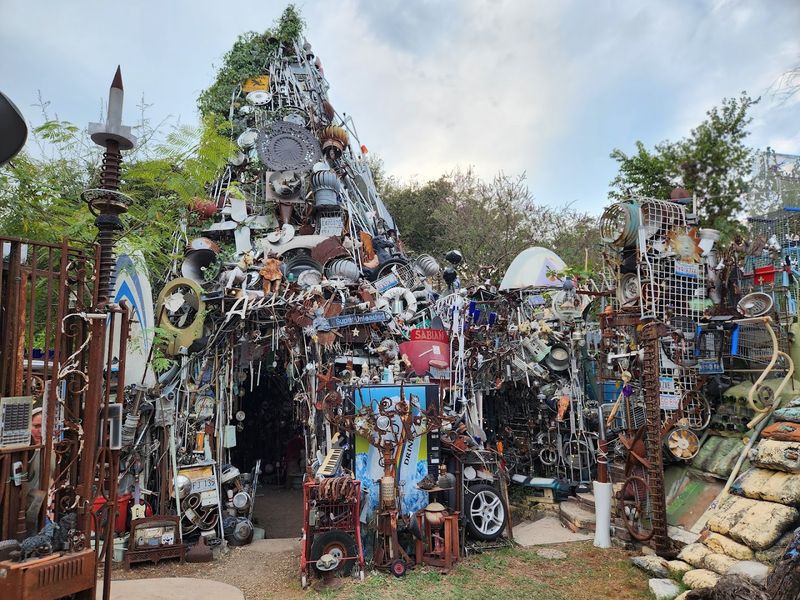
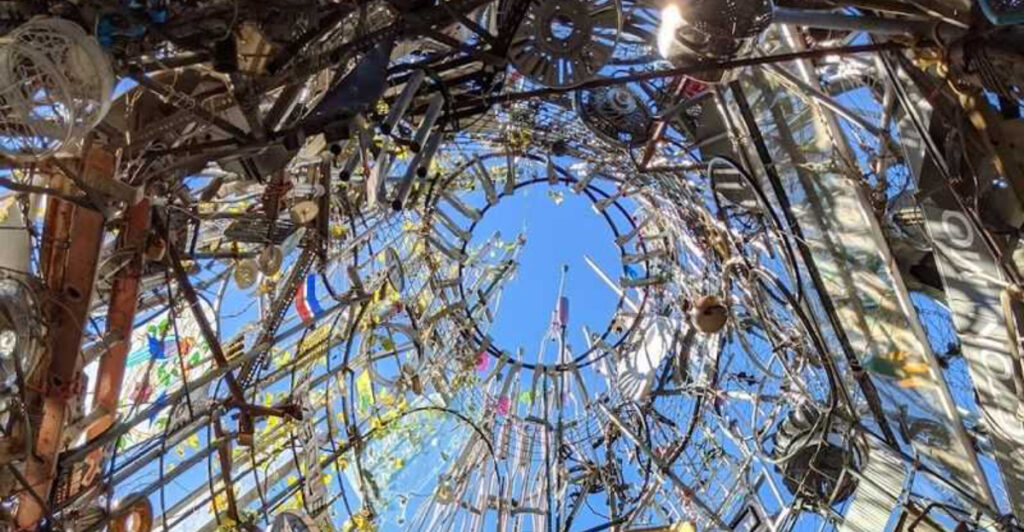
Hidden in a South Austin backyard stands a three-story tower built entirely from stuff most people would throw away. Vince Hannemann started building his Cathedral of Junk in 1989, and over three decades he’s transformed discarded bicycles, hubcaps, circuit boards, road signs, and thousands of other cast-off items into a sprawling sculpture you can actually walk through and climb on.
The structure rises about 60 feet into the air, with winding passages, balconies, and chambers created from carefully arranged junk. Hannemann doesn’t use blueprints or plans. He adds pieces based on instinct and balance, creating a organic-feeling space that somehow holds together despite being made from materials that were never meant to work as building blocks.
Visitors can explore the various levels, discovering hidden details and unexpected combinations of objects at every turn. Old toys peek out from walls of metal scraps, mirrors reflect light through passages made of bicycle wheels, and the whole thing creaks and shifts slightly as you move through it. It feels like stepping into someone’s wildly creative mind made physical.
The Cathedral faced demolition threats in 2010 when city officials raised safety concerns, but community support and some structural modifications saved it. Now Hannemann welcomes visitors by appointment, typically on weekends. You’ll need to check his website or social media for current visiting hours, as they change seasonally.
Admission is free, though donations help maintain the structure and support Hannemann’s ongoing artistic vision. Bring your camera, because every angle reveals new details and unexpected beauty in objects that society considered worthless. This backyard attraction proves that one person’s trash really can become another person’s cathedral.
5. Dinosaur Valley State Park Footprints
Walking in the actual footsteps of creatures that lived 113 million years ago isn’t something you can do in many places. Dinosaur Valley State Park near Glen Rose preserves some of the best-preserved dinosaur tracks in the world, pressed into limestone when massive reptiles walked through what was then a shallow sea.
The park’s main attraction sits right in the Paluxy River bed, where you can see tracks from both Acrocanthosaurus (a meat-eating predator) and Sauroposeidon (a plant-eating giant that may have weighed up to 44 tons). During dry seasons when the river runs low, the tracks become clearly visible, and you can walk right up to them or even wade in the shallow water for a closer look.
Some of the footprints measure over three feet long, giving you a real sense of how enormous these animals were. You can see where their massive feet sank into the ancient mud, and in some spots, you can follow entire trackways showing where dinosaurs walked along the prehistoric shoreline. Scientists have studied these tracks for decades, learning about dinosaur behavior, gait, and social patterns.
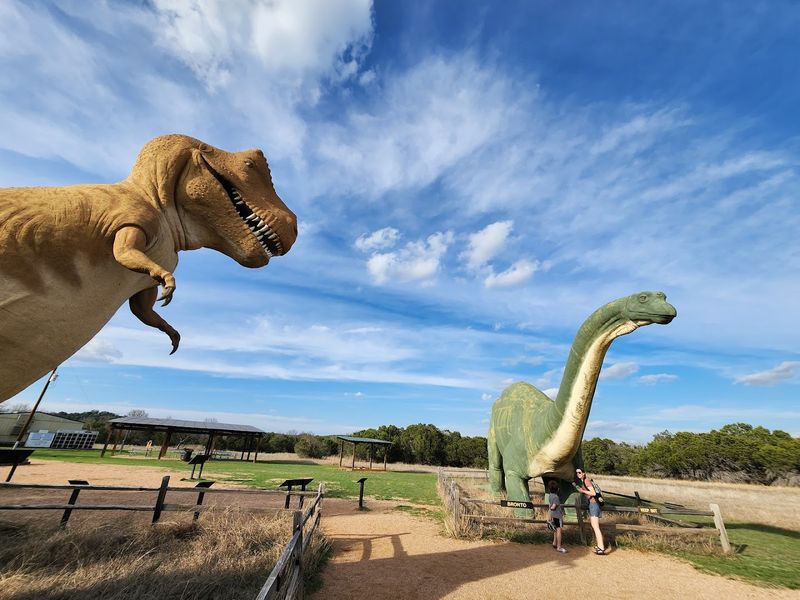
The park also features hiking trails, camping areas, and life-size dinosaur models that kids love climbing on. But nothing compares to standing next to a real footprint and imagining the creature that made it. The visitor center provides context and educational displays explaining what the area looked like during the Cretaceous period.
Visit during summer when water levels drop for the best track viewing, though the park offers activities year-round. Entry fees are modest, and the experience of connecting with creatures from deep time makes this more than just another roadside attraction—it’s a window into Earth’s ancient past.
6. The Big Texan Steak Ranch Sign & Steak Challenge
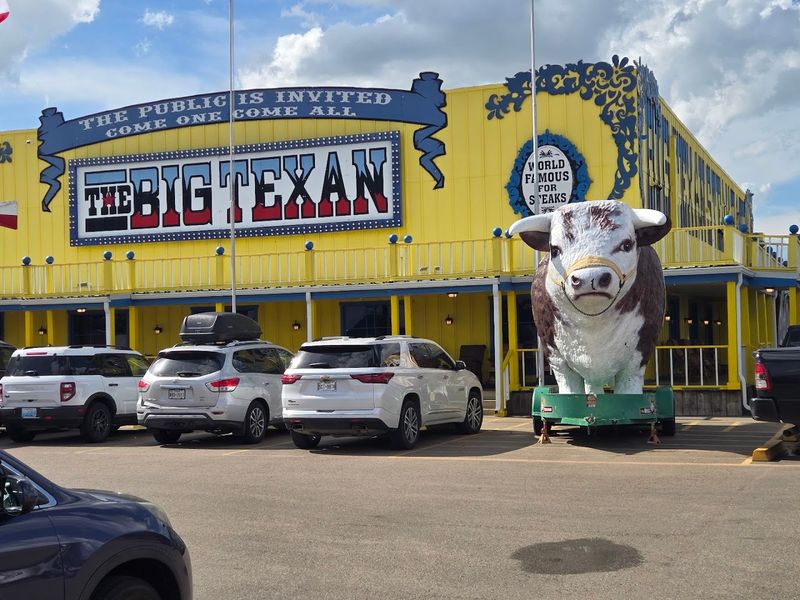
A massive cowboy waves from atop one of the most recognizable restaurant signs in America, beckoning hungry travelers to stop for what might be the biggest meal of their lives. The Big Texan Steak Ranch has been feeding Amarillo visitors since 1960, and its famous 72-ounce steak challenge has become a bucket-list item for competitive eaters and ambitious carnivores everywhere.
The challenge seems simple enough: eat a 72-ounce steak (that’s 4.5 pounds of beef) plus all the sides—shrimp cocktail, baked potato, salad, and roll—within one hour, and your meal is free. Fail to finish, and you’ll pay around $72 for the attempt. Contestants eat on a raised platform so other diners can watch the spectacle unfold, adding pressure and entertainment value to an already difficult feat.
Since the challenge began, over 10,000 people have successfully conquered the massive meal, though success rates hover around 20 percent. The restaurant keeps detailed records and crowns winners with certificates and bragging rights. Some competitors train for weeks, developing strategies for tackling the meat mountain efficiently.
Even if you’re not attempting the challenge, the Big Texan offers regular-sized portions and a fun, kitschy atmosphere that celebrates Texas excess. The restaurant relocated to its current spot near Interstate 40 in the 1970s, and the towering sign makes it impossible to miss. Inside, you’ll find Western-themed decor, a gift shop packed with Texas souvenirs, and even a motel if you need to sleep off your meat coma.
The restaurant has appeared in numerous TV shows and movies, cementing its status as a genuine American roadside icon. Whether you’re brave enough to attempt the challenge or just want to witness someone else try, stopping here delivers pure Texas entertainment.
7. Jacob’s Well Natural Area
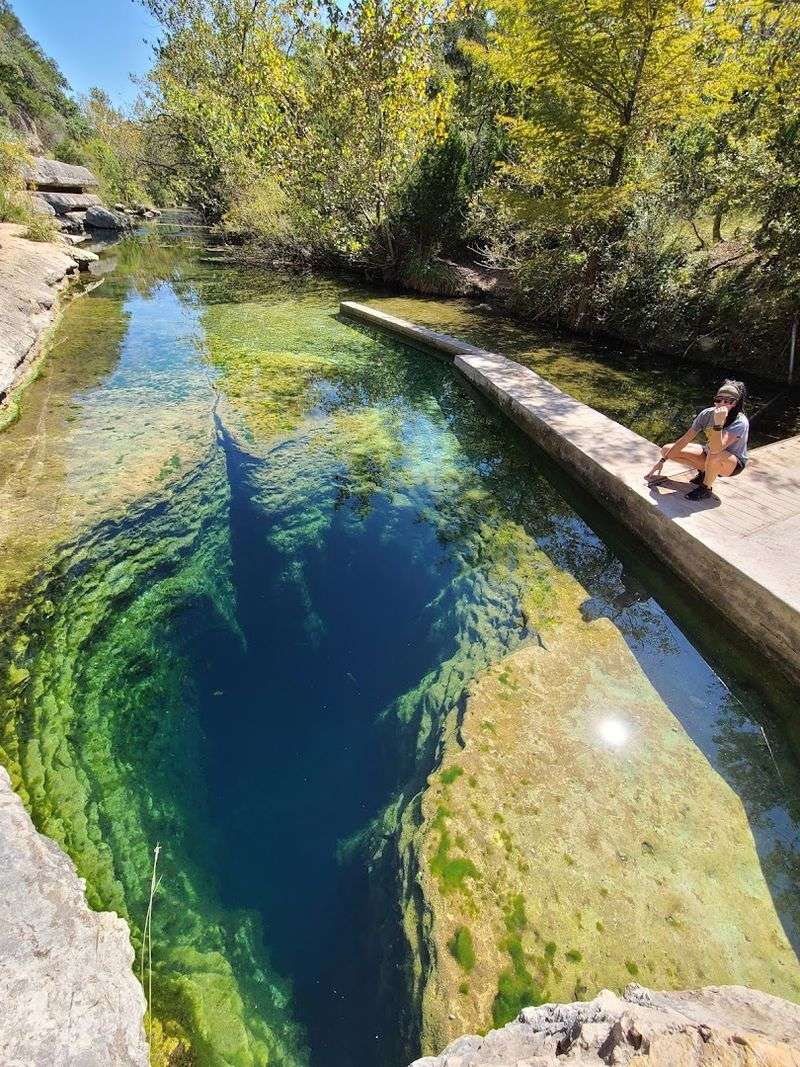
Peering into Jacob’s Well feels like looking into another world. This artesian spring near Wimberley drops straight down through limestone, creating a natural well with water so clear you can see the opening to an underwater cave system that descends over 140 feet. The spring has been flowing for thousands of years, pumping out millions of gallons of cool, fresh water annually.
Swimming in Jacob’s Well offers an experience unlike any typical swimming hole. The water maintains a constant temperature around 68 degrees year-round, feeling refreshing on hot Texas summer days. The main swimming area sits in a shallow basin where the spring emerges, surrounded by cypress trees that provide shade and add to the magical atmosphere.
The underwater cave system has attracted divers for decades, but it’s also proven deadly. At least nine divers have died exploring the submerged passages, leading to restrictions and warnings. Today, only certified cave divers with proper training and permits can explore beyond the first chamber.
For most visitors, staying in the swimming area provides plenty of natural beauty without the risks.
Access to Jacob’s Well requires reservations through the Hays County Parks system, and they limit daily visitors to protect the fragile ecosystem. The spring feeds Cypress Creek and provides habitat for several endangered species, making conservation efforts crucial. Reservations typically fill up quickly during summer months, so planning ahead is essential.
The surrounding natural area includes hiking trails through Hill Country terrain, offering views of the creek and native plants. Bring water shoes because the limestone rocks can be slippery, and arrive early to make the most of your reserved time slot. Jacob’s Well represents one of Texas’s most stunning natural features, where geology and beauty combine to create something truly special.
8. Stonehenge II
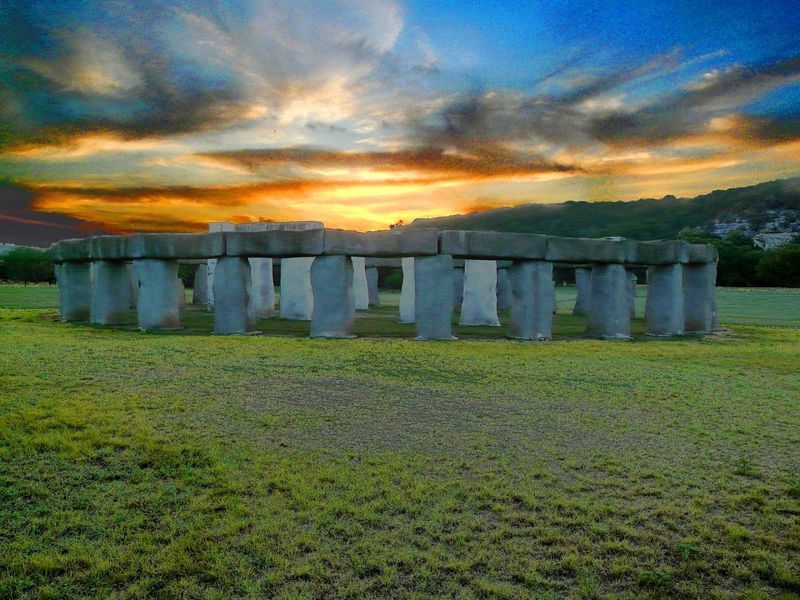
England has its ancient Stonehenge, built over 4,000 years ago by people we’re still trying to understand. Texas has Stonehenge II, built in the 1980s by a rancher and his friends using materials from a local lumberyard. Both involve massive stones arranged in mysterious circles, though the Texas version required significantly less ancient engineering and human sacrifice.
Al Shepperd and Doug Hill created this full-scale replica on Shepperd’s ranch near Ingram, constructing the standing stones from plaster, wire mesh, and metal framework. They positioned the stones in the same configuration as the original, complete with the iconic trilithons (the arrangements where two upright stones support a horizontal lintel). The result looks surprisingly convincing from a distance, especially at sunset when shadows stretch across the Hill Country landscape.
The site also includes two Easter Island moai statues, because why stop at just one ancient monument when you can have three? These 13-foot-tall heads add to the surreal experience of finding world-famous archaeological replicas on a Texas ranch. The combination creates a unique roadside attraction that’s part historical homage, part artistic statement, and part good old-fashioned Texas weirdness.
After Shepperd passed away, the replicas were moved to a new location in Ingram where they’re easier to access. The site sits on private property but welcomes visitors during daylight hours at no charge. You can walk around the stones, take photos from any angle, and contemplate why someone decided Texas needed its own Stonehenge.
The installation has become a popular spot for photos, especially during golden hour when the light hits just right. It’s also a reminder that Texans have never been shy about thinking big, even when it means recreating prehistoric monuments from scratch in the middle of ranch country.
9. The Alamo
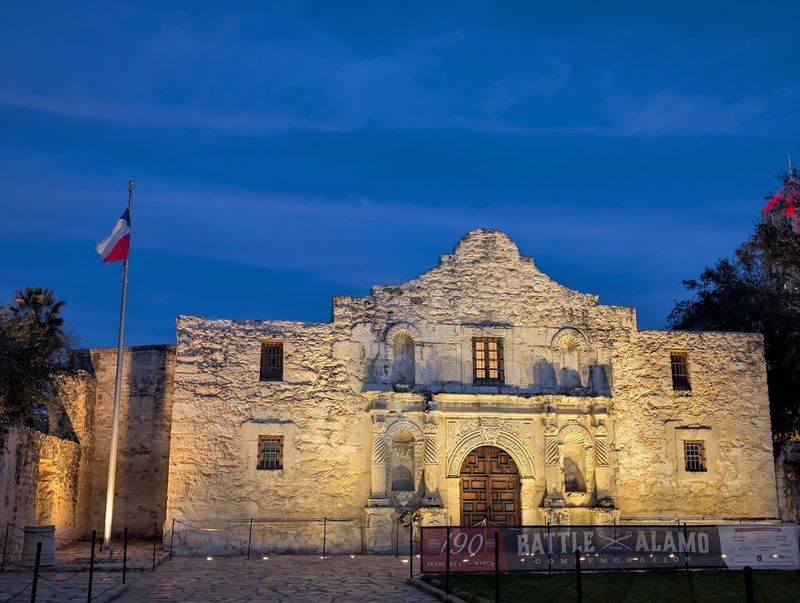
Some might argue that the Alamo doesn’t belong on a quirky roadside attractions list, but hear this out. Yes, it’s a serious historical site where 189 defenders died during a 13-day siege in 1836, becoming martyrs for Texas independence. But it’s also one of the most unexpectedly small and oddly located landmarks you’ll ever visit, sitting right in the middle of downtown San Antonio like someone dropped a Spanish mission into a modern city by accident.
Most people arrive expecting something grand and sprawling, then find themselves staring at a relatively modest limestone building surrounded by skyscrapers, hotels, and tourist shops. The actual mission church—the part everyone recognizes from photos—is just one small piece of what was once a much larger compound. Today, you can tour the building and grounds in less than an hour, which surprises visitors who imagined something on the scale of a medieval castle.
The interior contains artifacts, weapons, and exhibits explaining the famous battle and its significance to Texas history. You’ll see Davy Crockett’s rifle, Jim Bowie’s knife, and letters written by William B. Travis, the garrison commander who drew a line in the sand asking men to stay and fight.
The stories are genuinely moving and important to understanding Texas identity.
Admission to the Alamo is free, though they accept donations for preservation efforts. The site receives millions of visitors annually, making it Texas’s most popular tourist destination. Security is tight, and you’ll need to go through screening before entering.
Photography is restricted inside the church out of respect for those who died there.
The Alamo’s quirky factor comes from this disconnect between its massive cultural significance and its surprisingly modest physical presence, proving that sometimes the smallest landmarks cast the longest shadows.
10. World’s Largest Pecan
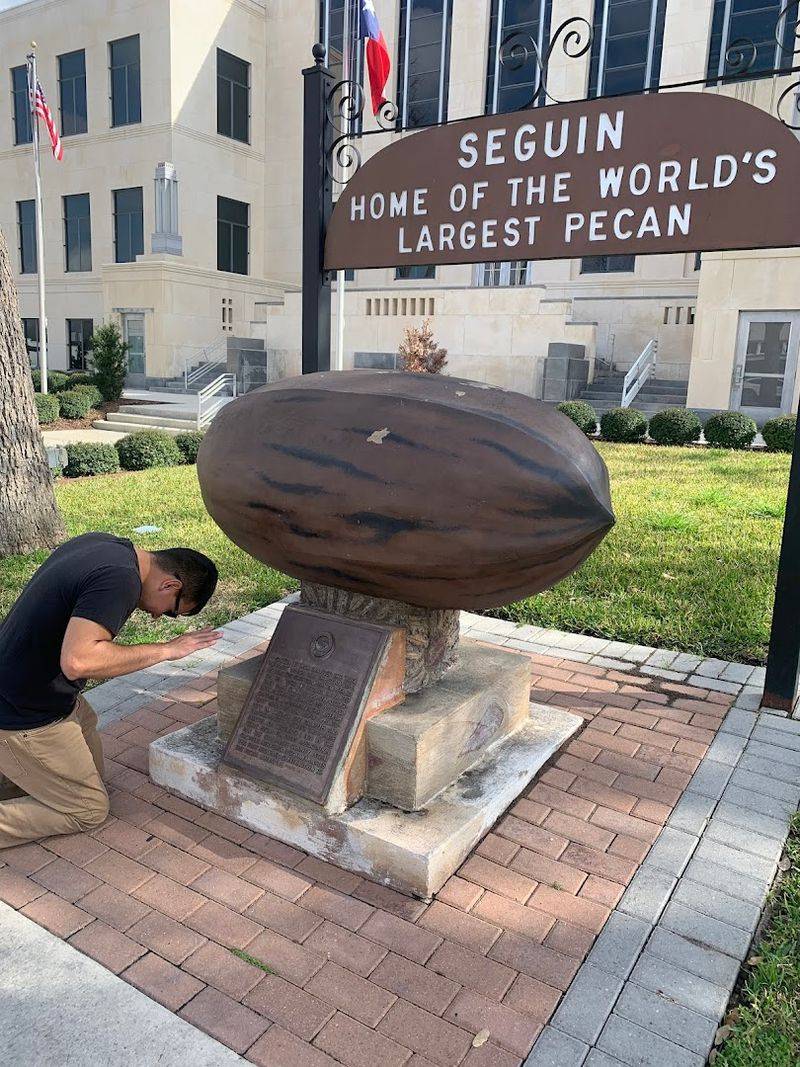
Seguin takes its pecans seriously. This small Texas town sits in the heart of pecan-growing country, and residents wanted everyone to know it. So in the 1960s, they built what they claim is the world’s largest pecan, a massive concrete and metal sculpture that weighs thousands of pounds and measures about five feet long.
The giant nut originally sat outside a local business but has since found a home where more visitors can appreciate its nutty grandeur. It’s painted to look like a real pecan, complete with the characteristic ridges and texture that make these native Texas nuts recognizable. Standing next to it makes you feel like you’ve shrunk down to ant size, or perhaps wandered into a giant’s pantry.
Seguin’s pecan pride runs deep in local history. The town hosts an annual pecan festival, and pecan trees line many streets, dropping nuts that locals gather each fall. The industry has supported the regional economy for over a century, making the oversized tribute more than just a roadside gimmick—it’s a celebration of agricultural heritage.
Other towns have tried to claim their own giant pecans, leading to friendly competition over who really has the largest. Seguin residents stand firm in their assertion, though the truth might depend on how you measure. Regardless of who wins the size debate, Seguin’s pecan delivers exactly what you want from a roadside attraction: something big, bold, and slightly absurd that makes you smile.
The sculpture sits in a spot that’s easy to access for photos. You can’t climb on it, but you can stand next to it for scale photos that make great social media posts. Seguin also offers other pecan-related attractions, including shops selling fresh pecans and pecan pies that showcase why Texans love this native nut so much.
11. South of the Border Texas-Style Murals
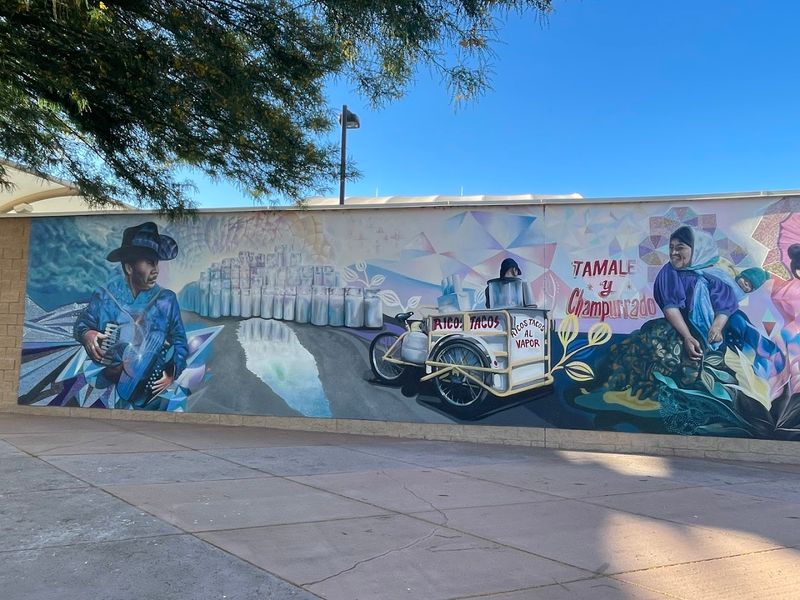
The El Paso area serves up some of the most vibrant street art in Texas, where murals transform ordinary buildings into canvases celebrating border culture, Mexican heritage, and Southwestern life. These aren’t carefully curated gallery pieces—they’re bold, colorful statements that reflect the region’s unique position where two countries meet and blend.
Artists from both sides of the border contribute to the ever-growing collection of murals scattered throughout El Paso and surrounding communities. You’ll find everything from traditional Mexican folk art imagery to modern street art styles, often incorporating themes of unity, cultural pride, and the complex history of the borderlands. Some murals stretch across entire building facades, while others occupy smaller spaces in unexpected locations.
Tracking down these murals turns into a treasure hunt, with new pieces appearing regularly as artists continue adding to the outdoor gallery. Some of the most photographed works sit in downtown El Paso, while others hide in residential neighborhoods or along commercial strips. Local art organizations sometimes offer guided tours, but exploring on your own lets you discover pieces at your own pace.
The murals represent more than just decoration—they’re statements about identity, belonging, and the richness of border culture that often gets reduced to political talking points. Artists use these public spaces to tell stories, honor heroes, and create beauty in areas that might otherwise go unnoticed.
Bring your camera and comfortable walking shoes, because the best way to experience El Paso’s mural scene involves wandering neighborhoods and staying alert for splashes of color. Many murals sit in regular communities where people live and work, so respect the spaces while you’re photographing. The art keeps evolving, meaning each visit might reveal new pieces you haven’t seen before, making this a roadside attraction that never gets old.
12. The Blue Whale of Catoosa
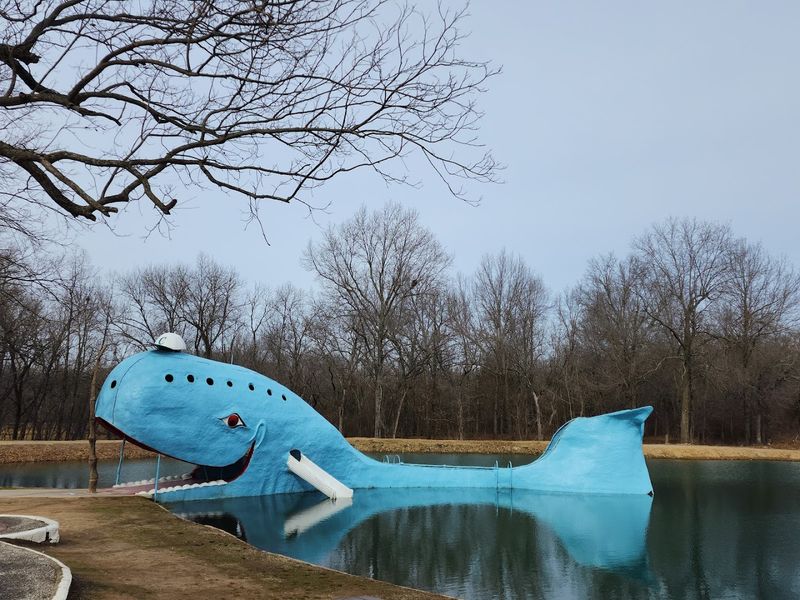
Okay, so technically the Blue Whale of Catoosa sits in Oklahoma, just across the Texas border. But it’s close enough to the state line that Texans have been claiming it as part of their roadside attraction heritage for decades, especially since so many people discover it while traveling historic Route 66 through the region.
Hugh Davis built this 80-foot-long blue whale in the early 1970s as an anniversary gift for his wife Zelta, who collected whale figurines. What started as a private swimming hole with a quirky centerpiece became a beloved roadside attraction when the Davises opened it to the public. Kids would climb up inside the whale and slide down into the pond, creating summer memories that lasted lifetimes.
The attraction fell into disrepair after the Davises passed away, but community volunteers restored it in the 2000s, repainting the whale its signature bright blue and cleaning up the grounds. Today, you can’t swim there anymore due to liability concerns, but you can walk around the property, climb on the whale for photos, and appreciate this piece of roadside Americana that almost disappeared.
The whale sits right along Route 66, making it an essential stop for anyone following the historic highway. Its cheerful appearance and slightly weathered charm capture the spirit of classic American road trips, when families would pile into station wagons and hunt for interesting stops between destinations. Modern interstate highways bypass these old attractions, but places like the Blue Whale survive because people still seek out authentic, quirky experiences.
Admission is free, and the site welcomes visitors year-round. Locals maintain the property out of love for their community landmark, proving that sometimes the best attractions aren’t built by corporations or governments, but by ordinary people who want to create something joyful and share it with strangers passing through.
13. Eiffel Tower Paris Texas
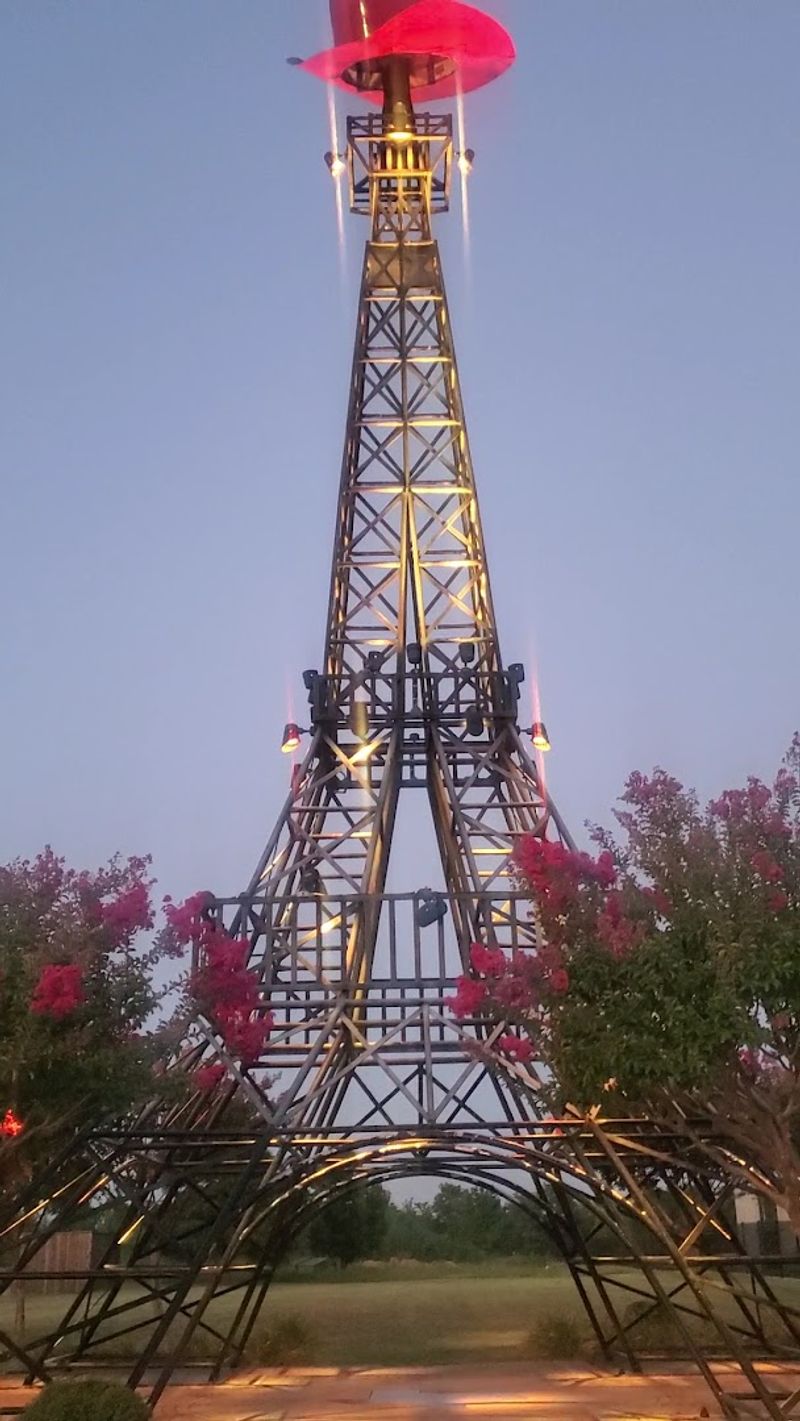
Paris, France has an Eiffel Tower. Paris, Texas decided it needed one too, but with a distinctly Texan twist. The town’s 65-foot-tall replica stands in front of the Paris Civic Center, painted bright red and topped with a giant red cowboy hat because everything in Texas eventually gets a cowboy hat, even French landmarks.
The tower was originally built in the 1990s by local welders and metalworkers who wanted to give their town a recognizable symbol. The first version didn’t include the cowboy hat, but after Paris, Tennessee built their own Eiffel Tower replica, the Texas town needed something to maintain its superiority. Adding a massive Stetson solved the problem perfectly, making their tower unmistakably Texan.
The structure stands as a testament to small-town pride and Texas’s tendency to do things bigger and bolder than anywhere else. Sure, the original Eiffel Tower in France rises over 1,000 feet tall and represents groundbreaking 19th-century engineering. But does it wear a cowboy hat?
Point goes to Texas.
Visitors can walk right up to the tower for photos, and it’s lit up at night, creating a surprisingly pretty sight in this northeast Texas town of about 25,000 people. The tower sits near other Paris attractions, including a downtown district with antique shops and cafes that embrace the town’s namesake connection to France.
Paris, Texas also claims other quirky distinctions, like being the site where a famous photograph of Bonnie and Clyde was taken. But the Eiffel Tower replica remains the town’s most photographed landmark, proving that sometimes the best way to honor a famous monument is to recreate it with your own regional flair. It’s not the biggest or most accurate replica, but it might be the only one that perfectly captures the spirit of Texas confidence and humor.
Share this story