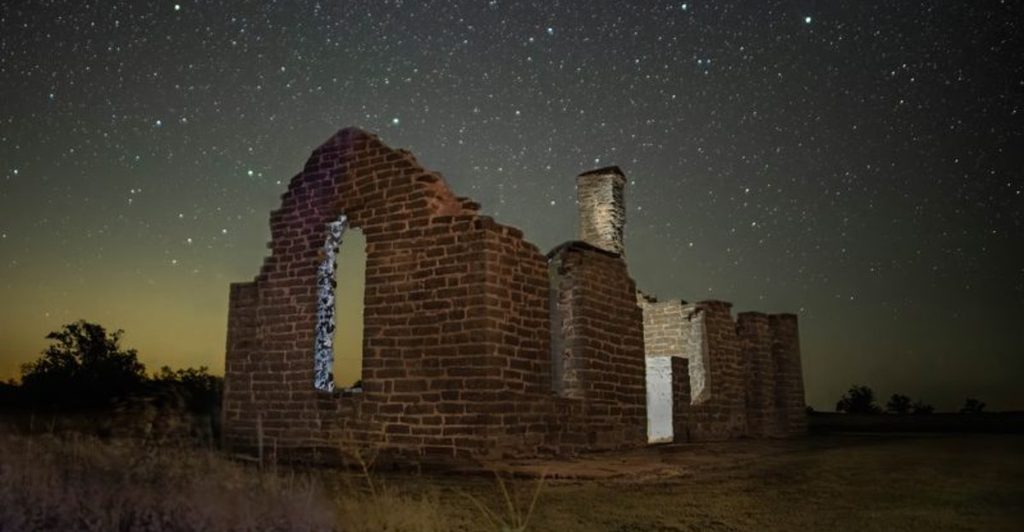
Texas is full of forgotten places where history still echoes through empty buildings and dusty streets. Ghost towns scattered across the state offer a rare chance to step back in time and see what life was like during the wild frontier days, mining booms, and railroad eras. Whether you’re a history buff or just looking for an unusual weekend adventure, these abandoned settlements tell stories that textbooks can’t capture.
1. Glenrio
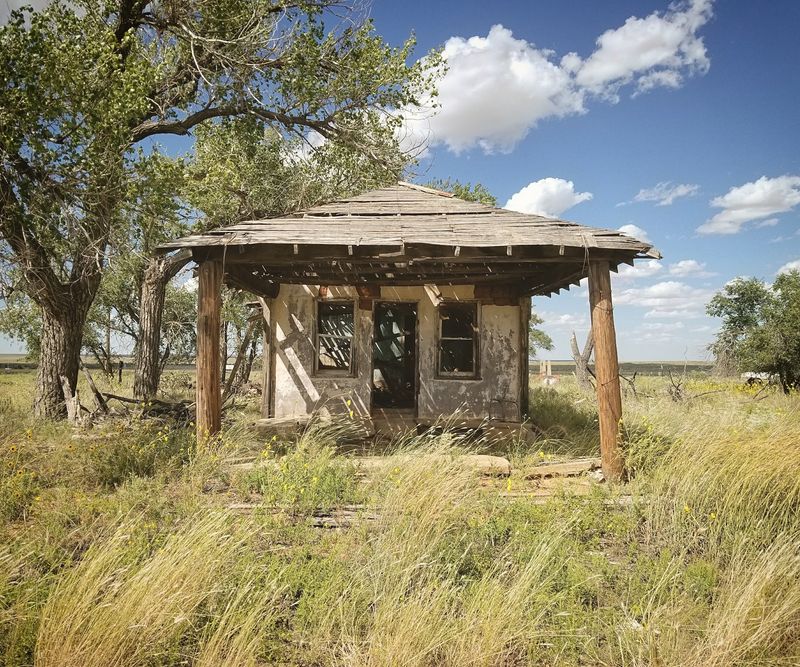
Straddling the Texas-New Mexico border, this once-thriving stop along Route 66 now sits frozen in time. Back when cross-country road trips meant following the Mother Road, travelers pulled into Glenrio for gas, food, and a place to rest. The town buzzed with diners, motels, and service stations that catered to families heading west in search of new opportunities.
Today, you can still see the skeletal remains of those roadside businesses. Faded signs point toward establishments that haven’t served customers in decades. The old Texaco station stands as a monument to mid-century America, its pumps long dry but its spirit intact.
Walking through feels like wandering onto a movie set. Rusted cars sit where they were abandoned, and empty buildings with broken windows tell silent stories of better days. You can almost hear the chatter of travelers and the clinking of coffee cups in the long-closed café.
What makes this spot especially interesting is how it captures the rise and fall of American car culture. When Interstate 40 bypassed the town in the 1970s, Glenrio’s fate was sealed. Businesses closed, families moved away, and the town became a memory.
Photographers love the place for its stark beauty and vintage Americana vibe. The isolation adds to the experience, making you feel like you’ve discovered something secret. Bring water and wear good walking shoes because there’s no shade and plenty of ground to cover.
The sun beats down hard out here, just like it did when this stretch of highway was the main artery connecting east to west.
2. Fort McKavett State Historic Site
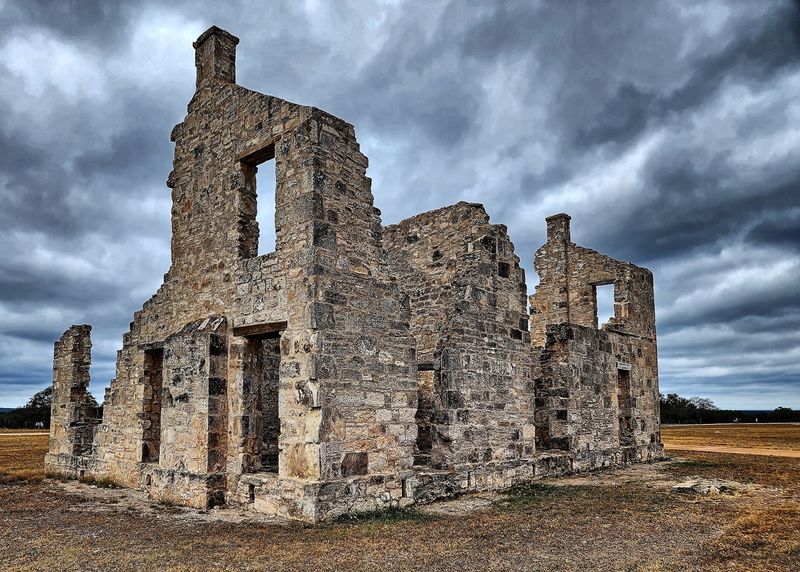
Established in 1852 to protect settlers and travelers from raids, this military outpost played a crucial role in Texas frontier defense. Soldiers stationed here endured harsh conditions while patrolling vast stretches of unforgiving terrain. The fort served as home to infantry and cavalry units, including the famous Buffalo Soldiers who earned respect through their bravery and dedication.
Unlike many ghost towns that crumbled into dust, Fort McKavett has been carefully preserved. More than 20 original and restored buildings stand ready to explore, including barracks, officers’ quarters, and the hospital. Walking through these structures gives you a real sense of military life in the 1800s.
The post was strategically positioned near the San Saba River, providing water in an otherwise dry landscape. During its active years, it bustled with soldiers, scouts, and civilians who supported the operation. When the fort closed in 1883, the town that had grown around it slowly faded away.
What survived is remarkable. You can peek into the schoolhouse where soldiers’ children learned their lessons, or stand in the commanding officer’s quarters where important decisions were made. The stone buildings have weathered more than a century, their thick walls keeping them cool even on scorching summer days.
Interpretive signs throughout the site explain what each building was used for and share stories about the people who lived here. The nearby cemetery holds graves of soldiers and settlers, adding a somber reminder of frontier hardships. Spring wildflowers blanket the surrounding hills, creating a beautiful contrast to the stark military architecture.
Pack a picnic and plan to spend a few hours soaking in the history.
3. Terlingua Ghost Town
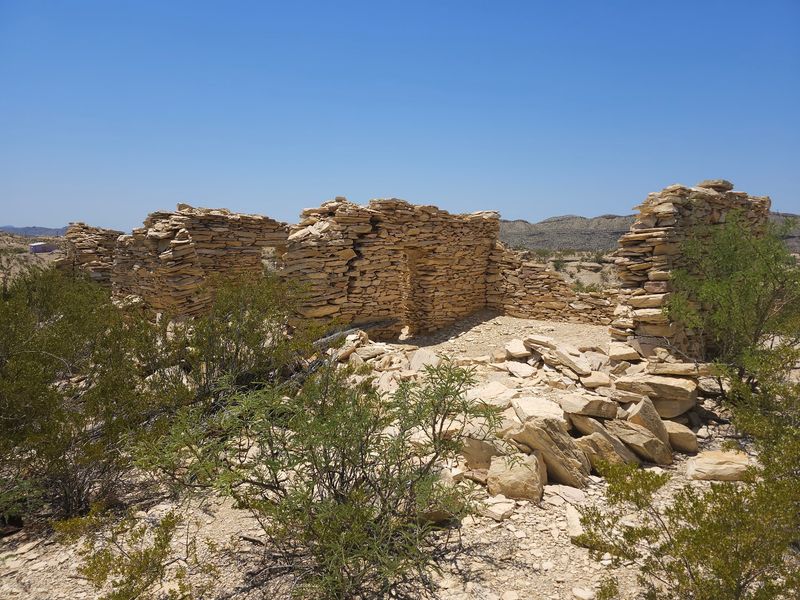
Mercury mining put this remote desert settlement on the map in the early 1900s. The Chisos Mining Company operated here, extracting cinnabar ore and processing it into quicksilver. At its peak, hundreds of workers and their families called Terlingua home, creating a bustling community in one of Texas’s most isolated regions.
When the mercury market collapsed in the 1940s, the mines closed and people scattered. What remained were crumbling adobe buildings, rusted equipment, and the skeleton of a once-thriving company town. The old Perry Mansion still stands on the hill, overlooking the ruins like a weathered sentinel.
But here’s where Terlingua gets interesting. Unlike most ghost towns that stay dead, this one has a pulse. A small community of artists, river guides, and desert lovers has breathed new life into the area.
The famous Starlight Theatre operates in a restored building, serving cold beer and hot food to visitors exploring Big Bend.
You can wander freely among the ruins, exploring the old trading post, church, and scattered homes. Cemetery headstones tell stories of harsh lives cut short by accidents, disease, and the brutal desert environment. Some graves belong to miners who never made it out of the shafts.
The annual chili cook-off held here every November draws thousands of people to this tiny spot. Competitors and spectators camp among the ruins, creating a temporary city in the desert. Even without the festival, Terlingua offers stunning sunsets, star-filled nights, and a genuine sense of remoteness.
The surrounding Chihuahuan Desert landscape is otherworldly, with jagged peaks and endless horizons that make you feel very small.
4. Judge Roy Bean Museum & Langtry Travel Information Center
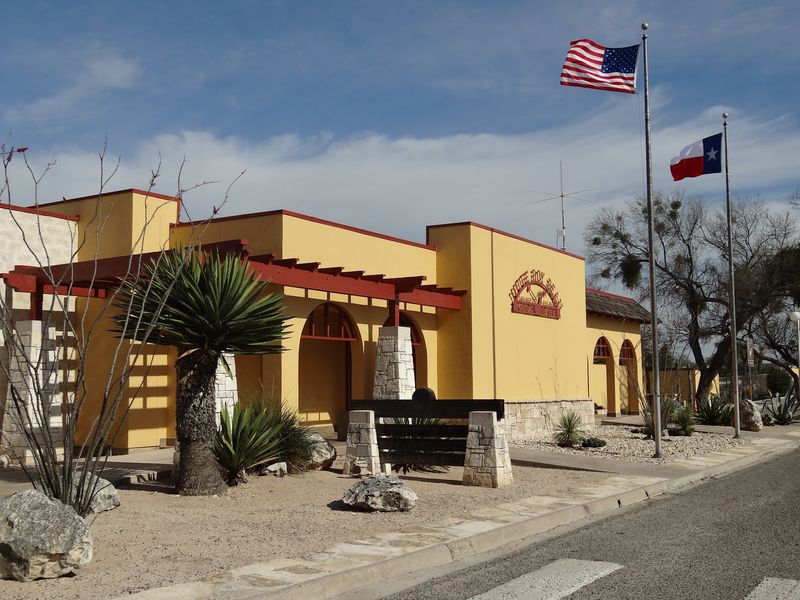
Roy Bean called himself the Law West of the Pecos, and he meant it. This self-appointed judge dispensed rough justice from his combination saloon and courtroom in the late 1800s. He named his establishment the Jersey Lilly after actress Lillie Langtry, whom he admired from afar but never met.
Bean’s colorful personality and unconventional legal proceedings became legendary throughout the Southwest.
The town of Langtry grew up around the railroad and Bean’s establishment. Workers building the Southern Pacific line needed supplies, entertainment, and occasionally someone to settle disputes. Bean filled all those roles, though his interpretation of the law was creative at best.
Today, the museum preserves Bean’s original saloon and courtroom. You can stand where defendants faced the judge’s often-biased rulings, usually designed to separate them from their money. His bar still displays bottles and equipment from the era, and the wooden building creaks with history.
The surrounding town has shrunk to almost nothing, making the museum and visitor center the main attractions. Interpretive exhibits tell Bean’s story, separating fact from the many legends that grew around him. Some tales are true, others wildly exaggerated, but all are entertaining.
A cactus garden behind the museum showcases desert plants native to the area. The Rio Grande flows nearby, marking the border with Mexico. Standing on the bluff overlooking the river, you can imagine how isolated this place must have felt when Bean held court here.
The visitor center offers clean restrooms and helpful staff who can point you toward other attractions in the region. It’s a quick stop but worth the detour if you’re driving between Del Rio and Big Bend. The combination of genuine history and larger-than-life character makes this spot memorable.
5. Historic Fort Phantom Hill
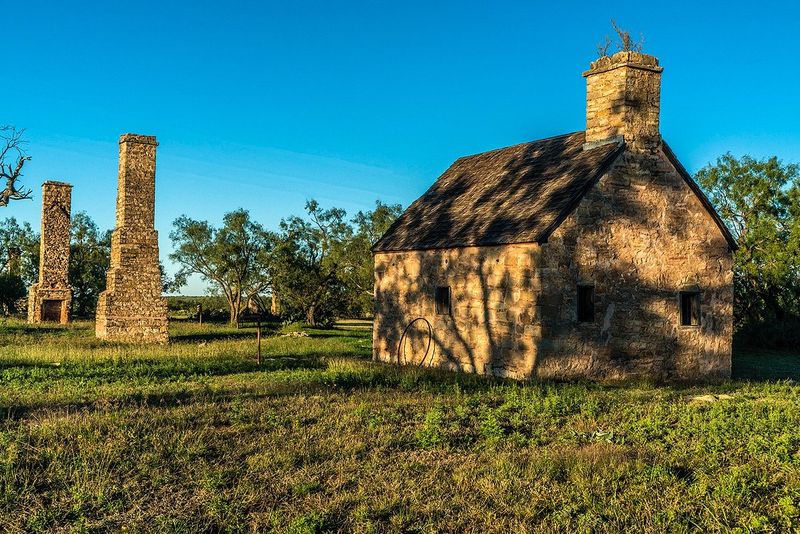
Three towering stone chimneys rise from the prairie like sentinels guarding secrets. These haunting structures are all that remain standing from a military post established in 1851. The fort was meant to protect the Texas frontier, but soldiers hated being stationed here.
Water was scarce, the climate brutal, and hostile encounters frequent.
The post earned its ghostly name from local legends about phantom lights and unexplained sounds. Some say the spirits of soldiers who died here still linger. Whether you believe in ghosts or not, there’s definitely something eerie about the place, especially at dusk when shadows stretch across the ruins.
The fort only operated for three years before being abandoned. In 1854, mysterious fires destroyed most of the wooden structures, leaving only the stone chimneys and a few building foundations. Some historians suspect disgruntled soldiers set the blazes, though the truth was never established.
What makes this site special is how little has changed. No modern development crowds the ruins, no visitor center breaks the spell. You park and walk among the remnants, imagining what the compound looked like when it was whole.
Foundation stones outline where barracks, stables, and storage buildings once stood.
The three main chimneys dominate the landscape, their massive stonework testament to the skill of the builders. Each one served a different building, and their survival through 170 years of Texas weather is impressive. Birds nest in the crevices now, and wildflowers grow where soldiers once drilled.
A small cemetery nearby holds graves of soldiers and family members. The isolation is complete, you’ll likely have the place to yourself. Bring your camera because the chimneys photograph beautifully against the big Texas sky.
Just remember to respect the site and leave everything as you found it.
6. The Grove
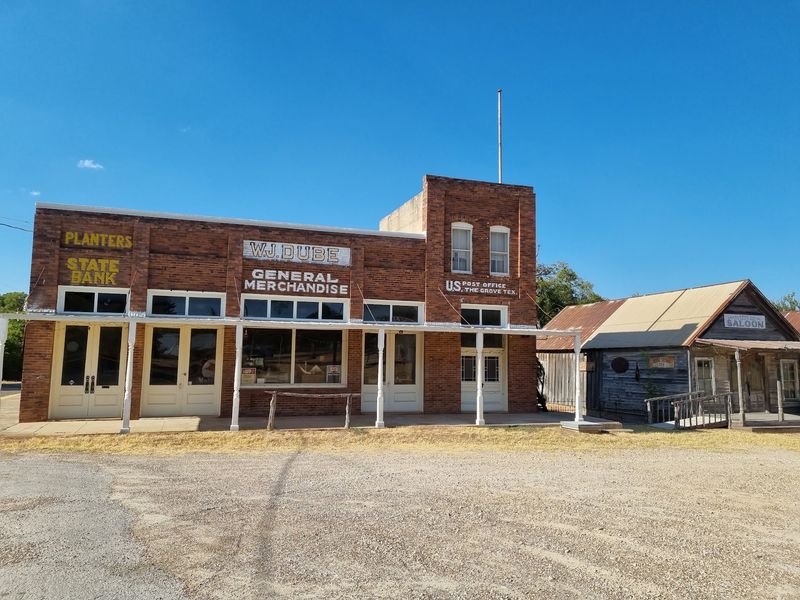
Cotton built this town, and when cotton failed, the town died. Founded in the 1850s, The Grove served as an early Coryell County settlement where farmers brought their crops to gin and ship. A thriving community developed around agriculture, complete with stores, schools, and churches that served families scattered across the surrounding farmland.
The town’s location near a natural spring and grove of trees made it attractive in an otherwise harsh landscape. Settlers appreciated the shade and reliable water source, rare luxuries on the Texas frontier. For a few decades, The Grove competed with nearby Gatesville for county prominence.
But when the railroad bypassed the town in favor of Gatesville, The Grove’s fate was sealed. Businesses relocated to be near the tracks, families followed, and within a generation the town withered. By the early 1900s, only a handful of residents remained, stubbornly clinging to the old settlement.
Today, several limestone buildings still stand, their walls solid despite decades of neglect. The old mercantile building is the most impressive survivor, its thick stone construction defying time and weather. Doorways open onto empty rooms where merchandise once lined shelves and customers gossiped about local affairs.
Trees have reclaimed much of the townsite, growing through foundations and wrapping roots around crumbling walls. The natural spring still flows, creating a green oasis that attracted the original settlers. Walking through feels like discovering a secret, because few people know about this place.
The site sits on private property, but the owners have traditionally allowed respectful visitors to explore. Always ask permission before entering, and be mindful that these are someone’s land and heritage. Poison ivy grows thick around the ruins, so wear long pants and watch where you step.
The peaceful setting makes it easy to spend an hour imagining life in this forgotten community.
7. W.K. Gordon Center / Thurber Ghost Town
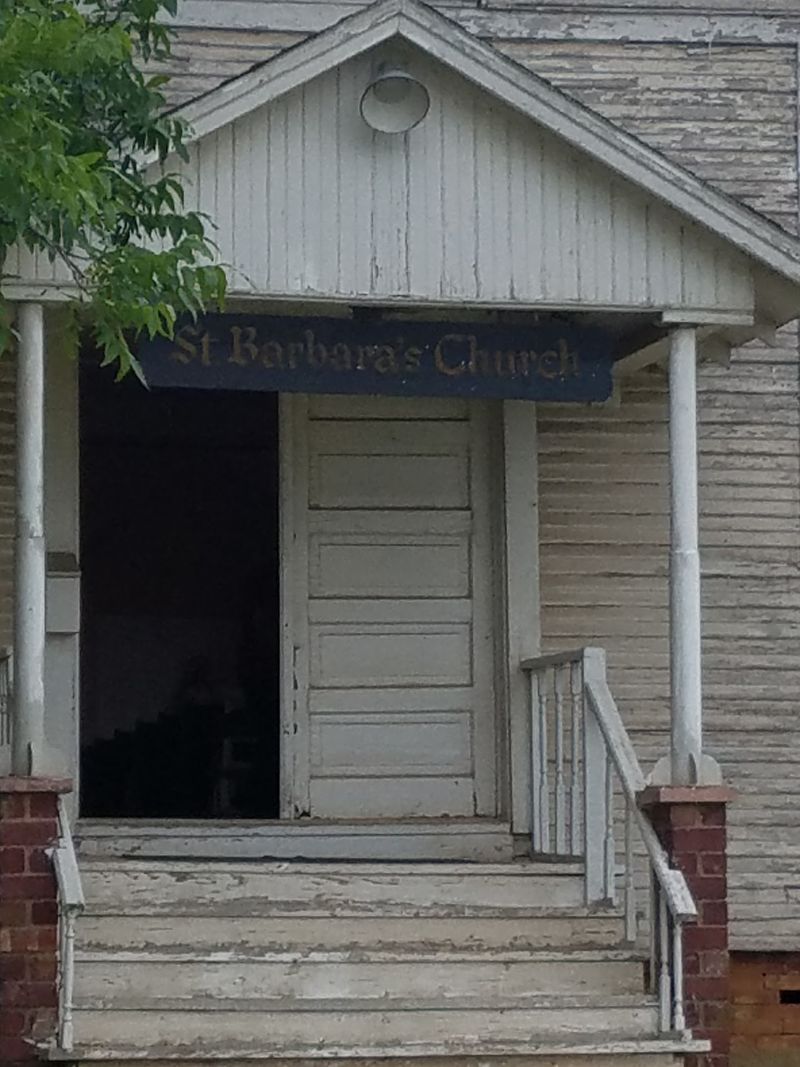
Coal fueled this company town’s rise, and when the coal ran out, 10,000 residents vanished almost overnight. Thurber was Texas’s first completely unionized town, a remarkable achievement in the early 1900s. The Texas and Pacific Coal Company controlled everything, from the houses workers rented to the stores where they shopped.
Despite this corporate dominance, the town thrived with ethnic diversity, bringing together immigrants from Italy, Poland, Mexico, and a dozen other countries.
At its peak, Thurber produced more than a million tons of coal annually. The mines ran deep, and the work was dangerous. Explosions and cave-ins claimed lives regularly, but jobs were scarce and families needed the income.
Above ground, the town buzzed with activity, supporting schools, churches, an opera house, and even an ice plant.
When natural gas and oil replaced coal as preferred fuels, Thurber’s economy collapsed. The company closed operations in the 1920s, and residents scattered in search of work. Buildings were demolished or moved, and within a few years, almost nothing remained of the once-bustling community.
The massive brick smokestack is the town’s most visible survivor. Standing 130 feet tall, it can be seen from Interstate 20 and serves as a landmark for travelers. The W.K.
Gordon Center museum tells Thurber’s story through artifacts, photographs, and exhibits about coal mining and company town life.
Walking the grounds, you can still find building foundations, brick streets, and the cemetery where miners and their families rest. Interpretive signs mark where major structures once stood. The restaurant that now operates nearby serves as a reminder that Thurber’s legacy lives on, even if the town itself is gone.
The museum is well-maintained and staffed by knowledgeable volunteers who love sharing Thurber’s history. Plan to spend at least an hour exploring the exhibits and grounds. The story of this vanished city is fascinating and surprisingly relevant to modern discussions about energy, labor, and economic change.
8. Fort Griffin State Historic Site
Buffalo hunters, soldiers, and outlaws all crossed paths at this rough frontier post. Established in 1867, Fort Griffin protected settlers and the Western Cattle Trail from raids and lawlessness. The nearby civilian town of The Flat grew into one of the wildest settlements in Texas, known for gambling, gunfights, and general mayhem.
Legendary figures like Wyatt Earp and Doc Holliday spent time here during the town’s rowdy heyday.
The fort itself maintained military discipline while chaos reigned just down the hill. Soldiers patrolled vast territories, chasing raiders and trying to maintain order in a region where law was more suggestion than rule. The post also served as a base for the final campaigns against the Southern Plains tribes.
When the fort closed in 1881, The Flat died quickly. Without the military presence and payroll, businesses folded and residents moved on. Today, several restored and reconstructed buildings stand on the fort grounds, including barracks and officers’ quarters.
You can explore these structures and get a sense of military life on the frontier.
The ruins of The Flat are scattered across the hillside below the fort. Stone foundations and cellar holes mark where saloons, stores, and homes once stood. It takes imagination to picture the wild town that existed here, but standing among the ruins at sunset, it’s easier to conjure images of cowboys and dance hall girls.
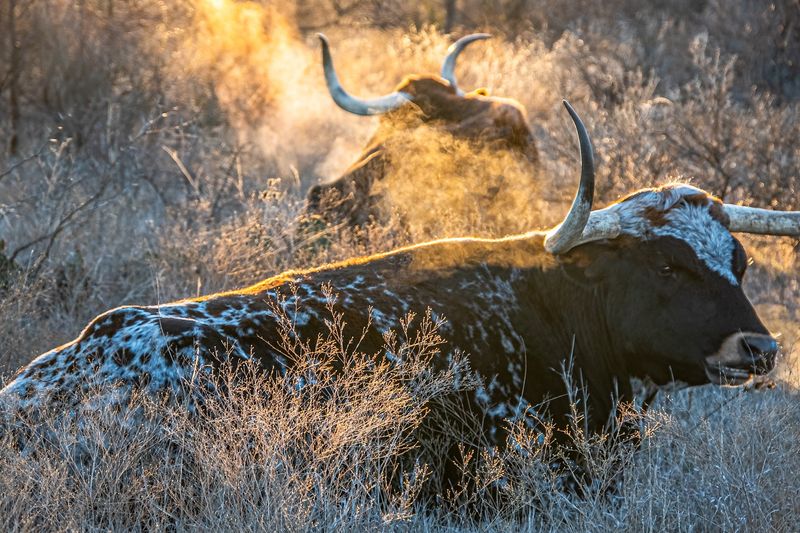
The state historic site also maintains a small herd of the official Texas longhorn cattle. These descendants of the cattle that once traveled the Western Trail graze the same prairie their ancestors crossed. A nature trail winds through the area, offering views of the Clear Fork of the Brazos River valley.
The visitor center houses artifacts and exhibits about both the military and civilian history. Rangers offer guided tours on weekends, sharing stories that bring the site to life. The combination of military history and Wild West legend makes Fort Griffin one of Texas’s most interesting ghost town experiences.
Share this story