Indiana does not usually get pitched as a crystal-hunting destination, which is exactly why Hoosier National Forest lands such a surprise. Across broad hardwood ridges, quiet creek beds, cliff-lined hollows, and backroad pull-offs, this forest offers a version of outdoor adventure that feels far more varied than most people expect.
If you know where to slow down, look at the water, and follow the shape of the land, Hoosier turns into a scavenger hunt with scenery attached. The best part is that the search itself is the thrill, wrapped inside one of the most expansive public landscapes in the state.
A Landscape That Looks Bigger Than Indiana Should
Hoosier National Forest does not arrive as one single dramatic overlook. It unfolds in pieces: a ribbon of road, a sudden wall of trees, a creek slicing through stone, then another long stretch of ridgeline beyond it.
That slow reveal is part of the hook, because the forest covers such a broad patch of southern Indiana that the scenery keeps changing before your eyes settle.
Near Bedford, the official address points you toward the administrative side, but the real experience lies in the spread of public land beyond the office doors. Hardwood forest, ravines, lakes, trailheads, and rural roads create a map that reads more like a region than a park.
You are not stepping into a manicured pocket of nature here. You are entering a working, living landscape where recreation, old communities, and wild terrain sit close together.
That scale matters once the drive begins. One section can feel open and easy, with gentle grades and broad views through the trees, while another drops into colder, tighter hollows where cliffs and overhangs pull the light down.
The forest has enough topography to keep a day from flattening into sameness, which is a big reason it surprises people who assume Indiana means only level ground and straight lines.
Even before the creek hunting starts, the setting is doing serious work. Morning fog can hang low over road cuts, spring woods can flash with redbud and dogwood, and fall shifts the whole place into a mix of copper and gold.
Hoosier earns attention by refusing to fit one simple picture, and that variety gives every mile a little momentum.
The Free Crystal Hunt Hiding in the Creeks
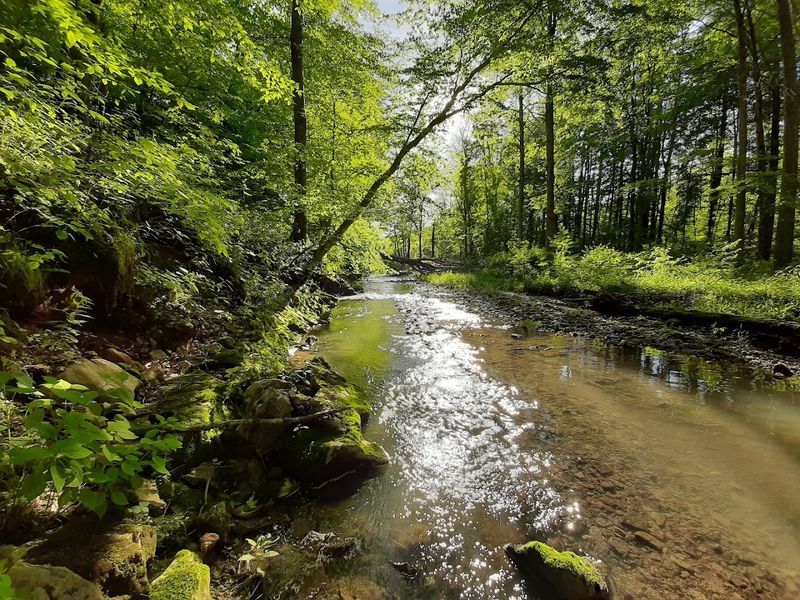
The phrase “crystal scavenger hunt” sounds almost too theatrical for a national forest, yet Hoosier has a long reputation for geode hunting in and around certain creek areas. The draw is not a staged attraction with signs and gift-shop language.
It is the simple, addictive act of scanning wet rocks, turning over rounded stones, and wondering which plain-looking lump might split open into sparkling quartz inside.
That is what makes the experience so satisfying. Nothing is handed to you, and the creeks do not advertise themselves with neon clues.
You notice shallow water sliding over gravel bars, pockets where rounded stones collect, and stretches where patient searching suddenly becomes the whole afternoon. Kids understand the game immediately, but adults lock in just as fast once the first unusual stone shows up in a palm.
Hoosier works especially well for this kind of wandering because the forest gives you room to mix treasure-hunt curiosity with an actual day outdoors. You are not standing in a crowded pay-to-dig lot.
You are in creek country, with birds overhead, leaf litter along the banks, and the sound of moving water setting the pace. Even without a jackpot find, the search feels active and specific, not like a generic hike with a side task.
The smart approach is to treat geode hunting as part observation, part restraint. Conditions change with rain, water levels, and access, so paying attention matters more than rushing.
Slow feet, careful eyes, and respect for the stream bed go further than any grand strategy. In Hoosier, the thrill comes from spotting possibility in ordinary stone, then letting the forest decide what it reveals.
Cliffs, Caves, and Cold Hollow Air
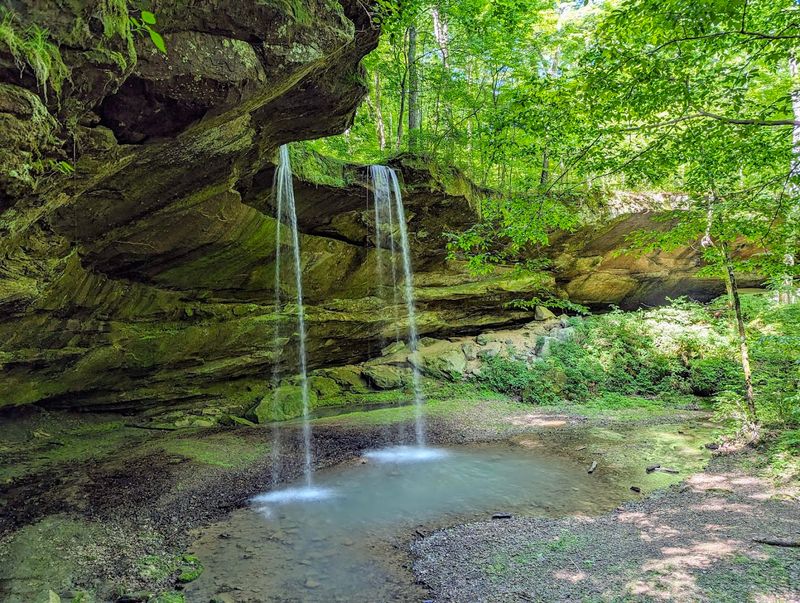
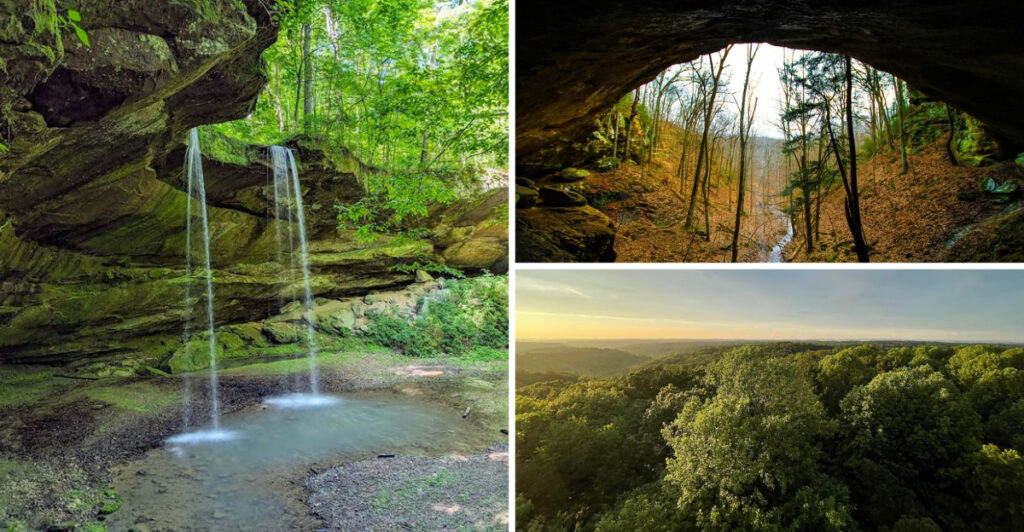
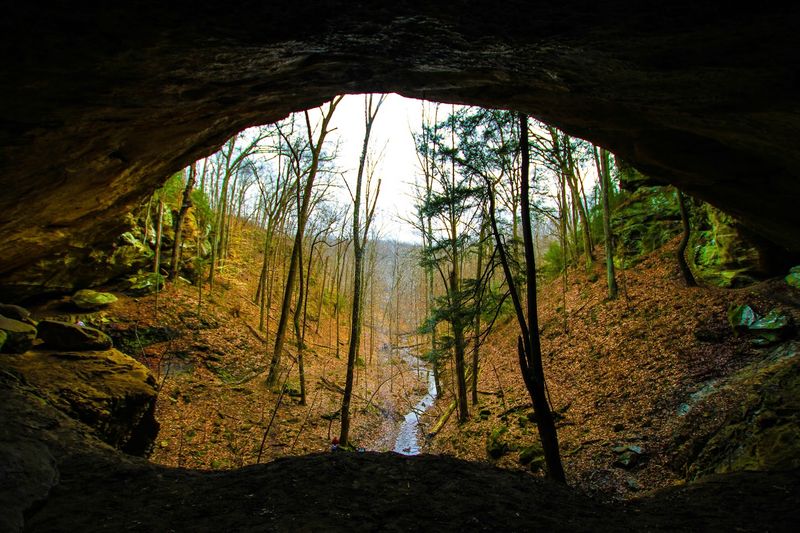
If the creeks provide the scavenger-hunt energy, the cliff country supplies the drama. In parts of Hoosier National Forest, trails slip into narrow hollows where sandstone walls rise overhead and the air turns cooler in a hurry.
You get that sharp environmental reset that makes a short walk feel like a move across seasons, especially in spring or after rain.
Hemlock Cliffs is the area most people point to for this mood, and for good reason. The route brings together rock shelters, cliffs, and waterfall zones in a compact loop that makes the terrain read larger than it is.
Even on drier days, the shapes do the heavy lifting: shadowed recesses, curving walls, exposed roots, and stone ledges that look carved rather than simply worn down.
These sections matter because they prove Hoosier is not one-note forest scenery. You can start the day on a ridge or by a lake and end it in a ravine that feels almost enclosed, with sound bouncing differently and the canopy filtering the light into darker greens.
That kind of topographic variation gives the forest texture. It also changes how you move, from casual strolling on easier stretches to more attentive footing around damp rock and uneven trail surfaces.
The cliffs add historical imagination without needing theatrical interpretation. Rock overhangs naturally invite thoughts about shelter, travel, and the long human habit of reading the land for protection and water.
In practical terms, they also offer some of the strongest photo stops in the forest. Hoosier may be known for acres on a map, but these close, cool hollows are where the place sharpens into detail.
Where Hoosier National Forest Turns Into Water Country
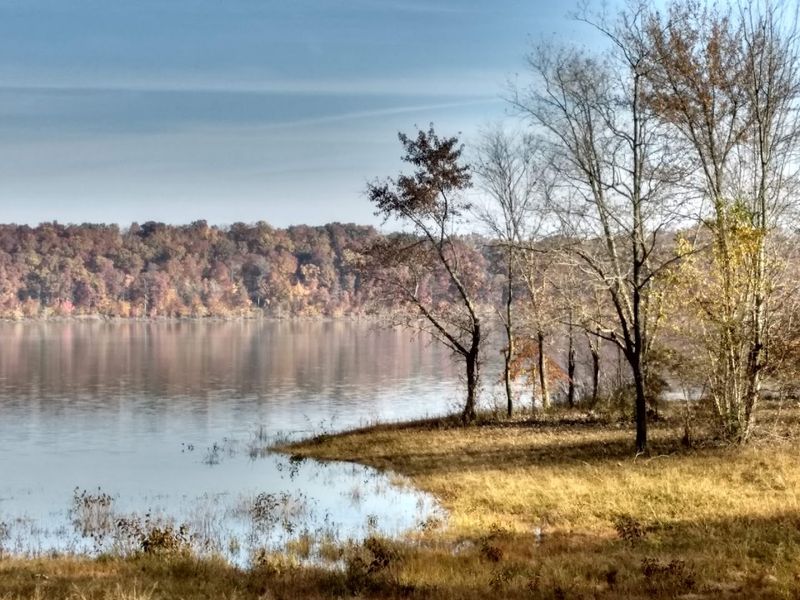
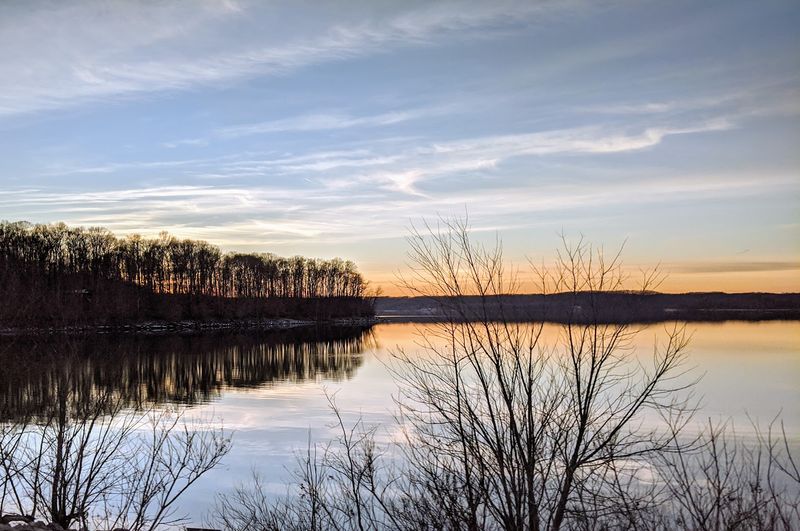
One of Hoosier’s smartest surprises is how often water changes the mood. Instead of a forest built only around trails, this landscape opens onto lakes, ponds, streams, and shorelines that keep the experience from becoming all boots and switchbacks.
A day here can include cliff views in the morning, then a completely different rhythm beside open water by afternoon.
Lake Monroe is the headline example, especially near the Charles C. Deam Wilderness, where backpackers and day hikers can connect wooded routes with shoreline scenery.
Water widens the visual field after long stretches under canopy. You move from enclosed trail corridors to bright edges where the sky suddenly matters again, and that shift gives the forest a bigger, more layered personality than many inland destinations manage.
Elsewhere, smaller lakes and creek systems create quieter versions of the same effect. Fishing, paddling, or simply sitting near the bank works here because the water is not decorative.
It is woven into how the forest functions, from habitat to recreation to route planning. Even a scenic drive picks up more interest when a road bends past coves, boat access points, or creek crossings instead of repeating the same woodland view mile after mile.
That variety also broadens who enjoys the place. Some people want mileage, elevation changes, and a tower climb.
Others want to hear water, pack lunch, and settle into a slower afternoon. Hoosier supports both without forcing one version of outdoor fun over the other.
The forest gets richer when you stop thinking of it as only trees and start noticing how often water redraws the map, adds light, and changes the pace.
Towers, Backroads, and the Old-Rural Edge
Not every memorable moment in Hoosier National Forest happens deep on a trail. Some of the most rewarding discoveries come along the forest’s edges, where gravel roads, old farm clearings, creek crossings, and occasional high points reveal how public land fits into southern Indiana’s rural landscape.
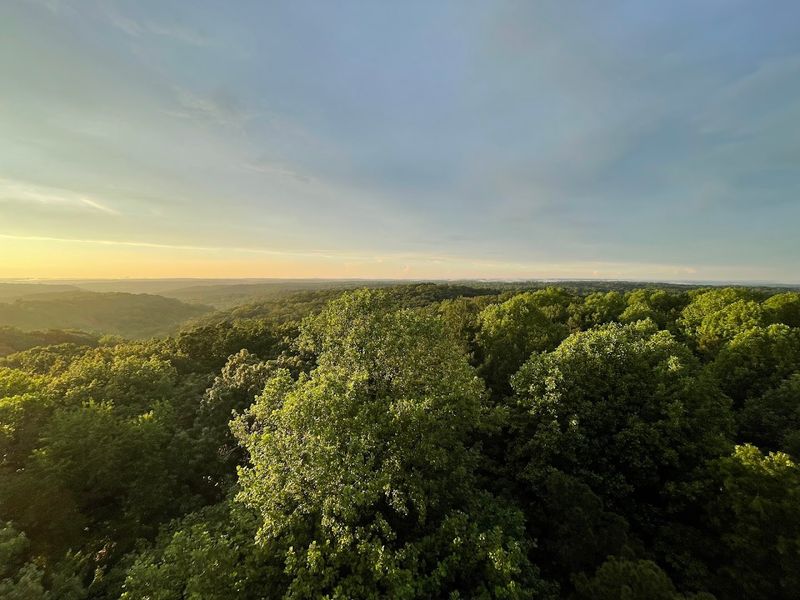
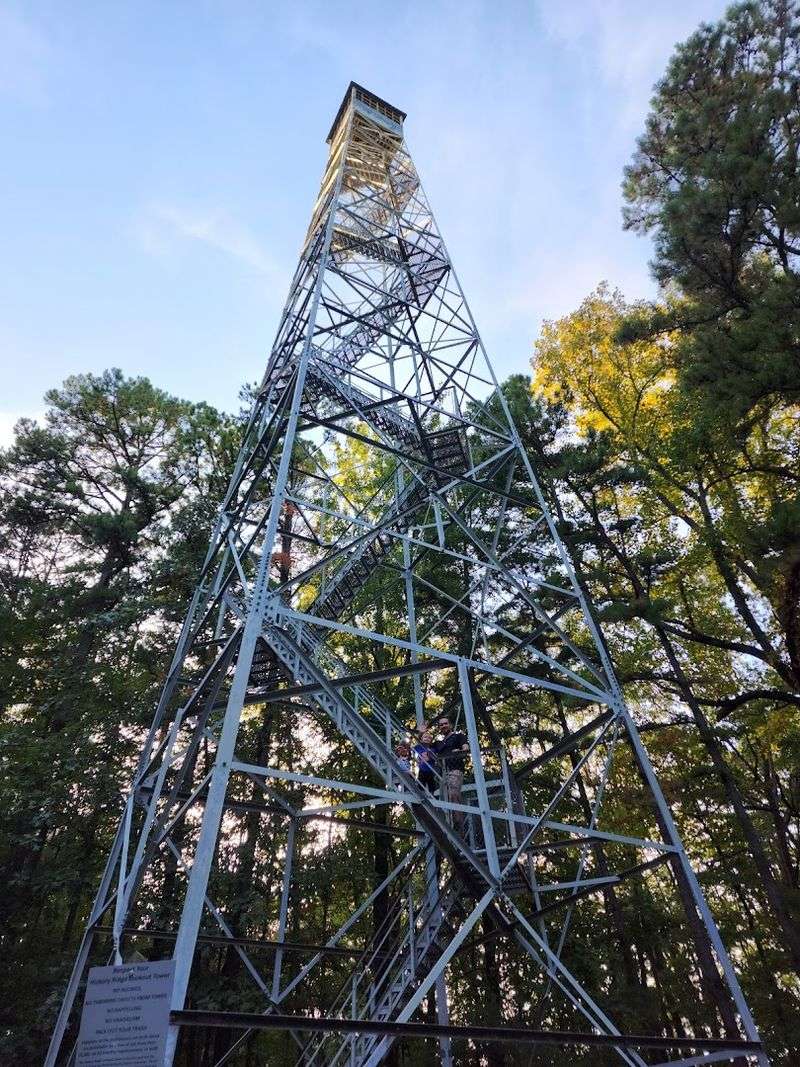
Those quieter stretches feel less like formal attractions and more like places waiting to be noticed. Hickory Ridge Fire Tower is one of the clearest examples.
The climb is relatively simple, but the view helps connect everything you’ve been seeing throughout the day. From above, the forest stops feeling like separate stops on a map and starts reading as one large landscape of ridges, waterways, roads, and wooded valleys.
It is a reminder that Hoosier works best when explored as a whole rather than a collection of individual sights. The drives between trailheads matter too.
Rural roads pass old homesteads, fields, churchyards, and creek valleys that can easily become unexpected highlights. For visitors interested in geodes, these quieter corners often feel like part of the adventure.
The search naturally encourages paying closer attention to streams, rock formations, and places that might otherwise be overlooked. Practically, these roads require a little preparation.
Services can be sparse, routes can feel more remote than expected, and a simple detour can become a longer scenic loop. For many travelers, that unpredictability is part of the appeal.
Hoosier rewards a full gas tank, extra water, and a willingness to follow one more backroad, one more creek crossing, or one more overlooked turnoff before calling it a day.
How to Experience It Without Rushing Past the Good Parts
The easiest mistake at Hoosier National Forest is trying to turn it into a checklist. There are too many trails, lakes, scenic roads, campgrounds, and side adventures for that approach to work well.
The better plan is to pair one anchor activity with one slower one, such as a cliff trail and a creek search, or a tower climb and an afternoon around water.
Timing shapes the day more than most people expect. Early morning has a real advantage here because roads are quieter, wildlife is more active, and the light works beautifully through open hardwoods and along creek corridors.
Reviewers who mention sunrise are not exaggerating the appeal. Southern Indiana woods can look especially crisp at that hour, before heat and midday glare flatten the details.
For anyone drawn by the geode-hunting angle, patience matters more than distance. You do not need to race across the forest hunting for a perfect secret spot.
Choosing a legal access area, moving carefully along the creek, and giving yourself time to observe the stone patterns is usually the smarter move. On the trail side, carrying more water than expected is wise.
Several hikers note that even moderate routes can demand more energy than the map first suggests.
Camping can stretch the experience into something much better than a quick stop. Developed campgrounds, horse camps, and backpacking areas each create a different version of Hoosier after dark, from practical comfort to near-silent woods.
If only one day is available, resist overloading the schedule. This forest improves when you leave room for an unplanned turnout, an extra half mile, or ten more minutes by a creek that suddenly looks promising.
Why This Forest Stands Out in a State Full of Low Expectations
Hoosier National Forest stands out partly because it beats the assumptions attached to Indiana. People arrive expecting decent woods, maybe a pleasant trail, and leave talking about cliffs, waterfalls, geodes, fire towers, backpacking loops, and long scenic drives through unexpectedly rugged country.
That gap between expectation and reality gives the forest extra force. It does not need to be the biggest spectacle in the country to deliver a genuinely absorbing day outdoors.
The place also avoids feeling single-purpose. Some public lands do one thing extremely well and ask everyone to fit that mold.
Hoosier is broader than that. A family with kids can turn creek searching into a treasure game. Campers can settle into established sites with useful facilities. Hikers can choose easier loops or longer wilderness miles.
Drivers can enjoy the landscape without committing to a punishing itinerary. Few Midwestern outdoor destinations offer that much flexibility without losing a sense of place.
There is also a welcome roughness to it. Hoosier does not read like a heavily curated attraction built for constant spectacle.
It asks you to notice changes in rock, water, and elevation, to keep an eye on side roads, to read the land rather than wait for it to entertain you. That makes every discovery, from a cold hollow to a glinting stone in a creek bed, land with more satisfaction.
In the end, the free crystal hunt is only part of the appeal, though it is a very good hook. The deeper payoff is finding a forest in southern Indiana that keeps switching form without losing coherence.
Creek beds, ridges, lakes, cliffs, and rural roads all pull in the same direction. Hoosier proves that surprise does not need hype when the landscape is already doing the work.
Share this story