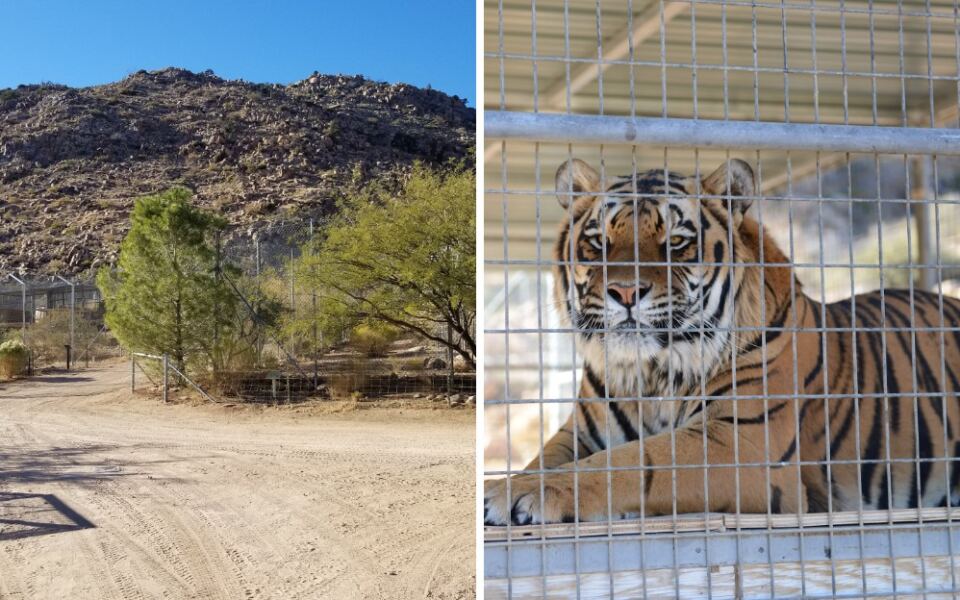
Out on a lonely stretch of old Route 66 near Kingman, there is a place where tigers once tied to a famous TV story now nap in big desert enclosures. Every afternoon, a guide loads up a group and heads out to watch those cats get their dinner. There is no cell signal out here, so the only thing to scroll through is a lineup of lions, bears, wolves, and one monkey with a famously spicy attitude.
Each animal arrived with a rescue story, and the staff can tell you every one of them. This guide covers how the tours work, the best time to show up, what to bring, and why a Phoenix or Tucson local might want to make the drive on a free weekend. Keep reading, because timing your visit right is the difference between seeing sleepy cats and watching dinner time unfold.
1. A Sanctuary on Old Route 66
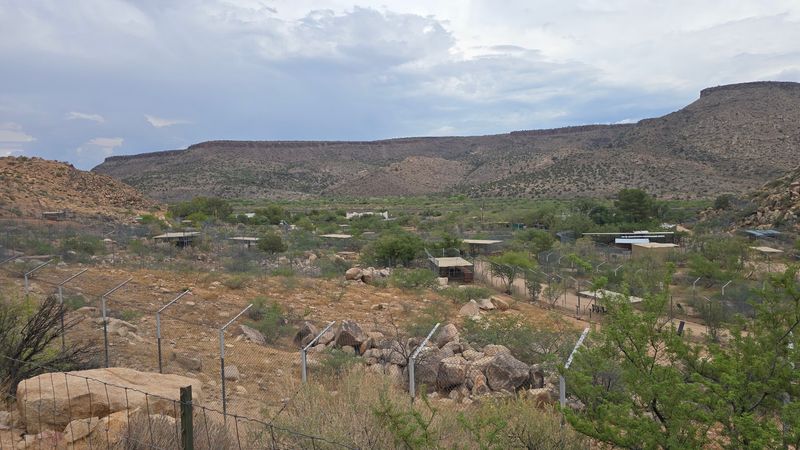
Keepers of the Wild Nature Park sits at 13441 AZ-66, Valentine, AZ 86437, in the rugged country northeast of Kingman, Arizona. The highway out front is part of historic Route 66, so the drive itself doubles as a scenic road trip.
The park is a nonprofit wildlife sanctuary, not a zoo. Every animal on the grounds is a rescue, and many came from situations where they could never survive on their own.
Big cats are the headliners here. Tigers and lions share the property with bears, wolves, coyotes, and monkeys, each living in its own enclosure.
For Valley residents, the trip makes a solid weekend outing, especially paired with a stop in Kingman. The setting feels remote, and that is part of the appeal.
Out here, the only traffic jam you are likely to hit is a group waiting for the tour bus. Plan ahead, because once you arrive, your phone will mostly be a camera.
2. Why Every Animal Has a Backstory
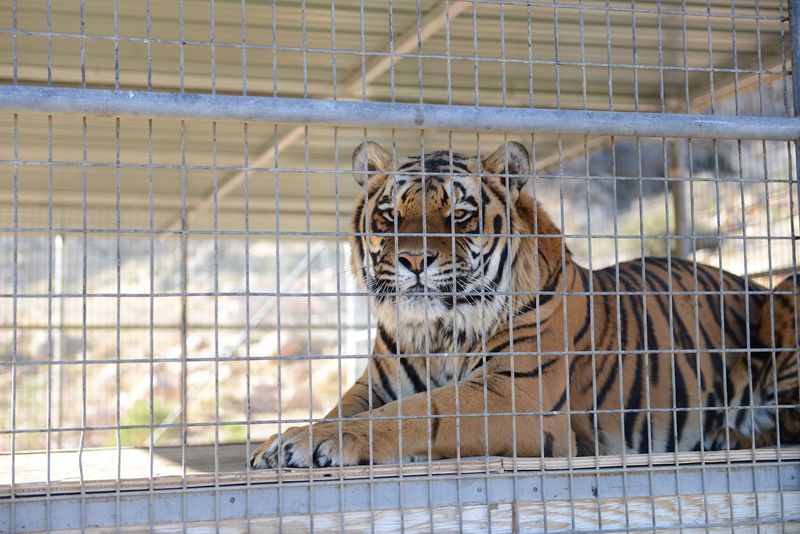
Nobody here was bought from a catalog. The animals arrived from private owners, shuttered parks, and other rough situations, and most have never lived in the wild.
That detail matters. Because so many were hand-raised or kept as pets, releasing them is not an option.
Guides share stories that stick with you long after the drive home. There are hand-reared tigers, a monkey whose former owner pulled all of its teeth to stop it from biting, and wolves that made it through a wildfire.
Some residents are older now. The sanctuary works as a retirement home for many of them, and a few are in hospice care.
Guests often wonder whether a visit will feel sad. The honest answer is that the animals are not free, yet they are getting a far better life than the one they left behind.
That mix of hard truth and hope is what gives the whole place its heart.
3. The Tiger King Connection
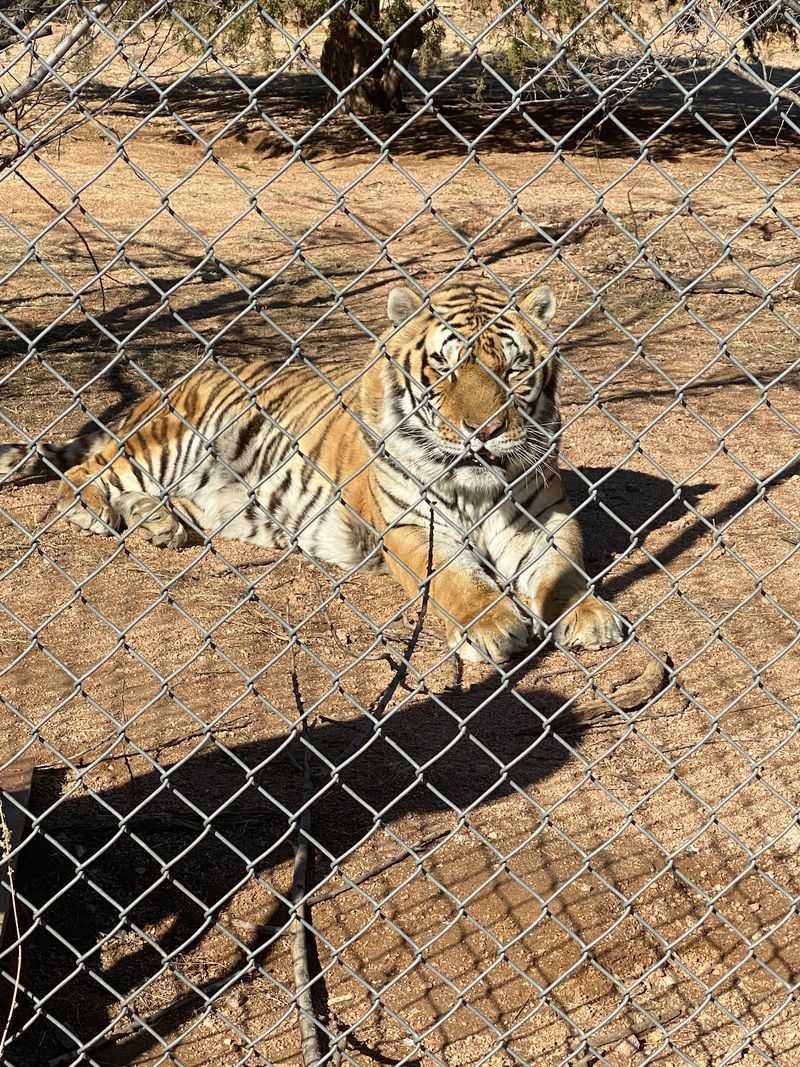
Remember the documentary series everyone watched a few years back? Some of the tigers linked to that story now live right here in Mohave County.
Staff have pointed out that the white tiger on site was one of the cats rescued from the Tiger King situation. Other big cats from that same chapter also call the park home.
Guides use these animals to explain a bigger issue. Tours cover the dark side of the cub petting industry and why wild animals do not belong in backyards.
It is a quick education that lands without a lecture. You meet the cat first, then hear how it got here.
Those former headline-makers now spend their days lounging, pacing, and occasionally joining a roaring match with the lions next door. Not a bad second act for a celebrity cat.
4. Dinner Time at 3:30
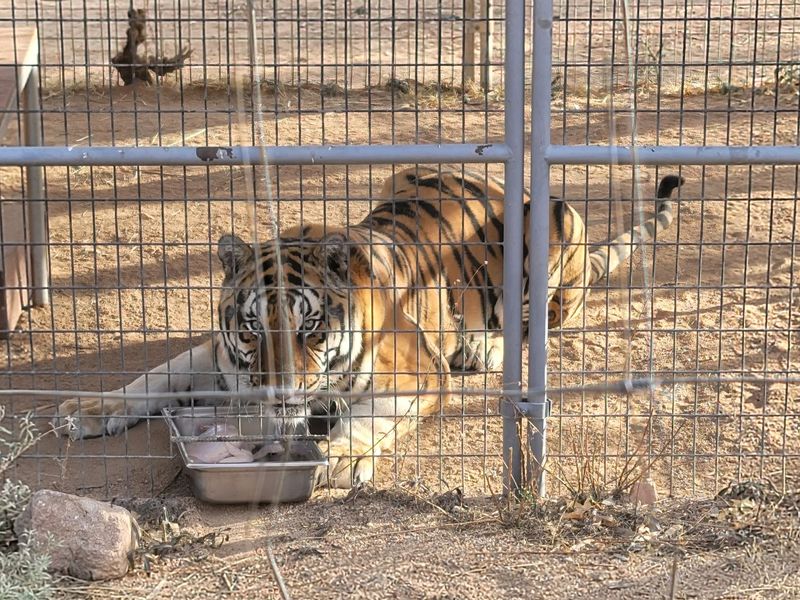
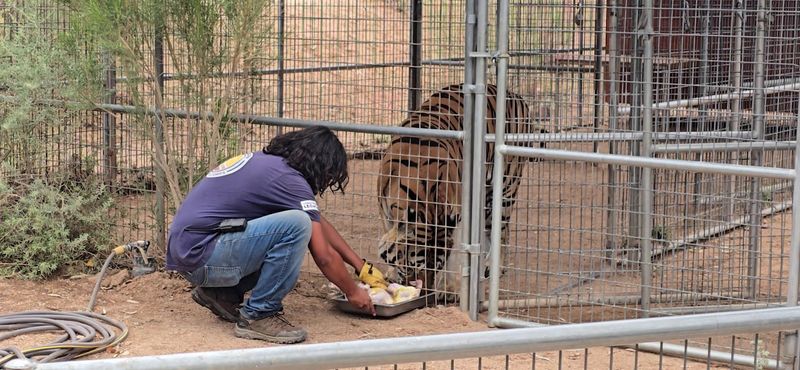
Here is the main event. The last guided tour of the day leaves at 3:30 PM, and it includes scheduled feeding of the tigers and lions.
Guests call it a must-see. Watching a big cat get its meal gives you a real sense of its size and power.
There is a trade-off. Because the feeding tour builds in time for meals, it covers fewer animals than the morning safari runs.
The smart move is to arrive in the early or mid afternoon. Walk the grounds on your own first, then hop on the 3:30 tour as the grand finale.
After the tour, there is usually still time to swing back by a favorite enclosure. Save that last look for the tiger who stole your attention.
5. Three Safari Runs, Three Personalities
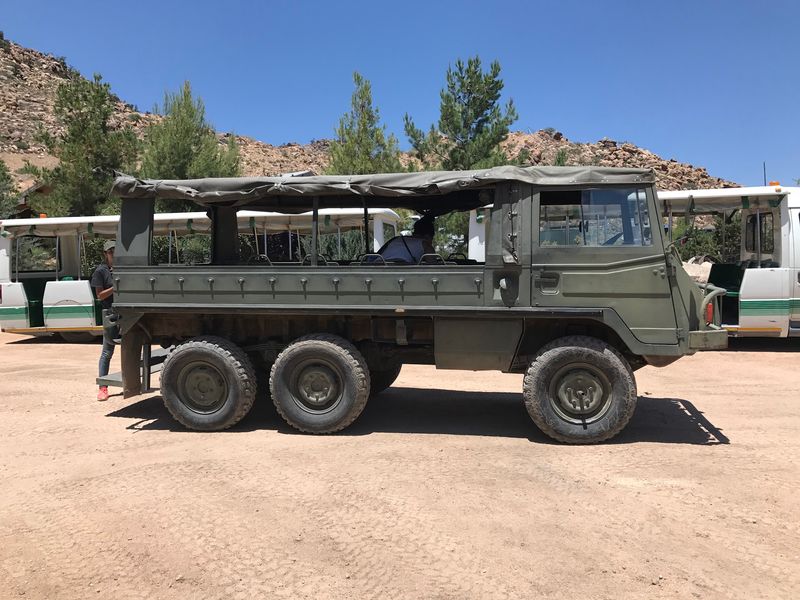
Not every tour is built the same, and that is a good thing. The park runs three safari schedules through the day.
The first two are the in-depth options. They spend more time on each animal and its history.
The third is the 3:30 feeding tour, which trades breadth for the excitement of mealtime.
Tours run on a tram or bus, and the guide narrates along the way. When the sound system has been spotty, guides have hopped off with a portable speaker so nobody misses a story.
Staff have also been known to wait patiently while slower walkers make it up the slight hill to board. That kind of care shows up all over the property.
Pick the tour that matches your goal, whether that is learning or watching dinner.
6. Guides Who Know Every Quirk
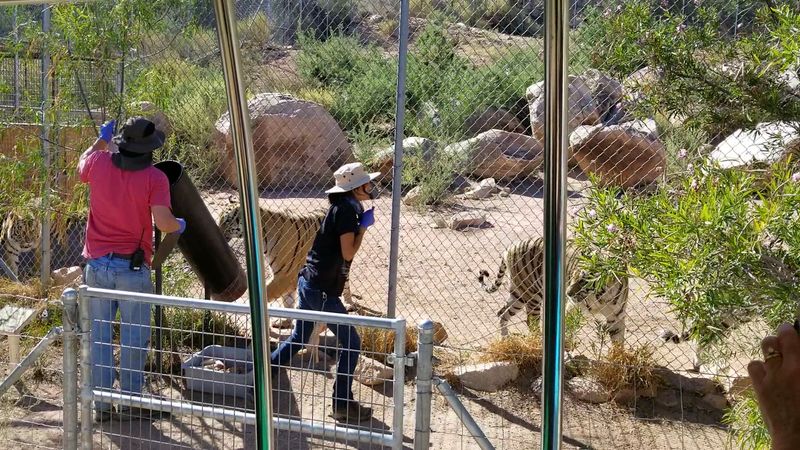
Ask a guide about any animal, and you will get a name, a history, and probably a personality profile. The staff know these residents on a personal level.
Guides explain how each animal arrived and what makes it tick. They also cover topics like the impact of wildfires on wildlife.
Questions are welcome, and the team can answer almost anything you throw at them. Several guides get mentioned by name for their knowledge and warmth.
That affection comes through clearly. It is obvious the people here care about comfort first and show second.
Plenty of families say the guided tour is what made the trip worthwhile. Walking alone is fine, but the stories turn a cage into a character.
7. Bears, Wolves, and a Monkey With Opinions
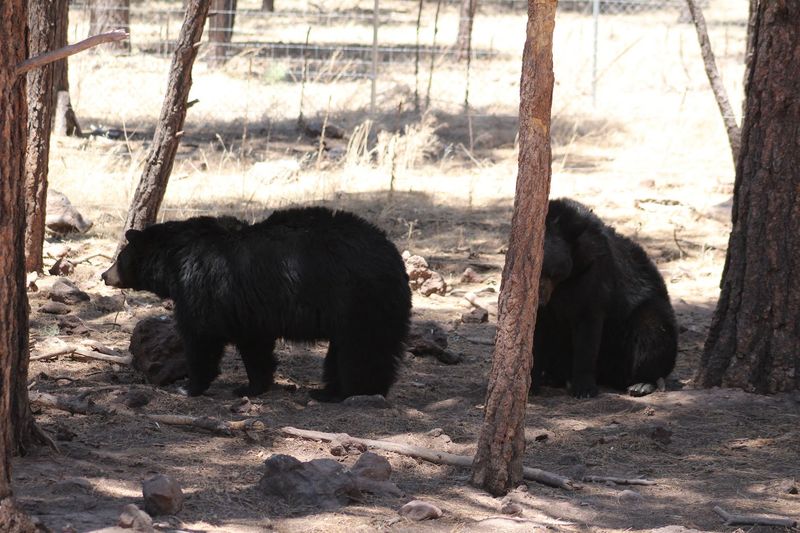
Tigers may get top billing, but the supporting cast deserves applause. Bears, wolves, coyotes, and monkeys round out the roster.
The bears hibernate in colder months, so a winter trip may mean missing them. That is worth knowing if they are on your must-see list.
The wolves carry one of the most memorable stories, having made it through a fire before landing here.
Then there is the monkey. Staff describe one resident as having anger issues, and guests regularly mention its funny personality.
Lions add their own soundtrack too. A roaring match between them is not unusual.
Come for the stripes, and you might leave talking about the primate instead.
8. Room to Roam
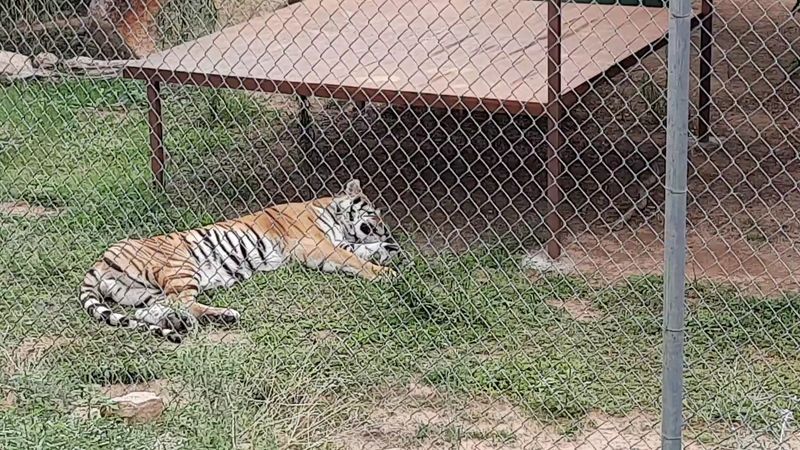
Enclosures here lean big. Many come with platforms, pools, and toys that keep the animals busy.
Enrichment is a priority, and it shows in how active the residents can be. Habitats are cleaned every day.
The grounds stay tidy, and the habitats feel more natural than a typical concrete exhibit. The whole setup puts the animals first.
That approach explains why the park calls itself a sanctuary. The goal is a comfortable life, not a performance.
Spend a few minutes at each enclosure and you will start to notice small routines. Patience pays off out here.
9. Exploring on Foot
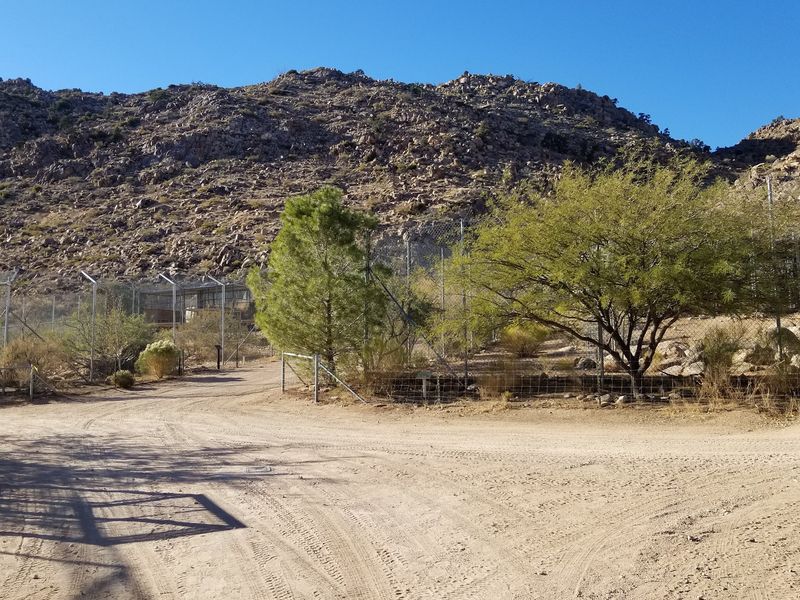
Pack your walking shoes, because the self-guided loop has some attitude. A few inclines are steep, especially if you aim to reach every corner.
Paths are mostly sand and pea gravel. Sneakers beat sandals by a wide margin.
Covering everything takes roughly an hour to an hour and a half. Add a tour, and you are looking at a few hours total.
Many guests like doing a tour first, then wandering at their own pace. Others flip the order and end with the feeding run.
Either way, there is no rush. Linger as long as you like at the lions, then trek back for one more lap.
10. Timing Your Trip Around the Heat
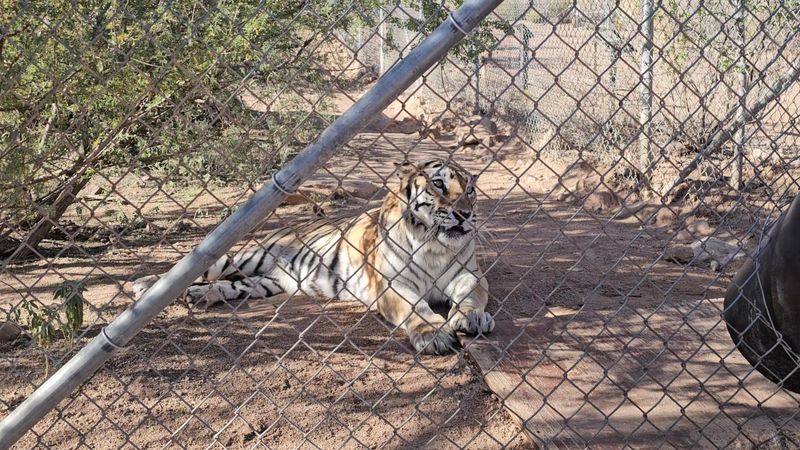
Summer is the tricky season. On very hot days, the animals hide out in shade and can be hard to spot.
That makes fall and spring the sweet spot for a Valley day trip. Cooler weather tends to bring more activity.
Sunscreen is smart even on overcast days. Sunglasses help too.
Bring plenty of water no matter the month. The terrain and sun can wear you down faster than expected.
Winter has its own catch, since the bears go into hibernation. Choose your season based on which animals top your list.
11. Picnic Tables and a Gift Shop Worth Browsing
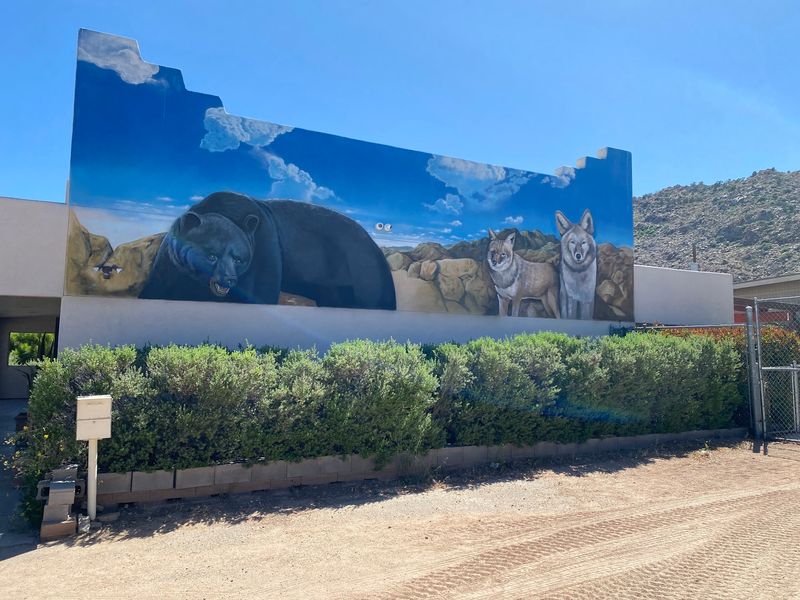
Good news for budget-minded travelers. Outside food and drinks are allowed, and the park has tables and chairs for a picnic break.
Drinks are also available to buy on site.
The gift shop gets plenty of praise. Since the sanctuary runs on donations and park revenue, every purchase helps feed the animals.
Bring cash as a backup. The electricity sometimes goes out, which can leave card readers useless.
A souvenir here does double duty. You get a keepsake, and a tiger gets a little more dinner.
12. Overnight Sounds for RV Travelers
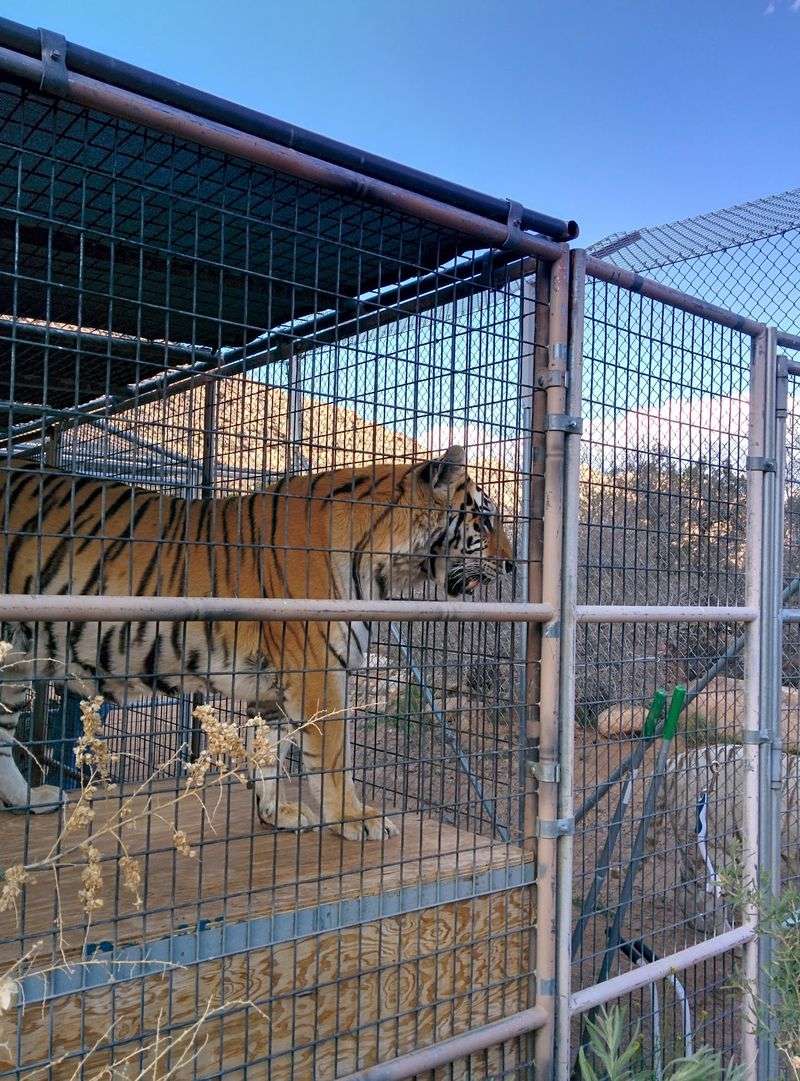
Here is a perk few people expect. RV travelers have been able to stay overnight in the parking lot, including through the Harvest Hosts program.
The nights are lively. Animals call out after dark, and a train rumbles through the canyon.
Expect a fun story more than a deep sleep. Guests who try it often say the experience is worth the trade.
Staying over also makes it easy to catch the 3:30 feeding tour and explore before closing.
Check with the park ahead of time about current overnight options. Then set an alarm for a morning lap of the grounds.
13. Hours, Signal, and Smart Planning
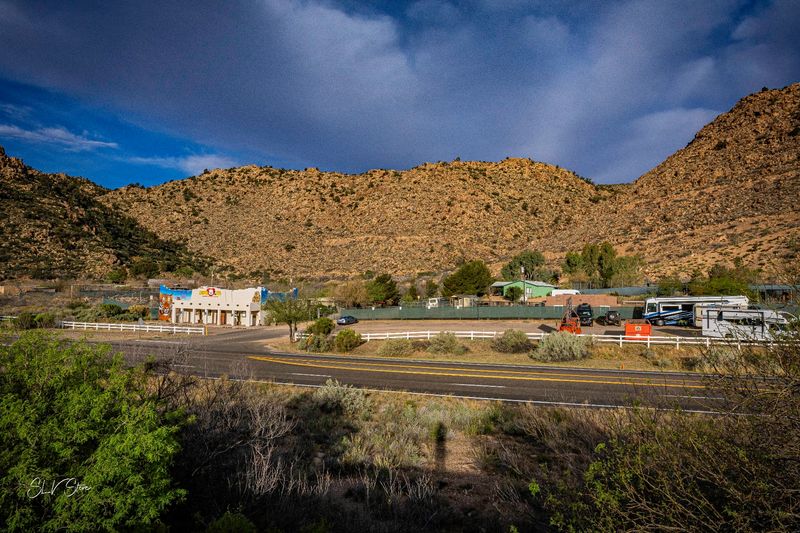
Mark your calendar carefully. The park is open 9 AM to 5 PM every day except Tuesday, when it is closed.
Cell service is basically absent in the area. Download directions before you leave and make sure your phone is charged.
Discounts have shown up on Groupon, so it may pay to check before buying tickets. Confirm current admission and tour prices on the park website.
Kingman makes a handy base, and the drive out is pretty in its own right. From Phoenix, plan for a full day.
Show up by early afternoon to explore and still grab a spot on the final tour. A little planning goes a long way out here.
14. A Detour With Real Purpose
Some roadside stops are just a place to stretch your legs. This one leaves you with a few new friends and a lot to think about.
With a 4.7-star reputation built on caring staff and rescue stories, the sanctuary earns its spot on a weekend list.
The 3:30 feeding tour delivers the wow moment. The rest of the day fills in the why.
Families, animal lovers, and Route 66 road-trippers will all find something here. Just skip the hottest summer days and avoid Tuesdays.
Bring water, cash, and good shoes. The tigers will handle the rest.
Share this story