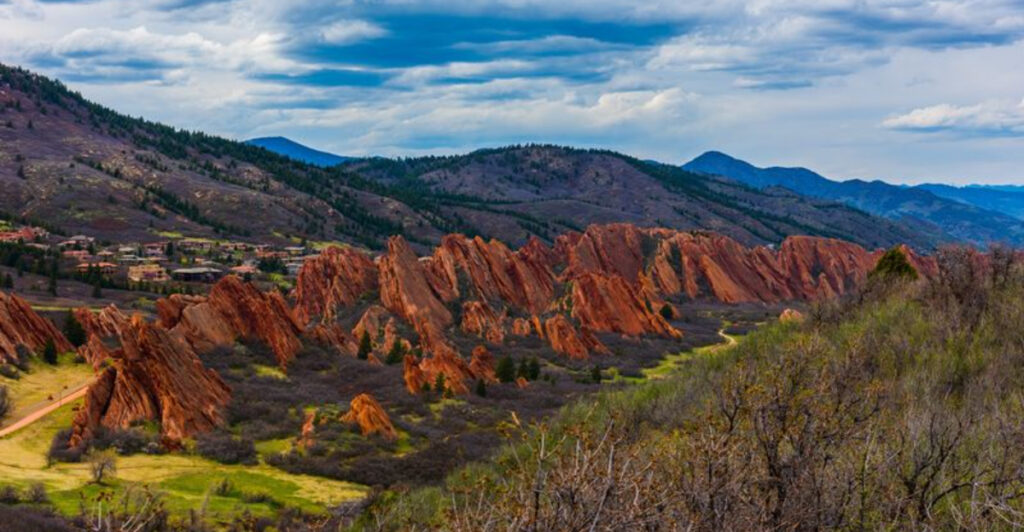
Dramatic landscapes don’t always require a long drive into Colorado’s highest mountains. Just outside Littleton, Roxborough State Park captivates visitors with towering red sandstone formations that rise dramatically from the plains, creating one of the state’s most striking natural scenes.
Protected for its remarkable geology, abundant wildlife, and fragile ecosystems, the park offers peaceful hiking trails where every turn reveals another spectacular view. Whether you’re hoping to spot mule deer, photograph the iconic rock formations, or simply enjoy a quieter alternative to Colorado’s busier destinations, Roxborough State Park is an unforgettable place to explore.
Where the Plains Suddenly Crack Open
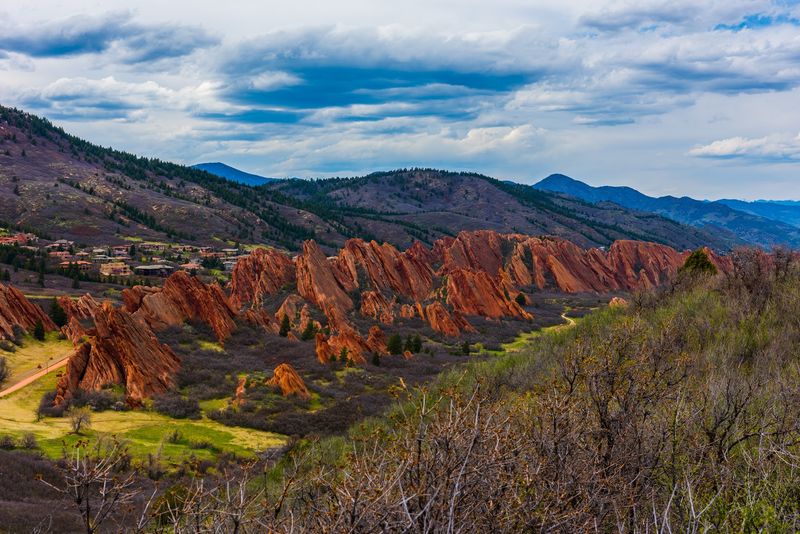
Nothing about the approach prepares you for how sudden the scenery changes. One minute the land looks broad and open, with dry grass, rolling space, and low foothill country in the distance.
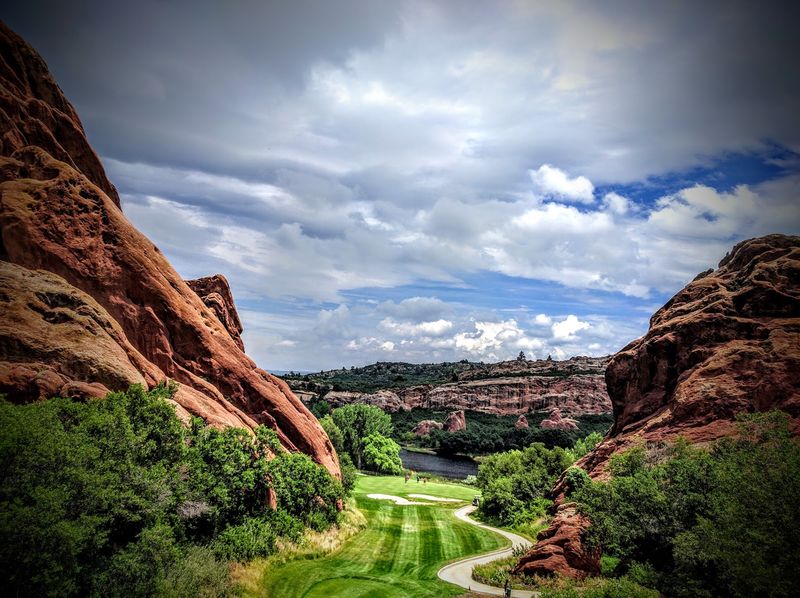
Then the rock walls appear, rising in long tilted slabs of deep red and orange, as if the ground pushed them upright in one powerful movement.
That sharp contrast is the first big reason Roxborough State Park stands out. The park sits where plains, foothills, and dramatic rock formations meet, so the view has a built-in sense of surprise.
Instead of climbing toward mountains right away, your eyes follow the land across a quieter foreground before smashing into those giant stone fins.
The effect is strongest in clear morning light, when the red sandstone glows against pale grasses and a bright Colorado sky. Even from lower trails, the walls look oversized because they rise so cleanly from the landscape around them.
There is very little visual clutter, which makes every ridge, angle, and shadow feel bigger.
Photographers love that open setting for a simple reason. The park gives the rocks room to dominate the frame.
Families and first-time hikers also get an easy reward, because huge scenery arrives without a long, punishing climb.
Bring a hat, water, and sun protection even for shorter walks. Shade can be limited, especially later in the day, and the open terrain reflects heat.
For the best first look, arrive early when the parking area is calmer and the red walls catch softer light. Roxborough does not hide its best feature behind thick forest or distant overlooks. The red rock walls are right there, bold and unmistakable, rising straight from the plains exactly the way the title promises.
Fountain Valley Puts the Rock Walls Center Stage
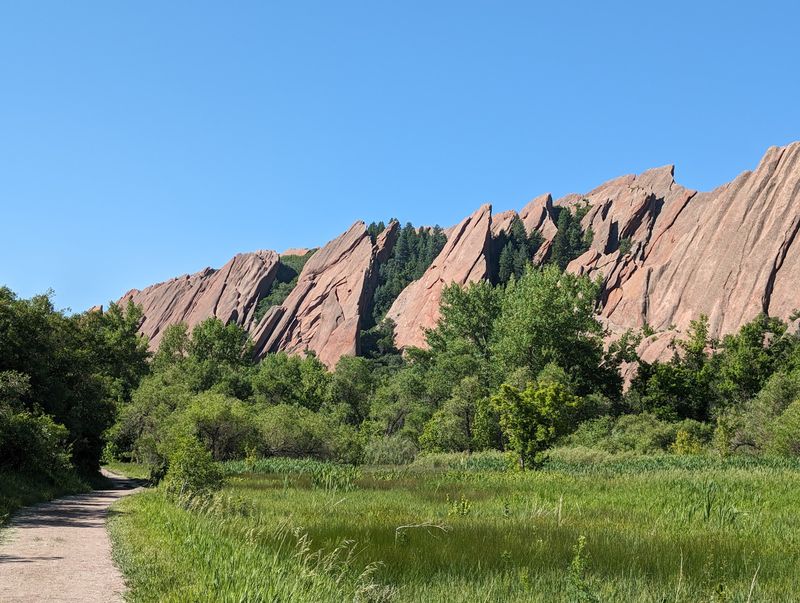
If one area sums up the park, Fountain Valley is the clearest answer. This part of Roxborough State Park brings hikers close to the famous sandstone walls without making the experience feel harsh or unreachable.
The trail system here is known for broad views, well-kept paths, and angles that show off the scale of the stone. Walking through Fountain Valley, the rock formations do not sit off in the distance like a painted backdrop.
They lean, stretch, and slice upward beside the trail, sometimes looking like giant pages standing on edge. The shape of each wall changes as you move, which makes even a short hike feel visually busy in the best way.
Plenty of people start here because the route gives a strong payoff without requiring expert hiking skills. Easier loops make it a smart pick for families, casual walkers, and anyone who wants memorable scenery without a full-day trek.
Benches in parts of the park also make it easier to stop, breathe, and take in the view instead of rushing through it.
Look closely and the smaller details begin to matter too. Green shrubs, wildflowers in season, and pale grasses soften the hard lines of the red stone. That contrast keeps the landscape from feeling empty, even though the rocks are clearly the stars.
Good shoes still help, even on groomed trails. The sun can get intense by late morning, and there are stretches with little cover. Carry more water than you think you need, especially during warmer months.
For many visitors, Fountain Valley becomes the picture they carry home. It offers the cleanest look at why Roxborough feels so unusual, with giant red walls standing above a calm, open valley that makes every turn look larger than life.
Colorado Light Turns the Stone Into a Color Show
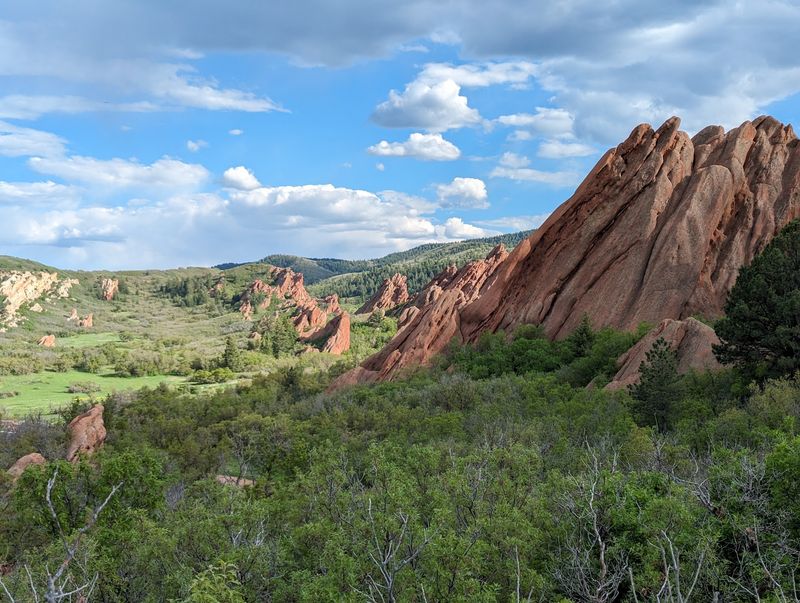
Color does a lot of the heavy lifting at Roxborough, and the light is what wakes that color up. Red sandstone can look strong at any hour, but in this park the changing sun turns the walls from rusty brown to glowing orange to rich brick red.
A cloudy day gives the formations weight, while sunrise and sunset pull out warmth and depth. Early morning is often the sweetest time to see the park at work. The lower sun stretches shadows across the open ground, which makes the rock slabs look taller and sharper.
If you reach a viewpoint soon after opening, the quieter trails and softer light can make the whole landscape feel crisp and freshly unwrapped.
Later in the day, the color shifts again. Under stronger sun, the red walls can look brighter and more intense, almost as if the stone is reflecting heat.
Blue sky makes the contrast even stronger, which is one reason photos from Roxborough often look so dramatic without much editing.
That changing light also affects how you plan a visit. Morning walks are usually cooler and more comfortable, especially in warmer months when the open trails can heat up quickly.
Sunset can be beautiful too, but hikers should watch time carefully and leave enough room to return before closing.
Even the same trail can look different from one hour to the next. A wall that seemed flat in midday can suddenly show deep ridges and layers once the sun drops lower. It rewards slow looking, not just fast hiking.
Bring sunglasses, sunscreen, and a charged phone or camera if pictures matter to you. The view shifts often, and the best scenes may appear when the light catches one edge of stone just right. At Roxborough, sunlight is not background decoration. It is part of the show.
Quiet Trails, Sudden Wildlife
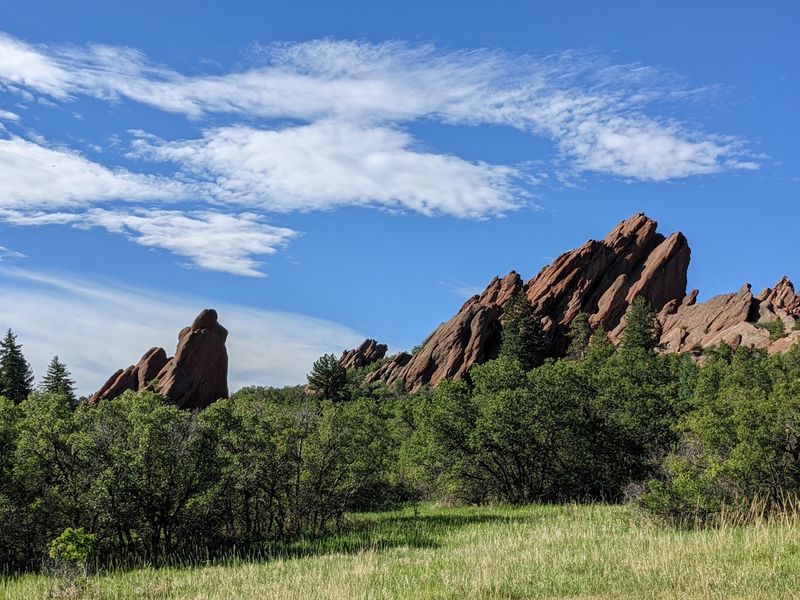
A trail can feel calm one second and full of life the next. Roxborough State Park is known not only for its towering red rock formations but also for the wildlife that shares the same open landscape.
Mule deer are among the most common sightings, and depending on the season, hikers may also spot wild turkeys, rabbits, hawks, songbirds, and other native animals moving quietly through the grasslands and foothills. That combination of dramatic geology and active wildlife changes the pace of a hike.
Instead of treating the park like a race to the next viewpoint, many visitors find themselves slowing down to scan the edges of meadows, shrubs, and stands of scrub oak. The open terrain makes wildlife easier to spot than in dense forests, where animals often remain hidden behind thick vegetation.
Silence becomes part of the experience as well. On a quieter morning, the park can feel remarkably still, allowing the sounds of rustling grass, birds calling overhead, or hoofbeats in the distance to stand out.
Those small moments add another layer to a landscape already defined by its spectacular rock formations. Wildlife encounters often feel especially rewarding because they happen naturally rather than at designated viewing areas.
A deer grazing beside the trail or a hawk circling above the sandstone fins can appear with little warning, rewarding hikers who move patiently and pay attention instead of hurrying past. Many of the park’s most memorable sightings happen after simply standing still for a few minutes and watching the landscape.
If wildlife is one of your goals, arrive early and give yourself time to slow down. You may spend several quiet minutes seeing nothing at all before a deer steps into view or a flock of wild turkeys crosses the trail.
Roxborough offers a rare combination: towering red rock walls that immediately capture your attention and peaceful wildlife encounters that reward those willing to look a little longer.
Best Ways to Hike the Park Without Wearing Yourself Out
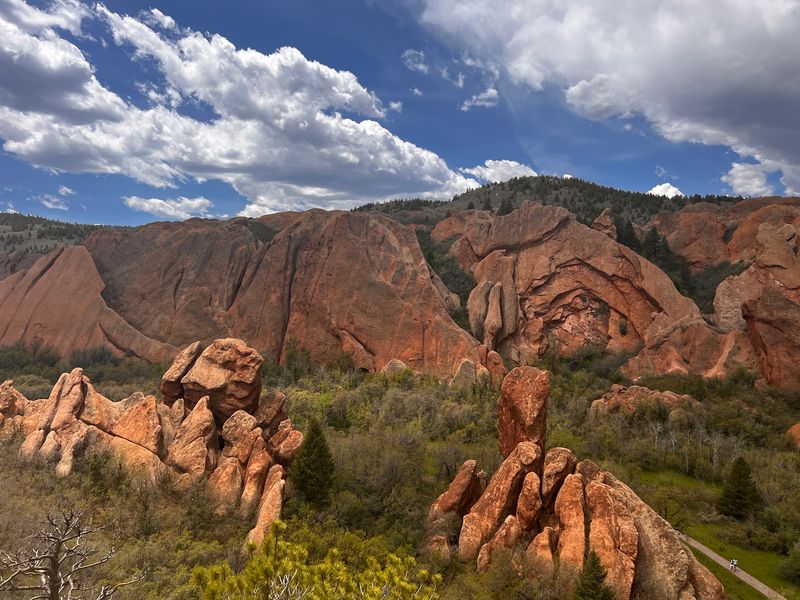
Smart planning makes a big difference at Roxborough because the park can look easy and still wear people down in the sun.
The trails are generally well maintained, and there are options for different skill levels, but open exposure means even a shorter walk takes more energy than some visitors expect. A little preparation can turn a rushed outing into a smooth one.
For a first visit, easier scenic loops are usually the best call. They deliver the famous red rock views without demanding a hard climb right away, which is helpful for families, casual hikers, and travelers adjusting to Colorado elevation.
More ambitious routes, including longer hikes with bigger elevation gain, are better saved for those ready for extra distance.
Start early if possible. Morning temperatures are kinder, wildlife is often more active, and parking tends to be simpler before busier stretches of the day.
There have been times when the park reached entry limits, so arriving late on a popular weekend can mean waiting rather than walking.
Pack more water than seems necessary. Reviews and trail descriptions regularly point to strong sun and limited shade, especially from late morning onward. Sunscreen, a hat, and sturdy shoes should be part of the basic plan, not optional extras.
It also helps to download maps before arriving, since phone service can be spotty for some carriers. Knowing your route ahead of time keeps the day relaxed and lets you choose a turnaround point before anyone gets overly tired.
If someone in your group has mobility concerns, take extra time around the visitor center area and choose the easiest access paths.
Roxborough rewards a steady pace more than a heroic one. Pause at benches, turn around for the changing views, and let the landscape do the exciting part.
Hiking here works best when the goal is not speed, but seeing those red walls from as many good angles as possible.
Why the Rules Matter at Roxborough State Park
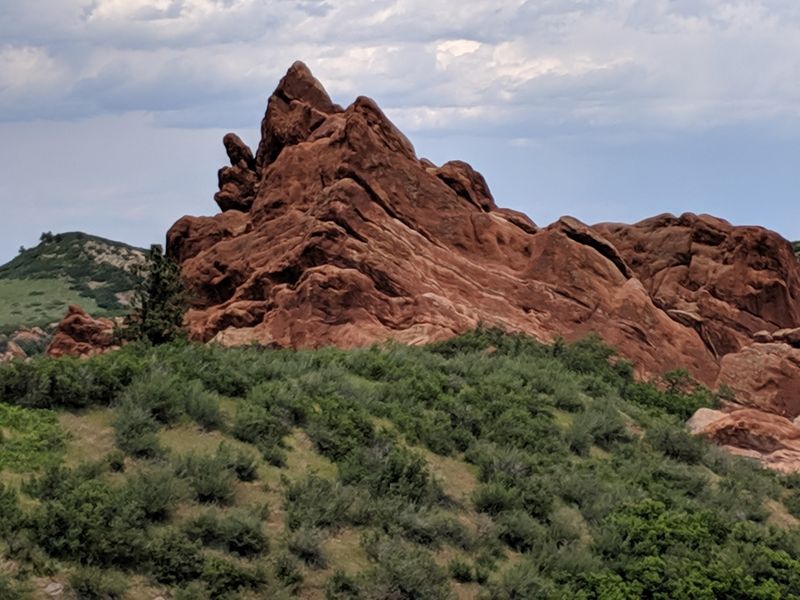
One reason Roxborough feels so different from many Front Range parks is that preservation comes before recreation.
The towering sandstone formations, rare plant communities, and abundant wildlife are carefully protected, and the rules visitors follow today help ensure the landscape remains just as remarkable for future generations.
Staying on designated trails is one of the most important ways to protect the park. The soils surrounding the rock formations are surprisingly fragile, and delicate native plants can take years to recover from repeated foot traffic.
What may seem like a harmless shortcut can leave lasting damage in an ecosystem that has evolved over centuries.
The same idea applies to the sandstone itself. Climbing on the rock formations is prohibited not only for visitor safety but also to help preserve one of Colorado’s most distinctive geological landscapes.
Likewise, restrictions on pets and bicycles reduce disturbance to wildlife and help maintain the peaceful atmosphere that makes the park feel so different from busier outdoor destinations.
Rather than limiting the experience, these protections actually improve it. Well-maintained trails, healthy wildlife habitat, and unspoiled scenery allow visitors to experience Roxborough much as it has appeared for generations.
The result is a park that feels quieter, cleaner, and more connected to the natural landscape than many heavily used recreation areas.
Before setting out, it’s worth stopping by the visitor center for current trail conditions, weather updates, or seasonal wildlife information. Heat, snow, and temporary closures can affect trail access throughout the year.
Roxborough is at its best when visitors approach it not simply as another hiking destination, but as one of Colorado’s most carefully protected natural treasures, where every rule plays a part in preserving the experience for the next person on the trail.
A Rare Front Range Escape That Still Feels Calm
Close to Denver is not always the same thing as crowded, noisy, or overbuilt. Roxborough State Park offers a different version of the Front Range experience, one with big scenery and a calmer rhythm.
It sits within reach of the metro area, yet once the trails begin, the mood shifts toward space, stillness, and long looks at the land.
That balance is part of what makes the park stand apart from more famous red rock destinations. The formations are dramatic enough to impress first-time visitors, but the setting stays quieter and more measured.
Instead of battling heavy tourism energy, many hikers get room to notice smaller details like shifting wind, bird movement, or the way the light changes on one wall over twenty minutes.
The park also works well for different kinds of outings. A family can come for a short loop and wildlife spotting. A photographer can chase early light and shadow. Someone wanting a longer hike can push farther into the trail system and earn broader views.
Even practical features help the experience stay manageable. There is a visitor center, parking, and clearly maintained routes, so the park does not demand wilderness-level navigation skills from every guest.
At the same time, the protected setting keeps the place from feeling overly polished or crowded with built attractions.
Timing still matters. Weekend afternoons can be busier, and warm weather raises the challenge level because the sun is strong and shade is limited.
Earlier starts usually mean cooler temperatures, easier parking, and a better shot at hearing more birds than conversations.
Roxborough is memorable because it combines accessibility with scenery that looks much larger than a simple day trip should deliver. Towering red rock walls rise from the plains, wildlife slips through the grass, and the whole place holds onto a welcome kind of quiet that is getting harder to find near a major city.
Share this story