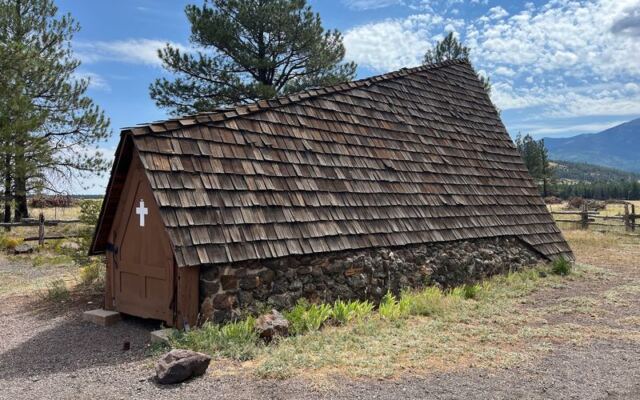
Most Phoenix folks blast up Highway 180 toward the Grand Canyon without tapping the brakes once. That is a mistake, because a tiny A-frame sits just outside Flagstaff with a door that looks built for a hobbit.
Behind that door waits one of the best mountain views in northern Arizona, and it costs exactly nothing to see. A local doctor built the place in the early 1960s because he wanted strangers to share the view that gave him and his wife a break from busy days.
It burned down once, and the community raised it back up. Today it never locks, runs on an honor system, and has hosted hundreds of weddings.
Keep reading for the story, the quirks, the parking catch in snowy months, and why a ten-minute stop here can stretch into an hour.
A Tiny A-Frame Off Highway 180
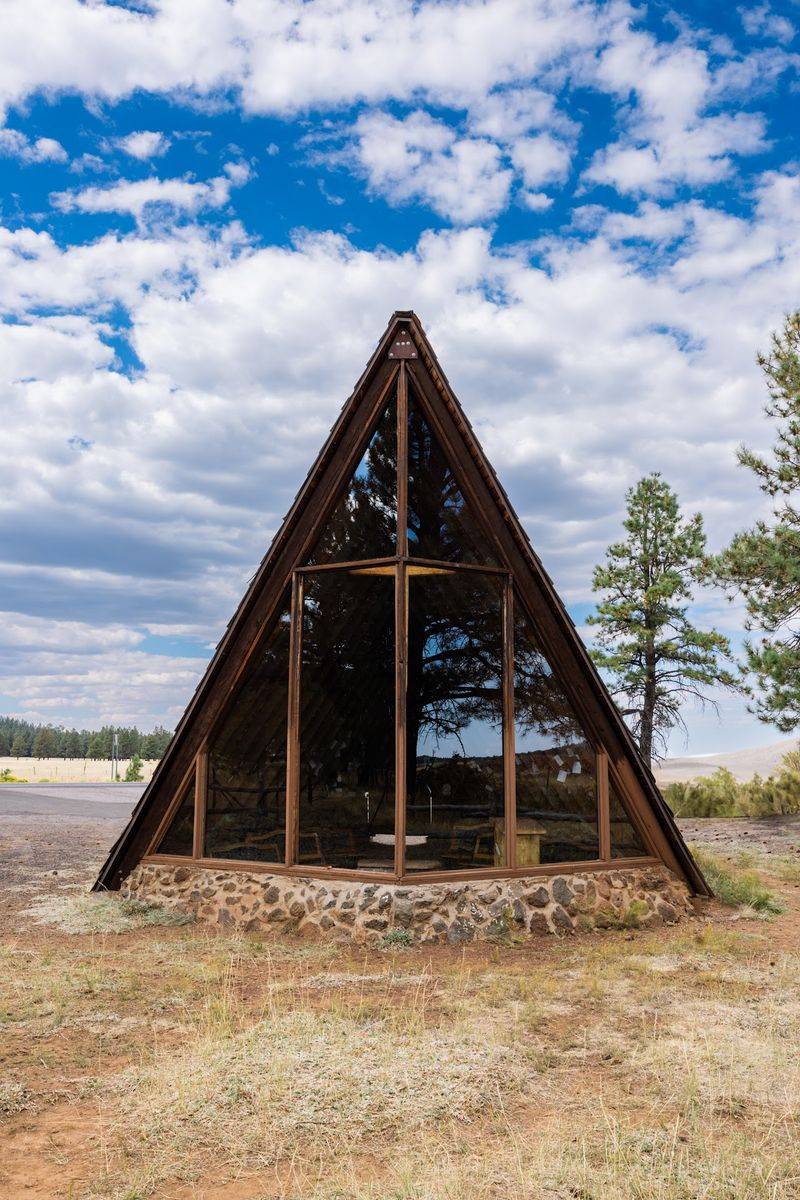
Blink on the drive north and the building slips right past the windshield. The Chapel of the Holy Dove sits on W Fort Valley Rd, Flagstaff, AZ 86001, along Highway 180 in the Coconino National Forest.
It sits just out of Flagstaff, on the stretch that carries road-trippers toward the Grand Canyon. A small pull-off and parking area mark the spot, so there is no long hike or ticket booth between the car and the door.
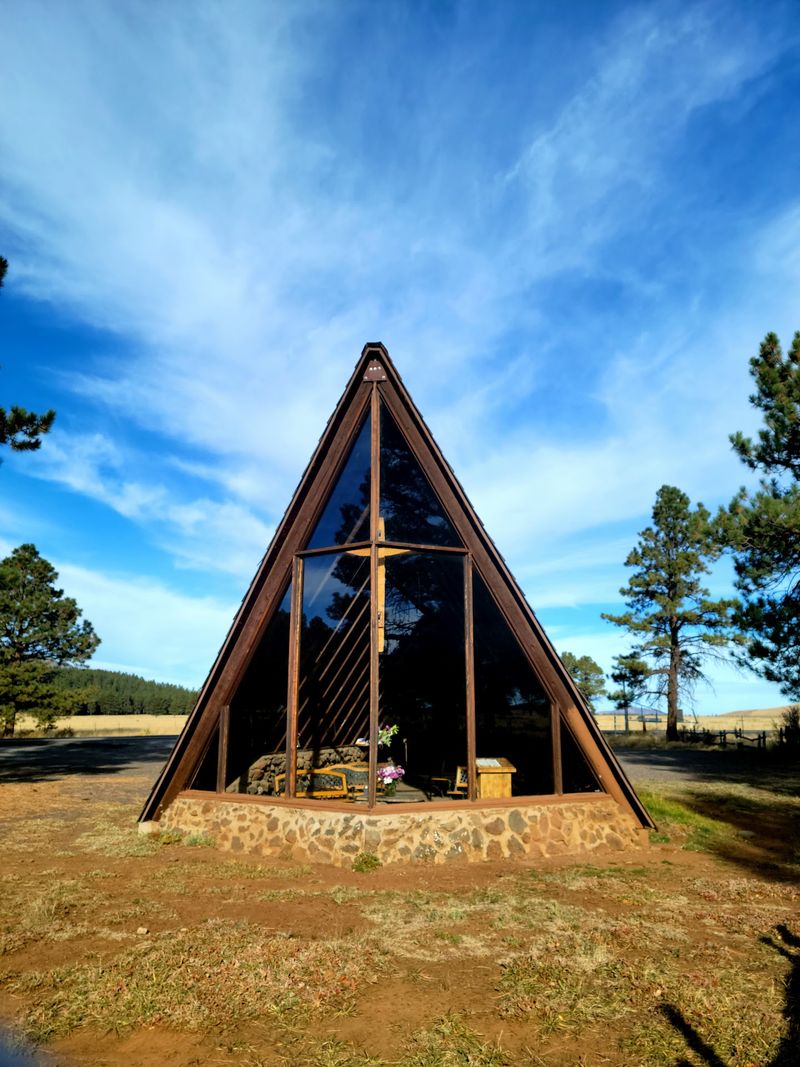
The structure itself is modest. Ponderosa pine framing rises from a foundation of local volcanic rock, forming a steep A-shape that pops up among the trees and meadows.
For Valley drivers, the appeal is simple math. Flagstaff is already a classic escape from the heat, and this stop adds almost no time to a day trip while handing over a view that usually takes real effort to earn.
Tour groups heading from Sedona to the Grand Canyon sometimes pause here too. Locals who know about it tend to treat it as their secret first stop on the way north.
So what makes a little roadside chapel worth a detour? The answer starts with a doctor and a window.
Dr. Lacy and a View Worth Sharing
Some people keep a favorite view to themselves. Dr. Lacy, a local physician, went the opposite direction.
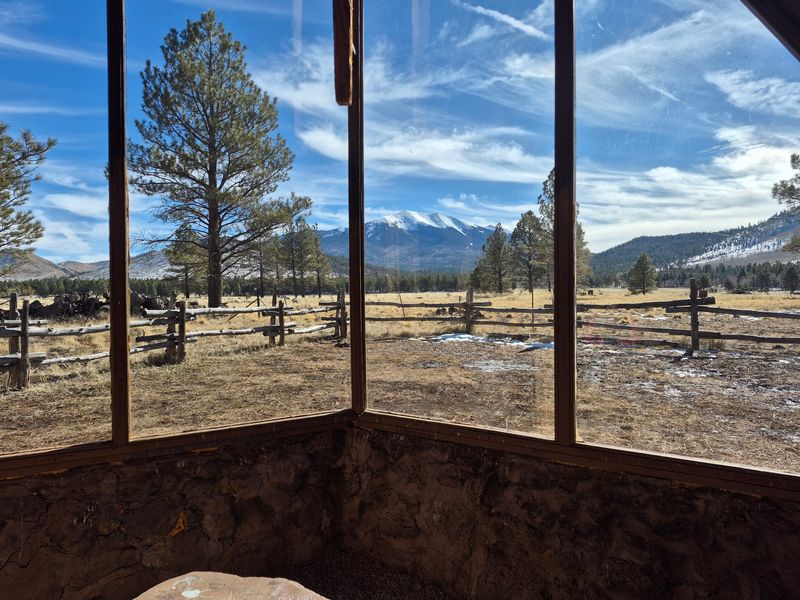
He and his wife found real rest in the scene of the San Francisco Peaks rising behind this patch of forest. Instead of fencing it off, he decided travelers should get a chance to enjoy the same respite.
Construction ran from 1961 to 1962. The result was a small chapel open to anyone passing by, a generous idea from someone who spent his working life caring for others.
Dr. Lacy lived until 1991. After that, the little plot of land and the chapel were placed into his wife’s trust, keeping his original intention in place.
That backstory changes how the building reads. It is less a monument and more an invitation, one person’s view handed over to strangers with no strings attached.
There is a quiet lesson in it for any Arizonan who has a favorite overlook. Sharing a good thing can outlast the person who shared it, which is exactly what happened next, when the chapel faced its toughest year.
From Ashes in 1999 to a Rebuild in 2000
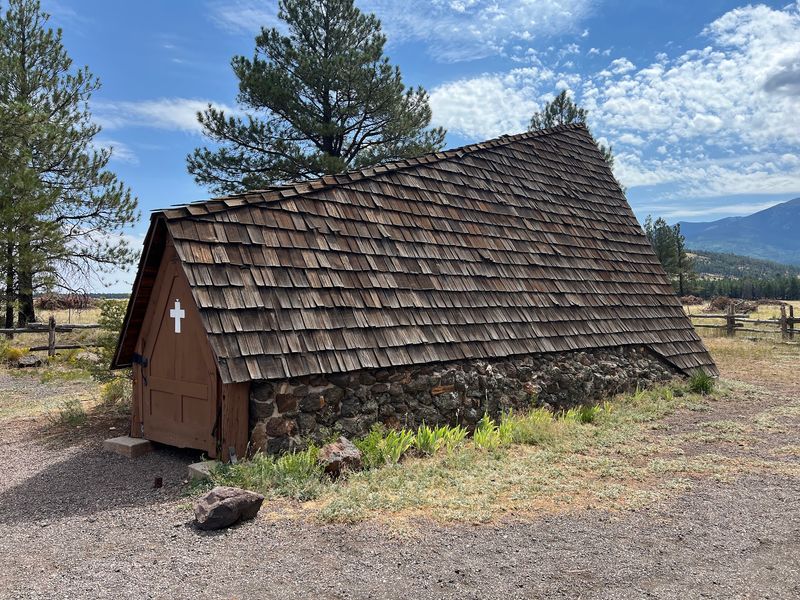
In 1999, a fire took the chapel down to its foundations. For a lot of roadside landmarks, that would have been the final chapter.
Here, an 18-year-old named Christen McCracken stepped up. Dr. Lacy’s wife gave permission for McCracken and the local public to raise money and rebuild.
The community answered. The chapel standing today was finished in 2000, sitting on that same volcanic rock base that survived the flames.
That detail makes the place feel even more like a shared project. It was born from one doctor’s generosity and reborn through a teenager’s push and a whole community’s donations.
A caretaker sometimes shows up on site and will share pieces of this history with anyone who asks. Catching that person on a visit is pure luck, but a welcome bonus.
Knowing the rebuild story also explains the donation box near the entrance. The chapel stays standing because people keep chipping in, and that brings us to the real star of the show waiting inside.
The Hobbit Door Surprise
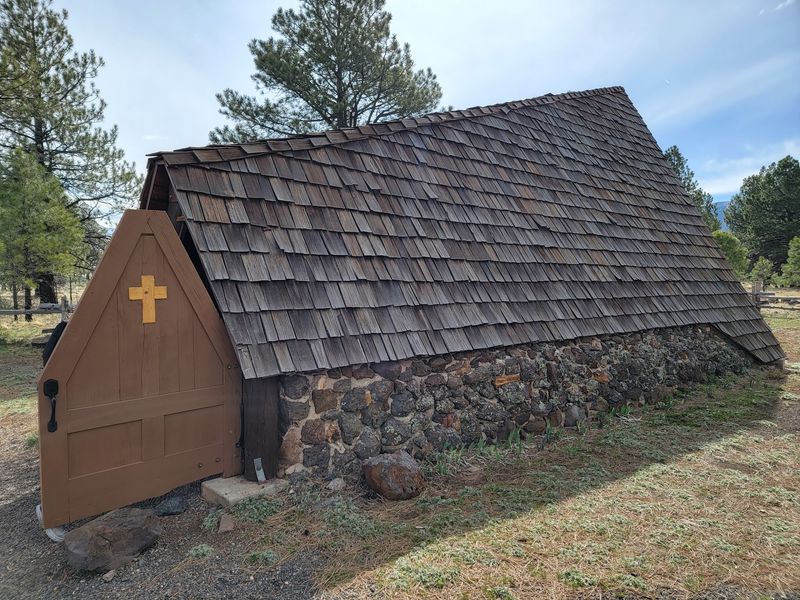
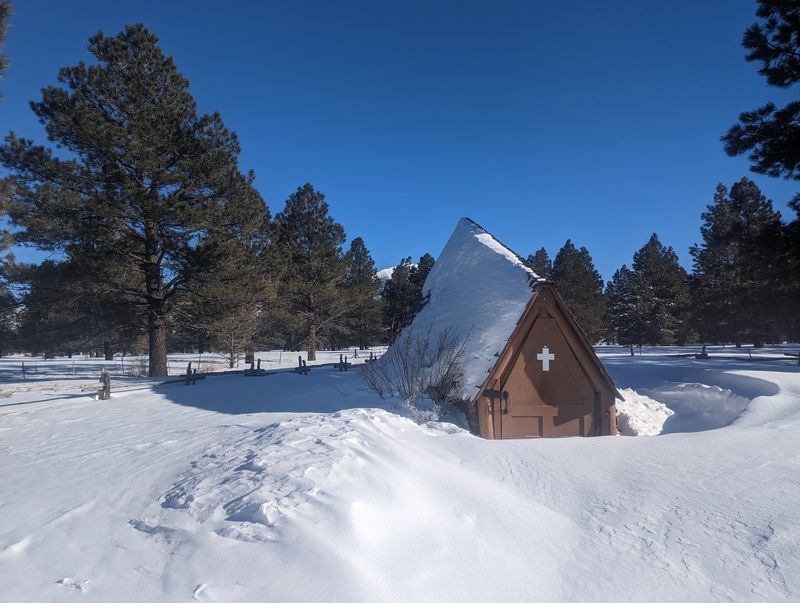
From the parking area, the chapel looks almost kid-sized. The entry door is small enough that plenty of people call it a hobbit door.
Then comes the twist. Once through that doorway, the room opens up with tall ceilings and a surprisingly spacious layout.
The A-frame design does the heavy lifting here. Its steep roofline climbs high overhead, so the inside feels far grander than the outside promises.
That small-to-big reveal is part of the fun, especially for kids. Families with grandkids often find this stop becomes a favorite moment of the whole road trip.
The door works almost like a portal. One step separates a highway pull-off from a calm, quiet room.
Design nerds will appreciate how intentional it all feels. Every line in the building points one direction, toward the far wall, where the payoff waits.
Mountains Behind the Pulpit
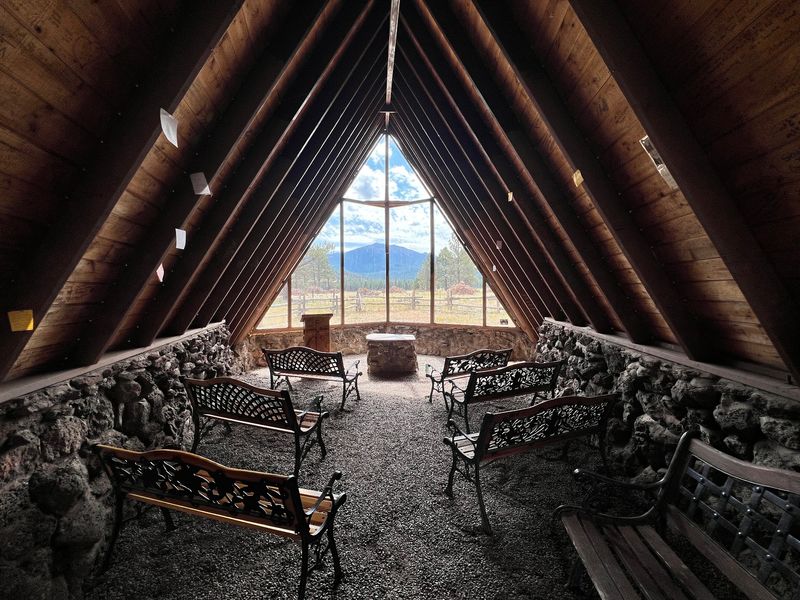
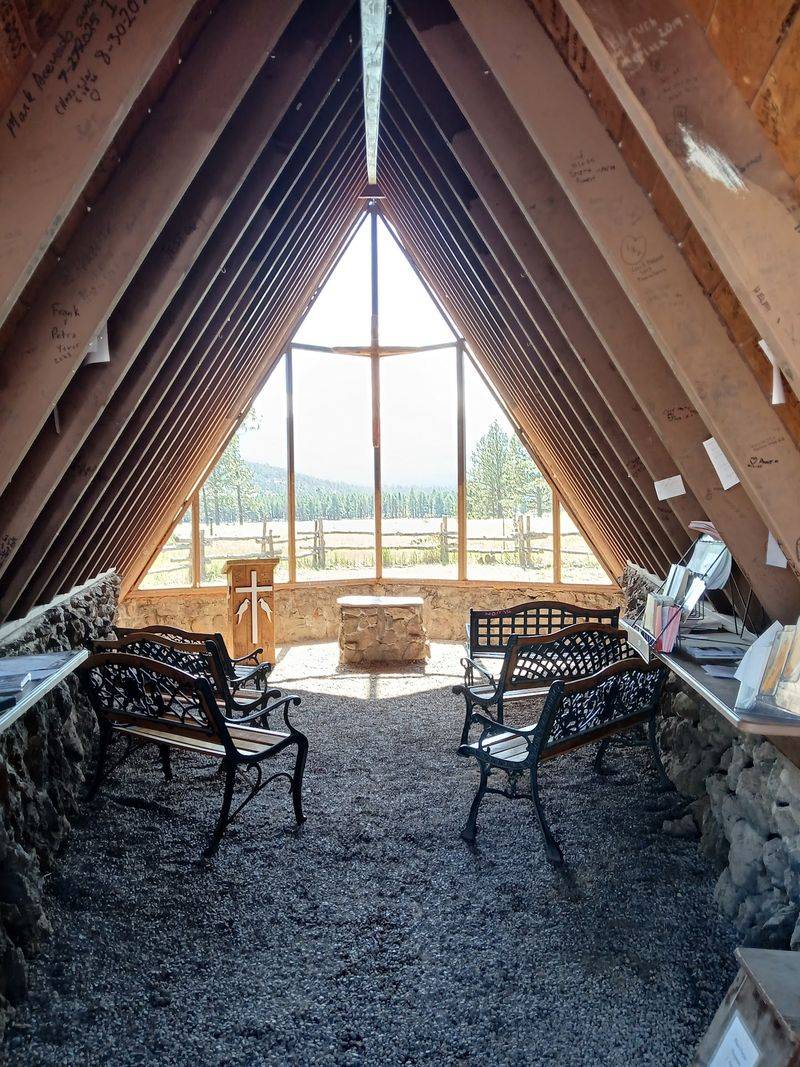
Forget stained glass. The back wall here is a full bank of windows, and the artwork is the San Francisco Peaks themselves.
The A-frame funnels attention straight to that glass. Pine trees, open meadow, and the Peaks fill the frame, so the mountains seem to become part of the chapel.
A pulpit stands in front of the view, with a few pews lined up facing it. Seating covers roughly 20 or so people, which keeps things intimate.
This is the exact scene Dr. Lacy wanted to share. Decades later, it still does the job he built it for.
Timing changes the experience. A fresh snowfall turns the forest white and makes the room feel even more peaceful, while sunny days put the sun right over the roofline for photographers.
One art-minded traveler even turned a sunny photo of the chapel into a watercolor painting. That says plenty about how this spot sticks with people long after they pull back onto the highway.
Walls Covered in Notes and Names
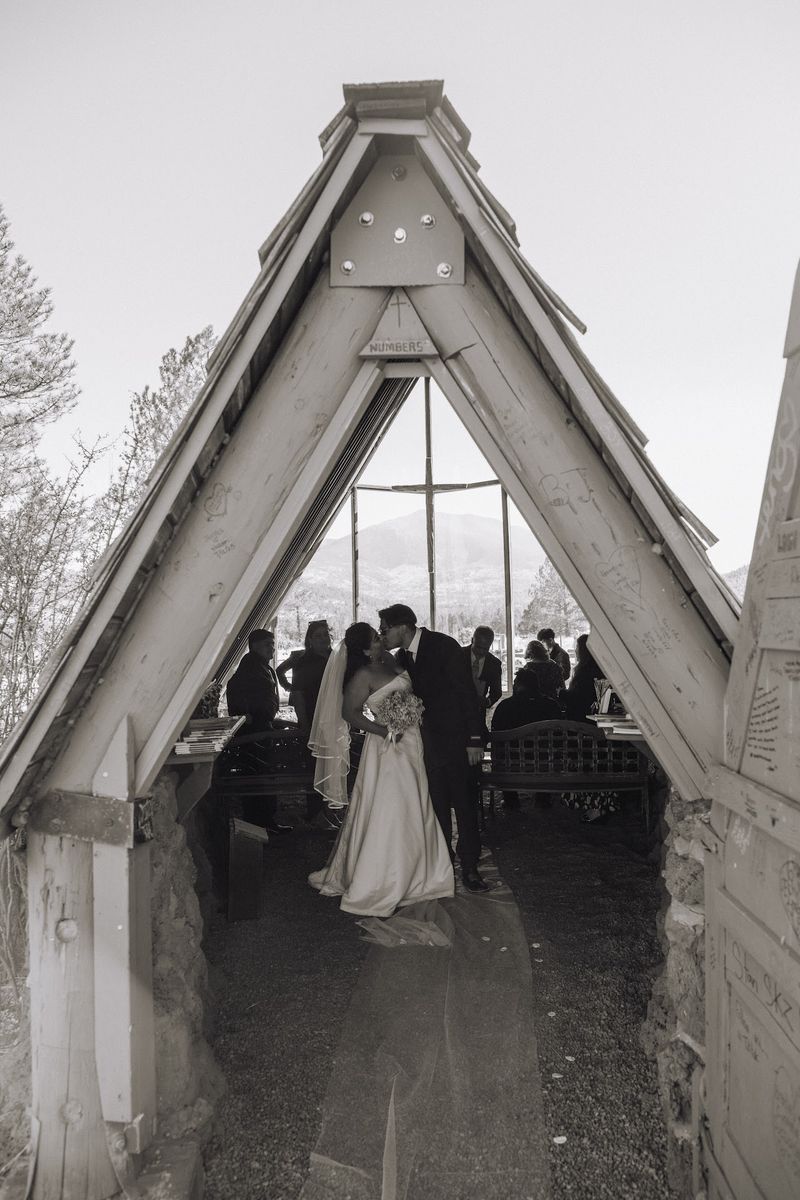
After the view, the walls start talking. Handwritten notes, prayers, and names cover much of the interior.
Some messages come from couples planning to marry here. Others are simple thank-yous from travelers happy they stopped.
Families have been leaving their mark for years. Some can find their own names scattered across the wood, along with prayers and signatures dating back decades.
Reading them becomes its own activity. It is easy to lose twenty minutes scanning dates and hometowns.
Shelves hold books about faith and prayer, free for anyone to read. A Bible is on hand, and a prayer request box lets people leave a request that someone will pray over.
That hands-on element is what separates this from a look-and-leave overlook. People add to the place every time they visit, so the chapel changes a little with each car that pulls in.
Free Weddings on the Honor System
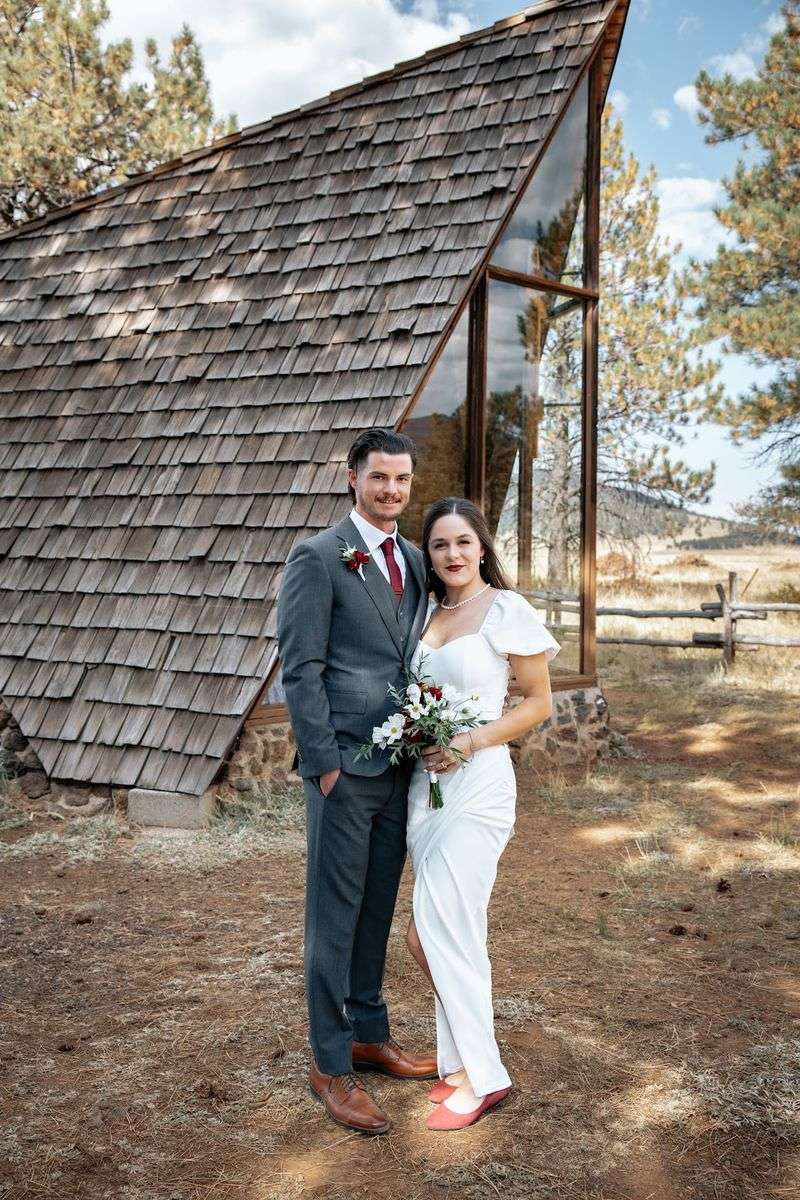
Hundreds of weddings have taken place inside these walls. The price tag for using the chapel is zero.
There are no reservations, though. Weddings and events work on a first come, first served basis.
Couples typically find a journal or calendar on site and write down their date and time. Fair warning, another couple might pencil in a slot shortly after on the same day.
Donations are appreciated, and the box sits right there. Couples are also asked to sign their names, adding to the wall of history.
With seating for about 20 or more, it suits small ceremonies best. Big guest lists will spill outside onto the gravel and pine needles.
One practical note for the dress code: the floor is gravel. Heels can be tricky, so flats or boots may save a stumble on the way to the vows.
Who Pulls Over Here, and Why
Some stop to pray. Others stop to stretch their legs between Flagstaff and the canyon.
Both crowds fit. The chapel is simple and humble rather than fancy, and that plain style makes it welcoming whatever brings someone through the door.
Quiet is the main currency here. People come to reflect, meditate, worship, or just sit in silence for a few minutes.
Solo visitors sometimes get the whole room to themselves. That kind of private time is rare at any scenic Arizona stop.
Families enjoy the hobbit door and the walls of notes. Road-trippers appreciate that a quick 5 to 10 minute visit still feels worthwhile.
Everyone shares one responsibility, though. The chapel runs on respect, so cleaning up after yourself keeps the space ready for the next person who needs it.
Open All Night, Plus a Few Catches
Here is the best part for night owls. The chapel never locks and stays open 24 hours a day, every day of the week.
Entry is free. A donation box sits on site for anyone who wants to help with upkeep.
Now the catches. There are no restrooms, so plan a stop in Flagstaff first.
There is also no heating or air conditioning. Winter visits can get very cold inside, so bring a jacket.
Snow brings a parking wrinkle. After a fresh storm, the chapel’s own lot may not be usable, but a small parking lot a short walk away tends to be easier to reach.
Summer is a natural fit for Valley escapees chasing cooler air up north. Fall and winter bring their own charm, just with a few more layers and a little more patience at the pull-off.
A Borrowed View Worth Returning To
Plenty of Arizona viewpoints charge parking fees or demand a steep hike. This one asks for nothing more than a turn of the steering wheel.
The chapel holds a 4.9-star standing across 174 public ratings online, and it is easy to see why. It is free, always open, and built on a story of generosity that survived a fire.
Dr. Lacy wanted strangers to borrow his view. More than six decades later, they still do, leaving behind notes, names, and wedding dates as a thank-you.
For Phoenix and Tucson locals, it makes a smart first stop on any Flagstaff or Grand Canyon run. Ten minutes is enough, though an hour rarely feels too long.
Bring a pen to sign the wall. Bring a few dollars for the donation box.
Then sit in a pew, look past the pulpit, and let those mountains do the rest. The view was meant to be shared, and now it is your turn to borrow it.
Share this story