Fort Negley sits on a hill just south of downtown Nashville, quietly overlooking the city skyline like a guardian from another era. Most people drive past it without a second thought, but this massive Civil War fortification holds stories that are stranger, darker, and more complicated than most history books let on.
From the thousands of laborers who built it under brutal conditions to the archaeological mysteries still being uncovered today, Fort Negley is anything but forgotten once you know what to look for.
A Civil War Fort Hiding in Plain Sight in Nashville
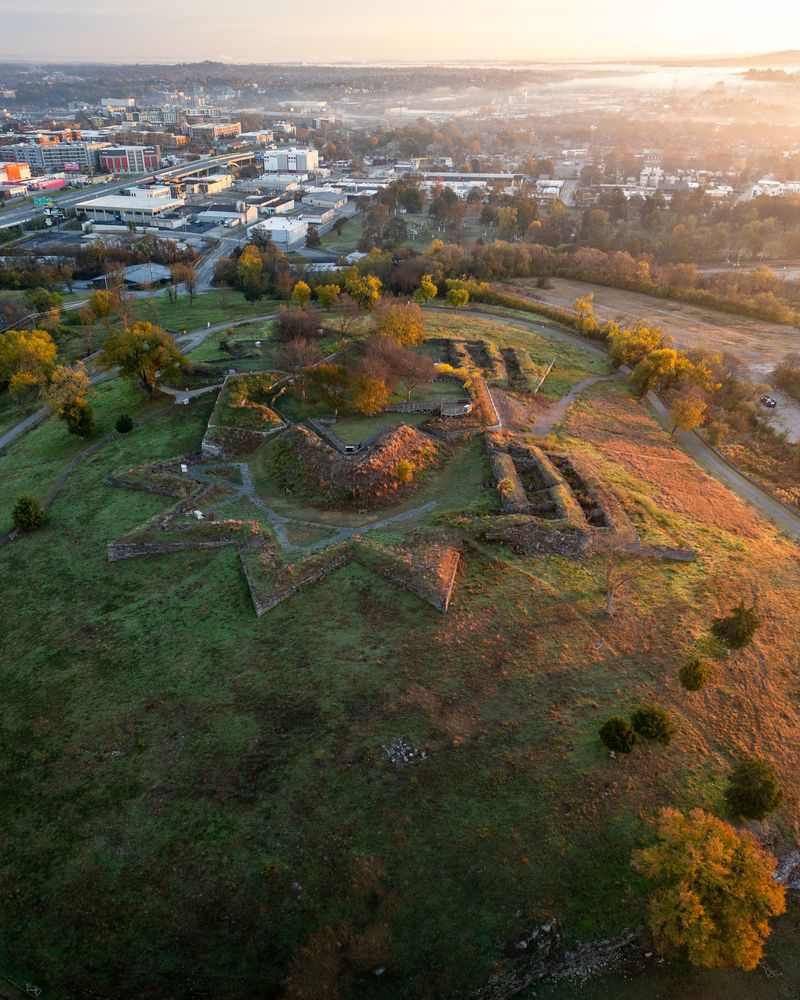
Fort Negley rises from a hill about two miles south of downtown Nashville, surrounded by neighborhoods, highways, and the hum of modern city life. Most visitors to Nashville never hear about it.
Even locals sometimes forget it exists until they catch a glimpse of those stone walls from the interstate or stumble across it while looking for a good view of the skyline.
The fort was built during the Civil War by Union forces who occupied Nashville starting in 1862. At the time, it was the largest inland fortification in the entire United States.
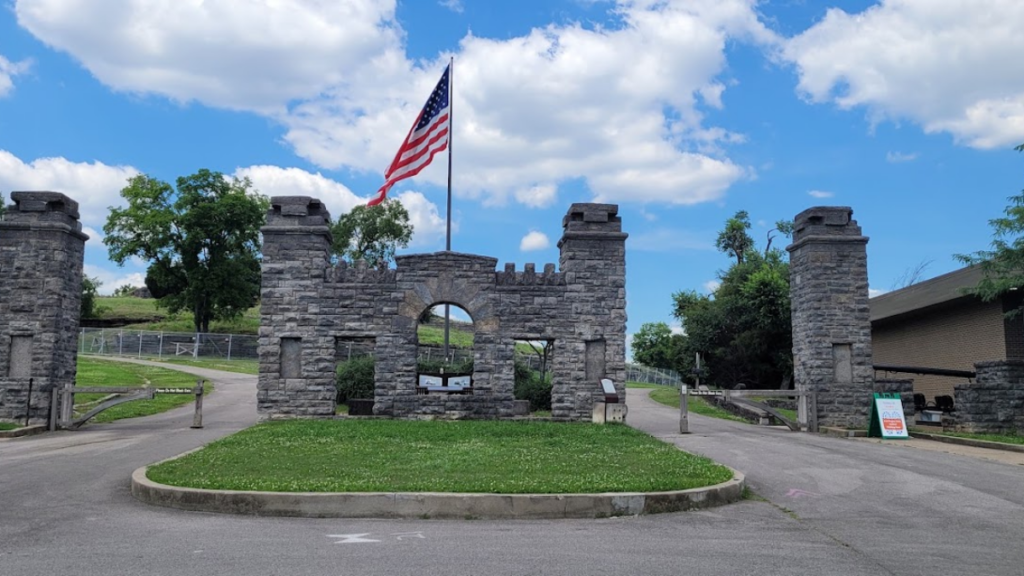
Today, what remains are weathered limestone ruins, walking paths, and a small visitors center that tells a story most people never learned in school.
Unlike the honky-tonks and hot chicken joints that dominate Nashville tourism, Fort Negley sits quietly on its hilltop. There are no billboards advertising it. The parking lot is modest, and the hours are limited, which only adds to the sense that this place has been overlooked for far too long.
But the fort’s importance is undeniable. It played a key role in protecting Nashville during the war, and its construction involved thousands of Black laborers whose contributions were ignored for more than a century.
The site has been through periods of abandonment, neglect, and restoration, each chapter adding another layer to its complicated legacy.
Walking the grounds today feels different once you understand what happened here. The stone walls, the sweeping views, the interpretive signs, they all take on new meaning. Fort Negley is hiding in plain sight, waiting for people to notice it again.
Why Union Forces Built Fort Negley in the First Place
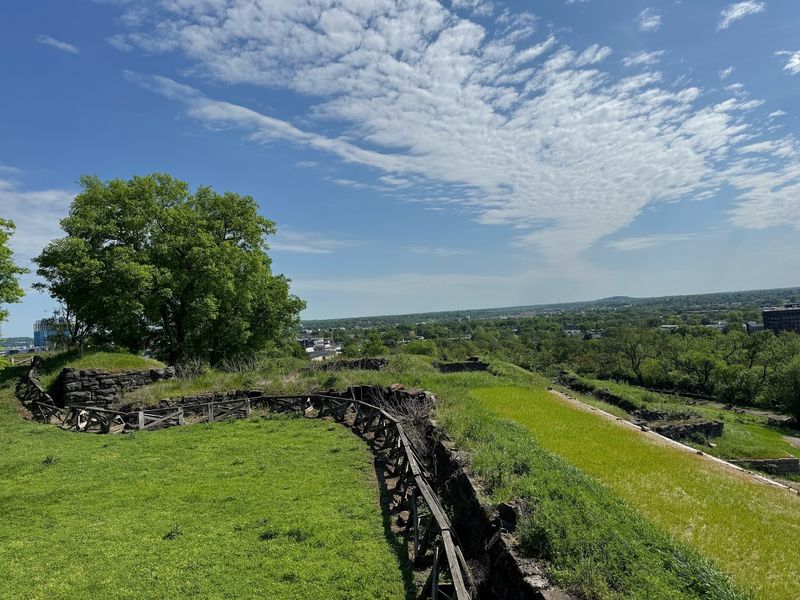
Nashville wasn’t just another Southern city during the Civil War. It was a critical transportation hub, sitting at the crossroads of railroads and river routes that connected the Deep South to the border states.
When Union forces captured Nashville in February 1862, they knew they had to hold it at all costs.
The problem was that Nashville was surrounded by hills, any of which could be used by Confederate forces to bombard the city. Union commanders quickly realized they needed fortifications, and they needed them fast.
St. Cloud Hill, the highest point near the city, became the obvious choice for the largest and most strategic fort.
Fort Negley was designed to be massive and intimidating. Its walls were built thick enough to withstand artillery fire, and its position gave Union soldiers a clear view of anyone approaching the city from the south.
The fort could house hundreds of troops, along with cannons, supplies, and ammunition.
Building something this big required an enormous amount of labor and materials. Limestone was quarried from the surrounding area, and timber was cut from nearby forests.
The work was grueling, dangerous, and relentless. Union commanders needed the fort finished quickly, so they turned to the one labor source they could control without paying wages or offering protections.
The strategic importance of Fort Negley can’t be overstated. Nashville became a Union stronghold for the rest of the war, and the fort played a key role in keeping it that way. But the human cost of building it was staggering, and that part of the story was buried for generations.
The Thousands of Black Laborers Behind the Fort’s Construction
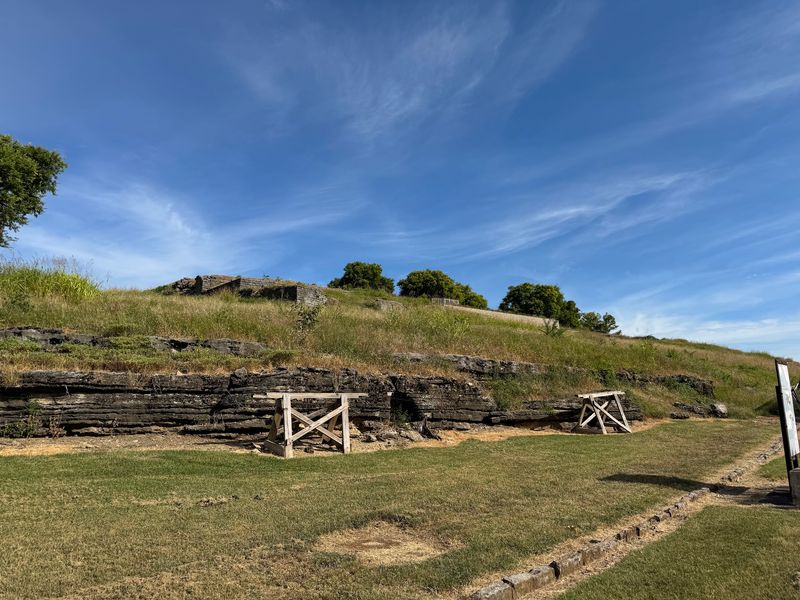
Fort Negley was built by the hands of roughly 2,700 Black men, most of whom were enslaved or had just escaped slavery. Union forces pressed them into service under a system that was supposed to be voluntary but was anything but.
Men were rounded up from contraband camps, where formerly enslaved people had fled seeking freedom, and forced to work on the fort under harsh and often brutal conditions.
The work was backbreaking. Laborers hauled massive limestone blocks up steep hillsides, quarried stone, cut timber, and dug trenches, all while living in makeshift shelters with little food or medical care.
Injuries were common, and disease spread quickly through the crowded camps. Many men died during construction, though exact numbers were never recorded.
What makes this even more disturbing is that these men were building a fort for the Union army, the same army that claimed to be fighting for their freedom. Instead of being treated as free men, they were coerced, underpaid or not paid at all, and denied basic protections.
The irony was not lost on anyone, then or now.
For more than a century, the contributions of these Black laborers were largely ignored. Early historical markers at Fort Negley focused on military strategy and Union generals, barely mentioning the men who actually built the place.
It wasn’t until the late 20th century that historians and activists began pushing for a more honest telling of the fort’s history.
Today, the visitors center includes exhibits about the laborers, and walking tours acknowledge their role. But the story is still being uncovered, and it serves as a reminder that even sites associated with Union victory have complicated, painful histories.
Fort Negley Was Enormous, But It Barely Saw Battle
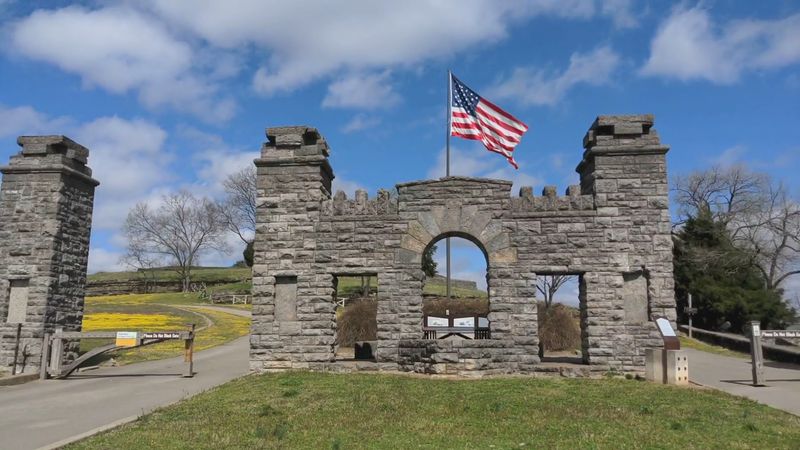
Fort Negley was built to be a fortress that could withstand a full-scale assault. Its walls were eight feet thick in some places, and it was armed with artillery capable of firing in every direction.
The fort covered several acres and included barracks, powder magazines, and water cisterns. By the time it was finished, it was the largest inland fort ever built in the United States.
But here’s the wild part: despite all that firepower and preparation, Fort Negley barely saw any direct combat. Confederate forces never mounted a serious attack on the fort itself. Its sheer size and strategic position were enough to deter most threats, which means it succeeded simply by existing.
The fort did play a role during the Battle of Nashville in December 1864, one of the most decisive Union victories of the war. Union troops used Fort Negley as a command post and staging area, and its artillery supported the overall battle plan.
But the fighting happened miles away, along Confederate defensive lines south of the city.
In a way, Fort Negley was a victim of its own success. It was so intimidating that it never had to prove itself in battle. But that doesn’t mean it wasn’t important.
The fort helped secure Nashville as a Union stronghold, protected vital supply lines, and served as a symbol of Union power in the heart of Confederate territory.
Walking the ruins today, it’s hard to imagine the scale of the original structure. Much of the fort has crumbled or been dismantled over the years, but what remains still gives you a sense of just how massive and imposing it once was.
What Happened to the Fort After the Civil War
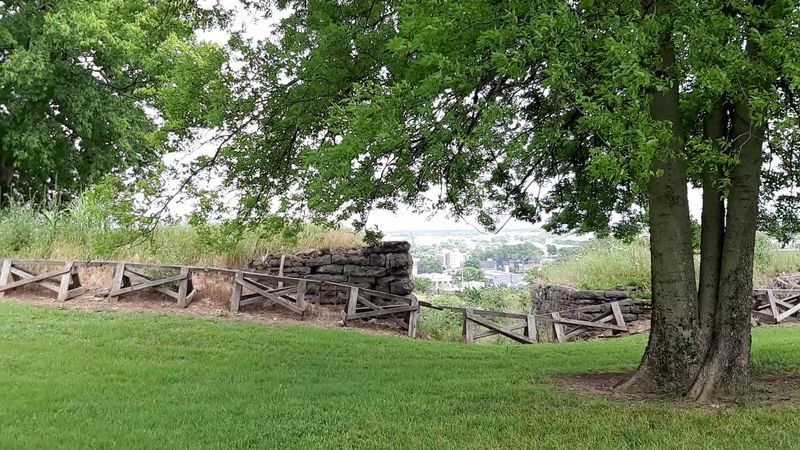
Once the Civil War ended, Fort Negley lost its military purpose almost overnight. The Union army abandoned it, and the fort quickly fell into disrepair.
Locals scavenged limestone blocks to build homes and businesses, and the site became overgrown with vegetation. By the early 20th century, most of the original structure had either collapsed or been carted away.
In the 1930s, the Works Progress Administration attempted to restore the fort as part of a nationwide effort to preserve Civil War sites. Workers rebuilt some of the walls and created pathways, but the restoration was based more on imagination than historical accuracy.
The result was a romanticized version of the fort that didn’t reflect what it actually looked like during the war.
For decades, Fort Negley existed in a kind of limbo. It was technically a historic site, but it wasn’t well maintained or heavily visited.
The surrounding neighborhood changed, and the fort became a somewhat forgotten piece of Nashville’s landscape. Some people used it as a park, others ignored it entirely.
In the 1990s and 2000s, renewed interest in the fort’s history led to new restoration efforts and the construction of a visitors center. Archaeologists began excavating the site, uncovering artifacts and evidence that challenged earlier assumptions about the fort’s design and use.
These discoveries also raised uncomfortable questions about burial sites and how the laborers who built the fort were treated.
Today, Fort Negley is undergoing yet another phase of restoration. Parts of the site are roped off for ongoing archaeological work, and plans are in place to improve access and interpretation.
The fort’s story is still being written, and its relationship with Nashville continues to evolve.
The Stories Archaeologists Are Still Uncovering Here
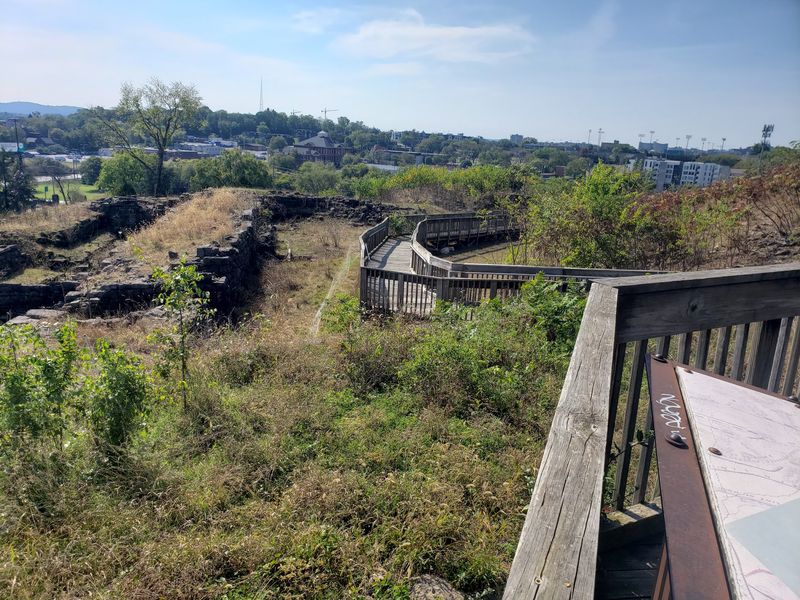
Fort Negley isn’t just a relic of the past. It’s an active archaeological site where new discoveries are still being made.
Over the past few decades, researchers have uncovered artifacts ranging from military equipment to personal items belonging to the laborers who built the fort. Each find adds another piece to the puzzle of what life was like on this hilltop during the Civil War.
One of the most significant discoveries involved the fort’s original design. Early restorations in the 1930s were based on guesswork, but modern excavations revealed that the fort’s layout was different than historians thought.
Walls were in different locations, and some structures that were assumed to exist never actually did.
Archaeologists have also found evidence of the harsh conditions faced by the Black laborers. Artifacts from their camps, including tools, cooking utensils, and remnants of shelters, paint a picture of men living in squalor while building one of the war’s most important fortifications.
These findings have helped shift the narrative around Fort Negley from a purely military story to a human one.
There are also ongoing concerns about burial sites. Some researchers believe that laborers who died during construction may have been buried on or near the fort grounds, but no graves have been definitively located.
The possibility that unmarked burials exist has complicated restoration efforts and raised ethical questions about how the site should be developed.
Recent work has also focused on using technology like ground-penetrating radar and 3D mapping to better understand the fort’s structure without disturbing the site. These methods allow archaeologists to see what’s beneath the surface and plan future excavations more carefully.
The more they dig, the more they realize how much is still hidden.
What Visitors Can See at Fort Negley Today
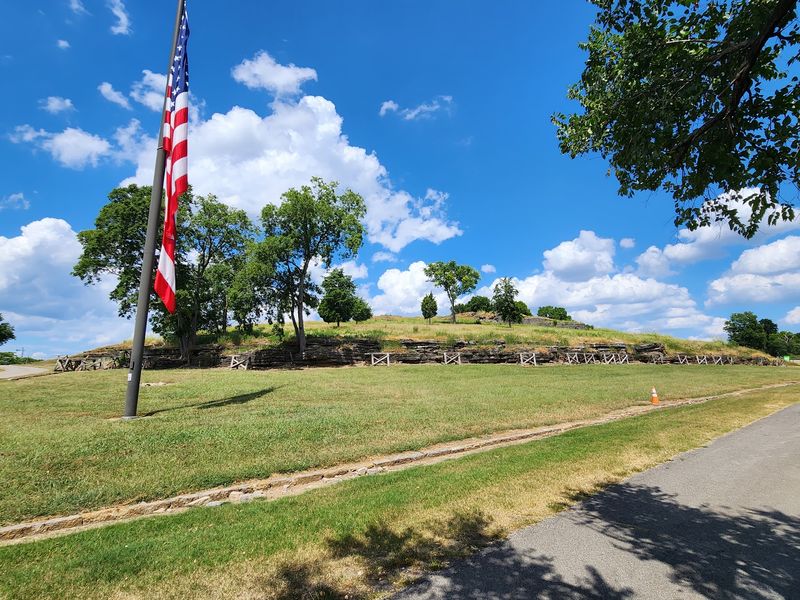
The Fort Negley Visitors Center sits at the base of the hill, offering a starting point for anyone curious about the site’s history. Inside, you’ll find exhibits that cover the fort’s construction, its role in the Civil War, and the stories of the laborers who built it.
The staff is knowledgeable and eager to share details that aren’t on the signs, and admission is free, though donations are welcomed.
From the visitors center, walking paths lead up to the fort ruins. The main loop trail is paved and takes you around the perimeter of the original fortification.
Along the way, interpretive signs explain what each section of the fort was used for, though some of the older signs have faded and are hard to read. The walk is easy and offers stunning views of downtown Nashville, especially at sunrise or sunset.
Parts of the fort are roped off due to ongoing restoration and archaeological work, so you can’t explore every corner. But what’s accessible gives you a real sense of the fort’s scale and strategic importance.
The limestone walls, though crumbling in places, are still impressive, and standing on the hilltop makes it clear why Union forces chose this spot.
One unexpected feature is the small flock of sheep that grazes on the grounds. They’re part of a land management program that helps keep vegetation under control, and visitors often enjoy watching them wander among the ruins.
There’s also a fossil pile near the trails, a quirky collection of limestone fossils that have been gathered from around the site.
Fort Negley feels different once you know its history. What might seem like just another park becomes a place where layers of the past are still being uncovered, where uncomfortable truths are finally being told, and where the skyline view comes with a story wilder than most people realize.
Share this story