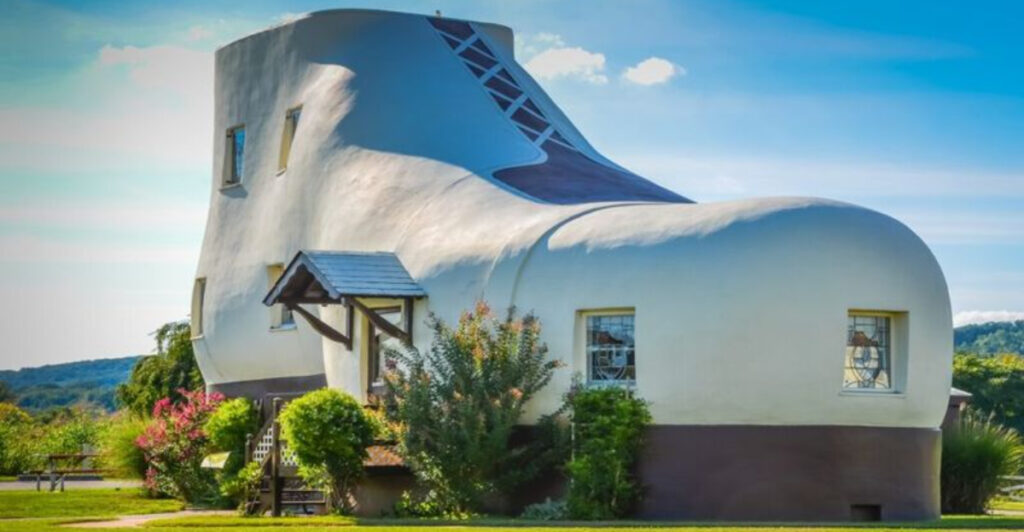
There are roadside attractions, and then there is a five-story boot planted on a hill in York County. The Haines Shoe House looks delightfully unreal at first glance, but its story is tied to local business, American car culture, and the long tradition of curious highway stops. If you love places that feel playful, historic, and just a little improbable, this Pennsylvania landmark absolutely earns a closer look.
Built as a giant tribute to the shoe industry, the Haines Shoe House has become one of Pennsylvania’s most recognizable roadside surprises. Its unusual design has been catching the attention of travelers for decades, drawing visitors who want to experience a piece of Americana that feels unlike anywhere else. From its quirky architecture to the story behind the man who created it, every detail adds another layer to its charm. Whether you are exploring York County or simply looking for a memorable stop off the beaten path, this oversized shoe proves that some of the best landmarks are the ones you never expect to find. Here is what makes the Haines Shoe House such an unforgettable oddity.
1. A Giant Shoe on a Pennsylvania Hill
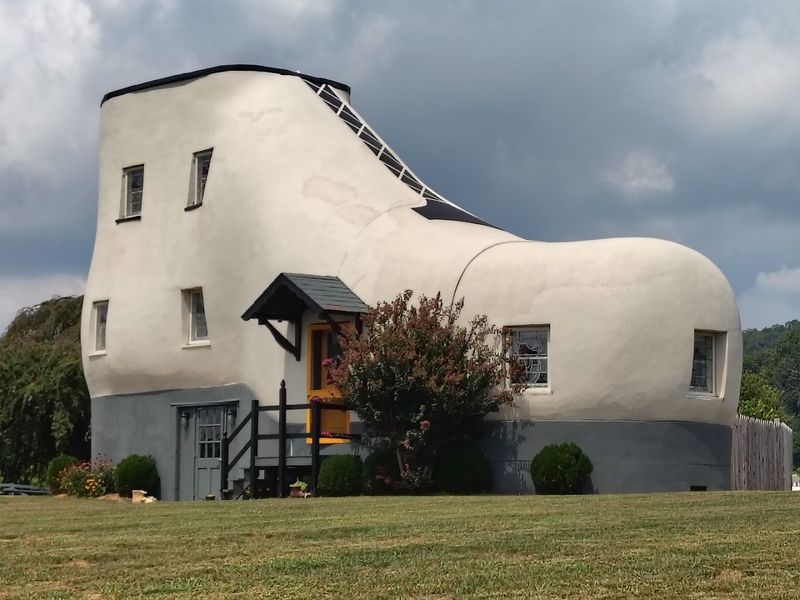
Seeing the Haines Shoe House for the first time feels like stumbling onto a postcard from a stranger, more playful version of America.
Perched along Shoe House Road in York, it rises like an oversized work boot, complete with laces, sole, and windows tucked into its curves.
That single view explains why generations of travelers have slowed down, stared, smiled, and reached for a camera.
What makes it memorable is not just the shape, but the confidence of the idea itself.
This is programmatic architecture at its boldest, where a building becomes the object it celebrates and refuses to blend in with anything around it.
Even from the roadside, with gates and fences often limiting access, the house still has that rare ability to surprise you instantly and make an ordinary drive feel unexpectedly fun, personal, and worth remembering long after you leave.
2. Why the Shape Matters
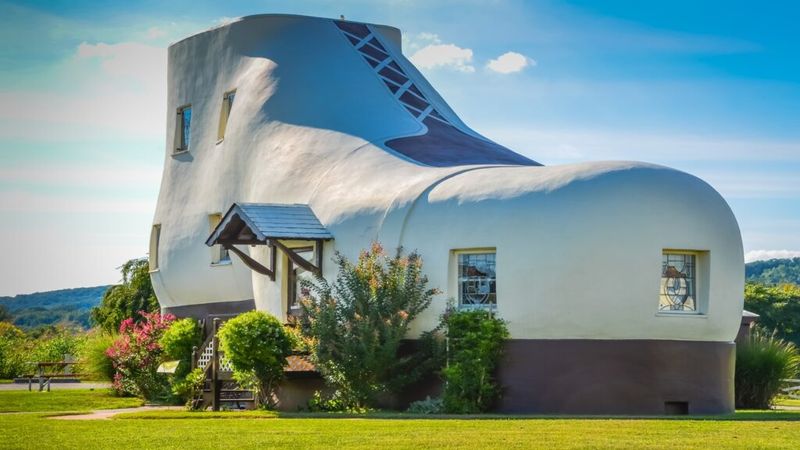
Plenty of unusual buildings exist, but the Haines Shoe House stands out because its shape is so literal and so carefully carried through.
It does not vaguely suggest a shoe – it commits fully, from the rounded toe to the raised heel and the decorative laces crossing the front.
That commitment is what turns the structure from a gimmick into a genuine piece of architectural theater.
The design matters because it represents a specific moment in roadside America, when buildings were expected to entertain as well as function.
Instead of hiding utility behind plain walls, novelty architecture made buildings speak directly to travelers in a language anyone could understand.
At the Shoe House, the message is immediate, funny, and oddly elegant.
You do not need a guide to explain why it exists, because the building tells its own story before you even step closer to the fence or read a plaque nearby.
3. Inside the Shoe
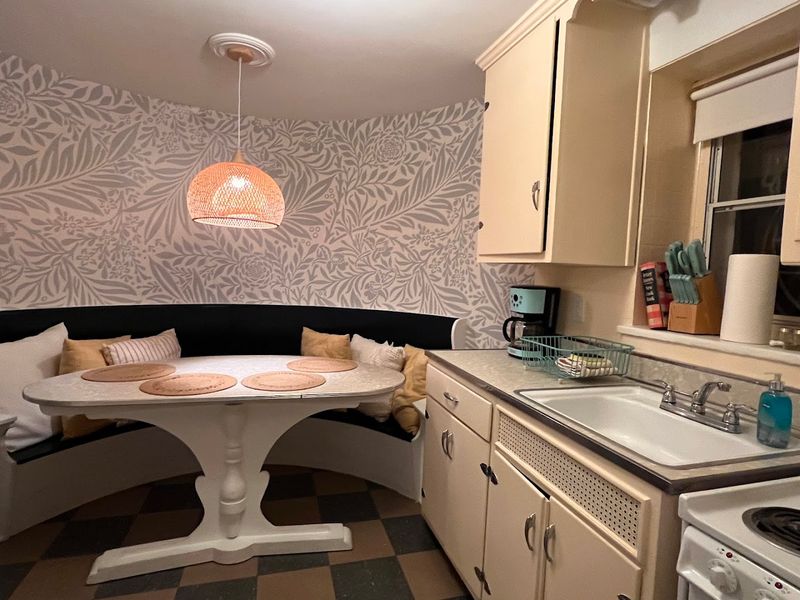
One of the most fascinating things about the Haines Shoe House is that it was never just a sculptural shell.
It contains real rooms arranged within that eccentric outline, and visitors have long been charmed by how much can fit inside such an unlikely form.
Reviews often mention bedrooms in the toe, kitchen spaces toward the heel, and tight stairways that make the experience feel both clever and intimate.
The interior has a reputation for being small, quirky, and surprisingly functional, which seems exactly right for a house shaped like footwear.
People who toured it during public periods often described it as a quick but memorable visit, packed with history panels and mid-century touches.
Others noted that the spaces could feel narrow if you dislike enclosed rooms.
That honesty only adds to the appeal, because this place was never meant to be ordinary or spacious – it was meant to be unforgettable.
4. What Visitors Say Today
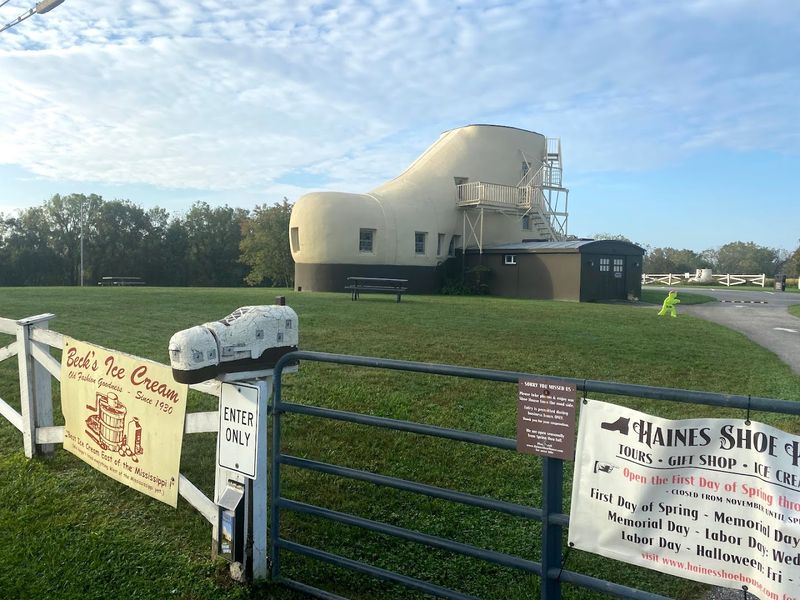
Modern reactions to the Haines Shoe House are full of affection, nostalgia, and a little frustration about access.
Many people describe it as fun, quirky, beautifully restored, and absolutely worth seeing, especially if you care about roadside history.
Others point out that unless you have a reservation, you may only be able to admire it from the road or from outside the fenced property.
Those mixed experiences actually paint a useful picture for anyone planning a stop.
If you are hoping for a full public museum visit, current conditions may not match memories from earlier years when tours and ice cream were available.
But if your goal is simply to see one of Pennsylvania’s strangest landmarks and appreciate its story, the site still delivers a strong impression.
The key is going in with realistic expectations, respect for private property, and enough patience to enjoy the house for what it is now.
5. The Charm of Roadside Americana
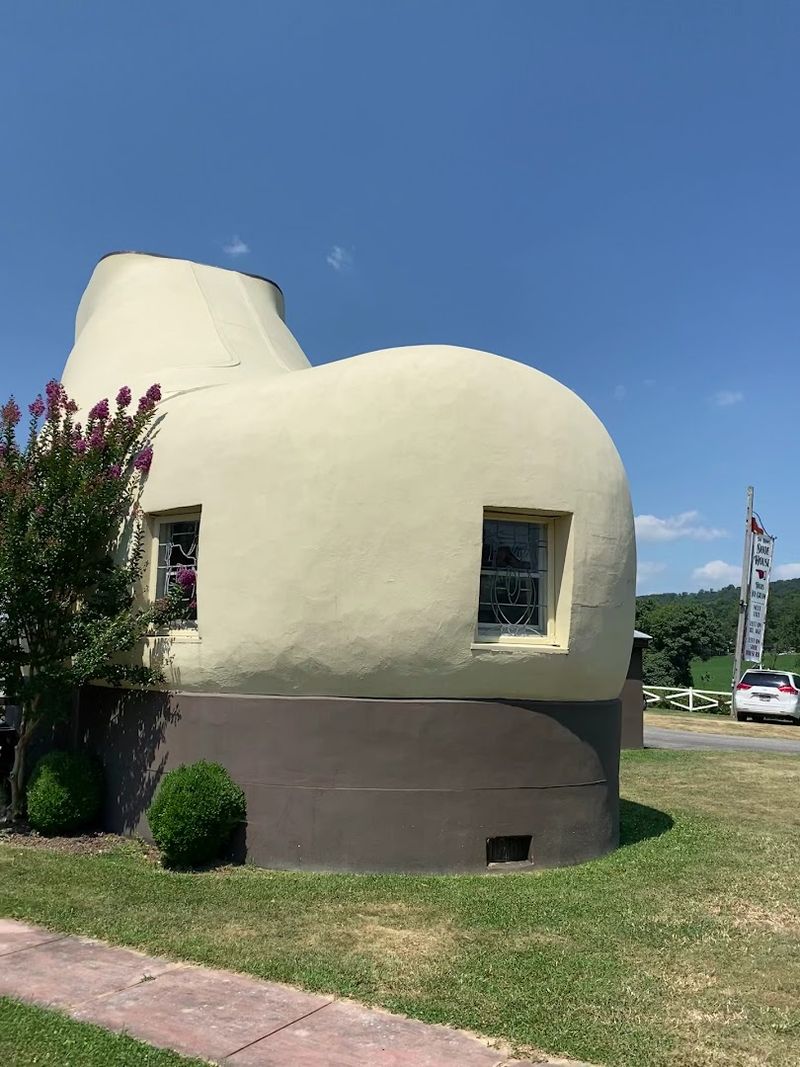
The Haines Shoe House belongs to a category of places that feel inseparable from the romance of the road.
It sits near Route 30, the kind of corridor where family trips, detours, and spontaneous photo stops have always shaped travel memories.
A building like this does more than occupy land – it creates a story the moment you pull over and wonder who first decided a giant shoe was a perfectly reasonable thing to build.
That is why people keep calling it pure Americana.
It captures an era when businesses used humor, scale, and novelty to compete for attention, and when travelers rewarded that creativity by stopping to look.
So many attractions of that kind have disappeared, making the survivors feel even more meaningful.
The Shoe House reminds you that oddity can be part of heritage too, and that preserving whimsical places matters because they reveal how communities once imagined fun, commerce, and identity together.
6. Restoration and Preservation
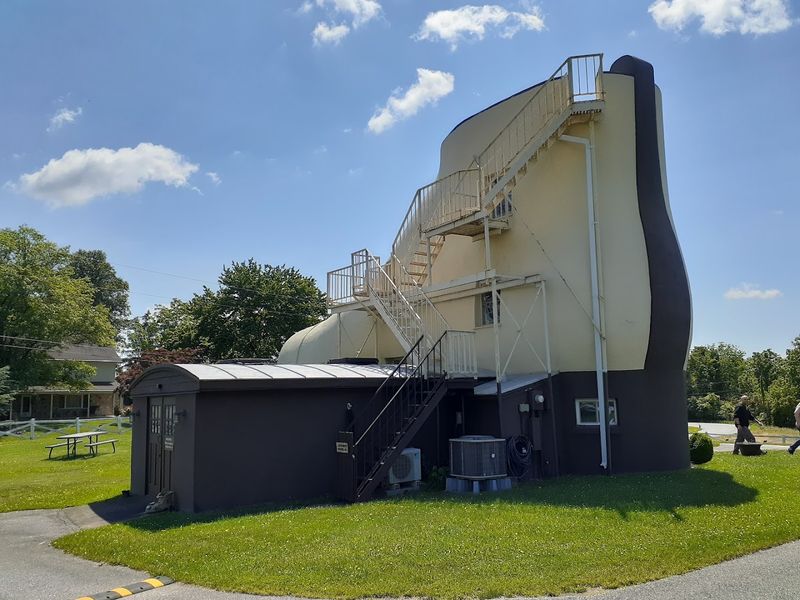
Part of the Haines Shoe House’s appeal comes from the obvious care that has gone into keeping it alive.
Visitors frequently mention that it looks well maintained and thoughtfully restored, with details that help it feel more like a preserved landmark than a neglected curiosity.
That matters, because novelty buildings can easily slip into decay if nobody is willing to invest in their strange, demanding shapes.
Preservation here is about more than fresh paint or structural upkeep.
It is also about protecting the history attached to the house, including the story of Mahlon Haines, the building’s marketing purpose, and the many phases of public life it has enjoyed.
Reviews from earlier tour periods praised the historical displays and knowledgeable staff, suggesting that interpretation was treated seriously alongside entertainment.
When a place this unusual is preserved with care, it gains another kind of value – not just visual charm, but cultural endurance.
7. Planning a Respectful Visit
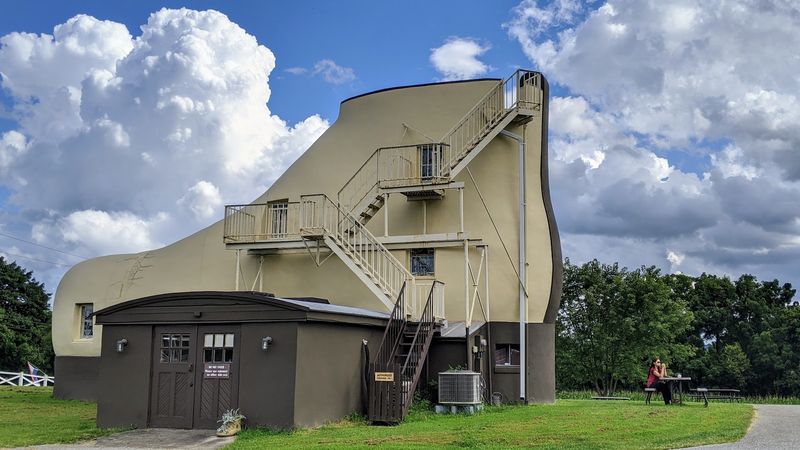
If you want to see the Haines Shoe House in person, the smartest approach is to treat it as both a landmark and a private-use property.
Reviews repeatedly mention limited access, a fence around the grounds, and parking concerns unless you are an overnight guest.
That means your visit should be shaped by courtesy first, especially if you are arriving only to take photos from the road.
Several visitors have noted that roadside viewing can still be rewarding, but conditions may require caution because there is little room and the terrain can be awkward.
The best mindset is simple: check current information, avoid blocking traffic, and respect boundaries without assuming the site functions like a fully open museum.
Doing that helps protect the experience for everyone, including future guests and curious travelers.
Even a brief look can be satisfying when you understand what the Shoe House is today and appreciate the privilege of seeing it at all.
8. Why It Feels So Personal
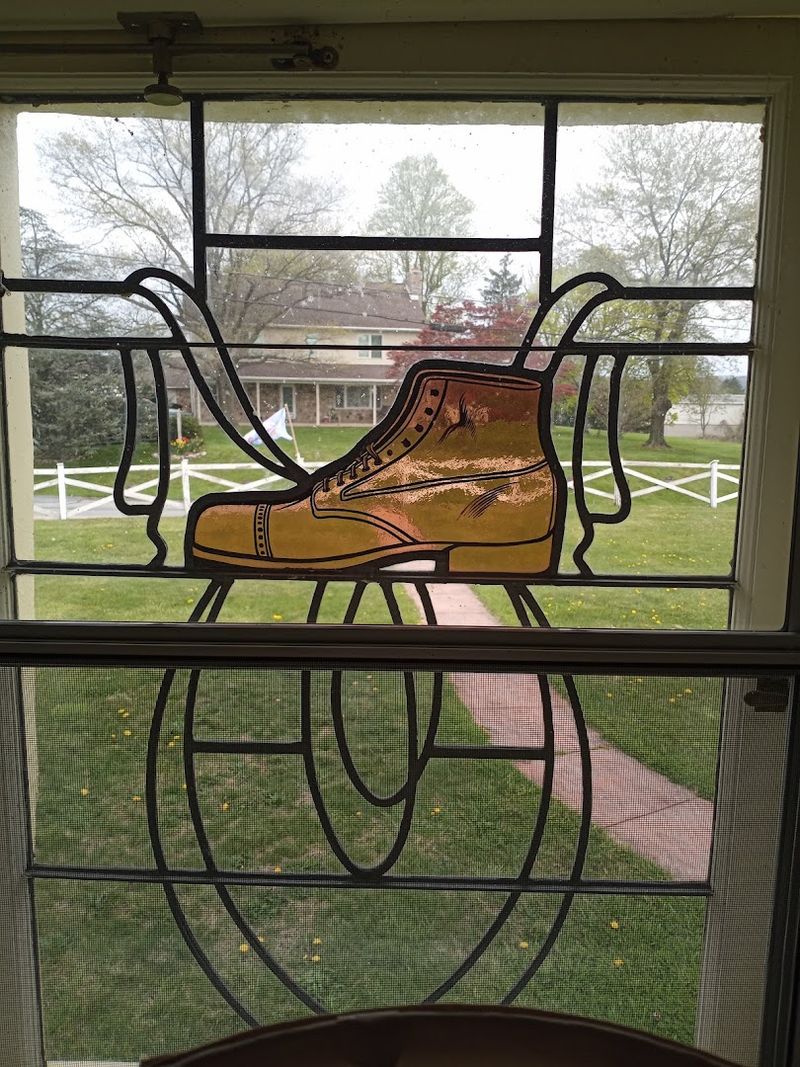
Some landmarks impress because they are grand, but the Haines Shoe House wins people over because it feels personal.
It is odd in a friendly way, the kind of place that invites laughter first and then slowly earns your respect as you learn the history behind it.
People who stay there or remember earlier tours often talk about it with real affection, as if the building itself has a personality.
That emotional pull comes from the balance it strikes between absurdity and sincerity.
Yes, it is a giant shoe, and part of the fun is letting yourself enjoy that simple fact without overthinking it.
But it also represents human creativity, local pride, and the willingness to build something memorable just because memory matters.
You leave with more than a photo.
You leave with a story that feels easy to retell, because the place makes you feel like you discovered something both improbable and genuinely heartfelt.
9. A Rare Surviving Curiosity
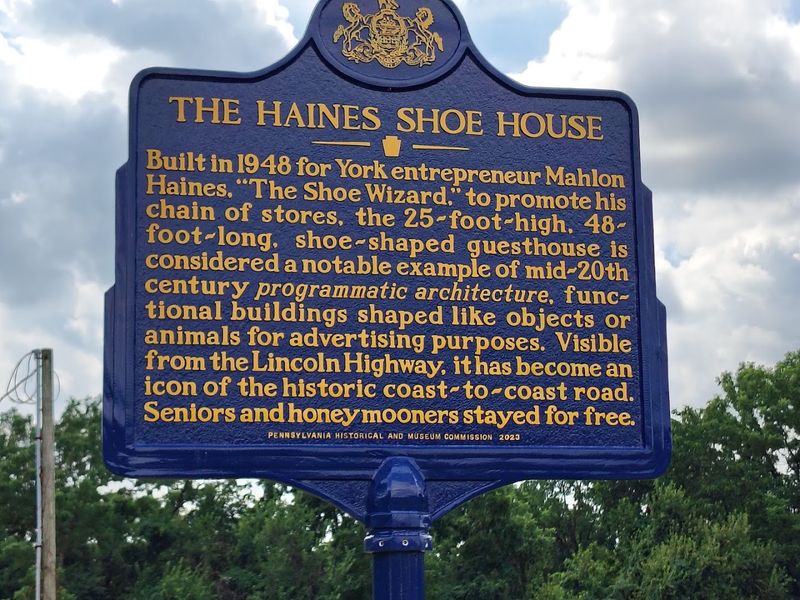
The longer you think about the Haines Shoe House, the more remarkable its survival seems.
Many novelty structures from the golden age of roadside travel were demolished, stripped of character, or left to deteriorate once tastes changed and highways shifted.
This one remains recognizable, celebrated, and still capable of drawing people off the road simply because it exists in such defiant, cheerful form.
Its rarity gives it weight beyond local charm.
For architectural historians, it is a strong example of programmatic design, where a building’s purpose and appearance are intentionally fused.
For casual travelers, it is a wonderfully bizarre stop that breaks up the sameness of modern travel.
Both readings are valid, and together they explain why the house deserves attention.
It is not merely weird for the sake of being weird – it is a surviving document of how Americans once sold products, entertained visitors, and turned everyday objects into landmarks.
10. What Makes It Worth Remembering
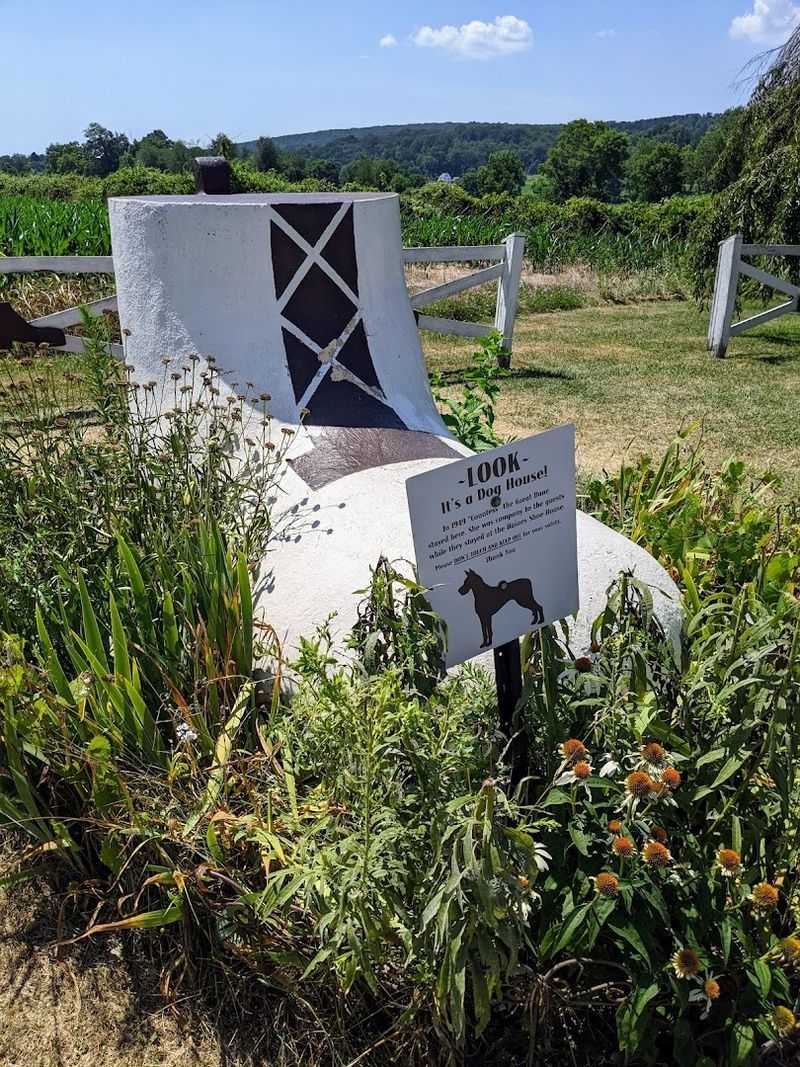
The Haines Shoe House is worth remembering because it delivers exactly what great oddball landmarks should.
It surprises you instantly, rewards a closer look with real history, and connects local identity to a larger American tradition of creative roadside design.
Even if you only glimpse it from outside the fence, the image tends to stick with you long after more polished attractions have faded.
What lasts is the combination of whimsy and permanence.
The house could have been a temporary publicity stunt, yet it became a regional symbol with enough staying power to outlive changing owners, uses, and travel habits.
In that sense, it stands for more than a shoe business or a curious photo stop.
It stands for the joy of places that refuse to be ordinary.
Pennsylvania has many historic sites, but very few can claim to be as strange, lovable, and instantly recognizable as this oversized boot on a York hillside.
Share this story