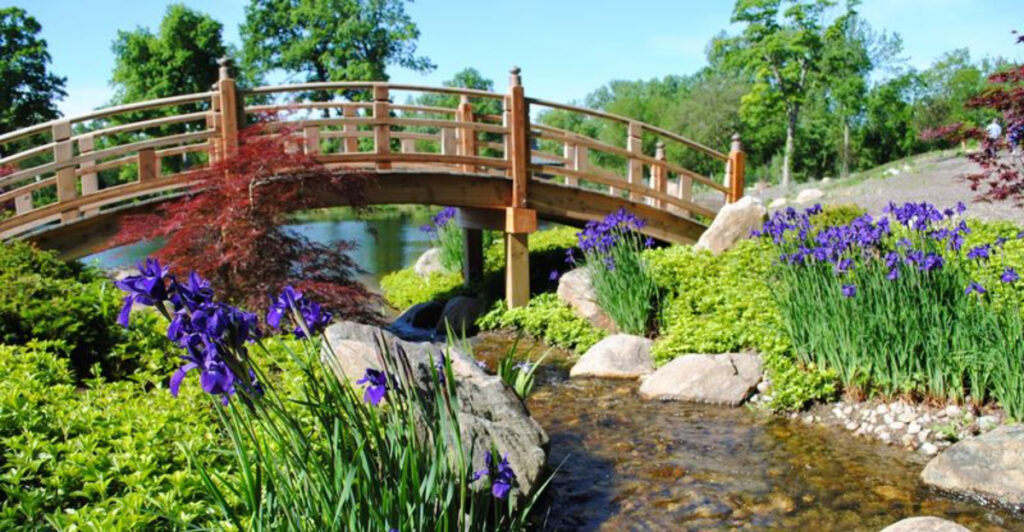
Awards can create high expectations, but Wellfield Botanic Gardens in Elkhart has the scenery to back them up. Recently recognized as the best botanical garden in the United States, this beautifully designed destination combines colorful gardens, peaceful water features, winding pathways, striking sculptures, and elegant bridges into an experience that feels both relaxing and inspiring.
Every season brings a different display of blooms and landscapes, ensuring there’s always something new to discover. Whether you’re a passionate gardener, a photographer, or simply looking for one of Indiana’s most beautiful places to unwind, this nationally celebrated garden is well worth the visit.
A Water-Laced Entrance That Changes Your Pace
Some gardens announce themselves with a grand gate or a single signature flower bed. Wellfield Botanic Gardens takes a smarter route.
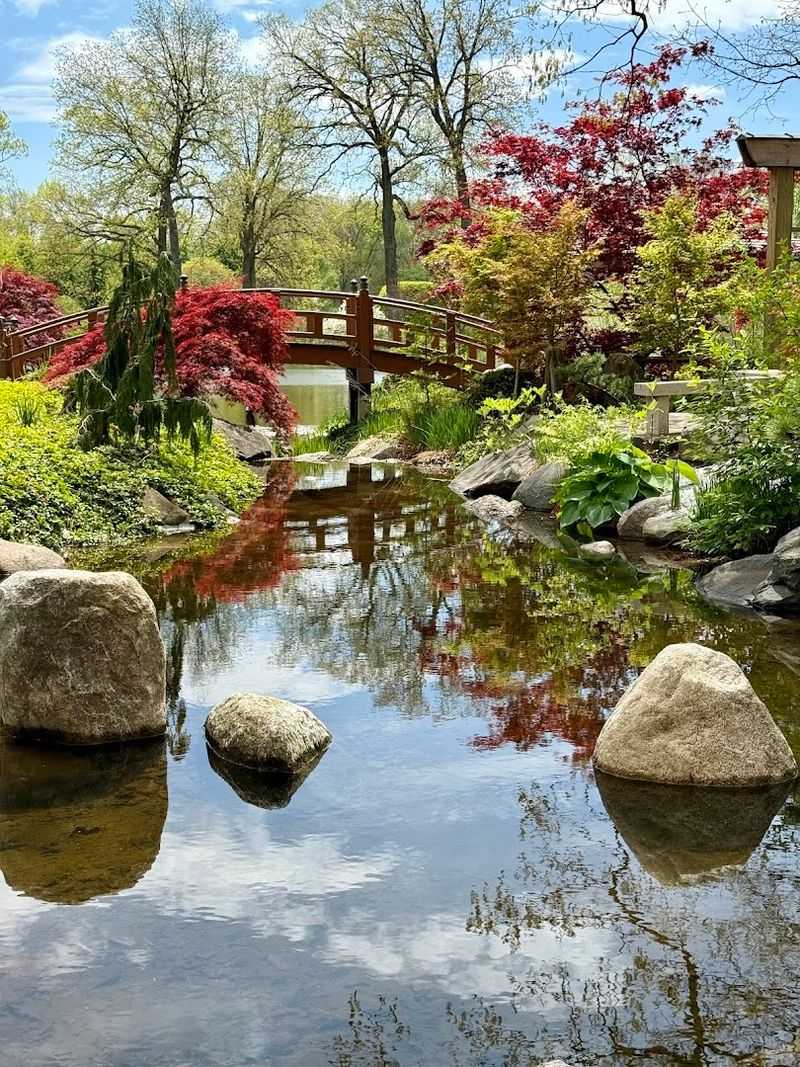
The first thing that grabs you is the way water keeps reappearing beside the paths, under bridges, and around planted edges, quietly setting the rhythm before any individual garden room starts competing for attention.
That layout matters because it instantly pulls the walk away from street logic and into landscape logic. You are not moving in a straight line to check off attractions.
You are following curves, crossing over channels, pausing at railings, and noticing how reflections soften the borders between paved walkway, greenery, and open sky.
The paths help with that shift. They are broad, level, and easy to navigate, which makes the whole place approachable without flattening its character.
Instead of forcing a rugged, rustic mood, the design uses accessibility as an asset, letting the textures of stone, planting, and water do the expressive work.
Benches show up often, and not as afterthoughts. They are placed where you would actually want to stop, near water, under shade, or facing a scene with enough depth to reward a few extra minutes.
That simple generosity changes the experience from a quick lap into a place where lingering seems built into the plan.
Even before peak bloom enters the picture, the structure of the grounds carries the visit. Bridges break up sightlines, trees add shelter, and small visual reveals keep the promenade from feeling repetitive.
By the time you have covered only a portion of the garden, the city outside already seems much farther away than the address suggests.
The Japanese Garden Brings Precision, Not Flash
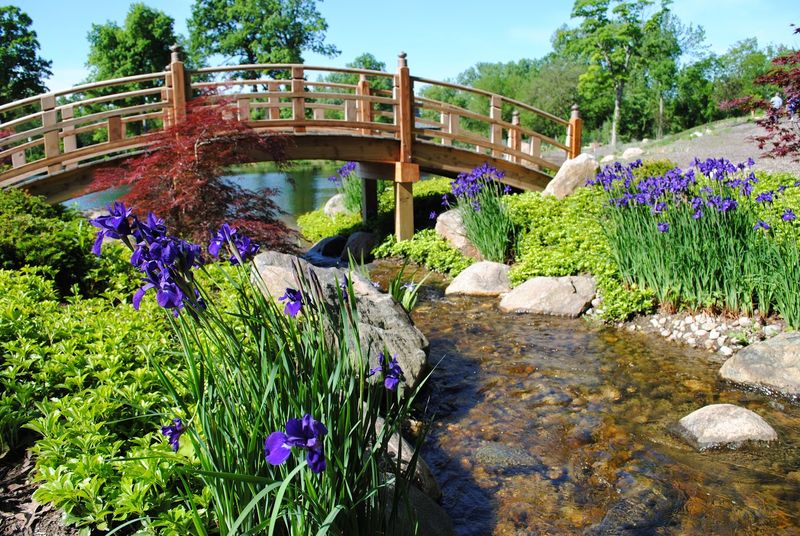
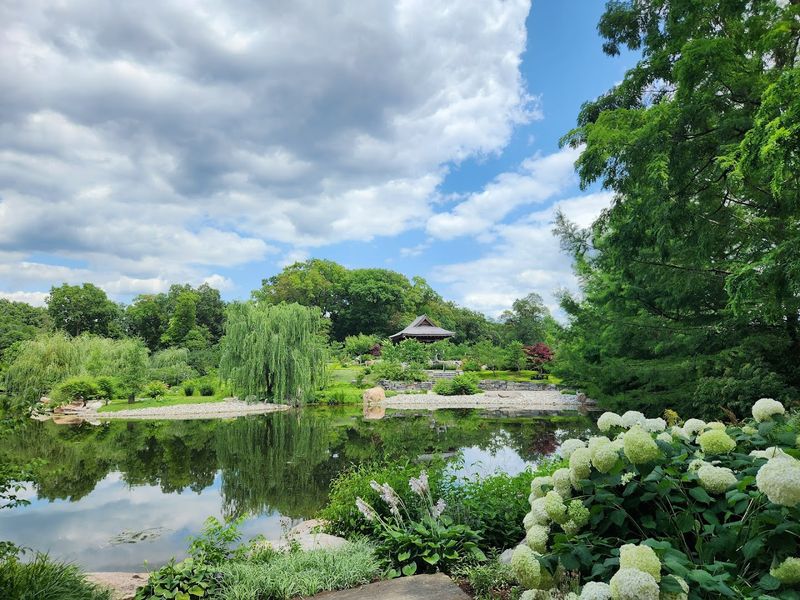
One of the most talked-about corners at Wellfield is the Japanese garden, and the appeal is easy to understand once you reach it. Instead of shouting for attention, this space works through restraint.
Lines are cleaner, transitions are more deliberate, and the planting composition invites slower looking rather than quick photo grabbing.
That difference gives the broader garden real range. Elsewhere, water, sculpture, and varied beds create a lively sense of movement.
Here, the mood tightens into clarity, with every curve and surface change seeming more considered. You notice stone, open space, and framing as much as you notice color.
It also adds contrast to the walking experience. In many public gardens, separate areas can blur together after a while, especially when they rely on seasonal bloom alone.
This section avoids that problem by shifting the visual language, so your eyes reset and start reading the landscape differently.
The surrounding paths make that transition gentle instead of theatrical. You do not step into a stage set. You move into a space that edits away visual noise and asks for more attention to proportion, texture, and stillness. That subtle control is part of why it lands so well.
If you are the kind of person who likes gardens that reward a second lap, this is where that instinct pays off. The first pass gives you the obvious harmony.
The next one reveals small alignments, careful edges, and how the water helps anchor the entire composition. It is a standout feature not because it dominates the property, but because it proves how thoughtfully Wellfield handles variety.
You leave that section with your pace lowered, your eyes sharper, and the rest of the grounds looking even more intentional than before.
Art, Fountains, and the Details Between the Flowers
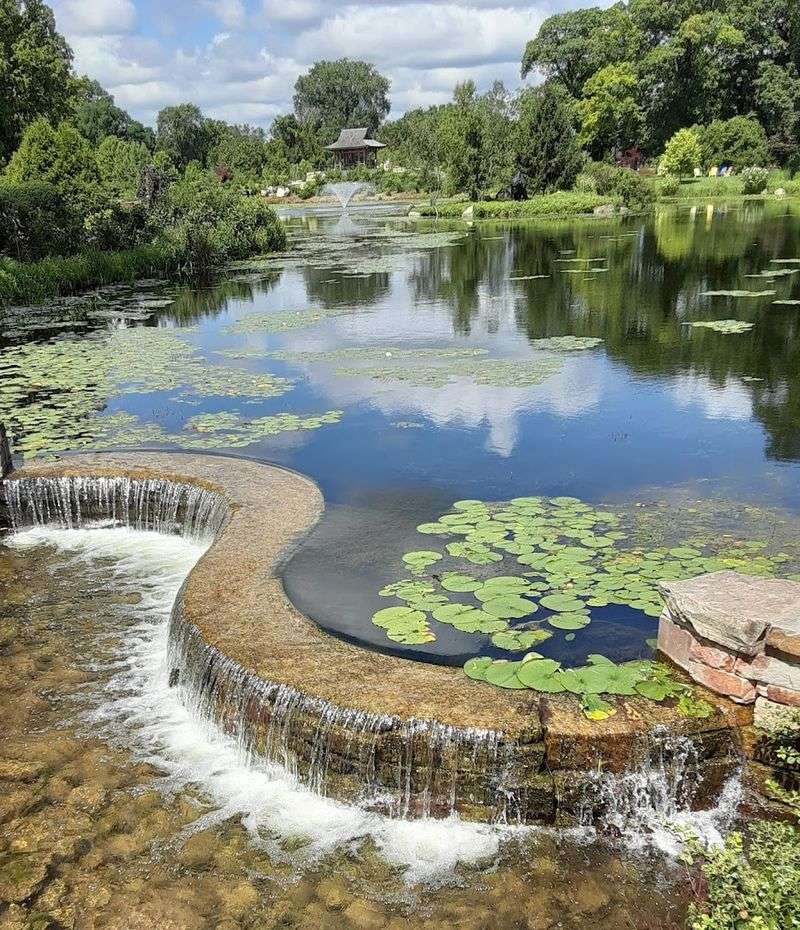
Plenty of botanical gardens depend almost entirely on bloom cycles. Wellfield has flowers, of course, but the stronger trick is how much there is to notice when blossoms are not doing all the heavy lifting.
Fountains, sculpture, seating, paving textures, and small architectural touches keep the grounds visually active across the entire walk.
That makes the garden more durable as an experience. On a day when certain beds are between peaks, you still have clear water catching light, statues tucked into strategic sightlines, and benches that look chosen rather than mass ordered.
The place keeps offering composition, not just color. The water features deserve special credit here. They are not limited to one central spectacle.
Instead, they show up in different scales, from broader channels to smaller falls and fountain moments, creating motion and sound that stitch separate areas together. You hear the garden before you see every part of it.
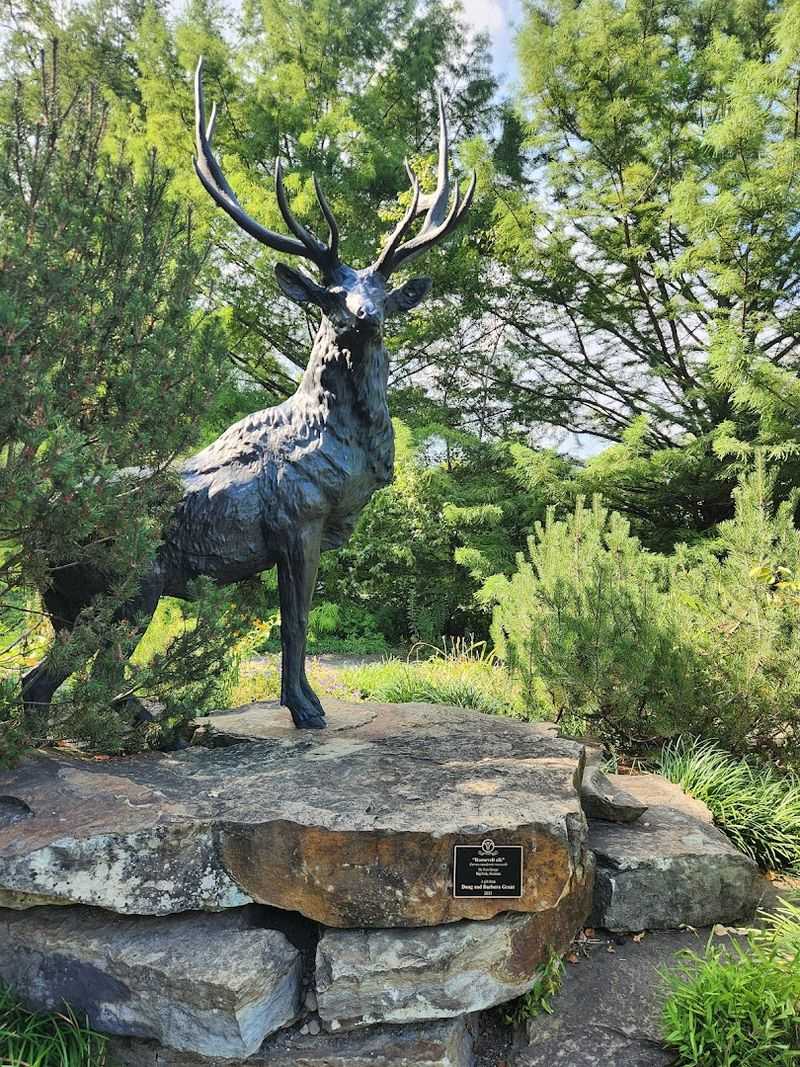
Sculpture works the same way. Some pieces present themselves openly, while others wait off to the side, rewarding slower walkers and curious kids.
That hide-and-reveal approach keeps the route playful without turning it into a scavenger hunt. It also helps the grounds feel layered rather than overly scripted.
Even the benches contribute to that sense of detail. Different styles appear throughout, and their placement suggests active observation of how people actually move through a garden.
Add in the mix of bridges, trees, and paved surfaces, and you get a landscape where design decisions keep surfacing in small, satisfying ways. You do not need a giant seasonal event to justify the visit.
The ordinary daytime version already has enough texture and visual intelligence to hold your attention for much longer than the map might imply.
A Garden Designed to Be Enjoyed, Not Rushed
Some celebrated gardens are beautiful in theory and exhausting in practice. Wellfield succeeds because it understands that comfort shapes attention.
When paths are smooth, shade is available, seating is frequent, and the layout is easy to follow, you spend less energy managing the visit and more energy noticing the place itself.
That practical intelligence shows up almost everywhere. The walkways are wide enough to keep strollers, wheelchairs, and slow walkers from feeling squeezed.
Rest areas appear regularly, which means the garden does not punish anyone for taking it at an easier pace. Accessibility here is not a side note. It is part of the design personality.
The children’s garden reinforces that point from another angle. Instead of treating younger visitors like a disruption to a quiet horticultural space, Wellfield gives them a zone that is sensory, shaded, and integrated into the broader experience.
Families can spend real time there without feeling parked off to the margins. You can also sense that the grounds were arranged to minimize friction.
The route tends to guide you naturally past key areas, so there is less backtracking and less standing around trying to decode where to go next. For a public garden, that kind of circulation planning matters as much as plant selection.
Then there is the setting itself, close to downtown yet insulated enough to function as an escape. That combination gives Wellfield unusual usefulness.
It can be a full destination, a mid-trip reset, or the easiest beautiful stop you make all week. Add free parking, a welcome center, and a gift shop that rounds out the visit without hijacking it, and you get a place that respects your time as much as your attention.
That is rarer than it should be, and it helps explain why the garden lands so strongly with such a wide range of visitors.
More Than a Garden—A Community Gathering Place
Wellfield Botanic Gardens is easy to admire as a collection of landscapes, but that is only part of its role in Elkhart.
The property also functions as a civic space, the kind of place where gardening, culture, and community events overlap without any one piece overwhelming the others. That broader purpose gives the grounds extra life.
You can see it in the infrastructure. The welcome center and event spaces are not random add-ons dropped beside a garden.
They extend the idea of the place, creating room for classes, gatherings, and seasonal programming while keeping the landscape at the center. The effect is polished without becoming stiff.
That matters because public gardens can sometimes feel passive, as if their only job is to be looked at. Wellfield is more active than that.
Yoga sessions, concerts, weddings, and educational moments all fit naturally here because the site has enough beauty to elevate an event and enough structure to support one.
There is also a neighborhood value to having this kind of space near downtown. Instead of asking residents to drive far for a restorative setting, the garden brings a substantial green experience into the city itself.
That proximity changes how a place gets used. It becomes easier to return, easier to recommend, and easier to weave into ordinary life.
Even the gift shop makes more sense in that context. It acts less like a tourist trap and more like a final extension of the visit, offering a small indoor coda after the outdoor wandering.
Altogether, the garden reads as a community asset with aesthetic ambition, not merely a decorative attraction. That distinction helps explain why it resonates beyond plant lovers alone.
You do not need specialist knowledge to connect with a place that can host a field trip one day, a quiet personal walk the next, and a music-filled evening after that, all without losing its identity.
The Best Time to Experience Wellfield’s Beauty
Timing changes the character of Wellfield Botanic Gardens more than it changes its quality. That is an important distinction.
Some places peak hard for two weeks and fade into a weaker version of themselves afterward. Wellfield has enough structure, shade, and water to stay rewarding across seasons, with each period emphasizing a different strength.
Spring is the obvious draw if you want fresh color and the lift that comes with new growth. Tulip time is especially appealing, and it is one of the moments when the garden’s formal beds and curving paths can look especially vivid.
If flowers are your priority, this is when you plan around the planting calendar. Summer, though, may be the most comfortable all-around experience.
Mature trees provide real shade, the waterways make the grounds feel cooler, and the place settles into a leafy fullness that suits longer wandering.
It is also a strong season for families, casual afternoon visits, and anyone who wants a garden walk without rushing.
Autumn brings another shift, one based more on texture and atmosphere than floral abundance. The structure of the landscape becomes easier to read, and the contrast between water, paths, and changing foliage sharpens the design. Even a quieter plant season can still look composed here.
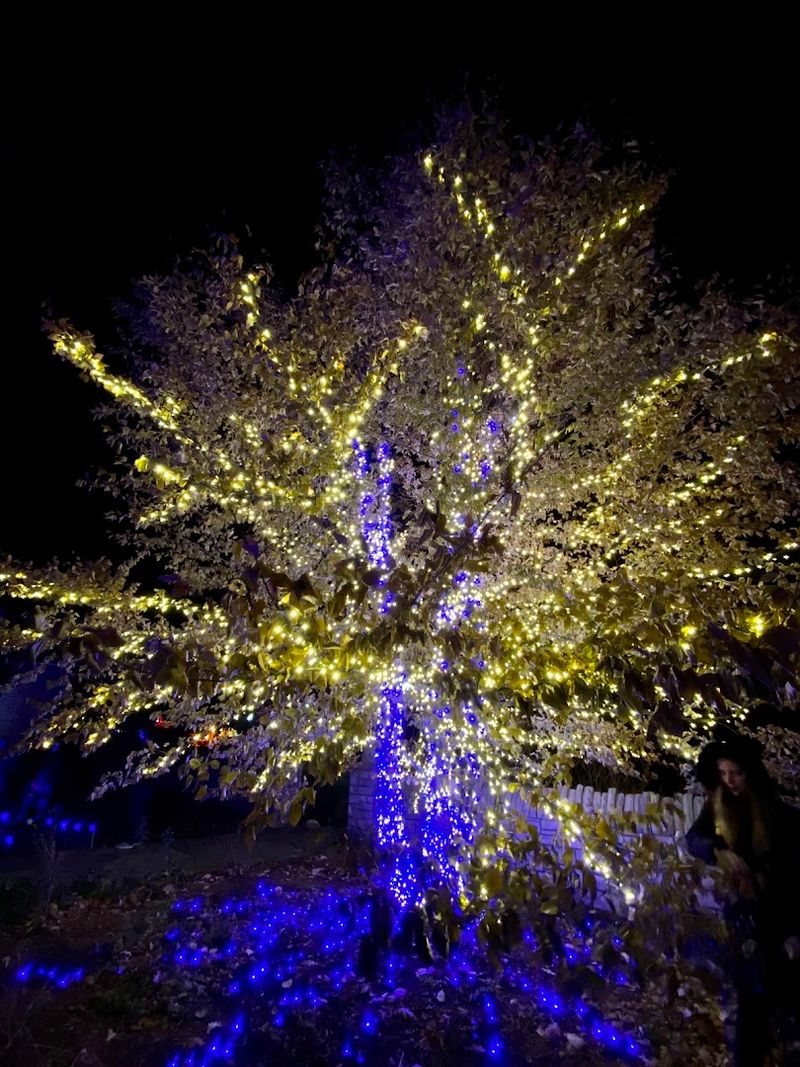
Then winter rewrites the place completely through holiday lights and seasonal programming. Instead of treating the cold months as downtime, the garden leans into illumination, warmth, and evening energy.
If you prefer lower crowds, weekdays can be the smarter move for special events, while daytime visits often offer a calmer pace year-round. Regular hours typically run from late morning through early evening, making this an easy stop to build into a day.
Whenever you go, the best plan is simple: allow more time than you think you need, because this garden keeps creating reasons to slow down.
Why This Award-Winning Garden Lives Up to the Hype
Calling any garden the best in the country sets an almost unfair expectation. The phrase invites thoughts of huge estates, famous conservatories, or blockbuster plant collections attached to major cities.
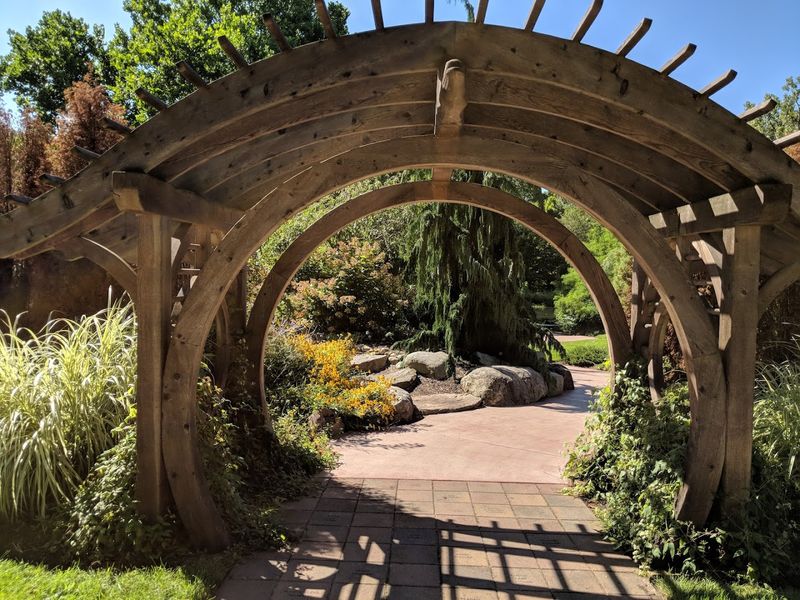
Wellfield Botanic Gardens takes a different route to that level of praise. Its strength is not sheer scale. It is how well every part of the experience has been edited, connected, and made usable. That becomes clearer as the visit unfolds. There is beauty, yes, but also sequence.
Water leads to bridges, bridges lead to changing views, and those views lead into garden rooms that never feel disconnected from the whole. Instead of one marquee attraction doing all the work, the property builds momentum through consistency.
It also avoids the trap of being impressive only to serious gardeners. You do not need deep plant knowledge to appreciate why this place is special.
The grounds speak through movement, texture, accessibility, shade, sound, and visual contrast. That wider readability is a major reason the garden leaves such a strong impression on first-time visitors.
Then there is the setting. To find a garden this composed, this welcoming, and this close to downtown Elkhart gives it extra punch.
It feels substantial without feeling remote, polished without becoming formal, and family-friendly without sacrificing design quality. Those balances are hard to pull off at the same time.
In the end, national recognition makes sense because Wellfield delivers more than a pretty walk. It offers a complete public-garden experience that remains interesting in different seasons, works for different ages, and rewards different styles of visiting, whether you want a quick peaceful loop or a long slow afternoon.
Plenty of places can stage a lovely view. Far fewer can create an environment where nearly every path, bench, bridge, and planting choice supports the same clear idea.
At Wellfield, that coherence is the real luxury, and it is exactly why the garden rises above ordinary regional acclaim.
Share this story