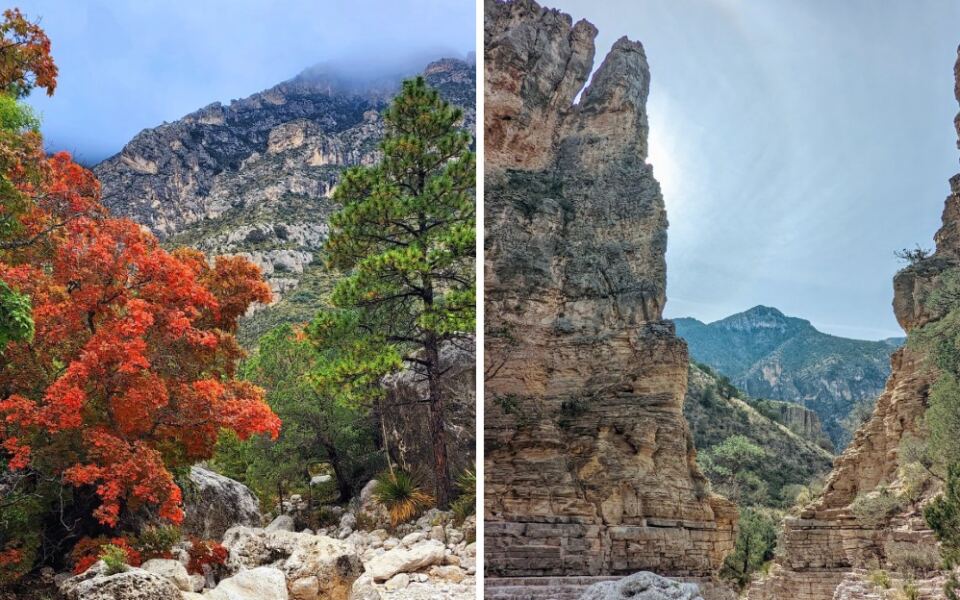
Deep inside a rugged West Texas canyon, a natural staircase rises from the rocky ground, with layers of ancient limestone forming steps that look almost too perfect to be real. No one built them, yet they seem like something straight out of a fantasy movie.
Beyond those stone steps, towering canyon walls close in to create a narrow passage that feels hidden from the rest of the world. I love how a place this unusual can exist in Texas, far from the crowded attractions and familiar tourist stops.
But reaching this secret-looking corridor isn’t exactly a casual stroll. The trail starts out relatively easy before turning into a rocky adventure through a dry creek bed. Hikers must scramble over boulders, navigate uneven ledges, and sometimes use their hands to climb.
The reward is a breathtaking natural hallway tucked between towering walls of stone. It’s the kind of place that makes every tricky step feel worthwhile, and one of those rare Texas hikes where the journey feels just as magical as the destination.
The Wardrobe Door Is Made of Limestone and Boulders
Narnia had a wardrobe, and West Texas has a rocky canyon. Devil’s Hall Trail sits inside Guadalupe Mountains National Park, and it leads to one of the strangest rock corridors in the state.
The hike runs about 4.2 miles round trip. That number sounds friendly until you learn the park rates this trail as strenuous.
Why the tough label? The second half trades a smooth dirt path for a dry wash full of boulders, loose stones, and ledges.
You start on a regular trail and end up climbing through rocks with your hands. It feels a bit like a story that changes genres halfway through.
The elevation gain is roughly 550 feet. That’s modest for a mountain park, but the rough footing makes every foot count.
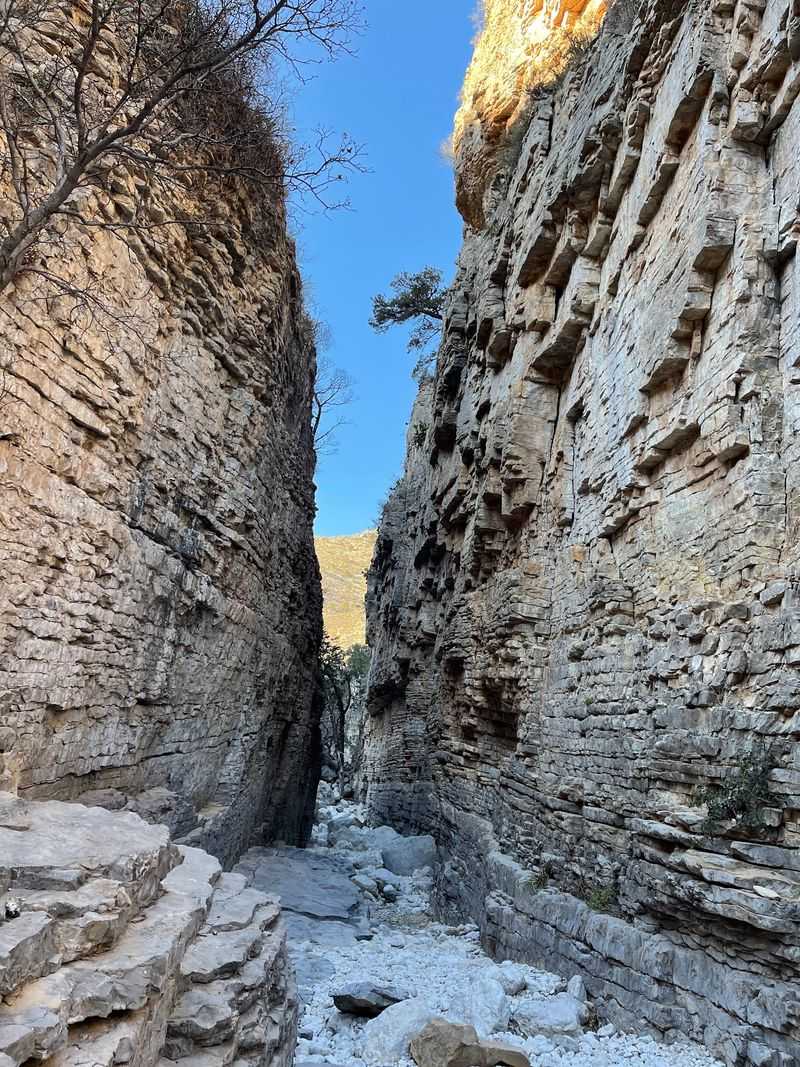
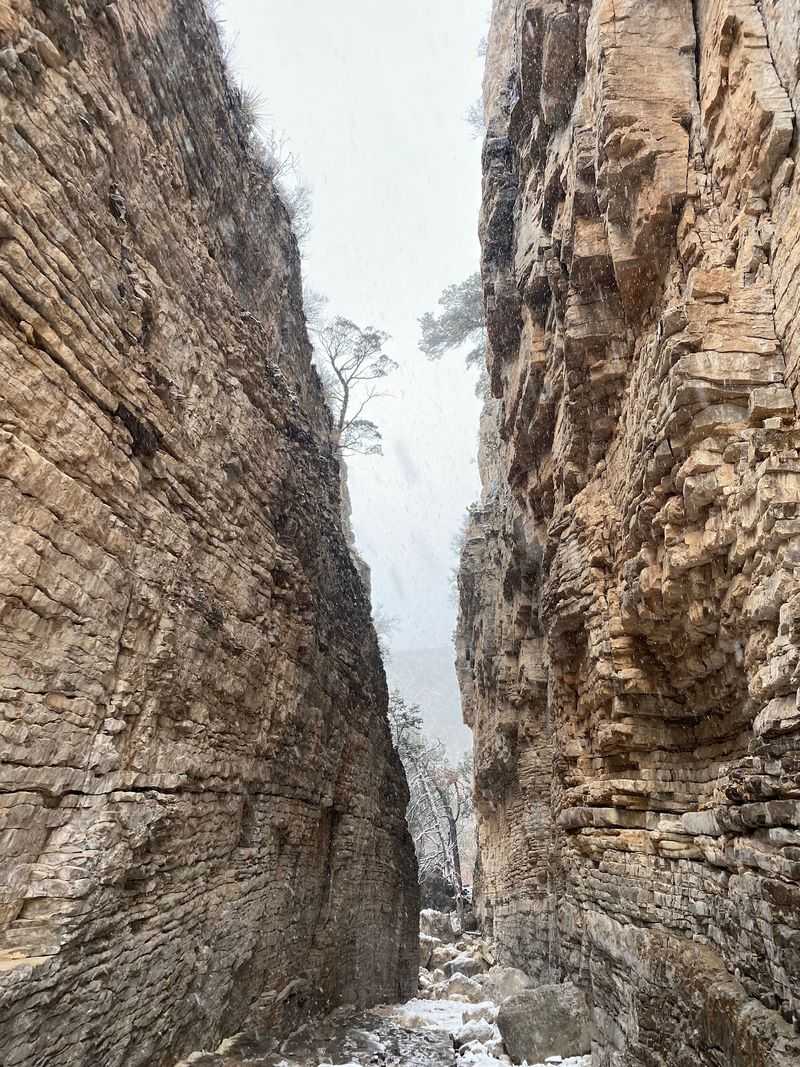
The final payoff is Devil’s Hall itself, a narrow slot between steep canyon walls. It looks carved by giants, and the layered rock adds to that magical, otherworldly feeling.
Plenty of hikers pair this trail with a bigger day in the park. Still, Devil’s Hall Trail earns its own spot on any Texas bucket list, no sidekick hike required.
The First Mile Is Just the Opening Act
Every great story starts slow, and this trail follows the rule. The first stretch leaves from the Pine Springs Trailhead on a clear, easy-to-follow dirt path.
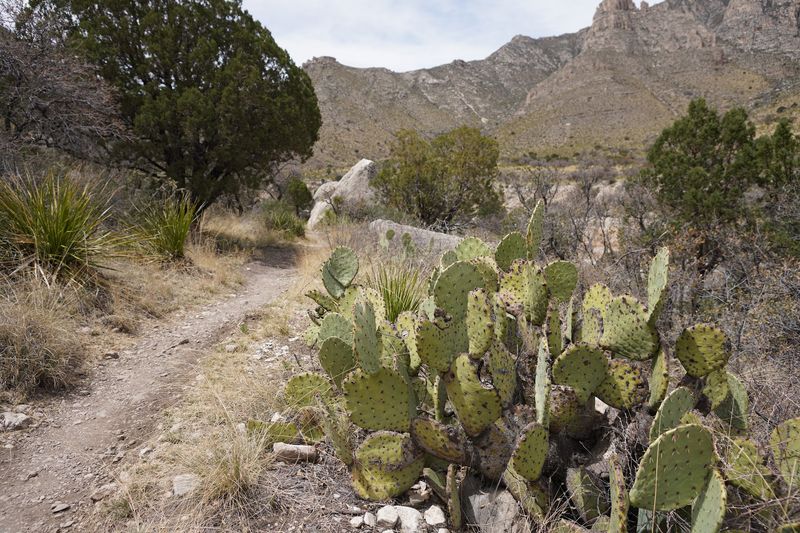
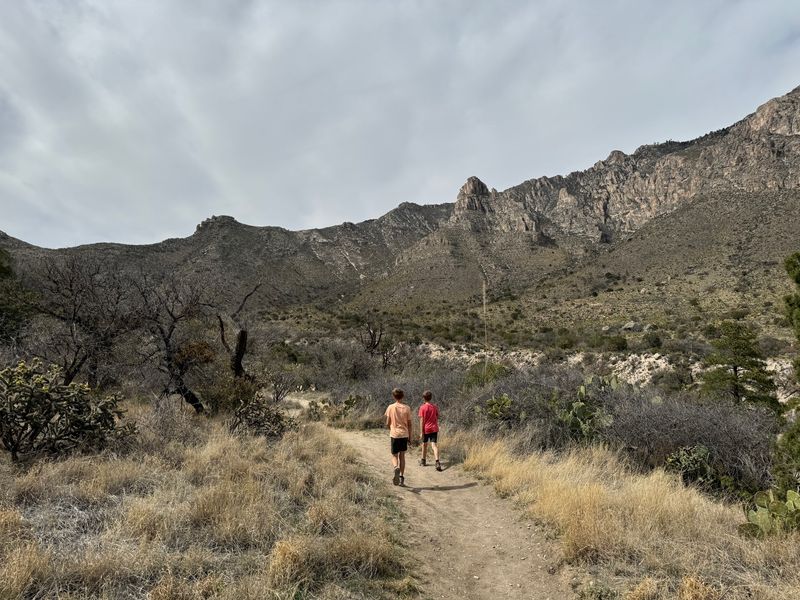
For about a mile, the trail climbs gently through desert scrub. Your legs barely notice, which gives your eyes plenty of time to wander.
Look around and you’ll spot spiky agave, sotol, and prickly pear cactus. Alligator juniper trees show off bark that really does look like reptile skin.
The Guadalupe Mountains rise ahead the whole time. Their pale cliffs keep getting bigger, like a castle coming into view.
Early on, the route shares ground with the trail system heading toward Guadalupe Peak. Signs mark where Devil’s Hall Trail splits off, so keep an eye out.
Missing that junction would send you on a very different and much steeper adventure. Nobody wants a surprise trip up the tallest mountain in Texas by accident.
Use this warm-up wisely. Sip water, settle into a steady pace, and enjoy the easy walking while it lasts.
The ground is about to get a lot more interesting. Think of this part as the calm before the boulders.
Your Hands Will Stay Just as Busy as Your Feet in the Wash
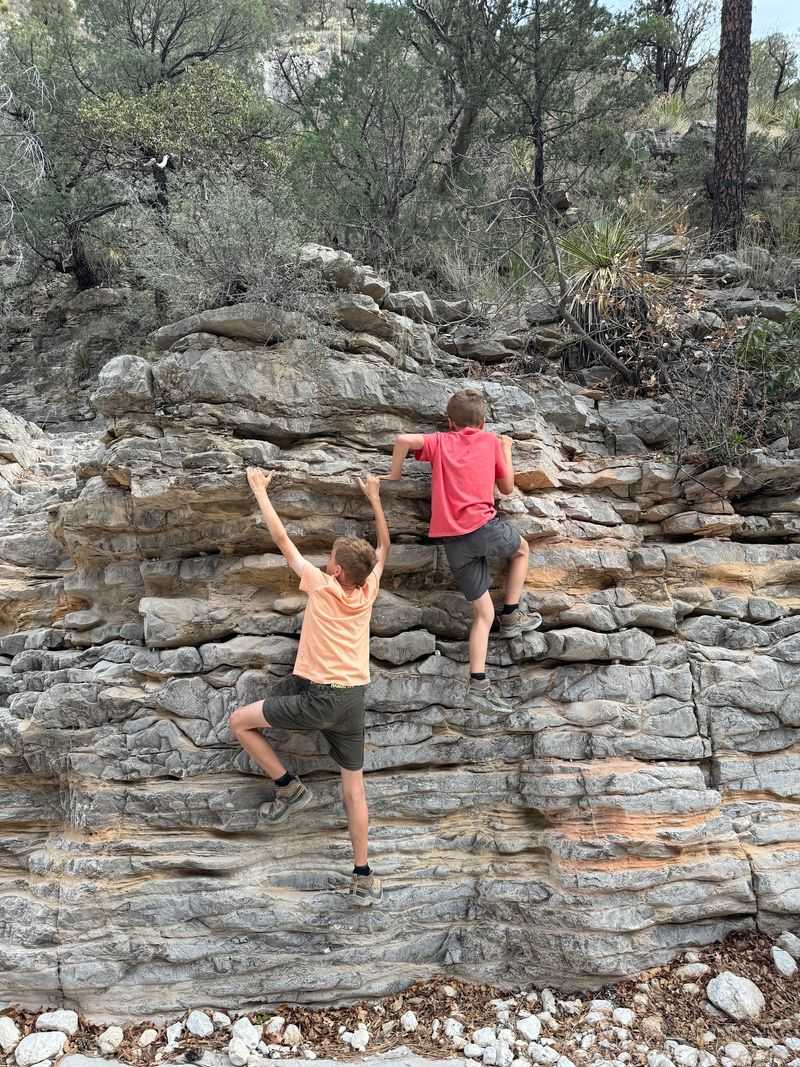
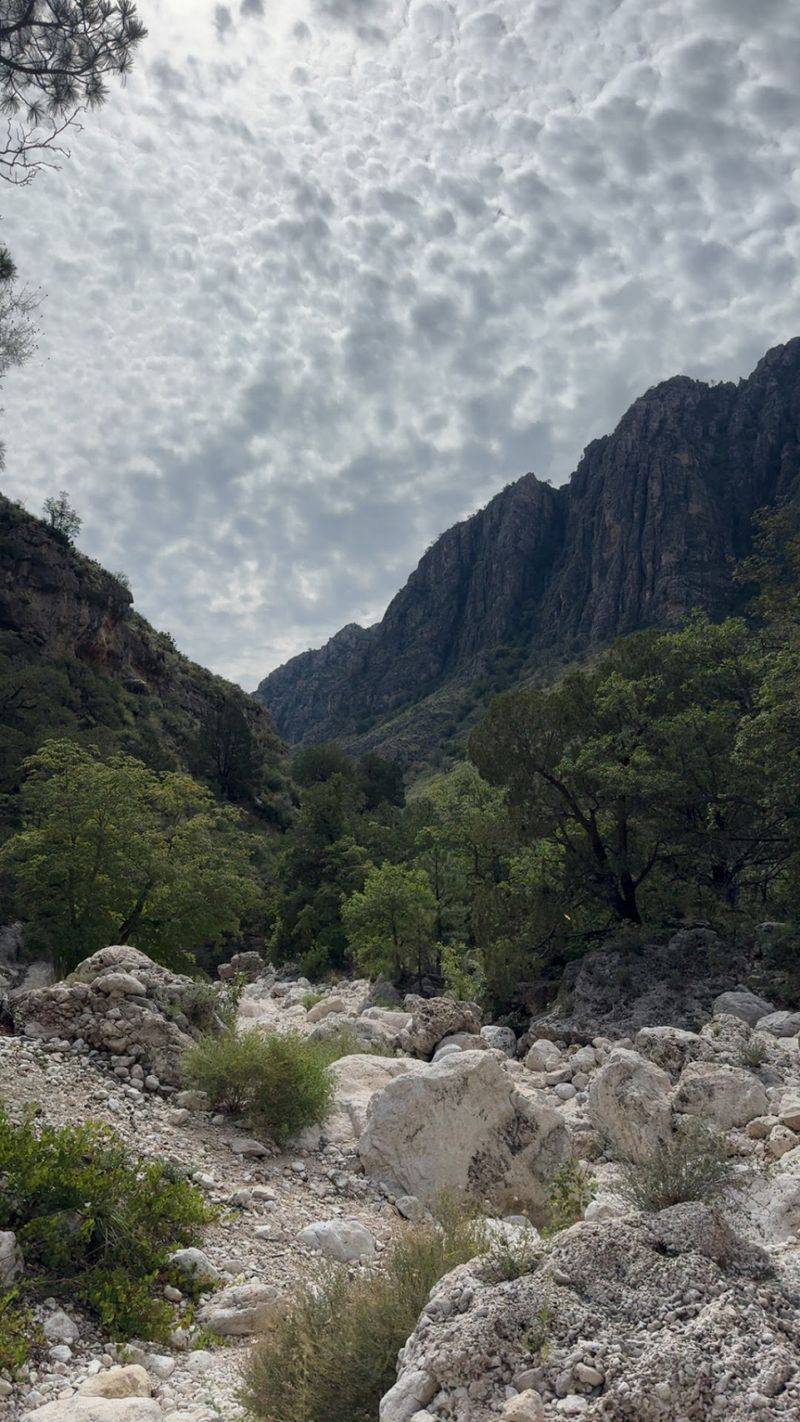
Around the halfway point, the path drops into Pine Spring Canyon. The dirt trail disappears, and a dry creek bed full of rocks takes over.
Here’s where the real fun starts. There’s no single path through the wash, so you choose your own route over and around the boulders.
Some rocks are small enough to hop. Others ask you to sit, slide, or use your hands to climb up a ledge.
Kids and grown-ups who love climbing tend to treat this part like a giant natural playground. Just move carefully, because smooth rock can get slick.
Route-finding matters in the wash. Watch for small rock piles called cairns, which help point the way through the jumble.
Pay attention to landmarks on the way up, too. Everything can look different on the return trip, and the canyon has plenty of tempting side gaps.
Sturdy shoes with good grip make a huge difference here. Gloves can help too if your hands get tender on the rough limestone.
This stretch takes longer than the first mile, so don’t rush it. Slow and steady wins this rocky race.
Nature Built a Staircase and Never Sent the Bill
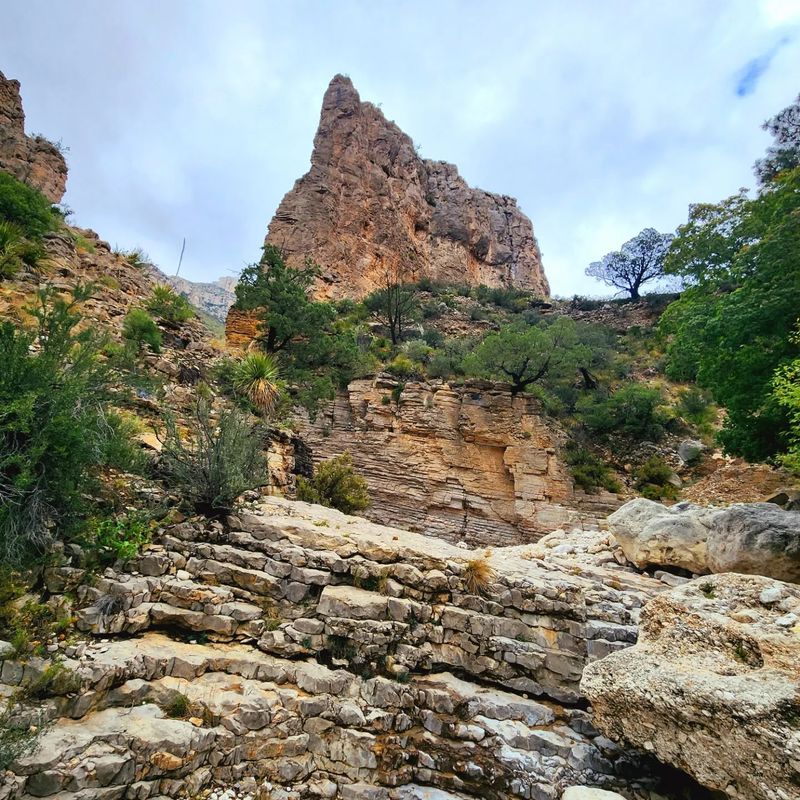
Near the end of the wash, the rocks suddenly look organized. Flat layers of limestone stack up like a set of giant stairs, and they even have a name: the Hiker’s Staircase.
No crew of builders showed up with tools. Layers of rock formed over a very long time, then wore away unevenly into these step-like ledges.
Climbing them feels like something from a fantasy movie. You half expect a talking animal to greet you at the top.
The steps aren’t all the same size, so some take a big stretch. Shorter hikers may want to use their hands for balance.
Take a moment here for photos. The stacked rock layers look especially neat when the sunlight hits them from the side.
It’s also a great place to catch your breath. You’re very close to the grand finale now, and the canyon walls are starting to close in.
Fun fact for curious minds: these layers tell the story of an ancient sea floor. Each band of rock marks a different chapter in that long history.
Not bad for a staircase that comes free with the hike.
Towering Walls Squeeze Into a Secret Stone Hallway
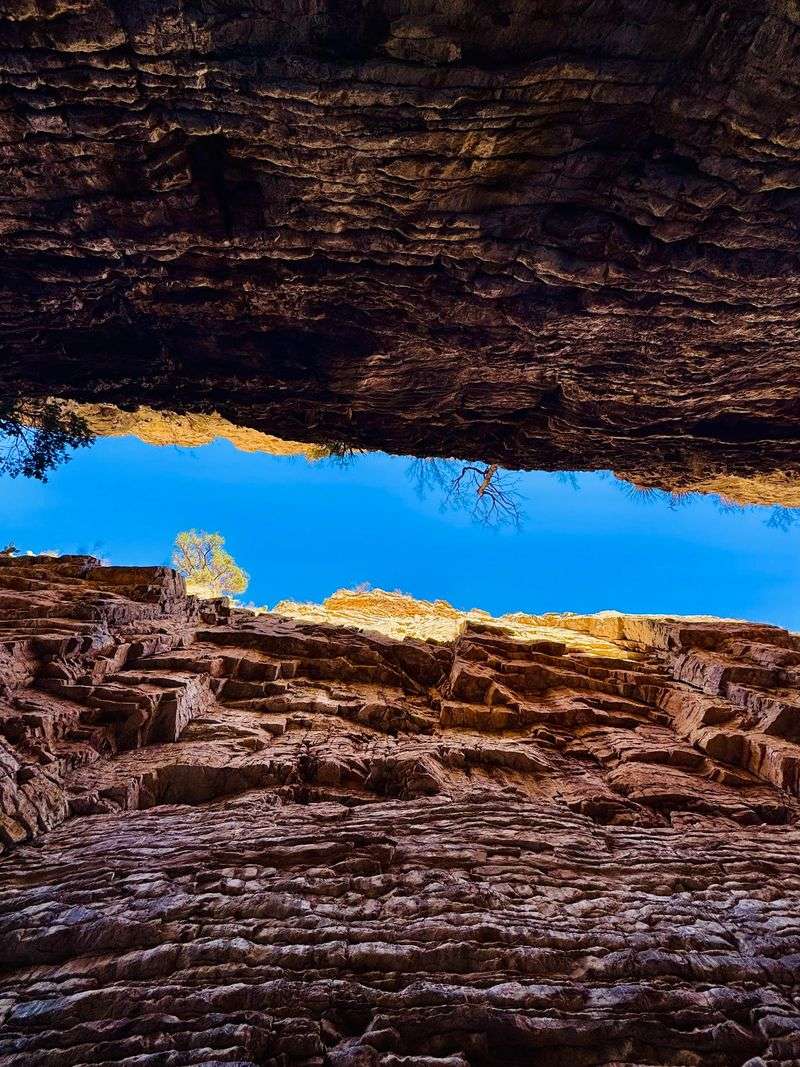
Then it happens. The canyon narrows into a tight corridor with sheer rock walls soaring overhead, and you’ve officially reached Devil’s Hall.
The name sounds spooky, but the place feels more like a hidden castle hallway. Tall, layered walls frame a slim strip of sky above.
Standing inside makes you feel tiny in the best way. It’s easy to see why this spot gets compared to scenes from a fantasy novel.
The floor of the hall is rocky, just like the wash behind you. Watch your footing while you stare upward, because that’s hard not to do.
Give yourself time to explore and soak it in. After all that scrambling, rushing out right away would be like skipping the last page of a book.
A sign marks the end of the maintained route a short distance beyond the hall. Hikers should turn around there, since the canyon past that point gets rougher.
Lunch with a view? This is a great place for a snack break.
Just pack out every wrapper and crumb. The magic stays magic when everyone leaves it clean.
Autumn Paints the Canyon Like a Storybook Illustration
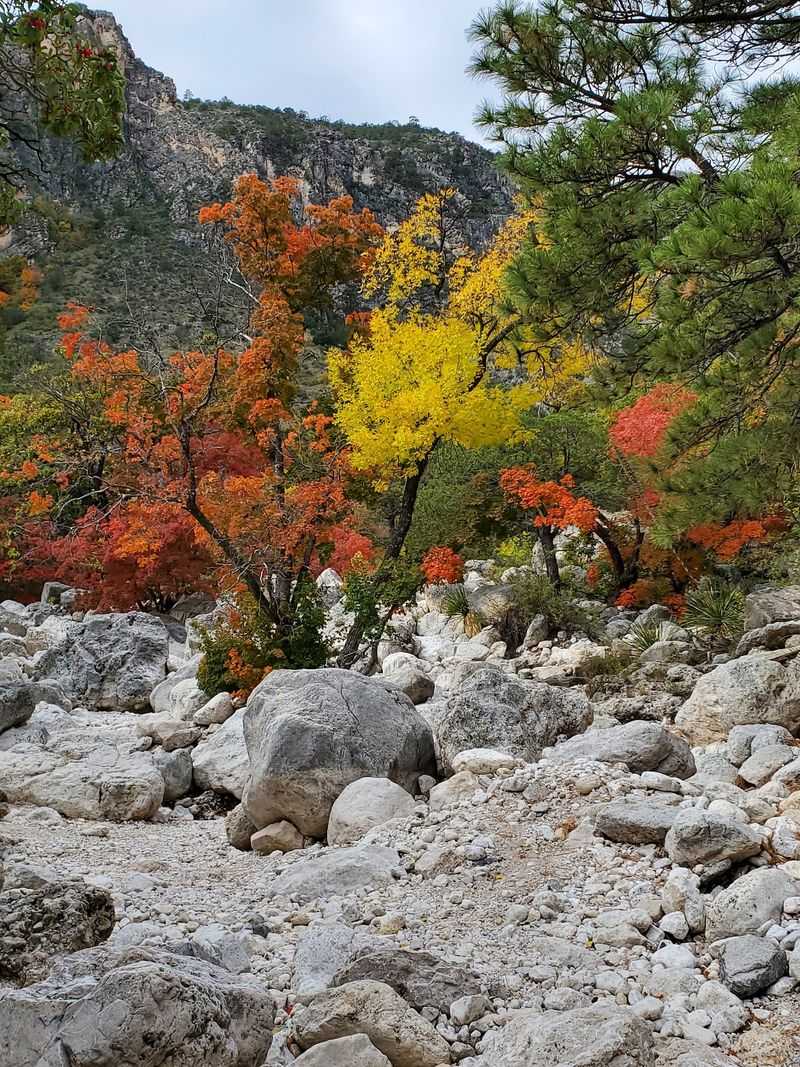
Red and orange leaves in the desert? It sounds unlikely, but Pine Spring Canyon pulls it off.
Bigtooth maple trees grow in the sheltered parts of this canyon. When fall arrives, many of them turn bright shades of red, orange, and gold.
That splash of color against pale limestone looks almost unreal. It’s the kind of scene you’d expect on the cover of a fairy tale.
Fall color in the Guadalupe Mountains often peaks around late October into early November. Timing changes from year to year, so check with the park before planning around it.
Autumn can bring bigger crowds to the park in general. Starting early helps you find parking and enjoy the canyon in quieter light.
Other seasons have their own charm. Winter can bring cold winds and even snow, while summer heat can feel intense out in the open.
Spring may treat you to blooming cactus and desert flowers along the first mile. Every visit offers a slightly different version of the story.
Bring layers no matter when you go. Mountain weather in West Texas can switch moods faster than a plot twist.
A Little Planning Keeps the Adventure From Going Off Script
Water comes first, and lots of it. There’s no water source along the trail, so carry plenty for the whole trip.
Plan on roughly three to five hours for the full hike. The wash slows everyone down, and you’ll want extra time inside the hall.
Shoes matter more than you might expect. Pick sturdy footwear with good traction for the rocky climbing sections.
Leave your dog at home for this one. Pets aren’t allowed on Devil’s Hall Trail, though a few other spots in the park welcome leashed pets.
Keep an eye on the sky. Storms can cause flash flooding in canyons and washes, so avoid this hike whenever rain or wet conditions are expected.
Wildlife lives here too, including rattlesnakes in warmer months. Watch where you put your hands and feet while scrambling.
Sun protection is a must in this open desert country. A hat, sunscreen, and sunglasses will make the first mile much more comfortable.
Stop by the visitor center for current trail conditions before you start. Rangers can share the latest updates and answer any questions.
The Tallest Mountain in Texas Lives Right Next Door
Some neighbors are a big deal. Guadalupe Peak, the highest point in Texas at 8,751 feet, shares the same trailhead area with Devil’s Hall Trail.
Many hikers tackle both on different days of a trip. Devil’s Hall works as a shorter adventure that still feels wildly rewarding.
Your starting point is the Pine Springs area of Guadalupe Mountains National Park. The visitor center sits at 400 Pine Canyon Road, Salt Flat, TX 79847.
Inside, you’ll find exhibits, park information, and rangers ready to help. It’s a smart first stop before lacing up your boots.
The park also has a campground near Pine Springs. Spending the night means you can hit the trail early, before the day warms up.
Keep in mind that this corner of Texas is remote. Fill your gas tank and pack food before you arrive, since services nearby are limited.
The park follows Mountain Time, unlike much of the state. That small detail can save you from showing up an hour off schedule.
Once you’re here, though, the mountains make the long drive feel completely worth it.
An Ancient Ocean Gave This Canyon Its Legendary Look
Long before cactus and hikers showed up, this whole area sat underwater. The Guadalupe Mountains are part of an ancient reef called the Capitan Reef.
That reef grew in a shallow sea more than 250 million years ago. Over time, the sea disappeared and the reef got buried under layers of sediment.
Later, the land lifted and erosion went to work. Today, parts of that old reef stand tall as the mountains around Devil’s Hall Trail.
Scientists consider it one of the best-preserved fossil reefs on Earth. So yes, you’re basically scrambling through a giant natural history museum.
Those neat rock layers in the canyon walls are part of this tale. Each stripe holds clues about life in that long-gone sea.
Guadalupe Mountains National Park was established in 1972 to protect this remarkable landscape. Leave rocks and fossils exactly where you find them so future hikers get the same wonder.
Knowing the backstory changes the whole hike. Every boulder suddenly feels like a page from an ancient book.
Narnia had its magic wardrobe, but this corner of Texas has an entire ocean hiding in its stones.
Share this story