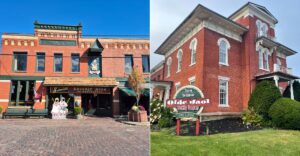
Colorado’s oldest restaurant has been welcoming diners since 1893, and stepping inside Buckhorn Exchange feels like walking straight into the state’s frontier past. This legendary Denver landmark pairs Victorian-era architecture, original Western décor, and a menu known for steaks, wild game, and Rocky Mountain specialties in a setting that has changed remarkably little over the decades.
Every room reflects a chapter of Colorado history, making the experience as much about the atmosphere as the meal itself. If you’re looking for a historic Colorado restaurant that still captures the spirit of the Old West, Buckhorn Exchange belongs at the top of your list.
A Dining Room Packed With Old-West Theater
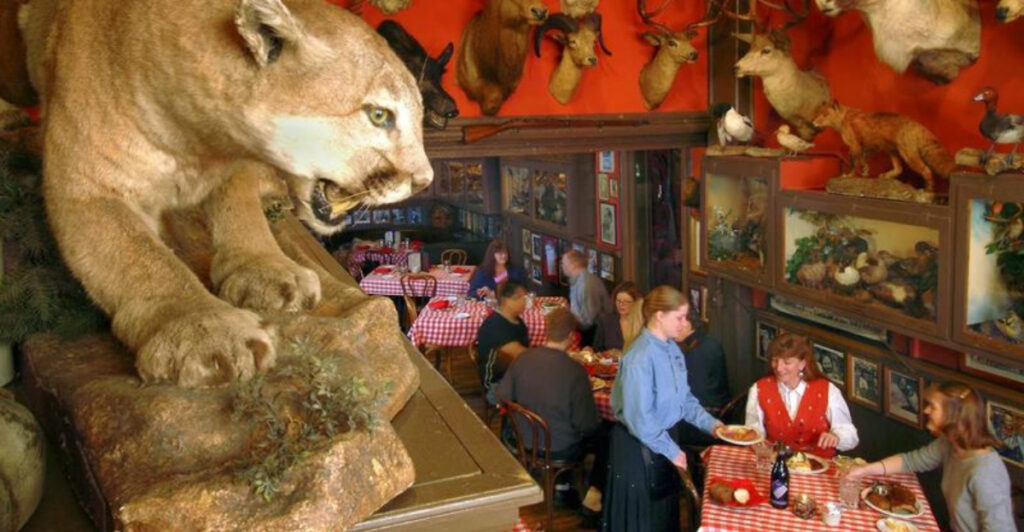
The first surprise at Buckhorn Exchange is not the menu. It is the room itself, where nearly every wall surface competes for your attention with mounted wildlife, framed relics, old photographs, and polished wood that looks like it has absorbed more than a century of conversation.
Instead of sleek minimalism, you get visual density, a style so committed to its own period character that the dining room starts reading like a museum that also serves dinner.
That layered look changes the pace of the meal. You do not settle in and ignore your surroundings here, because the surroundings keep pulling you back with antlers over doorways, vintage objects near the bar, and details tucked high enough that you catch them only after a second glance.
Even before food arrives, the setting gives you a storyline, one built from frontier bravado, railroad-era Denver, and a very deliberate refusal to sand down the rough edges.
There is also a practical side to all that visual drama. The room encourages you to look around, talk about what you spot, and treat dinner as an experience rather than a quick transaction.
That matters at a place with a long identity, because the decor is not acting as background wallpaper. It is carrying part of the restaurant’s argument, which is that age, oddity, and character still deserve center stage in a city that keeps reinventing itself.
Plenty of historic restaurants trade on one old sign or a sepia photo near the host stand. Buckhorn Exchange goes much harder than that.
When you sit down, you are not just entering a steakhouse with history attached. You are entering a fully built environment where the visual excess is part of the point, and Denver suddenly looks a lot older, stranger, and more entertaining than it does outside.
Where the Menu Leans Into Colorado Boldness
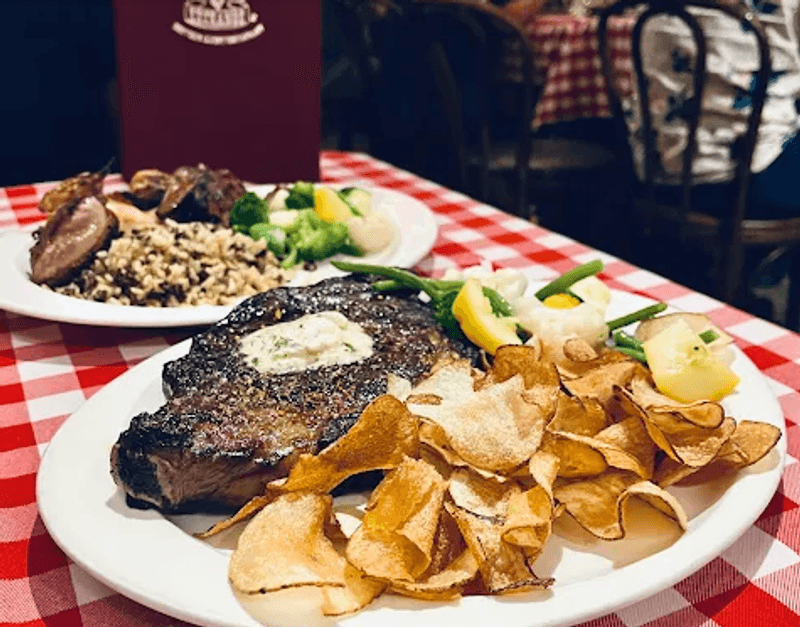
Once you open the menu, Buckhorn Exchange makes its identity clear in a second way. This is not a place trying to blend into the modern steakhouse template with a safe list of predictable cuts and a token local nod.
The restaurant is known for serving game alongside more familiar options, which means your dinner can move from classic beef into bison, elk, quail, or other meats that fit the house’s frontier personality.
That approach changes the energy of ordering. Instead of asking only how hungry you are, the menu pushes you to decide how adventurous you want the night to be.
One table might split a large steak and keep things traditional, while another leans toward buffalo prime rib or a game-focused combination plate. Either way, the point is not novelty for its own sake.
The food choices are tied directly to the restaurant’s long-standing Western identity.
There is a reason that works especially well here. In a room this rooted in historic imagery, a conservative generic menu would feel disconnected, almost timid.
By keeping wild game visible and central, Buckhorn Exchange lets the kitchen participate in the same story the decor is telling. You are not just looking at Colorado history on the walls.
You are being invited to taste a menu shaped by the region’s ranching, hunting, and steakhouse traditions. That does not mean every diner needs to order the boldest thing available.
The smarter move is choosing the version of the experience that suits your comfort level while still respecting the place’s distinct point of view.
Buckhorn Exchange stands out because its menu has a backbone. It knows exactly what kind of restaurant it is, and it does not apologize for being a little wilder than average.
The Upstairs Bar and the Details Worth Looking Up For
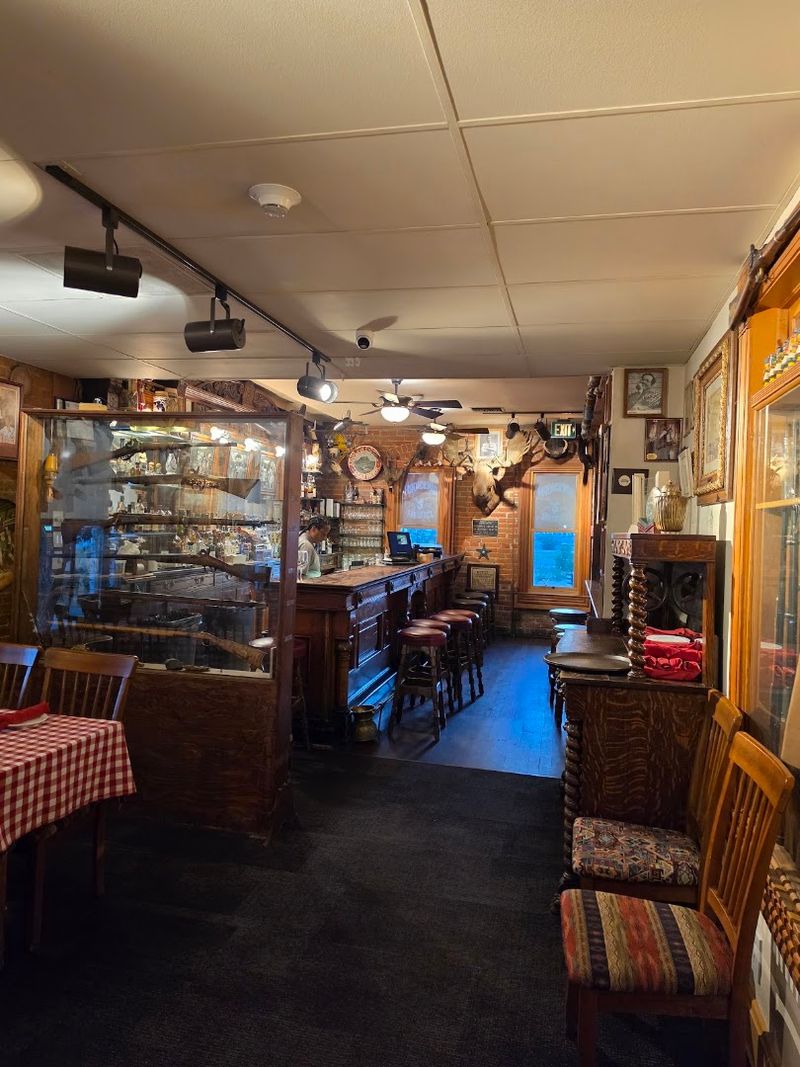
Buckhorn Exchange rewards curiosity. If you keep your eyes moving instead of locking onto the table, the restaurant starts revealing smaller details that deepen the visit, especially around the bar areas and the memorabilia woven through the building.
One of the most talked-about artifacts is the liquor license displayed as No. 1, a piece of visual history that instantly shifts the place from themed restaurant to civic landmark with receipts.
That sort of object matters because it roots the restaurant in Denver’s development instead of presenting a vague frontier fantasy. The room is crowded with horns, hides, pictures, and antiques, but not all clutter works the same way.
Some items create mood. Others function like evidence, linking the building to the city’s saloon culture, hospitality traditions, and long-running appetite for places that mix spectacle with storytelling.
The smartest way to enjoy Buckhorn Exchange is to let those layers unfold gradually. Notice how the memorabilia is not isolated in one showcase or reduced to a short timeline on a wall.
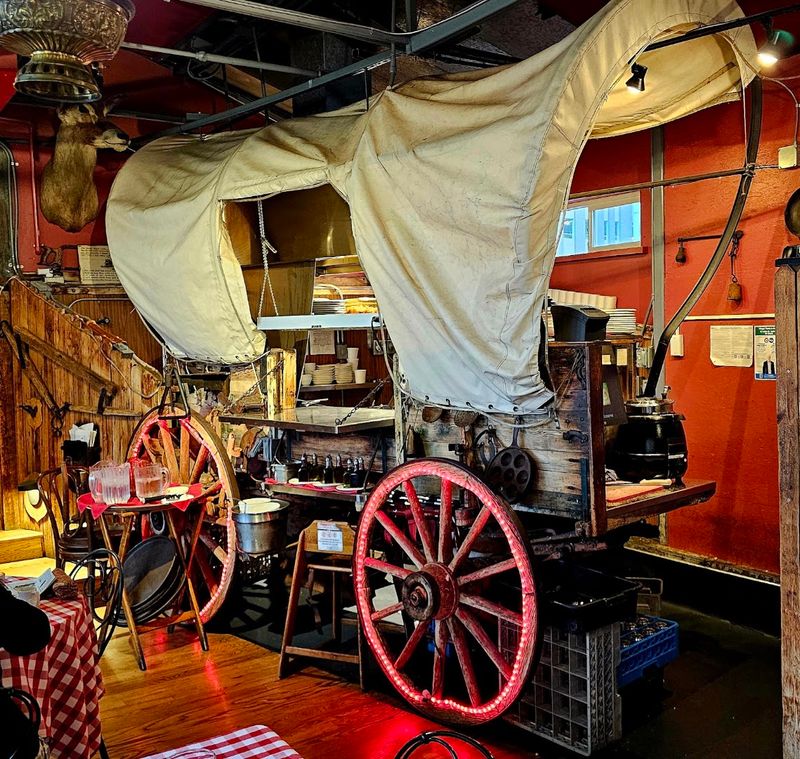
It is integrated into the meal, surrounding you while you wait for drinks, scan the menu, and look toward the staircase or the bar. That makes the history feel lived in rather than cordoned off behind velvet rope.
There is also fun in the sheer abundance of it all. A more polished contemporary restaurant would edit aggressively, but Buckhorn Exchange thrives on visual overload and knows that abundance is part of its charm.
You could spend half the evening tracing frames, artifacts, and mounted pieces without exhausting the room. For a diner who likes restaurants that offer more than a plate, these embedded details turn a reservation into a slow visual treasure hunt.
Why This Colorado Landmark Still Works at Street Level
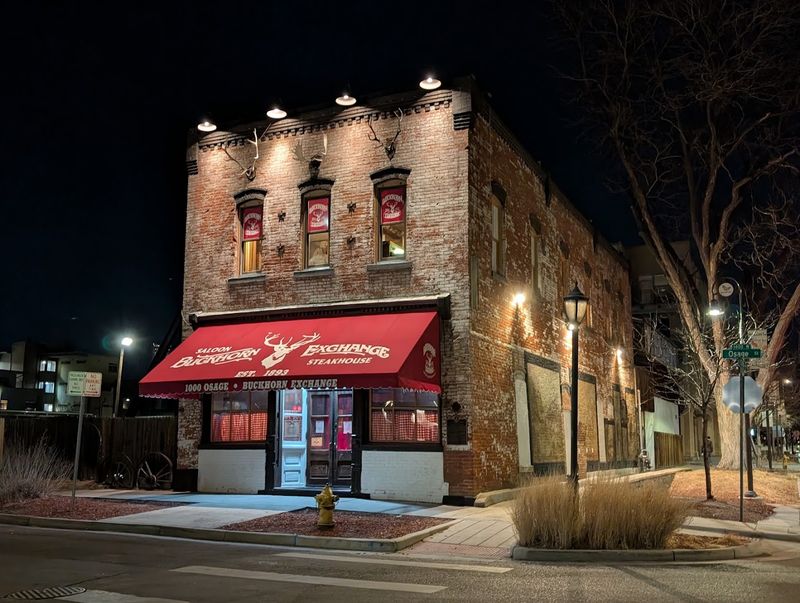
Historic restaurants often survive by becoming self-conscious monuments. Buckhorn Exchange avoids that trap because it still works as an active, street-level place to have dinner, not just a preserved curiosity.
Sitting at 1000 Osage Street, it occupies a part of Denver where old brick character meets transit lines, stadium traffic, and the movement of a city that has changed dramatically around it.
That contrast gives the restaurant unusual power. You can step out of present-day Denver, cross a practical stretch of urban street, and enter a building that keeps its own rhythm inside.
The setting is not hidden away in a mountain town or tucked into a heritage village arranged for tourists. It is right there in the city, which makes the shift in mood more immediate and a little more striking.
The location also shapes expectations in useful ways. This is not a remote special-occasion inn where the landscape does half the storytelling.
Buckhorn Exchange has to build its atmosphere indoors, using architecture, decor, service, and menu to create separation from the pace outside. That self-contained quality is part of why the place stands out. Once you are in, the room does the heavy lifting.
For Denver, Colorado, that matters from an identity standpoint too. The city is full of newer dining rooms chasing clean lines and modern cool, while Buckhorn Exchange offers a different kind of local confidence, one tied to age, eccentricity, and frontier imagery without pretending to be polished beyond recognition.
It stays distinctive because it has not tried to erase its edges. In a fast-changing city, that old-school stubbornness reads less like nostalgia and more like personality with staying power.
Best Time to Go If You Want the Room to Breathe
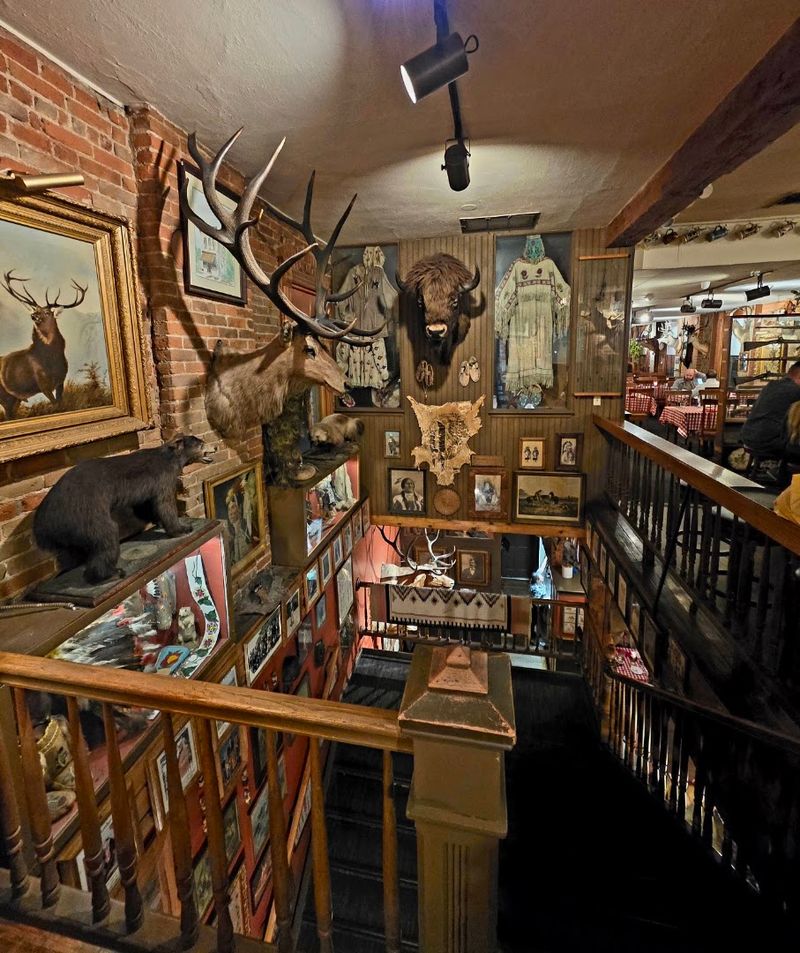
Timing changes the Buckhorn Exchange experience more than you might expect. Because the restaurant opens in the late afternoon or early evening depending on the day, arriving near opening gives you a better chance to take in the room before the energy builds.
In a place this visually busy, that quieter window can be the difference between merely noticing the decor and actually studying it.
An early reservation also suits the style of the meal. This is not a rushed lunch counter or a quick pre-concert stop where you want to be in and out before the lights dim downtown.
The menu invites deliberation, the space rewards attention, and the historic setting lands better when you are not navigating peak noise right away. If you like hearing servers explain a dish or pointing your eyes upward without distraction, earlier is a smart call.
Later seatings bring a different flavor. As the room fills, Buckhorn Exchange shifts from hushed curiosity to a livelier steakhouse cadence, with more conversation rolling across the dining room and the old saloon personality becoming more social than contemplative.
Neither version is wrong. They simply highlight different strengths. Early dining favors observation and ease, while prime dinner hours lean into bustle and occasion.
Practical planning matters here too. The place is popular, the parking lot is limited, and nearby street parking may become part of your strategy.
There is also transit access close by, which can simplify the arrival if you want to skip circling for a spot. A reservation is the better move than gambling on luck, especially on weekends. Buckhorn Exchange is not the kind of restaurant you want to experience while already annoyed from logistics.
Service That Connects the Building to the Plate
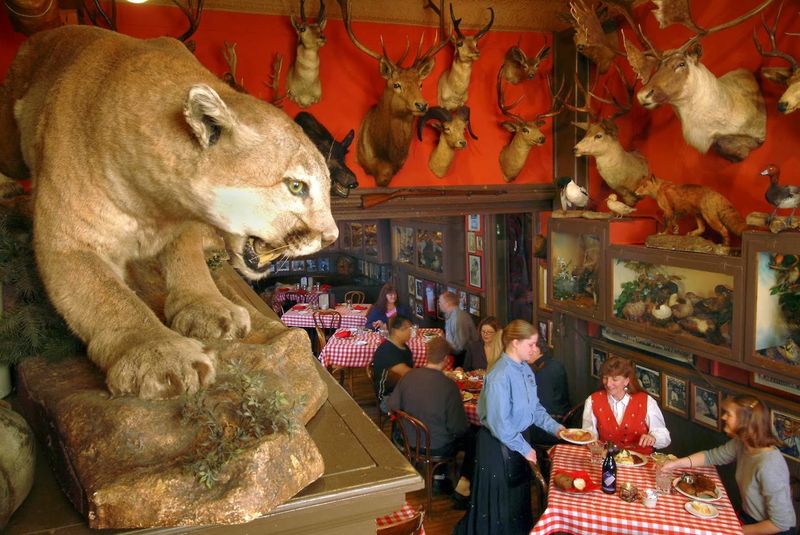
At a restaurant with this much visual history, service can either sharpen the experience or let it collapse into backdrop.
Buckhorn Exchange benefits from staff who are often described as knowledgeable, which is especially important in a place where guests may be deciding between unfamiliar meats, scanning antiques, and trying to understand which pieces of the room carry actual historical weight.
Good service here is not only about speed. It is about interpretation. That interpretive role matters from the first few minutes.
A server who can explain a game dish clearly, guide a steak order confidently, or answer a question about the building helps the whole restaurant make sense.
Without that bridge, the decor risks reading as spectacle and the menu risks feeling like a dare. With it, dinner becomes more coherent. The room, the food, and the history start reinforcing one another instead of competing for attention.
Buckhorn Exchange also seems to understand that diners often come for a specific kind of experience. Some want a classic steakhouse meal in an unusual setting.
Others want to try bison, elk, or another game option that they might not order elsewhere. Attentive guidance lets both styles of diner share the same room successfully.
You do not need a lecture, just enough context to choose well and settle into the house rhythm. That kind of hospitality fits the restaurant’s age. In a building anchored by memorabilia and tradition, polished human interaction keeps the night from becoming static.
It turns history into conversation rather than décor alone. When service is warm, informed, and relaxed, Buckhorn Exchange avoids the trap of becoming overly precious about itself.
Instead, it functions the way a landmark restaurant should: grounded in story, but still focused on giving you a satisfying, navigable evening at the table.
The Sharp Reason Buckhorn Exchange Stays Relevant
Buckhorn Exchange stays relevant because it offers something harder to copy than age alone. Plenty of restaurants can reproduce vintage fonts, reclaimed wood, or a frontier-style cocktail list, but that kind of design usually stops at surface effect.
This place has the deeper advantage of continuity. The history is embedded in the building, reinforced by the menu, and legible in the accumulated objects surrounding the tables.
Just as important, the restaurant does not rely on one single hook. If you come for Colorado history, the dining room gives you plenty to inspect.
If you come for a substantial steakhouse meal, the menu can meet that expectation while still nudging you toward regional specialties. If you want a memorable dinner in Denver that does not resemble every polished contemporary room built in the past decade, the visual character alone gives it a clear lane.
That combination explains why Buckhorn Exchange works for more than one kind of diner. Travelers can treat it as a classic stop, locals can use it for celebrations or out-of-town guests, and curious eaters can use it as a low-pressure place to try game in a setting that makes thematic sense.
The restaurant is distinctive without being inaccessible. It asks for a little time and attention, then pays that attention back with detail.
The final takeaway is not that Buckhorn Exchange belongs to the past. It is that the place still has enough confidence to let the past shape the present without sanding it into trendiness.
In a city where new restaurants appear constantly, that stubborn old identity is a genuine competitive advantage. You leave understanding why this address has lasted. Dinner here is not trying to imitate Colorado character. It is serving a version of it that still has its original edges.
Share this story