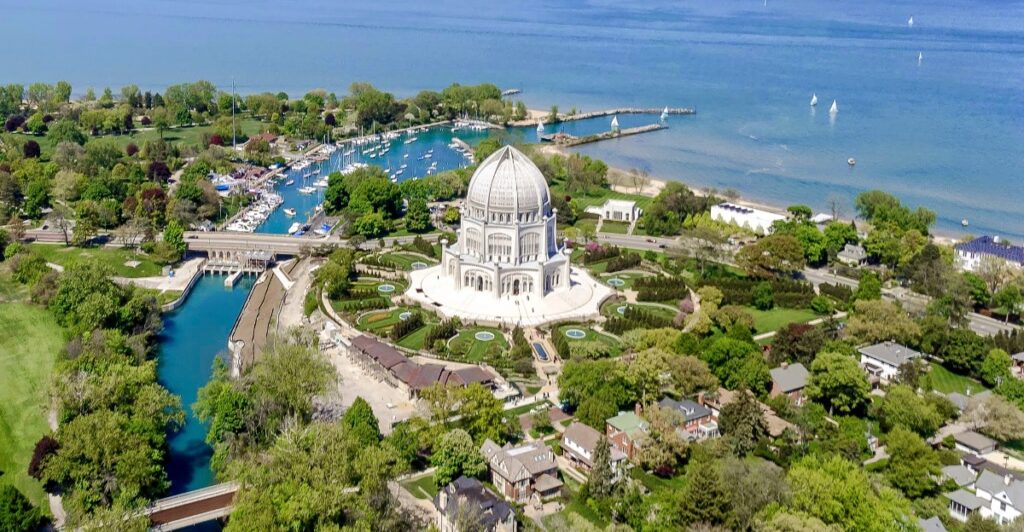
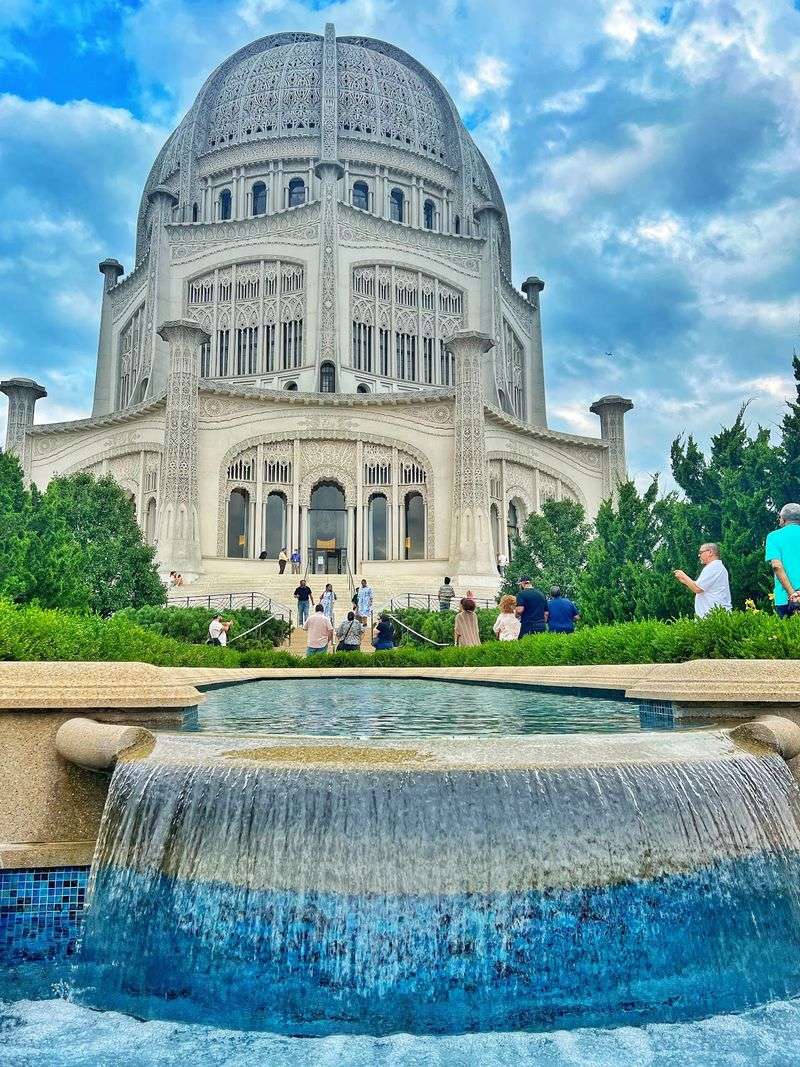
A magnificent white dome rising above the trees is your first glimpse of the Baháʼí House of Worship in Wilmette, just north of Chicago. This extraordinary Illinois landmark is the only Baháʼí temple in North America, welcoming visitors of every faith and background to experience its remarkable architecture and peaceful surroundings.
Intricate stonework covers the building like delicate lace, while beautifully maintained gardens offer quiet paths for reflection. Inside, the atmosphere feels wonderfully removed from the noise and rush of everyday life. Whether you appreciate architecture, enjoy exploring gardens, or simply need a peaceful afternoon, this Wilmette landmark offers a beautiful place to slow down.
A White Stone Crown on the North Shore
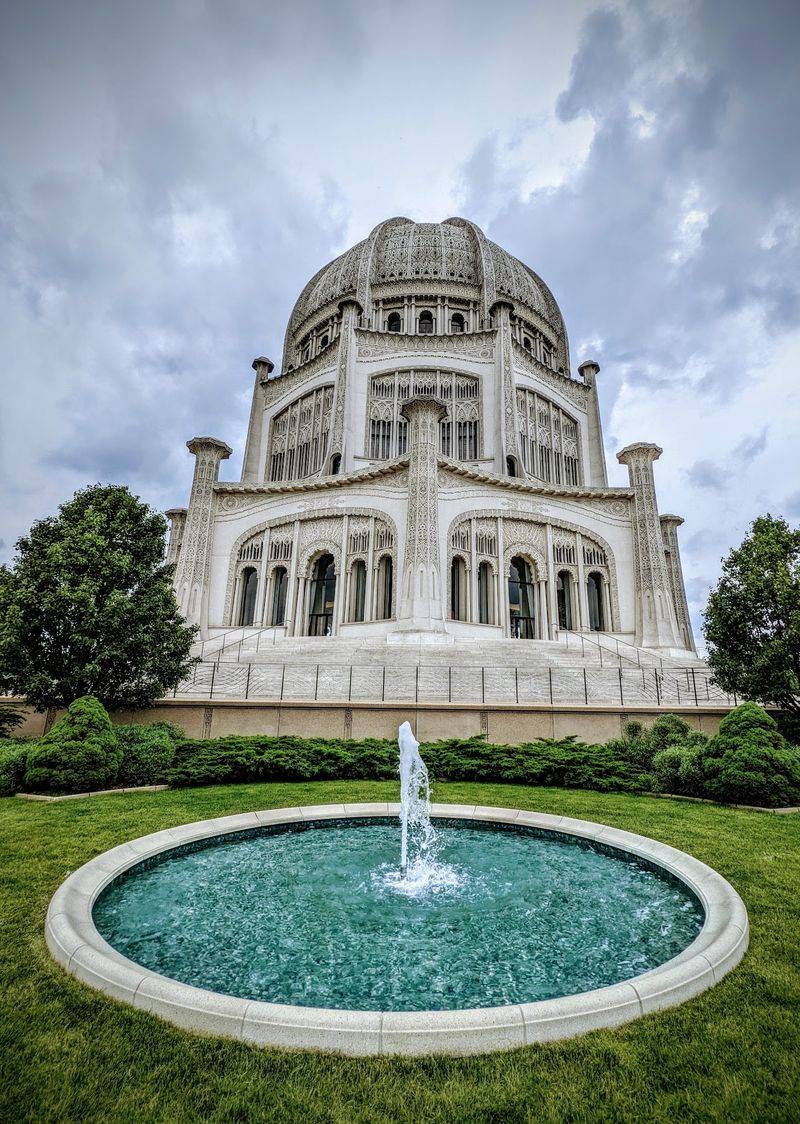
Drive north along Sheridan Road and the trees suddenly part. There it is, a tall white dome that looks almost too delicate to be made of stone. Even from a distance, the building seems to glow against the sky.
Size is the first surprise. The dome climbs about 135 feet high, so it towers over the quiet neighborhood homes and the nearby lakefront. Lake Michigan sits just to the east, which means the light here changes quickly, shifting from soft gray in the morning to bright white by noon.
Get closer, and the surface stops looking smooth. Every inch is covered in carved patterns that look like frost on a window or thread on a piece of lace. From the sidewalk, it is hard to tell where one design ends and the next begins.
The shape follows a clear plan. The temple has nine sides, and that number shows up again and again across the building and grounds. In the Baháʼí Faith, nine is a symbol of unity and completeness, so the design is doing more than looking pretty.
Each side has its own entrance. That detail carries a message too, since the doors face every direction as a sign that people from anywhere are welcome to walk in.
Walking a slow loop around the outside is the best way to take it in. The shadows fall differently on each face, and new details pop out with every few steps. Look up at the curved ribs of the dome and notice how they pull your eyes toward the very top.
Bring sunglasses on a sunny day. All that white stone reflects a lot of light, and you will want to keep staring upward for a while.
Inside the Dome, Where the Noise Switches Off
Step through the doors and the sound of traffic simply disappears. The sanctuary is wide, bright, and almost completely silent. Most people stop for a second just to let their eyes adjust to the space.
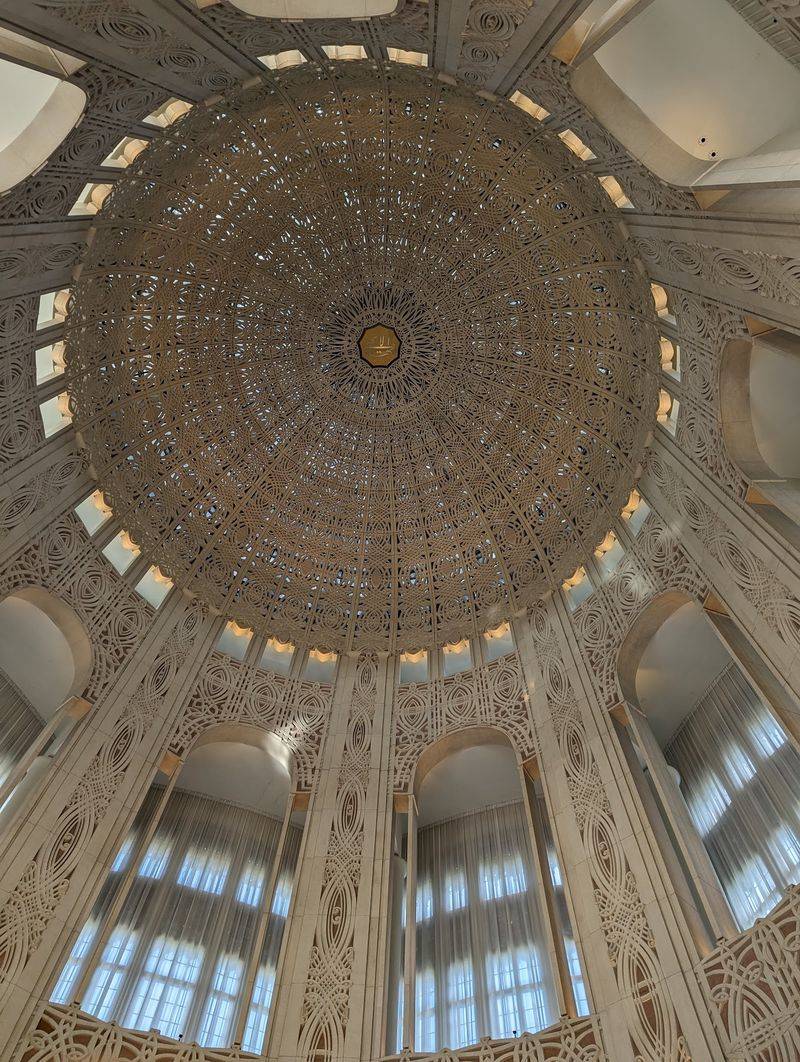
Above you, the inside of the dome rises in layers of carved white tracery. Daylight filters through the openings, so the room never looks harsh or dim. On cloudy days, the light turns soft and silvery, which gives the space a whole different mood.
The setup is simple on purpose. Rows of chairs face toward the center, and there is no pulpit, altar, or stage. The Baháʼí Faith has no clergy, so the room is built for quiet prayer, reading, and reflection rather than sermons.
Listen closely and you might hear someone reading a passage aloud during a devotional program. Readings can come from Baháʼí writings and from the sacred texts of other world religions. Music, when it happens, is sung by voices alone.
Photos are not allowed inside, and signs near the entrances make that clear. Honestly, it helps. Without phones out, people actually look around, sit down, and breathe.
Above the alcoves, carved inscriptions share short spiritual quotations. Reading them slowly is a good way to settle in if you are not sure what to do with yourself in a quiet room.
Visitors of any faith, or no faith at all, are welcome to sit as long as they like. Some people stay five minutes, while others linger for half an hour with their eyes closed. Pick a seat near the edge if you want to watch the light move across the ceiling without feeling in anyone’s way.
Nine Gardens, Fountains, and a Lot of Clipped Green
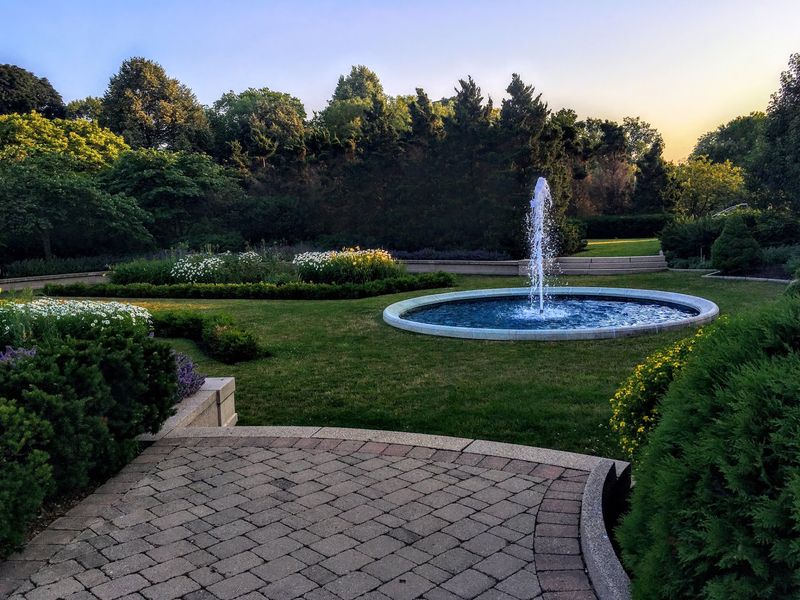
Gardeners must be the busiest people on the property. Hedges are trimmed sharp, flower beds look freshly planted, and the lawns are almost suspiciously perfect. It is the kind of tidy that makes you want to step lightly.
The grounds wrap all the way around the temple, matching its nine-sided design. Paths lead outward from the building like spokes on a wheel, and each section has its own shape and plantings. That layout makes it easy to wander without getting lost, since the dome is always right there as a landmark.
Fountains add a soft, steady splash in warmer months. That sound does a lot of work, covering up the hum of nearby roads and making the gardens seem farther from the city than they are.
Seasons change the scene completely. Spring brings bright bulbs, summer fills the beds with thick color, and fall turns the trees around the edges gold and red. Winter strips everything back, which actually makes the white temple look even bolder against the snow.
Benches are tucked along the paths in shady spots. They are perfect for a quiet snack-free break, a little journaling, or simply watching bees work the flowers.
Keep an eye on the reflecting pools and water features. On a calm day, they catch pieces of the dome and sky, creating a mirror image that is great for photos from outside the building.
A full lap of the gardens takes around twenty to thirty minutes at a relaxed pace. Wear comfortable shoes, since there are some steps and slopes, and stay on the paths so the plantings stay as neat as you found them.
Half a Century of Building an Illinois Icon
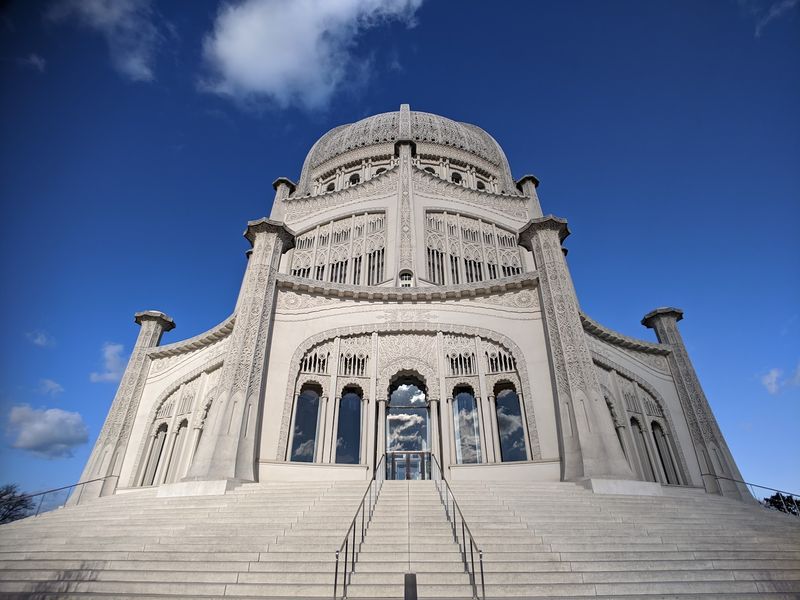
Patience built this place. The first stone was laid back in 1912, and the temple was not dedicated until 1953. That is roughly four decades of planning, fundraising, and careful construction.
The architect was Louis Bourgeois, a French-Canadian designer with big ideas. His plan mixed shapes and symbols from many cultures and religions into one building. Look closely and you can spot stars, crosses, crescents, and other shapes woven together in the stonework.
Making that design real was a huge challenge. Builders turned to a special technique using cast concrete mixed with crushed quartz, which gives the surface its bright sparkle. Each ornamental piece was made in molds and then fitted onto the structure like an enormous puzzle.
Money was another hurdle. Baháʼí communities paid for the project through donations, and the work slowed during hard times like the Great Depression and World War II. Each stage moved forward only when funds were ready.
Today, it is the oldest surviving Baháʼí House of Worship in the world and the only one in North America. There are only a handful across the globe, which makes this one a pretty rare sight.
The building also earned national recognition. It is listed on the National Register of Historic Places, a big honor for any American structure.
Chicago locals sometimes admit they waited years to visit, even though it sits just outside the city. Out-of-town friends are often the ones who finally drag them up to Wilmette. Once there, the long backstory makes the dome look even more impressive, like a project that refused to quit.
Start at the Welcome Center Before Climbing the Steps
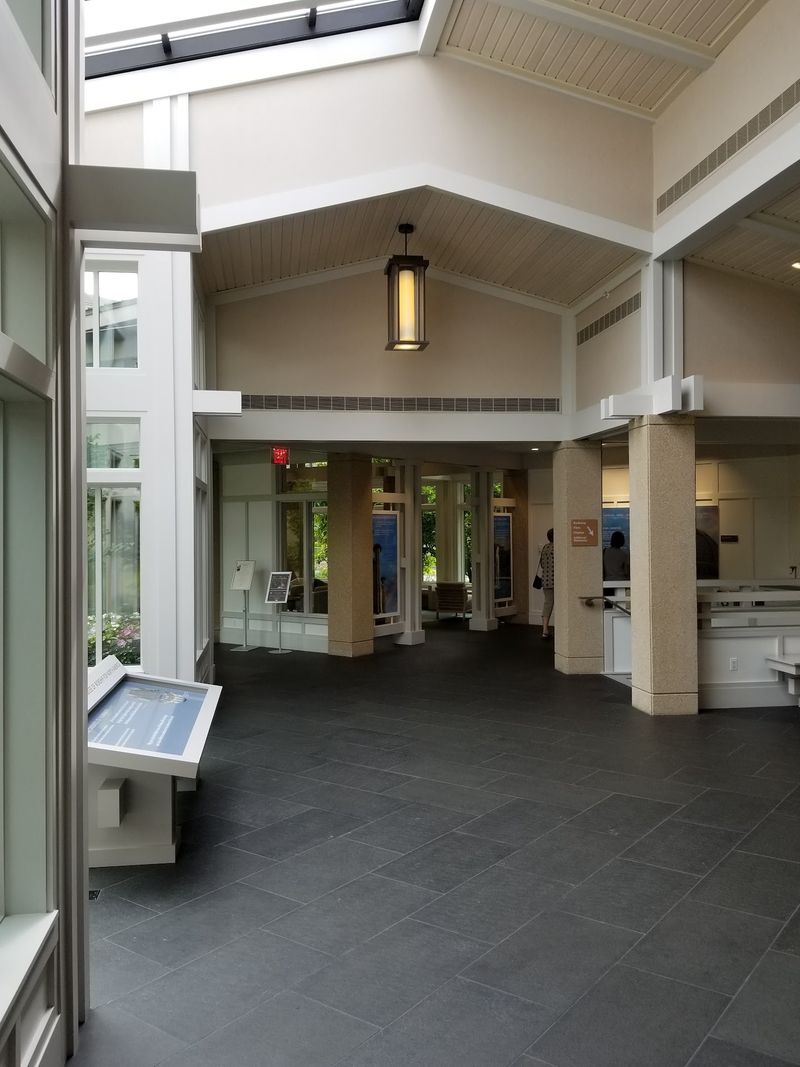
Here is a smart move that many first-timers skip. Before heading up to the temple, stop by the Welcome Center located on the lower level beside it. It turns a pretty visit into a much richer one.
Inside, you will find displays and short videos that explain the Baháʼí Faith, how it began, and why the temple looks the way it does. The information is clear and easy to follow, even for kids. Nobody pushes beliefs on you, and you can move through at your own speed.
Volunteer guides are usually nearby and happy to chat. Ask them about the symbols on the outside walls or what happens during a devotional program. Their answers often point out details you would walk right past on your own.
There is also a small bookshop with books, cards, and simple gifts. It is a nice spot to pick up something to remember the trip by.
Restrooms are here too, which matters since the sanctuary itself is a space for quiet. Families with little ones will appreciate knowing where to go before the long walk around the gardens.
Hours for the Welcome Center can differ from the temple itself, often opening later in the morning. Plan an early sunrise visit to the gardens and dome, then circle back once the Welcome Center doors open.
Spending fifteen to twenty minutes there first makes the rest of the visit click. After learning what nine sides and many doors stand for, the walk up the steps feels more like reading a story written in stone. Then head outside and see how many symbols you can spot.
Timing, Parking, and Getting to Wilmette
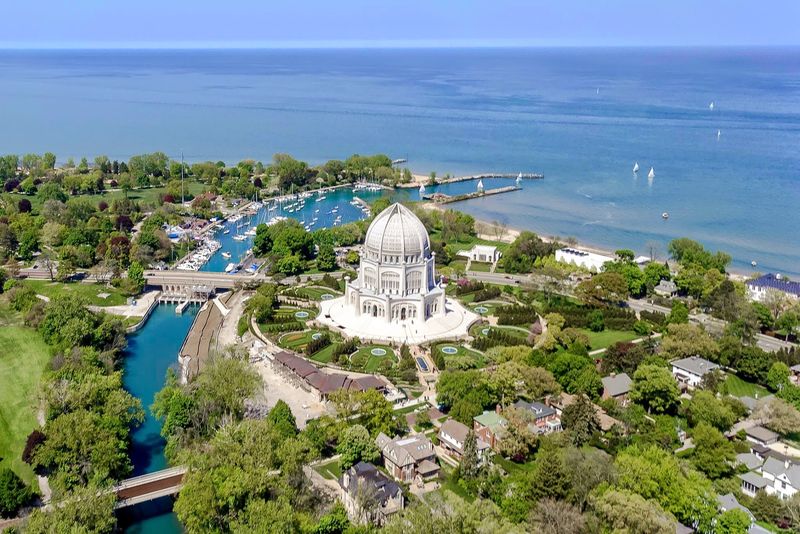
Early birds win here. The temple opens at 6 AM every day, and the hour after opening is calm, cool, and nearly empty. Sunrise light on the white dome is worth setting an alarm for.
Regular hours run from 6 AM to 6 PM, and the schedule may stretch later during summer months. Admission is free, and no appointment or ticket is needed. You can just show up.
Weekday mornings tend to be the quietest time overall. Weekends and holidays bring more visitors, plus the occasional wedding or special gathering. A rainy day can be lovely too, since the gardens look extra green and the crowds thin out.
Driving is simple, and there is free parking on site. Spaces can fill up during busy times, though, so arriving early helps. If the lot is full, be careful to follow local street parking signs in the neighborhood.
Public transit makes it even easier. The CTA Purple Line ends at Linden station, just a few blocks west of the temple. From there, it is a short, pleasant walk through a leafy Wilmette neighborhood.
Biking is another great option. Sheridan Road connects to other North Shore towns, and the lakefront nearby is popular with cyclists.
Dress comfortably but respectfully, especially if you plan to go inside. Keep voices low near the entrances and read the posted photography guidelines before taking pictures.
Plan on one to two hours to see everything without rushing. Pair the trip with a stroll at nearby Gillson Park along the lake, and you have an easy half-day escape from the city.
A Rare Kind of Quiet in the Chicago Area
Plenty of places near Chicago are beautiful. Very few are built entirely around stillness. That is the real difference at this Wilmette landmark.
Every choice on the property points in one direction. No admission fee means nobody is rushing you along. No photos inside means no crowd of phones. No clergy and no sermon means the sanctuary belongs to whoever sits down in it.
The welcome is wide open, too. Families with young kids, architecture fans, students, couples on a weekend drive, and people of many faiths all share the same paths. Nobody asks what you believe before you walk in.
Beyond the peace, there is plenty to learn. The building tells a story about unity through its shape, its symbols, and its open doors on every side. Even a skeptic can appreciate the effort it took to bring that idea to life in stone.
For a first visit, keep it simple. Walk the gardens, read a few of the carved quotes, spend some time in the sanctuary, and stop by the Welcome Center to fill in the gaps. Leave the schedule loose so you can stay longer if you want.
Come back in a different season and the whole place changes. Tulips in spring, thick blooms in summer, blazing trees in autumn, and a snowy white-on-white scene in winter all give the temple a fresh look.
Out on Sheridan Road, cars keep rushing by. Inside the gate, the fountains keep splashing, the bees keep humming, and the dome keeps catching the light off Lake Michigan, exactly as it has since 1953.
Share this story