Indiana has plenty of charming small towns, but few places feel as unusual as Story Inn near Nashville. Once a 1800s village, this restored ghost town now offers visitors the chance to eat, wander, and even spend the night surrounded by historic buildings, quiet gardens, gravel paths, and old-fashioned character.
Guests can dine inside a former general store, explore the peaceful property, and stay in rooms or cottages that make the past feel surprisingly close. For travelers looking for a getaway with history, mystery, and rustic charm, Story Inn is one of Indiana’s most memorable overnight escapes.
Where the Woods Open and Story Appears
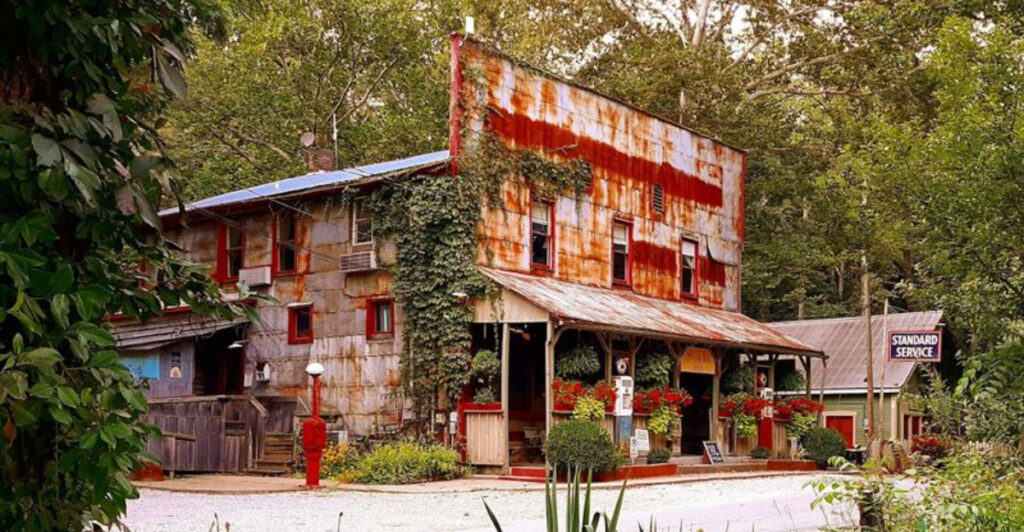
The approach to Story Inn is part of the appeal. Indiana 135 curves through Brown County’s wooded hills, and then the landscape relaxes into a small clearing where old buildings, porches, and weathered siding suddenly come into view.
Instead of a resort entrance or polished gate, you arrive at a place that still reads like a tiny settlement holding its ground.
That first visual impression matters because Story is not trying to look new. The structures, spacing, and open land create the sense of a preserved crossroads rather than a single hotel building with historical decor layered on top.
You are seeing the layout as much as the lodging, with gardens, horse pastures, and paths helping the property spread out across the acreage.
It is easy to understand why the place gets called a ghost town, even though the tone is more quiet than eerie in daylight.
The stillness comes from the setting itself: a pocket of old Brown County tucked away from commercial strips, framed by trees, and buffered by the kind of distance that makes ordinary traffic noise disappear.
That separation changes your pace before you even carry in a bag. Story Inn also benefits from not being overbuilt. There is room between structures, room to look around, and room for the old architecture to register without competing signage or oversized additions.
That restraint gives the property its strongest visual trick, which is making a short walk across the grounds feel like moving through a preserved fragment of rural Indiana. If you arrive near evening, the place sharpens even more.
Porch lights begin to glow, the white facades pick up warm color, and the whole settlement starts looking less like a roadside stop and more like a stage set that somehow never got dismantled. It is an unusually cinematic arrival, especially for a place this remote.
A Bed, a Porch, and a Strong Sense of Place
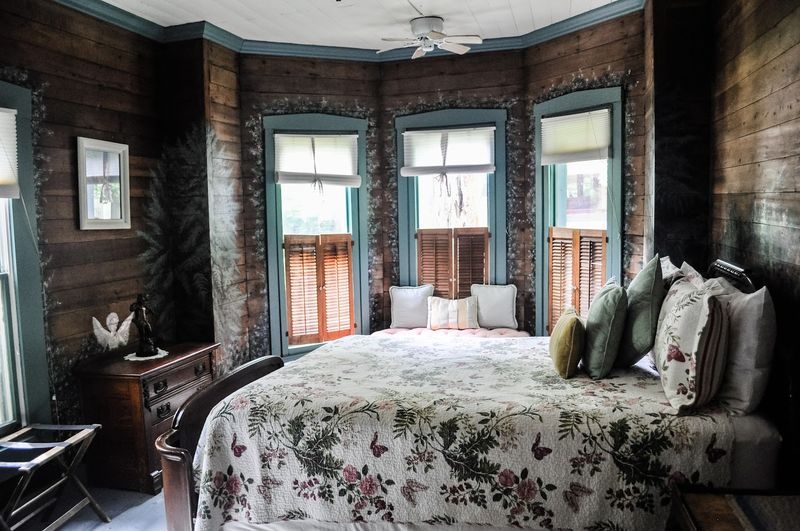
Staying overnight is what turns Story from a scenic stop into a full experience. The accommodations are spread between rooms in the main building and private cottages, and that variety matters because it lets the property function more like a small village than a standard inn.
You are choosing a way to inhabit the site, not simply booking square footage. The design leans into age rather than disguising it.
Individually decorated spaces, older furniture, and details like claw-foot tubs or whirlpool baths give the rooms a collected look instead of a uniform hotel style.
Even when modern necessities such as air-conditioning and private bathrooms are in place, the visual language stays rooted in the nineteenth-century setting.
Cottages add another dimension. Some include living rooms and more room to spread out, which makes them useful for couples wanting privacy or small groups planning a relaxed weekend near Brown County State Park.
A deck or balcony, when available, changes the rhythm of the stay because the surrounding quiet becomes part of the room itself.
This is not the kind of property where every door opens into the same predictable layout. One room may read romantic and compact, while another has a more homey, cabin-like personality.
That irregularity is part of the point, and it suits Story better than polished sameness ever could. If you are deciding whether to visit only for dinner or to spend the night, the overnight stay is the stronger choice.
Once darkness settles over the grounds and the road traffic drops away, the old-town illusion gets deeper, and your room stops feeling like a backdrop. It becomes your temporary address in one of Indiana’s strangest and most atmospheric little settlements.
Inside the Old General Store Tavern
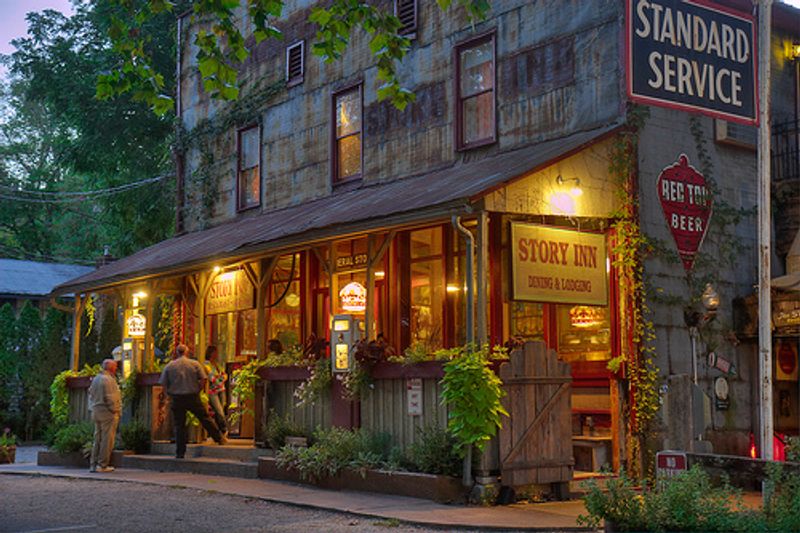
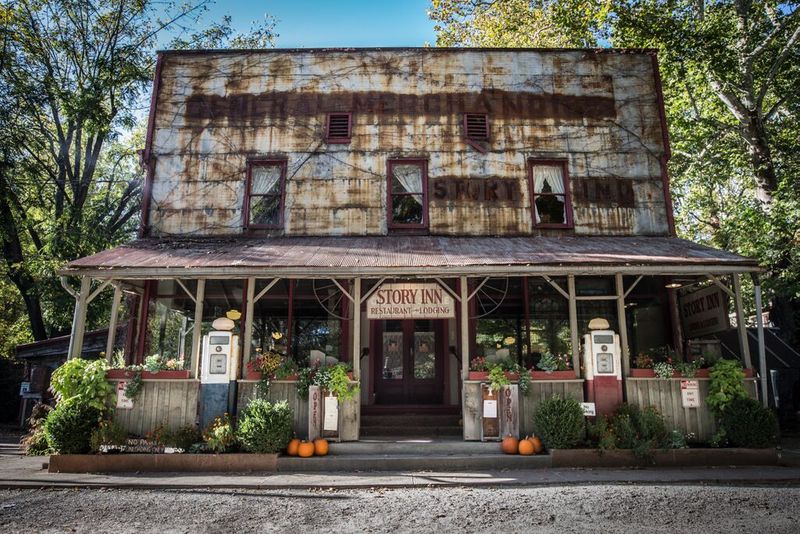
The dining room and tavern give Story Inn its social center. Housed in an old general store, the restaurant space connects directly to the town’s preserved identity, so a meal here is tied to the building itself rather than feeling like an unrelated amenity added for convenience.
The wood, scale, and low-key rustic character do a lot of the storytelling before any plate arrives. The food program is built around traditional cuisine and locally grown ingredients, which fits the setting far better than anything overly styled or trend-chasing.
Depending on timing, the menu can shift, and that makes this a place where flexibility helps. You are not arriving for a giant standardized list but for a more variable dining experience shaped by the day and service style.
That variability is worth keeping in mind because Story Inn works best when approached as a historic destination with dining, not as a guaranteed fine-dining exercise detached from context.
Some travelers come mainly for the tavern energy, a drink, and the novelty of eating in a former store in the middle of a restored settlement.
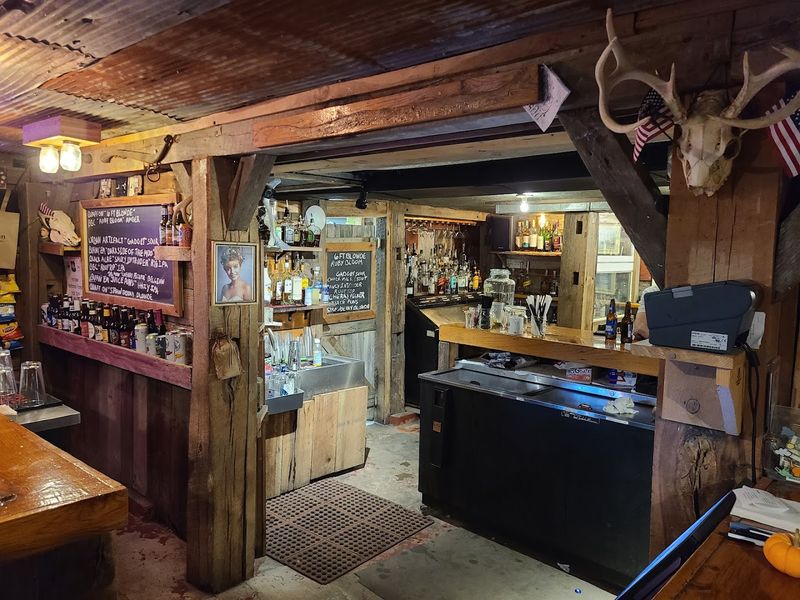
Others build an overnight stay around dinner and settle into the evening at a slower speed. The basement bar and tavern atmosphere add another layer.
This is where the place can feel most communal, with locals, weekenders, and overnight guests crossing paths in a compact room that suits conversation better than scrolling.
In a setting with limited distractions, a drink downstairs becomes part of the entertainment rather than a prelude to somewhere else.
For the best odds of enjoying this side of Story, it helps to arrive with time, patience, and realistic expectations. Treat dinner as one piece of the wider property rather than the whole reason to come.
Framed that way, the restaurant becomes part of the town’s texture, with history, architecture, and remoteness shaping the meal around you.
The Indiana Escape You Cannot Rush
Story Inn is close enough to Nashville, Indiana for a side trip, but it does not behave like an extension of town. The setting is distinctly more secluded, with the property spread across open land near Brown County State Park and surrounded by the kind of roads that make you pay attention to the drive.
That distance is part of the experience, not a minor inconvenience to overcome. If you are used to destinations that stack shops, cafes, and attractions within a five-minute walk, Story asks for a different rhythm. The point here is not nonstop activity.
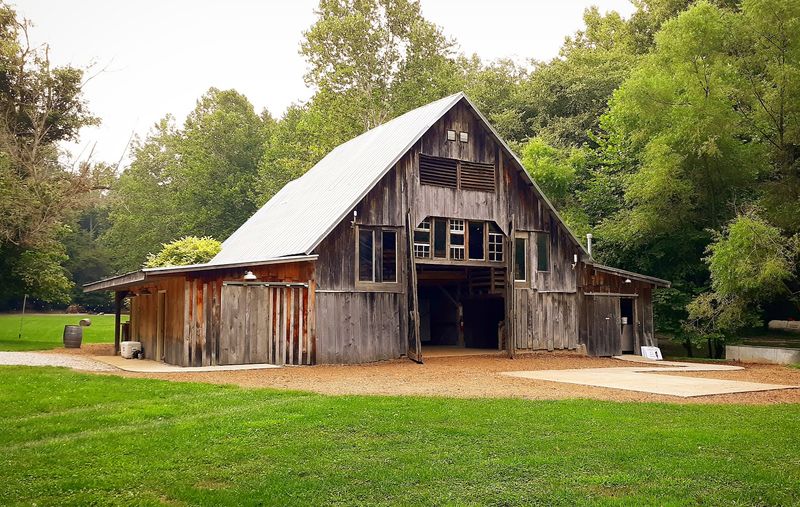
It is the way the property encourages slower movement, whether you are strolling past gardens, checking out the barn and stable areas, or simply standing outside long enough to register how quiet the place actually is.
This makes Story especially appealing for travelers trying to unplug. Weak cell service in rural pockets, fewer urban distractions, and the lack of overprogrammed entertainment can turn an overnight into the kind of break where conversation, reading, and wandering regain their status as enough.
That simplicity is harder to find than it should be. The remoteness also works in visual terms. Morning light over the fields, late-afternoon shadows around the old buildings, and the dark countryside after sunset all become more noticeable when there is less competing clutter.
Story does not need manufactured ambiance because the setting already does most of the work. The best strategy is to give the place time. Arrive before dark if possible, walk the grounds before dinner, and leave room in the schedule for doing very little.
Story is not a dash-in, dash-out attraction. It lands best when you let the road, the quiet, and the old town layout slow you down on purpose.
History Lives in the Layout
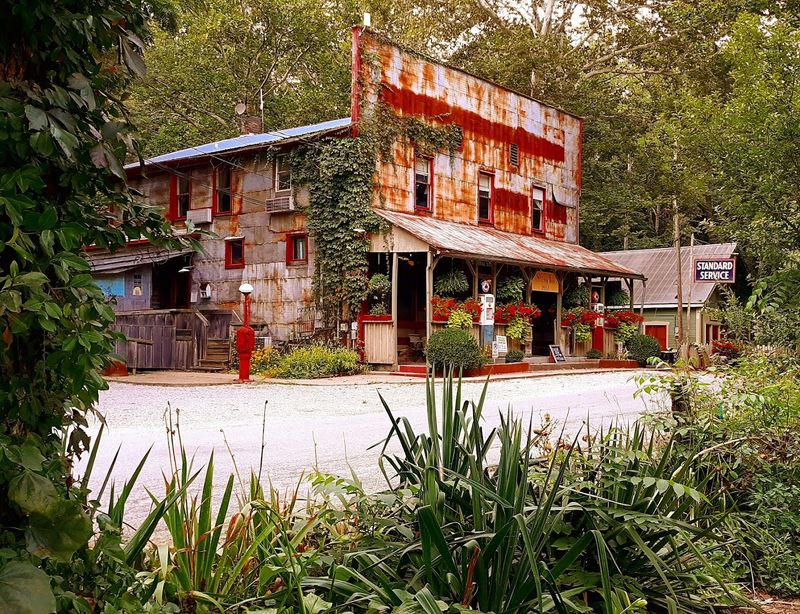
Plenty of historic inns use a date on a plaque as decoration. Story Inn has a stronger asset: the physical arrangement of an old place that still reads clearly on the ground.
With roots going back to the mid-1800s, the property carries its history through buildings, spacing, and use patterns rather than relying only on framed text and nostalgia-heavy branding.
You notice that in the way the site functions as a compound. There is the inn, the old store restaurant, outbuildings, open lawns, and surrounding pastureland, all of which make sense together as parts of a small settlement.
Even the simple act of walking from your room to dinner has more narrative weight here because you are moving through a miniature townscape, not across a parking lot.
That layout creates opportunities for detail hunting. A gazebo, a barn, stable areas, porches, and the visual breaks between structures all add texture to the experience.
None of this needs heavy interpretation to work. The buildings and grounds communicate enough on their own, especially for travelers who like places where the setting does some of the explaining.
Story’s history also blends with local folklore and long-running haunted-house intrigue, which only amplifies the town’s appeal without being necessary to enjoy it.
You do not have to arrive looking for ghost stories to appreciate why the place attracts curiosity. The architecture, isolation, and age already create plenty of mood.
Most important, the preservation does not seem sealed behind velvet ropes. You sleep there, eat there, and walk through it at your own pace.
That practical access gives Story a quality many historic destinations lack. It remains a place with daily functions, which means the past is encountered through movement, scale, and routine rather than through a museum script.
How to Spend the Night Without Missing the Best Parts
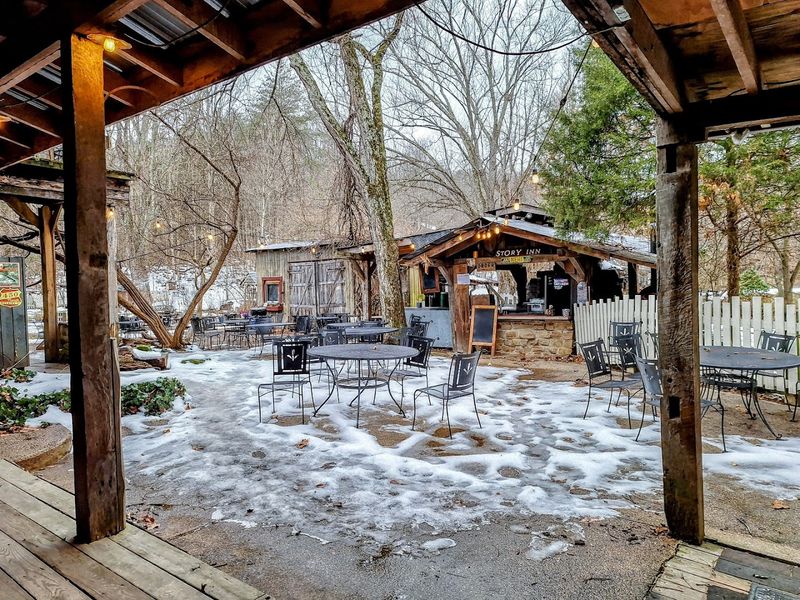
The smartest way to do Story Inn is to build an evening around the property itself. Arriving late only for sleep misses too much of the visual setup, while stopping briefly for a look around undersells how the place changes after sunset.
This is a destination where the overnight hours are as important as the daytime views. Start with the grounds. Check in, drop your bag, and take a full walk before dinner instead of saving it for the morning.
That first loop lets you understand the layout in daylight, spot details like the outbuildings and open pasture, and see how separate structures relate to one another before the light starts fading.
Then shift indoors for dinner or drinks. The old general store restaurant and tavern fit naturally into the evening because you do not need to drive anywhere else afterward.
Once you settle in, the property becomes more self-contained, which is exactly when Story begins to feel less like a curiosity on the map and more like a complete little world for the night.
Afterward, go back outside. If there is seating around outdoor gathering areas, use it. The darkness in this part of Brown County is a feature, and the quiet between buildings can be striking once the restaurant noise drops behind you and the grounds return to stillness.
Morning deserves equal attention. Wake early enough to walk again before checkout, when the settlement looks softer and the landscape feels almost suspended.
That second pass is not repetitive because the place reads differently in daylight after you have already seen it lit up at night.
Story works best as a sequence: arrival, exploration, dinner, darkness, and one more slow lap before the road pulls you back toward town.
Who Story Inn Is Really For
Story Inn is not the right fit for travelers chasing frictionless luxury, constant entertainment, or a polished chain-hotel rhythm. Its appeal is narrower and more interesting than that.
This place is for people who like setting, character, and the odd thrill of sleeping in a restored settlement where the road in already feels like part of the plot.
Couples looking for a low-key getaway can get a lot out of the cottages, porches, and old-town atmosphere, especially if the goal is conversation and quiet rather than a packed itinerary. Architecture lovers will appreciate the preserved structures and the way the property still reads as a village.
Road trippers and weekend wanderers will likely enjoy it most when they treat it as an experience to absorb rather than a checklist stop.
It also suits travelers who already plan to explore Brown County but want lodging with a stronger identity than the standard cabin or roadside inn. Being near Nashville and Brown County State Park gives Story practical reach, yet the property feels removed enough to stand on its own.
You can combine it with hikes, scenic drives, or leaf-peeping, then return to a place with a much stranger silhouette than a typical hotel.
The biggest separator is tolerance for quirks. Historic properties come with irregularities, and Story’s charm depends on not sanding those edges away.
If you want every surface slick and every detail standardized, this may not be your lane. If you want a stay that looks, moves, and sleeps differently from the usual travel script, that distinction becomes the draw.
That is why Story remains memorable in Indiana’s crowded field of weekend escapes. It offers a rare combination: restored history, real overnight lodging, and a full small-town setting in the woods.
Few places let you spend the night inside a ghost-town narrative without ever feeling like you bought a ticket to a reenactment.
Share this story