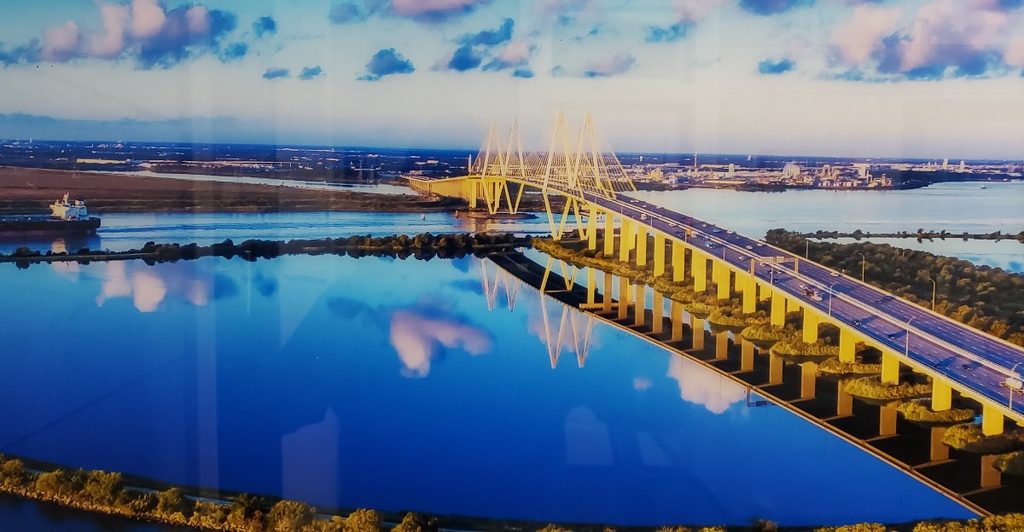
The Fred Hartman Bridge towers 440 feet above the Houston Ship Channel, making it one of the tallest cable-stayed bridges in Texas and a true engineering marvel. Drivers crossing this massive structure on State Highway 146 get incredible panoramic views of the water below, the bustling port activity, and the sprawling industrial landscape that defines this corner of the Gulf Coast. Whether you’re commuting between Baytown and La Porte or just passing through, this bridge offers an unforgettable experience that reminds you just how big everything really is in the Lone Star State.
1. Soaring 440 Feet Above the Ship Channel
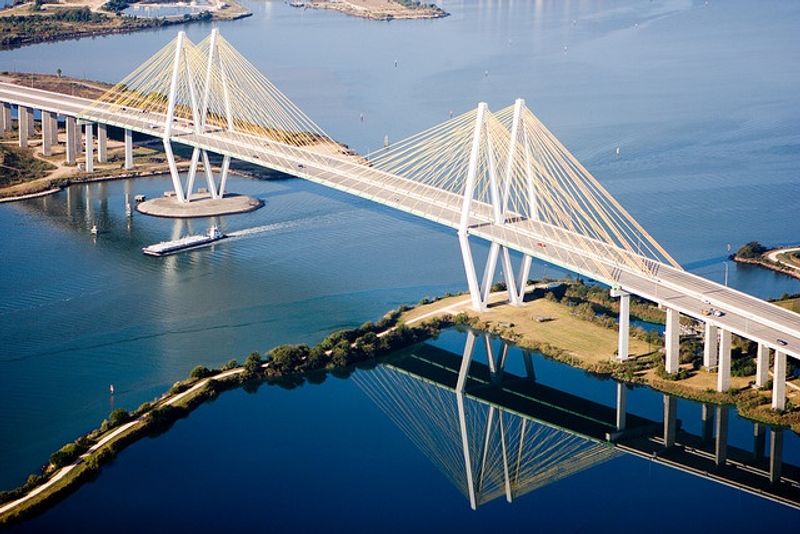
Standing taller than a 40-story building, the Fred Hartman Bridge reaches an impressive 440 feet at its highest point. That’s higher than the Statue of Liberty from base to torch, giving drivers a bird’s-eye perspective that few other Texas roadways can match. When you’re cruising across the deck, you’re literally floating above one of the busiest shipping channels in the entire United States.
The elevation isn’t just for show. Large cargo ships and tankers need plenty of clearance to navigate the Houston Ship Channel, which connects the Port of Houston to the Gulf of Mexico. Engineers designed this bridge to allow even the tallest vessels to pass underneath without breaking a sweat.
On a clear day, you can watch massive container ships glide beneath you like toy boats in a bathtub.
The view from up here changes with the weather and time of day. Morning fog can make the water look mysterious and endless, while sunset paints the industrial skyline in shades of orange and pink. Even at night, the bridge lights up, and the glow from refineries and port facilities creates a surprisingly beautiful scene.
Some drivers actually plan their trips just to cross at golden hour.
If you’re nervous about heights, the guardrails and solid roadway make the crossing feel safe and secure. But if you love a good view, roll down your windows (weather permitting) and take in the salty Gulf breeze mixed with that distinct petrochemical smell that tells you you’re in Texas refinery country.
2. Cable-Stayed Design That Looks Like Giant Harp Strings
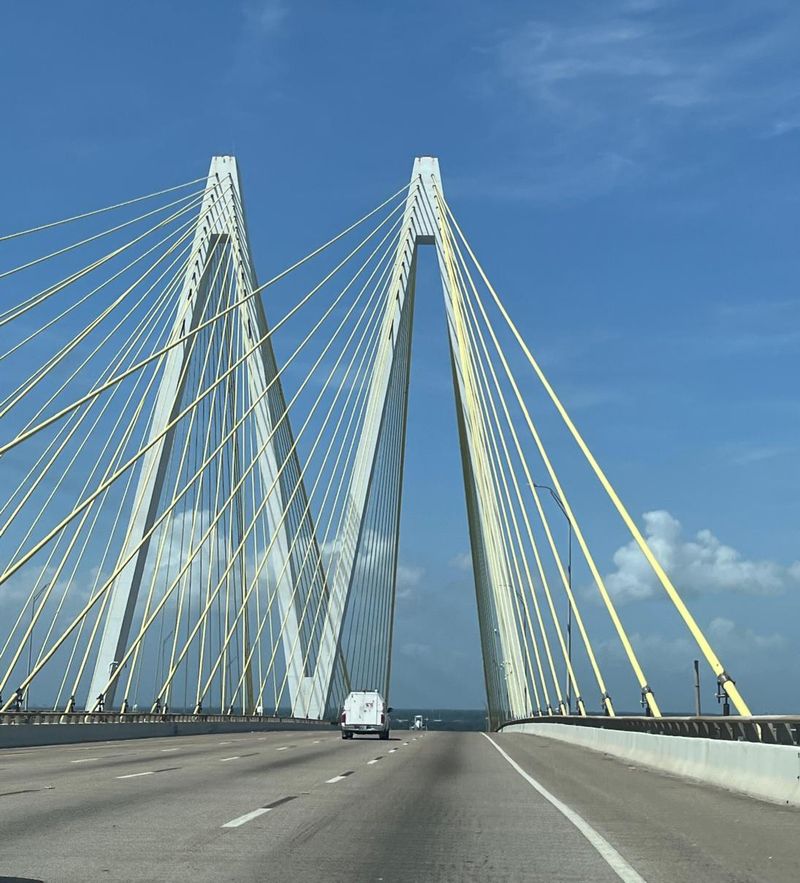
Two towering concrete pylons rise from the bridge deck, and from each one, dozens of white steel cables fan out like the strings of a giant harp. This cable-stayed design isn’t just eye-catching; it’s a feat of modern engineering that distributes the bridge’s weight efficiently while keeping the roadway smooth and stable. The cables gleam in the sunlight, creating a striking geometric pattern against the Texas sky.
Unlike older suspension bridges that use thick vertical cables, cable-stayed bridges attach cables directly from the towers to the road deck at angles. This creates that distinctive fan or harp shape that makes the Fred Hartman Bridge instantly recognizable from miles away. Each cable is under tremendous tension, holding up thousands of pounds, yet they sway gently in strong Gulf winds.
Photographers and architecture fans love this bridge because of its clean, modern lines. The symmetry is almost perfect, with cables radiating from both towers in mirror image. At night, when the bridge is illuminated, those cables glow against the dark sky, turning the whole structure into a piece of functional art.
The design also means there are no bulky support columns cluttering the water below, which keeps the shipping channel wide open for maritime traffic. Engineers chose this style specifically because it could span the necessary distance without interfering with ship navigation. The result is a bridge that’s both beautiful and brutally practical, which feels very Texas.
When you drive across, you’ll pass right between those towering pylons. Look up through your windshield and you’ll see the cables converging overhead, creating a canopy effect that’s both impressive and slightly dizzying.
3. Connecting Baytown and La Porte Across Busy Waters
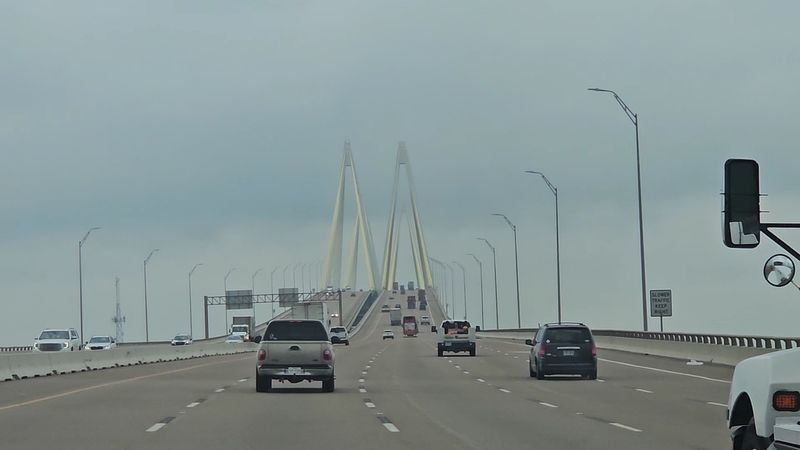
Before the Fred Hartman Bridge opened in 1995, getting between Baytown and La Porte meant using the old Baytown Tunnel, a narrow, sometimes claustrophobic passage that ran under the ship channel. The tunnel was fine for its time, but it couldn’t handle modern traffic volumes or the size of today’s vehicles. The new bridge changed everything, turning a potential bottleneck into a smooth, scenic crossing.
State Highway 146 carries thousands of vehicles across this bridge every single day. Commuters heading to refineries, petrochemical plants, and port facilities make up a big chunk of that traffic, but you’ll also see plenty of recreational travelers exploring the Gulf Coast region. The bridge is a vital economic link, keeping goods and workers moving efficiently through one of Texas’s most industrialized areas.
From the bridge deck, you can see both cities spread out on either side. Baytown sits to the north, home to one of the largest oil refineries in the country, while La Porte stretches to the south with its mix of industrial sites and waterfront neighborhoods. The contrast between heavy industry and small-town Texas charm is part of what makes this area unique.
The crossing takes just a few minutes, but it feels longer because there’s so much to see. Ships coming and going, tugboats guiding barges, fishing boats heading out to the bay, and sometimes even dolphins playing in the channel below. Traffic usually flows well, though rush hour can slow things down a bit.
Still, even in traffic, the view beats sitting in a tunnel any day of the week.
4. Watching Cargo Ships Pass Underneath Your Wheels
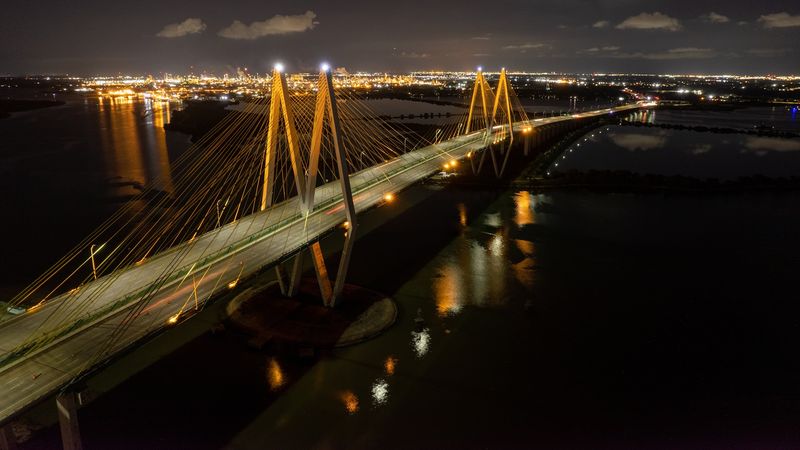
One of the coolest experiences on the Fred Hartman Bridge is timing your crossing just right to see a massive cargo ship passing below. The Houston Ship Channel is one of the busiest waterways in the nation, so ship traffic is constant. Tankers, container ships, and bulk carriers move through here around the clock, hauling everything from crude oil to steel to grain.
These aren’t small boats. Many of the vessels navigating the channel are longer than two football fields and stacked high with shipping containers or filled with petroleum products. From 440 feet up, they look surprisingly manageable, but when you think about the scale, it’s mind-blowing.
Each ship represents millions of dollars in cargo and connects Houston to ports all over the world.
If you’re driving across and you spot a ship approaching, it’s tempting to slow down for a better look. Just remember that other drivers are behind you, so save the serious ship-watching for when you’re parked at one of the nearby viewpoints. Still, even at highway speed, you can catch a great glimpse of the action below.
Tugboats often accompany the larger ships, guiding them safely through the channel. These smaller vessels are powerful and maneuverable, pushing and pulling their enormous charges with impressive precision. Watching them work is like seeing a carefully choreographed dance on the water.
The channel itself is surprisingly narrow when you see it from above, which makes you appreciate the skill of the ship captains and pilots who navigate it daily. One wrong move could cause a major incident, but these professionals make it look routine. The whole scene is a reminder of how much commerce flows through Texas every single day.
5. Panoramic Views of Industrial Texas at Its Finest
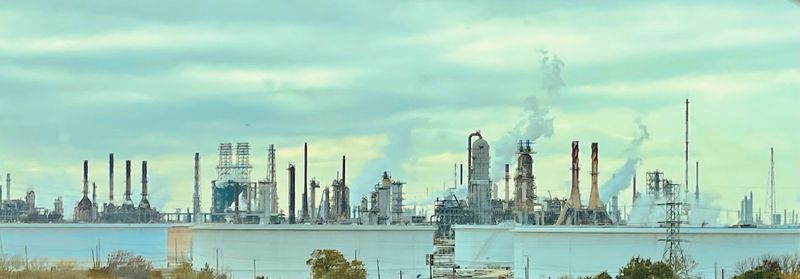
The view from the Fred Hartman Bridge isn’t your typical postcard scenery. Instead of rolling hills or pristine beaches, you get a front-row seat to the industrial heartbeat of Texas. Refineries with their tangles of pipes, towering smokestacks, and endless rows of storage tanks stretch out in every direction.
At night, the whole area lights up like a futuristic city, with flare stacks burning off excess gas and creating dramatic orange flames against the dark sky.
Some people might find the industrial landscape ugly, but there’s a raw beauty to it if you know what you’re looking at. This is where energy gets refined, chemicals get processed, and goods get manufactured. It’s loud, it’s gritty, and it’s absolutely essential to modern life.
Without places like this, your car wouldn’t run, your home wouldn’t have plastic products, and the global economy would grind to a halt.
From the bridge, you can identify individual facilities if you know the area. The massive ExxonMobil refinery in Baytown is one of the largest in the United States, and its sprawling complex dominates the northern view. To the south, you’ll see other chemical plants and port facilities, each with its own maze of equipment and infrastructure.
The air often carries that distinctive petroleum smell, which some locals actually find comforting because it means jobs and economic stability. Love it or hate it, this is real Texas, where hard work and heavy industry built a modern powerhouse. The view from the Fred Hartman Bridge captures that reality better than just about anywhere else in the state.
6. Replacing the Old Baytown Tunnel With Modern Engineering
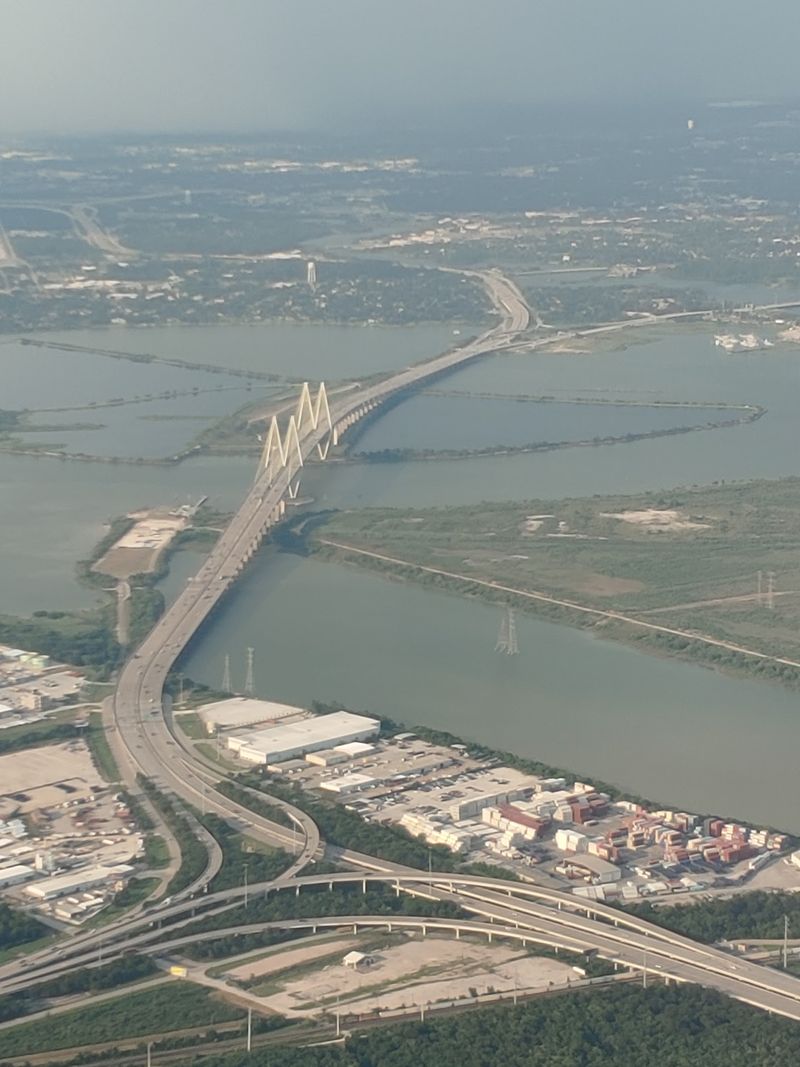
For decades, the Baytown Tunnel was the only way to cross the Houston Ship Channel in this area without going miles out of your way. Opened in 1953, the tunnel ran underneath the channel, and while it was an engineering achievement for its time, it had serious limitations. The two narrow lanes could barely handle two-way traffic, and the low clearance meant tall vehicles couldn’t use it at all.
As Baytown and the surrounding area grew, the tunnel became a major headache. Traffic backups were common, and the aging infrastructure required constant maintenance. Plus, being stuck in a tunnel under a busy shipping channel isn’t everyone’s idea of a relaxing commute.
By the 1980s, it was clear that a new crossing was desperately needed.
The Fred Hartman Bridge opened in 1995, and the difference was like night and day. Instead of a cramped tunnel, drivers got a wide, modern bridge with multiple lanes and spectacular views. The bridge was named after Fred Hartman, a longtime state senator who championed the project and fought for funding.
Without his persistence, the region might still be dealing with that old tunnel.
After the bridge opened, the tunnel was eventually closed and sealed. Some locals still remember driving through it and don’t miss it one bit. The bridge not only solved the traffic problem but also became a landmark and a source of regional pride.
Today, the Fred Hartman Bridge handles traffic volumes the old tunnel could never have managed. It’s a testament to how infrastructure investment can transform a region, making life easier for residents and supporting economic growth.
7. Best Times to Cross for Stunning Sunrise and Sunset Colors
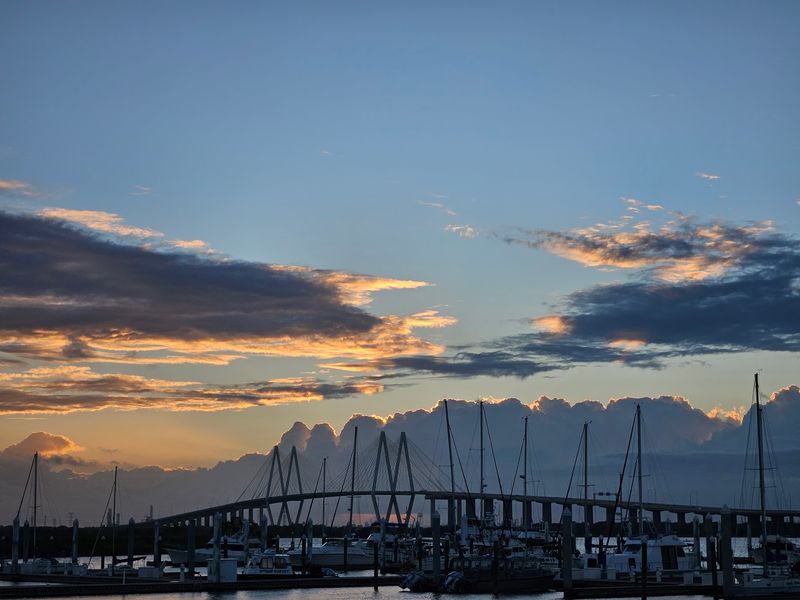
If you want to experience the Fred Hartman Bridge at its most beautiful, timing is everything. Sunrise and sunset transform the industrial landscape into something almost magical. During golden hour, the low angle of the sun bathes the bridge, the water, and the surrounding facilities in warm, glowing light that softens even the harshest edges of the refineries.
Sunrise crossings are especially peaceful. Early morning fog often rolls off the Gulf, creating a dreamy, ethereal atmosphere over the ship channel. As the sun breaks through, the fog gradually lifts, revealing the water and the city beyond.
The light is soft and golden, and traffic is usually light, making for a calm, almost meditative drive.
Sunset is equally spectacular but in a different way. The western sky explodes with color, ranging from deep purples and reds to brilliant oranges and pinks. The reflection on the water doubles the visual impact, and the silhouettes of ships and industrial equipment create dramatic contrasts.
If you’re lucky enough to cross during a particularly vivid sunset, it’s genuinely breathtaking.
Photographers love this bridge at these times, and you’ll sometimes see people pulled over at nearby spots to capture the scene. Even if you’re just driving through, it’s worth planning your trip to hit the bridge around dawn or dusk at least once.
Night crossings have their own appeal too. The bridge is lit up, and the refineries glow with thousands of lights. The flare stacks create bursts of orange flame that look almost festive.
It’s a completely different vibe from daytime, but equally impressive in its own industrial, sci-fi kind of way.
8. Free Scenic Drive Through One of Texas’s Busiest Shipping Zones
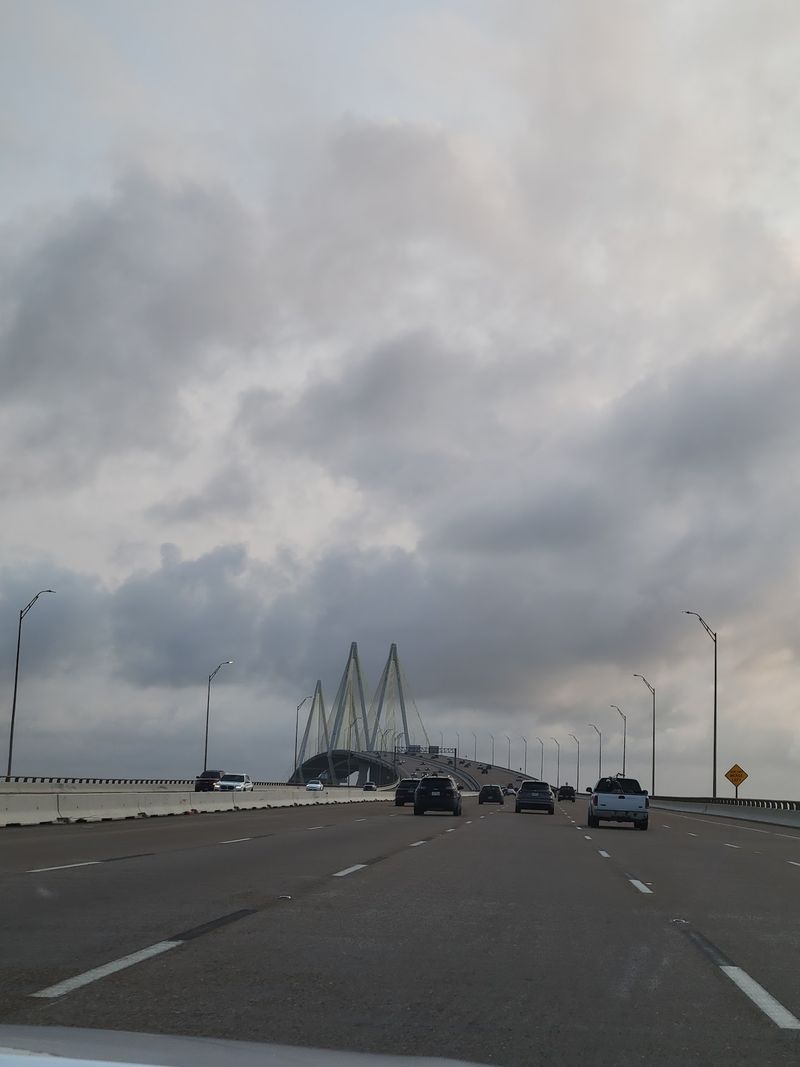
Unlike some scenic routes that require fees, detours, or special access, the Fred Hartman Bridge is completely free to cross. State Highway 146 is a regular public road, so anyone can drive across and enjoy the views without paying a toll. That makes it one of the best free attractions in the Houston area, especially for visitors who want to see the industrial side of Texas without spending a dime.
The bridge sits right in the heart of one of the nation’s most important shipping and industrial zones. The Houston Ship Channel handles more foreign tonnage than any other U.S. port, and the surrounding area is packed with refineries, chemical plants, and manufacturing facilities. Driving across this bridge gives you a real sense of the scale and importance of the region’s economy.
You don’t need to plan a special trip just to see the bridge. If you’re traveling between Houston and the Gulf Coast, Highway 146 is a natural route that takes you right across it. Many people discover the bridge by accident and are pleasantly surprised by the experience.
It’s not advertised as a tourist attraction, but it absolutely deserves recognition as a unique Texas landmark.
The crossing is quick, usually just a few minutes depending on traffic, but those few minutes offer more visual interest than many longer drives. You get the height, the views, the ships, the industrial landscape, and the sense of being part of something bigger than yourself. All of that without paying a cent.
So next time you’re in the area, take Highway 146 across the Fred Hartman Bridge. Roll down the windows, take in the sights, and appreciate this impressive piece of Texas infrastructure.
Share this story