Carmel Clay Parks & Recreation is easy to underestimate until you realize how much ground it actually covers. What looks like a single park unfolds into a larger network of trails, green spaces, recreation facilities, and gathering spots spread throughout Central Park in Carmel.
The waterpark may grab most of the summer attention, but it is only one piece of a property designed for everything from quiet walks to active afternoons. Families, runners, cyclists, and casual visitors all seem to find their own corner of it. The result is a destination that works just as well for a full day out as it does for a quick escape between other plans.
Where the Park Suddenly Gets Bigger Than You Expected
The address on Central Park Drive sounds simple enough, but the setting opens wider once you are actually there. Carmel Clay Parks & Recreation reads less like one stand-alone attraction and more like a carefully stitched network of outdoor space, movement corridors, and activity zones that keep revealing new edges.
If you arrive expecting a single lawn with a sign out front, the scale immediately resets your expectations. That broader footprint matters because the place functions like a community hinge.
Trails pull in walkers and runners, open areas create breathing room, and the recreation focus gives the whole property more structure than a casual neighborhood park.
You are not dealing with a sleepy green strip here. You are stepping into a park system that connects exercise, family time, and destination-level amenities in one concentrated pocket of Carmel.
There is also a useful visual contrast built into the experience. One minute you have practical suburban order – paved routes, organized facilities, straightforward access – and the next you are looking at stretches of greenery that soften everything around them.
That mix keeps the park from feeling sterile. It also explains why the place works for quick drop-ins and longer, purpose-driven outings.
Even the strongest praise in the public record points to range more than hype. Some visitors call out the trails and trail access specifically, while others focus on the playground or simply describe it as a fun hangout. Those comments line up with the layout itself. The site is not trying to sell one mood.
It gives you multiple ways to use the same address, which is often the difference between a park you visit once and one that stays in rotation.
The Waterpark Angle That Changes the Energy

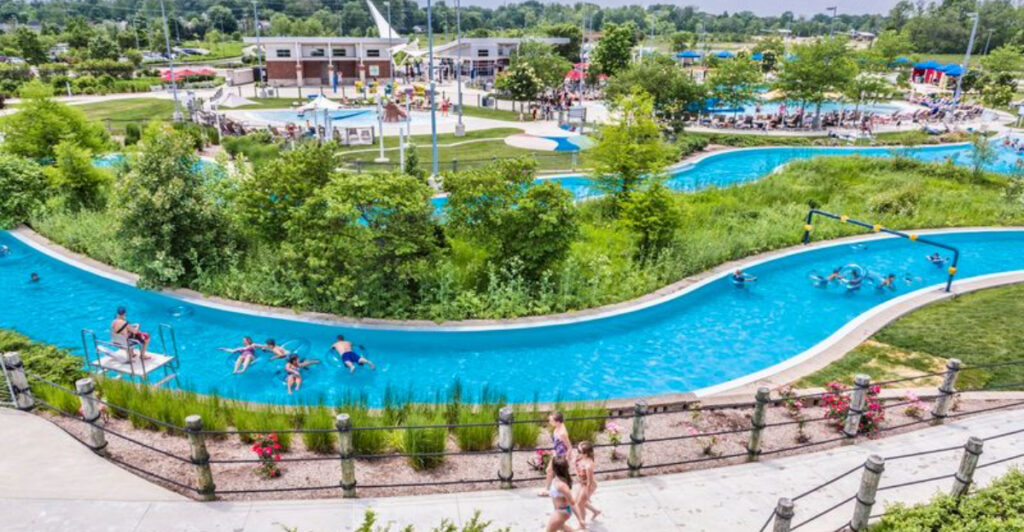
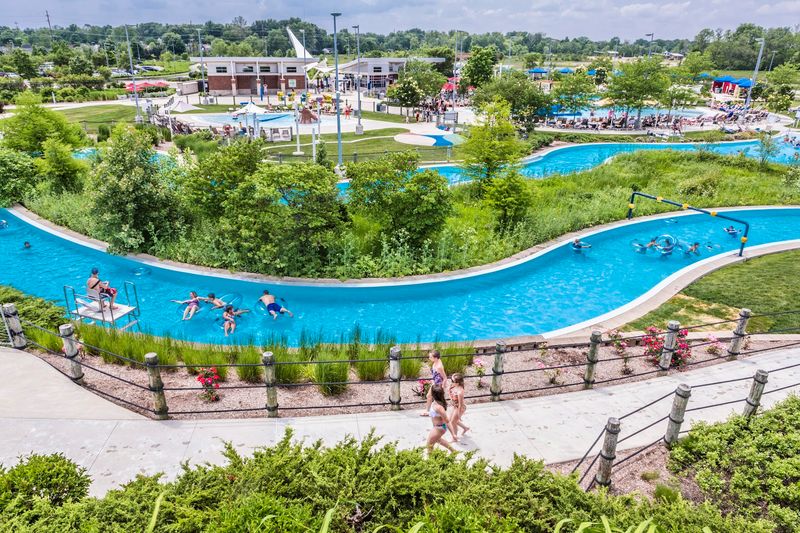
The reason this address sparks curiosity well beyond regular park circles is the aquatic side of the property. When a public recreation campus includes a large waterpark component, the tone shifts immediately.
Suddenly the park is not only a place to walk, stretch, or sit outside for a while. It becomes a summer destination with a louder social pulse, more anticipation around timing, and a stronger sense that certain visits should be planned rather than improvised.
That is where the after-hours adults-only party angle enters the picture and gives the waterpark extra intrigue. On a family-centered campus, adult-focused evening programming stands out because it reintroduces the space in a completely different register.
The same slides, deck areas, and water features can read one way in the middle of a busy afternoon and another way once the crowd mix changes and the clock pushes later. It turns a daytime amenity into an event space without needing to reinvent the physical setting.
Even if you are more interested in the park than the party concept, the existence of a water-centered draw shapes the entire property. It adds seasonal momentum, increases destination appeal, and gives Carmel Clay Parks & Recreation a profile that many ordinary municipal parks never develop.
You can sense that through the way the place is discussed: some people are here for trails, some for playgrounds, and some because the aquatic facilities are the headline attraction.
The important distinction is that the broader park still anchors the experience. This is not an isolated resort dropped into nowhere.
The waterpark energy lands inside a larger recreational landscape, which keeps the location grounded, practical, and much more connected to everyday Carmel life than a standalone summer venue would be.
Carmel, Indiana Has a Trail Connection Built Right In
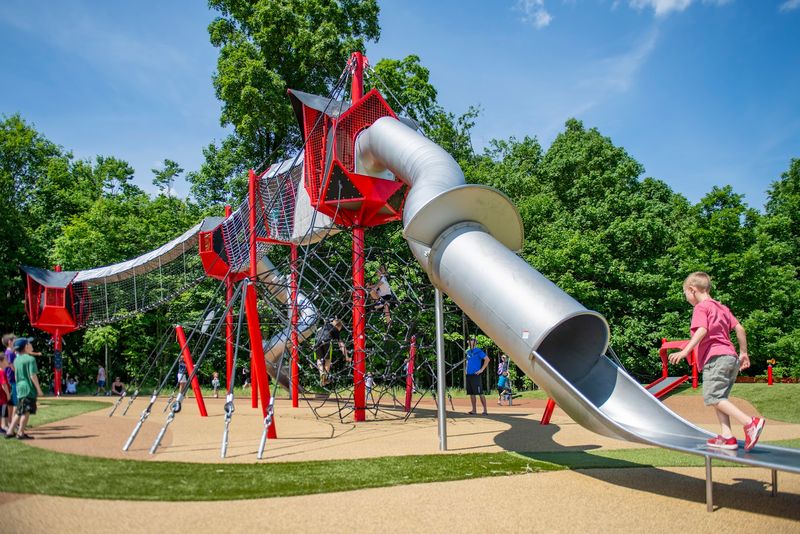
Not every park earns repeated praise for access, but this one clearly benefits from its relationship to movement. More than one reviewer specifically highlights the Monon Trail connection, and that detail says a lot about how the park fits into Carmel rather than simply sitting inside it.
A trail link changes your entry point. You do not have to arrive only by car with a fixed plan. You can reach the space as part of a bike ride, a long walk, or a broader loop through the city.
That flexibility gives the property a different rhythm from parks that feel sealed off from their surroundings. Trail users can pause, reset, and continue moving.
Families can pair a playground stop or open-air break with a longer outing. Anyone trying to avoid the stop-and-start pattern of suburban driving gets a cleaner, more pleasant route into the park experience.
It is a practical strength, but it also changes the mood because places connected to trails usually feel more alive throughout the day.
The visual effect is easy to picture even before you arrive. Paths bring in steady motion, not just occasional bursts of activity.
Joggers pass through, cyclists roll by, and casual walkers use the area as a midpoint rather than a final destination. That continuous flow can make a park feel larger than its formal boundaries, especially when the landscaping and open areas support a sense of movement instead of blocking it.
For visitors, that means timing matters less than it would at a strictly programmed attraction. You can use the address for a destination visit, but you can also fold it into an existing routine.
That is one of the smartest qualities a public space can have. It does not demand a grand outing every time. It works just as well as an intentional stop on the way somewhere else.
Playgrounds, Open Space, and the Everyday Side of the Address
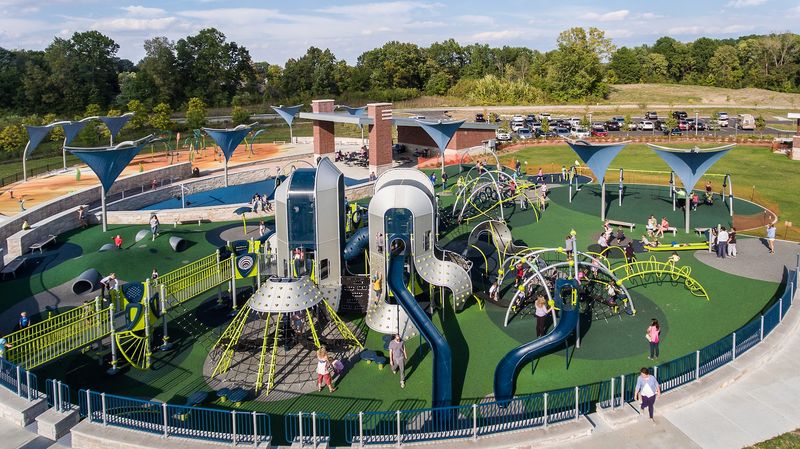
Big aquatic attractions tend to steal the spotlight, yet the everyday usefulness of Carmel Clay Parks & Recreation may be the more important story. A standout review calls the playground amazing, and that sort of comment matters because playground praise is usually specific.
Parents do not rave over a mediocre slide and a tired swing set. When a playground becomes the thing someone goes out of their way to mention, it usually means the space delivers enough variety, comfort, or visual appeal to justify the stop.
That family-friendly layer gives the park a much broader identity than a seasonal destination. You can picture strollers, quick energy-burning visits, and low-stakes afternoon meetups that do not require a major plan.
Open green areas support that pattern beautifully. They create spillover room for picnics, unstructured play, and the kind of wandering that younger kids naturally do between more obvious focal points.
A park becomes easier to use when not every minute has to be scheduled around one central feature. The site also benefits from being part of a recreation system rather than an isolated plot.
Organized management often shows up in practical ways: clearer circulation, more deliberate placement of amenities, and spaces built to absorb different age groups at the same time.
That design logic can be easy to miss when the waterpark gets top billing, but it matters once you are actually trying to spend a full afternoon here without friction.
If you are traveling with mixed ages, this side of the property is especially useful. Not everyone wants the same pace, and not every outing needs admission-driven excitement.
A well-placed playground, generous lawns, and easy movement paths can quietly save the day. They give the address staying power beyond peak summer, which is exactly why the place lands as more than a one-note attraction.
A Public Space With Strong Assets and Real-World Friction
The most honest way to look at Carmel Clay Parks & Recreation is to recognize both the strengths and the friction that come with a heavily used public facility. The positive side is obvious from the breadth of amenities, trail connections, and repeat local use.
This is clearly not a forgotten park sitting idle. At the same time, public feedback raises concerns about maintenance, cleanliness in some aquatic areas, and inconsistent customer service.
Those issues are part of the real picture too. That tension actually tells you something important about the place. Parks and recreation campuses that combine pools, trails, play areas, and indoor or staffed facilities are complicated to run well every day.
High traffic amplifies everything. A small maintenance lapse looks bigger in water. A confusing policy feels sharper when guests are already navigating admissions, timing, or family logistics. Staff interactions also carry more weight in spaces where recreation is supposed to feel easy and welcoming.
There are also serious concerns in the review record involving inclusivity and communication, and those should not be brushed aside. Public recreation spaces succeed when people feel comfortable using them without confusion, judgment, or unnecessary barriers.
The posted responses from management indicate awareness and an effort to address at least some complaints, but the fact that these concerns appear at all is relevant for anyone trying to understand the place beyond promotional language.
None of this erases the park’s appeal. It simply reframes it in a more useful way. If you go in expecting a polished private resort, you may fixate on imperfections.
If you understand it as a large, busy civic recreation hub with notable strengths and visible operational pressure points, the experience makes more sense. That perspective helps you use the place on its best terms instead of forcing it into the wrong category.
How to Time Your Visit Without Wasting the Best Hours

Timing can make this address feel either spacious and manageable or far more hectic than you wanted. The posted hours suggest a broad daily operating window, with longer weekday access and earlier weekend closing.
That alone tells you the park is built for many kinds of use: early exercise routines, midday family visits, after-work walks, and seasonal recreation plans that stretch into the evening. If you like parks when they are calmer and more legible, arriving earlier in the day is the safest move.
Weekdays probably offer the cleanest read on the property. You are more likely to notice how the paths connect, where the open space expands, and how the recreation pieces fit together without the same level of weekend churn.
That matters at a large multi-use site because the layout can be easier to understand before peak crowds change the tempo. If the water-focused side of the complex is part of your plan, building in extra patience is smart. Busy aquatic facilities compress space quickly, especially during warm weather.
Evening has its own appeal, particularly because this park stays active late enough to support after-work use. The light softens, the pace often shifts, and the trail-connected side of the property can be especially pleasant when the day starts cooling down.
For anyone interested in the adult-event energy associated with the aquatic facilities, later hours naturally carry more anticipation than a standard daytime park visit.
The practical takeaway is simple: match your timing to your reason for going. If you want movement and breathing room, lean early.
If you want social energy and the fullest sense of the park’s recreational identity, later hours make more sense. At a place with this many layers, the clock does more than organize the day. It changes the character of the visit.
The Sharpest Reason This Carmel Address Keeps Drawing Attention
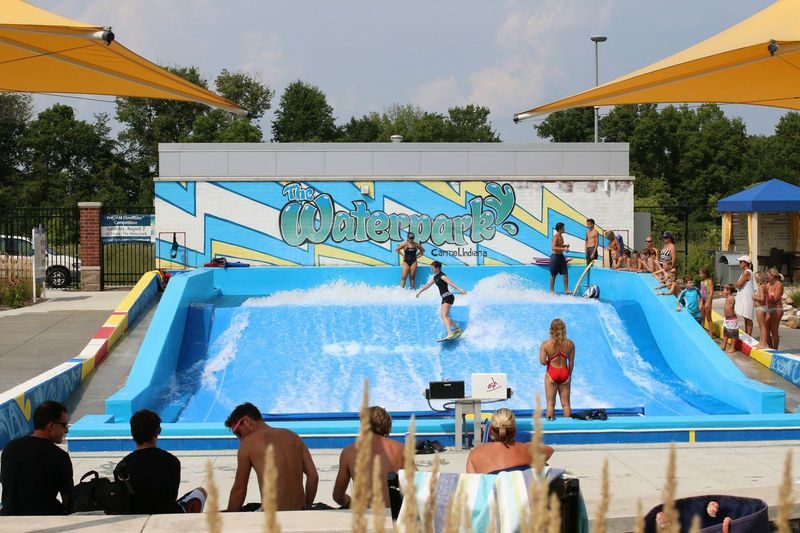
The strongest reason this place keeps attracting attention is not just size, and it is not only the waterpark headline. It is the unusual overlap of everyday public park function with destination-style recreation.
At one address, you get a trail-linked green space, family-friendly park use, and an aquatic identity strong enough to spark curiosity well beyond local errand radius. That combination gives Carmel Clay Parks & Recreation a bigger cultural footprint than a standard suburban park usually earns.
It also helps explain why the place can inspire very different reactions. Someone stopping for trail access may experience it as convenient and easy.
A family focused on the playground may remember it as a practical win. A visitor arriving for aquatic fun or after-hours programming may judge the entire destination through a completely different lens.
When a site serves that many purposes, it almost becomes several parks layered together, each one activated by a different schedule, mood, and expectation.
For you, that means the smartest approach is to decide which version of the place you want before you arrive. If the goal is movement, use the trail connection.
If you need an adaptable family outing, lean into the playground and open space. If the waterpark is the draw, treat the visit like a higher-energy recreational outing and plan accordingly. The address rewards clarity because it contains more than one experience under the same name.
That is ultimately why the Indiana waterpark angle lands so well in conversation. It is surprising, a little bolder than expected, and attached to a park system that still serves ordinary daily life.
Plenty of attractions are exciting for a season. Plenty of parks are useful all year. This one gets attention because it sits right between those two categories and refuses to stay in only one.
Share this story