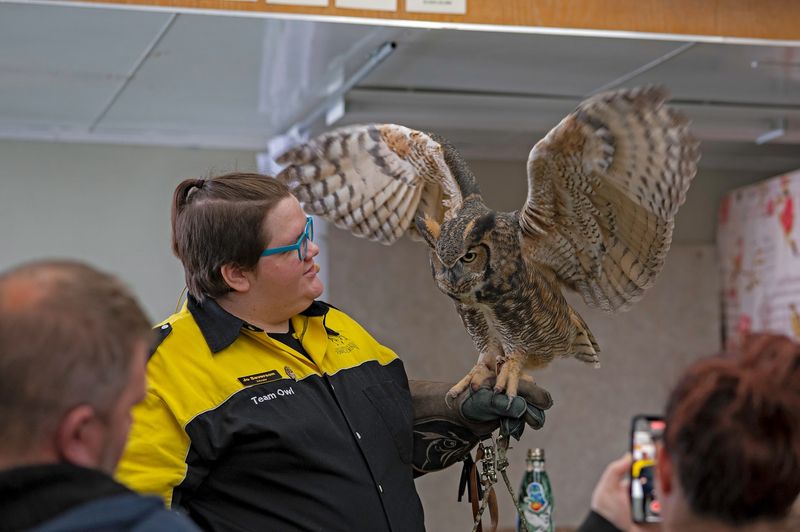
An owl museum sounds like a place to study pictures, but Houston, Minnesota, offers something more personal. At the International Owl Center, visitors describe meeting live owls and learning from people who know them well.
Children’s artwork, hands-on learning materials, and an owl-filled gift shop add to the experience. For bird lovers, this small stop gives a detour a clear purpose.
A Small Owl Center on Houston’s Cedar Street
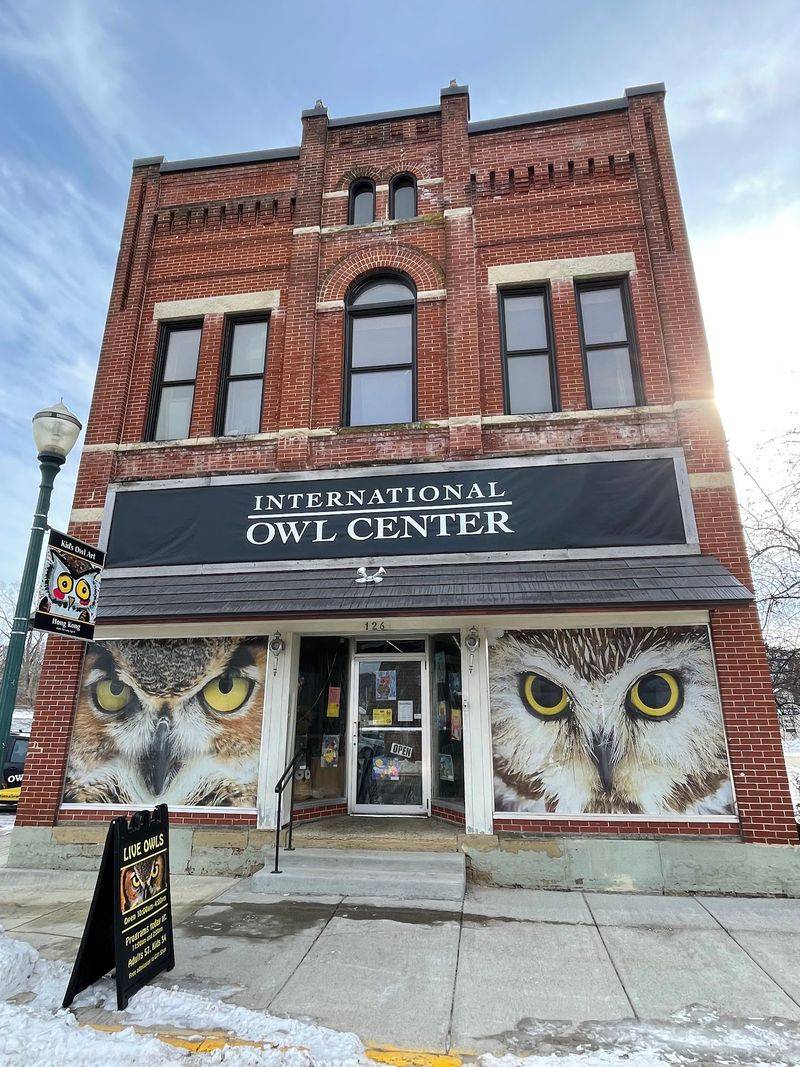
A live owl is a pretty good reason to turn off your usual route. The International Owl Center is at 126 E Cedar St, Houston, MN 55943, and its appeal goes beyond the museum-style stop suggested by this article’s title.
Visitors describe a place where educational materials, scheduled presentations, and resident owls share a relatively small space. Rather than promising a huge building full of exhibits, the reviews point toward a focused experience built around one fascinating group of birds.
That distinction helps set expectations before you arrive. You are coming to learn about owls, hear from knowledgeable staff, and potentially see an owl during a program, not simply move through rooms of objects behind glass.
For Minnesota bird lovers, the specific payoff is easy to understand: reviewers repeatedly mention close views of owls and lessons that made the visit meaningful. Several say the center’s size did not limit how much they learned.
Keep the full address handy when planning your drive. Houston is the destination, and the Cedar Street center is the main event, so it makes sense to build your timing around what is happening there rather than treat it as an unplanned doorway stop.
A Modest Setting With a Larger Purpose
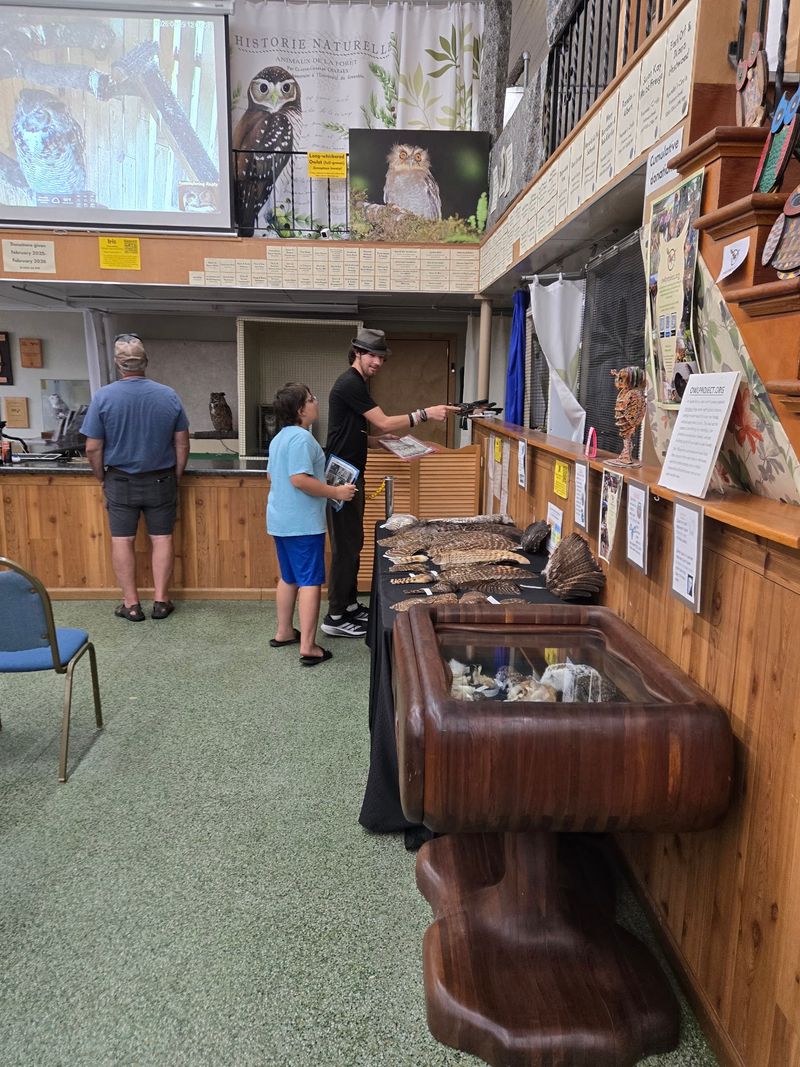
Big buildings are not the only places that can leave a strong memory. Reviewers often describe the International Owl Center as small, then spend the rest of their comments praising the information, staff, and birds they encountered inside.
One older visitor account describes a quaint, well-loved building. More recent reviews still mention limited space, but they also describe it as filled with educational materials and a gift shop with unusual finds.
The story available through these accounts is less about architecture and more about dedication. Visitors praise the care given to the owl ambassadors and the staff’s enthusiasm for helping people understand them.
Several reviews also mention plans for a new facility. Those comments show that visitors have heard about a possible next chapter, but they do not establish a construction schedule, opening date, or change of address.
For now, the supplied listing points to the Cedar Street location. Appreciate the center on those terms: a compact place where the subject gets more attention than the scale of the building, and where the experience depends heavily on the people explaining what you see.
Live Owl Ambassadors at Close Range
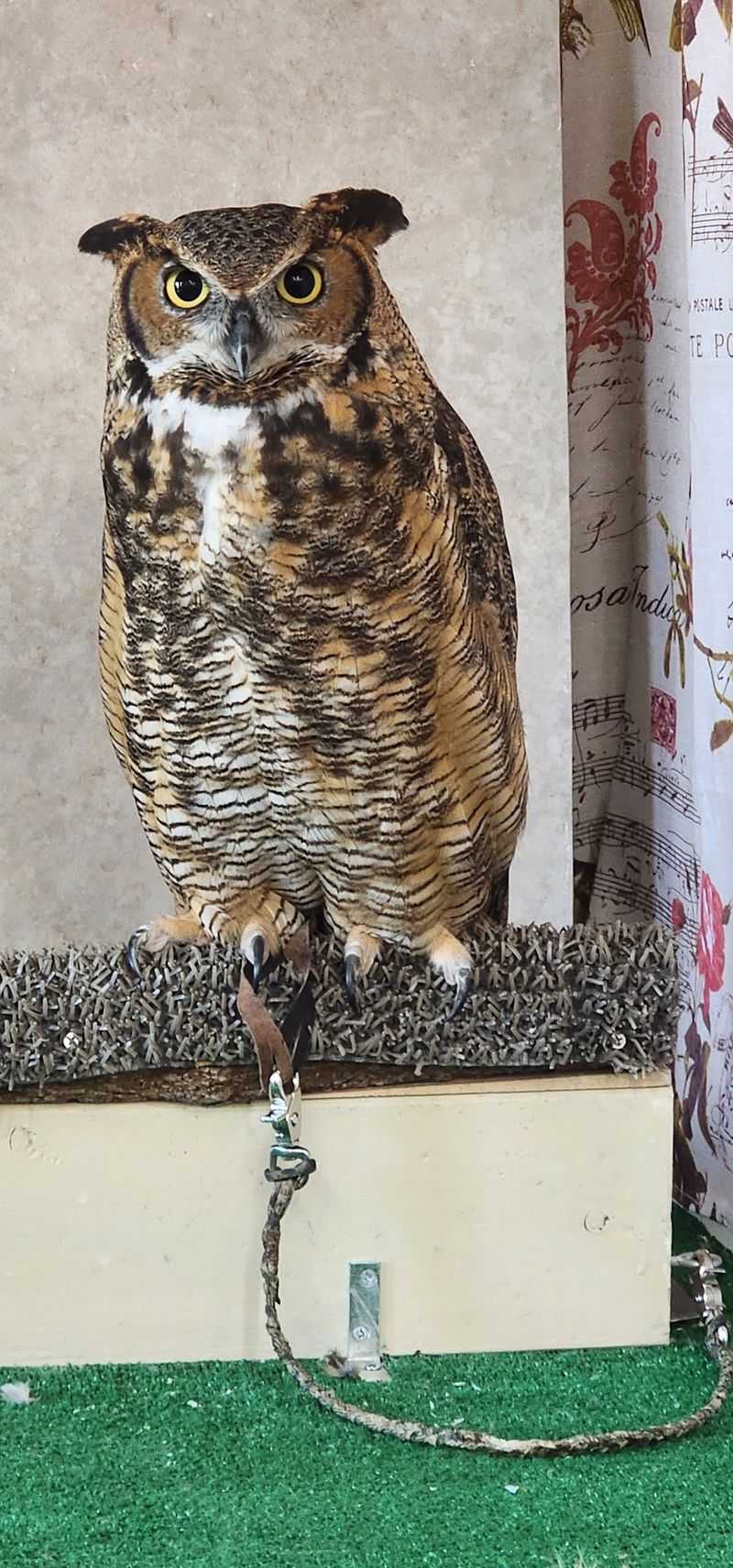
Looking an owl in the eye is the moment several visitors remember most. Across the supplied reviews, close encounters with live owls stand out as a major reason to make the trip.
Guests describe seeing multiple owls living at the center and meeting owl ambassadors during demonstrations. One reviewer specifically praises the staff for taking excellent care of those birds, while others emphasize how much the close view added to their understanding.
There is an important difference between seeing an owl and expecting to touch one. The reviews support opportunities to observe owls nearby, not a promise of petting, holding, or direct contact, so arrive with viewing and learning in mind.
Older and newer accounts mention different numbers of owls. Because those details can change, it is more useful to focus on the experience than to expect a fixed count or a particular lineup on your visit.
If the live birds are your main reason for coming, ask the center about the day’s program before you travel. Reviewers repeatedly recommend attending a presentation, where an owl and a knowledgeable presenter can turn a memorable sight into something you understand more deeply.
Presentations With Questions and Convincing Owl Calls
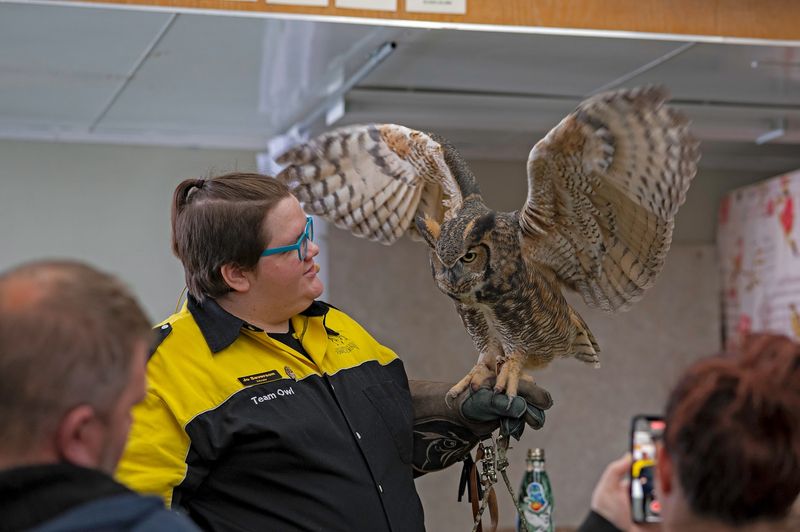
A convincing owl call can make a lesson feel much less like homework. Multiple visitors praise presenters who can imitate owl sounds, adding a memorable listening element to the center’s educational programs.
The presentations also get strong marks for audience involvement. Reviewers describe informative demonstrations that hold attention, invite questions, and help people of different ages follow along without making the subject feel out of reach.
Several accounts describe programs lasting about an hour. One family says a two-year-old listened and participated throughout, while another reports that children ages four and eleven felt comfortable raising their hands to ask questions.
Those experiences suggest a welcoming teaching style, not a guarantee that every child will sit through a full session. If your group has a short attention span, knowing the likely program length can help you decide how to plan the visit.
A past Saturday visitor reported presentations at 11 a.m. and 2 p.m., but that is a historical account rather than a current timetable. Call ahead for the day’s schedule, then give the presentation enough room in your plans to enjoy it without watching the clock.
Hands-On Materials for Curious Learners
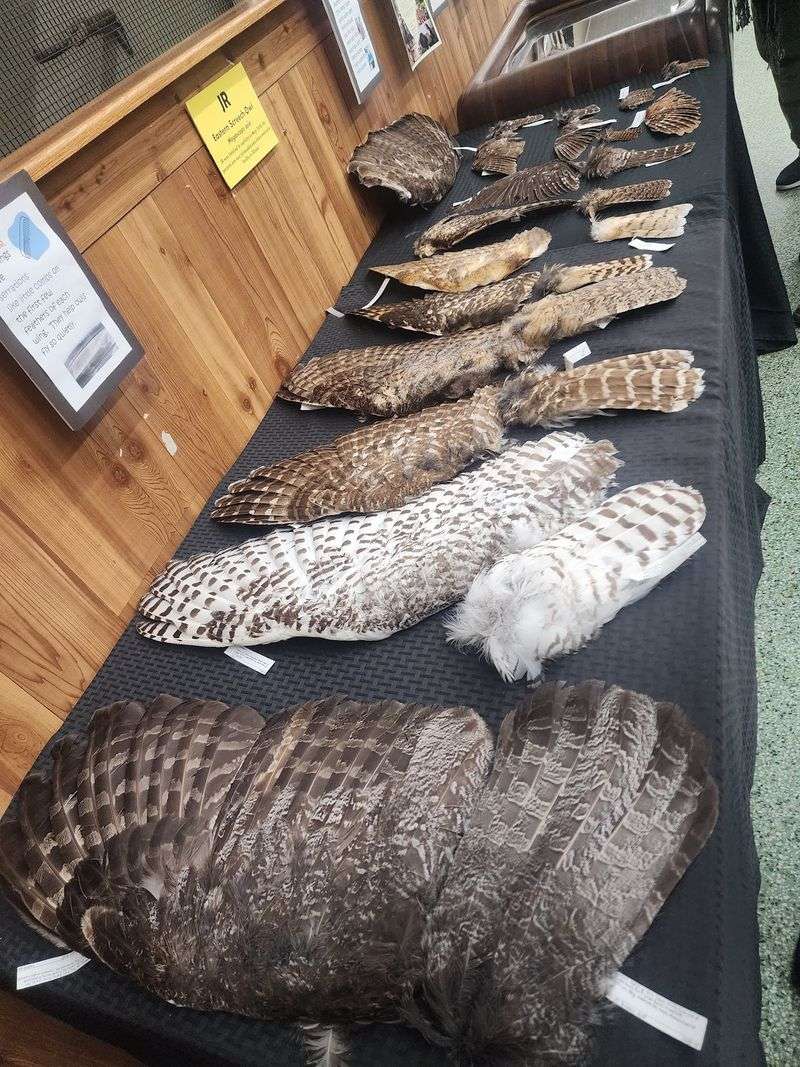
Feathers become more interesting when learning involves more than reading a label. Older visitor accounts describe hands-on materials that let guests feel differences in feathers, giving owl education a practical, touchable side.
Another family remembers reading owl books, completing an indoor scavenger hunt, and making a pledge to help keep owls safe. Together, those details show how the center has offered several ways to engage with its subject beyond watching a presentation.
For a child who learns best by doing, that variety could matter. A book, a search activity, and an item to examine each offer a different route into the same topic, without requiring everyone to enjoy learning in exactly the same way.
Because these activities appear in past reviews, ask staff which materials and activities are available when you arrive. The supplied information does not establish a permanent activity list, and it would be a mistake to promise every past feature on every visit.
Adults can benefit from the same approach, too. You do not need to arrive with a strong background in birds; visitors who came simply wanting to know more describe helpful staff and plenty of useful information.
Children’s Owl Art With International Reach
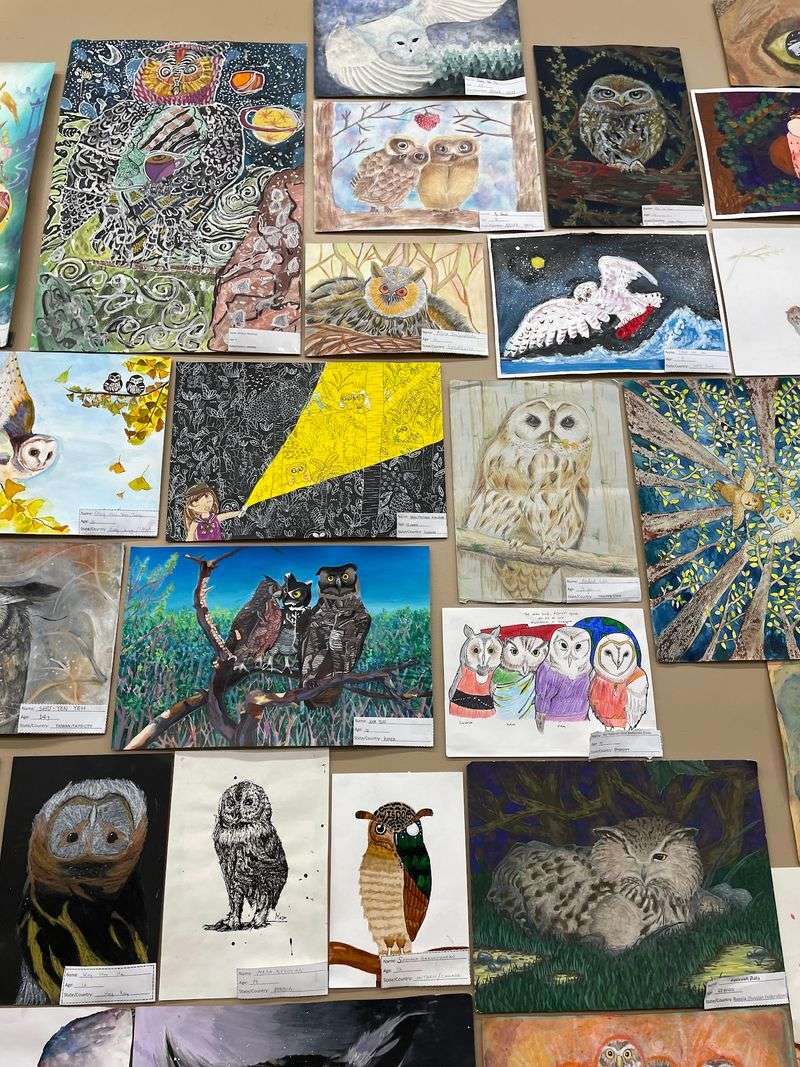
Not every memorable owl here has feathers. Visitors also describe artwork made by children from around the world, giving the center a creative side that may especially interest Minnesota crafters and amateur artists.
An older review mentions an annual international children’s art contest and the chance to look through entries. Other accounts praise the range of children’s owl pictures, with one amateur artist saying the work was a highlight of the visit.
More than one reviewer reports that some children’s artwork was available to buy. That makes the art worth asking about if you enjoy finding something personal and unusual rather than choosing a standard souvenir from a familiar display.
The supplied information does not identify current artists, prices, materials, or which pieces remain for sale. Treat those details as questions for staff, and let the available work shape your browsing rather than arriving with a specific purchase in mind.
Even without buying anything, this part of the experience offers a different way to look at owls. After a program centered on real birds, seeing how children interpret the same subject can shift your attention toward color, shape, and individual imagination.
A Gift Shop With Locally Made Finds
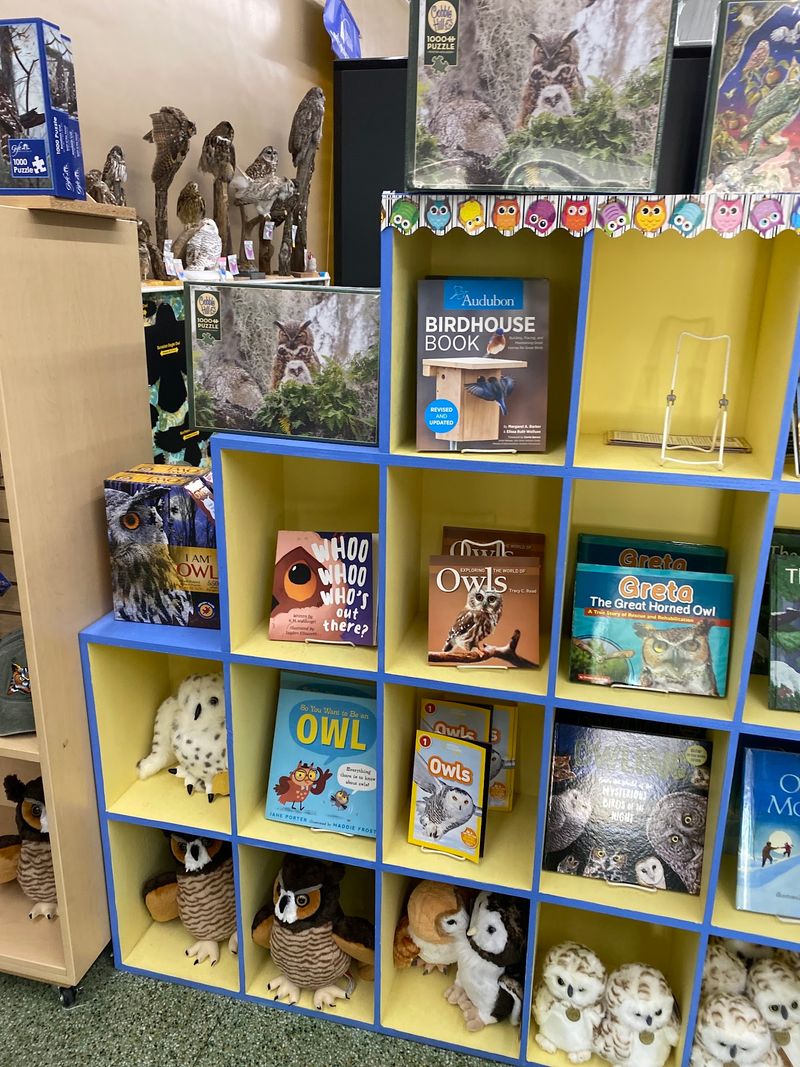
Owl fans may want to leave a little browsing time at the end. The gift shop appears often in visitor comments, with recent reviews describing a well-stocked selection, unique items, and locally made goods.
For Minnesota crafters, that last detail offers a specific reason to look closely. Locally made pieces can be more interesting to examine than a generic souvenir, especially when you enjoy noticing the choices and techniques behind handmade work.
An older family review lists owl shirts, hand-painted decor, puzzles, books, pens, jewelry, soap, and children’s art. That account gives a sense of the shop’s past variety, but it should not be treated as a current inventory sheet.
Ask what is locally made and which artwork is available during your visit. The supplied reviews do not provide makers’ names, present-day prices, or enough information to make claims about bargains, so the strongest supported appeal is selection and distinctiveness.
There is also no need to turn the stop into a shopping mission. A quick browse can simply extend the owl theme after a presentation, while a more careful look may reward visitors who like bringing home a small reminder of what they learned.
A Welcoming Room for Different Ages
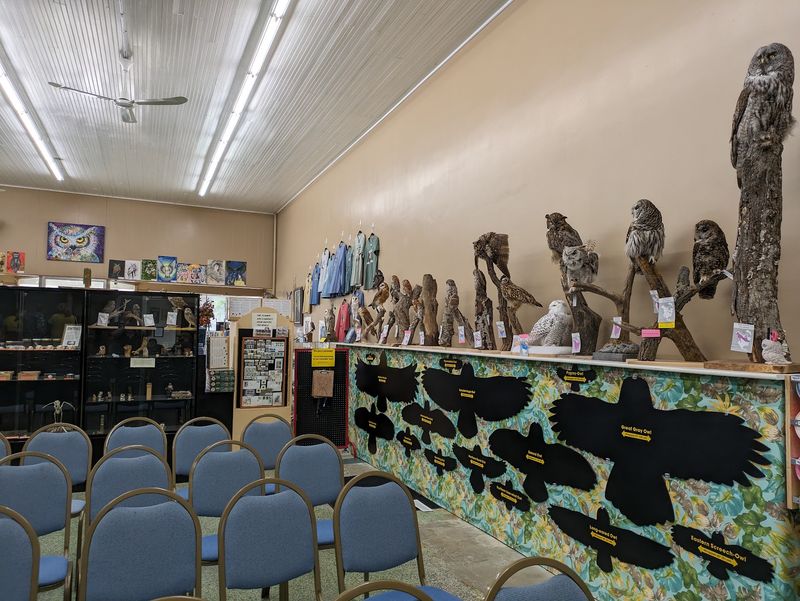
A good question should not require an expert vocabulary. Visitors repeatedly describe staff who are friendly, knowledgeable, and willing to help, which makes this stop sound approachable for both devoted bird watchers and people meeting the subject for the first time.
Families offer some of the clearest examples. Reviews mention a toddler joining a presentation, school-age children asking questions, and adults enjoying the same programs alongside them, rather than waiting through an activity meant only for kids.
Other accounts come from friends attending an owl event and a family celebrating an adult’s birthday. The common thread is interest in owls, not a narrow age range or a need to arrive with children.
The supplied Google listing shows a 4.8-star rating from 631 reviews. That supports the broad positive pattern in the comments, though it does not mean every visitor will have the same experience or prefer the compact setting.
If you enjoy conversation, focused learning, and a close look at birds, the atmosphere described by visitors is a strong match. If your group mainly wants a large attraction with many unrelated activities, keep the center’s modest scale and owl-centered purpose in mind before setting out.
Hours, Admission Questions, and Arrival Plans
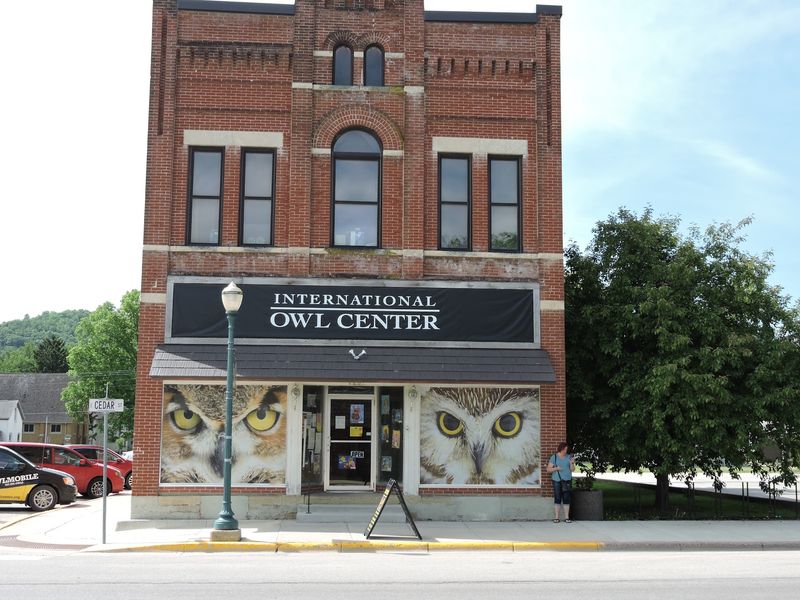
Timing matters more here than a rushed arrival might suggest. The supplied operating hours are 10 a.m. to 4 p.m.
Friday, Saturday, Sunday, and Monday, with the center closed Tuesday, Wednesday, and Thursday.
Those hours tell you when the building is listed as open, not when a particular presentation begins. Since visitors often recommend planning around a program, contact the center at +1 507-896-6957 or check www.internationalowlcenter.org before choosing your arrival time.
No current admission price is included in the supplied data. An older reviewer calls entry reasonably priced, but that opinion does not establish today’s cost, discounts, or ticket options, so confirm those details directly rather than budgeting from a guess.
Use 126 E Cedar St, Houston, MN 55943 as your navigation destination. The available information does not establish parking arrangements, public transit options, or accessibility features; ask about those needs in advance if they will affect your visit.
Allow room for both the program and browsing. Several visitors describe an hour-long presentation, and reviews mention educational materials, art, and the gift shop, so squeezing the whole experience into a brief stop could mean missing the part you most wanted to see.
An Owl-Focused Detour Worth Considering
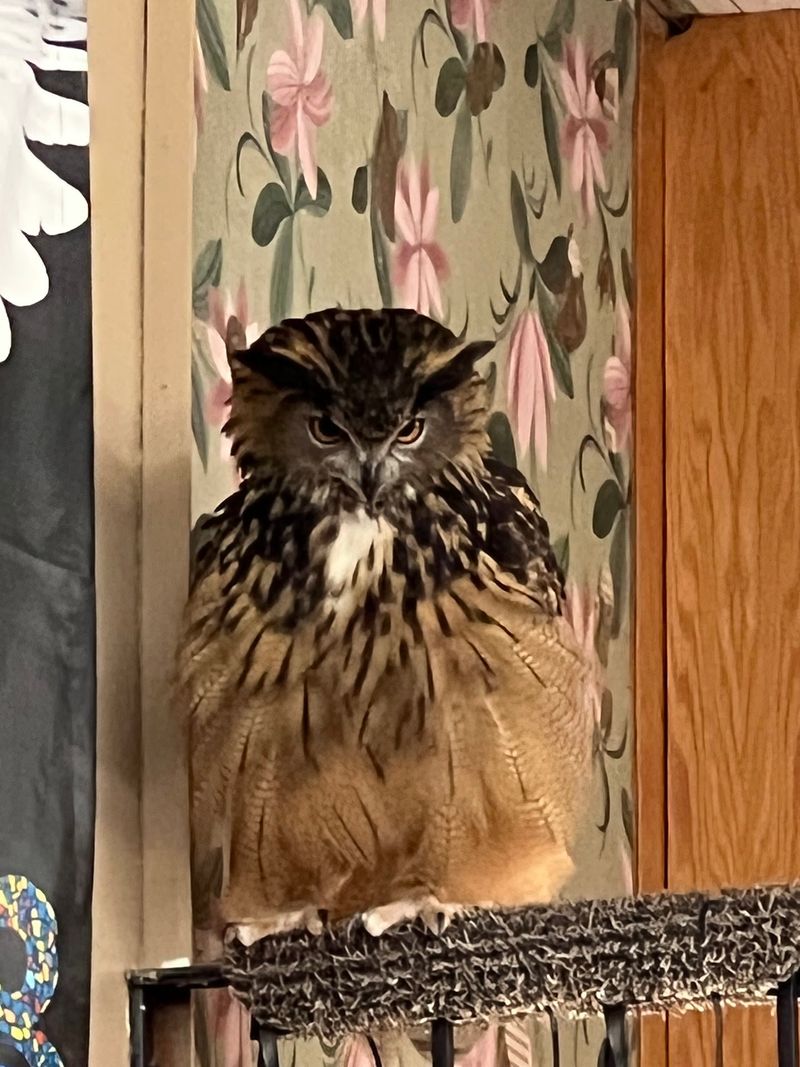
The best reason to go is also the simplest: you genuinely want to spend time with the subject. For bird lovers, the reviews describe a rewarding combination of live owls, engaging presentations, and staff who make room for curiosity.
There may also be an owl-themed reason to linger outside the center. Older visitors mention a scavenger hunt involving owl sculptures around Houston, which added another layer to their outing after time spent learning indoors.
Ask the center whether that hunt is currently available and how it works. The reviews establish past participation, not a current route, sculpture count, or set of instructions, so it is best treated as a possible extra rather than the foundation of your trip.
The main experience already has a clear identity. Bird enthusiasts get a focused educational stop, families have encouraging reports from other parents, and art-minded visitors can look for children’s artwork and locally made gifts without pretending the center is something else.
Go with realistic expectations about the small space and a confirmed presentation time. On those terms, the International Owl Center makes a convincing case for a Minnesota detour: not because it offers everything, but because visitors consistently say it does its particular thing well.
Share this story