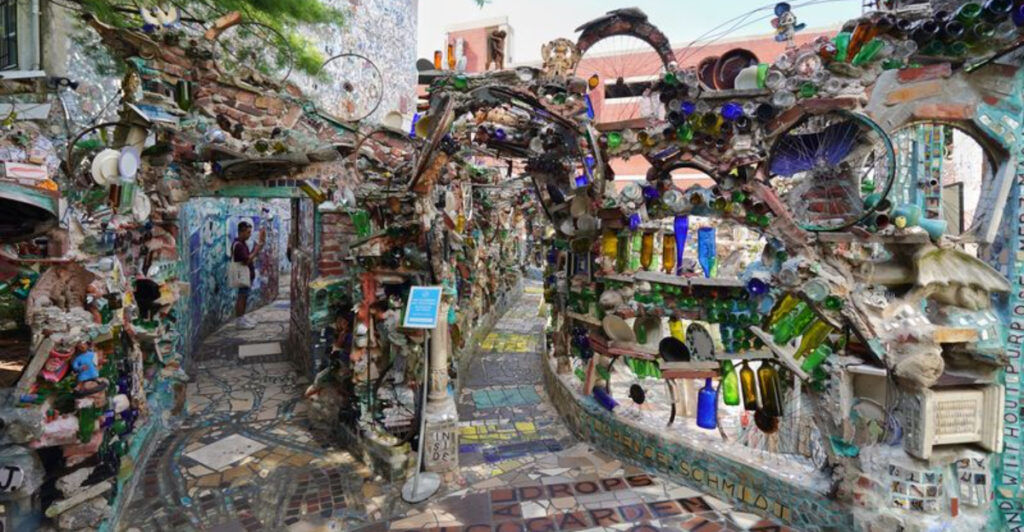
Philadelphia’s Magic Gardens is not the kind of quiet gallery where art hangs neatly on white walls. Instead, it is a colorful maze of tiles, mirrors, bottles, words, and found objects spread across an immersive space right on South Street in Philadelphia. Created by artist Isaiah Zagar, the space feels more like stepping into another world than simply visiting an art museum. Visitors can walk through the artwork, explore winding pathways, and discover new details almost everywhere they look.
Every wall and surface seems to offer something unexpected, from tiny pieces of glass and ceramic to colorful patterns and playful designs. The result is an experience that encourages you to slow down and take in the details rather than simply move from one exhibit to the next. If you enjoy places that feel strange, bright, creative, and full of surprises, Philadelphia’s Magic Gardens is one of the most memorable art spaces in Pennsylvania.
1. A South Street Wonderland Made From Tiny Pieces
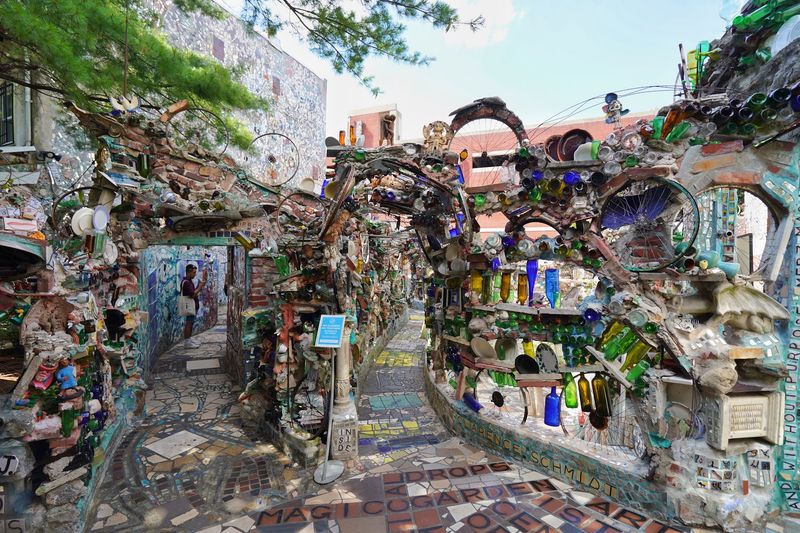
A small doorway on South Street opens into a world that feels bigger than it looks from outside.
Philadelphia’s Magic Gardens covers indoor galleries and an outdoor sculpture garden with mosaics from floor to ceiling.
Artist Isaiah Zagar used broken tiles, mirrors, glass bottles, bike wheels, plates, and hand-built forms to turn everyday objects into art.
The result is not neat or plain.
It is busy, playful, and full of movement, like a picture book you can walk through.
Plan to move slowly here because the best details are easy to miss.
Look down at the steps, across the walls, and above your head.
Even if you only spend 45 minutes, you may leave feeling like you visited someone’s dream, not a standard museum.
Wear comfortable shoes, keep your phone charged for photos, and give yourself time to notice the tiny surprises.
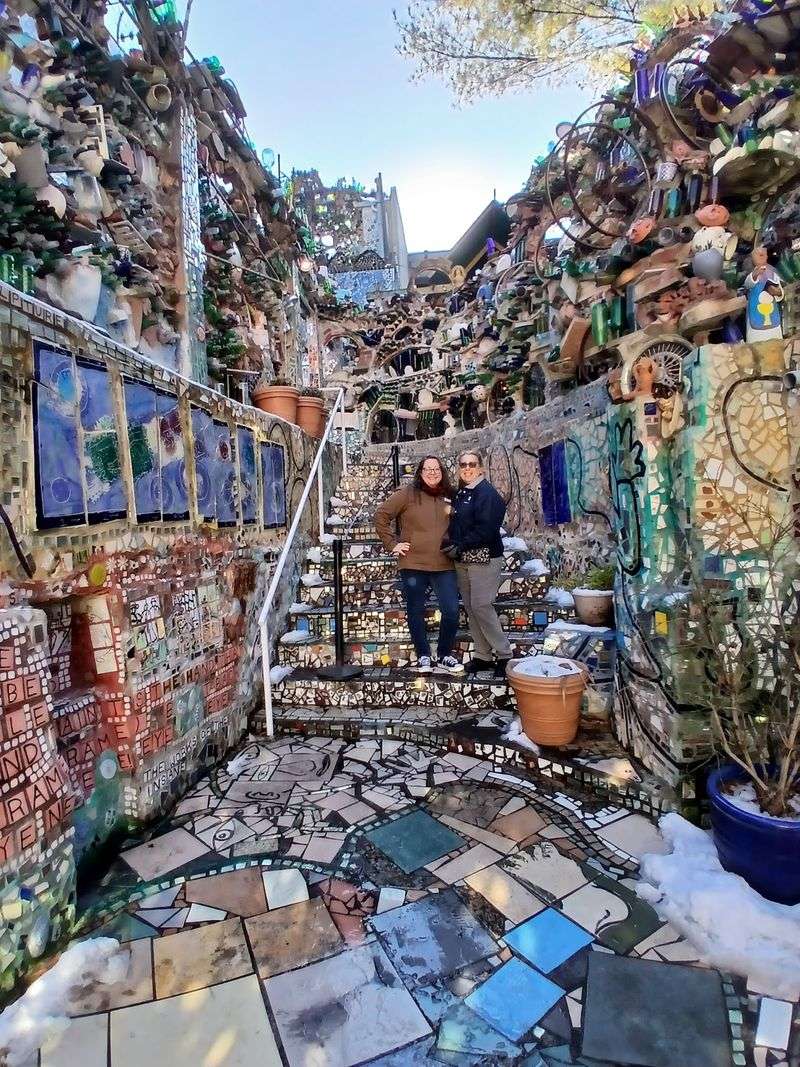
2. The Outdoor Maze Turns Art Into an Adventure
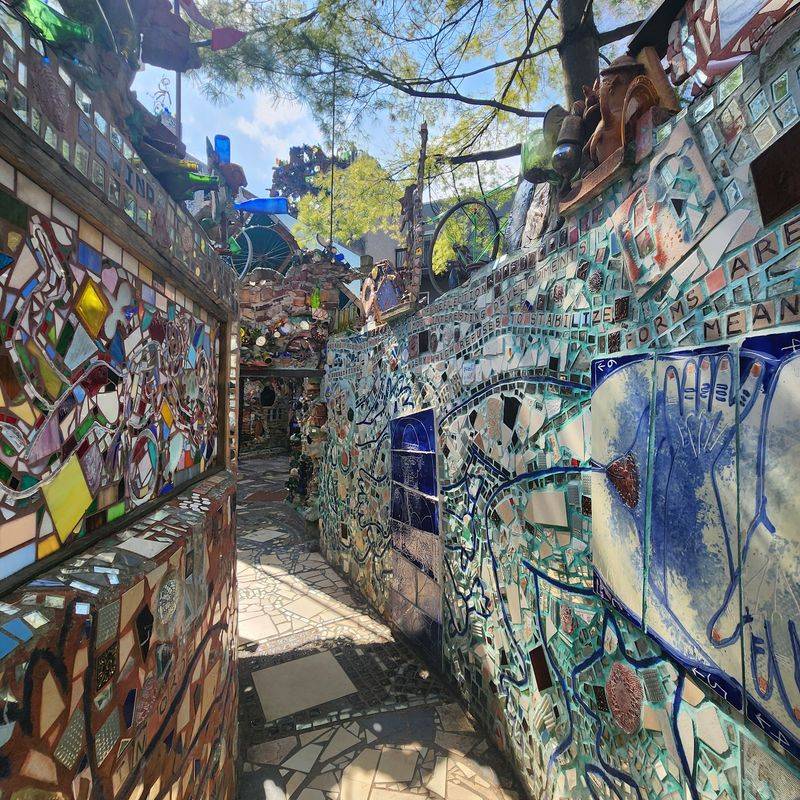
Wandering through the garden can feel like taking a secret path through a giant handmade puzzle.
Narrow walkways, stairs, tunnels, and walls lead you from one bright corner to another.
The outdoor space is one of the main reasons people call Philadelphia’s Magic Gardens an experience.
You are not standing still in front of a painting.
You are turning corners, ducking into tight spots, and finding new faces, words, patterns, and shapes tucked into the mosaics.
Because some pathways are slim and stairs can be steep, move with care, especially after rain.
The space may be harder for visitors with mobility needs, so checking accessibility details before visiting is smart.
Families should remind kids not to climb or touch fragile areas.
Treat it like a living artwork, and it becomes more fun, more respectful, and much easier to enjoy safely.
3. Isaiah Zagar’s Vision Fills Every Wall
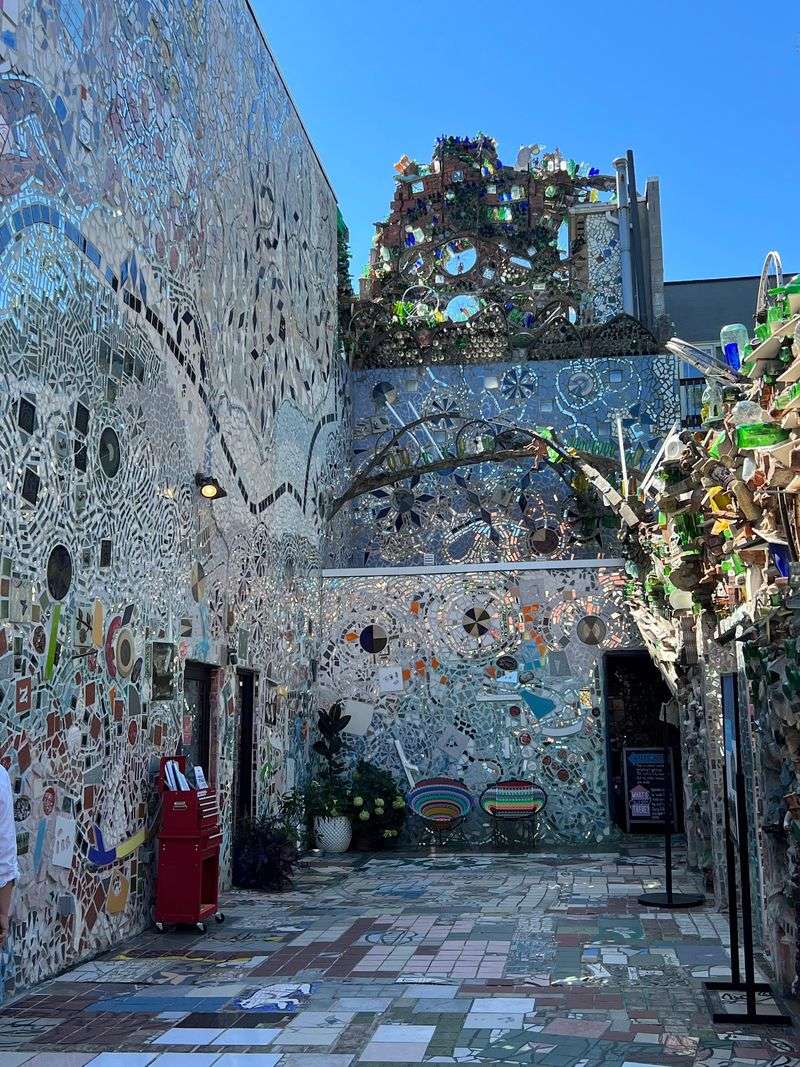
One artist’s imagination shaped this whole place, and that is part of what makes it feel personal.
Isaiah Zagar, a well-known Philadelphia mosaic artist, spent years covering surfaces with color, memory, and meaning.
His work appears across parts of the city, but Philadelphia’s Magic Gardens is the best-known home for his style.
You will see hand-lettered words, faces, animals, folk art symbols, and pieces from daily life.
Cups, plates, mirrors, and bottles become part of a much larger story.
Knowing a little about Zagar before you go can make the visit richer.
His art is tied to South Street, neighborhood change, travel, family, and creative freedom.
If you take a guided tour or watch the on-site video, the walls start to feel less random.
They become a record of one person’s bold way of seeing the world.
4. A Scavenger Hunt Makes the Details Pop
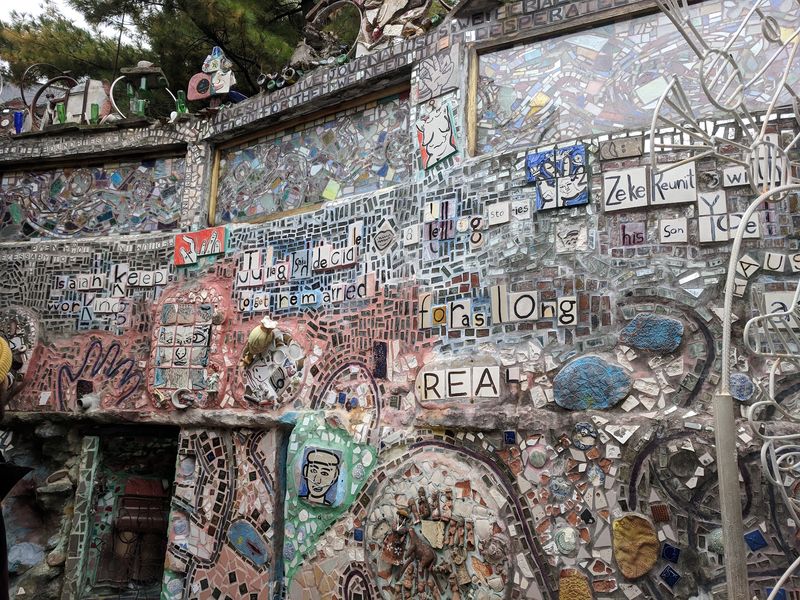
Kids are not the only ones who enjoy having a mission here.
The scavenger hunt at Philadelphia’s Magic Gardens gives visitors a fun reason to look closer at the walls, floors, and tucked-away corners.
With so much color around you, it can be hard to know where to focus first.
A scavenger hunt helps turn the visit into a game.
You might search for certain objects, shapes, images, or words hidden among thousands of mosaic pieces.
Suddenly, a wall that seemed crowded starts to make sense in smaller parts.
This is a helpful choice if you are visiting with children, teens, or friends who do not usually spend much time in museums.
It keeps everyone moving and talking.
Go slowly, compare what you find, and do not worry if you miss a few clues.
The search itself is part of the fun.
5. Photos Look Best When You Slow Down
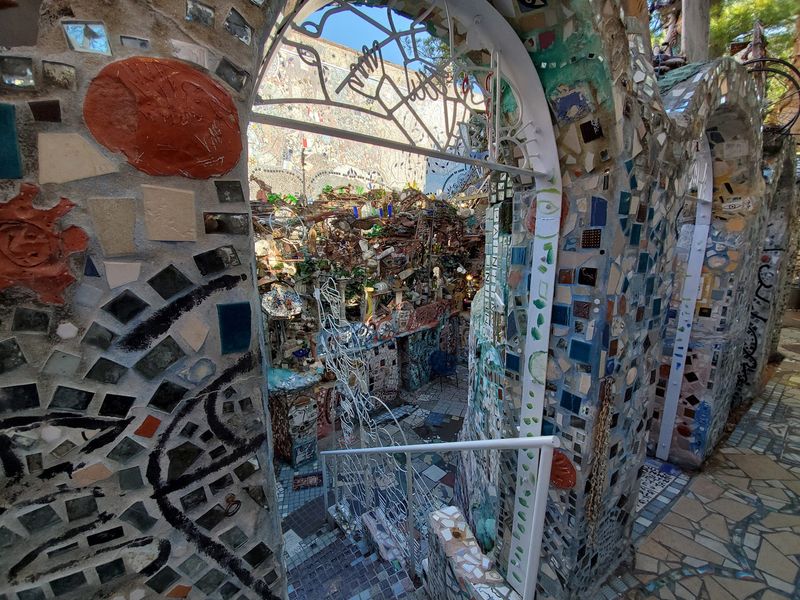
Your camera will probably come out within the first minute.
Philadelphia’s Magic Gardens is packed with photo spots, from shiny mirror walls to colorful stairways and small hidden scenes.
The trick is to avoid rushing from one picture to the next.
Many visitors say the space is smaller than they expected, so taking your time helps the visit feel fuller.
Step back when you can, frame the mosaics around doorways, and watch how sunlight bounces off the glass.
Weekdays often make photos easier because the paths may be less crowded.
Be patient with other guests, since everyone wants a turn in the best spots.
If you are visiting on a weekend, book ahead and expect tighter spaces.
For warmer, softer pictures, try early in the day after opening or later in the afternoon.
Good photos are nice, but the real reward is noticing what is behind them.
6. Guided Tours Add Stories You Might Miss

A guide can turn a colorful walk into a deeper story.
While self-guided visits are enjoyable, tours at Philadelphia’s Magic Gardens help explain the artist, the neighborhood, and the meaning behind many pieces.
Visitors often praise the guided experience because it points out details they would have walked past.
Some tours may include special access to areas such as the basement, depending on the ticket and schedule.
That extra context can make the art feel less like decoration and more like a timeline of ideas, places, and memories.
If you love history, symbolism, or local culture, consider paying for a tour.
It is also useful for first-time visitors who want more than photos.
Check the official website for current prices, times, and availability before you go.
Tours can sell out, and booking early helps you get the visit you want.
7. The Indoor Gallery Gives You Room to Pause
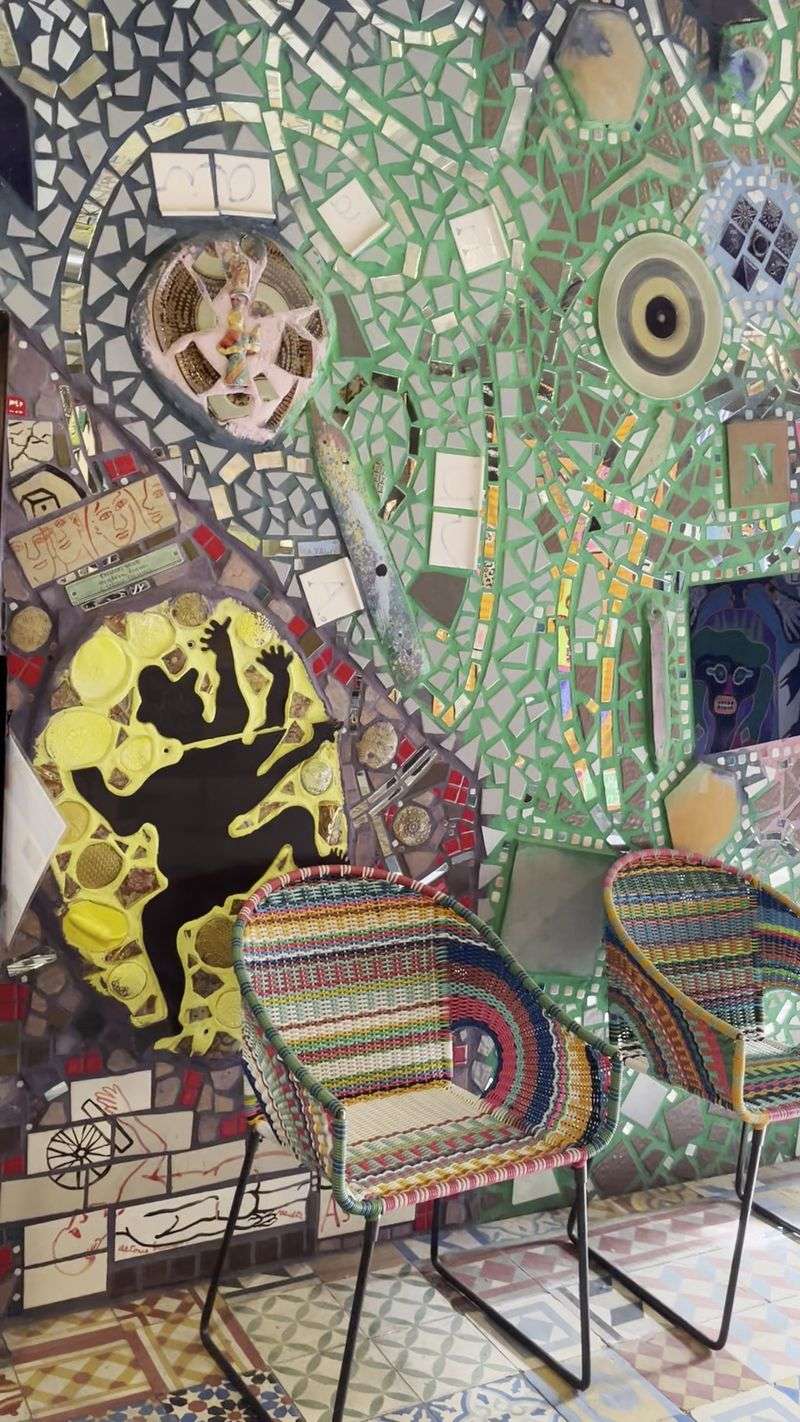
After the busy outdoor maze, the indoor gallery can feel like a helpful breath.
It gives visitors a chance to slow down, learn more, and see art in a more traditional museum setting.
The inside still carries the same creative spirit, with mosaics, displays, and changing exhibitions connected to folk art, community art, and Philadelphia’s art scene.
It is a good place to look for information about materials, techniques, and the larger world around Zagar’s work.
Many guests also enjoy the video that explains the process and history.
Do not skip this part just because the garden gets the most attention online.
The gallery helps connect the wild outdoor space to real people, real choices, and real work.
It is also useful on hot, cold, or rainy days.
Give yourself a few quiet minutes here before heading to the gift shop or back outside.
8. Twilight Events Bring a Different Kind of Magic
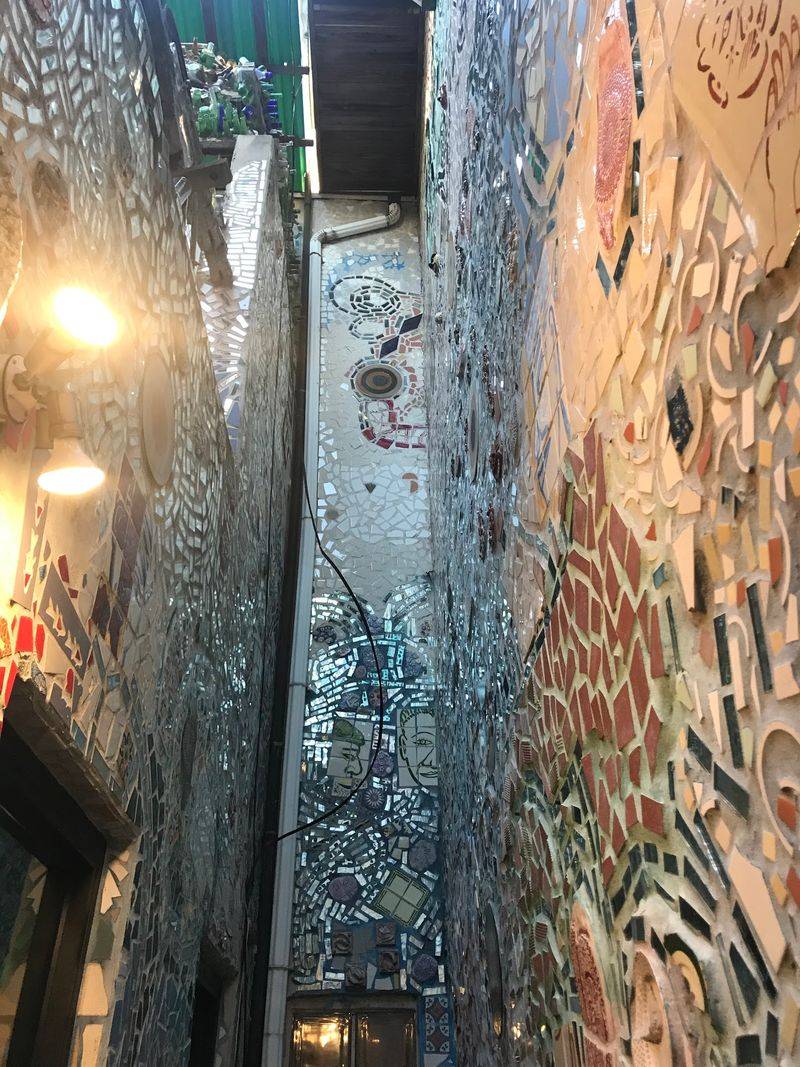
When the lights come on, the mosaics take on a whole new mood.
Philadelphia’s Magic Gardens sometimes hosts special evening programs, including Twilight in the Gardens events with music, crafts, and extra atmosphere.
Nighttime changes the way the mirrors, glass, and tiles feel.
Instead of bright daylight sparkle, you get shadows, warm light, and a more relaxed social setting.
Some events include live performances and hands-on activities, which make the space feel more like a neighborhood gathering than a museum visit.
Check the official website before planning around an evening event because dates, prices, and details can change.
If an event is BYOB or includes special access, rules may vary, so read carefully.
These programs can be a smart choice for couples, friends, or repeat visitors who already saw the gardens by day.
The same walls feel fresh under the evening glow.
9. Practical Planning Helps the Visit Go Smoothly
A little planning can save you from missing your preferred time slot.
Philadelphia’s Magic Gardens is located at 1020 South Street, a lively area with shops, food spots, and plenty to see nearby.
The museum is usually open from 11 AM to 6 PM on most days, but it is closed on Tuesday.
Hours can change for holidays or events, so always confirm on the official site before leaving.
Timed tickets are a smart idea, especially on weekends, during tourist seasons, or when the weather is beautiful.
Many visitors spend about 40 minutes to an hour here, though art lovers may stay longer.
Parking near South Street can be limited, so consider public transit, rideshare, or extra time to find a spot.
Wear shoes with good grip because stairs and outdoor surfaces may be slippery when wet.
A prepared visit feels calmer from the start.
10. A Uniquely Philly Stop With Nearby South Street Energy
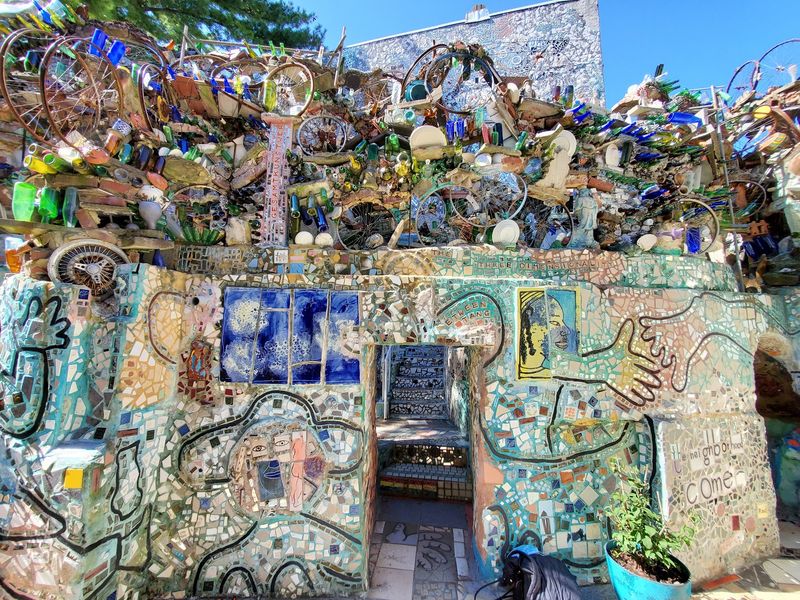
Few places show off Philadelphia’s creative personality quite like this one.
Philadelphia’s Magic Gardens feels tied to the city around it, especially the bold, busy, and artsy character of South Street.
After your visit, it is easy to turn the trip into a larger outing.
Nearby thrift stores, lunch spots, murals, and small shops make the area fun to explore before or after your ticket time.
You may even notice other mosaic works around the neighborhood, which helps show how Zagar’s art spilled beyond one address.
This stop works well for visitors who want something different from major historic sites.
It is not huge, and some people may find it smaller than expected, but its personality is strong.
Come for the mosaics, stay curious about the neighborhood, and leave time to wander.
That mix of art and city life is what makes it feel so Philly.
Share this story