A fully operational World War II tank sitting on a former top-secret Army research campus is not exactly the kind of thing you expect to find tucked into Wall Township, just inland from the Shore traffic and beach-town bustle. But that is the fun of Camp Evans.
One minute you are on Marconi Road, passing plain old brick buildings that look more like a forgotten municipal complex than a place with national secrets. The next, you are standing inside a museum network where radar, military vehicles, space communication, Cold War fear, and New Jersey brainpower all collide.
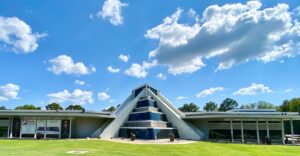
The Military Technology Museum of New Jersey is part of the larger InfoAge Science and History Museums campus, a former military site now filled with exhibits spread across historic buildings. It is wonderfully odd, deeply local, and much bigger than it looks from the parking lot.
The Secret Wall Township Campus Behind The Museum
Long before this place became a museum, Camp Evans was doing the kind of work that did not get splashy roadside signs. The property began in the early 1900s as Marconi’s Belmar Wireless Communication Station, helping connect transatlantic wireless communication during World War I.
Then World War II changed everything. The U.S.
Army took over the site, renamed it Camp Evans, and used it for radar development at a time when radar was not just interesting technology, but a wartime advantage. After the war, the work did not simply stop.
Camp Evans continued helping lead radar research during the Cold War and was also connected to nuclear weapons research. That is a lot of heavy history for a campus that today sits quietly at 2201 Marconi Road.
What makes the place feel especially New Jersey is how unshowy it is. There are no giant marble steps or polished military pageantry at the entrance.
Instead, you get low historic buildings, practical signs, and the sense that the best stories are hiding behind doors that once required clearance. InfoAge now occupies multiple buildings on the former base, with exhibits devoted to military technology, radio, computing, model railroads, shipwrecks, space exploration, and local scientific history.
The campus itself is part of the experience because visitors walk between buildings rather than staying inside one neat gallery box. That means you feel the old base layout as you move around.
It is not hard to imagine engineers, soldiers, scientists, and technicians crossing the same grounds when the work happening here was far less public.
Where Working WWII Vehicles Still Steal The Show
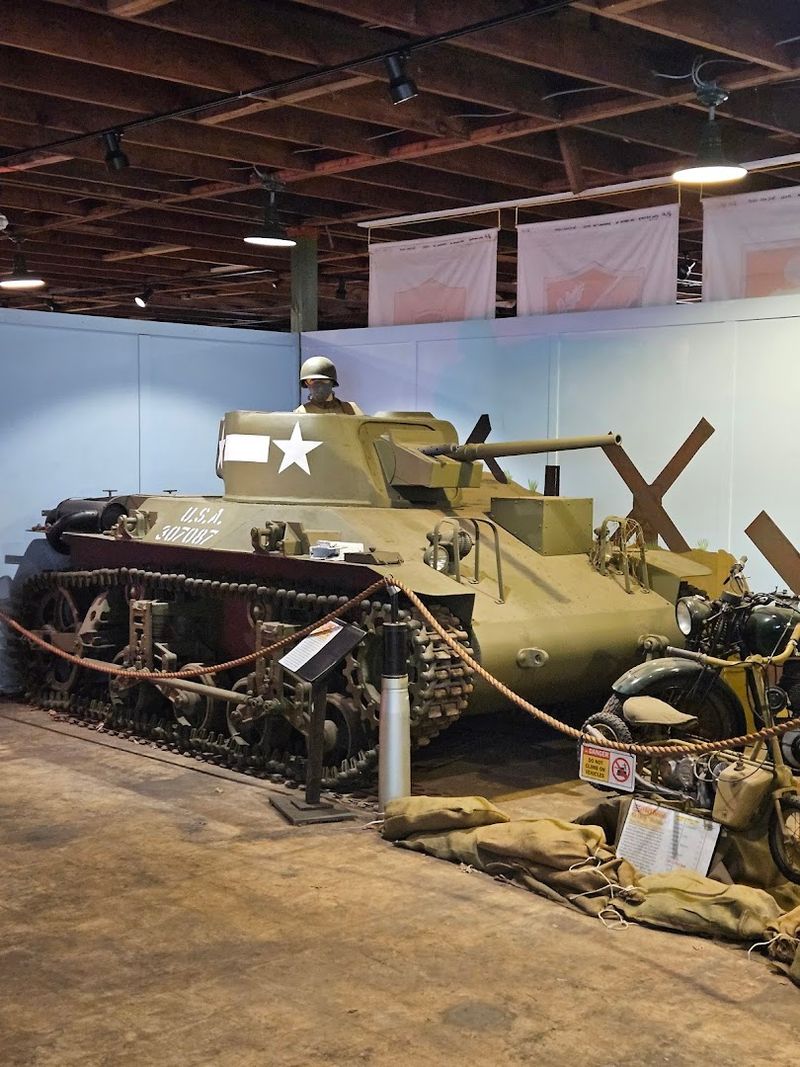
The big crowd-pleaser here has always been the Military Technology Museum of New Jersey, the InfoAge exhibit that makes even people who “do not really do museums” suddenly slow down. Its space is listed in Building 9011-A/B/C, and InfoAge describes it as the largest exhibit on the campus.
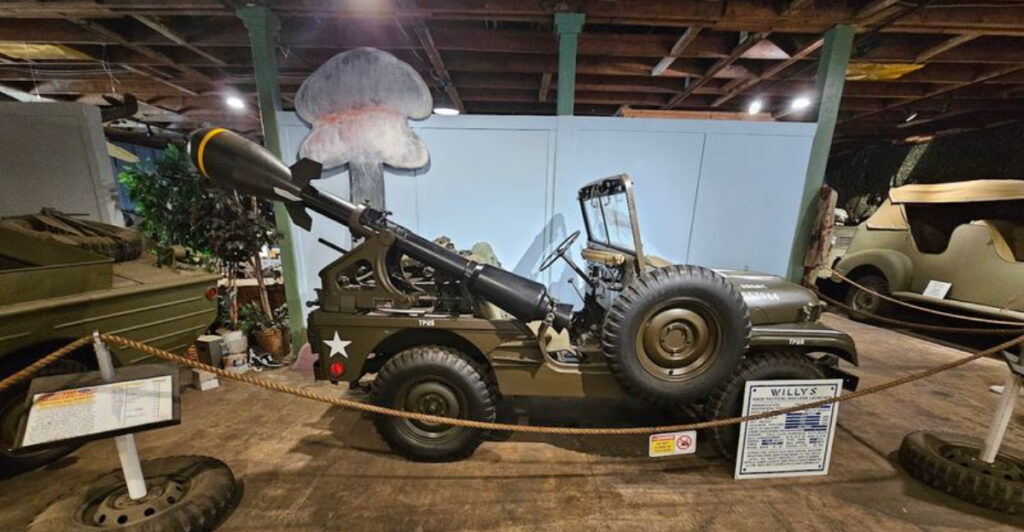
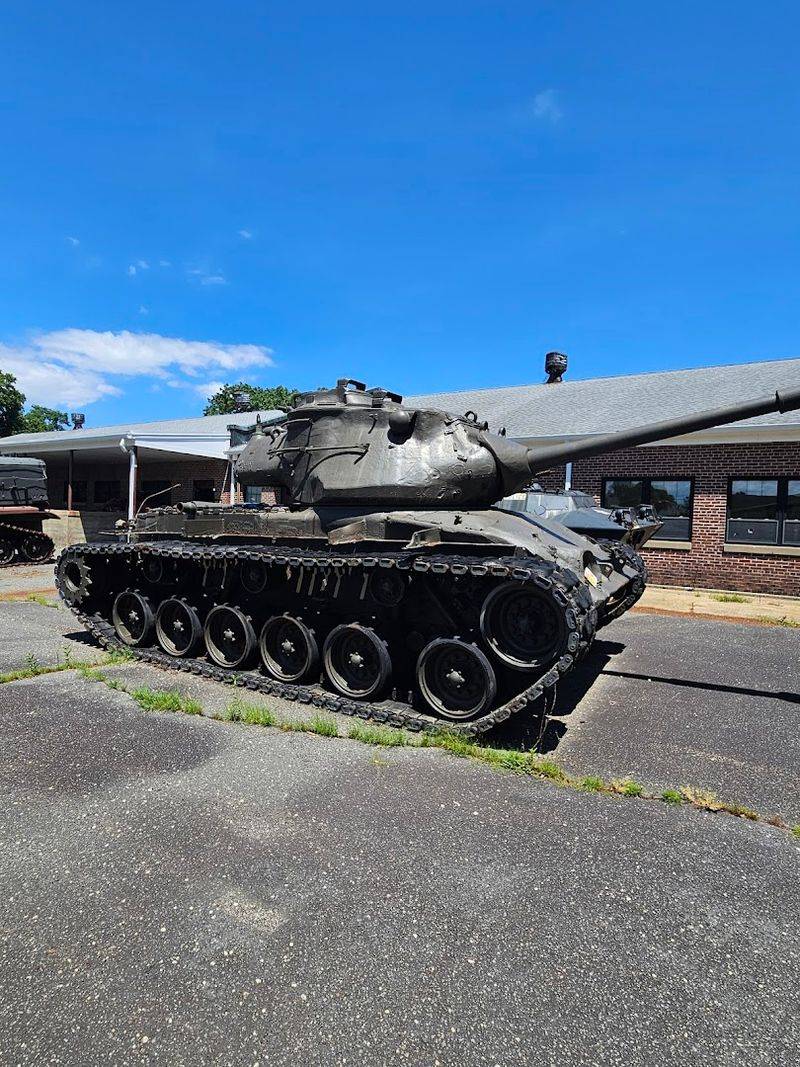
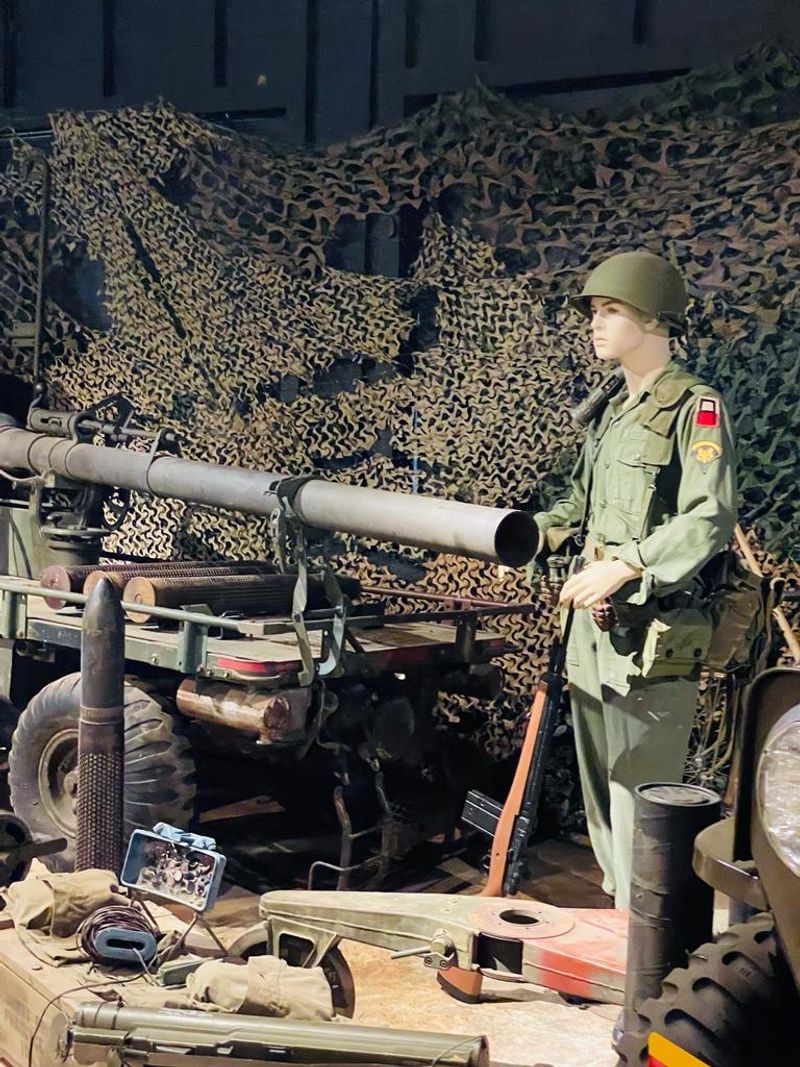
Inside, the collection centers on serious hardware: jeeps, tanks, half-tracks, amphibious vehicles, motorcycles, trucks, weapons, and other military equipment. This is not a wall of photographs asking you to imagine the machines.
These are the machines, many of them restored or preserved with the kind of care that comes from people who know what every rivet, tire, hatch, and headlamp is supposed to do. The star detail is the fully operational World War II Jeb Stuart M-3 tank, the kind of object that instantly changes the room.
A tank behind a rope can be impressive; a working tank feels like it brought its own weather system. The museum’s own materials say the collection includes one-of-a-kind pieces and even items not held by the Smithsonian, which gives you a sense of why military vehicle fans talk about this place with raised eyebrows.
The appeal is not only the size of the equipment, either. The vehicles make wartime logistics easier to understand.
You see how soldiers moved, how supplies traveled, how engineering choices had to survive mud, cold, salt air, bad roads, and worse days. For kids, it is big and loud-looking.
For adults, it is a reminder that history was built with tools that had weight, smell, and dents.
The Rare Military Machines You Probably Will Not See Anywhere Else
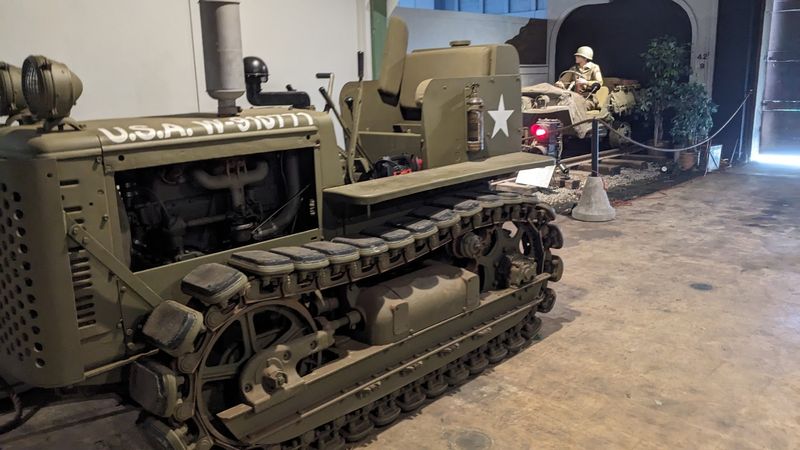
One reason this museum feels different from a standard military display is that the collection has the personality of a long-running obsession. The Military Technology Museum says it has spent more than 35 years amassing one of the largest and rarest collections of static and operating military vehicles and equipment, with a focus on showing how military inventions eventually shaped civilian life.
That last part matters. This is not just a room full of olive-drab machinery for people who already know model numbers by heart.
The exhibits connect military technology to things people actually recognize, from synthetic rubber and nylon to aerosol cans and food innovations. InfoAge even teases a lesson on where M&Ms came from, which is exactly the kind of detail that gets someone’s attention after ten minutes of tank talk.
The restoration side adds another layer. The museum’s gallery has identified projects including a 1941 Willys Slat Grill and an M3A1 Stuart Tank, the sort of named specifics that make the collection feel active rather than frozen.
You get the sense that volunteers are not just preserving history, but coaxing it back into motion one part at a time. That is also why the museum works well for mixed groups.
A military buff can linger over vehicle types. A local history person can follow the Camp Evans connections.
Someone who came along mostly because it was raining at the Shore can still end up fascinated by the odd chain between wartime necessity and everyday products. It is a museum where the “wait, really?” moments come fast, and they are usually attached to something with tires, treads, or a backstory that sounds made up until you read the label.
How Camp Evans Helped Shape Radar And Modern Defense
Camp Evans was not just storing military technology; it helped create the future of it. During World War II, the site became one of the Army Signal Corps’ important radar research locations, and that work carried into the Cold War.
Preservation New Jersey describes Camp Evans as a secret research laboratory where many types of radar, including weather radar, were developed. The New Jersey Historic Trust also notes that after World War II, the site continued leading radar technology development for Cold War use.
That is the part that makes this campus feel larger than Wall Township. The work done here fed into defense, communications, weather observation, and eventually space-age thinking.
One of the best examples is Project Diana. On January 10, 1946, a team at Camp Evans reflected radar signals off the moon using a modified radar system, with the signal taking about 2.5 seconds to travel to the moon and back.
The IEEE milestone for the achievement calls it the beginning of radar astronomy and space communications. In normal-person terms, New Jersey helped prove that radio waves could get through the ionosphere, hit the moon, and come back.
That is not a small footnote. Dr. Walter S.
McAfee, an African American physicist who worked at Camp Evans, was central to the calculations that made the moon-bounce experiment feasible, and the Army credits his theoretical work directly. It is one of those local stories that should be better known, especially because it links a quiet Monmouth County site to space communication before NASA even existed.
The Cold War Technology Hiding In Plain Sight
The Cold War pieces at Camp Evans have a different mood than the vehicle collection. The tanks are obvious.
The Cold War material sneaks up on you. InfoAge includes a 1950s and 1960s home fallout shelter mockup with period rations, supplies, informational media, and a “duck and cover” educational film about nuclear attack preparations.
That exhibit is small in concept but big in emotional weirdness because it takes something enormous, nuclear fear, and puts it in the language of pantry shelves and family preparedness. Then the campus swings in another direction with space technology.
Camp Evans helped with Project TIROS, tracking the first weather satellite, and InfoAge’s Space Age history connects the site to both Project Diana and weather satellite work. The InfoAge Space Exploration Center, a short walk south at 2300 Marconi Road, is built around that side of the story, with exhibits tied to radio astronomy, moon-bounce communication, satellites, and the large TIROS dish.
What makes this all feel mysterious is how much of it sits inside ordinary-looking old buildings. A fallout shelter mockup, a radar milestone, a satellite tracking story, and a former Army research base are all sharing the same Wall Township address family.
There is something very Jersey about that combination: practical, under-advertised, and quietly important. You can come for the vehicles and leave talking about the moon.
Or you can come for Cold War science and find yourself unexpectedly charmed by a truck that looks ready to roll out of a 1940s motor pool. Either way, the campus keeps revealing that the secret history was not only hidden in Washington or Los Alamos.
Some of it was right here near the Shore.
What To Know Before Planning A Visit
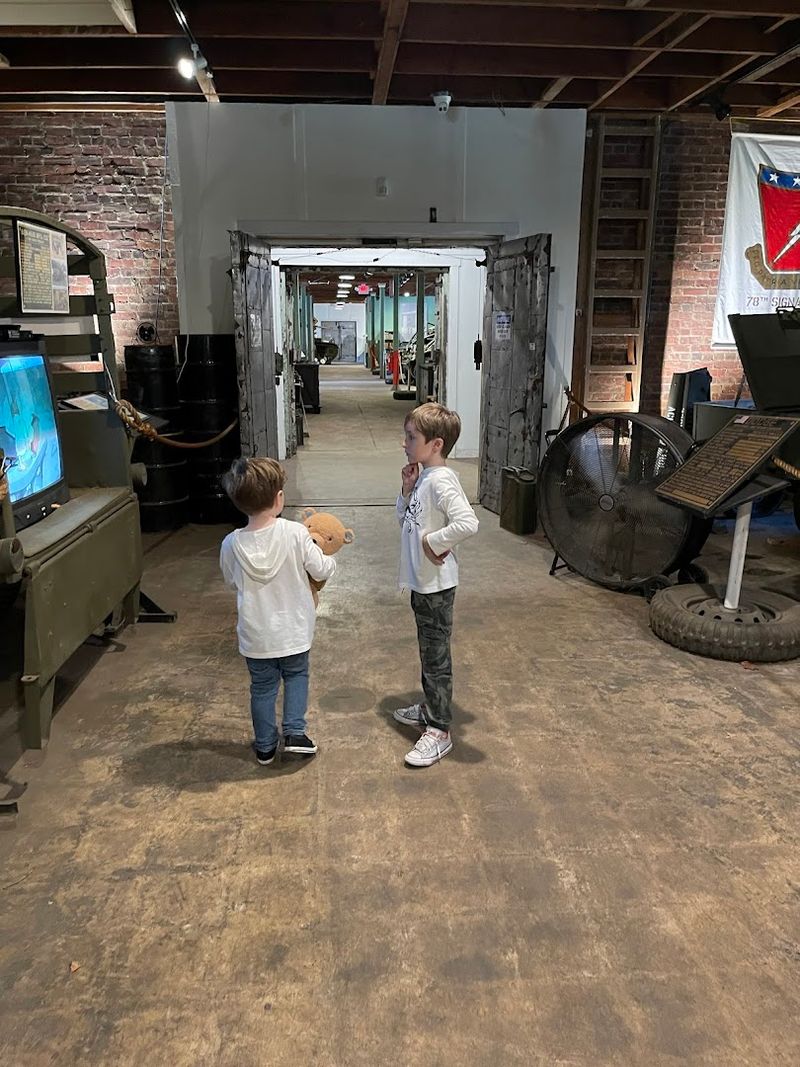
Here is the practical part, because this is where a little planning saves a lot of “well, now what?” in the parking lot. InfoAge Science and History Museums lists its main campus at 2201 Marconi Road in Wall Township, with regular public hours from noon to 5 p.m. on Wednesdays, Saturdays, and Sundays.
Admission for 2026 is listed at $15 for ages 13 and older, $12 for seniors, $8 for military with ID, and $10 for children, with young children admitted free. Parking is free, and the campus has multiple exhibit buildings, so dress for walking between them rather than assuming you will be indoors the whole time.
That advice matters in January wind and August humidity equally. One very important note: InfoAge’s current homepage says the Military Technology Museum is closed until further notice because of renovations.
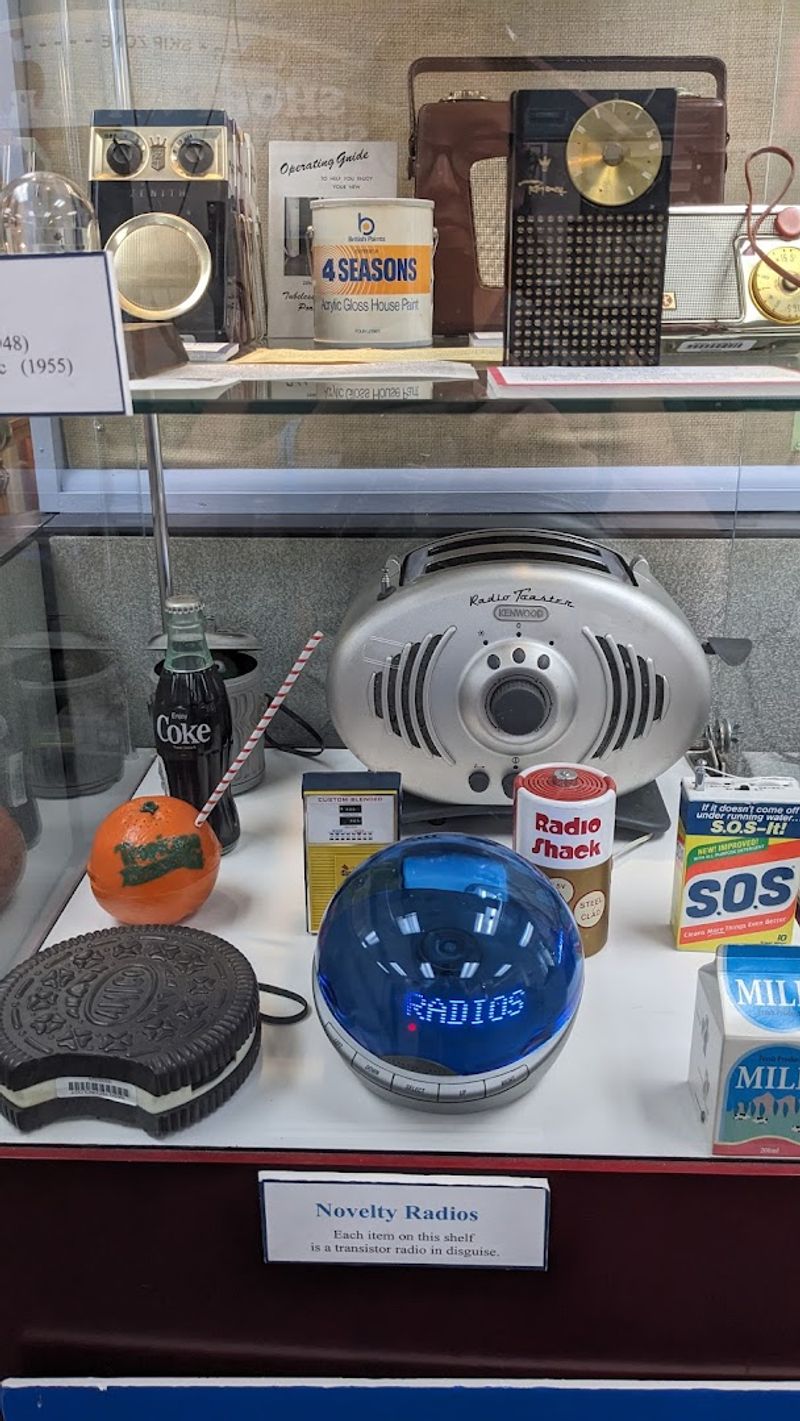
So the smart move is to check the latest status before going specifically for the WWII vehicles. The broader campus still has plenty to justify a history-minded visit, from the fallout shelter and radio exhibits to computing, railroads, shipwrecks, African American history, and the space exploration center, but the tank-and-vehicle portion is the piece to confirm first.
Accessibility is also better than the old-base setting might suggest. InfoAge says most buildings are wheelchair accessible, with ramps or handrails at the buildings and accessible bathrooms in several locations.
The site is especially good for people who like museums with volunteers who actually know the stories, not just the floor plan. This is not a glossy attraction built to look historic.
It is a historic place still being repaired, interpreted, and opened one building at a time.
Share this story