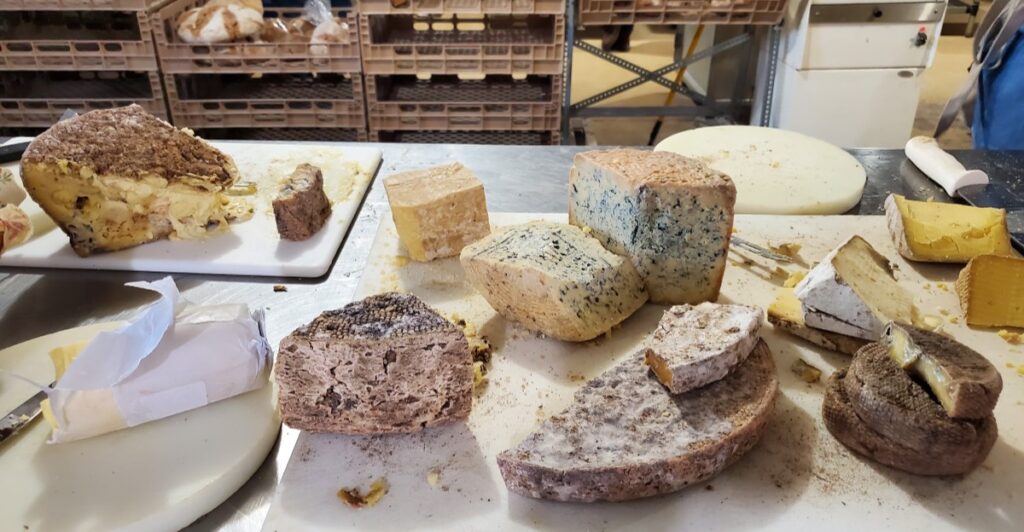
A wedge of Drumm can be crumbly in the center and soft around the edge, with grassy flavors that hint at where its milk began. At Bobolink Dairy and Bakehouse, that place is right outside: the pastures of a family farm in western Hunterdon County.
Jonathan and Nina White have built their business around grass-fed cows, traditional cheesemaking, and bread that deserves considerably more attention than the usual cheese-board supporting act. Their Milford farm brings those pieces together, giving a grocery stop the makings of a countryside afternoon.
You can pick out cheese, add a loaf from the bakehouse, and, on scheduled dates, walk the pastures or learn something useful in a hands-on class. The appeal goes beyond buying food close to its source.
Here, the source helps explain the food itself, from the changing character of the milk to the patient work behind every finished wheel.
Bobolink Dairy and Bakehouse Is Tucked Into the Hills of Milford
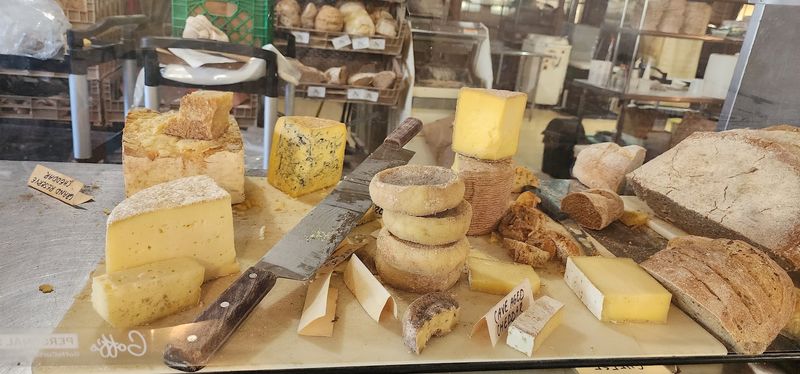
The address is straightforward, even if your shopping plans become less disciplined once you arrive: 369 Stamets Road, Milford. This is the rural side of Hunterdon County, where a trip for cheese fits comfortably into an afternoon of country roads and Delaware River towns.
Jonathan and Nina White founded Bobolink in 2002 on leased farmland, then purchased their Milford property in 2010 and moved their family, herd, and business there that June. Today, the farm describes its operation as a 187-acre family enterprise, with grazing land supporting the dairy and a bakehouse adding another reason to visit.
That acreage gives the place room to work; its personal scale comes from the people making and selling the food. The name has a connection to the landscape, too.
Bobolinks are grassland birds that nest on the ground, and the Whites chose their name to draw attention to the relationship between farming and wildlife. Pasture is central to both the dairy’s production and its broader purpose.
For a visitor, that makes the setting more than a pleasant background for a purchase. The fields are part of what you came to taste.
There is also a useful distinction between stopping at the store and attending an organized activity. A shopping visit can be simple, while tours and classes follow their own schedules.
You do not have to turn the afternoon into a full itinerary to enjoy the place. A loaf and a couple of contrasting cheeses make a perfectly respectable starting point.
Nearby Frenchtown or Milford’s riverside downtown can round out the day, but Bobolink has enough substance to be its own destination. The farm’s history, its working pastures, and its food all belong to the same story, and you can take a small, edible piece of it home.
Grass-Fed Cows Are at the Heart of Every Cheese
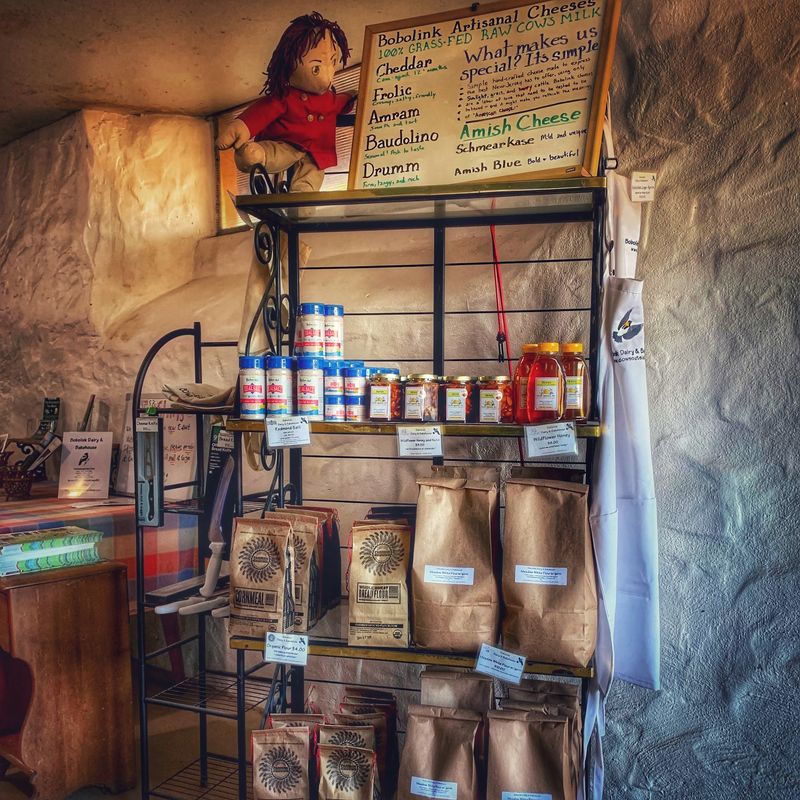
Before there is a rind, a wheel, or a carefully chosen wedge, there is a cow eating its way through pasture. Bobolink’s commitment to 100 percent grass-fed dairy cattle gives its cheesemaking a clear starting point.
The herd includes cattle with Irish Kerry ancestry, crossed with more familiar dairy breeds such as Jersey, Guernsey, and Ayrshire. Kerry cattle have a long history as hardy grazing animals, making that heritage relevant to a farm built around pasture rather than grain feeding.
The Whites have developed their herd with this way of farming in mind, linking the animals they raise to the milk they want to work with. For cheese lovers, the interesting consequence is variation.
Pasture changes throughout the growing season, and milk from grazing cows can reflect those changes. Bobolink embraces that character instead of aiming for a completely identical result from every batch.
Its cheesemaking season runs from April through November, tying production to the months when the farm’s grazing system is most active. A familiar cheese name can therefore contain something a little different on a return visit.
That is a useful thing to understand before you buy: consistency here means care and a recognizable approach, with room for the season to leave its mark. The farm also practices regenerative agriculture, placing soil health and the condition of its pastures alongside food production.
Those goals help explain why a pasture walk is a meaningful part of the visitor experience. You are seeing the land that supports the herd, rather than a separate attraction added beside the store.
Nobody needs to become an expert in cattle breeding to appreciate a good wedge of cheese. Still, knowing a little about these animals changes the purchase.
What looks like a finished product at the counter began with daily decisions about grazing, animal care, and the ground beneath the cows’ feet.
Traditional Cheesemaking Lets the Milk’s Seasonal Flavors Shine
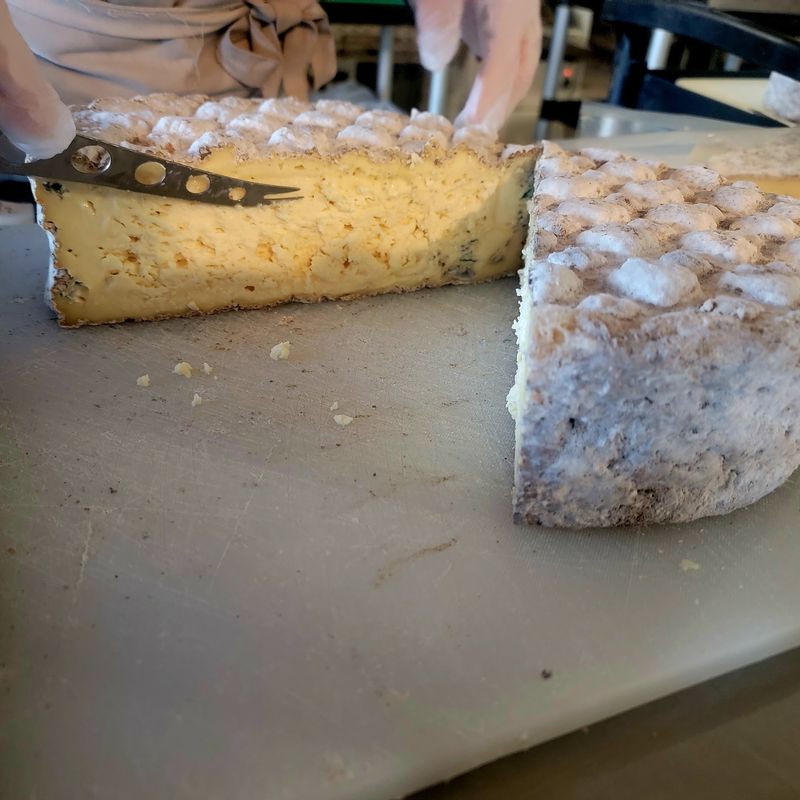
Four different cheeses can begin with the same curd. At Bobolink, Amram, Baudolino, Drumm, and Jean-Louis demonstrate how handling, moisture, and size can send that starting material in different directions.
The farm’s approach gives naturally developing flavors plenty of room, using native cultures and long fermentation rather than treating the milk as a neutral ingredient. Naturally cultured whey from the preceding batch helps begin the next round of cheesemaking.
As acidity develops, careful attention determines when the milk is ready for a small addition of rennet, the ingredient that helps it set into curd. The soft-ripened cheeses begin with wetter curds ladled into molds, while further draining produces the curds used for larger, firmer cheeses.
The details matter because texture is part of the pleasure. Two pieces made from the same milk can offer very different experiences once they have matured.
Aging brings another layer of change, giving each cheese time to develop its rind, aroma, and character. This also puts the word “fresh” in perspective.
Buying directly from a dairy gives you a close connection to production, but many of the cheeses are intentionally aged. Their quality depends on both good milk and the patience to let that milk become something more complex.
A first visit is easier when you approach the selection with curiosity rather than a rigid shopping list. Ask which cheeses are softer, which are firmer, and which have the boldest flavor in the current batch.
Those questions are more useful than trying to match everything to a supermarket category. At home, a simple comparison can be revealing: taste a small piece on its own, then another with plain bread.
Add fruit or preserves afterward if you like. Giving the cheese the first word makes it easier to notice the differences that the cheesemaker has worked to preserve.
The Farm Store Brings Bobolink’s Handcrafted Cheeses to Your Table
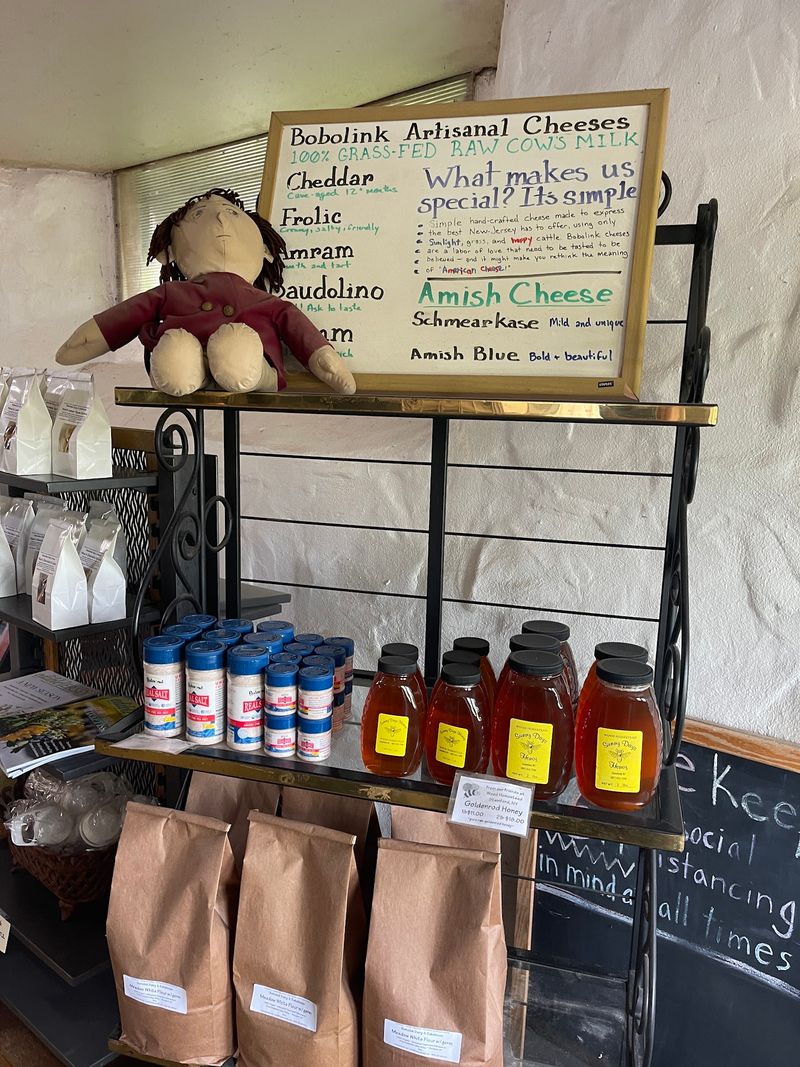
Drumm is a strong candidate for the first cheese in your bag. Jonathan White’s original creation earned a Super Gold at the 2025 World Cheese Awards, giving this Hunterdon County dairy recognition well beyond its local following.
The cheese has a light, slightly crumbly texture that can soften toward the edge, with bright, grassy, earthy flavors. Bobolink sells it in one-third-pound portions, a manageable size for trying something new without committing your entire refrigerator shelf.
It also gives you options beyond a cheese board. A little Drumm melted onto bread, eggs, or vegetables can turn an ordinary meal into a convincing argument for buying another portion.
For contrast, the farm describes Jean-Louis as a bolder choice and Frolic as a lighter, more approachable one. Availability changes, so it helps to ask what is ready rather than arrive determined to buy a particular lineup.
Choosing two cheeses with different textures often makes a more interesting plate than collecting several that taste broadly similar. Keep the accompaniments restrained at first.
Apple slices, a pear, or a piece of crusty bread can give the cheese space without competing for attention. The practical details are refreshingly clear.
Regular store hours are Monday from noon to 3 p.m., Wednesday through Friday from noon to 6 p.m., and Saturday and Sunday from 9 a.m. to 5 p.m. Tuesday is the closed day, making it a poor choice for a spontaneous cheese expedition.
Checking for special changes before a longer drive is sensible. Bring a cooler if you plan to continue exploring afterward, especially in warm weather.
Once home, serve a modest portion and keep the rest refrigerated according to its storage instructions. A thoughtful purchase does not need elaborate entertaining plans.
Two cheeses, good bread, and a few minutes to enjoy them can be enough of an occasion.
Freshly Baked Bread Makes the Perfect Partner for Your Cheese
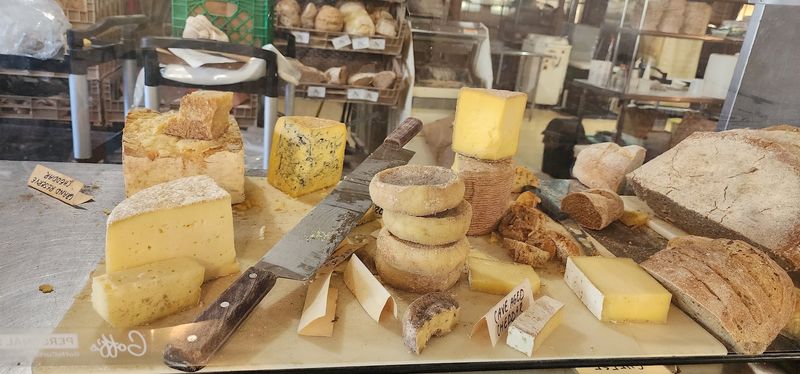
The loaf is where a quick dairy stop starts looking suspiciously like dinner. Nina White’s bakehouse brings heritage and heirloom grains, sourdough starter, and long fermentation into the same farm operation as the cheese.
The breads are baked in a wood-fired oven, and their role here extends well beyond giving a wedge somewhere to sit. Grain, fermentation, and crust all contribute flavor of their own.
Nina has been baking since childhood, and her work gives Bobolink two distinct crafts under one roof. The farm’s bread starter dates to 2003, when flour was mixed with Saison Dupont Belgian ale.
Since then, that starter has been carried forward through successive batches. It is a small piece of bakehouse history with a daily job, helping turn flour and time into the loaves customers take home.
The selection has included rustic wheat bread, cranberry walnut bread, and ciabattas, with varieties such as garlic and duck fat adding different possibilities. The day’s offerings should guide the final choice.
For a first pairing, a comparatively plain loaf gives you the clearest sense of the cheese. Cranberry walnut can make a more expressive partner, especially when you want the sweetness and crunch to be part of the bite.
Garlic bread brings its own strong personality, so it may be better suited to a sandwich or a meal than a side-by-side cheese tasting. There is no need to buy as though guests are arriving when you simply want a good lunch.
Slice what you need and freeze part of the loaf for another day. Toasted leftovers can become the base for an open-faced cheese sandwich, or accompany soup with very little further effort.
Bread and cheese are an old combination for a reason. At Bobolink, each has enough character to make that familiar pairing feel like a considered meal.
Farm Tours and Classes Bring You Closer to the Food You Love
A pasture walk answers questions that a label cannot. Where does the herd graze?
How does the farm manage the land? What does a working dairy look like beyond the shop counter?
Bobolink’s scheduled tours include walking out to see the cattle in their setting, with opportunities to ask about farming, food, and the natural world. The experience adds context to the cheeses without requiring a technical background.
It also gives the visit a different pace, shaped by the property and the animals rather than the length of your shopping list. Comfortable shoes suited to uneven ground are a sensible choice, and the weather deserves more attention than it would on a routine grocery run.
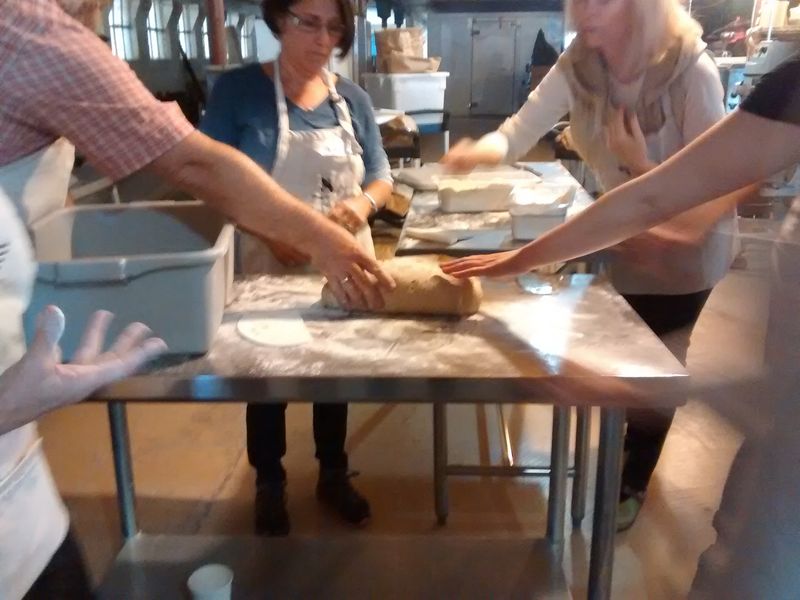
Classes take the learning in another direction. Bobolink welcomes beginners as well as experienced cooks and bakers, offering hands-on instruction in breadmaking and cheesemaking on selected dates.
Nina’s bread classes cover practical work such as mixing, forming, and baking, alongside discussion of flour and sourdough starter. Handling dough yourself brings a different kind of understanding than watching a finished loaf go into a bag.
Cheesemaking classes offer a similar opportunity to connect an everyday food with the decisions behind its production. These are scheduled experiences, so registration, timing, and the particulars of the session matter.
Tours should not be assumed to run every weekend, and class availability changes across the year. Seasonal farm-to-fork concerts add another way to spend time on the property, bringing food and music to the farmhouse lawn.
Each activity reveals a slightly different side of the place, from pasture management to the patience involved in fermentation. Afterward, the loaf and wedge on your kitchen table have familiar origins.
The bread came through someone’s hands and an oven; the cheese began with the herd you watched grazing. Dinner carries a little more of the day with it.
Share this story