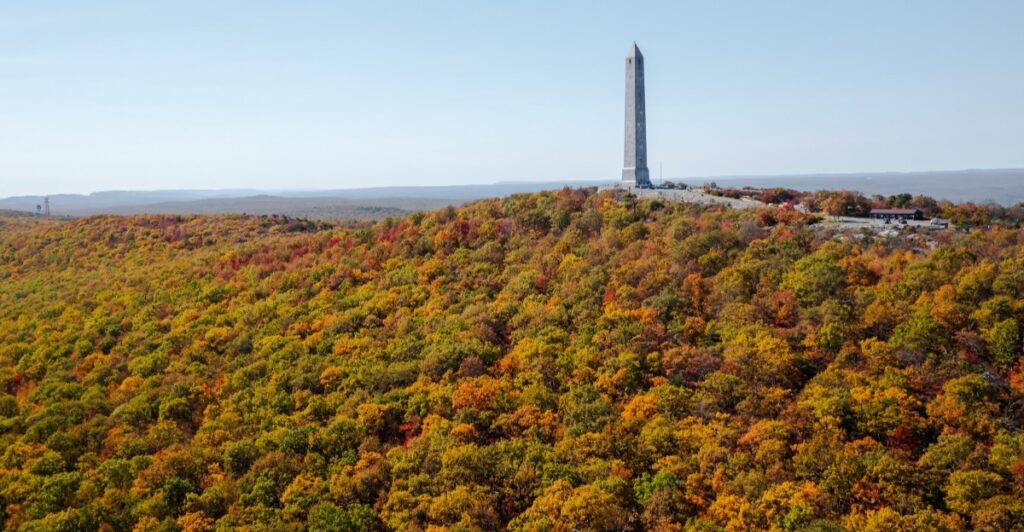
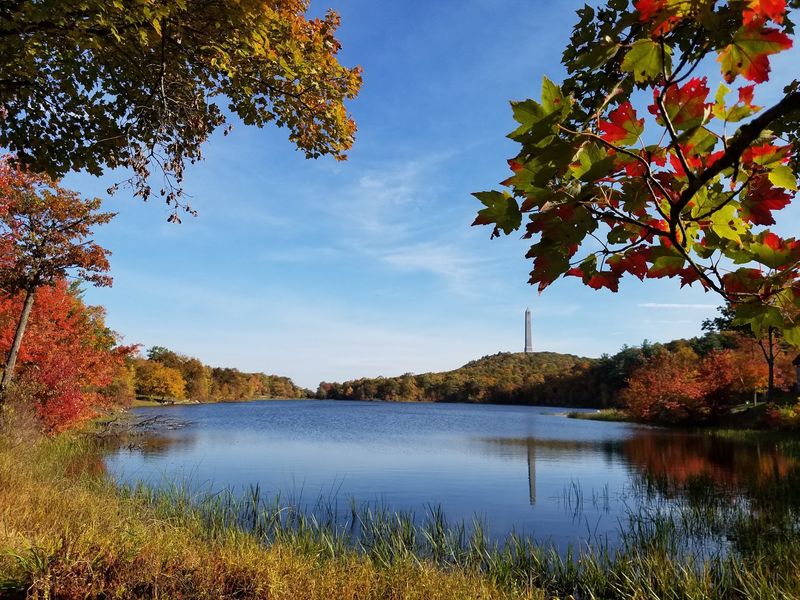
Lake Marcia sits beneath a ridge of trees, and above them rises a narrow stone monument that seems to belong in a painting of the countryside. Give the scene a little time and it changes: clouds move across the water, light catches the hillside, and the monument comes in and out of view as you walk.
This is High Point State Park, where New Jersey reaches 1,803 feet above sea level. The summit gets the attention, but it is only one part of the day.
You can follow a rocky trail for another view of the valley, take an easier walk through an Atlantic white cedar bog, or settle beside the lake and watch the colors shift. In autumn, the surrounding hills do plenty of showing off.
Even on an ordinary afternoon, though, the mix of open sky, mountain ridges and still water makes High Point worth lingering over.
High Point State Park Puts New Jersey’s Highest View on Display
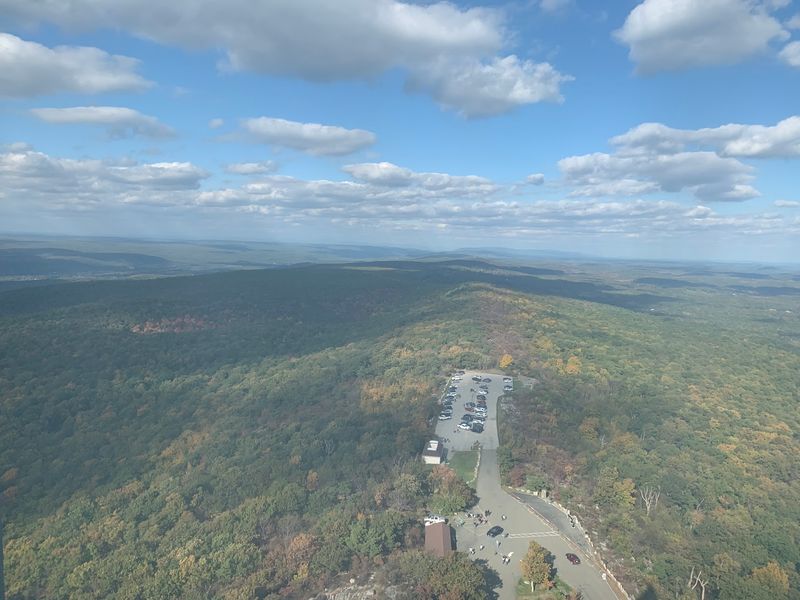
At 1,803 feet, the summit of Kittatinny Mountain is the highest natural point in New Jersey. The number sounds like something to check off a list.
The view is what makes you stay. From the open ground around the monument, the landscape spreads into a patchwork of wooded ridges, valleys and distant hills.
New York and Pennsylvania are both part of the panorama, with the Poconos to the west and the Catskills to the north on a clear day. You do not have to tackle a long hike to get that first look.
The park road leads to a parking area near the monument, followed by a short walk uphill. That makes the summit an easy starting point, even if the rest of your visit will be spent exploring on foot.
Take a moment to turn away from the monument, too. From one side, the stone tower anchors the scene; from another, the ridges seem to run on without it.
High Point covers more than 16,000 acres in Sussex County, so the scenery changes as you move through the park. A drive between the lake, picnic areas and trailheads passes through stretches of forest that feel far removed from the exposed summit.
Come back in another season and the same bends in the road look different: deep green in summer, bright with leaves in fall, and spare enough in winter to reveal the shape of the hills. That variety is the pleasure of High Point.
You can spend an hour enjoying the view from the top, then head down a trail and find a quieter corner that feels like a different park altogether.
The High Point Monument Rises Above Three States
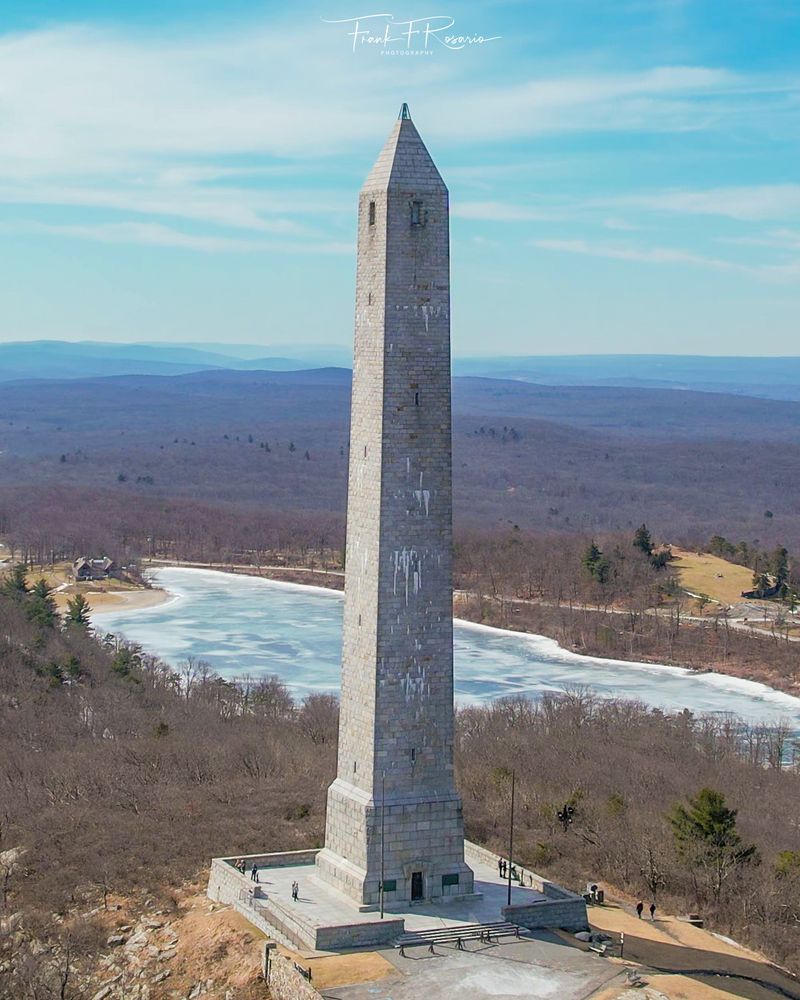
From beside Lake Marcia, the monument looks almost delicate against the sky. Up close, it is a 220-foot granite-clad obelisk standing on New Jersey’s highest ground.
Anthony and Susie Dryden Kuser, who donated the land that became High Point State Park, also funded the monument as a memorial to New Jersey veterans. Construction began in 1928, and the monument was dedicated in 1930.
The climb inside is 291 steps. When the interior is open, those steps take you to a view over New Jersey, New York and Pennsylvania, with the surrounding ridges laid out below.
It is a memorable way to see the park, though the ground outside already gives visitors a broad panorama. Anyone happier keeping both feet on the hillside can enjoy the setting without entering the tower.
The memorial has a presence from well beyond the summit. It appears above the trees as you approach, disappears behind them, then turns up again from a new angle near the lake or along a trail.
That changing perspective gives a walk here a satisfying little thread: wherever you wander, you can spot the landmark that marks the top. Plan separately for the grounds and the climb.
The area around the monument is generally accessible during park hours, while interior access follows a seasonal schedule and depends on staffing and weather. The park road can also be affected by winter conditions.
If reaching the top of the tower is central to your visit, check its current opening information before setting out. Otherwise, the monument is still worth seeing for its history and the remarkable piece of New Jersey landscape around it.
Lake Marcia Adds a Quiet Splash of Color
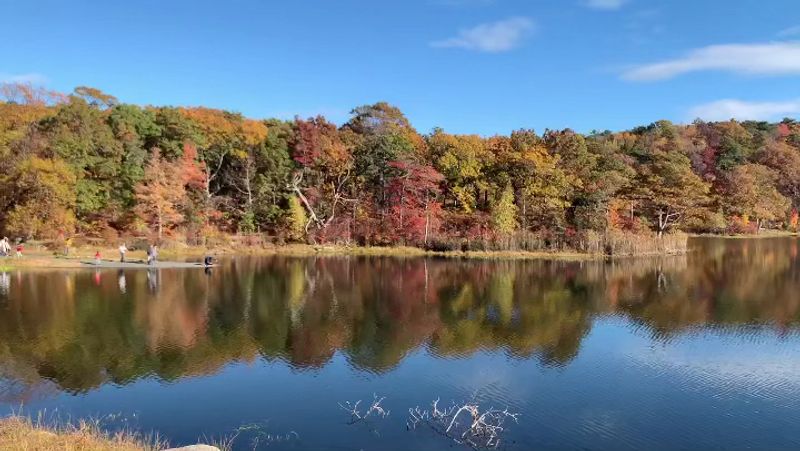
After the wide-open summit, Lake Marcia gives you somewhere to slow down. Trees gather close to the shoreline, the monument rises beyond them, and on a calm day the water brings the whole scene together.
It is one of High Point’s prettiest views, especially when the leaves start to turn and their colors show up twice, once on the hillside and again in the lake. The lake also makes a useful pause between the park’s bigger outings.
You might stop here before walking up toward the monument, return after a hike for lunch, or simply spend time near the water. The nearby day-use area has room to make an afternoon of it.
High Point has picnic spots throughout the park, so bringing food along is an easy way to leave your schedule pleasantly loose. In summer, Lake Marcia has a designated swimming beach.
Swimming is allowed only when lifeguards are on duty, and availability can change during the season. Treat the lake as a scenic stop unless the park confirms that guarded swimming is available on the day you visit.
There is plenty to enjoy without going in. Walk a little way from the busiest part of the day-use area and the view keeps changing.
The monument may sit clearly above the treetops one moment, then nearly vanish as the path curves. Look back toward the water before you leave.
At High Point, the grandest view may be from the summit, but the lake is where all those colors have a chance to settle.
Hiking Trails Reveal More Than the Summit
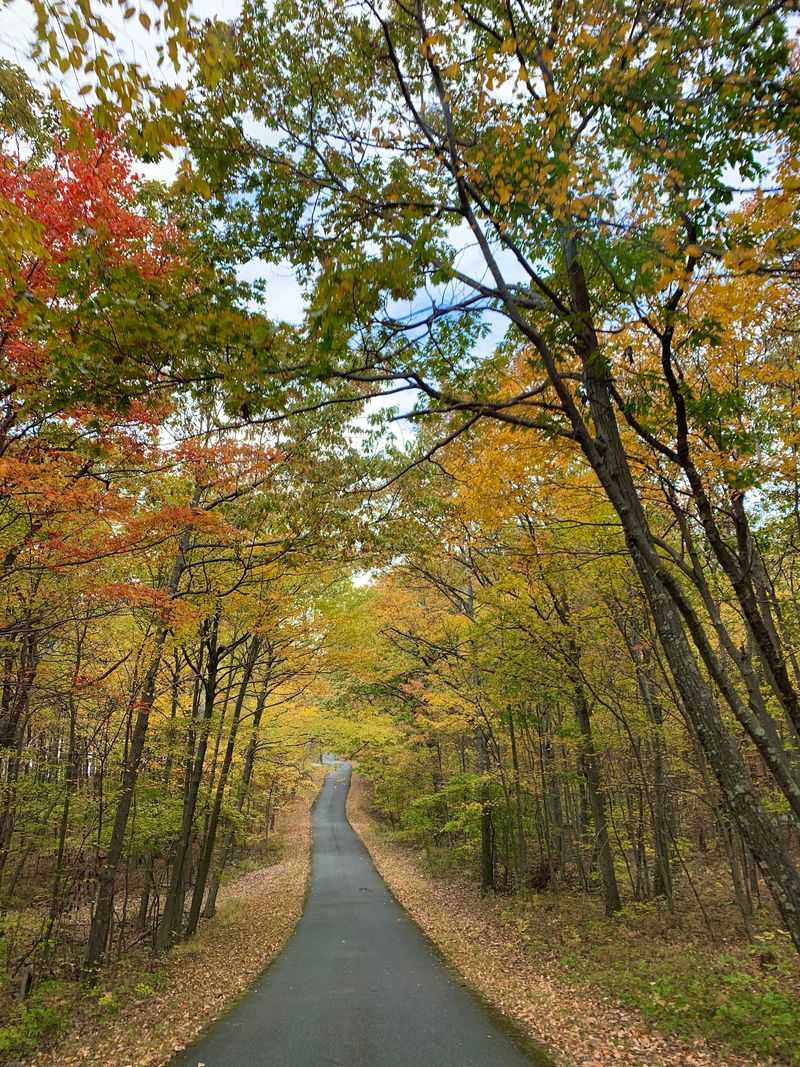
The monument tells you where the highest point is. The trails show you what surrounds it.
High Point’s paths cross rocky ridgetops, wooded slopes, old routes and wetlands, offering walks that feel quite different from one another within the same park. For a substantial outing, the Monument Trail is a 3.5-mile loop with steep, rocky stretches and views from the ridges.
You can reach it from near the interpretive center, the north end of Lake Marcia or the monument parking area. Along the way, look for stone steps and borders built by the Civilian Conservation Corps in the late 1930s.
They are a reminder that people have been shaping ways to explore this landscape for generations. The Appalachian Trail passes through the park as well.
Its white-blazed route follows the Kittatinny Ridge and rewards hikers with changing views of the surrounding valleys. You can walk a section without committing to an all-day trek, though the rocky footing deserves proper shoes and attention.
If you would rather keep the outing short, the Old Trail is an easy half-mile route that once served as an entrance to the High Point Inn. It pays to pick a trail for the day you actually want.
A breezy stroll beside the lake and a rocky loop over the ridge ask different things of your legs. Check the park map before you start, carry water, and allow time for the stops you will inevitably make when a view opens through the trees.
The best part of walking here is discovering that the summit is only one of High Point’s good angles.
The Cedar Swamp Shows Off a Different Side of the Park
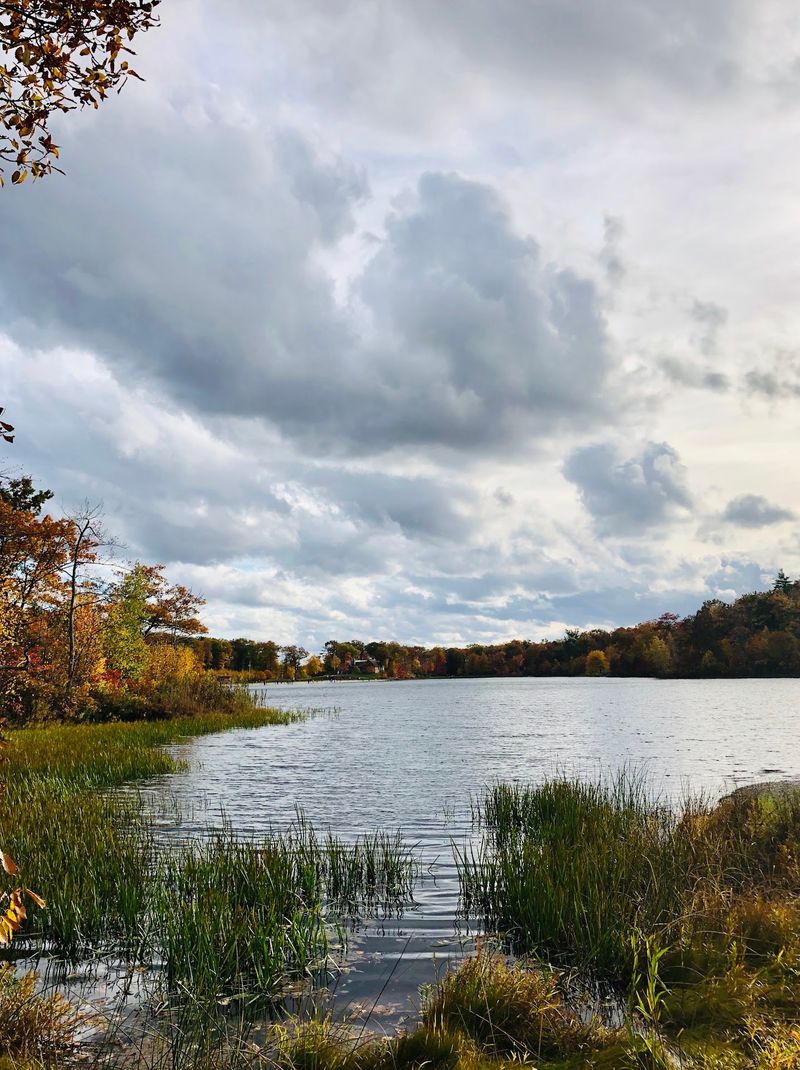
An Atlantic white cedar bog near the top of a mountain is an unexpected find. At High Point, it sits within the Dryden Kuser Natural Area, a protected landscape that includes both the bog and the park’s high ridge.
The contrast is part of the appeal: after broad views and exposed rock, the Cedar Swamp Trail leads you into a close, sheltered world of trees and wet ground. The route begins at the Cedar Swamp Picnic Area and follows an old road before circling the bog.
Much of the walk is relatively level, with gravel and paved stretches as well as a boardwalk across the wetter area. That boardwalk is the place to ease your pace.
From it, you can look into the cedar habitat without stepping off the path or disturbing the plants growing there. This landscape has a much longer story than the park itself.
The bog formed after a glacier retreated more than 15,000 years ago. A self-guided trail booklet describes the habitat and corresponds to numbered stops along the route, giving curious walkers something specific to look for instead of treating the swamp as a quick detour.
Bring shoes that can handle damp patches and leave the cedar bog as you found it. Its appeal is in the details: the shift in light beneath the trees, the change underfoot as the boardwalk begins, and the surprise of finding this kind of wetland so close to New Jersey’s highest point.
If the summit is High Point’s sweeping landscape painting, the swamp invites you to lean in and see the brushwork.
What to Know Before Visiting High Point State Park
Start with 1480 State Route 23 in Wantage for the park office, then decide what kind of day you want. The monument and Lake Marcia are good choices for a relaxed visit with big views.
The Monument Trail makes a longer outing, while the Cedar Swamp Trail offers an easier walk with a very different setting. A park map helps you choose a trailhead and see how far the areas are from one another.
Gate hours change with the seasons. The park currently lists them as 8 a.m. to sunset from April through November and 8 a.m. to 4:30 p.m. from December through March.
Vehicle entrance fees apply from Memorial Day weekend through Labor Day: New Jersey residents pay $5 on weekdays or $10 on weekends and holidays, while nonresidents pay $10 or $20. Outside that summer fee season, entry is free.
Check current conditions before traveling, particularly if you are planning around monument access, swimming or winter weather. You can drive close to the monument, but there are marked walking routes from the Lake Marcia beach parking lot and the interpretive center area if you would like to approach on foot.
Use those paths rather than walking along the narrow park road. For a picnic, pack what you need and bring a bag for your trash; High Point asks visitors to carry it out.
Leave a little room in the plan for a second stop. The monument, lake and cedar bog each show a different part of the park, and none requires you to see everything in one visit.
By the time you head back down Route 23, the view from the summit may be the one you remember most—or it may be a quiet reflection on Lake Marcia.
Share this story