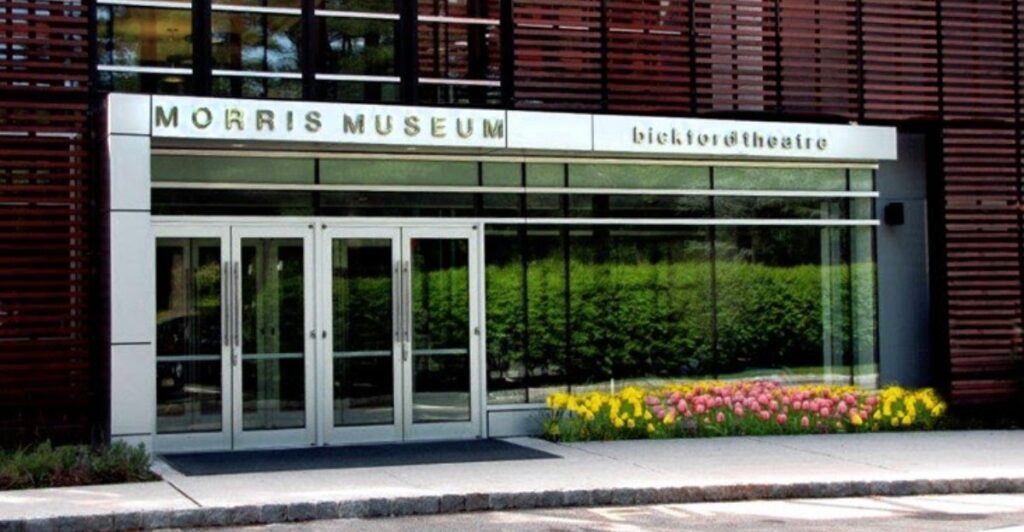
A music box small enough to fit inside a gold ring shares a museum with a machine that can play an entire orchestra.
Both are in Morristown, where the Morris Museum has a knack for making you stop midstride and ask, “How does that work?” Its collection of mechanical instruments and moving figures is the main attraction, but it is hardly the whole visit.
Around another corner, there are dinosaur fossils. Elsewhere, model trains wind through a miniature landscape, and children can test inventions they have built themselves.
The mix sounds unlikely until you’re inside, following whatever catches your eye next. That might be an intricately dressed automaton, an oversized amethyst, or a performance at the museum’s theater.
Give yourself more time than you think you need. The pleasure here is in discovering how much fits under one roof—and letting an unexpected favorite keep you a little longer.
The Morris Museum Has More Surprises Than You’d Expect
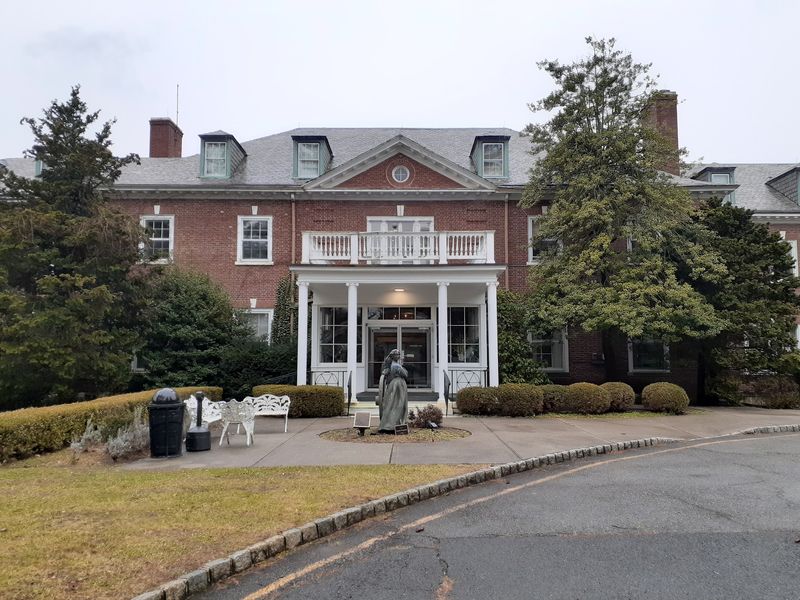
A museum that began with a curio cabinet now has a model railroad, a theater, science galleries, and one of the country’s notable collections of mechanical music. That range is part of the Morris Museum’s character.
Its story goes back to 1913, when the Morristown Neighborhood House began displaying cultural objects for local children. The collection outgrew its early home, and the museum eventually settled at Twin Oaks, a Georgian-style mansion acquired in 1964.
It has expanded considerably since then, but the impulse behind that first cabinet—put interesting things where people can encounter them—still comes through. The museum is also New Jersey’s only Smithsonian affiliate.
You can see the range without committing to a rigid route. Someone drawn in by the musical machines might end up studying fossils.
A child who wants to find the model trains may spot an artwork that makes the whole family pause. This is a good place to follow those detours, since the collections reward different kinds of curiosity.
The Mega Model Train Gallery is a fine example. Its nearly 300-square-foot landscape includes a city, countryside, a waterfall, and small surprises tucked among the scenery.
Visitors can press buttons to activate lights and moving features, then keep looking to see what else is hiding in plain sight. The trains once belonged to a display at Nabisco’s East Hanover headquarters, which gives this miniature world a distinctly New Jersey backstory.
The museum works especially well when everyone in your group wants something different. There is room for the person who reads every label and the person who would rather watch a train go by three more times.
Before long, both may find themselves standing in front of a mechanical doll, waiting to see what it does.
Mechanical Music Comes to Life in the Guinness Collection
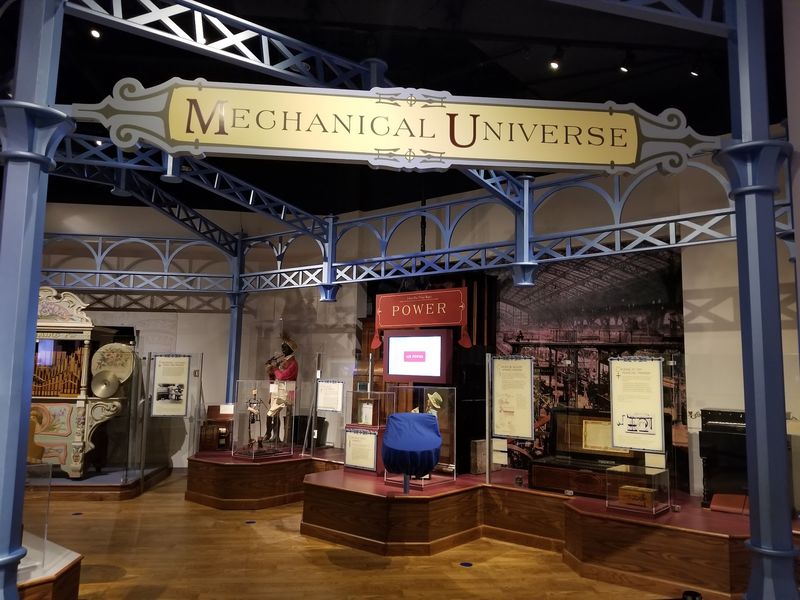
Before recorded music became something you could summon with a tap, getting a machine to play a tune took remarkable ingenuity.
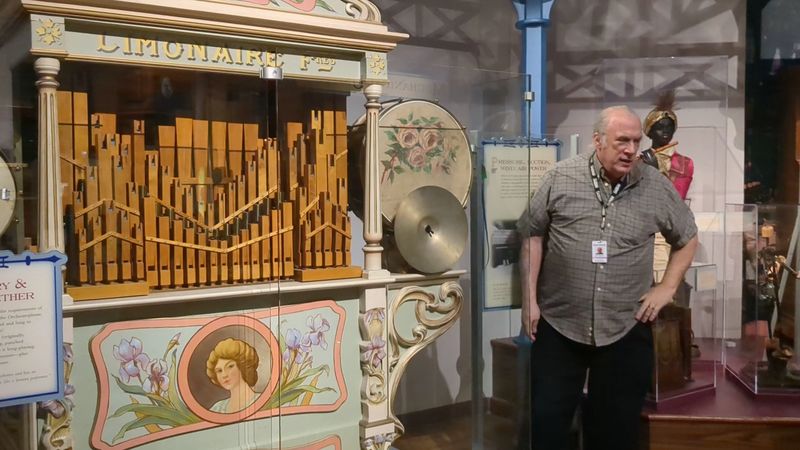
The Murtogh D. Guinness Collection lets you see that ingenuity at work. Its roughly 750 mechanical musical instruments and automata span 400 years, from delicate music boxes to imposing machines built to produce the sound of an orchestra.
More than 150 pieces are displayed in the permanent exhibition, with additional examples in a visible storage gallery. The difference in scale is half the fun.
One music box is small enough to fit inside an 18-karat gold ring. At the other extreme stands the Poppers “Rex” Orchestrion, a century-old machine that uses a complex pneumatic system to play multiple instruments.
Stand near a large piece like that and you begin to appreciate how many coordinated parts it takes to make a few minutes of music. There is a local connection, too.
As mechanical music became more widely available in the late 19th century, New Jersey became a center of American music box production. Instruments in the collection were made in Jersey City, Rahway, and Bradley Beach.
They put familiar town names into a story that otherwise stretches across centuries and continents. If you want to hear what these machines can do, time your visit around the Guinness Collection Workshop demonstration.
The museum currently lists it for 2 p.m. Wednesday through Sunday, included with admission.
Demonstrations explore the cylinders, discs, and paper rolls that told mechanical instruments what to play. You can even make a tune of your own on the workshop’s Pling-Plongs.
After examining all those gears and clever mechanisms, hearing one produce music gives the collection its best moment.
Moving Dolls Show Off the Art of Automata
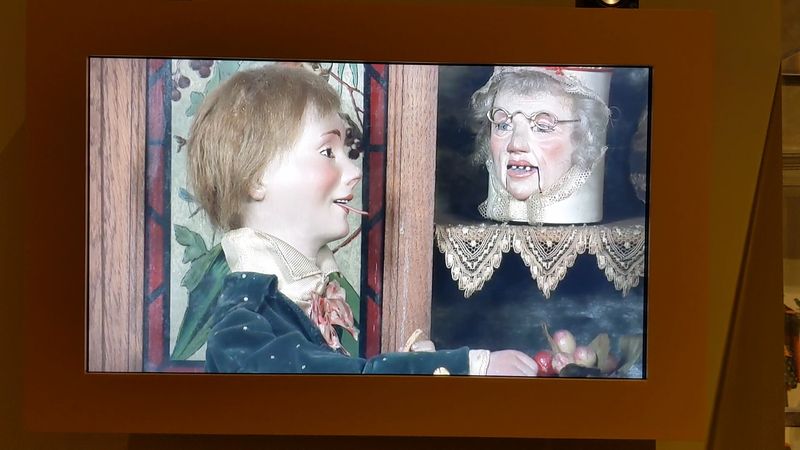
A clown magician, a walking peacock, and a group of card-playing cats sound like the cast of a very strange show. At the Morris Museum, they are examples of automata: figures designed to move through carefully engineered mechanical actions.
Many were made to entertain, and more than a century later, they still know how to hold an audience. Take the clown illusionist made around 1895.
Its appeal lies in the meeting of costume, character, and machinery. The walking peacock, made around the turn of the 20th century, brings a different kind of theatrical flair.
Then there are the cats playing cards, a scene whose tiny details invite a closer look. Even while the figures are still, you can imagine how much planning went into making their movements seem natural—or delightfully unnatural.
These are dolls in one sense, but the word only gets you so far. Each piece also reflects the work of artists, costume makers, and skilled mechanics.
A maker had to decide what a figure would do, how an audience would see it, and where to conceal the machinery that made the trick possible. The result can be funny, elegant, or just a little uncanny.
The Guinness galleries display a portion of the collection in settings inspired by Parisian shop windows, an apt backdrop for figures made to catch someone’s eye. It is easy to move quickly past a cabinet of small objects; these reward the opposite approach.
Look at a face, a sleeve, or the position of a hand, and you start to see the choices that give each character a personality. Children may be the first to ask whether a figure will move, but adults tend to linger over the answer.
Once you know how much craftsmanship sits behind a simple gesture, a nod or a turn of the head feels wonderfully extravagant.
Art and Science Give You Plenty More to Explore
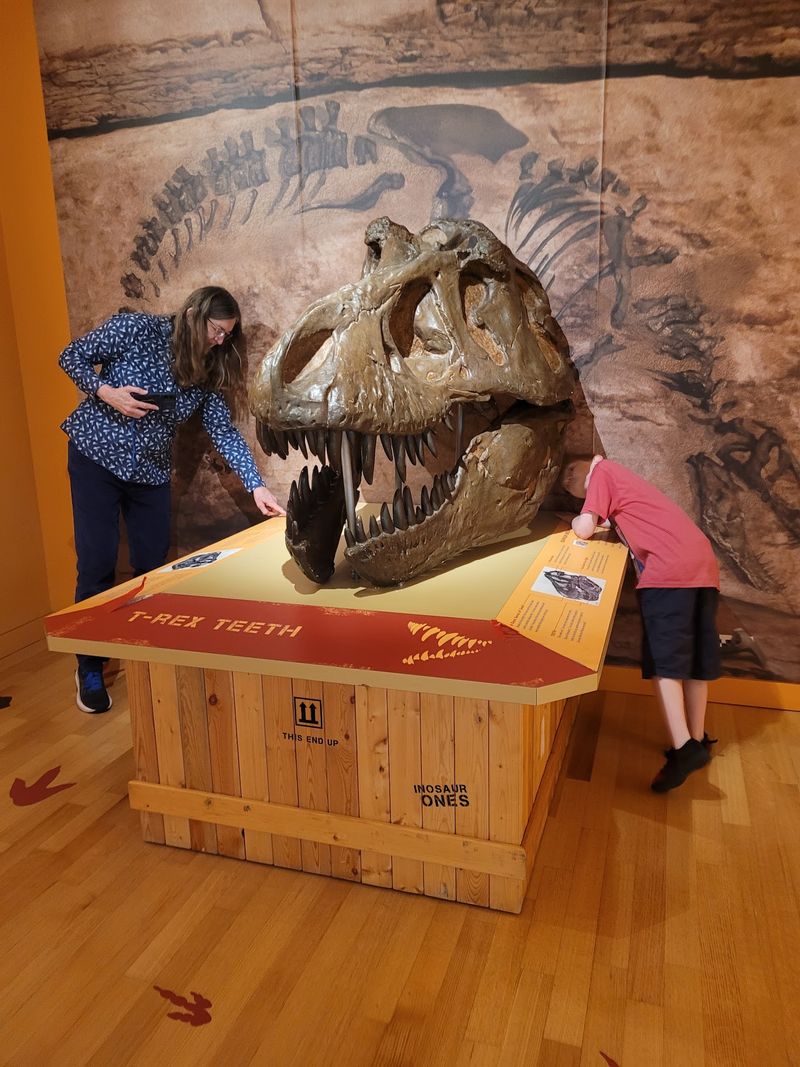
You can touch a real dinosaur egg in the Earth Science Gallery. That is a memorable way into a collection that also includes fossils, dinosaur tracks, minerals, petrified wood, and an oversized amethyst geode.
The gallery uses those objects to tell a much bigger story about Earth, including what New Jersey was like when dinosaurs lived here. There is even a simulated hadrosaur call, which tends to settle the question of which room younger visitors want to see next.
The dinosaur displays invite the kind of close inspection that is difficult to get from a picture. A footprint or fossilized egg is evidence of an animal that once occupied an actual landscape.
Nearby, the rocks and minerals tell another part of the story, from how different rocks form to what can be found beneath New Jersey’s surface. It is worth slowing down at the geode; its size makes it hard to miss, but its details are the reward.
Art takes the visit in other directions. The museum’s Native American Gallery displays pottery, textiles, baskets, carvings, beadwork, and quillwork from regions across the United States.
The cases provide geographic context, giving visitors a way to consider the objects and the communities that made them. It is a gallery to approach thoughtfully, with attention to the skill and purpose behind what is on display.
Families who would like to make something themselves can head to Spark!Lab, a hands-on invention space connected to the museum’s Smithsonian affiliation. Children can build a vehicle, test an idea in a vertical wind tunnel, or devise a chain of actions on a pegboard.
The point is to try an idea, see what happens, and improve it. After spending time with centuries-old mechanical inventions upstairs, making a contraption of your own feels like a fitting response.
Changing Exhibitions and Performances Reward Another Visit
A return trip can begin with a completely different plan. The permanent galleries will still be there, but the Morris Museum changes its temporary exhibitions and hosts a full calendar of performances, films, and talks.
That means one afternoon might revolve around the Guinness machines, while the next belongs to an artist you had not heard of before. As of September 2026, the current exhibitions include Audubon Songbirds, works by sculptor Thaddeus Mosley, and selections from the museum’s Eastern Mediterranean antiquities collection.
They give regular visitors a reason to check what is on view rather than assume they have already seen everything. The range also suits the museum: nature, art, and history can all claim a place on the same afternoon.
Then there is the Bickford Theatre. The museum added a theater in 1970, and its present program includes music, dance, film, and lectures.
The 2026–27 season lists New Jersey Ballet, jazz, classical music, and a lecture series called Breakfast University. A museum visit and a performance can make a satisfying pairing, provided you check the timing and tickets for each.
For a family visit, Spark!Lab offers another reason to return. Its open-ended challenges leave room for a child to try a new solution the next time around, whether that means changing a vehicle’s wheels or adjusting something intended to fly.
The activities make experimentation feel welcome, including when the first design does something entirely unexpected. That variety gives the museum a rare advantage.
You can go back for a favorite piece, then leave having spent most of your time somewhere else. The moving dolls may get you through the door, but the changing program makes it hard to declare the place fully explored.
What to Know Before Visiting the Morris Museum
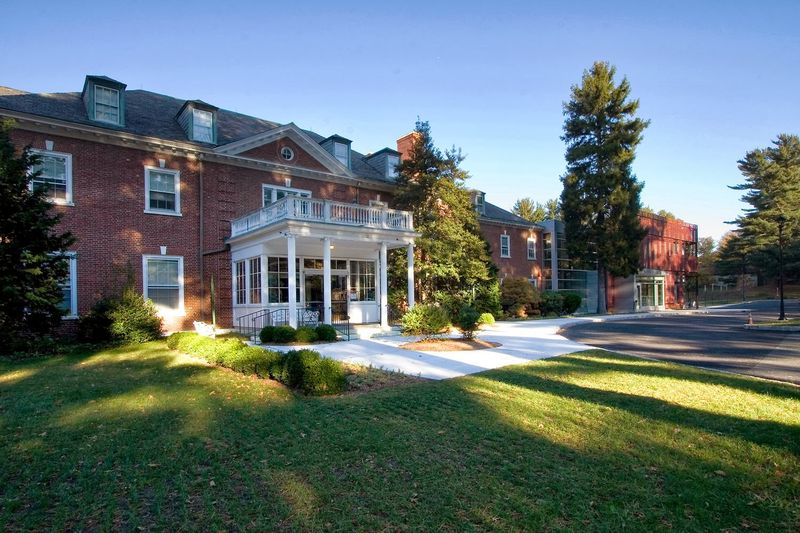
You will find the museum at 6 Normandy Heights Road in Morristown. Its published visiting schedule lists gallery hours from 11 a.m. to 5 p.m. Wednesday through Sunday; it is closed to the public on Mondays and Tuesdays, apart from a members-only period on the first Tuesday of the month.
Holiday closures also apply, so it is sensible to check the calendar if your trip falls near one. General admission is currently $12. Seniors, students under 25 with ID, and visitors ages 3 through 17 pay $8; children 2 and under enter free.
Museum members and active military personnel, along with up to five family members, also receive free admission under the museum’s listed policy. Those details can change, but they make it fairly easy to work out the cost of a regular gallery visit before leaving home.
If mechanical music is your main reason for going, remember the Guinness workshop demonstration is currently scheduled for 2 p.m. Wednesday through Sunday.
Arriving earlier leaves time to explore the collection before hearing a machine play. For families interested in Spark!Lab, the museum lists hours of noon to 4 p.m. on those same days.
Its 30-minute sessions require separate timed entry tickets from the front desk. They are included with general admission but depend on availability and cannot be reserved in advance.
Children must enter with an adult. Check the performance calendar separately if you are hoping to see something at the Bickford Theatre.
Otherwise, leave the afternoon fairly open. There is enough here to justify a careful look at the Guinness Collection, a turn through the other galleries, and one last stop at whatever drew you back on your way out.
Share this story